
325 – 152nd Street East, Tacoma, Washington

Best Practices - Photography, Canon 60D, Canon 70-200 mm 2.8 IS L Series Lens, Canon Camera, Canon Lens, Journaling, Light Intensity, Photoblog Intention, Photography & Conceptualizing Beauty, Project 365 - Photo-a-day, Season, Spring, Still Life, Vehicle, Vehicle Restoration

One of the bigger treats for me in visiting Seattle, Washington this Easter was something my wife and daughter allowed me to do on the Thursday before we returned to Canada, something that they joined me in. That Thursday morning, we drove from Seattle an hour south to Tacoma and using our TomTom GPS were able to navigate to 325 – 152nd Street East to arrive at the LeMay Car Collection/Museum at Marymount.

Imagine a former convent/school resurrected to become storage and showing site for the LeMay collection of cars and trucks, vehicles of the last one hundred years. At the museum, a docent will lead you through each collecting point on the Marymount property. Not only do rusting relics inhabit these spaces, but you also find that the majority of vehicles within these confines will have received restoration or would have been kept in their original pristine condition throughout their years. Beyond this, imagine that your docent has heart and understands well your connection to cars and knows each car’s history intimately. He’s able to tell you all that you didn’t know about each car. Our docent, Mr. Pierce, led us, this way and that, through the maze of cars parked end to end in each of three buildings, a means to house them all. He was introducing each car to us – what the car was about practically, what had been each automaker’s intentions for the vehicle conceptually and how the car came to reside within the LeMay collection.

And, Mr. Pierce allowed me a kind of grace that only a fellow gear-head would ever let you have … he allowed time to photograph the vehicles and for that I will be forever grateful. At two hours in to my tour my wife went to be with my daughter out in our rental car while I rounded off the tour with Mr. Pierce looking up close at some of the first-ever self-propelled vehicles to transport people around the Americas. In terms of next steps, I’m considering becoming a member at the LeMay museum – they may be able to make use of this old-time car jockey who used to dust and polish cars at Edmonton’s Waterloo Mercury.

Listening to – U2’s Magnificent, Coldplay’s Yes and Radiohead’s All I Need.  In terms of audiobooks, the last two morning walks have been a listen through D.H. Lawrence’s Lady Chatterley’s Lover; it’s been more than a couple of year’s since I’ve been through the book and this audio-recording has a good reader –  Maxine Peake.

Quote to Inspire – “Photography does not create eternity, as art does; it embalms time, rescuing it simply from its proper corruption.” – Andre Bazin (1918-1958), French film critic.

Broad Strokes – Three Dimensions

Best Practices - Photography, Canon 60D, Canon 70-200 mm 2.8 IS L Series Lens, Canon Camera, Canon Lens, Light Intensity, Night, Photoblog Intention, Photography & Conceptualizing Beauty, Project 365 - Photo-a-day, Spring, Still Life, Sunrise

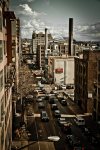
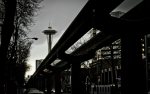
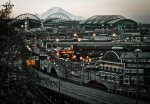
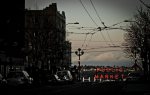
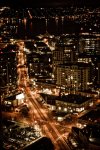
Visually, Seattle clusters in broad strokes among three dimensions. There’s the up and down of tall, tall buildings. There’s the Seattle you find more of to your right and to your left, more buildings, more streets, more sidewalks. Seattle extends in front of you, behind you and way over in every direction – bridges curve with the landscape and cross huge expanses of land and water. Seattle is a walker’s city. Distances around the city core are manageable walking distances. Navigating the downtown core is straightforward. The terrain offers up and down, a good walker’s workout. And, fresh air blows up from the ocean through the city. Movie-wise I recognized the city watching an eighty’s movie only last weekend; Seattle is the setting within the movie, An Officer and A Gentleman. And, during our time in Seattle, we were able to see the Lake Union lake cottage set of the house used by Tom Hanks’ character in the movie Sleepless in Seattle; we’d taken the Ducks’ tour and saw many of Seattle’s highlights. The Seattle night photos remind much of U2’s music video presentation of their album No Line on the Horizon and specifically to City of Blinding Lights, a reference more directly referring to Paris, France; the appellation could just as easily refer to the Seattle that I’ve seen at night.
Listening to a preview of Jack White’s Blunderbuss album; it’s holding true to Jack White sound; it’s good and it’s fresh Jack White.

Quote to Inspire – “There will be times when you will be in the field without a camera.  And, you will see the most glorious sunset or the most beautiful scene that you have ever witnessed.  Don’t be bitter because you can’t record it. Sit down, drink it in, and enjoy it for what it is!” – Degriff

Moonrise over Elliot Bay

Best Practices - Photography, Canon 60D, Canon 70-200 mm 2.8 IS L Series Lens, Canon Camera, Home, Night, Photography & Conceptualizing Beauty, Project 365 - Photo-a-day, Spring, Still Life, Sunrise

Coming to Seattle from just south of the 60th parallel, I had expected the earth’s sunrise and sunset to be more in tandem with what happens for us in our north. I was surprised to find the sun rising much earlier than it was back home. On Saturday, our travel day home from Seattle, Washington to Edmonton, Alberta I was able to gather photo gear quietly without disturbing my wife and daughter and head out quite early to snap photos. While I captured images from Seattle’s downtown, two of the shots I’m liking deal with the moonrise at sunrise across Elliot bay. And, while there are five images presented there are only two images dealt with.  One image plays with different lighting presets and composition while the other, the final one is pretty much straight out of the camera. Our waitress at the Andaluca restaurant caught the sight on her early morning jaunt to work. The sight was rare, something to see.

Quote to Inspire – “To me, photography is an art of observation.  It’s about finding something interesting in an ordinary place … I’ve found it has little to do with the things you see and everything to do with the way you see them.” – Elliot Erwitt

Listening to Pink Floyd’s Wish You Were Here album following a documentary on Pink Floyd that explored their reunion for the global Live 8 Concert;  they’d been apart for some twenty odd years … two of those members have passed on. In the song Wish You Were Here that I’m listening to, Stephane Grappelli accompanies Pink Floyd. Interesting!

Seattle’s Pike Market Place

Best Practices - Photography, Canon 60D, Canon 70-200 mm 2.8 IS L Series Lens, Canon Camera, Canon Lens, Canon Live View, Light Intensity, Photography & Conceptualizing Beauty, Project 365 - Photo-a-day, Spring, Still Life, Sunrise

One feature of our Seattle trip was we were active throughout each day walking, travelling and walking some more. Being active helped us maintain body rhythms and daily routine. We were usually up at seven and on our way somewhere by eight. Breakfast, most mornings, was at the Andaluca Restaurant, a restaurant attached to Seattle’s Mayflower Park Hotel. These morning meals were sumptuous – Brioche French Toast, Hazelnut Waffles, Steel Cut Scottish Oats and Banana Pancakes; a side of pepper bacon was added twice. Coffee was made as coffee should be and our orange juice was fresh. From this restaurant we’d head out to Seattle, its sights and attractions.

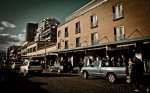
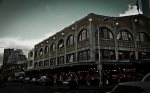
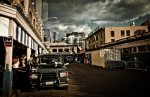
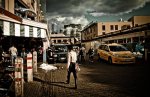
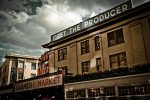
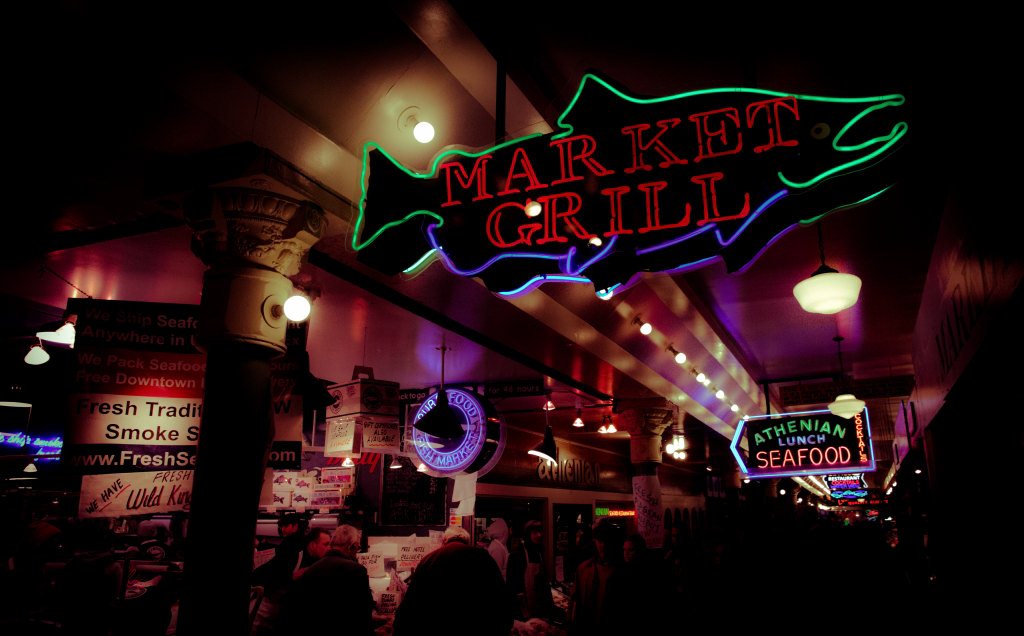
And, we always seemed to return to the Pike Place Market at day’s end, from up above, street side or from down below from the harbor. We seemed to arrive each day within the market’s last hour of hustle and bustle as vendors went about closing up shop – a flurry of activity, enthusiasm, good-natured banter with customers and the mingling and flow of people in movement into their evening. The photos presented here capture the Pike Place Market at day’s beginning and at its day’s end.

Notable among the attractions in the Corner Market (across from the Pike Place Market) is the original Starbuck’s (established in 1971) named after Starbuck in Herman Melville’s Moby Dick. In terms of the novel’s whaling adventures, this setting for a coffeehouse Starbuck would frequent is appropriate.  The coffeehouse is a short twenty-minute climb up from the harbor piers of Elliot Bay to its location above the harbor, looking out onto the bay. This original Starbucks is the point from which the Starbucks’ empire has grown and it’s a company that has grown equally by way of its service provided as well as by the quality of its coffee. In It’s Not About the Coffee, Howard Behar (former Starbucks vice president) writes about the act of growing Starbucks by way of good leadership that emphasizes the relationship sustained between coffee consumer and service provider (Starbucks’ worker) – the human side of business.

Not only has good leadership and good business grown from this location, but, right across the street the Pike Place Fish Market has become a model for ‘cultural transformation and self-generative learning for organizations of all kinds.’  Their model for transforming an organization from within focuses on empowerment, transforming vision into reality and the conception that any organization has as one of its primary purposes that of making a difference in the world.

And, the business of the day continues, each day … in this very rich starting point … for many good things.

10 Principles of Personal Leadership (from Howard Behar in It’s Not About the Coffee – Leadership Principles from Life at Starbucks)

  1. Know Who You Are: Wear One Hat
  2. Know Why You’re Here: Do It Because It’s Right, Not Because It’s Right for Your Resume
  3. Think Independently: The Person Who Sweeps the Floor Should Choose the Broom
  4. Build Trust: Care, like You Really Mean It
  5. Listen for the Truth: The Walls Talk
  6. Be Accountable: Only the Truth Sounds like the Truth
  7. Take Action: Think Like a Person of Action, and Act like a Person of Thought
  8. Face Challenge: We Are Human Beings First
  9. Practice Leadership: The Big Noise and the Still, Small Voice
  10. Dare to Dream: Say “Yes,” the Most Powerful Word in the World

Quotes to Inspire – (1) “To photograph is to confer importance.” – Susan Sontag (2) “To photograph truthfully and effectively is to see beneath the surfaces and record the qualities of nature and humanity which live or are latent in all things.” – Ansel Adams

Listening to – Counting Crows Omaha and Ghost Train; also listening to David Gray’s Shine.

By Way of Participation

Best Practices - Photography, Canon 60D, Canon Camera, Canon Lens, Light Intensity, Night, Photography & Conceptualizing Beauty, Project 365 - Photo-a-day, Spring, Still Life
Pike Place Market - Neon Signs, Seattle, Washington

Pike Place Market - Neon Signs, Seattle, Washington

Street photography is something described as an audit of an environment that the photographer places him- or herself in. What’s there?  What’s around you?  What’s happening? All are questions that receive answer within the images produced and the street’s narrative is built and understood. If you’re actually photographing what’s happening in the street you’re bound to capture people in the act of whatever it is that they do. The street photography that I’ve looked through most recently is that of the Edmonton photowalk led by Darlene Hildebrand back in October 2011. The cluster of pictures from several photographers on that first Saturday afternoon in October present an audit of Life along Edmonton’s Whyte Avenue in Edmonton’s Old Strathcona area. Everything is captured – architecture (doors, buildings, windows); modes of transportation (cars, buses, trucks, bicycles); there’s a sense of space (that within the street and that which surrounds people, their personal space); there’s the colour and weather of the afternoon. Within most of it there’s the art of human endeavor. Conversely, there’s the defeat of endeavor no longer strived for; there are people broken and lost and at wits-end, the down and out.  They too are captured in street photography. The photograph presented here is one taken from within the Pike Place Market in Seattle. To a certain extent it qualifies as street photography as it presents information about the environment of the market place – what you’ll find and what people are doing. What is surprising is the participatory element – people are tolerant of photographs being taken; it’s a touristy thing to do.  Good. Maybe that’s the thing to think about in street photography – investigating the street by way of participation.

Listening to Bill Mallonee & Vigilantes of Love with She Walks on Roses, Patty Griffin’s Tomorrow Night and Over the Rhine’s Jesus in New Orleans, all from a genius playlist starting with Pierce Pettis’ Everything Matters album.

Quote to Inspire – “Photography takes an instant out of time, altering life by holding it still.” – Dorothea Lange

Elegant Grunge

Best Practices - Photography, Canon 60D, Canon Camera, Canon Lens, Light Intensity, Photography & Conceptualizing Beauty, Project 365 - Photo-a-day, Season, Spring, Still Life

The term ‘grunge’ is something I associate with a photographic style in which elegance of form can be sussed out underneath evidence of decay; the elegance and the decay together are, in their juxtaposition, a thing of beauty. Grunge is also a Seattle term denoting a kind of raw alternative rock music that has its origin in this city. Musically, grunge owns guitar work with heavy distortion, dissonant harmonies and vocals/lyrics that must be sussed out. Grunge lyrics juxtapose angst and apathy of youth’s forward look to the rest of what Life offers; in these lyrics the mean of human condition – yours, mine, his and hers – is presented as something sullied, something confined, yet something that must move forward glimpsing more and more of what Life really is about. The lyrics are also about finding freedom within a sullied, confined life. The music and lyrics are the raw energy and angst in response to the experience of disillusionment and one’s discovering personally an identity in the mean of human condition.  Together, the grunge music and lyrics expose the elegance and beauty found within our sullied human condition.

The following Seattle photographs were taken on the last leg of the Seattle underground tour, an object of grunge – form and decay juxtaposed.  SAM’S was no doubt a store or bar or restaurant; the signage seems to associate to the fifties or sixties in style and was bulb lit rather than a neon sign.

Listening to Grunge – Nirvana’s Smells Like Teen Spirit, Joan Osborne’s celebrated song about the human mean, One of Us and Alice in Chains’ Heaven Beside You.

Quotes to Inspire – (1) “A great photograph is one that fully expresses what one feels, in the deepest sense, about what is being photographed.” – Ansel Adams (2) “Don’t shoot what it looks like. Shoot what it feels like.” – David Alan Harvey

Windblown Veils of Rain – Across Elliot Bay

Canon 60D, Canon Camera, Canon Lens, Canon Live View, Light Intensity, Photography & Conceptualizing Beauty, Project 365 - Photo-a-day, Season, Spring, Still Life, Weather
Veils of Rain, Elliot Bay - Seattle, Washington

Veils of Rain, Elliot Bay - Seattle, Washington

I spent most of last week on break, in and around Seattle, Washington. On Sunday, when we returned to Edmonton, my youngest brother asked me, “Why Seattle?” And, we let him know that our destination could just as easily have been New York, Cancun, San Francisco, the Utah mountains or St. John’s, Newfoundland. In any locale wherever we were our time would have been about chasing light in new and unfamiliar terrain and I could not have done any better than I have here, to look from east to west across Elliot Bay from Seattle’s Pike Place Market and to capture these windblown veils of rain as they mingle creating layers of sunlight, revealing landscape layers behind them. Seattle suits my interest because the landscape, weather and light are similar to that found on Vancouver Island where we’ve spent most of our summers with Mom and Dad, brothers, my grandparents and extended family. And, it has been years since I’ve been to Seattle with my family. In the time between visits, the nearby town of Forks, Washington has featured as location to Stephenie Meyer’s Twilight saga, a set of novels that work to establish social mores among today’s teens, something that Jane Austen was doing with her narratives – helping young adults make good decisions in their lives. While we certainly could have gone out to Forks, we didn’t. The opportunity to stay put in Seattle and chase light with camera in hand ranked equally in importance to taking in other attractions.

Listening to a genius playlist surrounding the starting song from City of Angels, Angel by Sarah McLachlan; other songs include Alanis Morrissette’s Uninvited, Sheryl Crow’s Strong Enough, Round Here by the Counting Crows and Dido’s Thank You.

Quote to Inspire – “There is only you and your camera.  The limitations in your photography are in yourself, for what we see is what we are.” – Ernest Haas

About Photography & B-Side Images

Canon 60D, Canon 70-200 mm 2.8 IS L Series Lens, Canon Camera, Canon Lens, Canon Live View, High Dynamic Range (HDR), Photography & Conceptualizing Beauty, Project 365 - Photo-a-day, Still Life, Vehicle, Winter

If you’ve been around the internet in the past five years, consideration of what comprises a perfect average day has surfaced as a means of designing one’s day so that key features in one’s day are found and recognized, so that Life-long goals are actualized and so that people recognize and master control over what happens within their days rather than being mere do-bodies, going from bed to work and back again with little awareness of time, values, meaning and effort, all of which are invested in each day. For me, what to do about photography and pursuing each next, best picture has been the question of the day … through many months. Photography is an activity that you make time for, an activity that you fit into your day, an activity that must, in precedence, rank equally to other activities in your day if you’re to find successes with it. It’s about photographing things you like to photograph, things you’re interested in. It’s about photographing things you don’t normally have access to in your day-to-day existence. It’s about capturing unique qualities in your subject that you and others may perhaps never find again. And, it’s about recognizing the beauty in things and photographing them. In Susan Sontag terms photography is about appropriating and making the thing photographed, yours.  Photography is not an activity easily engaged in. Often the timeframe from image capture through to print and presentation is a separation of tasks that involves days, weeks, months and as I’m still finding, it may involve years. It is work and it is cumulative work – seeing more and more of what the image can become. It is an endeavor engaged in primarily because the print outcome is reward; what is produced is a kind of manna for the viewer to feast upon. In the subjects photographed, while there are seasons and changes we pass through, what’s also beginning to surface as more photographs are created is the commonality or mean of existence, the fundamentals that we need to live and thrive.  And, I note my good fortune in not being fully exposed to lives lived in the absence of these basic ingredients of Life.

The photographs presented here are the other photographs, the b-side images that were not ones selected to tackle consideration of a single theme or idea or subject.  What’s interesting, though, is the repetition of what is subject within photographs – it’s beginning to reveal commonality among our human needs.

Listening to Young the Giant’s Cough Syrup, (a second night’s acclimatization to the tune), Ulrich Schnauss’ Passing By (from Elizabethtown Soundtrack – vol. 2), the Propellerheads’ Take California, Tricky’s Hell Is Around the Corner, Supreme Beings of Pleasure’s Strangelove Addiction, Moby’s Porcelain and the Gotan Project’s Santa Maria (Del Buen Ayre).

Quote to Inspire – Photography, like alcohol,  should only be allowed to those who can do without it.” – Walter Sickert

Tougher & Last Man Standing

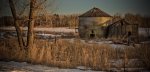
Barn, Canon 60D, Canon 70-200 mm 2.8 IS L Series Lens, Canon Camera, Canon Lens, Canon Live View, Farm, High Dynamic Range (HDR), Photoblog Intention, Photography & Conceptualizing Beauty, Project 365 - Photo-a-day, Season, Spring, Still Life, Vehicle, Vehicle Restoration, Winter
Fifties Flatdeck Truck - Nampa, Alberta

Fifties Flatdeck Truck - Nampa, Alberta

A few things make today a tougher go – not the legitimate student response to spring’s arrival and the fever it’s engendering, nor is it those minds that recognize that their attitudes are blocked, stalemated or closed with the past six months of winter’s interior Life at home and school; at this time of year openness in perception, thought and attitude itches in angst to break free of winter’s constraints of living.  These are all within the arena of Life work in early spring in High Level, Alberta.

At this time of year, it’s too easy to say the wrong thing. It’s too easy to get caught-up in oneself and one’s endeavors. It’s too easy to neglect where one’s care needs legitimate directing.  This season is one in which humour can get you into serious trouble while also being a source of tremendous healing and celebration.  It’s a time of year when it’s good to have a bonfire that is shared among others, a bonfire that extends the day into the wee hours of the night.  It’s a time when strength of body and strength of mind carry you forward into this next season that is spring.  At such a bonfire it’s good to have a keeper of the fire, the last man standing for when the last ember dies, someone we know who will see the night through on our behalf when we find that we should direct ourselves home and to sleep.  And, perhaps that’s it, the toughest part of today is that of helping one’s body overcome extended wakefulness as the season changes from winter to spring.

The photograph presented here is that of a late fifties flat-deck truck in Nampa, Alberta.  In Nampa the historical-agricultural museum is in the process of re-locating.  So, farming equipment/implements, vehicles, train cars and buildings are shifting location.  Until the new site is completed these items remain scattered throughout Nampa.  This flat-deck truck sits in someone’s backyard alongside other vehicles and looks to be in readiness for use. This truck has seen perhaps fifty or so years of service and its structure still has integrity.  It seems to be one of the last vehicles standing and seems to have strength associated with preserved shape and ability to function.  Its look is that which we’d find in the wizened face, that face of the last man standing – the keeper of the fire – when we need to direct ourselves to sleep.

Listening to Over the Rhine’s Spark, Joseph Arthur’s In the Sun (with Michael Stipe) and U2’s One;  other songs have included Eric Angus Whyte’s Beggars and Buskers (of Belfast), Liz Longley’s Free and the Steve Miller Band’s Rock’n Me.  My daughter has had me download Young the Giant’s Cough Syrup and Kelly Clarkson’s Stronger (What Doesn’t Kill You);  Demi Lovato’s Skyscraper has also received download tonight.

Quotes to Inspire –  (1) “If I knew how to take a good photograph, I’d do it every time.” –  Robert Doisneau; and, (2) “If I have any ‘message’ worth giving to a beginner it is that there are no short cuts in photography.” – Edward Weston.

That Old, Disused Farmhouse – Skulking Around Former Times

Canon 60D, Canon 70-200 mm 2.8 IS L Series Lens, Canon Camera, Canon Lens, Canon Live View, Farm, Farmhouse, Home, Homestead, Light Intensity, Photography & Conceptualizing Beauty, Podcast, Project 365 - Photo-a-day, Shuttertime with Sid and Mac, Spring, Still Life, Winter

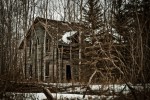
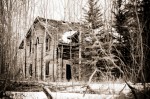
The farming region I knew as a boy is that which lies west of Ponoka, Alberta – land homesteaded and broken by people who received land grants following their participation in the Canadian war effort during the second world war. Perhaps participation in war, an ordeal survived and won as a collective has made this clustering of soldiers who became farmers quite pragmatic with regard to helping each other out, and particularly so in relation to disused items. Word of an item no longer used will make its way around the region and the person who can use that item will connect with its current possessor. Terms will be agreed to, cash or services in kind will trade hands and the item will be put to good use. While I have seen such transaction occur with many smaller things – cars, trucks, tractors and farming equipment – the photograph presented here reminds me that in two instances I have seen houses as big as this one transported to new locations, set on new foundations and made use of.

The photographs draw me back to my childhood as a boy in the sixties and skulking around the old, disused farm house across the way from my aunt and uncle’s home near Rimbey, Alberta. My exploration of the house revealed a wooden basement foundation instead of a foundation made of cement (what I was used to). It also revealed a dirt basement floor and seemed to be used mainly as a cold cellar for canned goods and the like. My cousin and I explored other houses no longer used; they seemed to have been left medias res (in the middle of things).  Beds and dressers would be left in rooms.  The rooms would usually have painted walls, but in some wallpaper revealed tastes of a former time.  Some homes served much like sheds these days where old furniture or clothes that have gone out of fashion can be stored.  Some had floors rotted through, the result of annual flooding. Some homes revealed children’s toys of a former time. Exploration always revealed the lives lived within the four walls of the house.

Moving forward – I wonder about the house in the photograph.  It is huge.  It is well-made.  It still retains its structure. The plant growth surrounding the house cannot be more than fifteen years in the growing. So, whoever left it made their departure quite recently in terms of the age of houses. Thinking back to houses I’ve seen moved, I wonder about why similar efforts have not been taken to add new life and new purpose to this farm house. Surely it could have been used a while back as a house to help a young family starting out.  And, perhaps more importantly, doing so would have been a part of a farm family’s moving forward and their de-cluttering from what is no longer needed of the past. The curiosity is that there is something that holds this house in its present location … and that’s where its story is.

Listening to Shuttertime with Sid and Mac episode XXI and good discussion on the practices associated with landscape photography; I continue to be impressed by the opinions, persuasion, logic and knowledge these two Edmonton-based, Canon photographers possess.   Dave Matthews Band’s Steady As We Go and Dreamgirl, David Gray’s This Year’s Love, Patty Griffin’s Rain, Dar Williams’ The One Who Knows and Mindy Smith’s One More Moment surface as music holding my attention.

Quote to Inspire – “In my view you cannot claim to have seen something until you have photographed it.” – Emile Zola