5 Truths Reconnecting You to Photography (and Your Camera)

Best Practices - Photography, Cameras as Meaning Makers, Journaling
Returning to Photography and my Camera Bag.

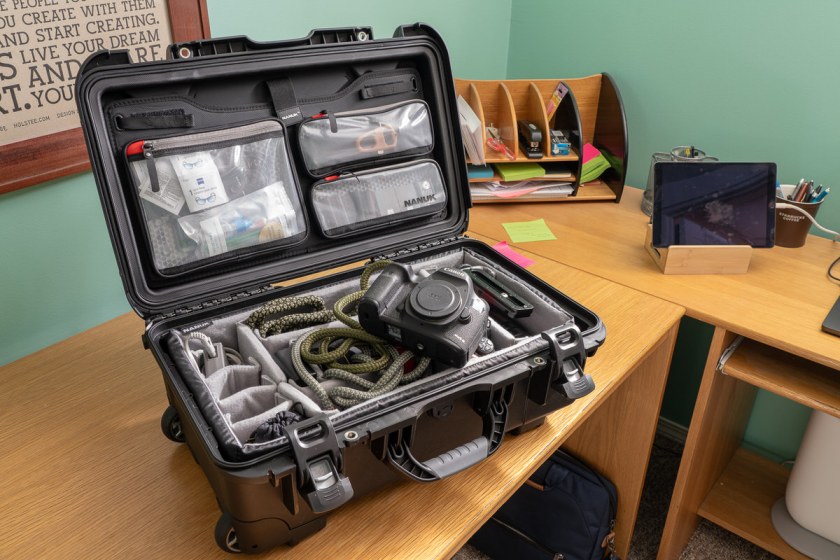
The camera bag sits in the corner, its leather cool to the touch. Weeks have passed — maybe months, maybe years — since you last heard the shutter click. The battery is dead. The SD card is a graveyard of half-finished ideas. Meanwhile, the smartphone in your pocket vibrates incessantly, a black mirror that demands your attention every waking moment.

Ruth Guest has seen this pattern countless times. A photographer with an MSc in Cyberpsychology, she has spent her career studying how technology shapes our behaviour, identity, and sense of self — and has lived it. “I spent years shooting high-end fashion and portraits across Europe, feeling absolutely nothing,” she says. After a failed tech startup and a bruising corporate job, her DSLR gathered dust for four years.

“Your camera isn’t broken,” she says. “Your relationship with it is. To come back, we have to stop looking at the glass and start looking at the soul.”


1 – The Problem Isn’t Your Eye — It’s Your ‘Why’

When creative momentum stalls, the instinct is to look outward. We ask how to improve, buy a sharper lens, or chase new post-processing techniques. But ‘how’ is a technical question that masks a deeper void. The only question that matters is: “Why did you stop?”

Photography often loses its appeal when it shifts from a practice of love to a performance for validation — shooting for likes or to meet a client’s expectations. When external rewards dry up, the internal engine stalls. The longer the camera sits in the drawer, the harder it becomes to close that gap.

No amount of new gear will fix this. Until you name the real blockers — fear, resentment, exhaustion — you won’t want to shoot again. The problem was never your technique or your eye. You simply lost sight of why you picked up the camera in the first place.


2 – You Are Caught in the ‘Mass Drift.’

Every time you unlock your phone, you are flooded with other people’s visions, aesthetics, and curated lives. In cyberpsychology, this relentless ‘identity performance’ is well documented — and it quietly erodes your sense of self.

Guest calls this the Mass Drift. When your eye is saturated with a billion other images, your unique way of seeing begins to fade. “The algorithm has become your creative director,” she says, “… even though you never hired it.” “It is not neutral — it is,” as she puts it, “… a parasitic creative director reshaping what you think your work and your life should look like.”

The drift isn’t just about taking uninspired photos. It is a drift from yourself. Your visual voice hasn’t vanished; it is buried. The first step toward recovery is a deliberate Media Fast — closing the black mirror long enough to let your own visual hunger return.


3 – Your Camera is a Mirror, Not a Window

We tend to think of photography as looking outward at the world. In reality, the camera points back at us. The subjects you choose, the light you seek, and the themes you return to — all of it reflects your internal landscape: your desires, fears, and values.

Guest discovered this through what she calls an Archive Audit, a process of reviewing her own body of work. She noticed she had been obsessively photographing couples during a painful breakup, then shifted to themes of friendship and coming-of-age when her brother emigrated. She hadn’t consciously chosen these subjects — her subconscious was using the camera to process her life.

She also identifies a related pattern: using the Camera as Armour, placing the lens between yourself and a world that feels too overwhelming to face directly. An honest Emotion Audit — asking what you were feeling when you took your best shots — can transform photography from a passive hobby into a vital, truthful practice.


4 – The ‘Contained Practice:’ Addition by Subtraction

When we feel creatively stagnant, the reflex is to add: a new location, a faster sensor, or a different genre. Guest argues the opposite. The secret to restoring the eye is constraint.

She calls it the Contained Practice, governed by the 1-1-1 Rule: one camera, one lens, one film stock. Strip away the burden of choice, and you eliminate gear fixation, freeing the brain to engage with the world in front of it.

For Guest, this meant selling all her digital equipment and buying a secondhand 1983 Leica without a light meter or backup. “It wasn’t the smart choice,” she admits, “but it was necessary.” That limitation forced her into what she describes as the Three Stages of Seeing — a discipline of noticing the world before even raising the camera.

For those feeling overwhelmed, she offers the 3-30 Rule as a starting point: give yourself three minutes to find a shot within a 30-foot radius, or limit yourself to three frames in 30 minutes. Less equipment, less time, fewer frames — and, paradoxically, more of yourself in every one.


5 – Shooting to ‘Escape Death:’ Finding Your True Philosophy

The deepest reason we take photographs is rarely spoken aloud. We are, Guest argues, trying to escape death — leaving proof that we were here, that we saw things, and that our particular way of seeing was ours and no one else’s.

This is the photography philosophy that outlasts every trend. When you begin to see your body of work as a legacy — a testament to your existence — the pressure to perform for an audience quietly dissolves. The practice ceases to be something you do and becomes an honest extension of how you live.


The Camera Has Waited Long Enough

Returning to photography is not about mastering technical settings. It is about stepping out of the Mass Drift and back into an honest, personal practice — finally deciding that you are done waiting to live the life you truly want.

Your love for the craft is still there, tucked away in that bag with the dead battery and the dusty lens. Before you pick it up again, Guest leaves you with one last, uncomfortable question.

What does your current body of work — or its absence — reveal about who you are right now?

The camera has waited long enough. It is time to see again.

Sources / Further Reading This article was inspired by Neale James’s interview with Ruth Guest on the Photowalk podcast. The frameworks and concepts discussed here are drawn from her work; her returning-to-photography workbook is available at ruthguest.com/returning-to-photography-workbook.

Quote to Inspire / Consider: borrowed from the Photowalk because it is relevant within the podcast, to the work of Ruth Guest and for what our photography is about. “What you have caught on film is captured forever. It remembers little things long after you’ve forgotten everything – Aaron Siskind.”

Listening to: Hollow Coves’ ‘Pictures,’ and Roo Panes’ ‘Message to Myself.’

The Masterpiece Mandate & Unexpected Lessons in Visual Storytelling

Cameras as Meaning Makers, visual storytelling

Most of us have experienced the quiet tyranny of the ‘masterpiece’ mandate—that exhausting belief that every press of the shutter must produce a perfect hero shot. We work hard to master the first element: the technical control of our cameras, light, and exposure. Then we add the second—a genuine artistic vision, where composition, balance, and the principles of design are applied thoughtfully and deliberately. Yet, even when both are present, something can still be missing. The image might be successful or even beautiful, but it doesn’t quite draw you in. It doesn’t leave a question hanging in the air or push the viewer’s imagination towards a next thought. That elusive quality—call it story, resonance, or simply the third element—is what separates a well-made photograph from one that stays with you. And here’s what I’ve come to believe: it rarely arrives in a single frame. It exists in the series.

Curation in Long-form Visual Storytelling

When images are arranged into a series, something fundamental changes. The individual frame is no longer expected to bear all the weight on its own. In long-form visual storytelling, a modest or quietly beautiful image — one that might seem unremarkable alone — finds its place within the larger rhythm. Its goal isn’t to surprise; it’s to breathe, to pace, to link what came before with what’s to come.

Photo essays showcase this beautifully. Not every shot needs to be a ‘breathtaking’ moment. When a series of photos are carefully arranged, something emerges — a perspective, a feeling, a narrative thread that none of the individual images could create alone. The collection as a whole gains that third element quality. A few quiet moments, gathered with purpose, become something that lingers.

Curation Part I – Culling (Selecting & Excluding)

High-volume shooting is straightforward; high-quality curation is genuinely difficult. You might return from a shoot with thousands of images, narrow them down to one hundred, and still face a challenge. To a viewer, one hundred images aren’t a story — they’re overwhelming. The message gets lost in the volume.

The true craft lies in what some might call the art of the cull. It’s about discovering the unifying element in your work and — this is the challenging part — removing even strong images when they don’t support the larger story. This is the moment your photographic voice begins to emerge. Not only through the colours you select or the contrast you establish during editing, but also in the silence of the frames you omit. What you choose not to show is just as expressive as what you do.

Practical tools like cataloguing and keywording in Lightroom help manage the chaos, but they’re part of a deeper process — the intentional, almost curatorial act of shaping a shoot into a clear path that the viewer can follow and connect with.

Curation Part II – Sequencing & Image Relationships

If culling is about exclusion — determining what is essential — then sequencing concerns relationships. It is the photographer’s deliberate choice of order, and that choice alters everything. The same ten images arranged differently can tell entirely new stories, evoke different emotional journeys, or even lead viewers to different conclusions. Sequencing is where the photographer’s influence is most noticeable.

A key part of good sequencing is understanding that not every strong image advances the story — and not every weak one should be removed. This is perhaps the most counterintuitive lesson in visual storytelling: narrative tension depends on the difficult moment, the frame where things aren’t falling into place, and where the outcome remains genuinely uncertain.

Consider a series of photographs capturing a building fire. Eight striking images of firefighters bringing a blaze under control might be visually compelling — but they don’t tell a story. The photo that truly stands out, the one that makes those final frames feel like a genuine reward, is the one most photographers might overlook: exhausted firefighters, soaked and resting, with the blaze still raging behind them. That moment of apparent failure is what gives the resolution its significance. Without it, the victory lacks its depth.

This principle goes well beyond dramatic events. A wedding, a colleague’s farewell, a school year, a family reunion — any story about people and time benefits from the same honesty. An engaging visual story doesn’t just highlight successes; it also shows what was overcome to reach them. That’s what makes a viewer feel something rather than just see something. Whether the story is dramatic or everyday, the principle still applies.

What Stories to Tell – Uncharted Visual Territory vs. What You Have Around You

There is a tendency in our craft to pursue uncharted visual territory — to believe that impact exists somewhere out there, waiting to be uncovered if only we travel far enough or find the right subject. However, scope doesn’t define meaning. A small patch of ground, approached with genuine curiosity and dedication, can hold as much narrative richness as a cross-continental journey. This could be called the 360 approach — examining a subject from every possible angle, through changing light, challenging weather, and the slow passage of seasons.

Whether you’re documenting a rodeo or watching the light shift across your backyard over a year, the core feeling comes from the same place: the act of return. Again and again, with fresh eyes and an open mind. It is that commitment — not the subject itself — that gives a work its depth.

Cameras as Meaning Makers

This year, I have approached visual storytelling as a practice to genuinely explore — not just to continue. In doing so, I’ve made a quiet discovery: I already do this. I gather a series of images rather than single frames. I revisit subjects over months and seasons. I regularly create slideshows and photobooks, selecting and sequencing images into narratives I want to share with others. What I hadn’t always done was hold onto the difficult frames — the ones where things weren’t working — but I now see how those images can be exactly what a story needs to breathe.

What strikes me most, looking back, is where the meaning has truly existed. It is not found in the pursuit of the masterpiece, but in the act of returning – to the subject, to the work, to the people the story involves. While the technically perfect shot can hold narrative or meaning, it is more often found in a series of photos. Meaning is held in the collaborative experience of watching or viewing a finished narrative together and recognizing something genuine within it. That shared moment of recognition — what might be called collaborative wonderment — may be the closest thing to the third element that I can point to.

Visual storytelling has become something I enjoy, and I imagine many of you are already involved in it too, maybe without even calling it that. I’d love to hear — what visual stories are you creating with your camera, and where are you finding the meaning within them?

Quotes to Inspire/Consider

“Photography for me is not looking, it’s feeling. If you can’t feel what you’re looking at, then you’re never going to get others to feel anything when they look at your pictures (Don McCullin).”

“Photography takes an instant out of time, altering life by holding it still (Dorothea Lange).”

“Photography is a small voice, at best, but sometimes one photograph, or a group of them, can lure our sense of awareness (W. Eugene Smith).”

“If a photographer cares about the people before the lens and is compassionate, much is given. It is the photographer, not the camera, that is the instrument (Eve Arnold).”

“A great photograph is one that fully expresses what one feels, in the deepest sense, about what is being photographed (Ansel Adams).”

Listening to – Hollow Coves’ ‘Pictures,’ Roo Panes’ ‘A Message to Myself,’ Harry Chapin’s ‘W-O-L-D’,’ Van Morrison’s ‘Behind the Ritual,’ Bob Dylan’s ‘Last Thoughts on Woody Guthrie,’ and with the passing of Motorhead’s guitarist Phil Campbell, Motorhead’s version of Bowie’s ‘Heroes.’