


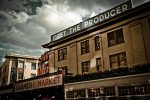

Seattle’s Pike Market Place

Best Practices - Photography, Canon 60D, Canon 70-200 mm 2.8 IS L Series Lens, Canon Camera, Canon Lens, Canon Live View, Light Intensity, Photography & Conceptualizing Beauty, Project 365 - Photo-a-day, Spring, Still Life, Sunrise

One feature of our Seattle trip was we were active throughout each day walking, travelling and walking some more. Being active helped us maintain body rhythms and daily routine. We were usually up at seven and on our way somewhere by eight. Breakfast, most mornings, was at the Andaluca Restaurant, a restaurant attached to Seattle’s Mayflower Park Hotel. These morning meals were sumptuous – Brioche French Toast, Hazelnut Waffles, Steel Cut Scottish Oats and Banana Pancakes; a side of pepper bacon was added twice. Coffee was made as coffee should be and our orange juice was fresh. From this restaurant we’d head out to Seattle, its sights and attractions.

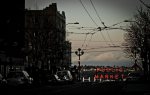
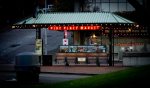
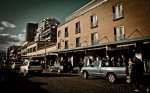
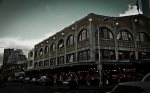
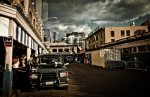
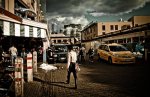
And, we always seemed to return to the Pike Place Market at day’s end, from up above, street side or from down below from the harbor. We seemed to arrive each day within the market’s last hour of hustle and bustle as vendors went about closing up shop – a flurry of activity, enthusiasm, good-natured banter with customers and the mingling and flow of people in movement into their evening. The photos presented here capture the Pike Place Market at day’s beginning and at its day’s end.

Notable among the attractions in the Corner Market (across from the Pike Place Market) is the original Starbuck’s (established in 1971) named after Starbuck in Herman Melville’s Moby Dick. In terms of the novel’s whaling adventures, this setting for a coffeehouse Starbuck would frequent is appropriate.  The coffeehouse is a short twenty-minute climb up from the harbor piers of Elliot Bay to its location above the harbor, looking out onto the bay. This original Starbucks is the point from which the Starbucks’ empire has grown and it’s a company that has grown equally by way of its service provided as well as by the quality of its coffee. In It’s Not About the Coffee, Howard Behar (former Starbucks vice president) writes about the act of growing Starbucks by way of good leadership that emphasizes the relationship sustained between coffee consumer and service provider (Starbucks’ worker) – the human side of business.

Not only has good leadership and good business grown from this location, but, right across the street the Pike Place Fish Market has become a model for ‘cultural transformation and self-generative learning for organizations of all kinds.’  Their model for transforming an organization from within focuses on empowerment, transforming vision into reality and the conception that any organization has as one of its primary purposes that of making a difference in the world.

And, the business of the day continues, each day … in this very rich starting point … for many good things.

10 Principles of Personal Leadership (from Howard Behar in It’s Not About the Coffee – Leadership Principles from Life at Starbucks)

  1. Know Who You Are: Wear One Hat
  2. Know Why You’re Here: Do It Because It’s Right, Not Because It’s Right for Your Resume
  3. Think Independently: The Person Who Sweeps the Floor Should Choose the Broom
  4. Build Trust: Care, like You Really Mean It
  5. Listen for the Truth: The Walls Talk
  6. Be Accountable: Only the Truth Sounds like the Truth
  7. Take Action: Think Like a Person of Action, and Act like a Person of Thought
  8. Face Challenge: We Are Human Beings First
  9. Practice Leadership: The Big Noise and the Still, Small Voice
  10. Dare to Dream: Say “Yes,” the Most Powerful Word in the World

Quotes to Inspire – (1) “To photograph is to confer importance.” – Susan Sontag (2) “To photograph truthfully and effectively is to see beneath the surfaces and record the qualities of nature and humanity which live or are latent in all things.” – Ansel Adams

Listening to – Counting Crows Omaha and Ghost Train; also listening to David Gray’s Shine.
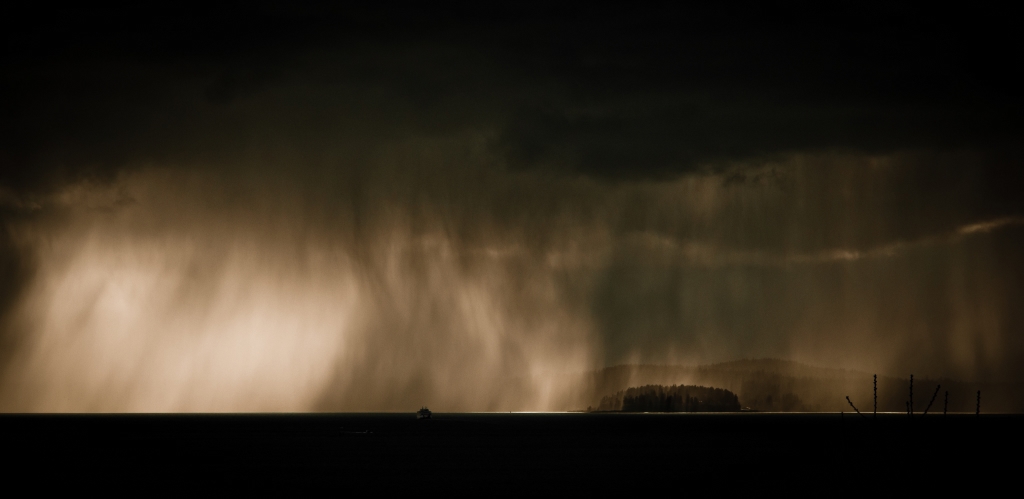
Windblown Veils of Rain – Across Elliot Bay

Canon 60D, Canon Camera, Canon Lens, Canon Live View, Light Intensity, Photography & Conceptualizing Beauty, Project 365 - Photo-a-day, Season, Spring, Still Life, Weather
Veils of Rain, Elliot Bay - Seattle, Washington

Veils of Rain, Elliot Bay - Seattle, Washington

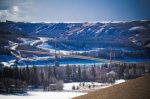
I spent most of last week on break, in and around Seattle, Washington. On Sunday, when we returned to Edmonton, my youngest brother asked me, “Why Seattle?” And, we let him know that our destination could just as easily have been New York, Cancun, San Francisco, the Utah mountains or St. John’s, Newfoundland. In any locale wherever we were our time would have been about chasing light in new and unfamiliar terrain and I could not have done any better than I have here, to look from east to west across Elliot Bay from Seattle’s Pike Place Market and to capture these windblown veils of rain as they mingle creating layers of sunlight, revealing landscape layers behind them. Seattle suits my interest because the landscape, weather and light are similar to that found on Vancouver Island where we’ve spent most of our summers with Mom and Dad, brothers, my grandparents and extended family. And, it has been years since I’ve been to Seattle with my family. In the time between visits, the nearby town of Forks, Washington has featured as location to Stephenie Meyer’s Twilight saga, a set of novels that work to establish social mores among today’s teens, something that Jane Austen was doing with her narratives – helping young adults make good decisions in their lives. While we certainly could have gone out to Forks, we didn’t. The opportunity to stay put in Seattle and chase light with camera in hand ranked equally in importance to taking in other attractions.

Listening to a genius playlist surrounding the starting song from City of Angels, Angel by Sarah McLachlan; other songs include Alanis Morrissette’s Uninvited, Sheryl Crow’s Strong Enough, Round Here by the Counting Crows and Dido’s Thank You.

Quote to Inspire – “There is only you and your camera.  The limitations in your photography are in yourself, for what we see is what we are.” – Ernest Haas

About Photography & B-Side Images

Canon 60D, Canon 70-200 mm 2.8 IS L Series Lens, Canon Camera, Canon Lens, Canon Live View, High Dynamic Range (HDR), Photography & Conceptualizing Beauty, Project 365 - Photo-a-day, Still Life, Vehicle, Winter

If you’ve been around the internet in the past five years, consideration of what comprises a perfect average day has surfaced as a means of designing one’s day so that key features in one’s day are found and recognized, so that Life-long goals are actualized and so that people recognize and master control over what happens within their days rather than being mere do-bodies, going from bed to work and back again with little awareness of time, values, meaning and effort, all of which are invested in each day. For me, what to do about photography and pursuing each next, best picture has been the question of the day … through many months. Photography is an activity that you make time for, an activity that you fit into your day, an activity that must, in precedence, rank equally to other activities in your day if you’re to find successes with it. It’s about photographing things you like to photograph, things you’re interested in. It’s about photographing things you don’t normally have access to in your day-to-day existence. It’s about capturing unique qualities in your subject that you and others may perhaps never find again. And, it’s about recognizing the beauty in things and photographing them. In Susan Sontag terms photography is about appropriating and making the thing photographed, yours.  Photography is not an activity easily engaged in. Often the timeframe from image capture through to print and presentation is a separation of tasks that involves days, weeks, months and as I’m still finding, it may involve years. It is work and it is cumulative work – seeing more and more of what the image can become. It is an endeavor engaged in primarily because the print outcome is reward; what is produced is a kind of manna for the viewer to feast upon. In the subjects photographed, while there are seasons and changes we pass through, what’s also beginning to surface as more photographs are created is the commonality or mean of existence, the fundamentals that we need to live and thrive.  And, I note my good fortune in not being fully exposed to lives lived in the absence of these basic ingredients of Life.
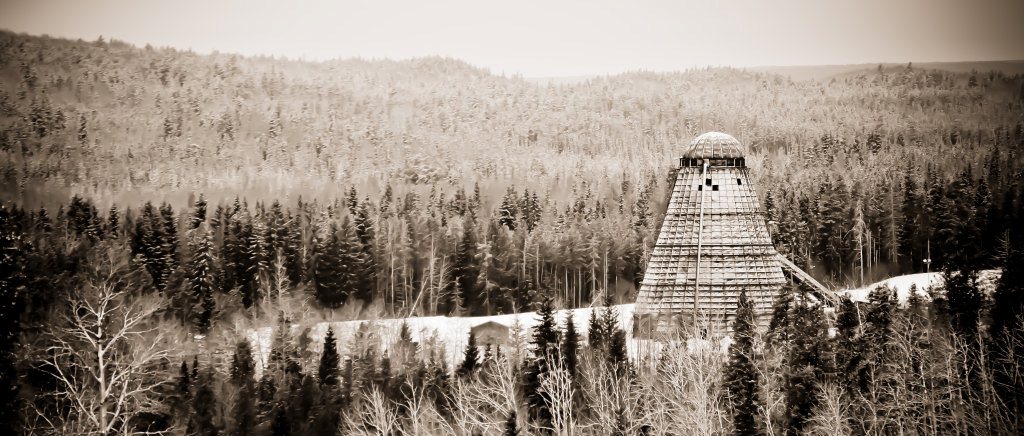
The photographs presented here are the other photographs, the b-side images that were not ones selected to tackle consideration of a single theme or idea or subject.  What’s interesting, though, is the repetition of what is subject within photographs – it’s beginning to reveal commonality among our human needs.

Listening to Young the Giant’s Cough Syrup, (a second night’s acclimatization to the tune), Ulrich Schnauss’ Passing By (from Elizabethtown Soundtrack – vol. 2), the Propellerheads’ Take California, Tricky’s Hell Is Around the Corner, Supreme Beings of Pleasure’s Strangelove Addiction, Moby’s Porcelain and the Gotan Project’s Santa Maria (Del Buen Ayre).

Quote to Inspire – Photography, like alcohol,  should only be allowed to those who can do without it.” – Walter Sickert

Tougher & Last Man Standing

Barn, Canon 60D, Canon 70-200 mm 2.8 IS L Series Lens, Canon Camera, Canon Lens, Canon Live View, Farm, High Dynamic Range (HDR), Photoblog Intention, Photography & Conceptualizing Beauty, Project 365 - Photo-a-day, Season, Spring, Still Life, Vehicle, Vehicle Restoration, Winter
Fifties Flatdeck Truck - Nampa, Alberta

Fifties Flatdeck Truck - Nampa, Alberta

A few things make today a tougher go – not the legitimate student response to spring’s arrival and the fever it’s engendering, nor is it those minds that recognize that their attitudes are blocked, stalemated or closed with the past six months of winter’s interior Life at home and school; at this time of year openness in perception, thought and attitude itches in angst to break free of winter’s constraints of living.  These are all within the arena of Life work in early spring in High Level, Alberta.

At this time of year, it’s too easy to say the wrong thing. It’s too easy to get caught-up in oneself and one’s endeavors. It’s too easy to neglect where one’s care needs legitimate directing.  This season is one in which humour can get you into serious trouble while also being a source of tremendous healing and celebration.  It’s a time of year when it’s good to have a bonfire that is shared among others, a bonfire that extends the day into the wee hours of the night.  It’s a time when strength of body and strength of mind carry you forward into this next season that is spring.  At such a bonfire it’s good to have a keeper of the fire, the last man standing for when the last ember dies, someone we know who will see the night through on our behalf when we find that we should direct ourselves home and to sleep.  And, perhaps that’s it, the toughest part of today is that of helping one’s body overcome extended wakefulness as the season changes from winter to spring.

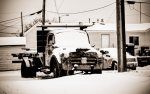
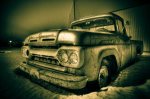
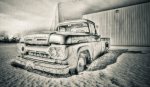
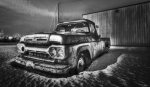
The photograph presented here is that of a late fifties flat-deck truck in Nampa, Alberta.  In Nampa the historical-agricultural museum is in the process of re-locating.  So, farming equipment/implements, vehicles, train cars and buildings are shifting location.  Until the new site is completed these items remain scattered throughout Nampa.  This flat-deck truck sits in someone’s backyard alongside other vehicles and looks to be in readiness for use. This truck has seen perhaps fifty or so years of service and its structure still has integrity.  It seems to be one of the last vehicles standing and seems to have strength associated with preserved shape and ability to function.  Its look is that which we’d find in the wizened face, that face of the last man standing – the keeper of the fire – when we need to direct ourselves to sleep.

Listening to Over the Rhine’s Spark, Joseph Arthur’s In the Sun (with Michael Stipe) and U2’s One;  other songs have included Eric Angus Whyte’s Beggars and Buskers (of Belfast), Liz Longley’s Free and the Steve Miller Band’s Rock’n Me.  My daughter has had me download Young the Giant’s Cough Syrup and Kelly Clarkson’s Stronger (What Doesn’t Kill You);  Demi Lovato’s Skyscraper has also received download tonight.

Quotes to Inspire –  (1) “If I knew how to take a good photograph, I’d do it every time.” –  Robert Doisneau; and, (2) “If I have any ‘message’ worth giving to a beginner it is that there are no short cuts in photography.” – Edward Weston.

That Old, Disused Farmhouse – Skulking Around Former Times

Canon 60D, Canon 70-200 mm 2.8 IS L Series Lens, Canon Camera, Canon Lens, Canon Live View, Farm, Farmhouse, Home, Homestead, Light Intensity, Photography & Conceptualizing Beauty, Podcast, Project 365 - Photo-a-day, Shuttertime with Sid and Mac, Spring, Still Life, Winter

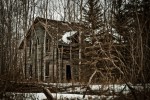
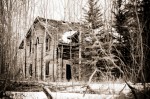
The farming region I knew as a boy is that which lies west of Ponoka, Alberta – land homesteaded and broken by people who received land grants following their participation in the Canadian war effort during the second world war. Perhaps participation in war, an ordeal survived and won as a collective has made this clustering of soldiers who became farmers quite pragmatic with regard to helping each other out, and particularly so in relation to disused items. Word of an item no longer used will make its way around the region and the person who can use that item will connect with its current possessor. Terms will be agreed to, cash or services in kind will trade hands and the item will be put to good use. While I have seen such transaction occur with many smaller things – cars, trucks, tractors and farming equipment – the photograph presented here reminds me that in two instances I have seen houses as big as this one transported to new locations, set on new foundations and made use of.

The photographs draw me back to my childhood as a boy in the sixties and skulking around the old, disused farm house across the way from my aunt and uncle’s home near Rimbey, Alberta. My exploration of the house revealed a wooden basement foundation instead of a foundation made of cement (what I was used to). It also revealed a dirt basement floor and seemed to be used mainly as a cold cellar for canned goods and the like. My cousin and I explored other houses no longer used; they seemed to have been left medias res (in the middle of things).  Beds and dressers would be left in rooms.  The rooms would usually have painted walls, but in some wallpaper revealed tastes of a former time.  Some homes served much like sheds these days where old furniture or clothes that have gone out of fashion can be stored.  Some had floors rotted through, the result of annual flooding. Some homes revealed children’s toys of a former time. Exploration always revealed the lives lived within the four walls of the house.

Moving forward – I wonder about the house in the photograph.  It is huge.  It is well-made.  It still retains its structure. The plant growth surrounding the house cannot be more than fifteen years in the growing. So, whoever left it made their departure quite recently in terms of the age of houses. Thinking back to houses I’ve seen moved, I wonder about why similar efforts have not been taken to add new life and new purpose to this farm house. Surely it could have been used a while back as a house to help a young family starting out.  And, perhaps more importantly, doing so would have been a part of a farm family’s moving forward and their de-cluttering from what is no longer needed of the past. The curiosity is that there is something that holds this house in its present location … and that’s where its story is.

Listening to Shuttertime with Sid and Mac episode XXI and good discussion on the practices associated with landscape photography; I continue to be impressed by the opinions, persuasion, logic and knowledge these two Edmonton-based, Canon photographers possess.   Dave Matthews Band’s Steady As We Go and Dreamgirl, David Gray’s This Year’s Love, Patty Griffin’s Rain, Dar Williams’ The One Who Knows and Mindy Smith’s One More Moment surface as music holding my attention.

Quote to Inspire – “In my view you cannot claim to have seen something until you have photographed it.” – Emile Zola

Twin Lakes – Roadscape

Canon 60D, Canon 70-200 mm 2.8 IS L Series Lens, Canon Camera, Canon Lens, Canon Live View, High Dynamic Range (HDR), Journaling, Light Intensity, Photoblog Intention, Photography & Conceptualizing Beauty, Project 365 - Photo-a-day, Still Life, Weather, Winter
Alberta Highway 35 near Twin Lakes, Alberta

Alberta Highway 35 near Twin Lakes, Alberta

Distances travelled within Canada’s vast landscape are huge. Travel along its roadways demands commitment to best use of drive time between point of origin and destination so you get where you are going and so you enjoy where you got yourself to. Within this travel predicament kinaesthetic awareness of the road counts as much as visual presentation in terms of road familiarity. Curves, drops, bumps and inclines inform you in your travel along the road. Artists depicting the predicament of Canadian travel often poke fun at vacations enjoyed from a car’s interior as the terrain passes by as much as it is something enjoyed at the destination’s endpoint.  A better way to see more of Canada’s landscape is accomplished looking through a camera lens; doing so requires you to stop your vehicle, stow it safely along the roadside, get out of it and interact more substantially with the environment you encounter.

An iconic rendering of Canada’s roadscape is what the image presented here is about. I’ve photographed a portion of the up-and-down incline leading up to Twin Lakes along Alberta’s Highway 35, one hundred and fifty kilometres south from High Level en route toward Edmonton. In distance, the incline covers five kilometres of road surface and rises onto a land mass noted for the temperature change that occurs from bottom of the incline to its crest. In winter a double-digit temperature change can occur and is accompanied by a marked change in weather travelled through. Ascending or descending, driving this incline is a tricky endeavor in winter, something compounded by snow. While one aspect of this image favours the artist’s tongue-in-cheek take on ‘Windshield Time’, the manner in which most Canadians see their Canada rolling past them, the image also recalls lives of former students who as new (and perhaps impatient) drivers were trekking through this bit of terrain on second- or third-ever tries; one bright future ended in a vehicle roll-over. Another life was impacted by partial paralysis.  It’s this portion of road in this image that seems to surprise drivers … even experienced ones. Last November, descending the incline in snow was an activity more akin to skiing than rolling forward in a half-ton truck.

Listening to:  Gillian Welch’s I Dream a Highway from her Time – The Revelator album, Lucinda Williams’ Car Wheels on a Gravel Road from her album of the same name and High and Dry from Radiohead’s The Best of Radiohead.

Quote to Inspire: “No man has the right to dictate what other men should perceive, create or produce, but all should be encouraged to reveal themselves, their perceptions and emotions, and to build confidence in the creative spirit.” ― Ansel Adams

Where Are You Going …?

Barn, Canon 60D, Canon 70-200 mm 2.8 IS L Series Lens, Canon Camera, Canon Lens, Canon Live View, Photoblog Intention, Photography & Conceptualizing Beauty, Project 365 - Photo-a-day, Still Life, Vehicle Restoration, Winter

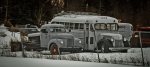
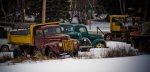
The images I present in this post remind of a time when as a young Dad, I read stories from the Thomas the Tank Engine series to my son and my/our doing so was an enjoyable way to close out each day. Thomas, Percy, Rusty, James et al each had an engineer, each had a conductor, all worked for Sir Topham Hat – each set about to complete a task each day. At the end of each day each engine returned to the engine shed for maintenance and rest. In Sangudo, Alberta, there’s a museum celebrating the vehicles and machinery that were used in the building of the Alaska Highway. Some are scattered within the museum’s yard and some are housed in a roofed shed without walls. The museum has closed and is no longer open to tourists. All vehicles seem to look onto the Alaska Highway they once had a hand in building. The scene is one you might find in a Thomas the Tank Engine story –  vehicles dormant and apparently waiting for a time when they can be re-tasked with new purpose and new life. Curiously, two songs I’m listening to tonight almost personify a state of mind that could lurk, here. One is Dave Matthew’s song Where Are You Going and the other is a Hank William’s song, I’m So Lonesome I Could Cry. Both songs are sung by Martyn Joseph and are found in his Passport Queue album Pq35.

Listening to: Weight of the World, Invisible Angel, Kindness and I Will Follow from Martyn Joseph’s Pq35.

Quote to Inspire: “A family’s photograph album is generally about the extended family—and, often, is all that remains of it.” – Susan Sontag (b. 1933), U.S. essayist. “In Plato’s Cave,” On Photography (1977).

Postponed for Better Days

Canon 60D, Canon 70-200 mm 2.8 IS L Series Lens, Canon Camera, Canon Lens, Canon Live View, High Dynamic Range (HDR), Photoblog Intention, Project 365 - Photo-a-day, Season, Still Life, Winter
Saw Mill - Whitecourt

Saw Mill - Whitecourt

Different economic forces press on the development of Alberta’s natural resources. The fall-out can mean that resource development is postponed for better days. Twenty minutes north from Whitecourt, Alberta, down a long, winding hill into a valley, a sawmill sits in disuse waiting its return to operation. In my northward return drives to High Level through this year, I’ve been meaning to capture this image. On Sunday I found myself with time enough to halt my Nissan Altima along the side of the road and allow myself opportunity for looking through my Canon 70-200 mm F 2.8 lens.

Listening to:  All This Time, Liberal Backslider and This Is Us from Martyn Joseph’s Thunder and Rainbows album on my return journey to High Level.  My trip southward to Edmonton allowed for a six hour listen to Susan Sontag’s collection of essays in an audiobook version of On Photography, a good articulation and wrestling with photography issues.

Quote to Inspire – “To photograph is to appropriate the thing photographed. It means putting oneself into a certain relation to the world that feels like knowledge—and, therefore, like power. A now notorious first fall into alienation, habituating people to abstract the world into printed words, is supposed to have engendered that surplus of Faustian energy and psychic damage needed to build modern organic societies. But print seems a less treacherous form of leaching out the world, of turning it into a mental object, than photographic images, which now provide most of the knowledge people have about the look of the past and the reach of the present. What is written about a person or an event is frankly an interpretation, as are handmade visual statements, like paintings and drawings. Photographed images do not seem to be statements about the world so much as pieces of it, miniatures of reality that anyone can make or acquire.” – Susan Sontag (b. 1933), U.S. essayist. “In Plato’s Cave,” On Photography, Farrar, Straus (1977).

B-Sides, Photographs that Linger

Barn, Best Practices - Photography, Canon 60D, Canon 70-200 mm 2.8 IS L Series Lens, Canon Camera, Canon Lens, Canon Live View, Farm, Farmhouse, High Dynamic Range (HDR), Home, Homestead, Light Intensity, Photoblog Intention, Photography & Conceptualizing Beauty, Project 365 - Photo-a-day, Spring, Still Life, Winter

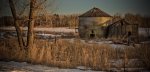
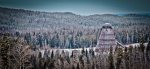
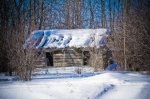
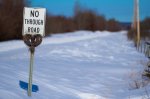
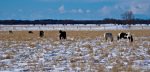
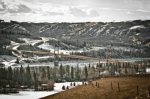
Sunday – photographs that I’d intended to post linger on my computer’s desktop in a file of edited images.  The week has been busy with obligations taking me into my nights. The first image is one of a barn located in a muskeg bog, just south of Figure Eight Lake on Alberta Highway 737; it is out of the weather and close to a water source; no house or homestead is in the immediate vicinity.  One could have burned down. Or, perhaps the barn is associated with the homestead in the second image; this homestead is treed in and built on higher ground a kilometre further south on the west side of the same highway. In another image an inuksuk has been assembled at the southwesternmost corner of someone’s farmland alongside Alberta Highway 685, stating to all comers that others have stood right there, where they now stand. Within metres of the inuksuk, a heart-shaped wreath is fastened below a ‘no through road’ sign, perhaps inviting people to come and investigate. The next photograph presents a second rendering of the Fairview horses and lamas in spring’s sunlight; there’s a glow of sunlight from the animals. Beyond this, are the other b-side renderings of the Dunvegin bridge, photographed last weekend.

Listening to Tonic’s rendition of Fleetwood Mac’s Second Hand News, then there’s Sister Hazel’s take on Gold Dust Woman and Shawn Colvin performs The Chain, all songs are part of Legacy:  A Tribute to Fleetwood Mac’s Rumours’ album.

Quote to Inspire – “I treat the photograph as a work of great complexity in which you can find drama. Add to that a careful composition of landscapes, live photography, the right music and interviews with people, and it becomes a style.” – Ken Burns

Two Mercury Trucks & David Lindley’s Tune

Best Practices - Photography, Canon 60D, Canon 70-200 mm 2.8 IS L Series Lens, Canon Camera, Canon Live View, High Dynamic Range (HDR), Photography & Conceptualizing Beauty, Project 365 - Photo-a-day, Still Life, Winter

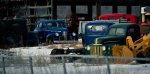
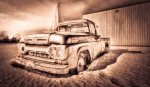
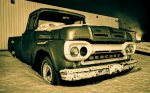
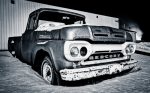
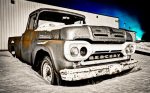
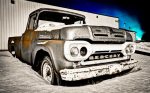
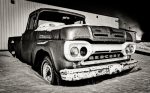
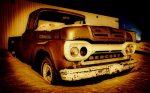
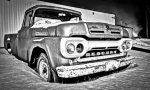
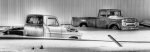
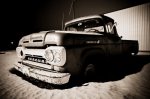
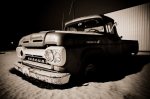
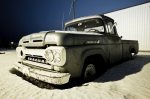
Within this past week I have photographed two Mercury Trucks, the first, an early fifties three ton grain truck, part of a display celebrating the agricultural heritage of Manning, Alberta; the second was a vehicle that is as old as I am, a 1961 Mercury 100 pickup truck located in Brock Enterprises’ industrial lot in High Level, Alberta.

As one who returned to University to complete two degrees, one job I enjoyed for an interim year in October of 1981 was that of working with Ford Motor Company (FOMOCO) in Edmonton, Alberta at Waterloo Mercury, first as a used-car car jockey, then as showroom car jockey and later as pre-delivery inspector.  Not quite a gear head, I know a good deal about how a car or truck can be driven and how a vehicle should ride; and, I am someone who enjoys BBC America’s Top Gear.  Back then, in 1981, detailing vehicles was my side-business, something allowing me to put money in the bank for University and it’s something I continue to take great pride in. I value a well-turned out vehicle and my preferences for waxes include the McGuiar’s waxes as well as the Autoglym waxes that have received Royal Warrant from Queen Elizabeth II (this is the schtuff used on Aston Martins).

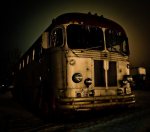
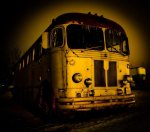
On Thursday, following a long day at school, I drove through High Level’s industrial area, saw a crew vehicle parked in front of Brock Enterprises and went in to ask permission to photograph the 1961 Mercury 100 Pickup stored on this property by the Brock Enterprises owner.  It was a never-done experience, that of providing my name, information about where I work and about my teaching photography at our local high school.  Later that evening, the matter was one moving me from our couch outdoors to seize the opportunity of photographing the Mercury 100 pickup up close. That night I got out to the Brock Enterprises Industrial Lot and spent perhaps forty-five minutes photographing this metallic green truck and another vehicle, likely a 1950’s Greyhound bus.  Photography with long exposures provided me time for looking beyond the truck around at its environment.  I was working with Automatic Exposure Bracketing to create High Dynamic Range (HDR) images; so, each HDR image was taking about two minutes to create at 100 ISO. I was dressed in ski pants, ski jacket and warm head-gear; warm comfort is a part of capturing good images in winter or colder temperatures. As I looked around me I saw deer in a neighboring industrial lot moving along a path taking them to the Viterra Grain Elevator where they could feast on grain spillage.

Listening to an iTunes genius generated playlist originating from Mercury Blues by David Lindley from the El Rayo-X album; others songs in the playlist include Get Right with God by Lucinda Williams from Essence, Sweet Fire of Love by Robbie Robertson from his album entitled Robbie Robertson Bang a Gong [Get It On] by T. Rex from Electric Warrior, Elvis Presley Blues by Gillian Welch from her Time – the Revelator album and Bob Dylan’s Dignity from Bob Dylan: The Collection – MTV Unplugged have also surfaced as song interests. I’ve also been inspired to purchase through iTunes Fly Like An Eagle, Rock’n Me and Take the Money and Run in addition to Mercury Blues by the Steve Miller Band (good old songs from a grade 11 year … all those years ago).

Quotes to Inspire (1) “The goal is not to change your subjects, but for the subject to change the photographer.” – Anonymous; and, (2) “Actually, I’m not all that interested in the subject of photography.  Once the picture is in the box, I’m not all that interested in what happens next.  Hunters, after all, aren’t cooks.” – Henri Cartier-Bresson