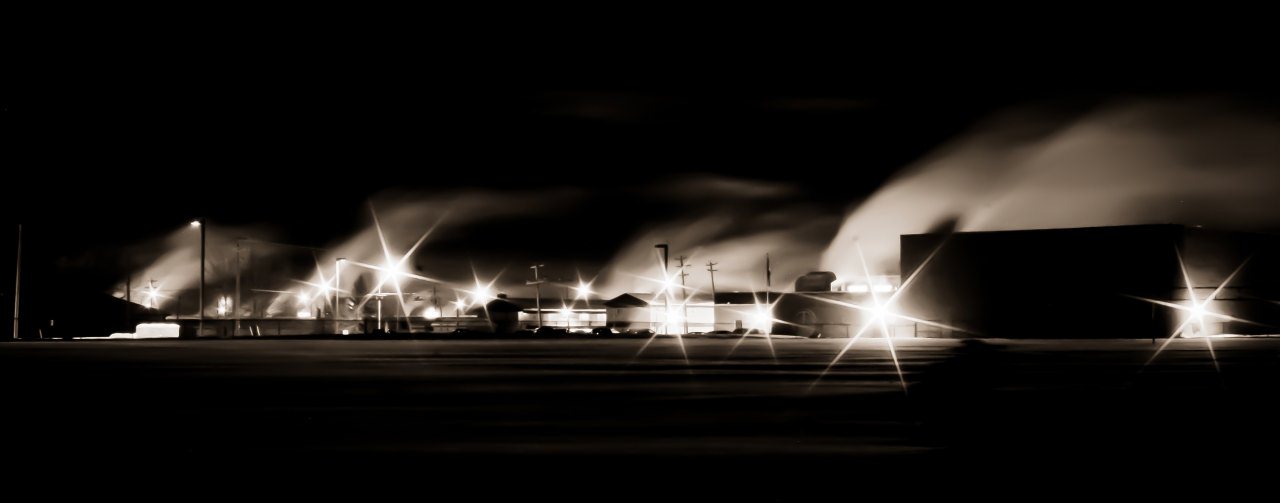
Thursday night – I’m checking the La Crete Online webpage lacreteonline.com/ for the next stock car race out on Wolf Lake Road (closer to Blumenort); there, I read and see pictures of a forest fire out on Wilson Prairie Road – south and east from La Crete, Alberta; windrows and forested land are ablaze. No one has been evacuated and only one home seems to be in the fire’s track. The Wilson Prairie area contains back roads of a Mennonite farming community, roads I used to drive when shuffling Home Education curriculum around to students – their names and faces and the faces of their parents come to mind. My hope for them is that the fire can be contained quickly and that they will not be affected. When I think through my students I’m reminded that the first home education student I met and worked with was one I had to get to by driving on Wilson Prairie Road and then finding another road – Savage Prairie Road. On Thursday evening, I drove out to the fire site staying a few hours, snapping photos and chatting with concerned residents driving by, amazed by the sight. It’s the second wildfire in the La Crete area this summer. On Thursday night, traffic tapered off around 1:00 a.m. with an occasional farmer still coming out to watch, to look and to assess.
Listening to – Matthew Perryman Jones’ Stones from the Riverbed. Other songs of the day are Sarah Masen’s Hope, Over the Rhine’s Spark, and Rumble by Link Wray and the Wraymen.
Quote to Inspire – “The only real voyage of discovery consists not in seeking new landscapes but in having new eyes.” – Marcel Proust.
This morning’s wee hours saw the completion of two day’s detailing our 2006 Nissan Altima, a task completed without anchored schedule and with all that time off. The task first involved trekking around the Altima with Autoglym Super Resin Polish with orbital buffer and polishing bonnet or buffer and buffing bonnet. The task next involved applying by hand Autoglym HD Wax, a paste wax, in sections and letting those sections cure for fifteen minutes at a stretch. In applying the HD paste wax I caught myself up on several podcasts.
Storing digital images was the subject of one podcast of Shuttertime with Sid and Mac; I’m in need of a new external hard drive and need to investigate back-up solutions. The podcast introduced me to Drobo and to Carbon Copy Cloning and much more. In another Shuttertime with Sid and Mac podcast the ‘why’ of the photographer – her or his motivation for shooting – was considered. A truth that surfaced is that good photography is something that serves the photographer first before her or his audience. It was noted that photographer burnout (meaning their interest or desire in photography is extinguished) occurs when the images created tend to be ‘for’ others. Ideally a photographer needs to manage the balance of work for others with work for themselves.
Two days detailing allowed for breaks when they were needed. Tuesday evening presented the opportunity of summer’s quietude along our street. Near midnight I was able to sit outdoors in the sun’s dusk, in the absence of activity and mosquitos to enjoy an evening breeze – a time to be, a time to sit still and enjoy. Within these two days I’ve been able to watch at various times most of the 2010 film of Charlotte Bronte’s Jane Eyre with Mia Wasikowska and Michael Fassbender, an allegory of spiritual development and of finding soul mates. Wax on, wax off – words from the Karate Kid, words akin to meditation, an activity slowing you down, a means to gather thoughts and loose-ends; the activity involves sight and seeing and perspective; section by section the activity moves toward the whole of an outcome completed. Perseverance is required – you and the car are better for it.
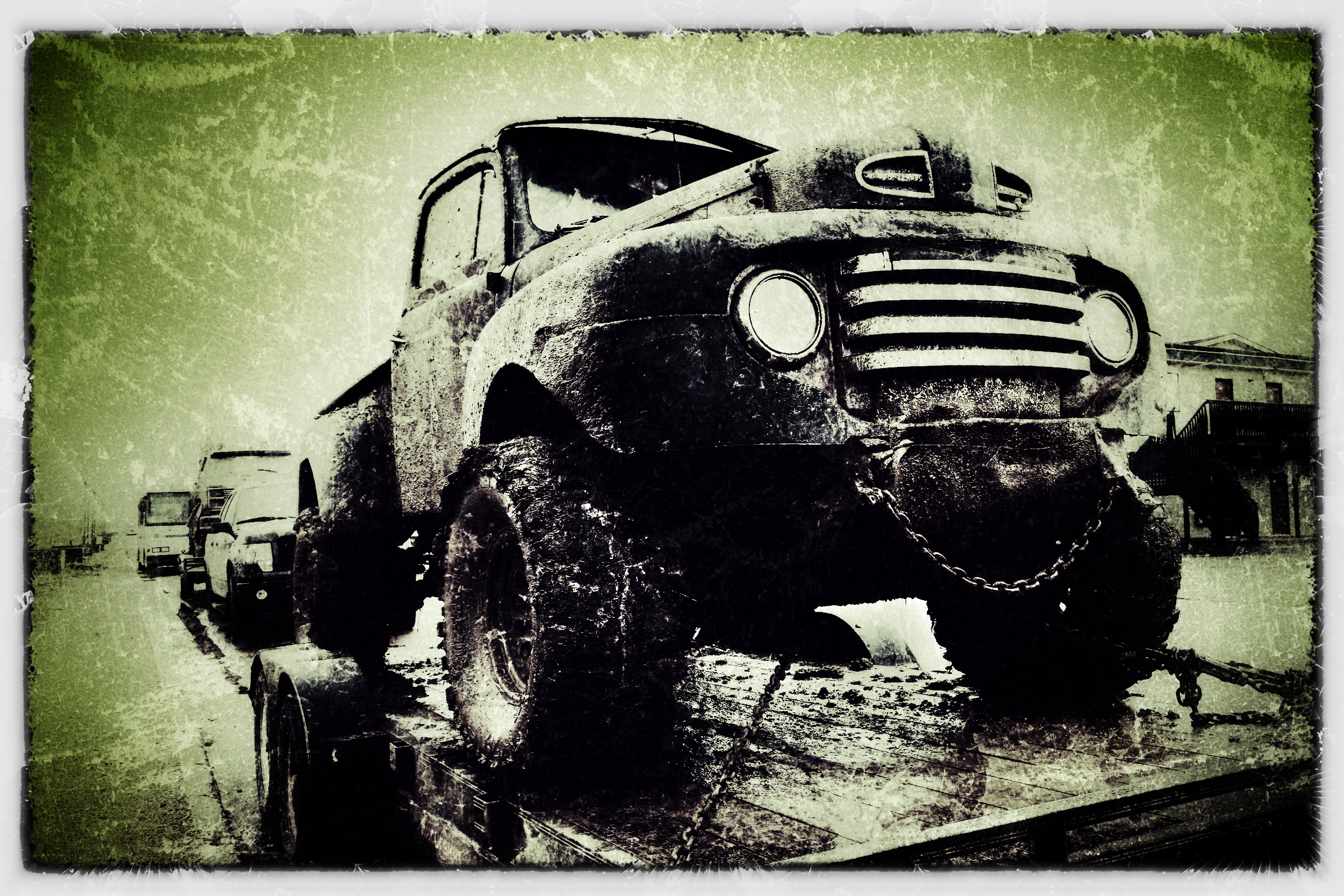
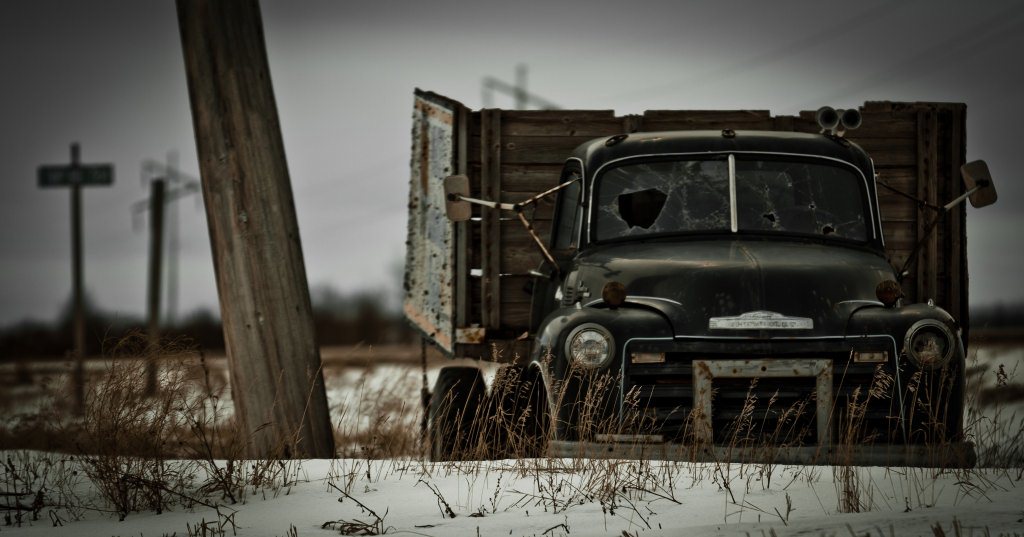
The photograph presented here is the first rendering of an image using the Snapseed app with my iPad – a truck that’s been used for mud-bogging.
Listening to – Over the Rhine’s Spark, Dar Williams’ Mercy of the Fallen and Radiohead’s High and Dry; the other song that’s been in my thoughts and hearing is Robbie Robertson’s Sweet Fire of Love.
Quotes to Inspire – (1) “I really believe there are things nobody would see if I didn’t photograph them.” – Diane Arbus; and, (2) “To photograph truthfully and effectively is to see beneath the surfaces and record the qualities of nature and humanity which live or are latent in all things.” – Ansel Adams
Interchangeable, Early Sixties GMC Half Tons – Fairview, Alberta
Dunvegan River Bank – Dunvegan, Alberta
Older Barn – Fairview, Alberta
Canada Geese Feeding at Sundown – Fairview, Alberta
Tonight has been an evening of yardio – yard-work and cardio effort. Our lawn is now dethatched, the old grass bagged (and ready for garbage day) and our lawn is fertilized and being watered as I write. For the first time this spring I have sudsed-up our Nissan Altima – I’ve washed it by hand, with brushes and sprayer, first with Palmolive soap to take the dirt off and then with Mother’s Vehicle soap. The Altima is clean. But, its six-year old exterior is in need of detailing – a good go-round with a good glazing polish, buffer and various amounts of elbow grease. If I’d had some Autoglym Bodywork Shampoo the wash would have produced a glossy sheen. My cabinet in the garage holds two things that will brighten this vehicle – Autoglym Super Resin polish and Autoglym High Definition paste wax. Not only will the paint gleam but the relief in the vehicle’s shape will be enhanced optically, in some cases to a degree of optical illusion. The waxing will have to wait until summer break and the chore will become a way to settle towards summer’s calm following a hectic school year. The chore, the time invested and the dazzling outcome are things I look forward to as summer projects.
Most photographs presented here are ones taken in the final hour of sunlight last Saturday night; it’s about half past ten heading to eleven o’clock. The river bank at Dunvegan features shadow play with shadows lengthening and darkening to enhance the rolling mounds of hillage above the Peace River. In two photos rusting relics are stored in public view. The three early sixties GMC half-tons seem ready to share parts in order to cluster into one working whole. The ready interchangeability of parts between the three trucks points to a need to gather them all rather than only one. Canada Geese move actively at sunset in a farmer’s field feeding. And, a disused barn catches the light of sunset … a dusky day’s end in Alberta’s late spring.
Listening to – J J Heller’s Your Hands, Missy Higgins’ Warm Whispers, Coldplay’s See You Soon, David Gray’s Kathleen, Jem singing Maybe I’m Amazed, Ray LaMontagne’s I Still Care for You and all the way through to John Denver’s Thank God I’m a Country Boy. The playlist rounds out to the Counting Crows’ Raining in Baltimore and David Gray’s Jackdaw.
Quote to Inspire – “Beauty can be seen in all things, seeing and composing the beauty is what separates the snapshot from the photograph.” – Matt Hardy
Totally an interesting day, yesterday – to post and then to return later and have not just Gina from The Regina Chronicles nominate my photoblog for an award, but also to receive nomination from Jeremy of 365 photos by Jeremy for the Versatile blogger award. Thank you Jeremy for this nomination and for the intrigue and interest you present the In My Back Pocket – Photography photoblog. More than you know the tribute/nomination hits home well. I am grateful.
The weblink above is an animoto of images posted on In My Back Pocket – Photography; have a look. 🙂
The Fifteen Blogs to Recommend and Explore
Teklanika Photography Field Journal
To A Dusty Shelf We Aspire
Subtlekate
A Traveller’s Tale
The Regina Chronicles
Leanne Cole’s Blog
Niltsi’s Spirit
Rubicorno
Ramblings
Blue Line
Not Yet There
Skymunki
Not Yet There
Greenford 365
Mars Black Vintage
Seven Things About Me
An audiobook listener since 1981 – Emma by Jane Austen was first, Shakespeare’s Hamlet was second, then Thomas Hardy’s The Mayor of Castorbridge; all were audiocassettes put out by Listen for Pleasure and used on a variety of Sony Walkmans.
I’ve completed two half-marathons – the first in two hours, fifty-one minutes and the second at age forty-nine in two hours, fourteen minutes.
My middle brother introduced me to the Canon T70 SLR camera I bought somewhere around 1985-87 and I’ve two framed pictures of Peggy’s Cove, Nova Scotia on our kitchen wall, twins to the pair my father has hanging on his bedroom wall in his retirement home.
I was made a school administrator, one-hundred and forty days into teaching. My teaching has all been north of Latitude 54.
In terms of my love for vehicles, I aspire one-day to help in the beginning-to-end, front-to-back restoration of a rusting relic – just to be a part of the transformation.
In terms of vehicles and vehicles I feel safe in – we’ve owned three Nissan Pathfinders (same series 1991-1995), a Dodge Dakota, a Dodge Colt, a Dodge Spirit, a Jeep Grande Cherokee, two Toyota Camrys (1991 – 2010), an Aries K-Car, a Hyundai Santa Fe and Nissan Altima; all are good vehicles. In terms of handling muck, cold, snow and ice, I’d go with the Nissan Pathfinder (with manual transmission and good tires, SE if possible).
Our Dogs – we’ve had a wolf-Lab cross (Chrissy), a Siberian Husky (Katya) and currently have a Cocker-spaniel (Shadow).
Listening to – John Cougar Mellencamp’s Rumbleseat and You’ve Got to Stand for Something, Dire Straits’ the Bug and U2’s When Love Comes to Town.
Quote to Inspire – “I always thought good photographs were like good jokes. If you have to explain it, it isn’t that good.” – Anonymous
I have an uncle, my Dad’s younger brother, who was in his career a beloved literature professor at Acadia University in Wolfville, Nova Scotia. As a professor he was well-liked by his students and he knew what students were about and was able to direct them profitably and constructively in their academic careers. At lunchtimes in Edmonton growing up, Dad would read us letters in which his brother would own to his chagrin in the matter of occasionally having to borrow cigarettes from his students. His students esteemed him enough to forego this trespass – he got along with his students that well. What’s brought him to mind tonight is that he was someone who when sitting still at a task for too long got himself up out of his chair or away from his desk and out into his car and go for an hour’s drive and have a look about at his world; the last car of his that I road in was an early eighties Volvo sedan that he had had repainted a metallic green. He loved a drive as did his mother (my grandmother), his wife and daughter. A good drive was always a means to unwind from a day pressing obligations to capacity; he’d arrive back and he would have shifted his state … the world was better for having gone for a drive.
Yesterday, at day’s end I found that I had been sitting at computers, at school and at home, for more than twelve hours combined. And, I found that there was still more to do, more obligations to students and staff and their various undertakings … the work of the work was to stay at it and complete it. But, I wasn’t being productive, more a body realization than anything else … sitting down and sitting still from my day into my evening was not to be had. I pulled my uncle’s trick, I grabbed my camera bag, tripod, down-filled jacket, gloves and hat, and, I got into my car and steered it east from High Level. Twenty minutes from High Level, yielded the opportunity to photograph Canada geese, cranes, swallows and reflection upon water. The evening also yielded the good fortune of stumbling into a former colleague whose career path has mirrored my own; we probably haven’t chatted meaningfully for about five or six years. In half an hour I heard much about her world – her daughters, her husband and their next steps. I finished out the evening with another hour of photography and returned home.
Listening to – the Steve Miller Band’s Rock’n Me, Take the Money and Run and Mercury Blues; Murray McLauchlan’s Farmer’s Song and Hard Rock Town have featured as has Ryan Adams’ Chains of Love. The morning’s walk featured U2’s Magnificent, Eddie Vedder’s Hard Sun among other songs.
Quote to Inspire – “I treat the photograph as a work of great complexity in which you can find the drama. Add to that a careful composition of landscapes, live photography, the right music and interviews with people, and it becomes a style.” – Ken Burns
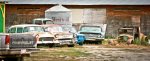
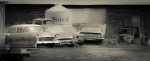
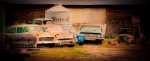
Charles Dickens once wrote a novel about an Old Curiosity Shop, a shop much like that of current second-hand stores or thrift stores in which a store owner collects collectibles, curiosities that satisfy our need to discover things that fit the environment we wish to create for our lives. Tonight, day-long, spring snow flurries bring about a look-back through photos. This photograph surfaced as one provoking the curiosities that rusting relics are at that point before restoration in which appraisal and consideration of possibility occurs – questions stir about what needs done, what the vehicle can become, what it will be like to drive and who will drive it. Possibility is leveraged as much by reminiscence as by future anticipation. Something of this imaginative aspect regarding a curiosity to be purchased is what Dickens explores in his novel The Olde Curiosity Shop – the nature of how we choose what we will put into our lives. Rusting relics in this rag-tag, makeshift auto-yard have me wondering about the curiosity that these older vehicles hold and highlight the necessity of imagination in investigating the possibility of what any of these vehicles can become. For me, the teal blue 1959 or 1960 Chevrolet reminds of a car that my grandfather drove when I was three or four. I can only recall being transported in this vehicle two or three times in and around Edmonton and then back to their home on Strathearn Drive – a memory that requires some reaching back.
Listening to – Snow Patrol’s Lifeboats, Radiohead’s High and Dry, Coldplay’s Don’t Panic and Kings of Leon’s Closer; the song that’s been on my mind throughout the post has been The Tragically Hip’s As Makeshift As We Are.
Quotes to Inspire – (1) “Photography can only represent the present. Once photographed, the subject becomes part of the past.” – Bernice Abbott (2) “A photograph is a secret about a secret. The more it tells you the less you know.” – Diane Arbus
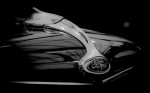
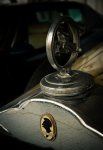
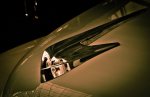
Hood Ornament 11, LeMay Car Museum – Tacoma, Washington
Hood Ornament 10, LeMay Car Museum – Tacoma, Washington
Hood Ornament 9, LeMay Car Museum – Tacoma, Washington
Hood Ornament 8, LeMay Car Museum – Tacoma, Washington
Hood Ornament 7, LeMay Car Museum – Tacoma, Washington
Hood Ornament 6, LeMay Car Museum – Tacoma, Washington
Hood Ornament 5, LeMay Car Museum – Tacoma, Washington
Hood Ornament 4, LeMay Car Museum – Tacoma, Washington
Hood Ornament 3, LeMay Car Museum – Tacoma, Washington
Hood Ornament 2, LeMay Car Museum – Tacoma, Washington
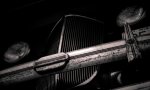
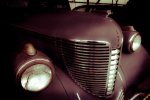
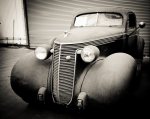
Vehicle Grill Work, LeMay Car Museum – Tacoma, Washington
Hood Ornament 1, LeMay Car Museum – Tacoma, Washington
Vehicle Grill Work 2 , LeMay Car Museum – Tacoma, Washington
I’ve just checked. It is still around, that thing that catalyzed so much of the work and time I’ve invested in cars I’ve owned and cars I’ve worked with. I happened on it by chance and by the end of that first day I had received an education in using it. On a Saturday morning in early summer 1982, I drove a green 1969 Pontiac Parisienne to a good friend’s house to see what we were up to that day. He had a project going, a task fueled by his father’s expertise in restoring and rehabilitating old cars.
I found him compounding (using rubbing compound on) the maroon paint of his two-door Dodge Aspen, a new acquisition – his first car. The idea was to remove paint that had dulled and oxidized and then add a layer of glazing resin to seal and maintain the maroon paint in pristine condition. As many things were in those days, this was a Tom Sawyer experience – a project he was engaged in was something I wanted to help with and he had the grace to allow me to do so. In two hours, our combined elbow grease brought out evenly the car’s true maroon colour in the paint. Then we added the glazing resin, something called TR-3 Resin Glaze; we rubbed it into the paint. We let it powder up and dry. And, then we used terry-towel rags to remove swirls of resin glaze residue.
What happened was remarkable. Our elbow grease, our use of rubbing compound and resin glaze according to instruction produced transformation – a previously dull, tired looking Dodge Aspen now looked new, even better than new. We’d seen this once before and talked about it. An older gentleman in the house next door, a man confined to a wheelchair had brought about similar transformation to his late sixties Dodge Dart. His candy apple red Dodge Dart was emaculate, the result of patient application of intelligence, initiative and diligence toward visual result.
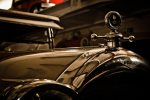
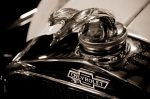
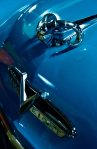
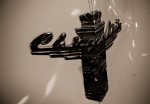
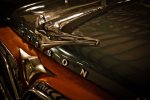
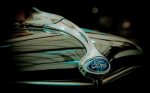
In terms of photographs, not many vehicles these days sport hood ornaments. Hood ornamentation tends to be associated with higher-end cars … perhaps they always have been. Hood ornaments accentuate the forward most part of the vehicle and perhaps in their being sculpted remind owner and driver of their vehicle being art, something crafted by others. Hood ornaments seem to have started out primarily as skilfully fashioned radiator caps; others serve to mark the hood’s center allowing drivers to position the vehicle on the road in relation to designated space between lines. Hood ornaments from several vehicles at the LeMay Car Museum feature as subject for this post’s photos.
Listening to a genius playlist starting from Over the Rhine’s Sleep Baby Jane; it moves on to Patty Griffin’s Mil Besos and then to Dar Williams’ Fishing in the Morning. In terms of audiobooks, I’m continuing to walk and listen to Lady Chatterley’s Lover; what struck me this morning is commonality of era. After all that the first world war was, the world my grandfather and grandmother would have shared as a young married couple was this same period as that of Constance and Clifford Chatterley, except that my granddad’s wounding at Vimy Ridge led him to become a military instructor for the remainder of the war and then back to Canada to marry the woman who would become my grandmother. Lawrence’s Lady Chatterley’s Lover was a book most likely banned in their time because it dealt with physical sensuality and challenged mainstream morality; I wonder about their take on the book … was it a book not to be read if you were a person of integrity?
Quote to Inspire – “There is nothing worse than a brilliant image of a fuzzy concept.” – Ansel Adams
International Truck, LeMay Car Museum – Tacoma, Washington
Studebaker, LeMay Car Museum – Tacoma, Washington
1939 Buick Century, LeMay Car Museum – Tacoma, Washington
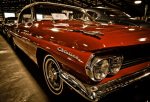
Pontiac Catalina, LeMay Car Museum – Tacoma, Washington
1939 Pontiac, Similar to Dad’s Dad’s Pontiac, LeMay Car Museum – Tacoma, Washington
One of the bigger treats for me in visiting Seattle, Washington this Easter was something my wife and daughter allowed me to do on the Thursday before we returned to Canada, something that they joined me in. That Thursday morning, we drove from Seattle an hour south to Tacoma and using our TomTom GPS were able to navigate to 325 – 152nd Street East to arrive at the LeMay Car Collection/Museum at Marymount.
Imagine a former convent/school resurrected to become storage and showing site for the LeMay collection of cars and trucks, vehicles of the last one hundred years. At the museum, a docent will lead you through each collecting point on the Marymount property. Not only do rusting relics inhabit these spaces, but you also find that the majority of vehicles within these confines will have received restoration or would have been kept in their original pristine condition throughout their years. Beyond this, imagine that your docent has heart and understands well your connection to cars and knows each car’s history intimately. He’s able to tell you all that you didn’t know about each car. Our docent, Mr. Pierce, led us, this way and that, through the maze of cars parked end to end in each of three buildings, a means to house them all. He was introducing each car to us – what the car was about practically, what had been each automaker’s intentions for the vehicle conceptually and how the car came to reside within the LeMay collection.
And, Mr. Pierce allowed me a kind of grace that only a fellow gear-head would ever let you have … he allowed time to photograph the vehicles and for that I will be forever grateful. At two hours in to my tour my wife went to be with my daughter out in our rental car while I rounded off the tour with Mr. Pierce looking up close at some of the first-ever self-propelled vehicles to transport people around the Americas. In terms of next steps, I’m considering becoming a member at the LeMay museum – they may be able to make use of this old-time car jockey who used to dust and polish cars at Edmonton’s Waterloo Mercury.
Listening to – U2’s Magnificent, Coldplay’s Yes and Radiohead’s All I Need. In terms of audiobooks, the last two morning walks have been a listen through D.H. Lawrence’s Lady Chatterley’s Lover; it’s been more than a couple of year’s since I’ve been through the book and this audio-recording has a good reader – Maxine Peake.
Quote to Inspire – “Photography does not create eternity, as art does; it embalms time, rescuing it simply from its proper corruption.” – Andre Bazin (1918-1958), French film critic.
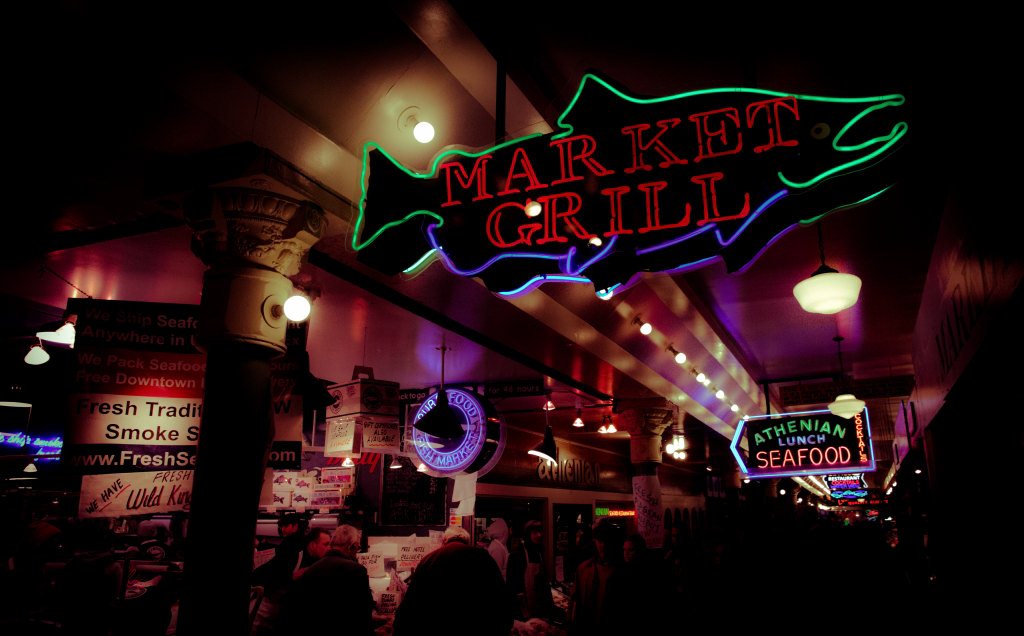
Pike Place Market - Neon Signs, Seattle, Washington
Street photography is something described as an audit of an environment that the photographer places him- or herself in. What’s there? What’s around you? What’s happening? All are questions that receive answer within the images produced and the street’s narrative is built and understood. If you’re actually photographing what’s happening in the street you’re bound to capture people in the act of whatever it is that they do. The street photography that I’ve looked through most recently is that of the Edmonton photowalk led by Darlene Hildebrand back in October 2011. The cluster of pictures from several photographers on that first Saturday afternoon in October present an audit of Life along Edmonton’s Whyte Avenue in Edmonton’s Old Strathcona area. Everything is captured – architecture (doors, buildings, windows); modes of transportation (cars, buses, trucks, bicycles); there’s a sense of space (that within the street and that which surrounds people, their personal space); there’s the colour and weather of the afternoon. Within most of it there’s the art of human endeavor. Conversely, there’s the defeat of endeavor no longer strived for; there are people broken and lost and at wits-end, the down and out. They too are captured in street photography. The photograph presented here is one taken from within the Pike Place Market in Seattle. To a certain extent it qualifies as street photography as it presents information about the environment of the market place – what you’ll find and what people are doing. What is surprising is the participatory element – people are tolerant of photographs being taken; it’s a touristy thing to do. Good. Maybe that’s the thing to think about in street photography – investigating the street by way of participation.
Listening to Bill Mallonee & Vigilantes of Love with She Walks on Roses, Patty Griffin’s Tomorrow Night and Over the Rhine’s Jesus in New Orleans, all from a genius playlist starting with Pierce Pettis’ Everything Matters album.
Quote to Inspire – “Photography takes an instant out of time, altering life by holding it still.” – Dorothea Lange
Fifties Grain Truck - South Side toward Nampa, Peace River, Alberta
In a Canadian literature course at the University of Alberta in the late eighties, Professor Bruce Stovel had us reading Canadian literature – Margaret Laurence’s Stone Angel, Upton Sinclair’s As For Me and My Houseand Hugh MacLennon’s Two Solitudes. I was coming to Canadian literature in my last year of an Arts degree after a tour through the literatures of the world, a literature decidedly English in its understanding of the world. We began the course with short stories about the Canadian experience of living in a young Canada. A young Canada could still be taken advantage of and Stephen Leacock wrote more than a few stories aimed at exposing a need to be more wiley and aware as a country among nations. One of the experiences written about was the matter of being sold something. Sales and selling were about creating something called the soft solder, an electrical analogy sales people understood to mean the means by which they connected the would-be, hinterland buyer to a commodity he or she didn’t really need.
The effective salesperson would work to leave the commodity, something such as a clock, in the care of the prospective Canadian buyer to let him try it out and to ascertain that the clock worked beyond expectations. For perhaps two weeks or a month the clock would remain fixed in the prospective buyer’s home. And, after two weeks or a month, the seller would return to review the merits of the clock with the prospective buyer and to collect the commodity, a clock which had worked its way into the habits and routines of the buyer. Removing the clock was something akin to removing a tooth from one’s mouth; it had been possessed and the threat of removal brought with it the uncertainty associated with luck and promise. The unsuspecting buyer would grapple with improved luck and situation that the clock affixed in the life of the buyer would provide. The clock would be kept and terms of sale agreed to.
In and around Peace River, Alberta the means of sale are not so subtle and no longer deal with affixing service or commodity to the buyer. The connective tissue (soft solder) at present seems to be that of using vehicles of a former era to attract retrospective view and attach it to a billboard affixed to the side of the grain box of an older grain truck. Retro grain trucks have become portable billboards regarding services found at location. On Peace River, Alberta’s west side a sixty-four (1964) GMC three-ton grain truck connects passersby with Luxliner services transporting them to Edmonton at fair price while this Chevrolet three-ton grain truck connects passersby with sandblasting services on Peace River’s south side.
Listening to: Radiohead’s Go to Sleep from The Best of Radiohead, a cool tune in terms of minor key melody; then it’s Ryan Adams’ Starting to Hurt from the Demolition album. Next is Pete Yorn’s Pass Me By from the Day I Forgot album. Later it is 5/4 by the Gorillaz from their album of the same name.
Quote to Inspire – “You don’t make a photograph just with a camera. You bring to the act of photography all the pictures you have seen, the books you have read, the music you have heard, the people you have loved.” ― Ansel Adams



























 In My Back Pocket - Photography
You must be logged in to post a comment.