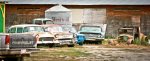
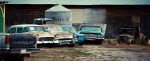
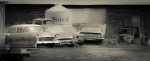
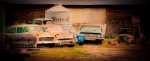
Charles Dickens once wrote a novel about an Old Curiosity Shop, a shop much like that of current second-hand stores or thrift stores in which a store owner collects collectibles, curiosities that satisfy our need to discover things that fit the environment we wish to create for our lives. Tonight, day-long, spring snow flurries bring about a look-back through photos. This photograph surfaced as one provoking the curiosities that rusting relics are at that point before restoration in which appraisal and consideration of possibility occurs – questions stir about what needs done, what the vehicle can become, what it will be like to drive and who will drive it. Possibility is leveraged as much by reminiscence as by future anticipation. Something of this imaginative aspect regarding a curiosity to be purchased is what Dickens explores in his novel The Olde Curiosity Shop – the nature of how we choose what we will put into our lives. Rusting relics in this rag-tag, makeshift auto-yard have me wondering about the curiosity that these older vehicles hold and highlight the necessity of imagination in investigating the possibility of what any of these vehicles can become. For me, the teal blue 1959 or 1960 Chevrolet reminds of a car that my grandfather drove when I was three or four. I can only recall being transported in this vehicle two or three times in and around Edmonton and then back to their home on Strathearn Drive – a memory that requires some reaching back.
Listening to – Snow Patrol’s Lifeboats, Radiohead’s High and Dry, Coldplay’s Don’t Panic and Kings of Leon’s Closer; the song that’s been on my mind throughout the post has been The Tragically Hip’s As Makeshift As We Are.
Quotes to Inspire – (1) “Photography can only represent the present. Once photographed, the subject becomes part of the past.” – Bernice Abbott (2) “A photograph is a secret about a secret. The more it tells you the less you know.” – Diane Arbus
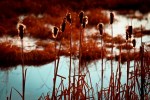
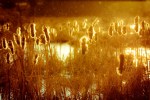
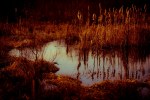
Water – within the past week I’ve slipped and nearly tumbled on water that’s oozed and frozen into globs of ice on High Level sidewalks during my morning walks. Water has met with gravitational pull and been transported as precipitation from clouds through a distance of kilometres to earth, sprinkling erratically. Water that’s changed state from snow or ice has in its melting been responsible for transport of dust and dirt from sidewalks to drains and through sewage systems. Water has been the key ingredient in transforming dirt into mud and curiously the removal of soil from our bodies is best accomplished with … water. And, within this photo water that is not in motion becomes mirror, an enigma catching my attention as I’m able to focus through its surface to the detail in my subject, the cattails. The water mirror allows cattails to become foreground to the backdrop of clouds of pink sunset, a feat that would not have been possible without this water mirror.
Listening to – Ray Lamontagne’s I Still Care For You, Ryan Adams’ Come Pick Me Up and David Gray’s Fugitive. The David Gray tune from yesterday that’s stuck in my head is We’re Not Right; the other is Shawn Colvin’s take on We All Fall Down. Today, David Gray’s My Oh My plays out to the end of this post.
Quote to Inspire – “In photography there is a reality so subtle that it becomes more real than reality.” – Alfred Stieglitz
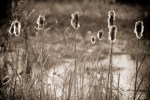
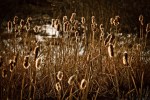
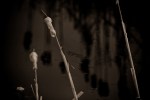
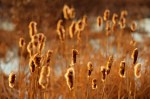
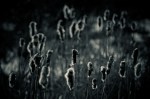
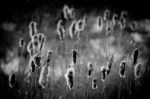
A cube or a box – the physical structure of the spaces we tend to inhabit for the majority of our days are cubes or boxes. There’s the cube or box of home. There’s the cube or box of work. As human beings it’s important that we find the third and fourth cubes beyond our work environment and beyond the home, the third and fourth elements of our day that balance out contact with work and withdrawal from endeavor. The analogy works forward in terms of thinking outside the box, breaking from routine and locating yourself in activities in the world to gain perspective on your world. Add a camera to the equation and the analogy drills down a step – you’re gaining perspective on the world you live in in much more concrete terms. Photography allows for that look at your broader context. Photography orients you to the beauty you’ll find that’s only minutes away. In fifteen minutes, I’d driven east and found these cattails at day’s end on a warmer spring day well into melt.
Listening to – The Five Blind Boys of Alabama and their rendition of Run On For A Long Time, Feed A Man by Billy Bragg & Wilco, Shakedown on 9th Street by Ryan Adams, Buffalo by Kathleen Edwards, Fully Completely by The Tragically Hip, Wonderwall by Ryan Adams, Eh Hee by Dave Matthews & Tim Reynolds, You Might Die Trying by the Dave Matthews Band, U2’s Wake Up Dead Man and Jack Johnson’s Rodeo Clowns.
Quote to Inspire – “A good photograph is knowing where to stand.” – Ansel Adams
Hood Ornament 11, LeMay Car Museum – Tacoma, Washington
Hood Ornament 10, LeMay Car Museum – Tacoma, Washington
Hood Ornament 9, LeMay Car Museum – Tacoma, Washington
Hood Ornament 8, LeMay Car Museum – Tacoma, Washington
Hood Ornament 7, LeMay Car Museum – Tacoma, Washington
Hood Ornament 6, LeMay Car Museum – Tacoma, Washington
Hood Ornament 5, LeMay Car Museum – Tacoma, Washington
Hood Ornament 4, LeMay Car Museum – Tacoma, Washington
Hood Ornament 3, LeMay Car Museum – Tacoma, Washington
Hood Ornament 2, LeMay Car Museum – Tacoma, Washington
Vehicle Grill Work, LeMay Car Museum – Tacoma, Washington
Hood Ornament 1, LeMay Car Museum – Tacoma, Washington
Vehicle Grill Work 2 , LeMay Car Museum – Tacoma, Washington
I’ve just checked. It is still around, that thing that catalyzed so much of the work and time I’ve invested in cars I’ve owned and cars I’ve worked with. I happened on it by chance and by the end of that first day I had received an education in using it. On a Saturday morning in early summer 1982, I drove a green 1969 Pontiac Parisienne to a good friend’s house to see what we were up to that day. He had a project going, a task fueled by his father’s expertise in restoring and rehabilitating old cars.
I found him compounding (using rubbing compound on) the maroon paint of his two-door Dodge Aspen, a new acquisition – his first car. The idea was to remove paint that had dulled and oxidized and then add a layer of glazing resin to seal and maintain the maroon paint in pristine condition. As many things were in those days, this was a Tom Sawyer experience – a project he was engaged in was something I wanted to help with and he had the grace to allow me to do so. In two hours, our combined elbow grease brought out evenly the car’s true maroon colour in the paint. Then we added the glazing resin, something called TR-3 Resin Glaze; we rubbed it into the paint. We let it powder up and dry. And, then we used terry-towel rags to remove swirls of resin glaze residue.
What happened was remarkable. Our elbow grease, our use of rubbing compound and resin glaze according to instruction produced transformation – a previously dull, tired looking Dodge Aspen now looked new, even better than new. We’d seen this once before and talked about it. An older gentleman in the house next door, a man confined to a wheelchair had brought about similar transformation to his late sixties Dodge Dart. His candy apple red Dodge Dart was emaculate, the result of patient application of intelligence, initiative and diligence toward visual result.
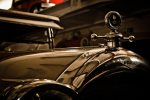
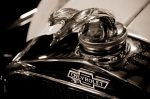
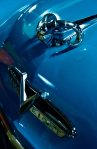
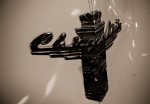
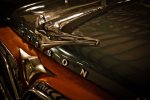
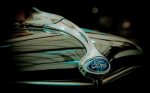
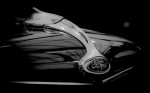
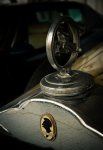
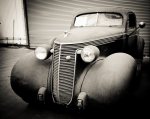
In terms of photographs, not many vehicles these days sport hood ornaments. Hood ornamentation tends to be associated with higher-end cars … perhaps they always have been. Hood ornaments accentuate the forward most part of the vehicle and perhaps in their being sculpted remind owner and driver of their vehicle being art, something crafted by others. Hood ornaments seem to have started out primarily as skilfully fashioned radiator caps; others serve to mark the hood’s center allowing drivers to position the vehicle on the road in relation to designated space between lines. Hood ornaments from several vehicles at the LeMay Car Museum feature as subject for this post’s photos.
Listening to a genius playlist starting from Over the Rhine’s Sleep Baby Jane; it moves on to Patty Griffin’s Mil Besos and then to Dar Williams’ Fishing in the Morning. In terms of audiobooks, I’m continuing to walk and listen to Lady Chatterley’s Lover; what struck me this morning is commonality of era. After all that the first world war was, the world my grandfather and grandmother would have shared as a young married couple was this same period as that of Constance and Clifford Chatterley, except that my granddad’s wounding at Vimy Ridge led him to become a military instructor for the remainder of the war and then back to Canada to marry the woman who would become my grandmother. Lawrence’s Lady Chatterley’s Lover was a book most likely banned in their time because it dealt with physical sensuality and challenged mainstream morality; I wonder about their take on the book … was it a book not to be read if you were a person of integrity?
Quote to Inspire – “There is nothing worse than a brilliant image of a fuzzy concept.” – Ansel Adams
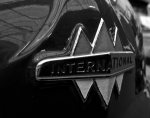
International Truck, LeMay Car Museum – Tacoma, Washington
Studebaker, LeMay Car Museum – Tacoma, Washington
1939 Buick Century, LeMay Car Museum – Tacoma, Washington
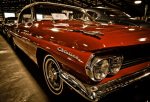
Pontiac Catalina, LeMay Car Museum – Tacoma, Washington
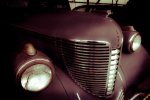
1939 Pontiac, Similar to Dad’s Dad’s Pontiac, LeMay Car Museum – Tacoma, Washington
One of the bigger treats for me in visiting Seattle, Washington this Easter was something my wife and daughter allowed me to do on the Thursday before we returned to Canada, something that they joined me in. That Thursday morning, we drove from Seattle an hour south to Tacoma and using our TomTom GPS were able to navigate to 325 – 152nd Street East to arrive at the LeMay Car Collection/Museum at Marymount.
Imagine a former convent/school resurrected to become storage and showing site for the LeMay collection of cars and trucks, vehicles of the last one hundred years. At the museum, a docent will lead you through each collecting point on the Marymount property. Not only do rusting relics inhabit these spaces, but you also find that the majority of vehicles within these confines will have received restoration or would have been kept in their original pristine condition throughout their years. Beyond this, imagine that your docent has heart and understands well your connection to cars and knows each car’s history intimately. He’s able to tell you all that you didn’t know about each car. Our docent, Mr. Pierce, led us, this way and that, through the maze of cars parked end to end in each of three buildings, a means to house them all. He was introducing each car to us – what the car was about practically, what had been each automaker’s intentions for the vehicle conceptually and how the car came to reside within the LeMay collection.
And, Mr. Pierce allowed me a kind of grace that only a fellow gear-head would ever let you have … he allowed time to photograph the vehicles and for that I will be forever grateful. At two hours in to my tour my wife went to be with my daughter out in our rental car while I rounded off the tour with Mr. Pierce looking up close at some of the first-ever self-propelled vehicles to transport people around the Americas. In terms of next steps, I’m considering becoming a member at the LeMay museum – they may be able to make use of this old-time car jockey who used to dust and polish cars at Edmonton’s Waterloo Mercury.
Listening to – U2’s Magnificent, Coldplay’s Yes and Radiohead’s All I Need. In terms of audiobooks, the last two morning walks have been a listen through D.H. Lawrence’s Lady Chatterley’s Lover; it’s been more than a couple of year’s since I’ve been through the book and this audio-recording has a good reader – Maxine Peake.
Quote to Inspire – “Photography does not create eternity, as art does; it embalms time, rescuing it simply from its proper corruption.” – Andre Bazin (1918-1958), French film critic.
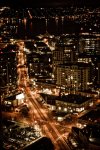
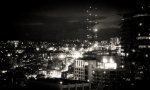
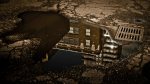
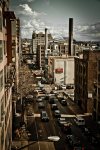
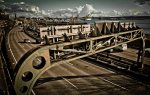
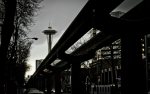
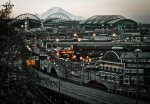
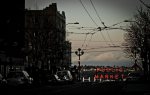
Visually, Seattle clusters in broad strokes among three dimensions. There’s the up and down of tall, tall buildings. There’s the Seattle you find more of to your right and to your left, more buildings, more streets, more sidewalks. Seattle extends in front of you, behind you and way over in every direction – bridges curve with the landscape and cross huge expanses of land and water. Seattle is a walker’s city. Distances around the city core are manageable walking distances. Navigating the downtown core is straightforward. The terrain offers up and down, a good walker’s workout. And, fresh air blows up from the ocean through the city. Movie-wise I recognized the city watching an eighty’s movie only last weekend; Seattle is the setting within the movie, An Officer and A Gentleman. And, during our time in Seattle, we were able to see the Lake Union lake cottage set of the house used by Tom Hanks’ character in the movie Sleepless in Seattle; we’d taken the Ducks’ tour and saw many of Seattle’s highlights. The Seattle night photos remind much of U2’s music video presentation of their album No Line on the Horizon and specifically to City of Blinding Lights, a reference more directly referring to Paris, France; the appellation could just as easily refer to the Seattle that I’ve seen at night.
Listening to a preview of Jack White’s Blunderbuss album; it’s holding true to Jack White sound; it’s good and it’s fresh Jack White.
Quote to Inspire – “There will be times when you will be in the field without a camera. And, you will see the most glorious sunset or the most beautiful scene that you have ever witnessed. Don’t be bitter because you can’t record it. Sit down, drink it in, and enjoy it for what it is!” – Degriff
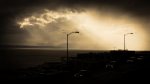
Coming to Seattle from just south of the 60th parallel, I had expected the earth’s sunrise and sunset to be more in tandem with what happens for us in our north. I was surprised to find the sun rising much earlier than it was back home. On Saturday, our travel day home from Seattle, Washington to Edmonton, Alberta I was able to gather photo gear quietly without disturbing my wife and daughter and head out quite early to snap photos. While I captured images from Seattle’s downtown, two of the shots I’m liking deal with the moonrise at sunrise across Elliot bay. And, while there are five images presented there are only two images dealt with. One image plays with different lighting presets and composition while the other, the final one is pretty much straight out of the camera. Our waitress at the Andaluca restaurant caught the sight on her early morning jaunt to work. The sight was rare, something to see.
Quote to Inspire – “To me, photography is an art of observation. It’s about finding something interesting in an ordinary place … I’ve found it has little to do with the things you see and everything to do with the way you see them.” – Elliot Erwitt
Listening to Pink Floyd’s Wish You Were Here album following a documentary on Pink Floyd that explored their reunion for the global Live 8 Concert; they’d been apart for some twenty odd years … two of those members have passed on. In the song Wish You Were Here that I’m listening to, Stephane Grappelli accompanies Pink Floyd. Interesting!
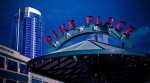
Early morning towards Pike Market Place – Seattle, Washington
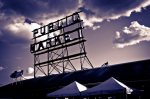
Pike Place Public Market – Seattle, Washington
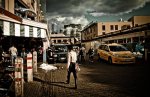
Pike Place Market Bus Stop – Seattle, Washington
The Pike Place Market – Seattle, Washington
Corner of Pike Place & Pine Street – Seattle, Washington
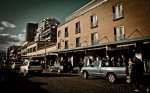
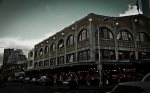
Corner Market (opposite Pike Place Market) 1 – Seattle, Washington
Corner Market (opposite Pike Place Market) 2 – Seattle, Washington
Corner Market (opposite Pike Place Market) 3 – Seattle, Washington
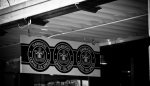
The Original Starbucks (est. 1971), Pike Place Market – Seattle, Washington
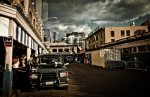
Looking southward to Pike Place Market 1 – Seattle, Washington
Pike Place Market signage 3 – Seattle, Washington
Looking southward to Pike Place Market 2 – Seattle, Washington
Looking southward to Pike Place Market 3 – Seattle, Washington
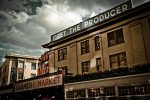
Meet the Producer, Pike Place Market – Seattle, Washington
Entrance, Pike Place Market – Seattle, Washington
Worker, looking out, Pike Place Market – Seattle, Washington
Tulips, Pike Place Market – Seattle, Washington
Place Pigalle, Restaurant & Bar, Pike Place Market – Seattle, Washington
Loback Meat Company signage, Pike Place Market – Seattle, Washington
Entrance Lower Floor, Pike Place Market – Seattle, Washington
One feature of our Seattle trip was we were active throughout each day walking, travelling and walking some more. Being active helped us maintain body rhythms and daily routine. We were usually up at seven and on our way somewhere by eight. Breakfast, most mornings, was at the Andaluca Restaurant, a restaurant attached to Seattle’s Mayflower Park Hotel. These morning meals were sumptuous – Brioche French Toast, Hazelnut Waffles, Steel Cut Scottish Oats and Banana Pancakes; a side of pepper bacon was added twice. Coffee was made as coffee should be and our orange juice was fresh. From this restaurant we’d head out to Seattle, its sights and attractions.
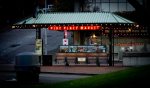
And, we always seemed to return to the Pike Place Market at day’s end, from up above, street side or from down below from the harbor. We seemed to arrive each day within the market’s last hour of hustle and bustle as vendors went about closing up shop – a flurry of activity, enthusiasm, good-natured banter with customers and the mingling and flow of people in movement into their evening. The photos presented here capture the Pike Place Market at day’s beginning and at its day’s end.
Notable among the attractions in the Corner Market (across from the Pike Place Market) is the original Starbuck’s (established in 1971) named after Starbuck in Herman Melville’s Moby Dick. In terms of the novel’s whaling adventures, this setting for a coffeehouse Starbuck would frequent is appropriate. The coffeehouse is a short twenty-minute climb up from the harbor piers of Elliot Bay to its location above the harbor, looking out onto the bay. This original Starbucks is the point from which the Starbucks’ empire has grown and it’s a company that has grown equally by way of its service provided as well as by the quality of its coffee. In It’s Not About the Coffee, Howard Behar (former Starbucks vice president) writes about the act of growing Starbucks by way of good leadership that emphasizes the relationship sustained between coffee consumer and service provider (Starbucks’ worker) – the human side of business.
Not only has good leadership and good business grown from this location, but, right across the street the Pike Place Fish Market has become a model for ‘cultural transformation and self-generative learning for organizations of all kinds.’ Their model for transforming an organization from within focuses on empowerment, transforming vision into reality and the conception that any organization has as one of its primary purposes that of making a difference in the world.
And, the business of the day continues, each day … in this very rich starting point … for many good things.
10 Principles of Personal Leadership (from Howard Behar in It’s Not About the Coffee – Leadership Principles from Life at Starbucks)
Know Who You Are: Wear One Hat
Know Why You’re Here: Do It Because It’s Right, Not Because It’s Right for Your Resume
Think Independently: The Person Who Sweeps the Floor Should Choose the Broom
Build Trust: Care, like You Really Mean It
Listen for the Truth: The Walls Talk
Be Accountable: Only the Truth Sounds like the Truth
Take Action: Think Like a Person of Action, and Act like a Person of Thought
Face Challenge: We Are Human Beings First
Practice Leadership: The Big Noise and the Still, Small Voice
Dare to Dream: Say “Yes,” the Most Powerful Word in the World
Quotes to Inspire – (1) “To photograph is to confer importance.” – Susan Sontag (2) “To photograph truthfully and effectively is to see beneath the surfaces and record the qualities of nature and humanity which live or are latent in all things.” – Ansel Adams
Listening to – Counting Crows Omaha and Ghost Train; also listening to David Gray’sShine.
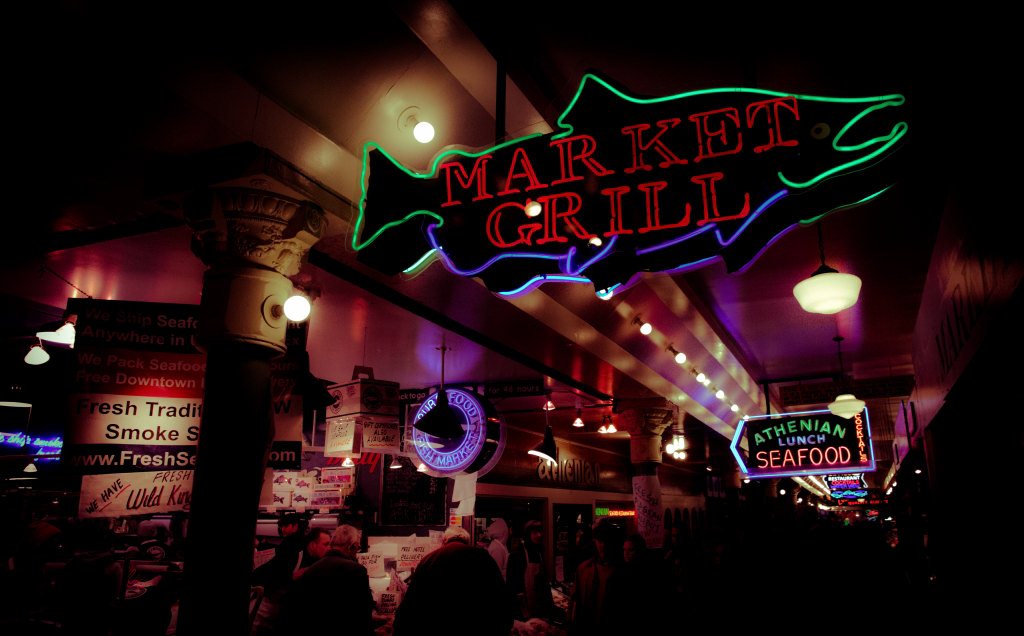
Pike Place Market - Neon Signs, Seattle, Washington
Street photography is something described as an audit of an environment that the photographer places him- or herself in. What’s there? What’s around you? What’s happening? All are questions that receive answer within the images produced and the street’s narrative is built and understood. If you’re actually photographing what’s happening in the street you’re bound to capture people in the act of whatever it is that they do. The street photography that I’ve looked through most recently is that of the Edmonton photowalk led by Darlene Hildebrand back in October 2011. The cluster of pictures from several photographers on that first Saturday afternoon in October present an audit of Life along Edmonton’s Whyte Avenue in Edmonton’s Old Strathcona area. Everything is captured – architecture (doors, buildings, windows); modes of transportation (cars, buses, trucks, bicycles); there’s a sense of space (that within the street and that which surrounds people, their personal space); there’s the colour and weather of the afternoon. Within most of it there’s the art of human endeavor. Conversely, there’s the defeat of endeavor no longer strived for; there are people broken and lost and at wits-end, the down and out. They too are captured in street photography. The photograph presented here is one taken from within the Pike Place Market in Seattle. To a certain extent it qualifies as street photography as it presents information about the environment of the market place – what you’ll find and what people are doing. What is surprising is the participatory element – people are tolerant of photographs being taken; it’s a touristy thing to do. Good. Maybe that’s the thing to think about in street photography – investigating the street by way of participation.
Listening to Bill Mallonee & Vigilantes of Love with She Walks on Roses, Patty Griffin’s Tomorrow Night and Over the Rhine’s Jesus in New Orleans, all from a genius playlist starting with Pierce Pettis’ Everything Matters album.
Quote to Inspire – “Photography takes an instant out of time, altering life by holding it still.” – Dorothea Lange
SAM’S signage – The Underground Tour, Seattle, Washington 1
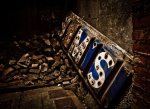
SAM’S signage – The Underground Tour, Seattle, Washington 2
SAM’S signage – The Underground Tour, Seattle, Washington 3
The term ‘grunge’ is something I associate with a photographic style in which elegance of form can be sussed out underneath evidence of decay; the elegance and the decay together are, in their juxtaposition, a thing of beauty. Grunge is also a Seattle term denoting a kind of raw alternative rock music that has its origin in this city. Musically, grunge owns guitar work with heavy distortion, dissonant harmonies and vocals/lyrics that must be sussed out. Grunge lyrics juxtapose angst and apathy of youth’s forward look to the rest of what Life offers; in these lyrics the mean of human condition – yours, mine, his and hers – is presented as something sullied, something confined, yet something that must move forward glimpsing more and more of what Life really is about. The lyrics are also about finding freedom within a sullied, confined life. The music and lyrics are the raw energy and angst in response to the experience of disillusionment and one’s discovering personally an identity in the mean of human condition. Together, the grunge music and lyrics expose the elegance and beauty found within our sullied human condition.
The following Seattle photographs were taken on the last leg of the Seattle underground tour, an object of grunge – form and decay juxtaposed. SAM’S was no doubt a store or bar or restaurant; the signage seems to associate to the fifties or sixties in style and was bulb lit rather than a neon sign.
Listening to Grunge – Nirvana’s Smells Like Teen Spirit, Joan Osborne’s celebrated song about the human mean, One of Us and Alice in Chains’ Heaven Beside You.
Quotes to Inspire – (1) “A great photograph is one that fully expresses what one feels, in the deepest sense, about what is being photographed.” – Ansel Adams (2) “Don’t shoot what it looks like. Shoot what it feels like.” – David Alan Harvey































 In My Back Pocket - Photography
You must be logged in to post a comment.