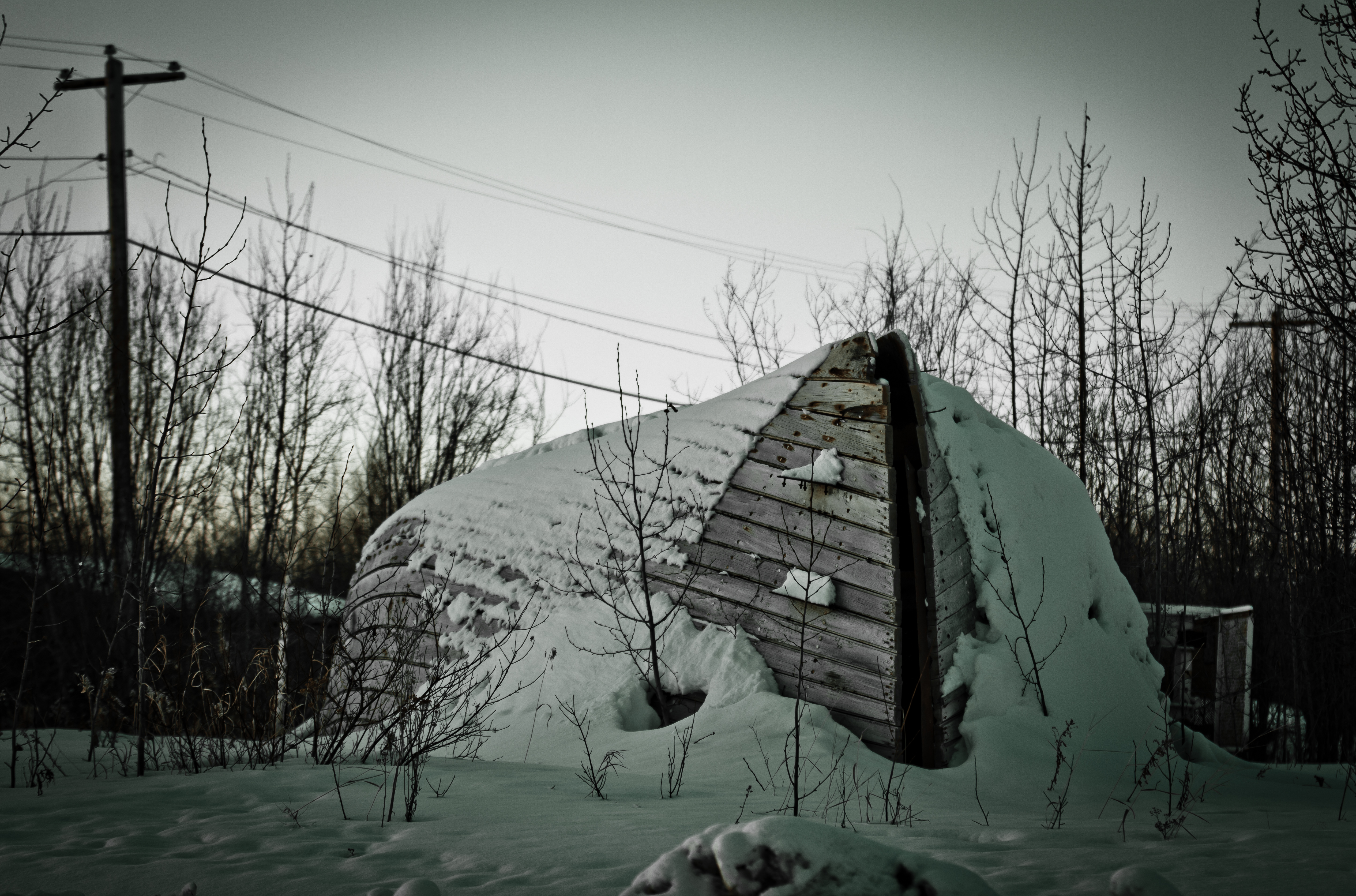
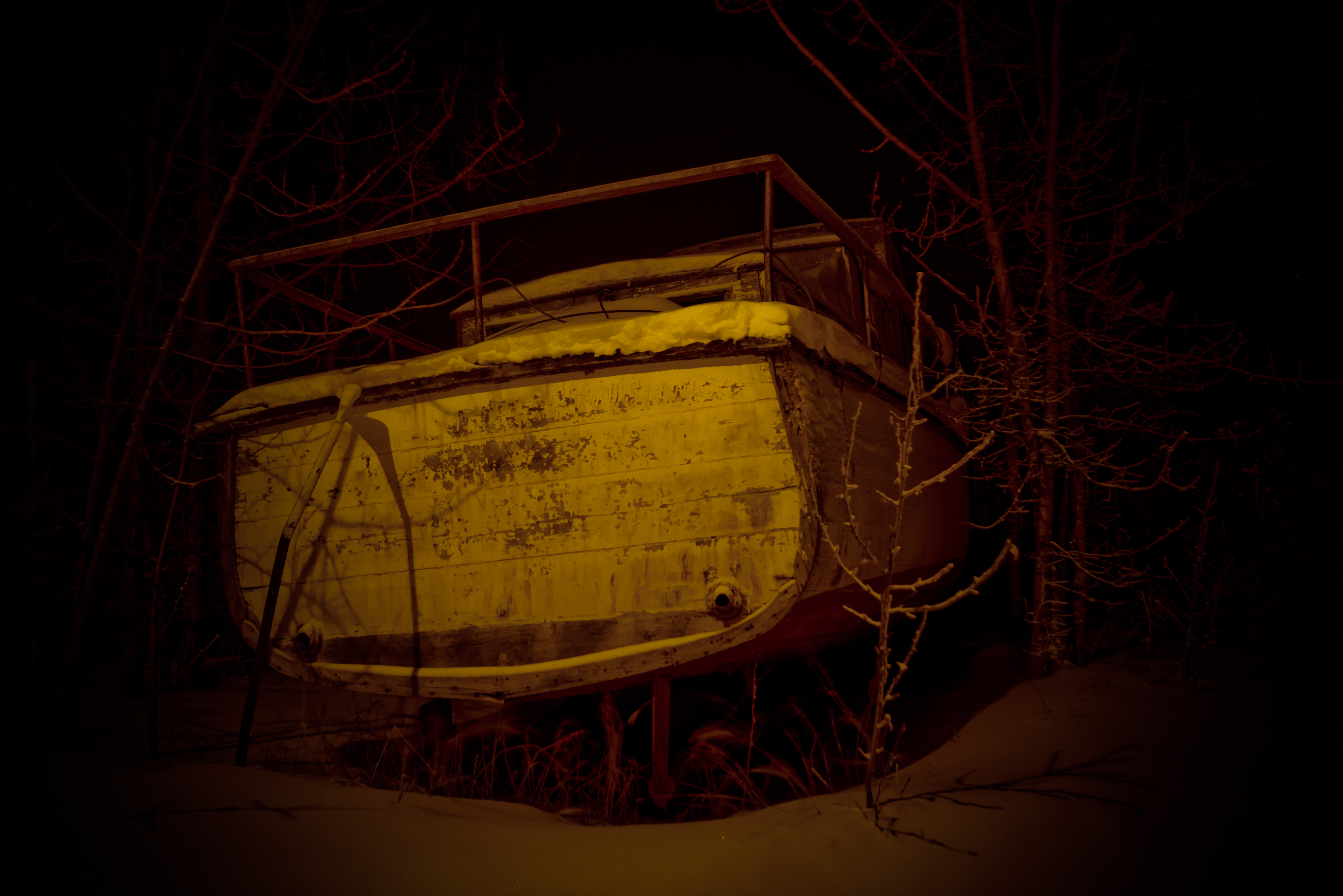
At sundown I found this boat, dragged to its rest among the trees; it lies on Vale Island in the industrial section of Hay River’s west channel that now caters to barges on the Great Slave Lake. The photograph may make the boat look smaller than it really is. From ground up to the boat’s keel is eight to ten feet and its length is about sixty feet. What has it been used to accomplish? Many things draw me to this photo – the juxtaposition of boat and plants, the juxtaposition of boat and telephone poles, a boat covered in snow, the colour, form and texture of the wood. The image draws highlight to the phrase, ‘coming apart at the seams.’ Possibly this phrase refers to the final demise of derelict boats and ships. As I look to the image, the final photograph I’ll consider today, it seems as though the boat sleeps under a blanket of snow.
Thank you to all bloggers who navigate regularly to ‘In My Back Pocket – Photography;’ thank you for the ‘likes’ and the ‘comments’. Good schtuff!!
Listening to a playlist while I walk tonight – U2’s Magnificent, Coldplay’s Yes, Radiohead’s All I Need, The Police’s Walking on the Moon, Kings of Leon’s Crawl, U2’s Moment of Surrender, David Bowie’s China Girl and U2’s Miracle Drug.
Quote to Inspire – “A lot of people think that when you have grand scenery, such as you have in Yosemite, that photography must be easy.” – Galen Rowell
A vase and a serving dish, both glass, both transparent yet holding colour, both with shape and form and both reflecting light are subjects in the images presented here. Both glass structures are lenses, the vase, a lens revealing entire beauty of the flower held, the serving dish, a lens to the manna that soon will be eaten. The polished surface’s shape and form reflects light. So too does the interior of the glass. There’s that place where the glass in being shaped curves or twists receiving form. From that point within there’s reflection, a glint of light from within shining back. Analogy extends forward … what structures hold us that allow us to be seen? Would this be a home? Would this be a marriage? A vase holds the still-life flower, a living thing of beauty while beautiful. Moving past prime, dying, it is discarded. For us, we each have a rich, subtle life, one that few others really know well. Is friendship the vase-lens structure allowing for revelation of one’s subtle life? Something in this analogy is truth my mother understood. Her memory via her paintings prods me forward toward unraveling it.
Listening to Bruce Springsteen from the Tunnel of Love album – One Step Up; Bryan Ferry sings Just Like Tom Thumb’s Blues from Dylanesque. Amiina from the album Kurr provides a tonal, music box sound in Rugla. Rugla reminds of another ambient mix by Sigur Ros from the Takk album – Glosoli. Later, I’m listening to Last Thoughts on Woody Guthrie, thoughts Bob Dylan offers – The Bootleg Series, Vols. 1-3 (Rare and Unreleased) 1961-1991.
Quote to Inspire – “Photography is only intuition, a perpetual interrogation – everything except a stage set.” – Henri Cartier-Bresson – Photography Year 1975 – Life Library of Photography, page: 216
On a Saturday afternoon, in late November or December, 1968, my father took me to Edmonton’s Varscona theater on the corner of 109th Street and Whyte Avenue to watch a newly created film version of a Dickens’ novel he knew well; my father took me to watch Oliver! In the film, I encountered a boy a little older than me, Oliver Twist, as he moved forward into the world without parents, moving from workhouse to funeral home and on into more (or less) corrupt hands (depending on your point of view), navigating by strength of character and goodwill through mishaps, misdeeds, abuse and neglect. Innocence and seeing the world with first eyes are key aspects in this narrative’s presentation, a child acclimating to what the world is about – good and bad.
Safety and what is right are elements of Life that Oliver perceives purely on the basis of tone. Highlighted in the novel is affectation of tone, tone used to achieve an end. Here, Oliver responds to the warmth and apparent sincerity in the charm and charisma proffered by Fagin (sly, cunning con artist) and Master Charlie Bates a.k.a. the Artful Dodger (Fagin protégé, pickpocket and derisively referred to as Master Bates). Their tone and apparent sincerity lead only so far before innocent and perhaps earnest discussion of what’s at play (picking pockets) draws both accountability and deflection of impropriety into/from the situation.
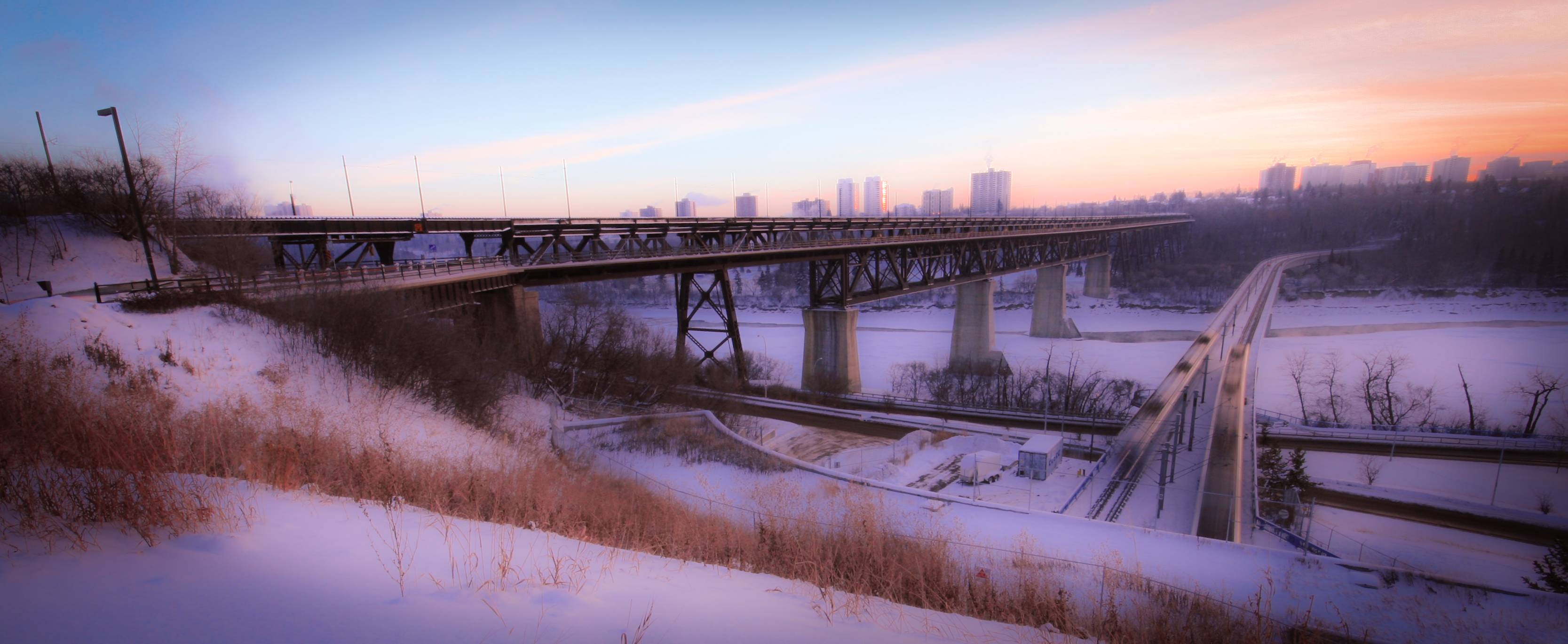
Key among things recalled from watching Oliver! at age seven is how light is used to convey tone and mood. Street scenes in the film occur when light is mistrusted as its intensity diminishes and as color and tone deepen and broaden, enhancing mood. Evening light, the cusp of sunlight declining into sunset, drawing day into night, is much of what the street scenes in Oliver are about. Perhaps director, Carol Reed, draws out broad visual metaphor, here, light’s transition into dark – wholesome Life moving to an arena of growing corruption, of that which is underhanded and unable to be truly ‘seen’. What stays with me after these forty-three odd years is the role that light’s intensity plays in establishing mood; the movie Oliver has had me attending to the tone, colour and atmosphere of winter street scenes as shadows lengthen, sunlight diminishes and we move through that range of colour taking us from day into night. Most often I’ll recognize this same tone driving west on Edmonton’s Whyte Avenue, close to Christmas as the sun draws toward the horizon … the mood is the same. The colours, light, tone and mood found in this December photograph of Edmonton’s High Level bridge are those you’ll find in Oliver!
Listening to Adele’s Set Fire to the Rain from her 21 album; other songs of the day include U2’s Bad from The Unforgettable Fire and Coldplay’s God Put a Smile Upon Your Face from their album A Rush of Blood to the Head. In the past few days Jack White and The White Stripes have featured in my listening – 300 M.P.H Torrential Outpour Blues (Live) from Under Great White Northern Lights (Live Canadian Tour). The Verve’s Lucky Man from the Urban Hymns album and U2’s Love and Peace or Else from How to Dismantle an Atomic Bomb have also been there.
Quote to Inspire – “People think that all cameramen do is point the camera at things, but it’s a heck of a lot more complicated than that!” – Larry in Groundhog Day
Someone’s project, this mauve and mint green 1953 Ford F-100 resides in the industrial area lot across from the Viterra grain elevator, a vehicle waiting for its next drive, more utility upon pavement. The mood of this photograph attracts. Its subject waits upon an earthly creator with abundant resources to transform ‘what was’ into ‘what will be,’ a creator who will set new purpose for this vehicle – breathing life into it, again. What this vehicle will become depends upon the creative imagination of those who will bring restoration.
Listening to U2 sing about INXS lead singer Michael Hutchence in Gone, from Best of 1990-2000 [B-Sides]; then it’s Gillian Welch singing Revelator from her Time – The Revelator album; finally it is Dar Williams singing Mercy of the Fallen from her album The Beauty of the Rain.
Quote to Inspire – “Photography can only represent the present. Once photographed, the subject becomes part of the past.” – Bernice Abbott
Wisconsin Locomotive – High Level Canadian National Rail Yards 1
Wisconsin Locomotive – High Level Canadian National Rail Yards 2
Wisconsin Locomotive – High Level Canadian National Rail Yards 3
Wisconsin Locomotive – High Level Canadian National Rail Yards 4
I am including four other photographs of the Wisconsin locomotive engine within the High Level Canadian National rail yard.
My interest in locomotive engines probably began with the matter of watching them pass by at railroad crossings, as a youngster, sitting among family in our 1969, silver-green Pontiac Parisienne; the big thing was to wave to the engineer and pull our arms down as if we were tugging on a rope above us – to our gesture we were sometimes rewarded with the engineer blowing the train’s air horn in our presence, something that would thrill us, creating big smiles on the faces of everyone. Later, during summers while in university, I served as spotter and brakeman moving hopper cars around rail yards in southern Edmonton. And, now, I still have an interest in trains and locomotives. I wonder how much of my current interest has been shaped by time enjoyably shared with my son reading Thomas the Tank Engine stories each night or watching the animated VHS video stories or in building different wooden track configurations and moving different engines around my son’s Thomas the Tank Engine track – Thomas, Percy, Rusty et al. Here, in Reverend Wilbert Awdry’s stories, it’s the everyday advice on the practicalities of living and the allegorical component of his stories that continues to hold my attention … there’s value and values there. My son is now eighteen and in university – many good facets of what life is about have been embedded in his character through these stories; these stories have been an enjoyable investment in my son’s future. And, still trains and what they accomplish capture my interest.
Listening to Billy Bragg and Wilco perform Stetson Kennedy from the Mermaid Avenue, Vol. 2 album; then it’s been Black Rebel Motorcycle Club … who would have thought four seminary graduates would minister through music … like this in Ha Ha High Babe.
Quote to Inspire – “I began to realize that the camera sees the world differently than the human eye and that sometimes those differences can make a photograph more powerful than what you actually observed.” – Galen Rowell
Edmonton – June 2, 2011 – In 1988, in Anzac, Alberta I painted the walls of a Northland School Division teacherage making it home for my wife and I in our second year of marriage. That fall, I listened and painted as a song aired for the first few times on the local FM radio station from Fort McMurray featuring Robbie Robertson and familiar ‘Joshua Tree’ vocals as back-up to the song with also familiar chiming guitar work. As I listened I was confirming the sacred arena that the lyrics were dealing with. Backing to the song was provided by Bono and Edge of U2. The song, Sweet Fire of Love, alluded to and opened out the experience of awakening to the Holy Spirit’s work. In the lyrics, awakening was the issue and the story side of the song had a biographical element, something true and encountered by members of U2.
I would read about such awakening in Steve Stockman’s Walk On – The Spiritual Journey of U2, a book originating in response to a Canadian in Vancouver, British Columbia challenging Steve to set out proofs that members of U2 were Christian. There was much disbelief about U2 being Christian. The band’s appeal to audiences would seem worldly and something quite far away from … ministry. Yet, Steve set about looking through the U2 canon to establish context and biblical reference for U2 songs and in doing so exposed the bad and good, the hurt and the love experienced in the current Church. Moreover, Steve considered the role contemporary secular and Christian music play in overcoming or ameliorating a grace-filled Christian walk.
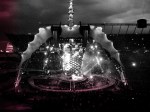
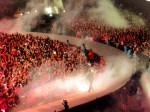
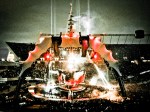
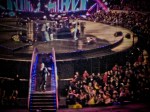
Throughout this time of challenge regarding U2’s credible Christian walk, Steve hosted a Sunday radio show called Rhythm and Soul on BBC Radio Ulster (8:00 p.m. – Ulster, 1:00 p.m. – Alberta) that examined Christian message found in contemporary Christian and secular music; over the internet, I tuned in from 2002 to 2007. By the time Rhythm and Soul completed its run, Steve had written three books considering music in the Christian walk, completed a Masters of Theology, led youth (young adult) missions trips to Cape Town, South Africa and had served as Dean of Derryvolgie Hall at Queens University in Belfast, Ireland. In the summer of 2005, I enjoyed an hour’s visit and dialogue with Steve at Regent College (Vancouver, British Columbia). After a few years, Steve became chaplain at Fitzroy Presbyterian Church in Belfast, Ireland; he now has a blog that follows from his Rhythm and Soul days and his Rhythms of Redemption blog – its called Soul Surmise. For Steve, Bono of U2 remains his favourite Irish pastor. For me, I finally got to see U2 in Edmonton, Alberta at Commonwealth Stadium in my forty-ninth year, days before I would turn fifty – 2 June 2011.
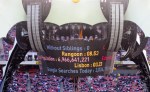
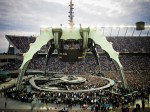
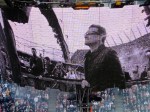
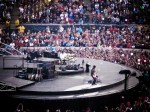
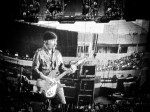
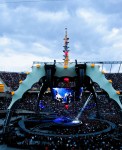
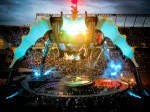
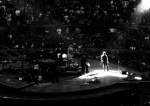
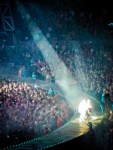
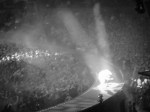
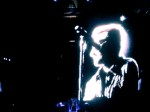
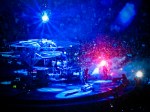
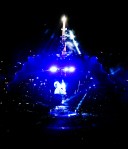
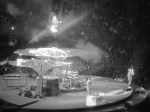
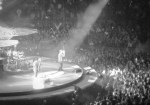
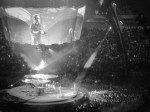
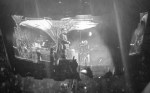
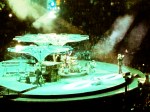
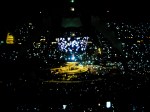
The photographs presented here capture something of the evening. It being an overcast day on June 2, 2011, the night became chilly and U2 donned extra clothing to stay warm. The evening held stories of Bono hitch-hiking in a Vancouver rainstorm and being picked up by a Vancouver Canuck’s player who Bono rewarded with tickets to the Edmonton performance. Bono sought out a female audience member to sing a Canadian tune, Neil Young’s Heart of Gold. The whole of the stadium knew each song of the U2 canon; all sang with U2, and together. As I would remark later – I was glad to be able to take my wife, daughter and son to see a live performance by a band whose music has filled our home through the years – a memorable, once-in-a-lifetime night.
Here’s the set list.
Even Better Than The Real Thing
I Will Follow
Get On Your Boots
Magnificent
Mysterious Ways
Elevation
Until The End Of The World
All I Want Is You
Stay (Faraway, So Close!)
Beautiful Day
Pride (In The Name Of Love)
Miss Sarajevo
Zooropa
City Of Blinding Lights
Vertigo
I’ll Go Crazy If I Don’t Go Crazy Tonight
Sunday Bloody Sunday
Scarlet
Walk On
Encore: One
Where The Streets Have No Name
Encore 2: Hold Me, Thrill Me, Kiss Me, Kill Me
With Or Without You
Moment of Surrender
Curious quote for the pondering:
“… some may call it blasphemy
But I believe it’s true
God lies there beside you in the gutter
And grace, like a mother holds you.” ~ Steve Stockman, from poem,Up on Scarlet Street
Listening to Ryan Adams’ Wonderwall from the album, Love is Hell
The photograph presented, here, is one of the five boats on Vale Island at Hay River, NWT. While several wordpress blogger photographs this week explore the theme of ‘simple’ in a weekly photo challenge, this photograph more accurately conveys the sentiment of ‘being at rest or at peace.’ This photograph is quirky, though, a boat dragged among the trees, a boat left to rot away … and still the lighting, the subject and boat’s shape suggest simplicity, perhaps a simplicity in resignation. As a concept, simple can be construed to mean the basics involved in the minimum equation for living; it can refer to what one finds easy to do and tangentially it can refer to limited cognitive capacity, perhaps a capacity less than what is required in order to live. Again, the photograph really presents the simplicity of resignation – a life resigned, something complete, something simple.
Listening to The Good in Me is Dead sung by Martyn Joseph in his album Don’t Talk About Love, Volume 1
Quote to Inspire – “There is no such thing as ‘correct’ composition, just bad composition, good composition and inspired composition.” ~ Andrew S. Gibson, Beyond Thirds – A Photographer’s Introduction to Creative Composition
On Vale Island, part of the old Hay River town site, at the wooded corner of 100th Street and 102nd Avenue, if you look into the trees of the northwest corner the sight you’ll see is that of four or five derelict wooden boats of various sizes, some small enough to have navigated the east channel alone, others with size enough to have been considered, in their day, seaworthy on the Great Slave Lake. Three of these boats are the subject of my second high dynamic range (HDR) photograph, boats well-past their prime, dragged to higher ground to rot away among the aspen willows. They will no longer be a nuisance there and they’ll need little upkeep. In actual fact, what I’ve come across is the cemetery plot for these old boats. While life has gone out from them, these vessels, without doubt, saw service in my life time; but, would they have been built in my life time?
The picture and this present consideration of boat-life reminds of a reader colleague and friend who pointed me toward Alice Munroe’s 2001 novel about the different ‘ships’ we sail within throughout our lives; it’s entitled Hateship, Friendship, Courtship, Loveship, Marriage, and has now been republished with the title ‘Away From Her.’ Within each state we act and move with different intents and purposes. But, a ship graveyard such as this found on Vale Island reminds that our journey within these collective or collected states has beginning, duration and an end, as well. The book was a tough go reading-wise, more something exposing malaise and truth than … hope?
The boats of Vale Island while having had lives that preceded this photograph, have certainly ferried human lives living within the various ‘ships’ that Alice Munroe has proposed in and around Hay River, NWT. These boats still hold their line and shape. Now, beyond their service, they are in demise. And, the winds blow from the Great Slave Lake through Vale Island, among these boats and into Hay River.
Listening to Ride Forever, sung by Paul Gross as part of the Due South soundtrack, a single song referencing the Great Slave Lake, living in Alberta … and matters of growing old.
Quote to Inspire – “Where I come from the challenges are quite different. There are no drug dealers or pimps, few thieves to bother with. There was only the environment and surviving in the face of it is the challenge of the Inuit. A mother gives birth somewhere out on a glacier field, hundreds of miles from the nearest outpost and she knows that the odds are stacked against her son even living to see the spring with disease, lack of food or the elements. And, even if they should survive and if he should grow to be a boy, she knows very well that all he has to do is lose his footing on the smooth surface of a glacier and that’ll be that. In other words, she should know that if her son cannot live … why should she try? Well I know this woman. I helped deliver her son. She was weak and undernourished. The next morning she stood up and she picked her child up into her arms and she set out again into the blinding snow. And, I think that was one of the most courageous acts that I’ve ever seen.” ~ Paul Gross, Fraser/Inuit Soliloquy – Due South
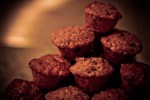
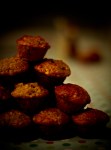
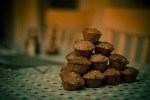
My daughter misses her brother who’s away at University. As the baker in our family and as someone who’s grown up with stories of and experiences with a grandmother who’s practiced and creative flare showed through her tasty dishes upon her dining room table, my daughter understands that care is expressed for others through the art of food. My son, who’s seven years older than my daughter, values and respects his sister’s abilities, creations and talent. Tonight, my daughter has baked muffins for her brother to send his way in a ‘care package.’
For my part, stories surrounding manna in the ancient wisdom text have me wondering about the longevity (or shelf-life) of this food parcel being sent 800km south; manna was to be collected once a day, a portion (an omer) for each member of the family; collecting more than was needed would see the uneaten portion rot, becoming filled with worms and maggots – all this to teach a people absolute reliance upon the creator. Still, for us, we are at that cold, polar, northern part of our year that sees temperatures drop to -40 where Celsius and Fahrenheit scales intersect. The cold will, no doubt, easily prolong the shelf-life of my daughter’s care package muffins, certainly long enough for my son and his dorm-mate to enjoy.
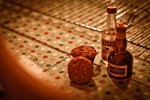
The muffins my daughter has baked are subject for tonight’s photographs. Later, with her, we added photographs of various teas from our cupboard and placed two ounce-bottles of the grandparent’s favourite spirits on the table to work with glass and shape. We experimented with depth of field and focusing with the Canon 60D’s live view display. Our photography session came about partially because my daughter was intrigued this morning when I showed her a PhotoPlus article on Food photography; it’s part of a monthly feature in which a pro photographer mentors an interested and willing amateur. Now that I’ve had a go at it, the article deserves a re-read.
Quote to Inspire – “Inspiration is always a surprising visitor.” ― John O’Donohue, Anam Cara: A Book of Celtic Wisdom
Listening to Mozart’s Andantino con variazioni from Flute and Harp Concerto K. 299
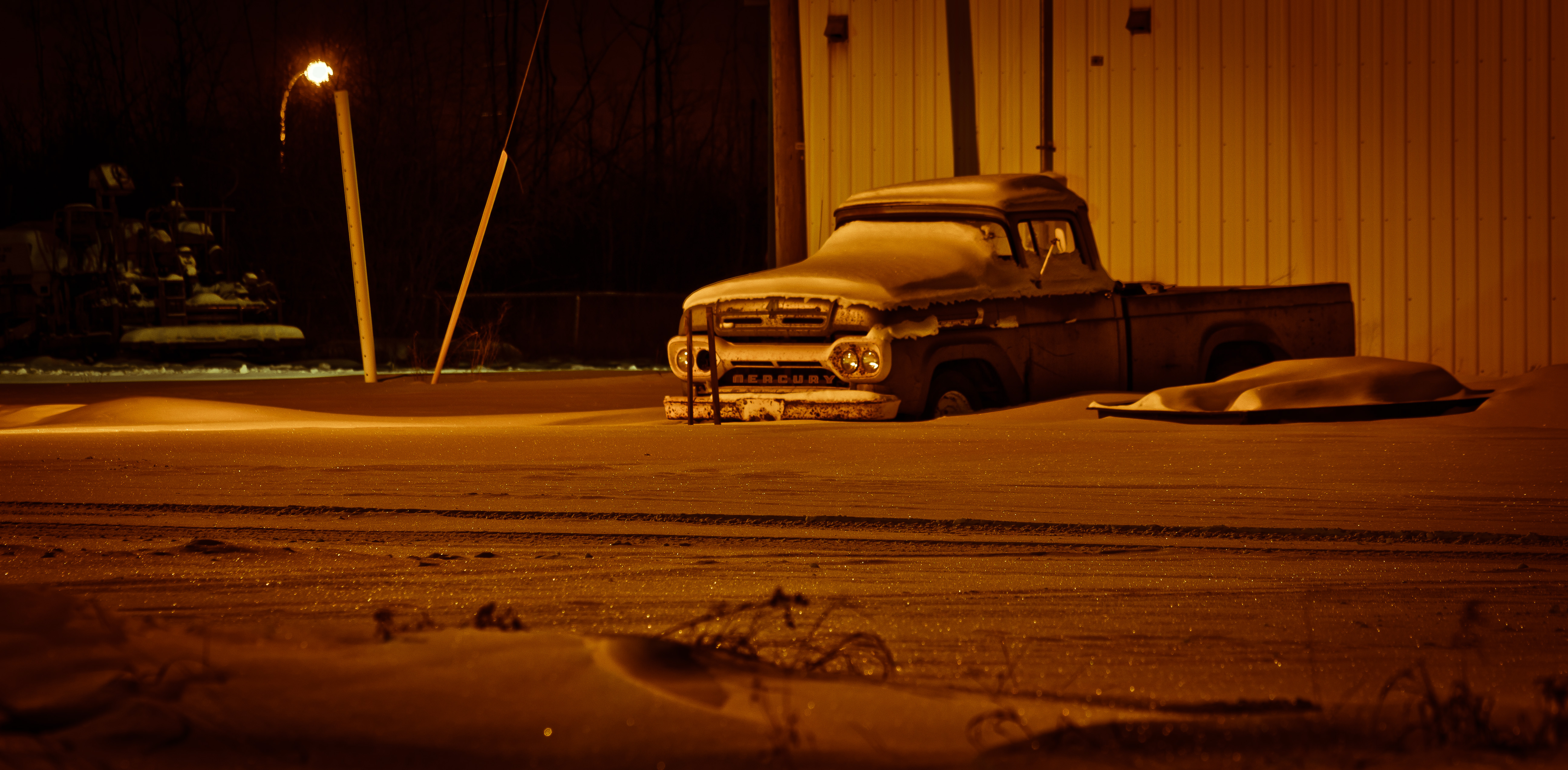
I’ve been out for a 6K walk around town tonight. It is -35C and I’ve listened to a lecture given by John O’Donohue on Imagination. After the walk, I recalled this vehicle in the High Level industrial park, a vehicle that I’ve known about but never photographed, a 1960 Mercury M 100 long box pickup truck. It’s been on my mind for the better part of a year. I’ve never photographed it because the landscape or situation it is set in seems bleak and uninteresting. Perhaps such context draws out beauty from the vehicle’s lines and shape or perhaps through time one acclimates to beauty, form and style.
In taking this photograph, I’m using a Canon 75-300 mm telephoto zoom lens and quite literally taking the photograph to see what is there … a rusting relic awaiting restoration when time and circumstance allow. In terms of integrity the M 100 looks more complete and useable than not. The photograph also demonstrates the compression that happens with a telephoto zoom as you shoot more flatly toward the subject – the distance from the first snow drift to the truck is 100 m and the posts in front of the truck are actually about 6-10 feet in front of it.
Quote to Inspire – “The duty of privilege is absolute integrity; the duty of privilege is integrity to ourselves, to our possibilities and to live to the full the life that we’d love and to animate and realize everything because the time is so short and it will be soon gone.” ~ John O’Donohue
Listening to Crash into Me from Dave Matthews & Tim Reynolds, Live At Radio City and as fretted on my Martin Backpacker.





































 In My Back Pocket - Photography
You must be logged in to post a comment.