Older Vehicles – Alaska Highway Museum, Sangudo, Alberta
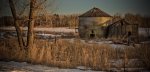
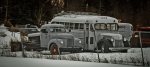
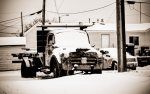
Cab and Chassis & Bus 1
Cab and Chassis & Bus 2
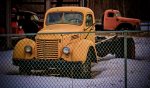
Old Cab and Chassis 1
Old Cab and Chassis 2
Old Cab and Chassis 3
Sangudo Truck Museum 1
Sangudo Truck Museum 2
Sangudo Truck Museum 3
Nampa Flat Deck Truck 1
Nampa Flat Deck Truck 2
Cab & Chassis – Sangudo 1
Cab & Chassis – Sangudo 2
Cab & Chassis – Sangudo 3
Cab & Chassis – Sangudo 4
Saw Mill – Whitecourt 1
Saw Mill – Whitecourt 2
If you’ve been around the internet in the past five years, consideration of what comprises a perfect average day has surfaced as a means of designing one’s day so that key features in one’s day are found and recognized, so that Life-long goals are actualized and so that people recognize and master control over what happens within their days rather than being mere do-bodies, going from bed to work and back again with little awareness of time, values, meaning and effort, all of which are invested in each day. For me, what to do about photography and pursuing each next, best picture has been the question of the day … through many months. Photography is an activity that you make time for, an activity that you fit into your day, an activity that must, in precedence, rank equally to other activities in your day if you’re to find successes with it. It’s about photographing things you like to photograph, things you’re interested in. It’s about photographing things you don’t normally have access to in your day-to-day existence. It’s about capturing unique qualities in your subject that you and others may perhaps never find again. And, it’s about recognizing the beauty in things and photographing them. In Susan Sontag terms photography is about appropriating and making the thing photographed, yours. Photography is not an activity easily engaged in. Often the timeframe from image capture through to print and presentation is a separation of tasks that involves days, weeks, months and as I’m still finding, it may involve years. It is work and it is cumulative work – seeing more and more of what the image can become. It is an endeavor engaged in primarily because the print outcome is reward; what is produced is a kind of manna for the viewer to feast upon. In the subjects photographed, while there are seasons and changes we pass through, what’s also beginning to surface as more photographs are created is the commonality or mean of existence, the fundamentals that we need to live and thrive. And, I note my good fortune in not being fully exposed to lives lived in the absence of these basic ingredients of Life.
The photographs presented here are the other photographs, the b-side images that were not ones selected to tackle consideration of a single theme or idea or subject. What’s interesting, though, is the repetition of what is subject within photographs – it’s beginning to reveal commonality among our human needs.
Listening to Young the Giant’s Cough Syrup, (a second night’s acclimatization to the tune), Ulrich Schnauss’ Passing By (from Elizabethtown Soundtrack – vol. 2), the Propellerheads’ Take California, Tricky’s Hell Is Around the Corner, Supreme Beings of Pleasure’s Strangelove Addiction, Moby’s Porcelain and the Gotan Project’s Santa Maria (Del Buen Ayre).
Quote to Inspire – “Photography, like alcohol, should only be allowed to those who can do without it.” – Walter Sickert
A few things make today a tougher go – not the legitimate student response to spring’s arrival and the fever it’s engendering, nor is it those minds that recognize that their attitudes are blocked, stalemated or closed with the past six months of winter’s interior Life at home and school; at this time of year openness in perception, thought and attitude itches in angst to break free of winter’s constraints of living. These are all within the arena of Life work in early spring in High Level, Alberta.
At this time of year, it’s too easy to say the wrong thing. It’s too easy to get caught-up in oneself and one’s endeavors. It’s too easy to neglect where one’s care needs legitimate directing. This season is one in which humour can get you into serious trouble while also being a source of tremendous healing and celebration. It’s a time of year when it’s good to have a bonfire that is shared among others, a bonfire that extends the day into the wee hours of the night. It’s a time when strength of body and strength of mind carry you forward into this next season that is spring. At such a bonfire it’s good to have a keeper of the fire, the last man standing for when the last ember dies, someone we know who will see the night through on our behalf when we find that we should direct ourselves home and to sleep. And, perhaps that’s it, the toughest part of today is that of helping one’s body overcome extended wakefulness as the season changes from winter to spring.
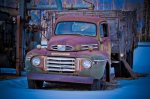
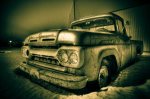
The photograph presented here is that of a late fifties flat-deck truck in Nampa, Alberta. In Nampa the historical-agricultural museum is in the process of re-locating. So, farming equipment/implements, vehicles, train cars and buildings are shifting location. Until the new site is completed these items remain scattered throughout Nampa. This flat-deck truck sits in someone’s backyard alongside other vehicles and looks to be in readiness for use. This truck has seen perhaps fifty or so years of service and its structure still has integrity. It seems to be one of the last vehicles standing and seems to have strength associated with preserved shape and ability to function. Its look is that which we’d find in the wizened face, that face of the last man standing – the keeper of the fire – when we need to direct ourselves to sleep.
Listening to Over the Rhine’s Spark, Joseph Arthur’s In the Sun(with Michael Stipe) and U2’s One; other songs have included Eric Angus Whyte’s Beggars and Buskers (of Belfast), Liz Longley’s Free and the Steve Miller Band’s Rock’n Me. My daughter has had me download Young the Giant’s Cough Syrup and Kelly Clarkson’s Stronger (What Doesn’t Kill You); Demi Lovato’s Skyscraper has also received download tonight.
Quotes to Inspire – (1) “If I knew how to take a good photograph, I’d do it every time.” – Robert Doisneau; and, (2) “If I have any ‘message’ worth giving to a beginner it is that there are no short cuts in photography.” – Edward Weston.
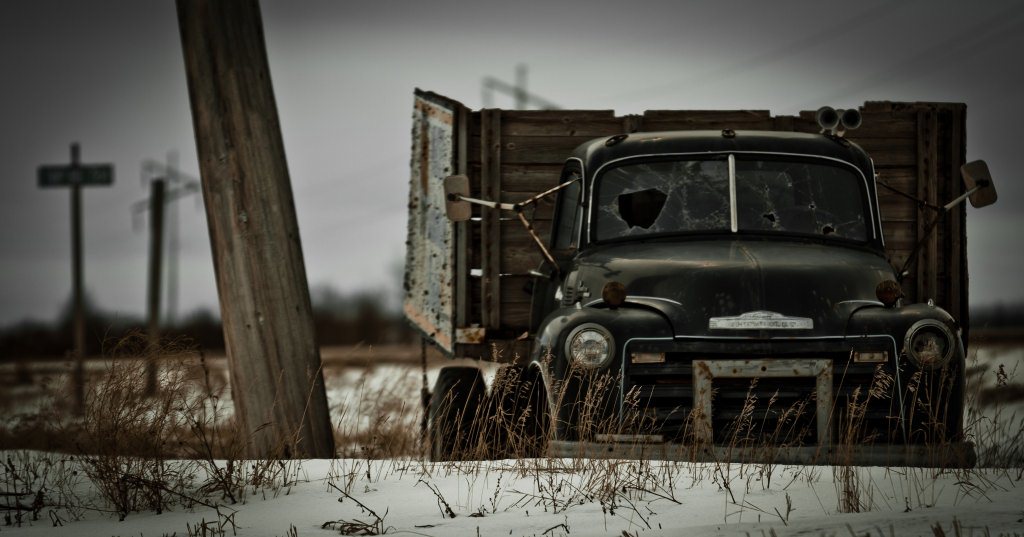
Fifties Grain Truck - South Side toward Nampa, Peace River, Alberta
In a Canadian literature course at the University of Alberta in the late eighties, Professor Bruce Stovel had us reading Canadian literature – Margaret Laurence’s Stone Angel, Upton Sinclair’s As For Me and My Houseand Hugh MacLennon’s Two Solitudes. I was coming to Canadian literature in my last year of an Arts degree after a tour through the literatures of the world, a literature decidedly English in its understanding of the world. We began the course with short stories about the Canadian experience of living in a young Canada. A young Canada could still be taken advantage of and Stephen Leacock wrote more than a few stories aimed at exposing a need to be more wiley and aware as a country among nations. One of the experiences written about was the matter of being sold something. Sales and selling were about creating something called the soft solder, an electrical analogy sales people understood to mean the means by which they connected the would-be, hinterland buyer to a commodity he or she didn’t really need.
The effective salesperson would work to leave the commodity, something such as a clock, in the care of the prospective Canadian buyer to let him try it out and to ascertain that the clock worked beyond expectations. For perhaps two weeks or a month the clock would remain fixed in the prospective buyer’s home. And, after two weeks or a month, the seller would return to review the merits of the clock with the prospective buyer and to collect the commodity, a clock which had worked its way into the habits and routines of the buyer. Removing the clock was something akin to removing a tooth from one’s mouth; it had been possessed and the threat of removal brought with it the uncertainty associated with luck and promise. The unsuspecting buyer would grapple with improved luck and situation that the clock affixed in the life of the buyer would provide. The clock would be kept and terms of sale agreed to.
In and around Peace River, Alberta the means of sale are not so subtle and no longer deal with affixing service or commodity to the buyer. The connective tissue (soft solder) at present seems to be that of using vehicles of a former era to attract retrospective view and attach it to a billboard affixed to the side of the grain box of an older grain truck. Retro grain trucks have become portable billboards regarding services found at location. On Peace River, Alberta’s west side a sixty-four (1964) GMC three-ton grain truck connects passersby with Luxliner services transporting them to Edmonton at fair price while this Chevrolet three-ton grain truck connects passersby with sandblasting services on Peace River’s south side.
Listening to: Radiohead’s Go to Sleep from The Best of Radiohead, a cool tune in terms of minor key melody; then it’s Ryan Adams’ Starting to Hurt from the Demolition album. Next is Pete Yorn’s Pass Me By from the Day I Forgot album. Later it is 5/4 by the Gorillaz from their album of the same name.
Quote to Inspire – “You don’t make a photograph just with a camera. You bring to the act of photography all the pictures you have seen, the books you have read, the music you have heard, the people you have loved.” ― Ansel Adams
Distances travelled within Canada’s vast landscape are huge. Travel along its roadways demands commitment to best use of drive time between point of origin and destination so you get where you are going and so you enjoy where you got yourself to. Within this travel predicament kinaesthetic awareness of the road counts as much as visual presentation in terms of road familiarity. Curves, drops, bumps and inclines inform you in your travel along the road. Artists depicting the predicament of Canadian travel often poke fun at vacations enjoyed from a car’s interior as the terrain passes by as much as it is something enjoyed at the destination’s endpoint. A better way to see more of Canada’s landscape is accomplished looking through a camera lens; doing so requires you to stop your vehicle, stow it safely along the roadside, get out of it and interact more substantially with the environment you encounter.
An iconic rendering of Canada’s roadscape is what the image presented here is about. I’ve photographed a portion of the up-and-down incline leading up to Twin Lakes along Alberta’s Highway 35, one hundred and fifty kilometres south from High Level en route toward Edmonton. In distance, the incline covers five kilometres of road surface and rises onto a land mass noted for the temperature change that occurs from bottom of the incline to its crest. In winter a double-digit temperature change can occur and is accompanied by a marked change in weather travelled through. Ascending or descending, driving this incline is a tricky endeavor in winter, something compounded by snow. While one aspect of this image favours the artist’s tongue-in-cheek take on ‘Windshield Time’, the manner in which most Canadians see their Canada rolling past them, the image also recalls lives of former students who as new (and perhaps impatient) drivers were trekking through this bit of terrain on second- or third-ever tries; one bright future ended in a vehicle roll-over. Another life was impacted by partial paralysis. It’s this portion of road in this image that seems to surprise drivers … even experienced ones. Last November, descending the incline in snow was an activity more akin to skiing than rolling forward in a half-ton truck.
Listening to: Gillian Welch’s I Dream a Highway from her Time – The Revelator album, Lucinda Williams’ Car Wheels on a Gravel Road from her album of the same name and High and Dry from Radiohead’s The Best of Radiohead.
Quote to Inspire: “No man has the right to dictate what other men should perceive, create or produce, but all should be encouraged to reveal themselves, their perceptions and emotions, and to build confidence in the creative spirit.” ― Ansel Adams
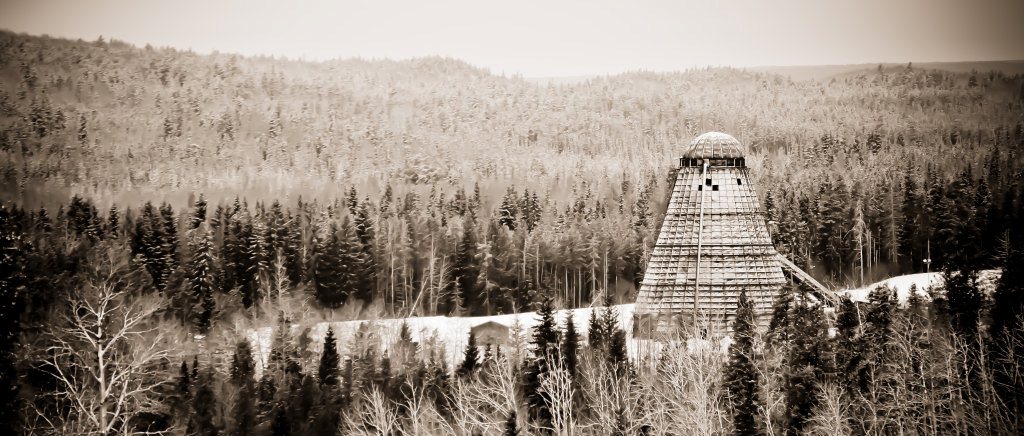
Different economic forces press on the development of Alberta’s natural resources. The fall-out can mean that resource development is postponed for better days. Twenty minutes north from Whitecourt, Alberta, down a long, winding hill into a valley, a sawmill sits in disuse waiting its return to operation. In my northward return drives to High Level through this year, I’ve been meaning to capture this image. On Sunday I found myself with time enough to halt my Nissan Altima along the side of the road and allow myself opportunity for looking through my Canon 70-200 mm F 2.8 lens.
Listening to: All This Time, Liberal Backsliderand This Is Usfrom Martyn Joseph’s Thunder and Rainbows album on my return journey to High Level. My trip southward to Edmonton allowed for a six hour listen to Susan Sontag’s collection of essays in an audiobook version of On Photography, a good articulation and wrestling with photography issues.
Quote to Inspire – “To photograph is to appropriate the thing photographed. It means putting oneself into a certain relation to the world that feels like knowledge—and, therefore, like power. A now notorious first fall into alienation, habituating people to abstract the world into printed words, is supposed to have engendered that surplus of Faustian energy and psychic damage needed to build modern organic societies. But print seems a less treacherous form of leaching out the world, of turning it into a mental object, than photographic images, which now provide most of the knowledge people have about the look of the past and the reach of the present. What is written about a person or an event is frankly an interpretation, as are handmade visual statements, like paintings and drawings. Photographed images do not seem to be statements about the world so much as pieces of it, miniatures of reality that anyone can make or acquire.”– Susan Sontag (b. 1933), U.S. essayist. “In Plato’s Cave,” On Photography, Farrar, Straus (1977).
Lone Barn – Alberta Highway 737, near Figure Eight Lake
Homestead – Near Lone Barn & Figure Eight Lake, Alberta Highway 737
Inuksuk – Highway 685 … Others Have Been Here, too
No Through Road with Heart Wreath
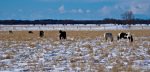
Fairview Lamas and Horses in Spring Sunlight – Rendering 2
Dunvegan Bridge – B-side Photograph 1
Dunvegan Bridge – B-side Photograph 2
Dunvegan Bridge – B-side Photograph 3
Sunday – photographs that I’d intended to post linger on my computer’s desktop in a file of edited images. The week has been busy with obligations taking me into my nights. The first image is one of a barn located in a muskeg bog, just south of Figure Eight Lake on Alberta Highway 737; it is out of the weather and close to a water source; no house or homestead is in the immediate vicinity. One could have burned down. Or, perhaps the barn is associated with the homestead in the second image; this homestead is treed in and built on higher ground a kilometre further south on the west side of the same highway. In another image an inuksuk has been assembled at the southwesternmost corner of someone’s farmland alongside Alberta Highway 685, stating to all comers that others have stood right there, where they now stand. Within metres of the inuksuk, a heart-shaped wreath is fastened below a ‘no through road’ sign, perhaps inviting people to come and investigate. The next photograph presents a second rendering of the Fairview horses and lamas in spring’s sunlight; there’s a glow of sunlight from the animals. Beyond this, are the other b-side renderings of the Dunvegin bridge, photographed last weekend.
Listening to Tonic’s rendition of Fleetwood Mac’s Second Hand News, then there’s Sister Hazel’s take on Gold Dust Woman and Shawn Colvin performs The Chain, all songs are part of Legacy: A Tribute to Fleetwood Mac’s Rumours’ album.
Quote to Inspire – “I treat the photograph as a work of great complexity in which you can find drama. Add to that a careful composition of landscapes, live photography, the right music and interviews with people, and it becomes a style.” – Ken Burns
Mercury Grain Truck, Agricultural Display, Manning, Alberta 1
Mercury Grain Truck, Agricultural Display, Manning, Alberta 2
Mercury Grain Truck, Agricultural Display, Manning, Alberta 3
Mercury Grain Truck, Agricultural Display, Manning, Alberta 4
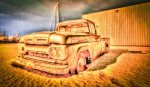
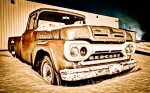
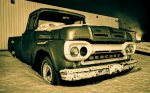
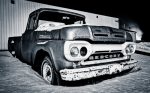
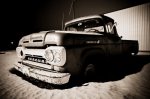
1961 Mercury 100 Pickup, Brock Enterprises, High Level, Alberta 1
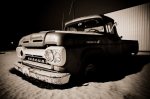
1961 Mercury 100 Pickup, Brock Enterprises, High Level, Alberta 3
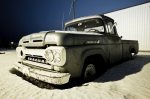
1961 Mercury 100 Pickup, Brock Enterprises, High Level, Alberta 5
1961 Mercury 100 Pickup, Brock Enterprises, High Level, Alberta 6
1961 Mercury 100 Pickup, Brock Enterprises, High Level, Alberta 7
1961 Mercury 100 Pickup, Brock Enterprises, High Level, Alberta 8
1961 Mercury 100 Pickup, Brock Enterprises, High Level, Alberta 9
1961 Mercury 100 Pickup, Brock Enterprises, High Level, Alberta 10
1961 Mercury 100 Pickup, Brock Enterprises, High Level, Alberta 11
1961 Mercury 100 Pickup, Brock Enterprises, High Level, Alberta 12
1961 Mercury 100 Pickup, Brock Enterprises, High Level, Alberta 13
1961 Mercury 100 Pickup, Brock Enterprises, High Level, Alberta 14
1961 Mercury 100 Pickup, Brock Enterprises, High Level, Alberta 15
1961 Mercury 100 Pickup, Brock Enterprises, High Level, Alberta 16
1961 Mercury 100 Pickup, Brock Enterprises, High Level, Alberta 17
1961 Mercury 100 Pickup, Brock Enterprises, High Level, Alberta 18
1961 Mercury 100 Pickup, Brock Enterprises, High Level, Alberta 19
1961 Mercury 100 Pickup, Brock Enterprises, High Level, Alberta 20
1961 Mercury 100 Pickup, Brock Enterprises, High Level, Alberta 21
1961 Mercury 100 Pickup, Brock Enterprises, High Level, Alberta 22
1961 Mercury 100 Pickup, Brock Enterprises, High Level, Alberta 23
1961 Mercury 100 Pickup, Brock Enterprises, High Level, Alberta 24
1961 Mercury 100 Pickup, Brock Enterprises, High Level, Alberta 25
1961 Mercury 100 Pickup, Brock Enterprises, High Level, Alberta 26
1961 Mercury 100 & 1980s Ford Half Ton 1
1961 Mercury 100 & 1980s Ford Half Ton 2
1961 Mercury 100 & 1980s Ford Half Ton 3
1961 Mercury 100 & 1980s Ford Half Ton 4
1961 Mercury 100 & 1980s Ford Half Ton 5
1961 Mercury 100 & 1980s Ford Half Ton 6
1961 Mercury 100 & 1980s Ford Half Ton 7
1961 Mercury 100 & 1980s Ford Half Ton 8
1961 Mercury 100 & 1980s Ford Half Ton 9
1961 Mercury 100 & 1980s Ford Half Ton 10
1961 Mercury 100 & 1980s Ford Half Ton 11
1961 Mercury 100 Pickup – Brock Enterprises, High Level, Alberta 1
1961 Mercury 100 Pickup – Brock Enterprises, High Level, Alberta 2
1961 Mercury 100 Pickup – Brock Enterprises, High Level, Alberta 3
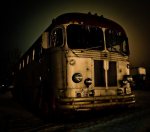
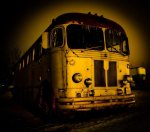
1950s Greyhound Bus – Brock Enterprises, High Level, Alberta 1
1950s Greyhound Bus – Brock Enterprises, High Level, Alberta 2
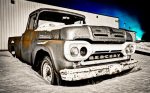
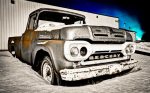
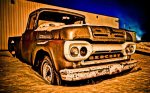
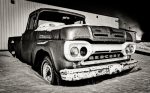
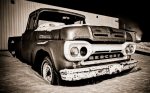
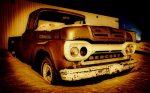
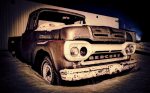
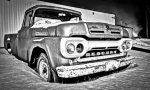
Within this past week I have photographed two Mercury Trucks, the first, an early fifties three ton grain truck, part of a display celebrating the agricultural heritage of Manning, Alberta; the second was a vehicle that is as old as I am, a 1961 Mercury 100 pickup truck located in Brock Enterprises’ industrial lot in High Level, Alberta.
As one who returned to University to complete two degrees, one job I enjoyed for an interim year in October of 1981 was that of working with Ford Motor Company (FOMOCO) in Edmonton, Alberta at Waterloo Mercury, first as a used-car car jockey, then as showroom car jockey and later as pre-delivery inspector. Not quite a gear head, I know a good deal about how a car or truck can be driven and how a vehicle should ride; and, I am someone who enjoys BBC America’s Top Gear. Back then, in 1981, detailing vehicles was my side-business, something allowing me to put money in the bank for University and it’s something I continue to take great pride in. I value a well-turned out vehicle and my preferences for waxes include the McGuiar’s waxes as well as the Autoglym waxes that have received Royal Warrant from Queen Elizabeth II (this is the schtuff used on Aston Martins).
On Thursday, following a long day at school, I drove through High Level’s industrial area, saw a crew vehicle parked in front of Brock Enterprises and went in to ask permission to photograph the 1961 Mercury 100 Pickup stored on this property by the Brock Enterprises owner. It was a never-done experience, that of providing my name, information about where I work and about my teaching photography at our local high school. Later that evening, the matter was one moving me from our couch outdoors to seize the opportunity of photographing the Mercury 100 pickup up close. That night I got out to the Brock Enterprises Industrial Lot and spent perhaps forty-five minutes photographing this metallic green truck and another vehicle, likely a 1950’s Greyhound bus. Photography with long exposures provided me time for looking beyond the truck around at its environment. I was working with Automatic Exposure Bracketing to create High Dynamic Range (HDR) images; so, each HDR image was taking about two minutes to create at 100 ISO. I was dressed in ski pants, ski jacket and warm head-gear; warm comfort is a part of capturing good images in winter or colder temperatures. As I looked around me I saw deer in a neighboring industrial lot moving along a path taking them to the Viterra Grain Elevator where they could feast on grain spillage.
Listening to an iTunes genius generated playlist originating from Mercury Blues by David Lindley from the El Rayo-X album; others songs in the playlist include Get Right with God by Lucinda Williams from Essence, Sweet Fire of Loveby Robbie Robertson from his album entitled Robbie Robertson; Bang a Gong [Get It On] by T. Rex from Electric Warrior, Elvis Presley Blues by Gillian Welch from her Time – the Revelator album and Bob Dylan’s Dignity from Bob Dylan: The Collection – MTV Unplugged have also surfaced as song interests. I’ve also been inspired to purchase through iTunes Fly Like An Eagle, Rock’n Me and Take the Money and Run in addition to Mercury Blues by the Steve Miller Band (good old songs from a grade 11 year … all those years ago).
Quotes to Inspire (1) “The goal is not to change your subjects, but for the subject to change the photographer.” – Anonymous; and, (2) “Actually, I’m not all that interested in the subject of photography. Once the picture is in the box, I’m not all that interested in what happens next. Hunters, after all, aren’t cooks.” – Henri Cartier-Bresson
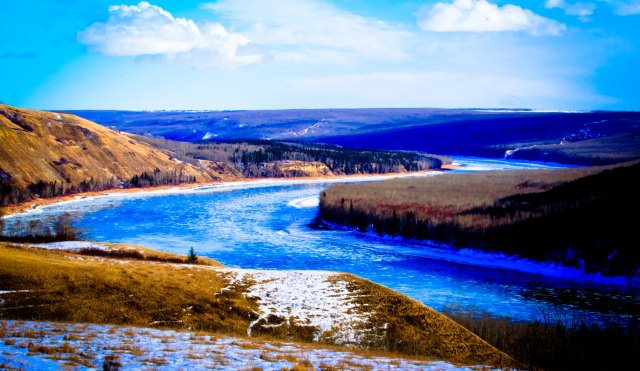
The Peace River - Dunvegan Bridge and Dunvegan Gardens
On October 1, 2011, as an educator having completed several month-long tasks associated with the September 30th student count and the paperchase associated with ministry deadlines at 11:00 p.m., the night before, the prospect of participating in a Kelby Photowalk was there, was a never-done and was possible. As a late, ‘day-of’ registrant one photowalk I could get to from High Level, Alberta, if I started my drive early enough was the photowalk in Dawson Creek, British Columbia. A five-hour drive would see me there with time to spare; the photowalk would start at 1:00 p.m., B.C. time. This was the photowalk I took part in. The other photowalk that was within driving distance but started much too early after my sleeping hard was Fairview-based but would take in the area in and around the Dunvegan Bridge, the Dunvegan historic site and the Dunvegan Gardens. That photowalk took place, in part, along the banks of the Peace River found in the image presented here.
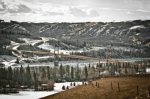
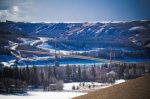
In reviewing this image today, I note that several features of the river draw my attention. The river winds its way through the huge, open space of the river valley. The valley is welcome contrast to the linear, familiar landscape surrounding High Level in which you can look forward, side-to-side and behind you; but up-down depth of perspective and distance are fixed. Standing midpoint up the valley slope allows good change of perspective – opportunity to look down into the valley toward the river and the opportunity to look along the sides of the valley (almost a hallway of sorts) to appreciate its relief (the land’s wrinkles leading down to the river). This kind of perspective as I enjoyed it from a Kelowna hot tub looking down onto Lake Okanagan is one feature I will emulate if and when I ever purchase a hot tub, enjoying a hot tub’s warmth from a height while looking out upon something below.
The photograph, here, is a high dynamic range (HDR) shot in which colour, texture, relief and light are crisply enhanced, capturing attention. Beyond this, the subject of the image – the river – holds attention because there is natural flow and movement, an indicator of spring’s upcoming arrival. The river holds broken ice and moves along the surface of the water. And, the sky’s blue reflects in the water. All this reminds of former life in Fox Lake, Alberta when each evening I’d trek to the Peace River, enjoy its expanse, then return home. I walked to the river through all seasons. For me, this photograph of the Dunvegan river valley and reminiscence of the Kelby Photowalk seem to point to a richness in opportunity for photography throughout each day and through all seasons.
Listening to – Over the Rhine’s Drunkard’s Prayer album; songs standing out – Born, Who Will Guard the Door and Spark.
Quote to Inspire – “The world just does not fit conveniently into the format of a 35mm camera.” – W. Eugene Smith
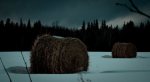
Round Bales and Clouds Stacking – near Grimshaw, Alberta 1
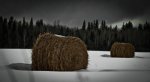
Round Bales and Clouds Stacking – near Grimshaw, Alberta 2
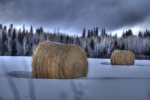
Round Bales and Clouds Stacking – near Grimshaw, Alberta 3
Round Bales and Clouds Stacking – near Grimshaw, Alberta 4
Round Bales and Clouds Stacking – near Grimshaw, Alberta 5
Round Bales and Clouds Stacking – near Grimshaw, Alberta 6
Round Bales and Clouds Stacking – near Grimshaw, Alberta 7
Round Bales and Clouds Stacking – near Grimshaw, Alberta 8
Round bales of hay populate the landscape in the triangle of area between Grimshaw, Dixonville and Bluesky, Alberta. As I saw them, the bales will, at times, be neatly stacked by a farmer in preparation for winter use. Some stacks will indicate surplus and that hay is for sale. In other instances, round bales are more of a challenge – the bales have ripped and given way, the stacks falling over, the hay’s colour indicating decay … hay that’s sat around for too long, presenting the problem of what it can be used for. Square bales of hay are what I’m used to in feeding cows on my cousin’s farm. The two lines of twine holding the bale together had a trick to opening and releasing the hay which did not involve cutting the twine; one of the lines was weaker; if you pulled on it first it would release the rest of the bale to the ground. And, then, square bales of Timothy hay are used innovatively as the insulating factor in hay bale houses both in warm and cold climates with an R value of 70; it can keep things cool in desert hay bale homes and keep things warm in arctic endeavors. Here, in these photographs the unified shape of the bales repeating, set on land regularly, drifted in and around by snow captures my attention. And, there’s variation in how spring light works as the afternoon draws toward dusk.
I am indebted to Russell Ray of Russell Ray Photos for suggesting the use of AVS Image Converter; not only has the software saved time in the resize conversion, it has also reduced upload times into wordpress immensely. Thank you … Russell.
Listening to Snow Patrol and Lifeboats from their A Hundred Million Suns album.
Quote to Inspire: “I photograph continuously, often without a good idea or strong feelings. During this time the photos are nearly all poor, but I believe they develop my seeing and help later on in other photos. I do believe strongly in photography and hope by following it intuitively that when the photographs are looked at they will touch the spirit in people.” – Harry Callahan
Dan Kameka, an artist and photographer in Alberta’s Peace Region has spurred me forward in this never-done photograph that I captured yesterday. I first became acquainted with Dan Kameka’s photography works at Grande Prairie’s Trumpeter hotel; there, I saw two eight-foot photographs, one a retro-green grain elevator (possibly United Grain Growers) and a second image of farming machinery from former times, a beautiful cluster of a Fargo grain truck with granaries now disused in a snow-dusted, winter fallow field.
That was ten years ago. Two years ago I found smaller versions of the same images for sale at Picture Perfect Frame & Gallery in Grande Prairie. In the set of images displayed I found two or three photographs by Dan Kameka that intrigued me because I wondered how they’d been taken. Of special interest was a Dunvegan Bridge photograph which intrigued because the riddle of working out where the photograph was taken from has stayed with me through these two years. The shot I have taken is likely taken at a point close to the location Dan would have used in capturing his image of the Dunvegan Bridge. Yesterday’s never-done was about riddling this through and then daring to navigate to the site which presented its own challenges, a task taking me from my car to the site and back in ninety or so minutes; it’s only been in the last two months that I’ve known how he probably had done it.
About this photo – this photograph associates to another I’ve posted entitled Alberta Fissure. It is the complement to this image and is taken from a point behind the far left of this image and it looks down the valley from the high left through to the expanse of the valley to the right in this image. This photograph is one of several high dynamic range (HDR) shots I’ve created with automatic exposure bracketing; but it is the first in which cloud cover accentuates significantly adding drama. In this picture I’m impressed with the zoom lens compression of distance. The bridge itself is one kilometre long reaching over the Peace River at a narrower point. The extrapolation then is that from the point I’m standing at taking the picture to the top of the S-curve on the other side of the valley is a distance of perhaps two to two-and-a-half kilometres. It would take a car travelling at 100 km/h about one minute to travel from the top of the S-curve to the point at which I stood near the highway incline. A significant distance is captured in this photograph.
Thank you Dan for those beautiful, intriguing photographs that capture my wonder and memory; you’ve had a hand in spurring me on not only with this photograph, but with my photography.
Listening to – Sarah Masen’s The Valley, Ziggy Marley’s Love is My Religion and Willard Grant’s Evening Mass.
Quote to Inspire – “There are always two people in every picture: the photographer and the viewer.” – Ansel Adams













































 In My Back Pocket - Photography
You must be logged in to post a comment.