Finished Work is the Work That Matters

Best Practices - Photography, Perfectionism, Project 365 - Photo-a-day

There is a gap between photographers who keep moving forward and those who never quite get there. Talent doesn’t explain it. Effort doesn’t explain it. More often than not, the gap comes down to perfectionism — and the quiet, costly way it keeps good work from ever reaching the world.

Perfectionism creates two things: spin and fear. Spin is the endless cycle, the feeling of working hard without getting anywhere. Fear is the worry that what you’ve made won’t measure up — that putting it out there will expose you to judgment, that it won’t resonate, and that people won’t get it. Together, they create a trough that’s easy to fall into and hard to climb out of. The longer you stay, the deeper it gets.
The truth is simple and worth saying plainly: your work will never be perfect. It can’t be. With virtually any photograph ever made, you can find a stronger one somewhere. Perfect is a strange, slippery word, and chasing it leads nowhere useful. More often, it leads to an archive of the ‘almost-done,’ projects that deserved to exist in the world, sitting in folders, waiting for one more pass that never quite comes.

The better approach is to care deeply, build steadily, and know when to call it done. Think it through, then start. Refine as you go — re-shoot, clean up, improve. At some point, say the words: This is good. This is ready. Then put it out and move on to the next story. Some of the greatest leaps in craft come from diving into a project before you feel fully prepared, building skills in real time, and letting the work push you forward. That’s how it works. That’s how it has always worked.

What “Good Enough” Actually Means

Good enough is not a lowering of standards. It’s a calibration — one of the most important things a working photographer can learn to do.

Good enough means good enough for this stage of your development, this story, and this moment in your practice. It is not a fixed ceiling you settle beneath. It is a moving standard that grows alongside you. As your eye sharpens and your craft deepens, what you consider good enough rises with them. Perfection, by contrast, is fixed and unreachable — a point on the horizon that never draws closer, no matter how long you walk toward it. Good enough is where you actually are, and it is enough to begin, finish, and share.

The Work That Gets Done Can Be Shared

This is where the argument moves beyond practice and into something more significant.

Perfectionism is not only a personal obstacle. It is a withholding. The work that never gets finished never enters the world. It never finds its audience. It never joins the larger conversation that photography is always having — about beauty, about truth, and about how the world looks, feels, and means something. A completed project, even one that falls short of some imagined ideal, may matter to someone else. An unfinished one has no chance at all.

There is something genuinely generous about finishing and releasing work. You are making it available. And availability is where resonance, connection, and real influence live.

Once the work is out, it enters someone else’s life and meets something in them you couldn’t have predicted or planned for — something known to them, unknown to you. A photograph you almost didn’t share becomes the image that stops someone mid-scroll and makes them feel seen. A project you nearly abandoned becomes the body of work that moves someone to pick up their own camera. At that point of intersection, the work belongs to the encounter as much as to you. That is where photography becomes something more than a craft.

This also addresses the fear that keeps so much work locked away. The worry is that putting your work out there exposes you to judgment. But the alternative is that the work simply doesn’t exist for anyone but you. Which, in the end, is the greater loss?


The Audience That’s Waiting

Someone out there needs the story you’re sitting on.
Not abstractly — specifically. The person who would have been moved by your work, who would have learned from it, who would have felt a little less alone because of it, never gets that chance when the work remains locked in revision. The withholding carries a human cost that extends well beyond you. Your stories do not belong only to you.
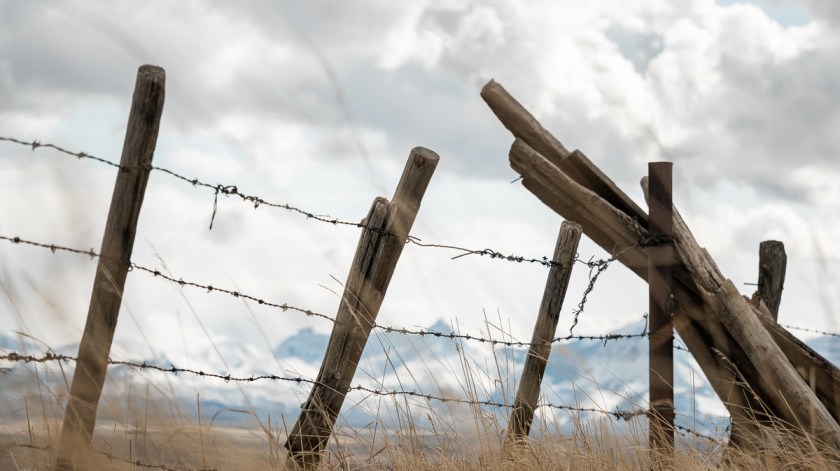
If your camera has been gathering dust, if there’s a project you’ve been circling for months or years, if you keep telling yourself you’ll finish it when the conditions are right — this is what matters: the conditions will never be perfect. But the story still needs to be told. And you are the one who can tell it.


Time Is Your Most Valuable Resource

Perfectionism wastes the one thing you cannot recover: time.
And the waste compounds. Time spent over-refining one project is time not spent starting the next — and often, it’s the next project where the real growth happens. The photographer who finishes and moves on builds a body of work. The photographer who endlessly refines builds an archive of the almost-done.

Progress lives in completion and momentum, not in the final, elusive pass.


Finishing Builds the Confidence to Keep Going

Every completed project does something endless revision cannot: it gives you the lived experience of having done it. Each finished body of work becomes evidence — to yourself — that you can do it again. That you are someone who makes things and puts them into the world.
Paradoxically, perfectionism erodes the very confidence it claims to protect. By never letting you finish, it never lets you prove to yourself that finishing is possible. The doubt grows. The camera gathers more dust.

The best remedy is a completed project. Then another. Then another. That is how a practice is built and how a photographer becomes, over time, the person they were trying to be when they first picked up a camera.


The Work Teaches You

There is one more thing perfectionism costs you, and it may be the most practical of them all.
Releasing a project and observing how it lands — what resonates, what doesn’t, what you would do differently — yields information you cannot get any other way. That feedback, from an audience, from time and distance, and from your own eyes returning to finished work months later, is how a practice grows. The perfectionist never gets that loop. Every project held back is also a lesson withheld.
Finishing is not merely an act of completion. It is a form of learning — and that learning only begins when the work goes out.


Take the Leap

Whether it’s a single image, a project you’ve carried for years, or a portfolio you’ve been afraid to show — don’t let perfectionism keep it from existing in the world. Get a little uncomfortable. Start before you’re ready. Build as you go. Make the call when the work is good, then let it go. The work you finish will always matter more than the work you’re still perfecting. Someone is waiting for it, even if neither of you knows it yet. Put it out. Value your time enough to spend it on the next thing. You may be surprised by what you create — and by how much it resonates with others.
Sources / Further Reading – The initial framework for this article was inspired by a discussion of perfectionism by Dave Brosha in his Storyteller course on the Teachable online learning platform. His framework and concepts served as a foundation from which the ideas in this article were further developed. (https://davebrosha.com/)

Listening to:

  • An unabridged audiobook performance of ‘A Perfect Spy’ by John Le Carré. I first listened to an abridged version narrated by David Cornwell (John Le Carré) cycling on Edmonton’s River City bike trails way back in 1987. This full version, while autobiographical in many ways for Cornwell, also points to the lives Burgess and Maclean must have led to do what they did all those years ago.

Quotes to Consider (about Perfectionism and Art)

  • “To demand perfection is to deny your ordinary (and universal) humanity, as though you would be better off without it. Yet this humanity is the ultimate source of your work; your perfectionism denies you the very thing you need to get your work done (Art & Fear: Observations on the Perils (and Rewards) of Artmaking by David Bayles and Ted Orland).”
  • Have no fear of perfection, you’ll never reach it (Salvador Dalí).”
  • The artist who aims at perfection in everything achieves it in nothing (Eugene Delacroix).”
  • “Don’t think about making art, just get it done. Let everyone else decide if it’s good or bad, whether they love it or hate it. While they are deciding, make even more art (Andy Warhol).”
Again …

Perfectionism is one of the most common—and paralyzing—hurdles in any creative journey. When we fixate on flawlessness, we often stunt the very experimentation and output required to actually improve.

Growth in photography and art comes from doing, failing, analyzing, and doing it again. Leaving perfectionism behind is the only way to free yourself up to make those necessary, beautiful mistakes.
5 Truths Reconnecting You to Photography (and Your Camera)

Best Practices - Photography, Cameras as Meaning Makers, Journaling
Returning to Photography and my Camera Bag.

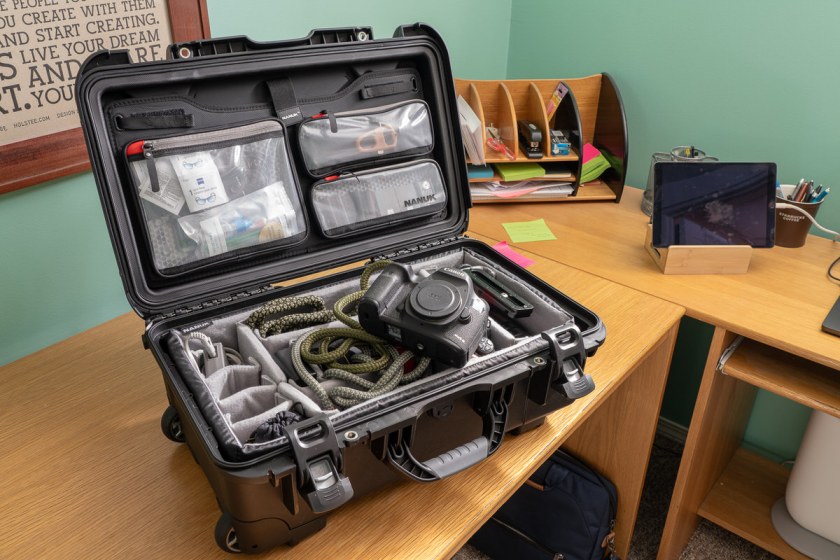
The camera bag sits in the corner, its leather cool to the touch. Weeks have passed — maybe months, maybe years — since you last heard the shutter click. The battery is dead. The SD card is a graveyard of half-finished ideas. Meanwhile, the smartphone in your pocket vibrates incessantly, a black mirror that demands your attention every waking moment.

Ruth Guest has seen this pattern countless times. A photographer with an MSc in Cyberpsychology, she has spent her career studying how technology shapes our behaviour, identity, and sense of self — and has lived it. “I spent years shooting high-end fashion and portraits across Europe, feeling absolutely nothing,” she says. After a failed tech startup and a bruising corporate job, her DSLR gathered dust for four years.

“Your camera isn’t broken,” she says. “Your relationship with it is. To come back, we have to stop looking at the glass and start looking at the soul.”


1 – The Problem Isn’t Your Eye — It’s Your ‘Why’

When creative momentum stalls, the instinct is to look outward. We ask how to improve, buy a sharper lens, or chase new post-processing techniques. But ‘how’ is a technical question that masks a deeper void. The only question that matters is: “Why did you stop?”

Photography often loses its appeal when it shifts from a practice of love to a performance for validation — shooting for likes or to meet a client’s expectations. When external rewards dry up, the internal engine stalls. The longer the camera sits in the drawer, the harder it becomes to close that gap.

No amount of new gear will fix this. Until you name the real blockers — fear, resentment, exhaustion — you won’t want to shoot again. The problem was never your technique or your eye. You simply lost sight of why you picked up the camera in the first place.


2 – You Are Caught in the ‘Mass Drift.’

Every time you unlock your phone, you are flooded with other people’s visions, aesthetics, and curated lives. In cyberpsychology, this relentless ‘identity performance’ is well documented — and it quietly erodes your sense of self.

Guest calls this the Mass Drift. When your eye is saturated with a billion other images, your unique way of seeing begins to fade. “The algorithm has become your creative director,” she says, “… even though you never hired it.” “It is not neutral — it is,” as she puts it, “… a parasitic creative director reshaping what you think your work and your life should look like.”

The drift isn’t just about taking uninspired photos. It is a drift from yourself. Your visual voice hasn’t vanished; it is buried. The first step toward recovery is a deliberate Media Fast — closing the black mirror long enough to let your own visual hunger return.


3 – Your Camera is a Mirror, Not a Window

We tend to think of photography as looking outward at the world. In reality, the camera points back at us. The subjects you choose, the light you seek, and the themes you return to — all of it reflects your internal landscape: your desires, fears, and values.

Guest discovered this through what she calls an Archive Audit, a process of reviewing her own body of work. She noticed she had been obsessively photographing couples during a painful breakup, then shifted to themes of friendship and coming-of-age when her brother emigrated. She hadn’t consciously chosen these subjects — her subconscious was using the camera to process her life.

She also identifies a related pattern: using the Camera as Armour, placing the lens between yourself and a world that feels too overwhelming to face directly. An honest Emotion Audit — asking what you were feeling when you took your best shots — can transform photography from a passive hobby into a vital, truthful practice.


4 – The ‘Contained Practice:’ Addition by Subtraction

When we feel creatively stagnant, the reflex is to add: a new location, a faster sensor, or a different genre. Guest argues the opposite. The secret to restoring the eye is constraint.

She calls it the Contained Practice, governed by the 1-1-1 Rule: one camera, one lens, one film stock. Strip away the burden of choice, and you eliminate gear fixation, freeing the brain to engage with the world in front of it.

For Guest, this meant selling all her digital equipment and buying a secondhand 1983 Leica without a light meter or backup. “It wasn’t the smart choice,” she admits, “but it was necessary.” That limitation forced her into what she describes as the Three Stages of Seeing — a discipline of noticing the world before even raising the camera.

For those feeling overwhelmed, she offers the 3-30 Rule as a starting point: give yourself three minutes to find a shot within a 30-foot radius, or limit yourself to three frames in 30 minutes. Less equipment, less time, fewer frames — and, paradoxically, more of yourself in every one.


5 – Shooting to ‘Escape Death:’ Finding Your True Philosophy

The deepest reason we take photographs is rarely spoken aloud. We are, Guest argues, trying to escape death — leaving proof that we were here, that we saw things, and that our particular way of seeing was ours and no one else’s.

This is the photography philosophy that outlasts every trend. When you begin to see your body of work as a legacy — a testament to your existence — the pressure to perform for an audience quietly dissolves. The practice ceases to be something you do and becomes an honest extension of how you live.


The Camera Has Waited Long Enough

Returning to photography is not about mastering technical settings. It is about stepping out of the Mass Drift and back into an honest, personal practice — finally deciding that you are done waiting to live the life you truly want.

Your love for the craft is still there, tucked away in that bag with the dead battery and the dusty lens. Before you pick it up again, Guest leaves you with one last, uncomfortable question.

What does your current body of work — or its absence — reveal about who you are right now?

The camera has waited long enough. It is time to see again.

Sources / Further Reading This article was inspired by Neale James’s interview with Ruth Guest on the Photowalk podcast. The frameworks and concepts discussed here are drawn from her work; her returning-to-photography workbook is available at ruthguest.com/returning-to-photography-workbook.

Quote to Inspire / Consider: borrowed from the Photowalk because it is relevant within the podcast, to the work of Ruth Guest and for what our photography is about. “What you have caught on film is captured forever. It remembers little things long after you’ve forgotten everything – Aaron Siskind.”

Listening to: Hollow Coves’ ‘Pictures,’ and Roo Panes’ ‘Message to Myself.’

Trading Unused Camera Gear: A Rational Case for Letting Go

Project 365 - Photo-a-day

The following started as a conversation about a specific decision — trading unused lenses at a camera store rather than selling them privately. It turned into something more broadly useful. I’m sharing it here so I can return to the thinking, and in case it helps anyone else in the same loop.

The Shape of the Problem

The decision to trade unused lenses at a camera store — rather than sell them privately — appears, on the surface, to be a financial one. In practice, it’s a psychological one. The hesitation stems from two opposing forces: fear of being taken advantage of by the store and guilt over losing the original investment in the gear. Together, they create a kind of paralysis that no amount of spreadsheet math can resolve on its own.

For anyone living outside a major urban centre, the calculus shifts considerably. Online platforms like MPB and KEH Camera don’t operate in Canada. Local buyers are scarce or non-existent. Shipping is a genuine friction point. The camera store becomes not a predator but, as it’s worth framing, a liquidity provider: a business that assumes the risk of time, shelf space, and eventual resale so you don’t have to.

Reframing the Trade-In

The instinct to watch your old gear reappear on the store’s website at a 40–60% markup is understandable, but it’s worth clarifying what that markup actually represents. The store bought your gear at a price that compensates them for the months it might sit in a display case, the staff time spent testing and listing it, the risk it might not sell, and the overhead of running a physical retail operation. That margin is not profit extracted from you — it is the cost of a service you’ve effectively hired them to perform.

Think of it less as “losing money on the trade” and more as paying a commission to an intermediary who handles the work you couldn’t or wouldn’t do yourself. Seen that way, the markup isn’t a sting — it’s a fee receipt.

The Real Value of Unused Gear

A lens sitting in a bag has a functional value of zero. This is the part that overthinking tends to obscure: unused gear is not a savings account. It depreciates whether you use it or not, and keeping it out of a sense of “protecting the investment” is the classic sunk-cost fallacy in photographic form — like holding onto a gym membership you never use because you already paid the sign-up fee.

A more useful way to look at it: take the total amount you feel you’re “losing” and divide it by the number of months you’ve owned the gear. In most cases, you’ll find that you effectively rent those lenses for between $5 and $15 a month. That’s a reasonable rate for the enjoyment they provided while you were using them. The loss isn’t a loss — it’s the final invoice for a rental that quietly ended some time ago.

A Pre-Visit Strategy

Before walking into the store, spend fifteen minutes researching. Check eBay’s “Sold” listings — not the asking prices, but the completed sales — for each piece of gear you’re trading. A reputable shop will typically offer 40–60% of that private-sale resale value. Use that range to set your floor: a number below which you’ll politely decline, and above which you’ll say yes without hesitation and without looking back.

This is important: make the decision before you’re standing at the counter. If you set your threshold in advance, the in-store negotiation becomes a simple binary — acceptable or not — rather than an anxious improvisation.

Once the trade is complete, take a photograph with the new lens the same day. The shift from thinking about assets (what you own) to making art (what you’re doing) is the fastest way to close the mental ledger on the transaction.

A Note on Watching the Aftermath

The single most corrosive thing you can do after a trade-in is monitor the store’s used inventory to see what your old gear sold for. There is no outcome from that exercise that makes you feel better. If it sells quickly for a high price, you’ll feel taken advantage of. If it sat for months at a reduced price, you’ll feel validated but gain nothing. Either way, you’ve spent mental energy on a transaction that is already closed.

A reasonable rule: once the trade is complete, consider those specific model numbers off-limits in your browsing for at least 90 days. By then, the photographs you’ve taken with the new lens will have replaced the memory of the trade-in price.

The Bottom Line

You are trading clutter, stagnation, and the ongoing mental overhead of unused gear for simplicity and a tool you will actually use. In a northern location where time and ease carry a premium, that exchange has real value beyond the dollar figures. The store will make money on your trade. That was always going to be true. The question is whether the clarity and creative momentum you gain in return are worth the commission — and, honestly, in most cases they are.

Set your floor. Make the trade. Go take photographs.

Quote to Inspire: “The logical solution is to sell what you are not using. It’s sitting there depreciating in value, taking up space and gathering dust when it could probably be helping someone else get into photography and capture great images.”Angela Nicholson, Amateur Photographer Magazine

Listening to: an audiobook about a photographer, ‘Still Life with Bread Crumbs,’ by Anna Quinlan.