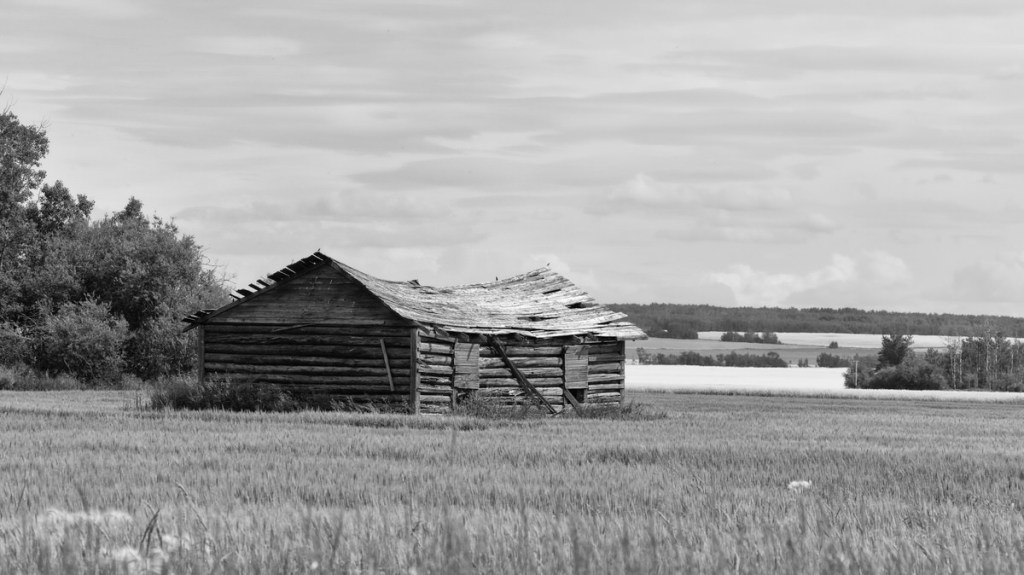
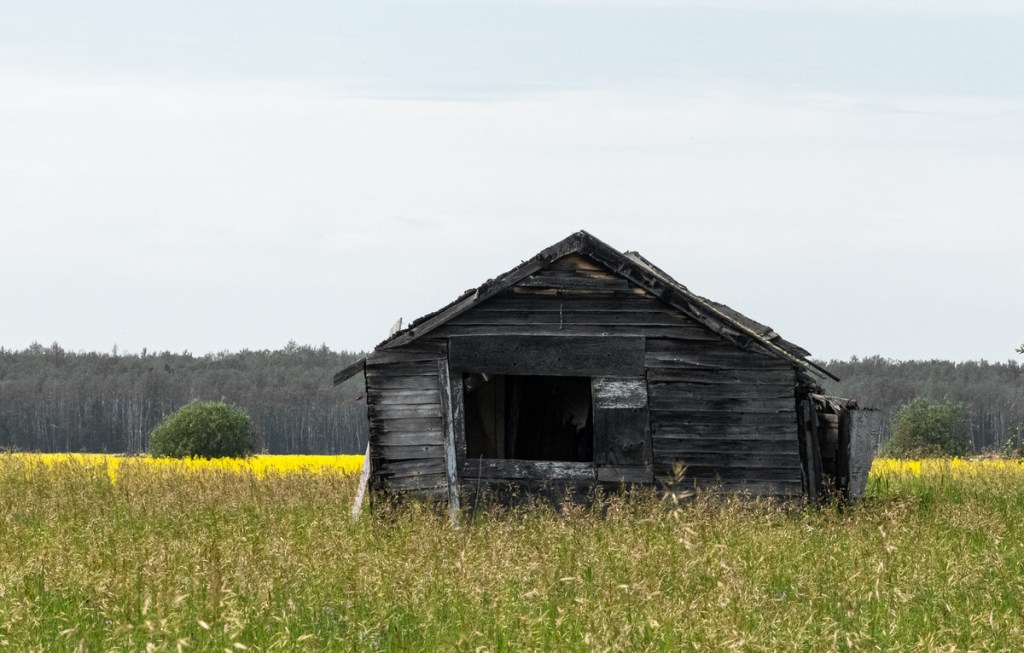
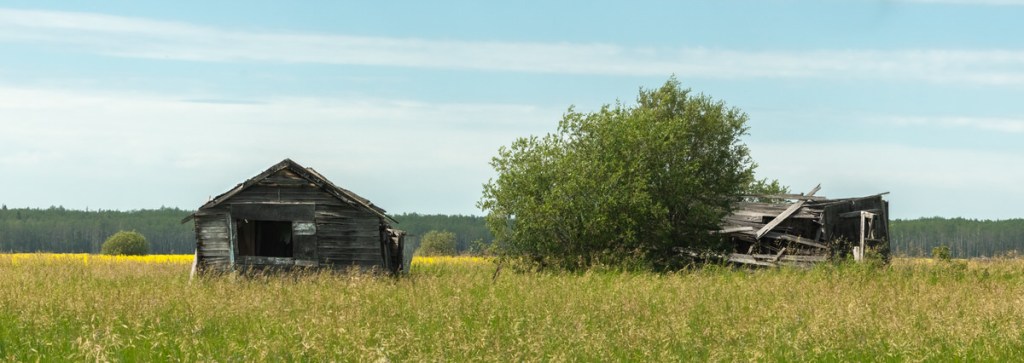
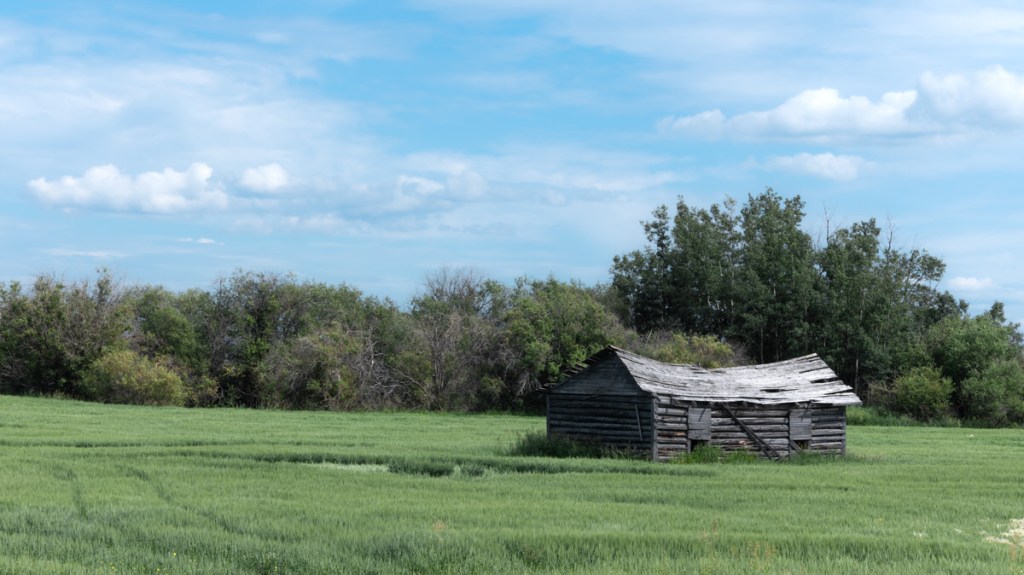
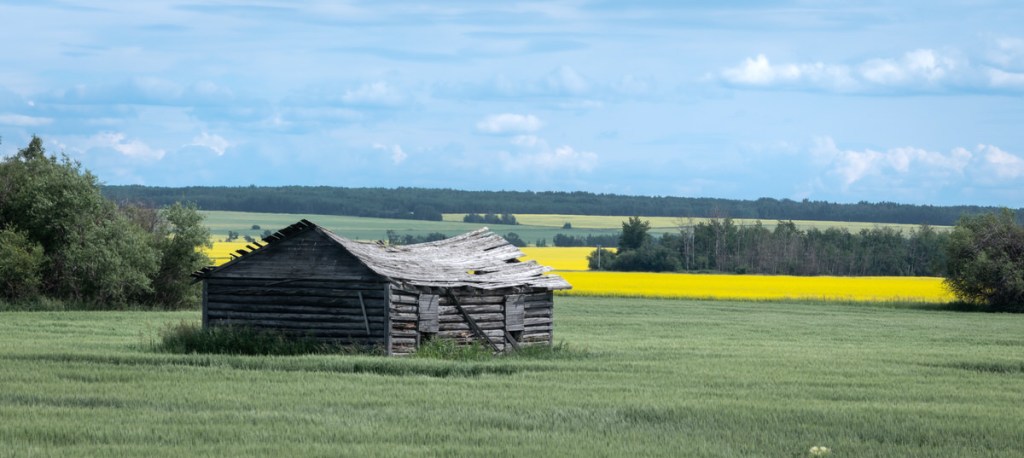
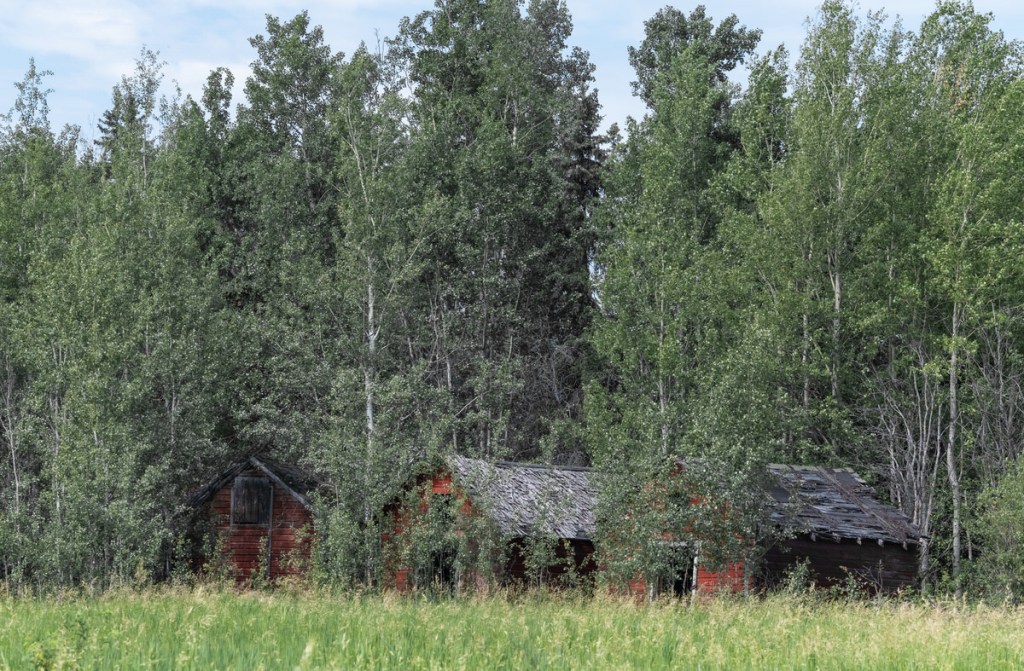
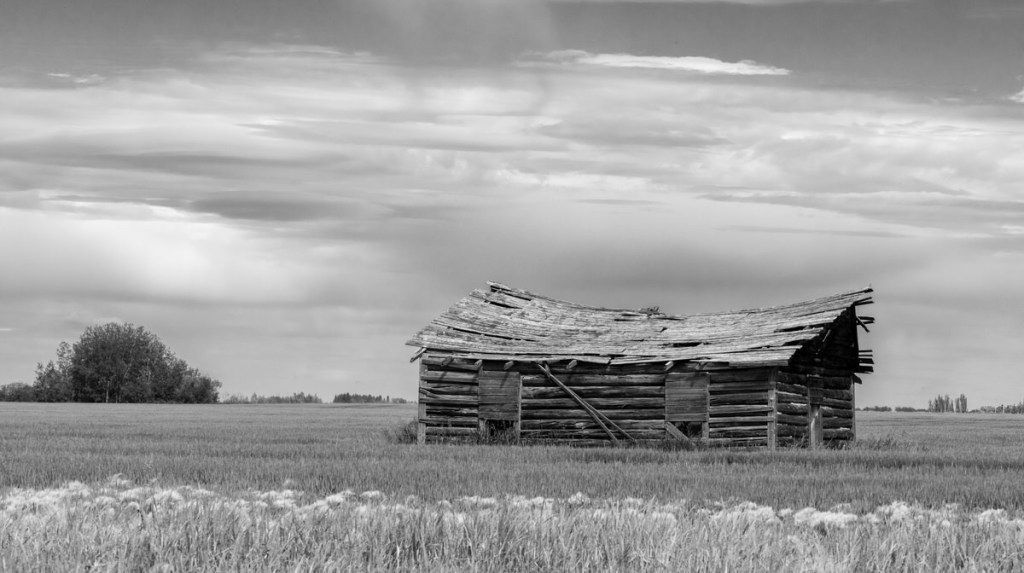
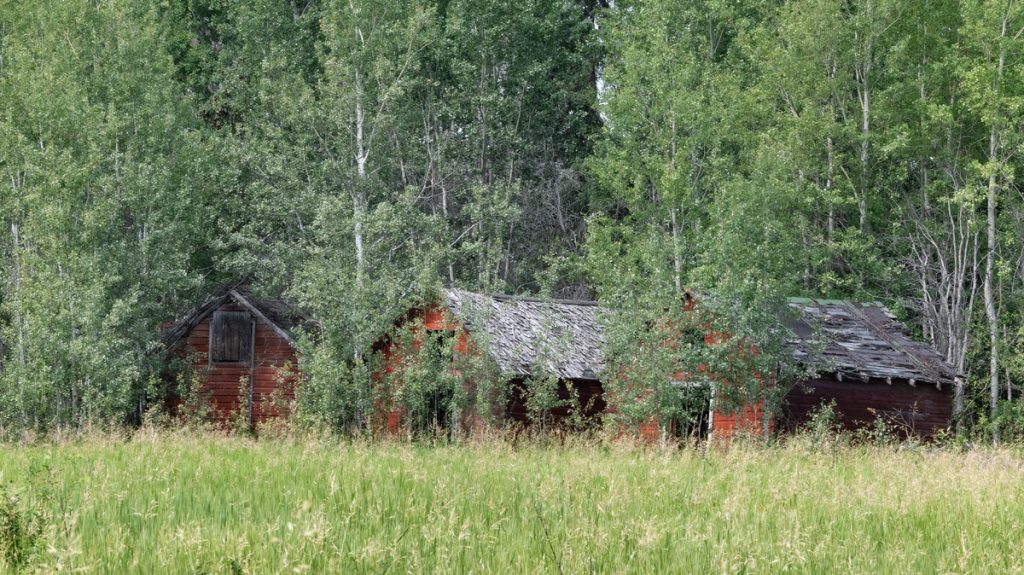
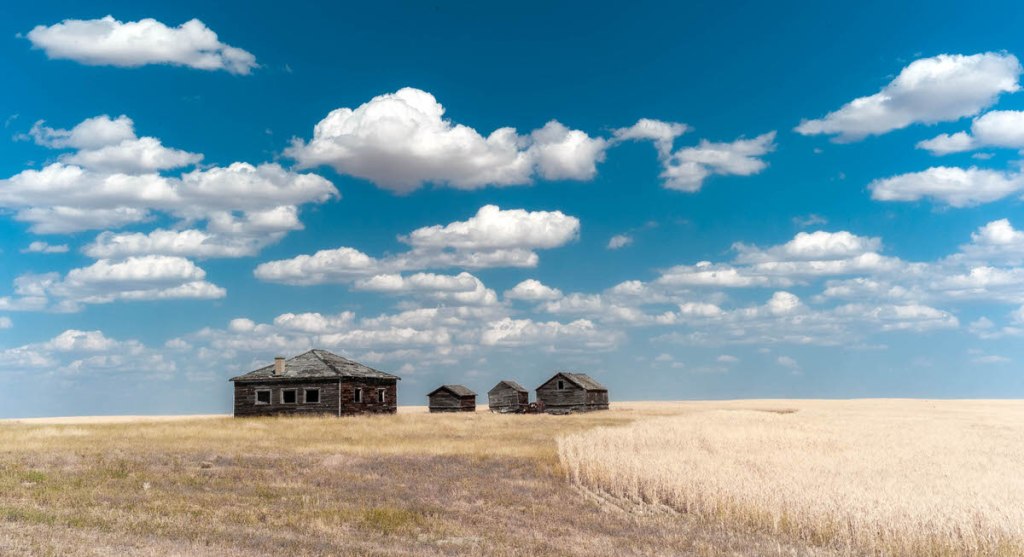
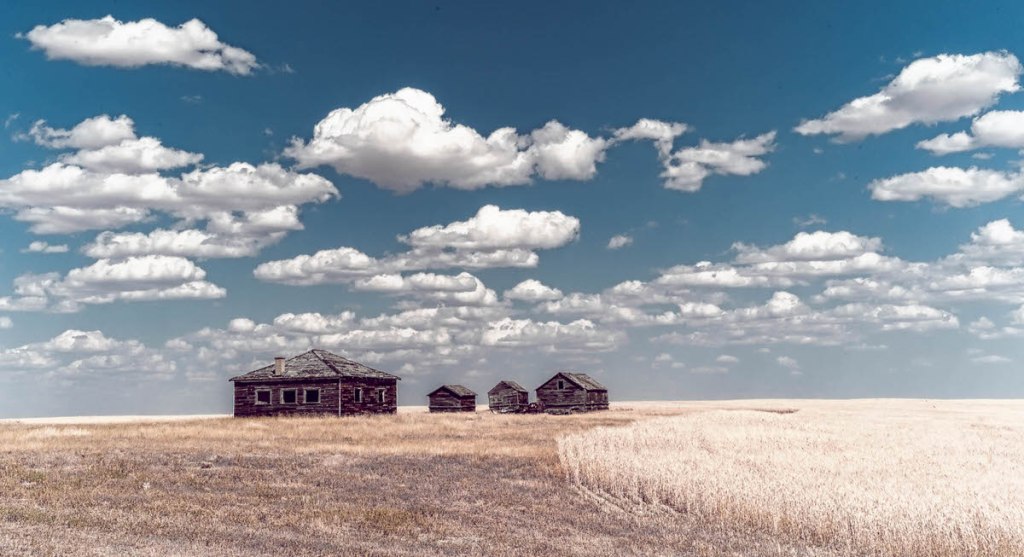
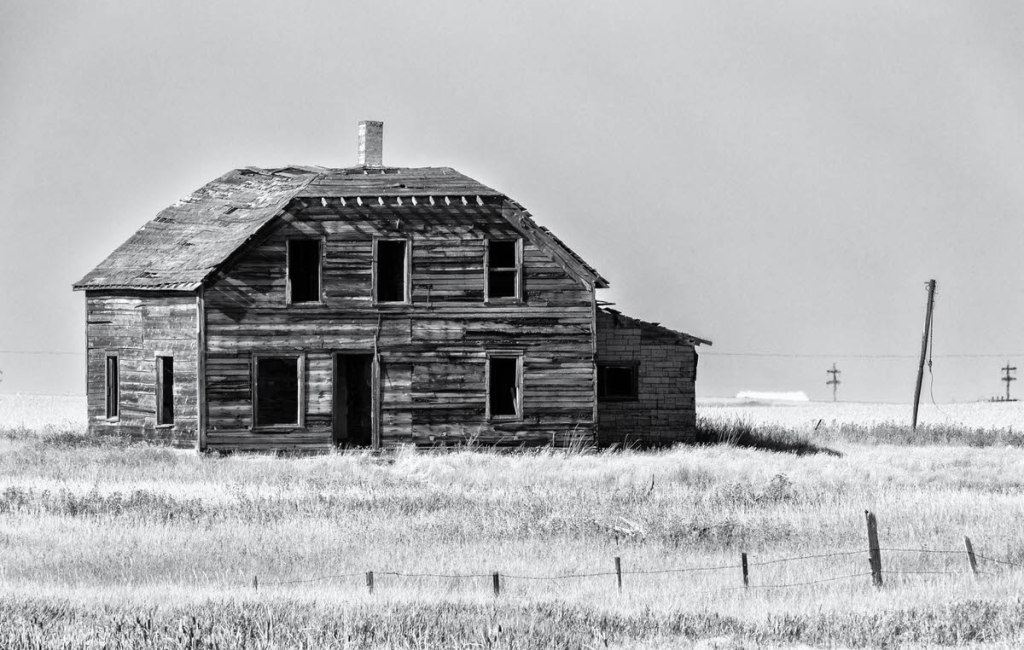
The reason for travel found, I drove southward through Boreal Forest made farmland. Allowing my eye to look and see and using my camera, these are first images of farmsteads and homesteads, now derelict, that hold memories for families whose predecessors built them. For travelers, though, along northern Alberta roads, they serve as mile markers, helping them gauge their progress toward a given destination.
There is a visual narrative to gather – those with a camera, curious with wonder, often stop and photograph. I am one of those. ‘Who lived and worked here?’ ‘How did weather shape Life through each season?’ ‘What were hard times like?’ ‘What were the good times?’ The story is there. With patient wandering, the ‘would-be’ photographer can unearth different parts of that story and make sense of them.
Listening to – #447 – Publish Your First Book, The Photowalk Podcast
Quotes to Inspire / Consider – ‘You give Life to what you give energy to.’ – Gary Williams / Neale James (via The Photowalk Podcast); ‘The energy of the mind is the essence of Life.’ – Aristotle
In the first week of summer break, school’s work has lessened—the last report, comprehensive as it was, has been written and submitted. Students’ award photos have been edited and uploaded, and the division’s long-service award images have been edited and delivered by thumb drive to the appropriate person. Next year, I will use Dropbox to move big images over the Internet. That done, I am able to launch into summer’s rest, time to myself with my thoughts, and begin letting go of the year that has been our school year and bridling down my watch for the next necessary thing needing done. It is time to release all that and take-up my own Life, once again. Movies are being watched – older ones, older favorite’s, and ones linked to novels read. An old pattern is there – movie marathon nights help dissociate me from the year that has been, one part of unlocking the door to summer.
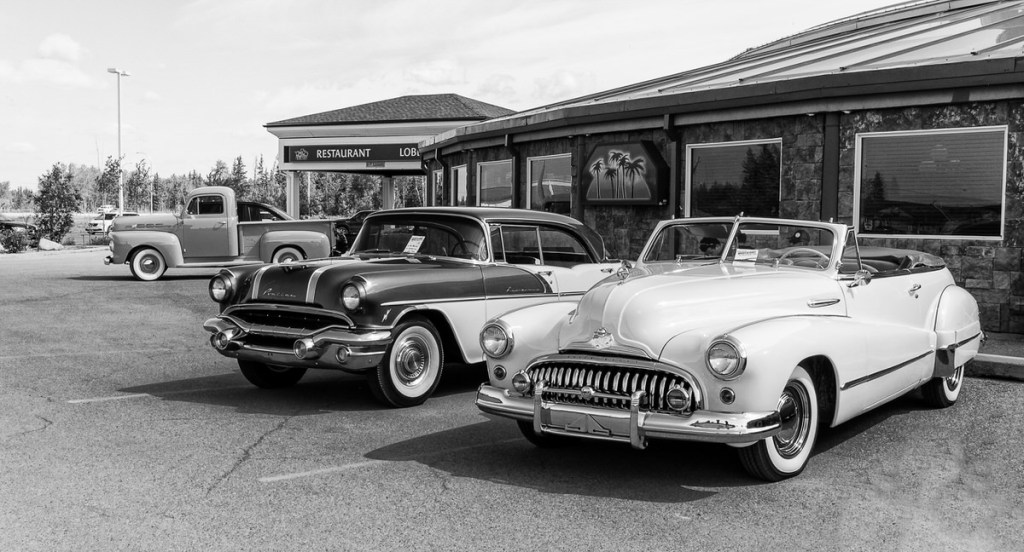
The other day, it was a good thing to wake up, gather my wife from her university work and into our truck, and get out for a drive. It set the tone for a summer’s day. That essential premise – get out the door – was lived out. I got out that door again yesterday, recalling with some strength that there should be a ‘Wheels and Deals’ event at the Mirage Hotel in High Level, Alberta, a ‘Show and Shine’ kind of gathering of favored vehicles with the added opportunity of a swap meet – ‘wouldn’t that be something for me to find a late sixties Pontiac, like the one I used to drive during high school?’ I took my Leica M8 with Zeiss ZM Biogon 28mm lens and went to have a look. I had my Fujifilm GFX 50r and Ricoh GR iii as cameras I might use as well.
I shot for the first hour with the M8, focusing with the rangefinder’s viewfinder and focus patch. I moved through the area as people set up. Cars, trucks and motorcycles arrived and were arranged in the hotel’s parking lot. I could move around, talk with vehicle owners, and photograph vehicles. I could shoot according to what I saw compositionally. I could take my time with the M8. Good.
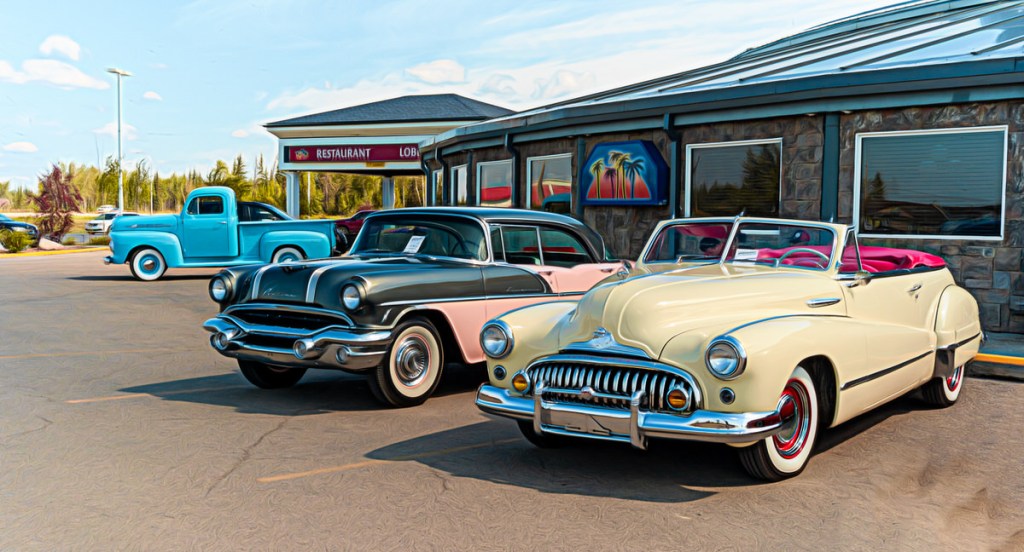
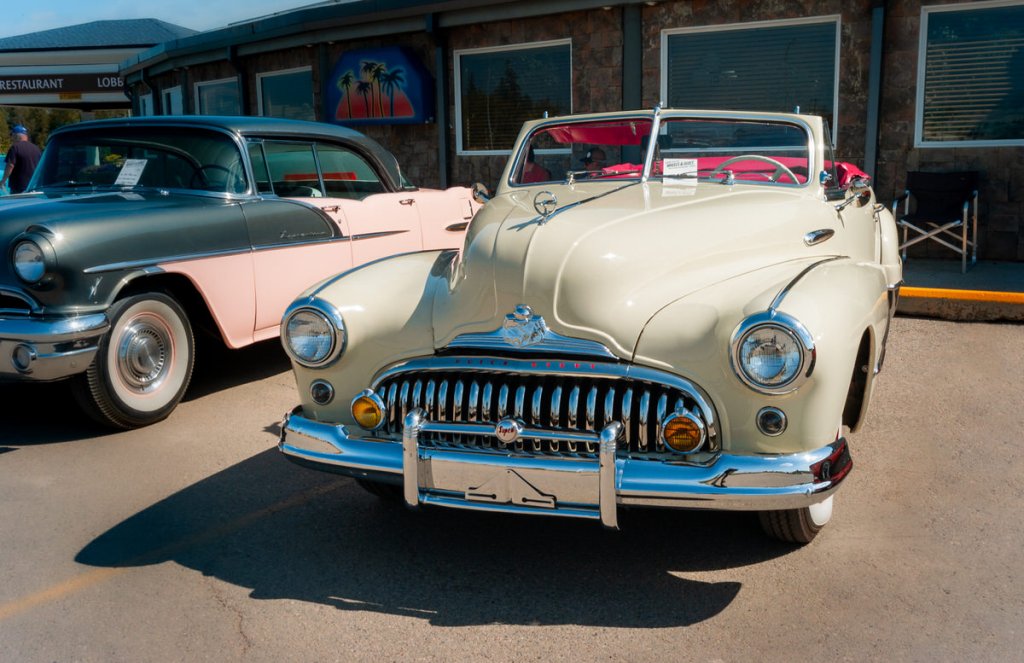
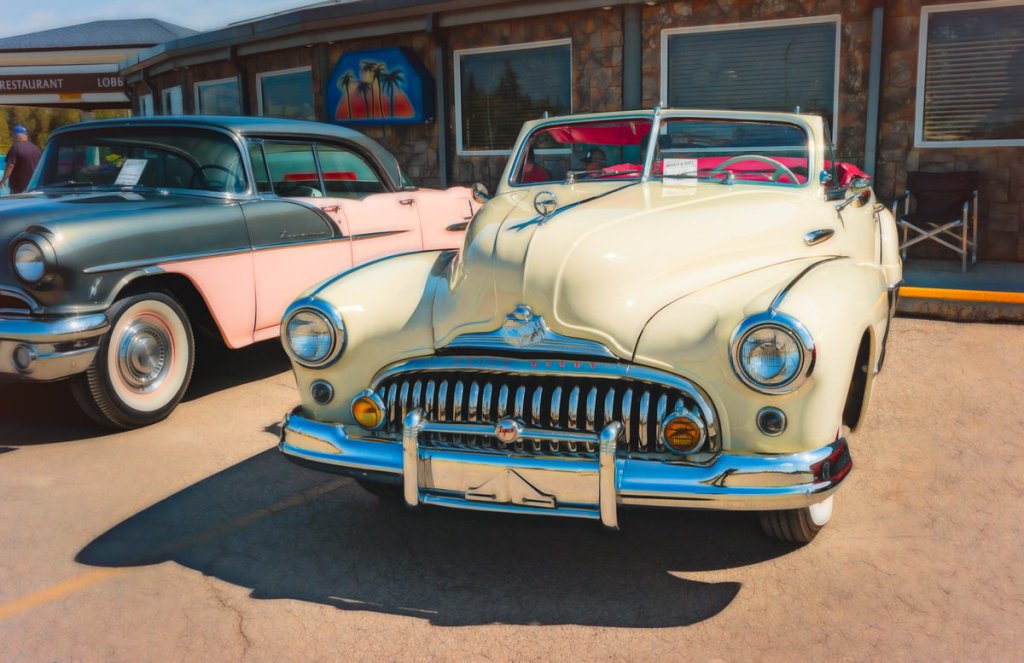
The black-and-white image presented here highlights some elements of visual composition—the Pontiac and the Buick Super Eight cluster in terms of visual weight in the image, and the black-and-white gradient of tone reveals shape, reflection, and vehicle lines (and an era of automobile design). A sense of depth is there as the eye moves from the Buick, past the Pontiac, to the Mercury truck and the hotel’s entryway. While the image was shot and edited primarily in colour, using Silver Efex from the NiK Collection provided an extraordinary, eye-captivating, black-and-white image – an image captured yesterday, in the summer of 2024, that, in terms of variety and proximity among vehicles, black-and-white toning, visual weight, and proportion, could easily have been an image captured in black-and-white during the fifties when these vehicles were first manufactured. In that sense, the image becomes nostalgic. It relates to a time preceding me … just. Other colour images are presented for reference.
Listening to: Bruce Springsteen’s ‘Open All Night,’ ‘Highway Patrolman,’ from the ‘Nebraska’ Album, JD McPherson’s ‘Let the Good Times Roll,’ and most of Bruce Springsteen’s ‘Tunnel of Love’ album, starting with ‘Walk Like a Man.’
Quotes to Consider – Re: Photography …
‘Date your cameras, marry your lenses.’ This quote is new to me, yet highlights a key idea for photographers – that investing in glass (good lenses) is essential while the cameras used over time will change.
‘Innovation comes from people who take joy in their work (W. Edwards Deming).’ The quote was offered in a YouTube video offered by ‘Three Blind Men and An Elephant’ in their video, ‘Leica D-Lux 8 Defies Expectations, Including My Own, (2 July 2024)’ to recognize that Leica, as a company already producing stellar cameras, is one whose employees enjoy innovation and improvement that can be made to their cameras and lenses. On the Adizes’ Curve, Leica has embraced a key dynamic that allows them to remain in the ‘prime’ of organizational/corporate lifecycles.
Rosanne Cash says about songwriting, “… Songs are there in the ether, and you just have to have your skills good enough to get them.” Like acapella singer Bobby McFerrin, Cash believes that as a songwriter, “You catch songs…. [and,] … you have to have your catcher’s mitt on…. Sometimes I’m afraid that if I don’t get it down, then somebody else will (Rosanne Cash, Time Traveler – On Being with Krista Tippett, 5 January 2012, https://onbeing.org/programs/rosanne-cash-time-traveler/ ).”
Photography is like that – about being present and ready for what you see, connecting with the moment, and ‘catching the image’ and its import as it confronts you.
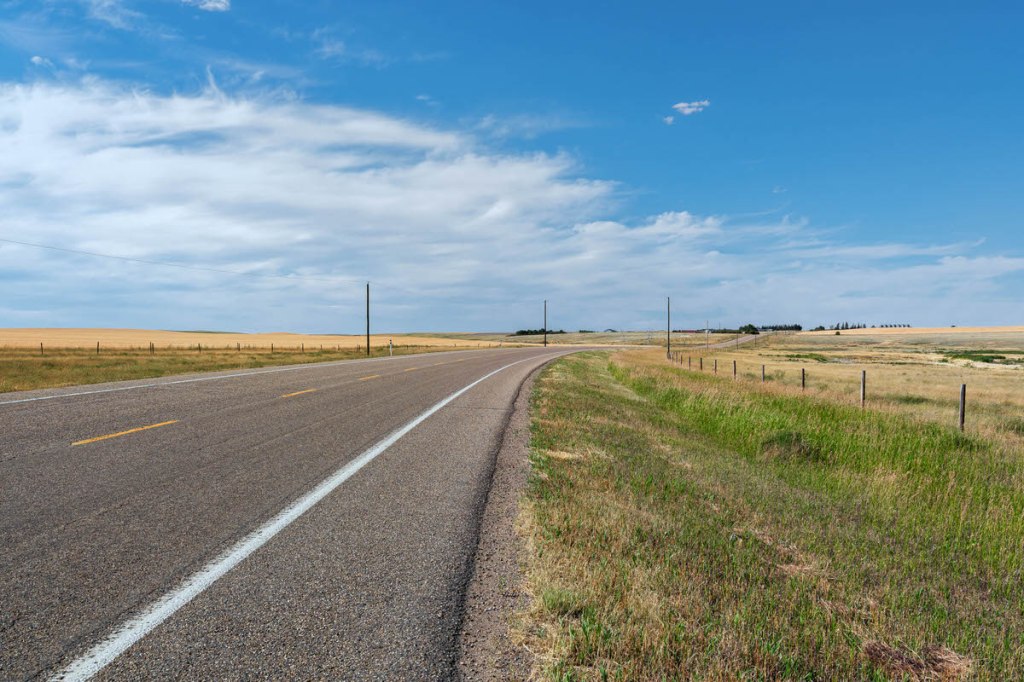
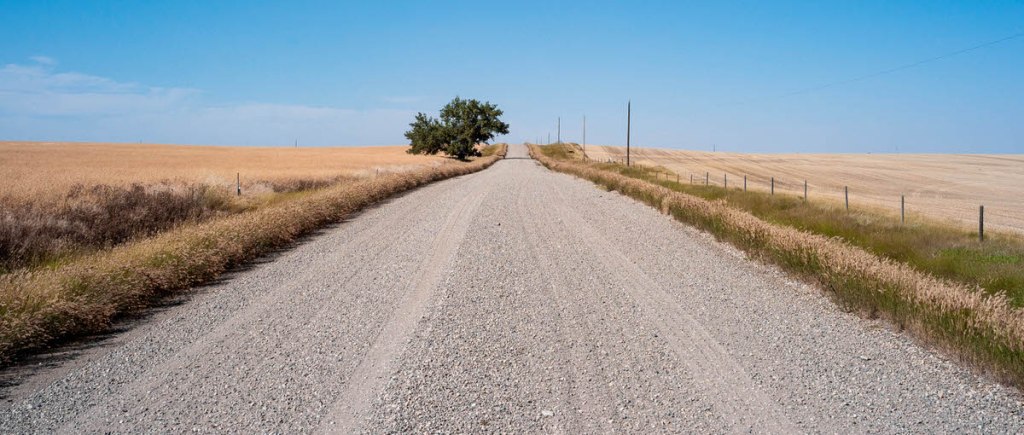
Wheat Kings and farmsteads served as points of departure. Stirling, Wrentham, Skiff, Foremost, Orion and Manyberries were place names in my travel – each had wooden grain elevators from the previous century used to stockpile grain for railway transportation. Some appeared to remain in use. Grey, weathering wood of still-standing derelict farm buildings clustered in disused prairie farmland with the rusting reds and browns of grain trucks – abandoned, yet holding memory to the past. General stores no longer in use faded in terms of colour and signage. I and my cameras went about image making.
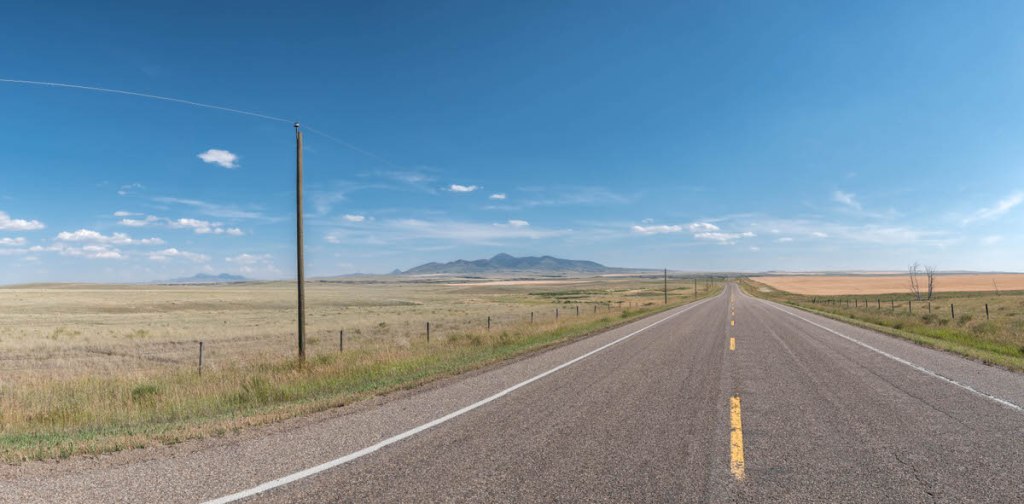
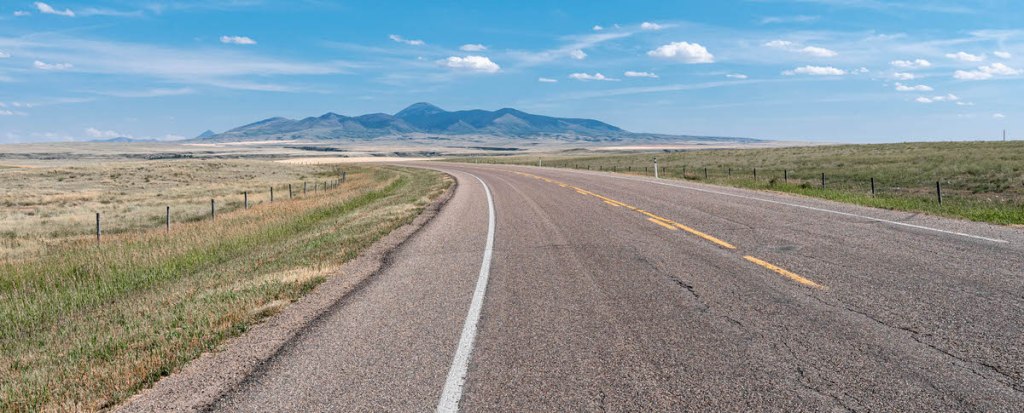
As I meandered, making exposures, travelling east and south, then west toward Milk River, two or three mountains loomed, growing more prominent in Alberta’s southernmost prairie, an unexpected juxtaposition – mountains within the prairie. I photographed them in stages as I travelled closer to them. While the mountains seemed to span the Canada – United States border, I was seeing the Sweetgrass Hills of Montana and evidence that volcanoes were a part of the prairie shared between Montana and Alberta. My mobile phone carrier began sending SMS messages advising of the need for a rate-plan change should I cross into the United States and need to use my phone. They were looking out for me. Good!
At this point in my summer, I was re-reading Thomas King’s novel, ‘Indians on Vacation,’ which has become one venue for Canadians to begin opening out Canada’s treaty history following the release of the National Truth and Reconciliation Commission report in 2015. Characters, Blackbird Mavrias (or ‘Bird’) and Mimi, are vacationing in Prague, in the Czech Republic.
In the interrogatory phrase they encounter with familiar cadence, ‘Where are you from?’ an equivalency of people among peoples, vacationers among vacationers, is drawn out. At play is Bird and Mimi’s nationality, which, while Canadian, shifts as they share it between Canadian (from Canada) and their indigenous first nation identification as Cherokee (Bird has Greek and Cherokee lineage) and Blackfoot (Mimi). ‘Where are you from?’ … is always a jumping-off point for being known and getting to know others.
Bird Mavrias is a writer and journalist looking toward retirement. For Mimi and Bird, considering Prague’s history, exploring it as a city, and its current events – all serve to jostle them, surfacing memories. Their conversations move them through their past and occasionally surface facts from the Truth and Reconciliation Commission’s final report – moments of poignancy, disappointment and numbing revulsion concerning the unimaginable. Somehow, what they remember almost becomes a Viktor Frankl choice point to move forward, to move on.
Bird recalls a story he covered regarding an encampment at ‘Writing-On-Stone’ in southern Alberta. Within the park, on the southern side of the Milk River, an indigenous woman sought to gather and practice traditional ways with those of like-mind, ways of their people(s) on their people’s land. The story recognizes a need to find and return to traditional ways. The story looks at the breaking down of the camp and moving trespassers from the site. Bird’s recollection recalls the impotence of the situation – what it did not achieve and its disappointment.
In my drive, moving south and east toward Aden from Milk River and then toward the Sweetgrass Hills of Montana, I came upon this site at ‘Writing-on-Stone Provincial Park.’ In Blackfoot, this site is referred to as Áísínaiʼpi, a word meaning ‘it is pictured’ or ‘it is written.’ The conceptualization of photography as being ‘writing with light’ and exposure of what the camera witnesses seem close to indigenous intention here, and the word Áísínaiʼpi seems as though it should be part of a photographer’s vocabulary. In both cases, the terminology refers to memory being held to be witnessed, considered and understood.
Gauging what remained of my day in terms of kilometres, gas and final meal, I began my return drive to Lethbridge and my hotel quite late. Tired at the end of my drive, I had accomplished a lot of what I intended – a day open for discovery, thought and camera work. I found Wheat Kings. I encountered the big sky of southern Alberta’s prairie landscape. I had scouted and became acquainted with an area of Alberta I was interested in and will return to.
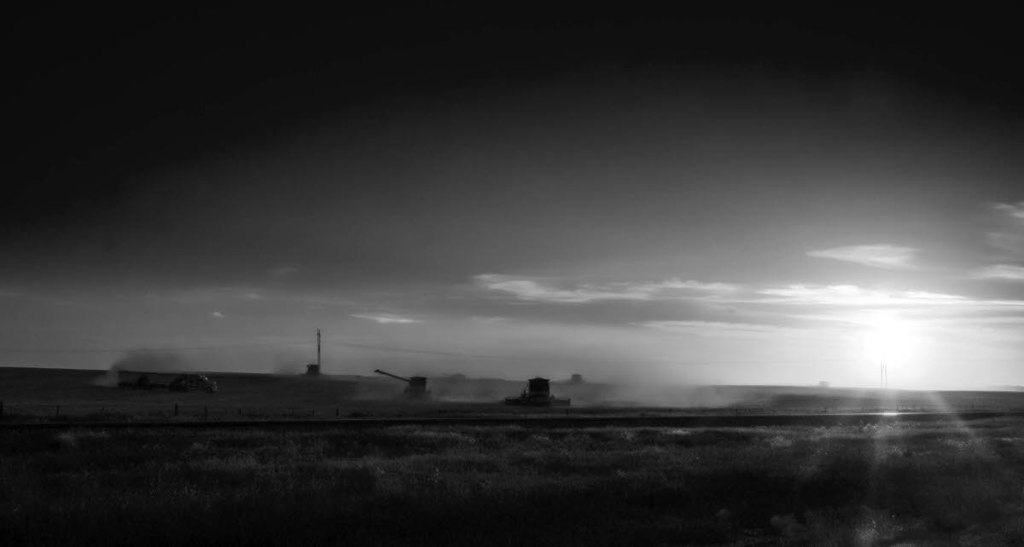
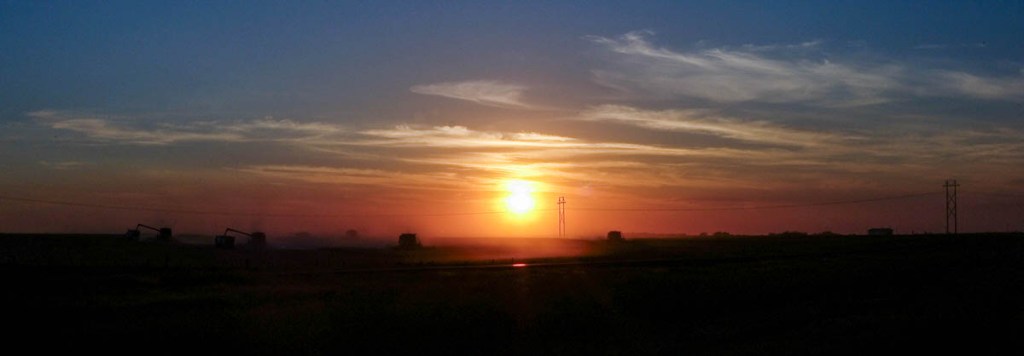
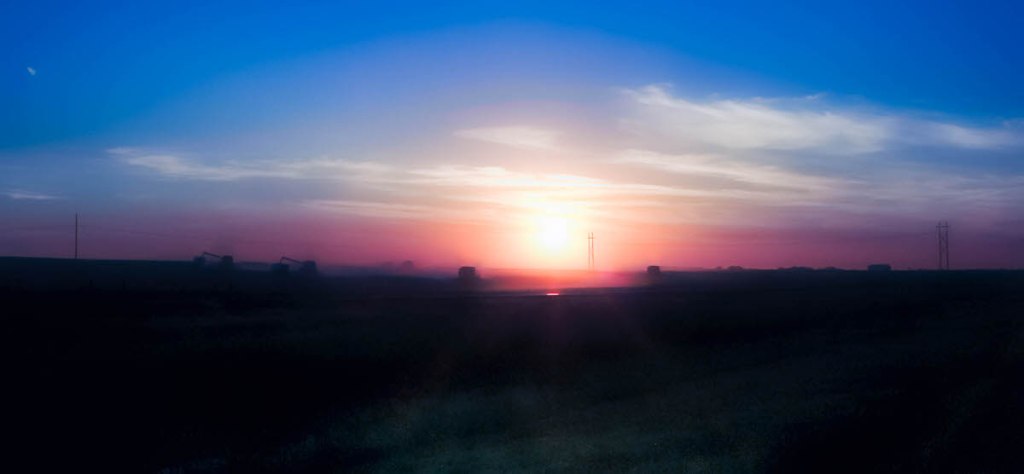
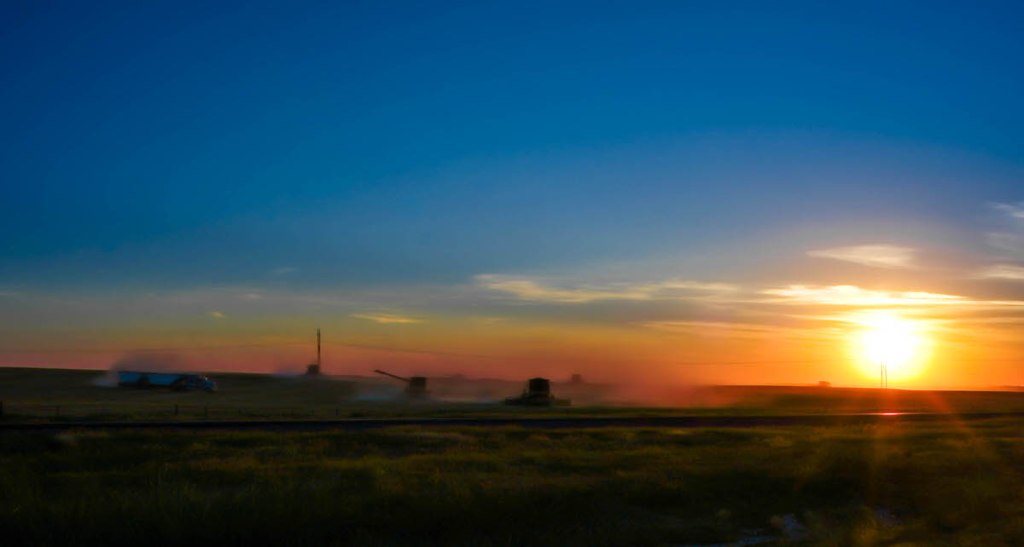
Harvest, though, caught me by surprise. Somewhere between 10:30 – 11:00 p.m. I drove past this late-night harvest scene below. The sight was extraordinary for me because the grain harvest in northern Alberta occurs from late August to mid-September. Here, it was an extraordinary sight … to see as many as five combines gathering grain from the prairie immensity. These mid-August images contain silhouettes of combines and grain haulers outlined in black against a colourful backdrop of setting sun, sky and prairie. People are at work, doing this day’s work as daylight diminishes.
Catcher’s Mitt & Day’s End
My day did not end there. Returning late to Lethbridge meant supper would be drive-through or order-in, and I hadn’t eaten for hours. Near midnight, a McDonald’s provided two quarter-pounders with cheese and a pop. A young, homeless teen hid in the shadows of the building beyond the sight of the cashier. As I moved from the drive-through, the teen presented cardboard on which was written, ‘Needing food. Can you help?’ I gave her twenty dollars, then left, returning to my hotel.
In all this, consideration of Thomas King’s novel has continued to intrigue me in its detail, humour, happenings, intention, and reference to areas of this country I know. It seems to hold the potential to prompt moving toward a good understanding of historical, colonial or treaty complexities for treaty people on both sides of each treaty. The narrative leaves off with vacationers returning from a vacation to the stability and familiarity routine offers but with questions and urgings about what’s next. Often returning from vacation, though, we are empowered (and perhaps have gained perspective enough) to consider ‘the what’ of what’s next. For Bird and Mimi, Tofino is on the table.
A year later, the photographs gathered continue to serve as a point of departure, not just in terms of images or photographic projects, but as a jumping-off point for thought and perspective gathered from such thought. A catcher’s mitt was at play within the day in song, thought and photos.
Quote to Consider / Inspire: “I like it when one is not certain about what one sees. When we do not know why the photographer has taken a picture and when we do not know why we are looking at it, all of a sudden, we discover something that we start seeing. I like this confusion.” – Saul Leiter.
Listening to: Courtney Marie Andrews’ ‘I’ll be Thinking On You,’ Ben Harper’s ‘Yard Sale,’ Terra Lighfoot’s ‘One High Note,’ GA-20’s ‘Dry Run,’ Iris Dement’s ‘The Sacred Now,’ Alberta Hunter’s ‘I’ve Got a Mind to Ramble,’ and Kue Varo’s ‘Yip Yip.’
The weather was that of early spring – a day grey and overcast, later filling with snow flurries, then shifting to bright sunlight among clouds as I drove south from Peace River, Alberta. I was taking time … to look around, to explore, to learn more about a region I drive through regularly but through decades had not yet investigated.
In December 2022, interested in the Peace River’s river valley’s terrain, I asked a farmer about possible vantage points for viewing the river. The river, from one kilometre to a kilometre and a half vast as it moves through an area I teach in, has intrigued me since my wife and I flew into a fly-in teaching community three decades ago. Two locations were recommended to look over the town of Peace River and along the river valley. The Twelve Foot Davis gravesite was high above the town on its east side. The second recommendation caught my attention – the Sagitowa Friendship lookout point had been described as being along the road to Judah, the hamlet of Judah, perhaps forty minutes south and west of Peace River along a route that follows the southern river bank. This lookout point allows the eye to travel west and south following the river; it allows for a look down and north to the town of Peace River’s south end, up to its north end; it permits looking across the river to the Shaftesbury Estates, the West Peace area, Saddleback Ridge and the Pines.
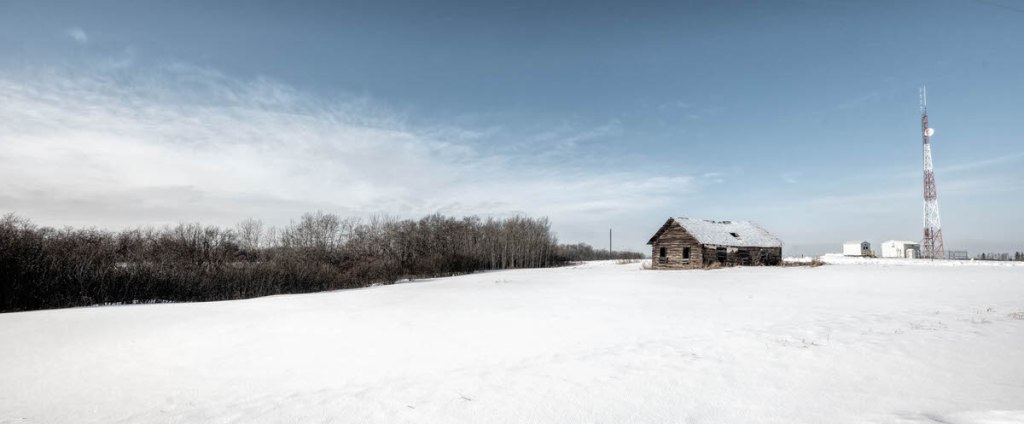
I was at the Sagitowa lookout working with my camera. After several shots, it began to snow. I packed up and began a drive toward Judah. In the early afternoon, the sun came out, somewhat harsh in terms of the contrast of light and shadows. Within the hamlet of Judah, I found treasure – this homestead.
Quotes to Inspire – two quotes have found me this week; both have value for a photographer. First, ‘We don’t see things as they are. We see them as we are (Anais Nin).’ The second is one that seems related, ‘People only see what they are prepared to see (Ralph Waldo Emerson).’ This quote highlights a photographer’s readiness to see a given subject and perhaps maturation in terms of seeing that subject. It attaches to a follow-up statement, ‘If you look for what is good and what you can be grateful for, you will find it everywhere.’ So, perhaps Emerson’s quote is a nudge out-of-context but still has import as we use it.
Listening to: Motorhead’s version of David Bowie’s ‘Heroes,’ Fred Eaglesmith’s ‘Can’t Dance,’ Pickin’ On U2 – A Bluegrass Tribute’s version of ‘One,’ and Bono’s ‘Surrender: 40 Songs, One Story’ audiobook reading.
On the final day of 2022, I drove from Lethbridge in southern Alberta to High Level in northern Alberta, a long fourteen- to fifteen-hour journey. As a return drive, I had started early, reached Edmonton just after noon, and continued northward through the day. In that time, I concluded my listening to an intriguing audiobook, ‘The Splendid and the Vile’ by Erik Larson, about Winston Churchill written recently and with access to documentation from previously unavailable sources; the book compiles memoirs and correspondences into a more intimate view of Winston’s world – Britain and its people, colleagues, family, friends, brokered loyalties, and royalty – all at a time of war, World War II.
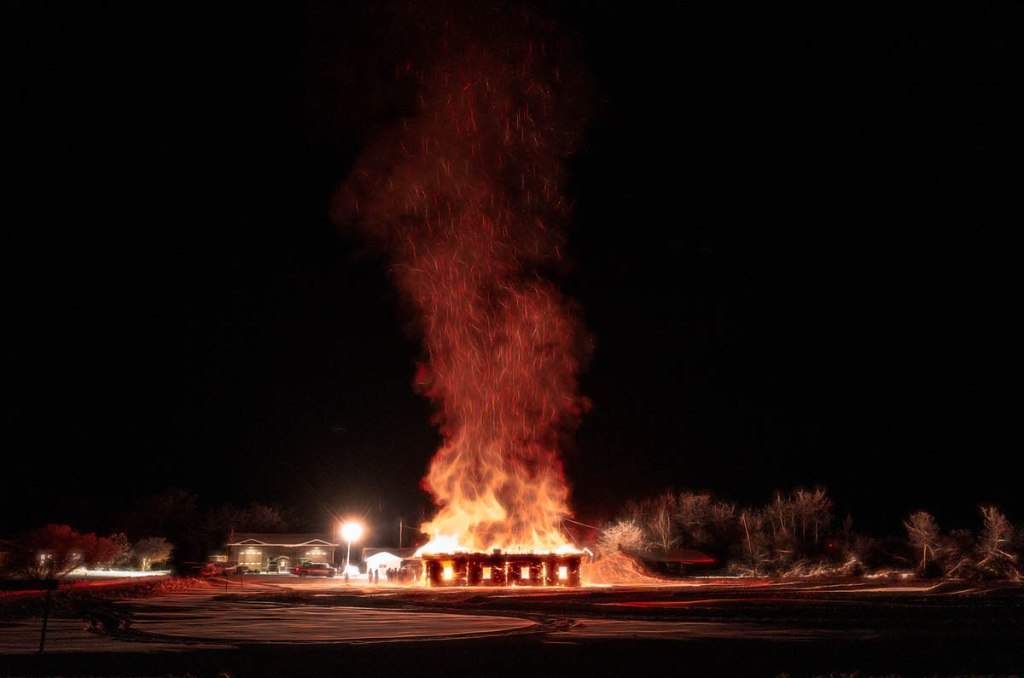
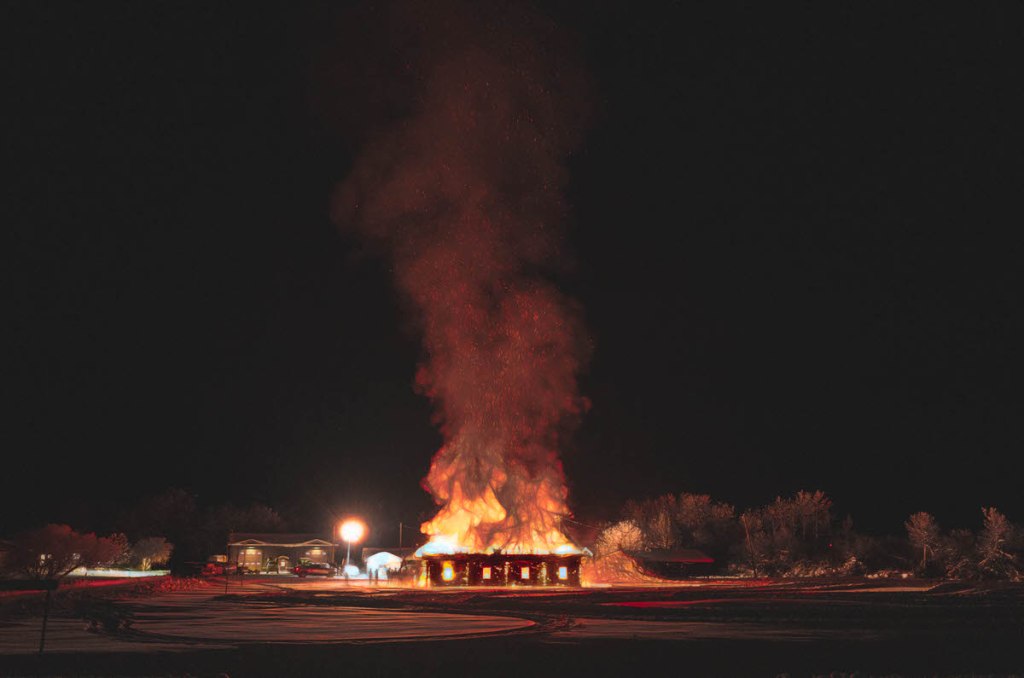
Near 9:00 p.m., my drive brought me to Manning, Alberta, where I fueled my Corolla, got snacks and began the last leg of my journey home. Northward, cresting the hill leading out of Manning, clouds in the night sky reflected bright, red-orange light. As I drove toward the Manning airport (ahead, on my left), flames reached high into the sky.
A building was burning, not at the airport, but at a farm on land immediately preceding the airport. The building was one I had considered photographing through the years. But it had been dressed down. While the overall shape and architectural style held interest, the building’s windows were boarded up, and the structure had been painted a dark chocolate brown. It was more a dark brown brick than architectural interest worthy of a photograph.
A week later, driving south, the building was absent. Nothing remained. The area, where the building had stood, was flat, cleared of debris and now offered a clear, unimpeded view from the farm home out to the service road and highway. Winter likely had been the safest time to burn this farm building, and burning the structure may have been the most efficient way to remove it.
Listened to: Erik Larson’s ‘The Splendid and the Vile: A Saga of Churchill, Family, and Defiance During the Blitz.’
Quotes to Inspire (1) ‘I walk, I look, I see, I stop, I photograph (Leon Levinstein).’ (2) ‘Photography must be integrated with the story (James Wong Howe).’
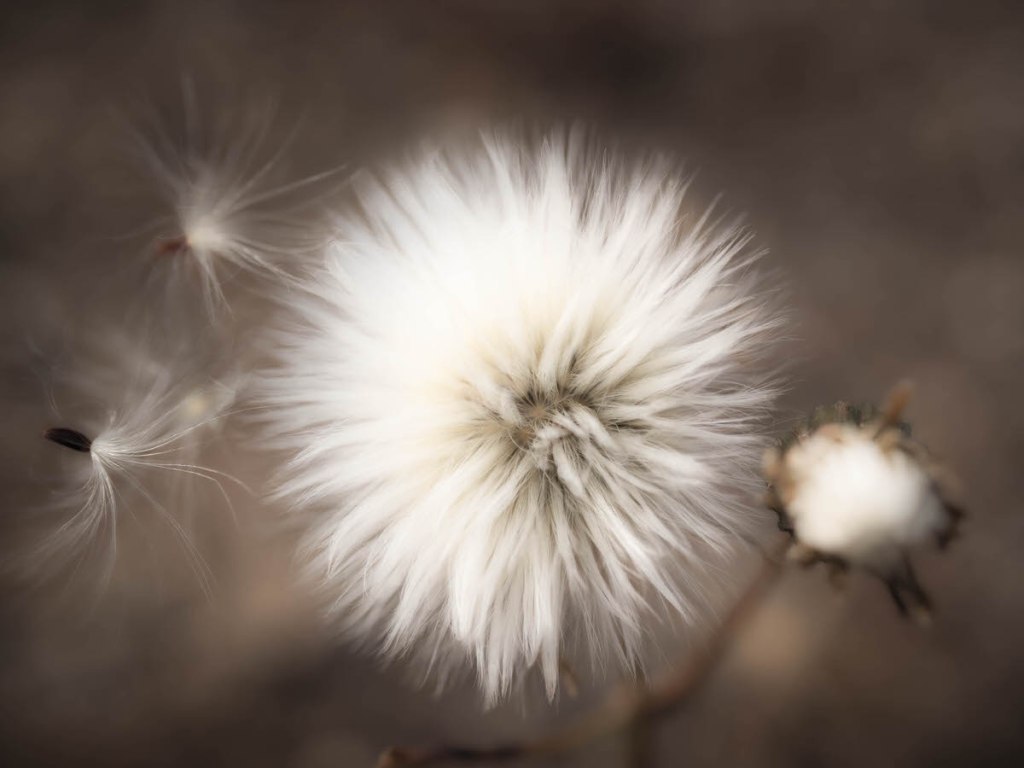
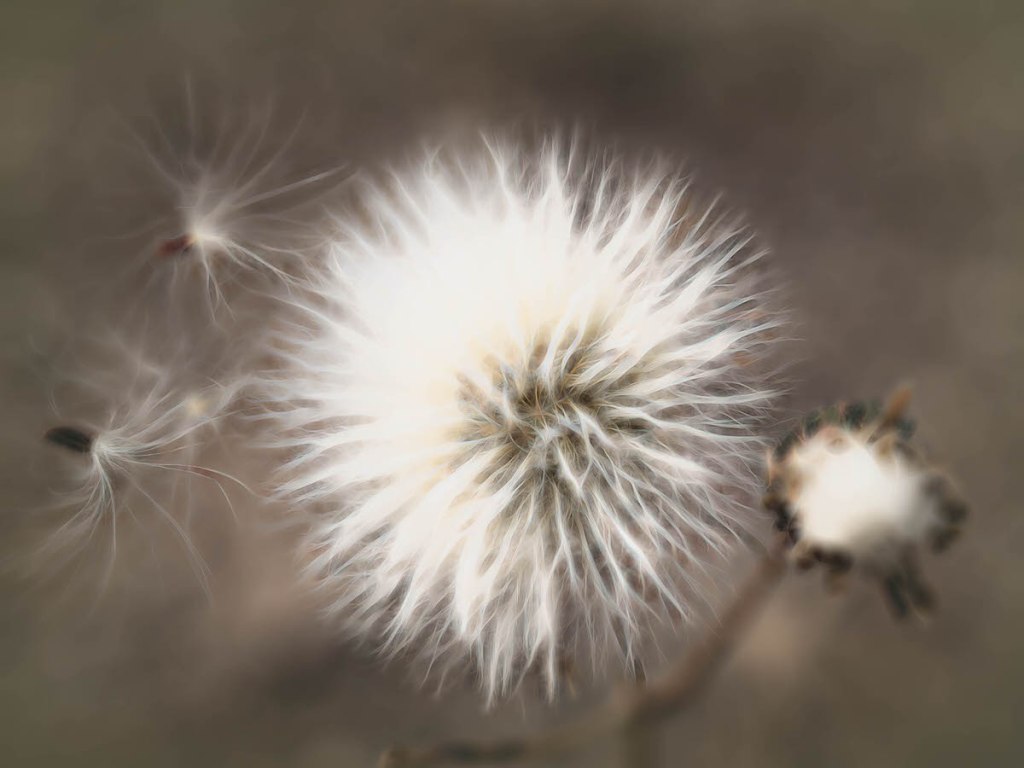
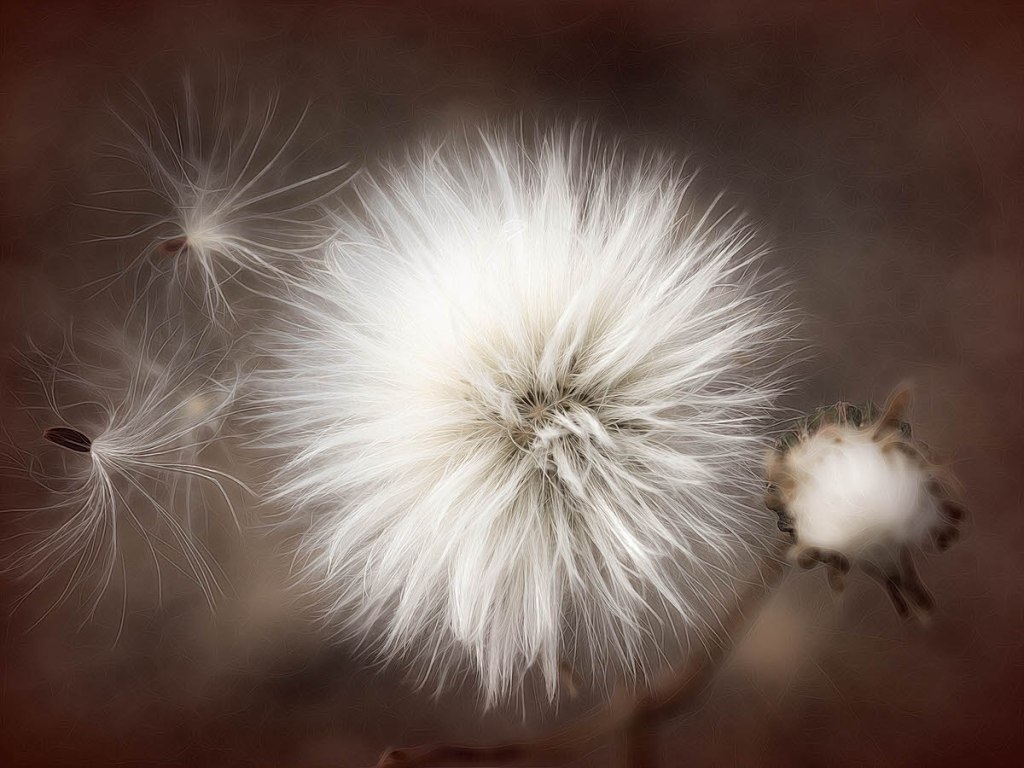
In my free time, I looked back through my Lightroom catalogue this past summer. I took the opportunity to view images I had taken a while ago. The intent was, in some ways, a historical look back. In another way, it became an opportunity to edit images I like using my present workflow. This dandelion image became a series of different edits – these edits. Looking back, I was surprised that this is a photo from October 2016 and that I had taken the image with my Olympus E-M5 Mark II. Pocketable and light, this camera was easy to use, rendered good images and was a camera I enjoyed using.
Quote to Inspire – “If you argue for your limitations, you get to keep them. But if you argue for your possibilities, you get to create them!” ― Kelly Lee Phipps.
Listening to: Spencer Elliott’s ‘Torque,’ Charl du Plessis’ ‘Ode to Peace,’ Pat Green’s take on U2’s ‘Trip Through Your Wires,’ Birdy’s ‘Quietly Yours’ from the ‘Persuasion’ soundtrack, and 100 Mile House and ‘1952 Vincent Black Lightning.’
7 – St. Henry’s Roman Catholic Church, Twin Butte, Alberta
8 – St. Henry’s Roman Catholic Church, Twin Butte, Alberta
9 – St. Henry’s Roman Catholic Church, Twin Butte, Alberta
10 – Twin Butte, Foothills, Front Range Moutains
11 – Twin Butte, Foothills, Front Range Moutains
12 – Foothills Homestead
13 – Foothills Homestead
14 – Foothills Cloud Work
15 – Foothills Homestead
16 – Foothills Cloud Work
17 – Waterton Lakes National Park
18 – Waterton Lakes National Park
19 – Waterton Lakes National Park
20 – Waterton Lakes National Park
Getting south – it began with a camera lens. While I was required to be in Edmonton for our annual, mid-year teacher conference, I would have three days to myself prior to this conference. I could work on finding a used 28mm Zeiss Biogon lens, a rangefinder lens that while wide-angle is rumoured not to offer any distortion. It had just been advertised. And, I had been looking. One 28mm Zeiss Biogon lens was on offer in Calgary. It would be a used lens, but it would be half the price of buying one new. The seller was unloading gear – trading away and aiming toward new and better. From Calgary, I could then head south into the Pincher Creek, Waterton and Lethbridge areas and follow my eye’s curiosity and gather images with my camera.
Locking in this plan, I began my drive late on a Sunday afternoon in February. The drive would be under overcast skies. The temperature would be close to 0C throughout the drive. I would use ten hours to get to my destination. I could manage it. I would pass through Edmonton near 11:00 p.m., proceed to Red Deer and stay the night at a hotel there. The drive to Edmonton was uneventful. The drive beyond Edmonton was not ideal. Temperatures through the day had been warmer. I was driving a car, not my truck. I began my drive toward Red Deer. I got on to the Queen Elizabeth II (QEII) Highway (between Edmonton and Calgary). With temperatures close to 0C through the day and with a recent snowfall, the QEII was slushy, sloppy and slippery. I passed the Wetaskiwin turn-off and then encountered a brightly lit, highway alert road sign indicating that travel was treacherous. The drive became a matter of keeping a safe speed and working through the road’s slushy, ever-hardening, icy mess. I made it to Red Deer, got a hotel room, showered and got to sleep.
The next morning was sunny. I messaged the lens seller advising that I could meet today and provided a location in downtown Calgary for us to meet. The lens seller indicated that meeting at lunch was possible. All was in the works. I breakfasted across the way from the hotel at Red Deer’s Donut Mill. Then, the seller messaged back. The seller could not meet. The seller would need a day or two in order to meet. I am not sure how best to have managed this situation. But, the time frame would not work for this trip. And, the seller was deviating from his first communication. A red flag went up, for me. Many things could have been at play for the seller. And, perhaps aiming to meet in the same day as my indicating interest was problematic. I halted things and asked the seller to disregard my interest in the lens. All this occurred within and hour and a half of first messaging the seller.
I moved on.
With that done I found myself in Central Alberta, still with an intention to travel further south and to explore with my camera. Travel would take me to Calgary and to The Camera Store. I would look around at books, at new cameras (Nikon and Fuji), at used cameras, at used lenses, at new lenses, at camera bags. I would have two good chats with sales people – warm, educating, engaging conversations, conversations in which my curiosity was able to lead some of the way. Good. I left at the end of store hours aiming to return to the store as I came back through Calgary.
Onward to Lethbridge – my intention was to get settled in Lethbridge and work from there to look around southern Alberta. Later that evening, I got a hotel room, washed my car and got a meal.
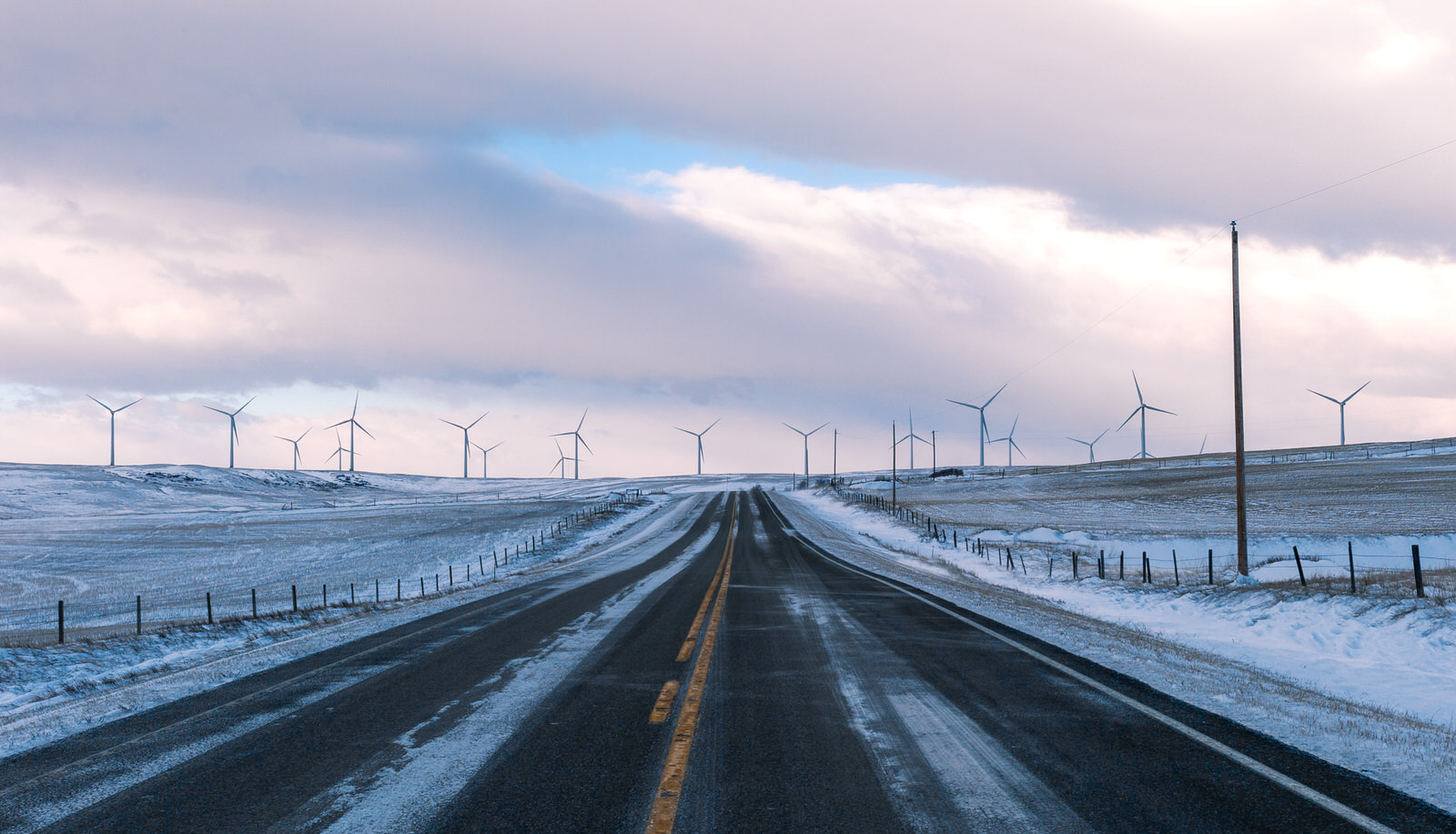
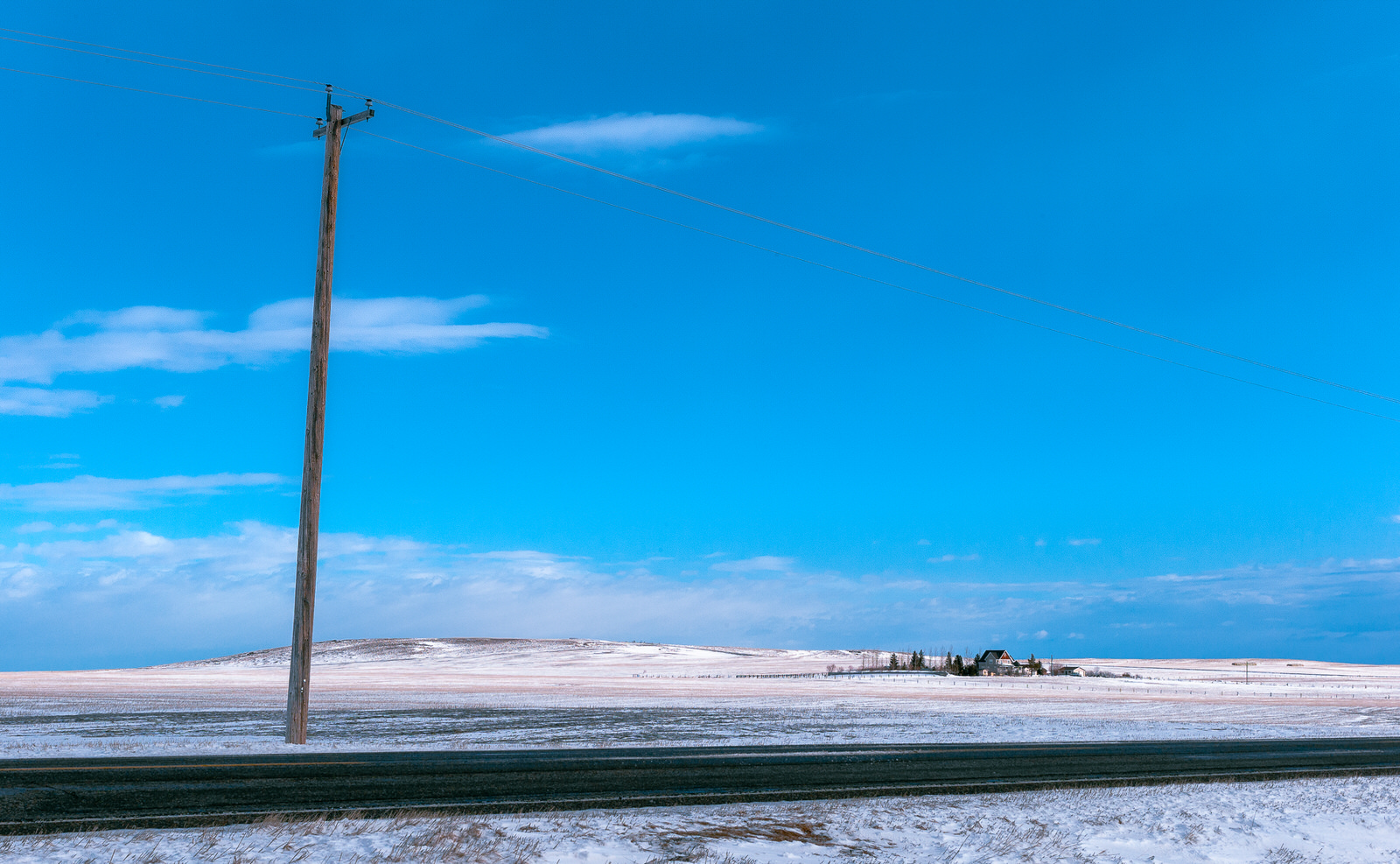
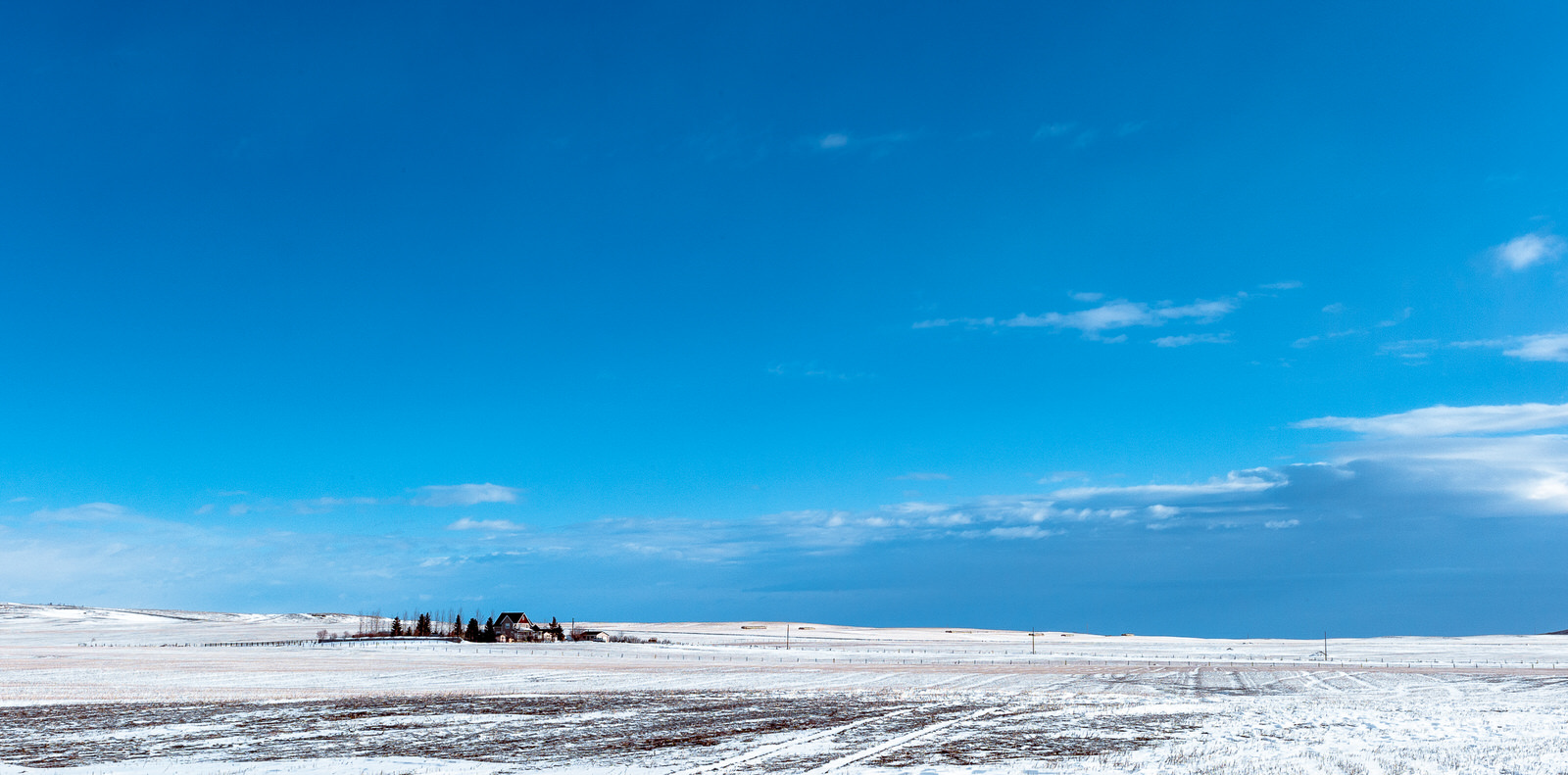
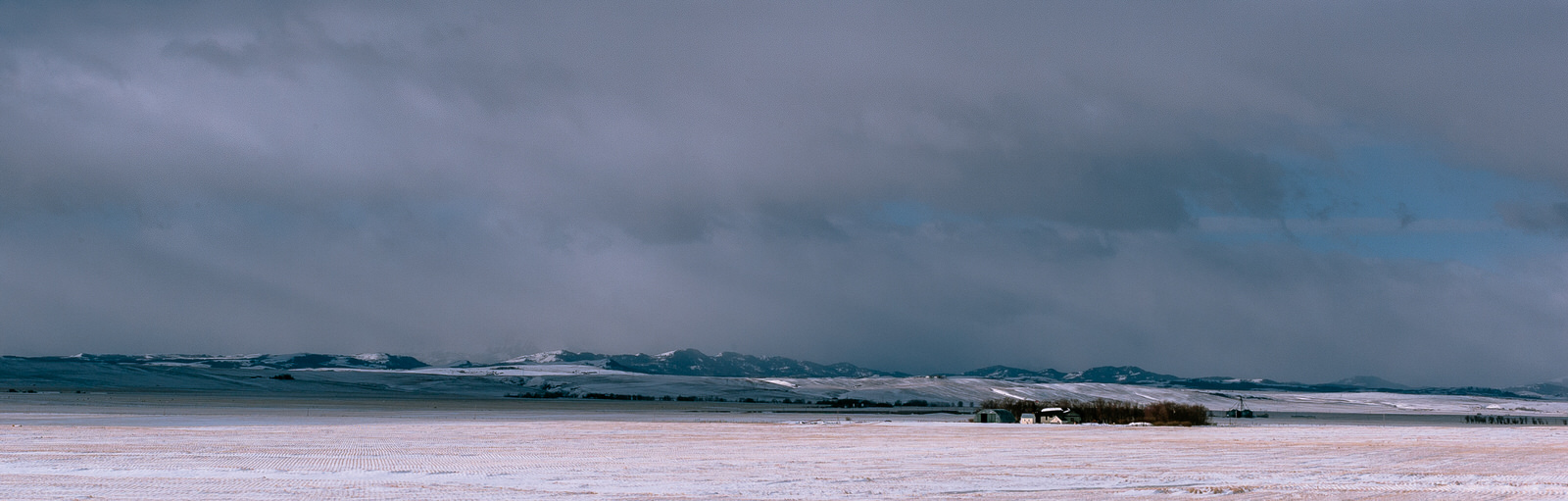
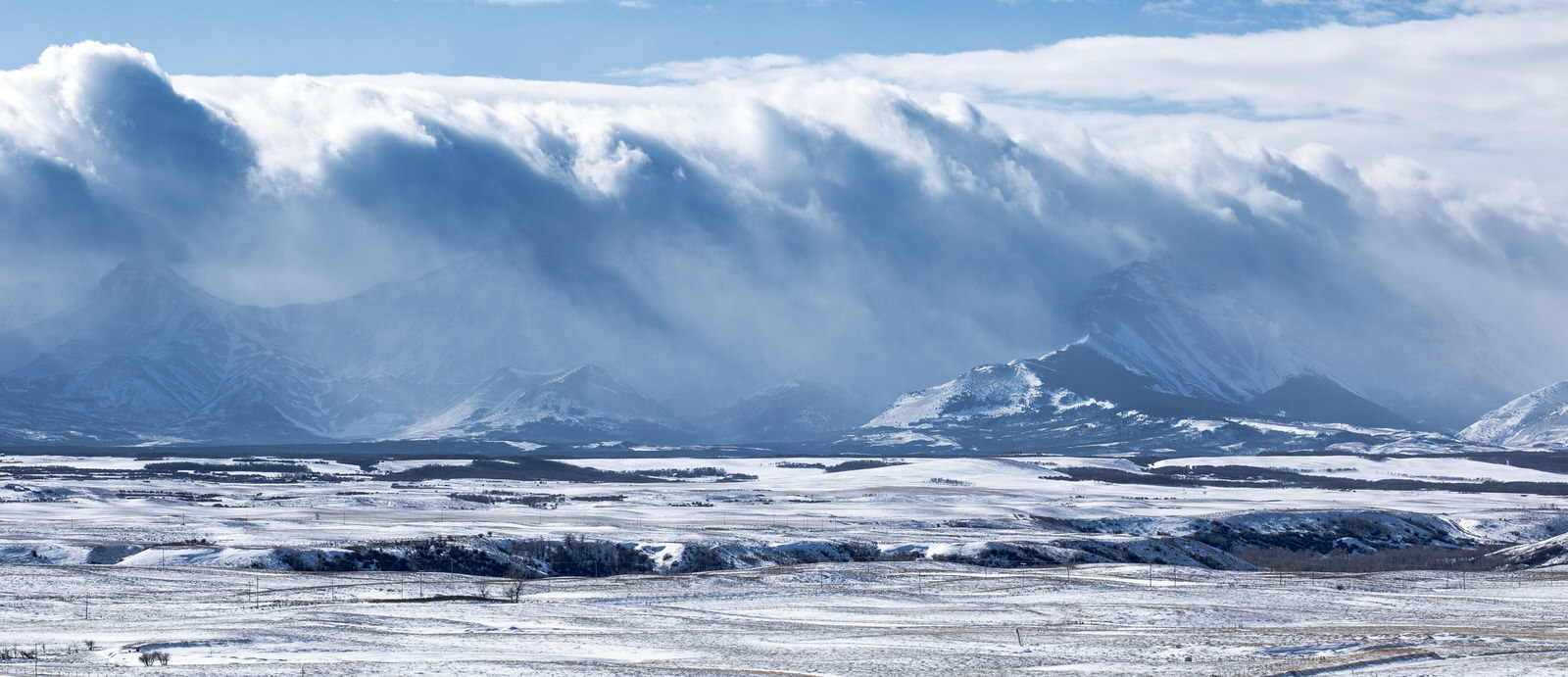
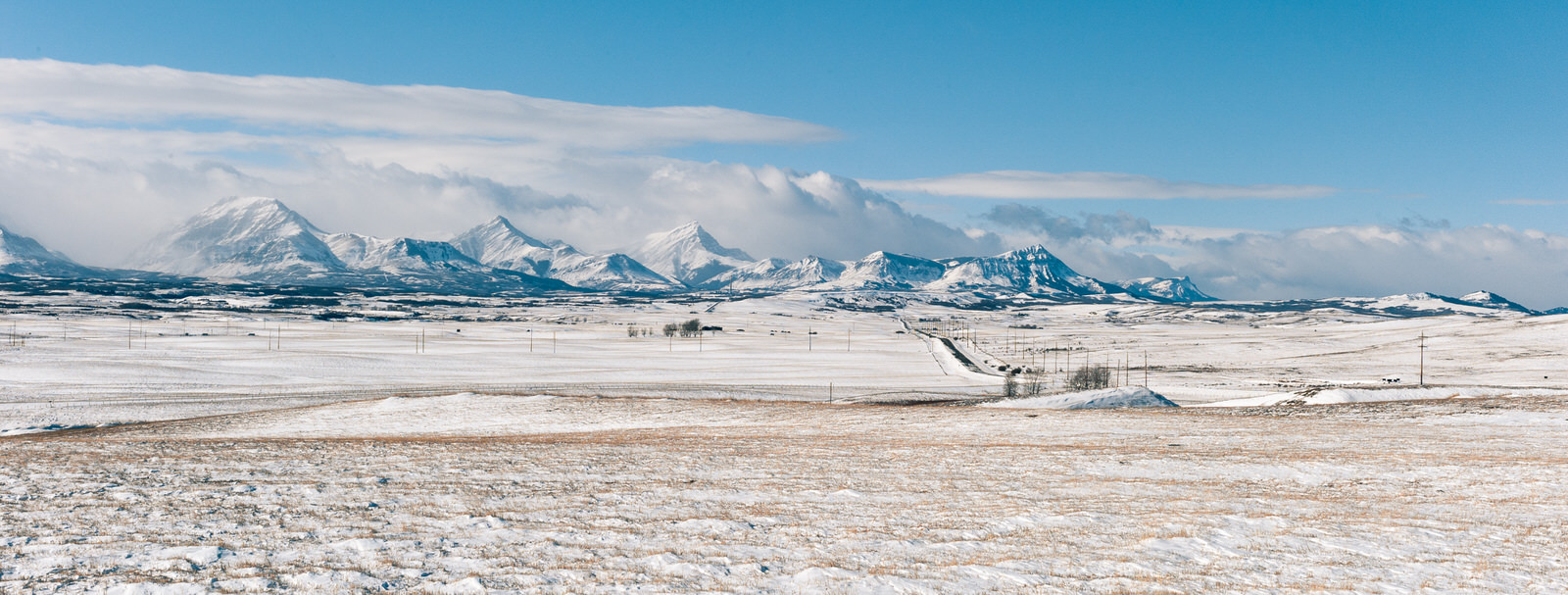
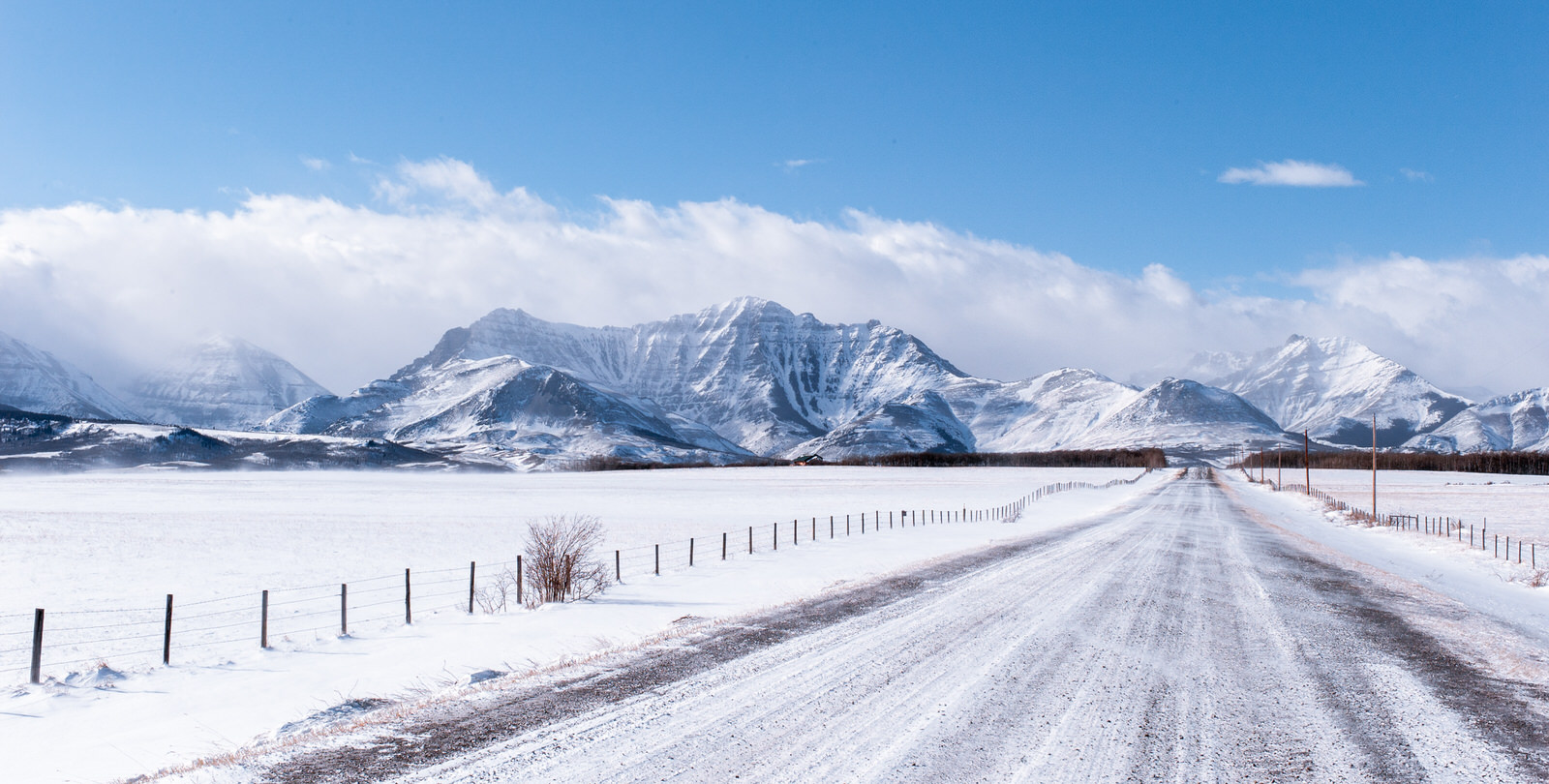
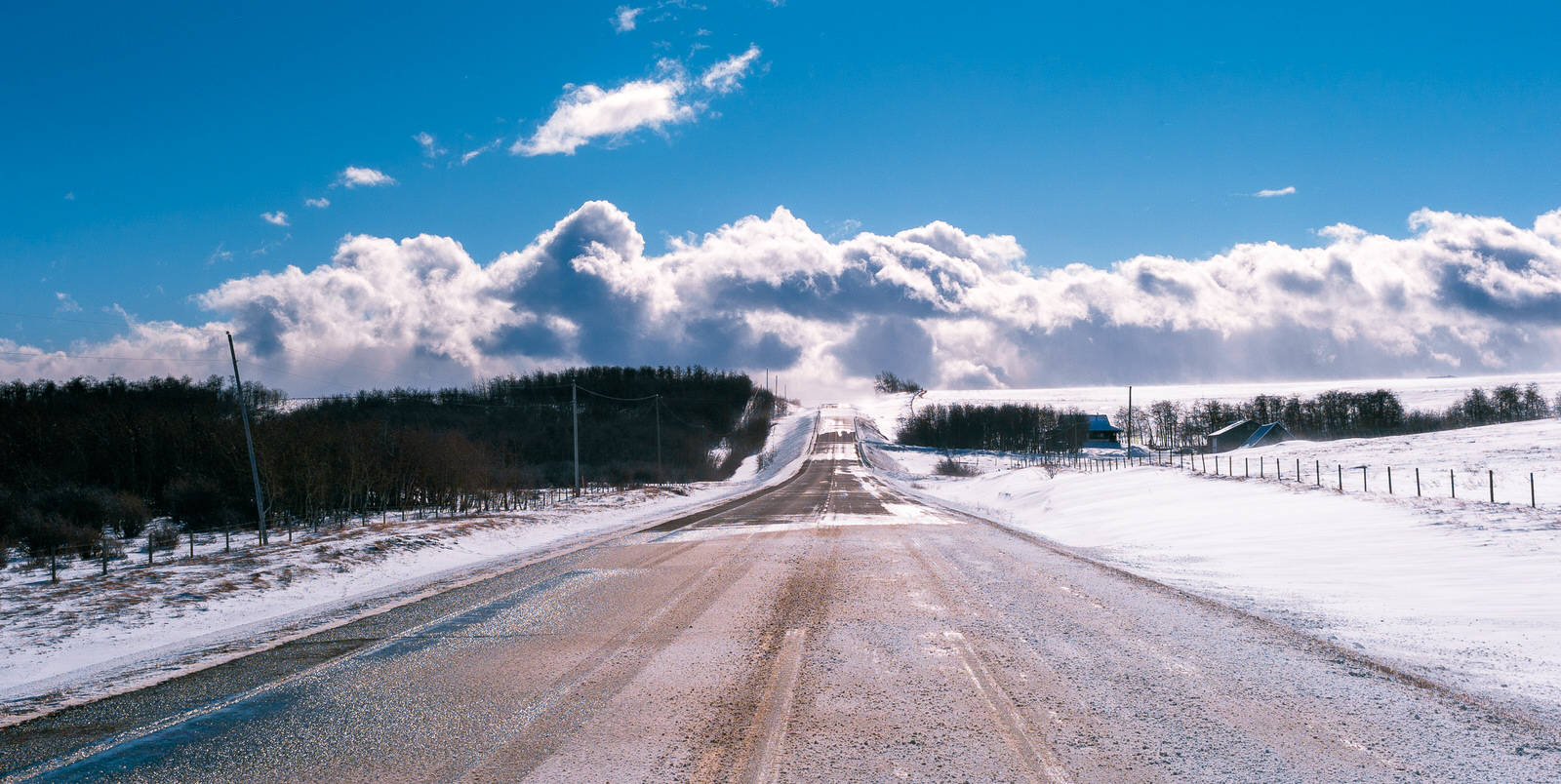
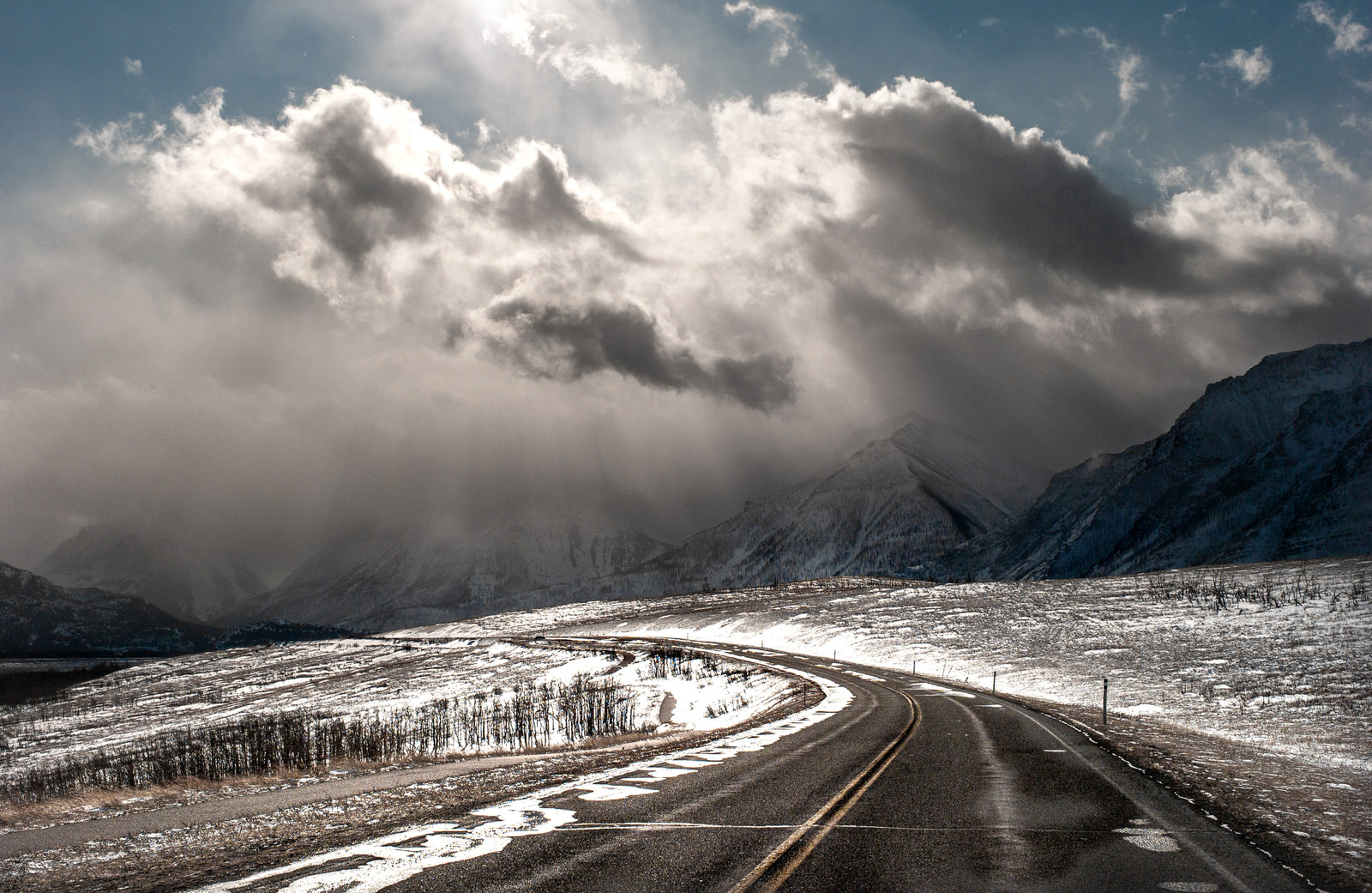
The next day, after a good breakfast at the hotel, I started out. The day began as one overcast with heavy, grey cloud. But, weather in this part of Alberta is quite changeable in terms of how it interacts with the Rocky Mountains. Mountain weather is something intriguing, especially for my northern Alberta eyes – something I remember from times hiking along mountain trails on out-trips in the Crowsnest Pass and when camping in Banff and Jasper. Almost as soon as I moved south and west from Lethbridge I encountered windfarms – rows and rows of gigantic, white wind turbines used to gather / produce electricity. I would drive south from Fort MacLeod and on my route to Pincher Creek I would find other wind farms. In posting wind farm images on Facebook, earlier this year, I would find that many people in southern Alberta no longer see their value, are concerned about their impact on the environment and find themselves rejecting how they have altered the landscape they live within. Along the drive I would find last areas of prairie within foothills. I would find homesteads as the only structures seen on the land for miles and miles, the land being that allocated for grain farming. From Pincher Creek to Waterton Lake National Park I moved further into the undulation of foothills and the mountains; the weather was mountain weather, weather that can shift rapidly. Sunshine and bright blue sky would be there one minute, the next I was driving through or standing in a cloud. Cloud work so close to land has immensity and is something to take in. Light and shadow are always moving with these clouds revealing a shifting contour, shape and relief. The highway south from Pincher Creek becomes the path along which foothills meet the front range of the Rocky Mountains. Homesteads are a part of this landscape as well – grain farms and cattle ranches. Again, changeable mountain weather, mountain and foothill landscape, farms and roads – all would catch my eye, my curiosity, my imagination.
I took a chance on a historic site. I drove from the highway out and up to Twin Butte upon which St. Henry’s Catholic Church sits; to the east it looks out to the prairies; to the west it looks from the butte over a valley of foothills and to the front range of the Canadian Rockies. To look out over all this, immensity is there … and it would be appropriate to use the term majestic. I rounded out my day’s picture-taking with a small look into Waterton Lake National Park before returning to Lethbridge. I paid the day’s entrance fee and took a slow drive into the park to gather a couple of images – the Prince of Wales Hotel is subject of two of these images. A good day out with my camera, it was. The next day I would return to Edmonton, to colleagues, to a conference. The Zeiss Biogon 28mm lens remains a lens I am still hunting for.
Quote to Inspire / Consider – “To the complaint, ‘There are no people in these photographs,’ I respond, there are always two people: the photographer and the viewer (Ansel Adams).”
Listening to – a cover of John Prine’s ‘Summer’s End’ by Sierra Hull; a song that’s so big and full of grace; Sierra does John proud with it. Good, good.
In Alberta’s northwest my family and I have lived in Fox Lake, Garden River, La Crete and High Level. The roads are long and distances travelled influence our cost of living. It can be cost effective to travel south for supplies if you are buying in bulk and stocking up. Yet, buying local permits piecemeal buying as needed and supports local business. We buy groceries here at home. And, I will travel south in the year.
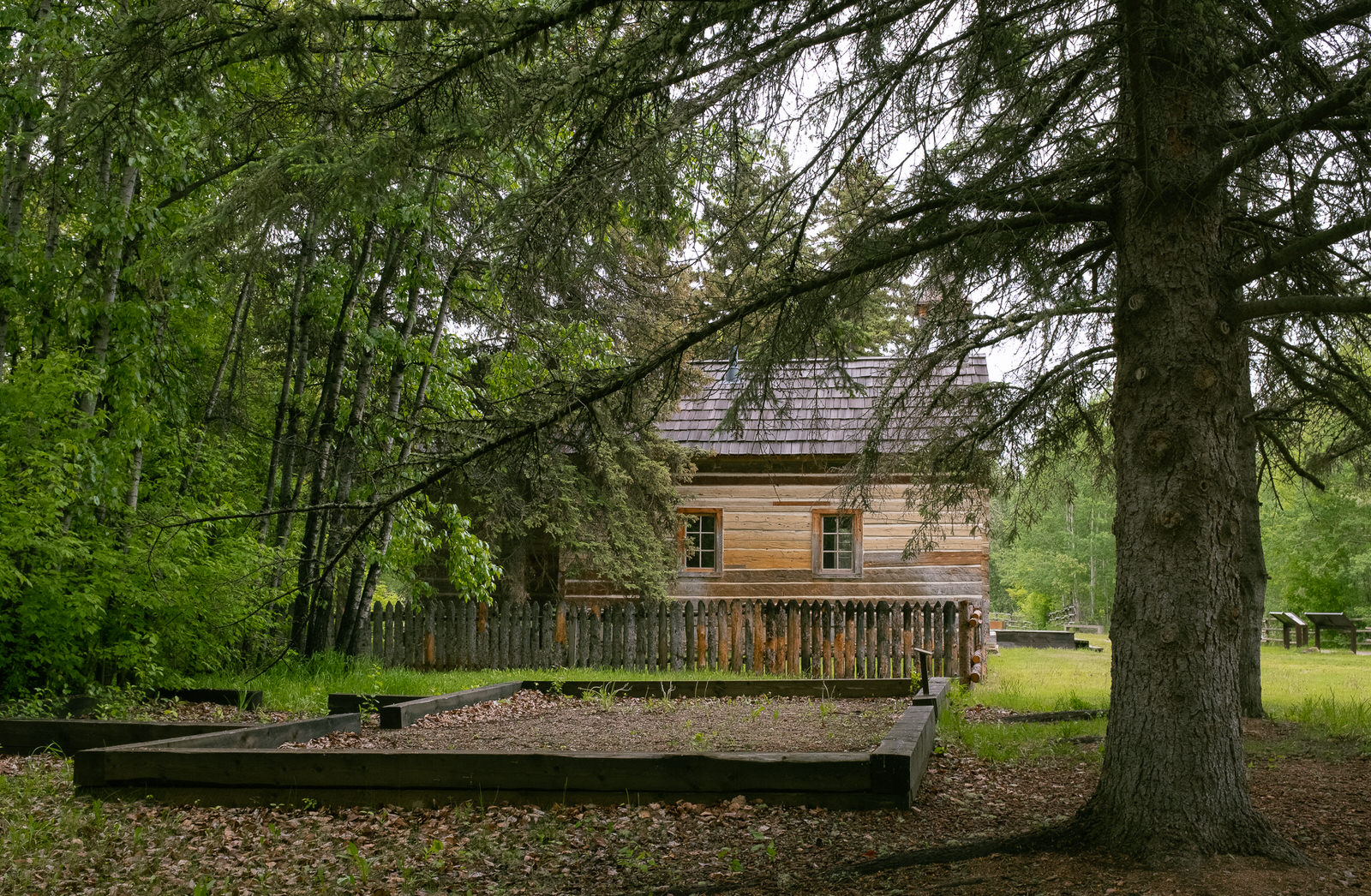
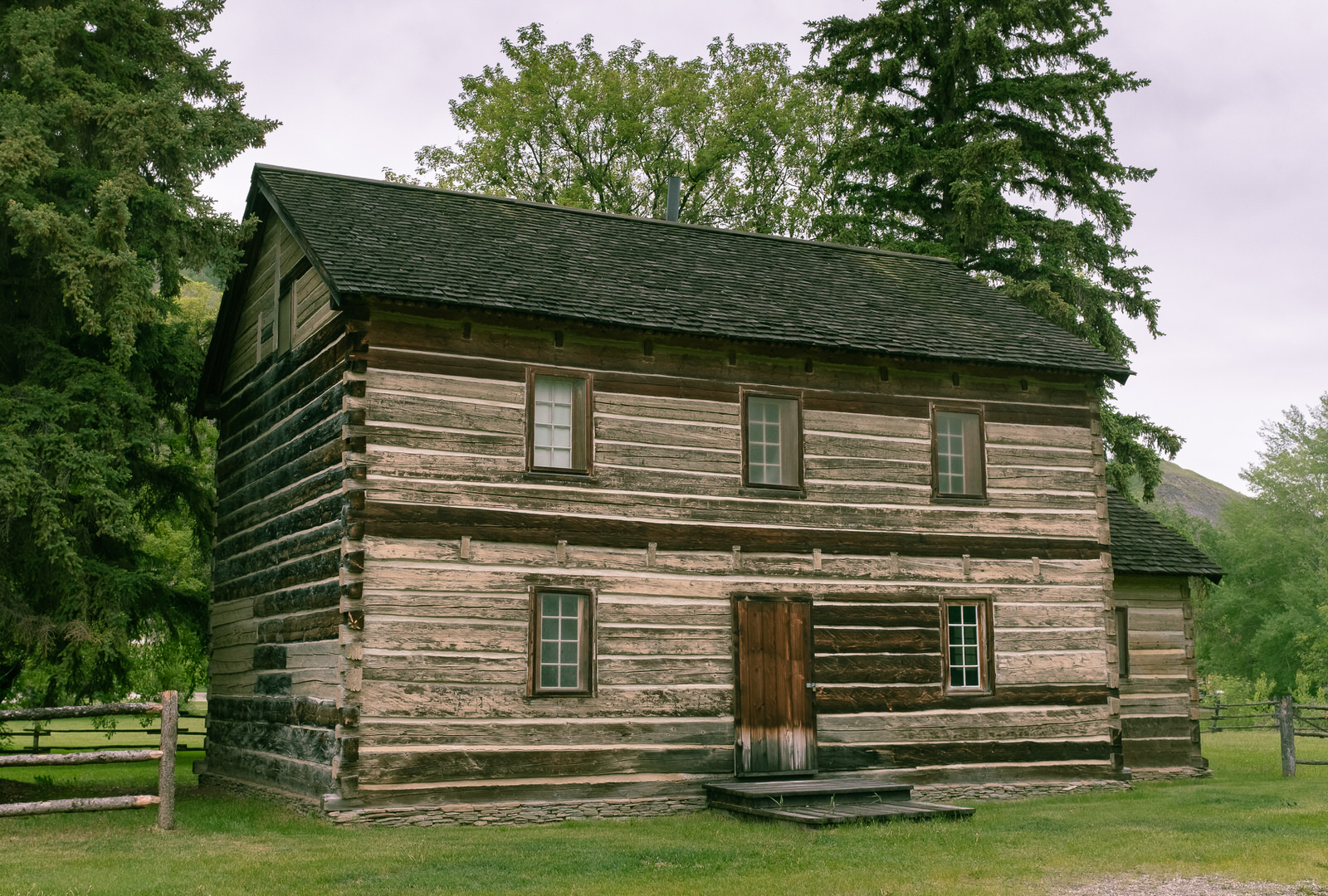
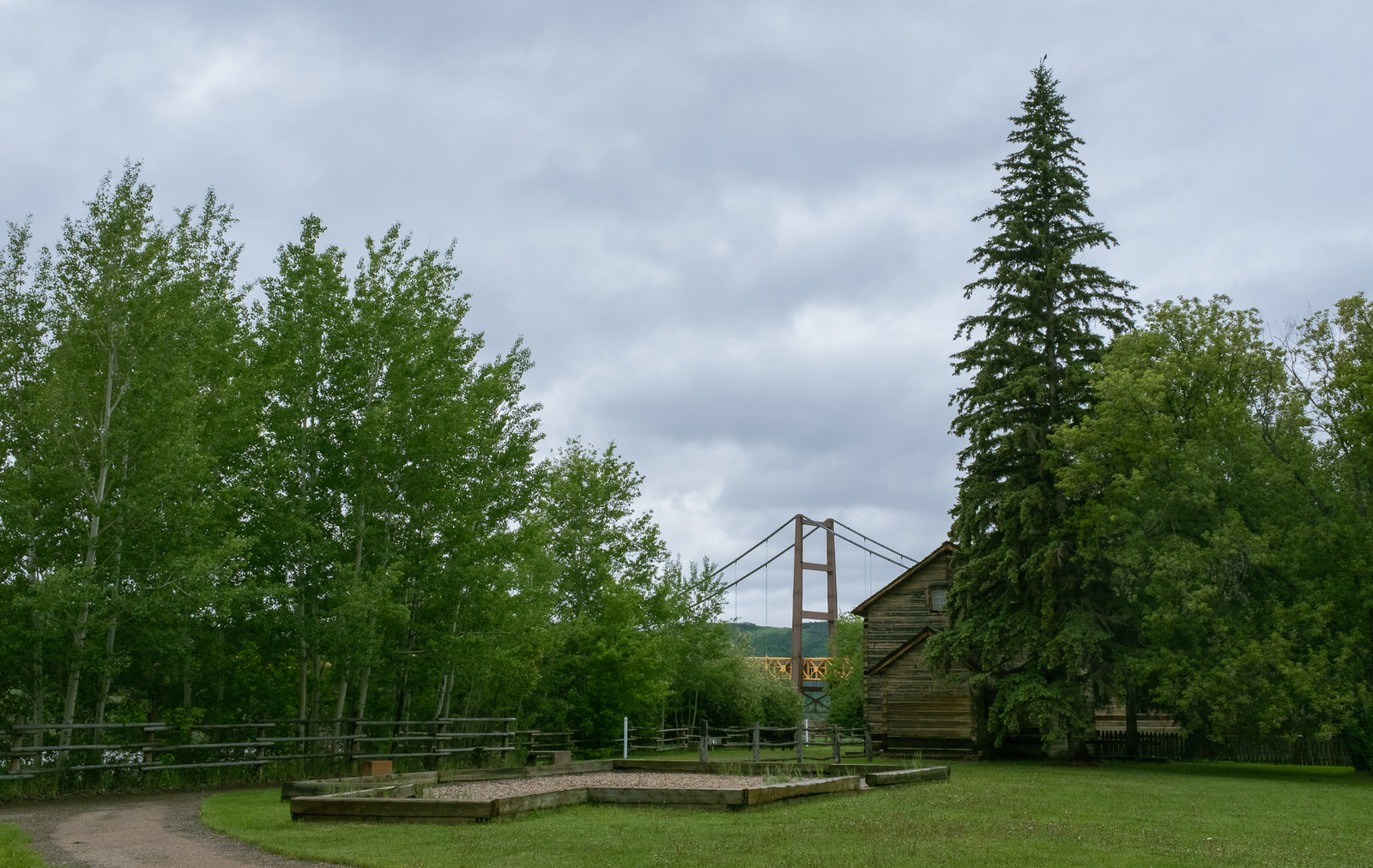
Dunvegan – it is a place I travel through on my way south to Grande Prairie; with the suspension bridge crossing the Peace River, it is a place I know by sight; it became a place I would investigate. Fifteen years would pass before indigenous Art, Alberta history and site use would coalesce with it being a fixed name in my mind – Dunvegan. Like other points along the Peace River you descend into this river valley. A road cuts a long two-kilometre gradient into each valley wall, north and south, to ease the braking efforts of heavy-laden transport trucks. At the lowest point, you cross the kilometre-wide Peace River on a yellow and brown suspension bridge. Then you accelerate moving up and out of the river valley – south towards Rycroft, north towards Fairview. Dunvegan is the name given to the plateau area under and surrounding the north side of the bridge.
Seeing Dunvegan – I would see Dunvegan in indigenous paintings at Grande Prairie Art galleries. The contour of the land folding down from a high river bank to plateau holds the eye. With skilled use of colour and light, the painter could draw attention to sacred place and practices. Longing for old ways was found in such Art. Still though, I was not recognizing these paintings as the area I travelled through a couple of times a year.
Dunvegan took hold in my classroom with my students. Each day, along with our school, students and staff read for 15 minutes. ‘Drop Everything And Read’ (DEAR) saw my students return to one book for regular reading, ‘Alberta Ghost Stories.’ One tale in the book told of a ghost sighting in an upper room in one of the old Dunvegan historical buildings. From what I recall, as with most ghost stories, light dwindles well past dusk. A living and breathing mortal is walking outside the house. He feels compelled to look up and sees someone or something looking at him. There is surprise, impact and connection in seeing and in being seen. The tale’s impact is greater finding out that the house has been shut-up for decades with no way in. Readers in my class always discussed what they thought was going on … offering speculation. The story became real to them. Like me, my students and their parents traveled through Dunvegan on their way to Grande Prairie. Often, they would stop at Dunvegan for lunch or a smoke break. The Dunvegan story held their imagination and during a travel break they would investigate as far as they dared. My students’ stories of being in Dunvegan would return with them to class every few months.
Still, haste in my travels got the better of me. I was not yet stopping at Dunvegan in my travels southward. And, it was only a few years ago that I first stopped in at Dunvegan. My wife had spoken about a nursery for spring bedding plants that she and a friend would go to hours south from High Level. She had been talking about Dunvegan Gardens, one of the best nurseries in Alberta. You find it at/on the eastern-most section of the Dunvegan plateau. Located between Fairview and Rycroft, the Dunvegan Gardens serves residents of Grande Prairie and from as far north as High Level.
One time, as she and I came upon the Dunvegan turn-off my wife pointed out the Dunvegan Gardens to me. It was the place she and her friend had been. And, my wife got me to slow down, turn-in and stop at Dunvegan to look around. I was finally connecting the dots – this was Dunvegan. Since that time, perhaps for the last six or seven years, I have been making time to stop and look around with my camera. Good. The Dunvegan site is a beautiful and worthy landscape in all seasons. One of these times I am hoping to pass through the area in late October or early November when the Dunvegan valley is sometimes shrouded in mists.
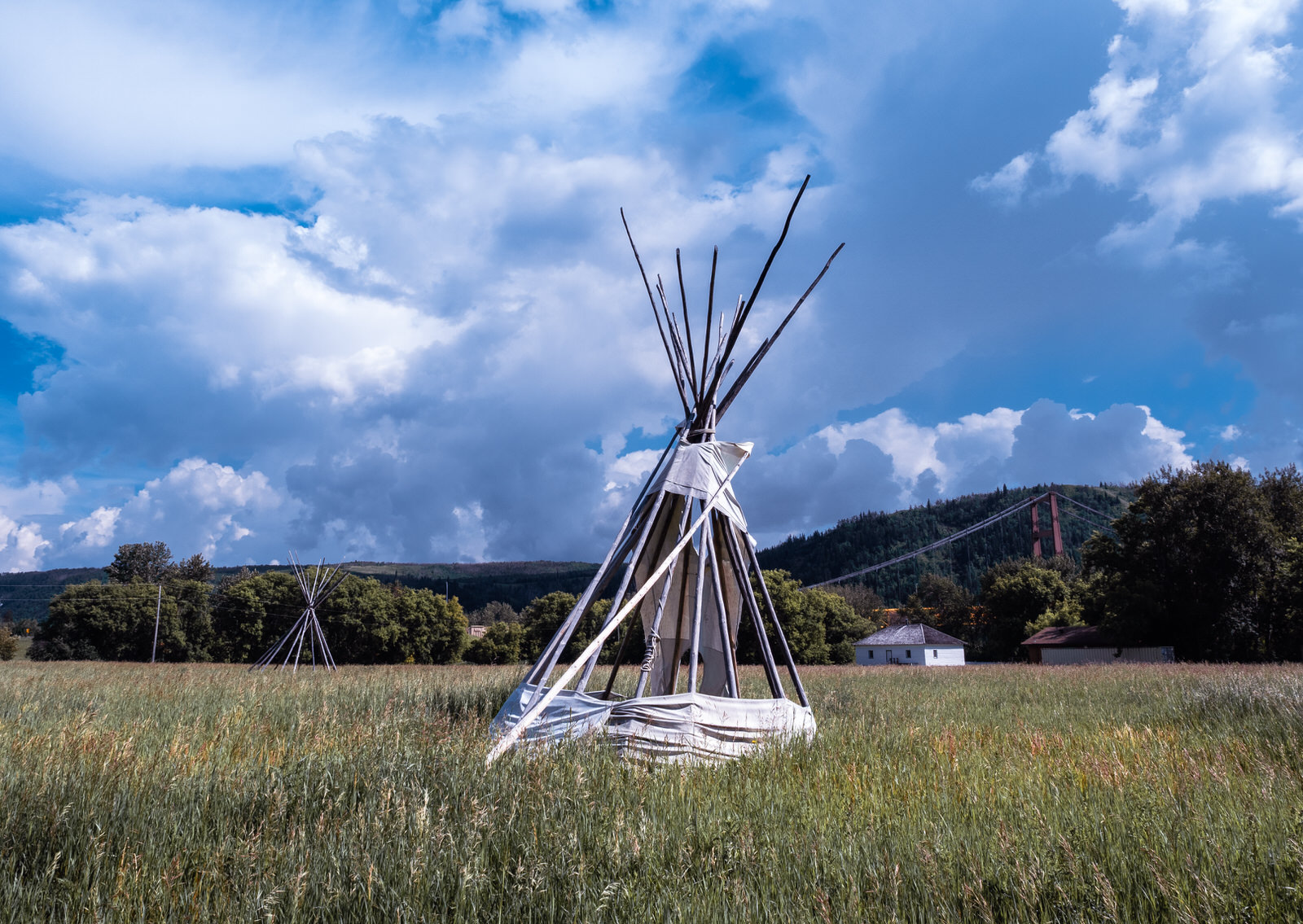
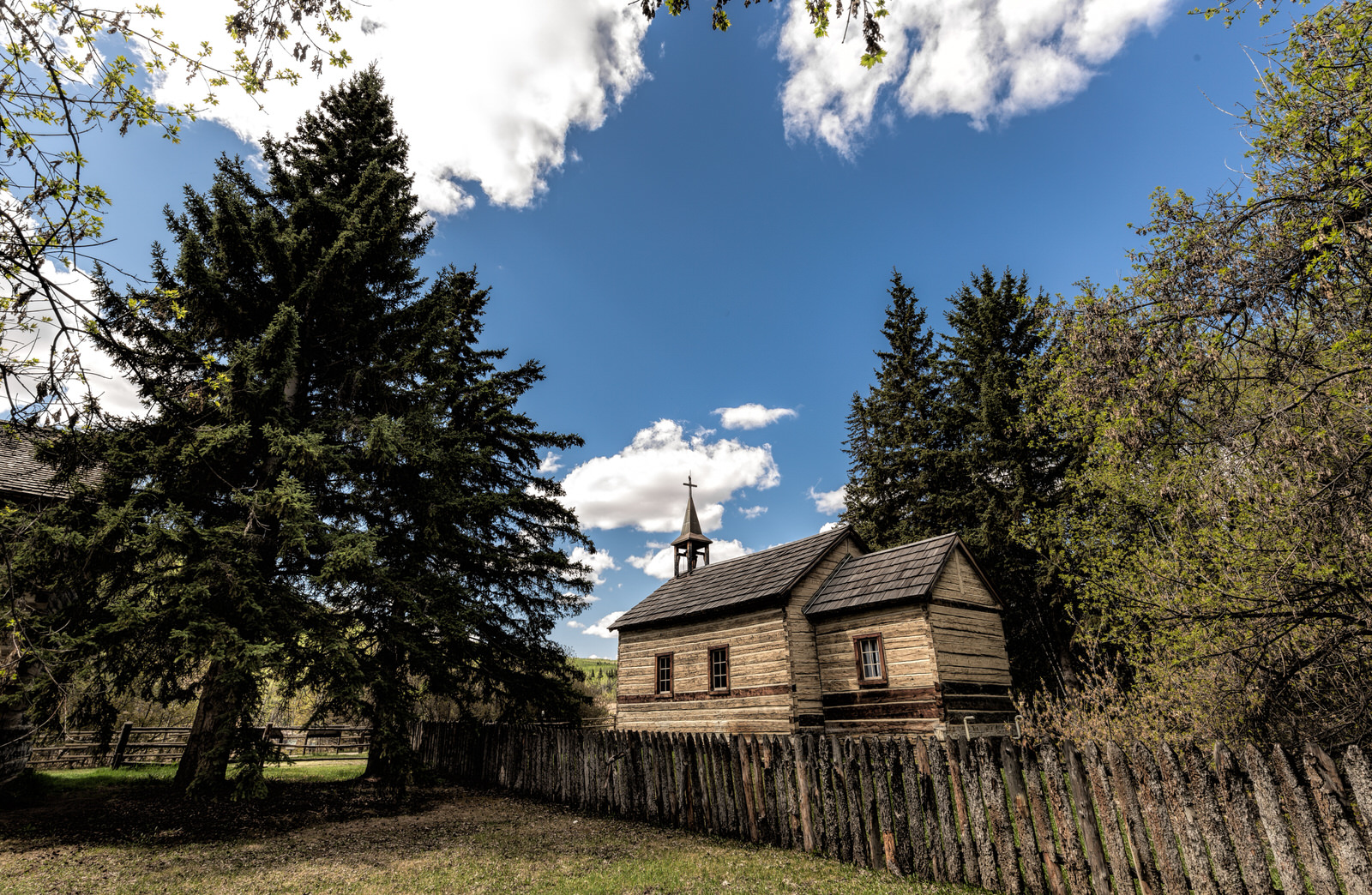
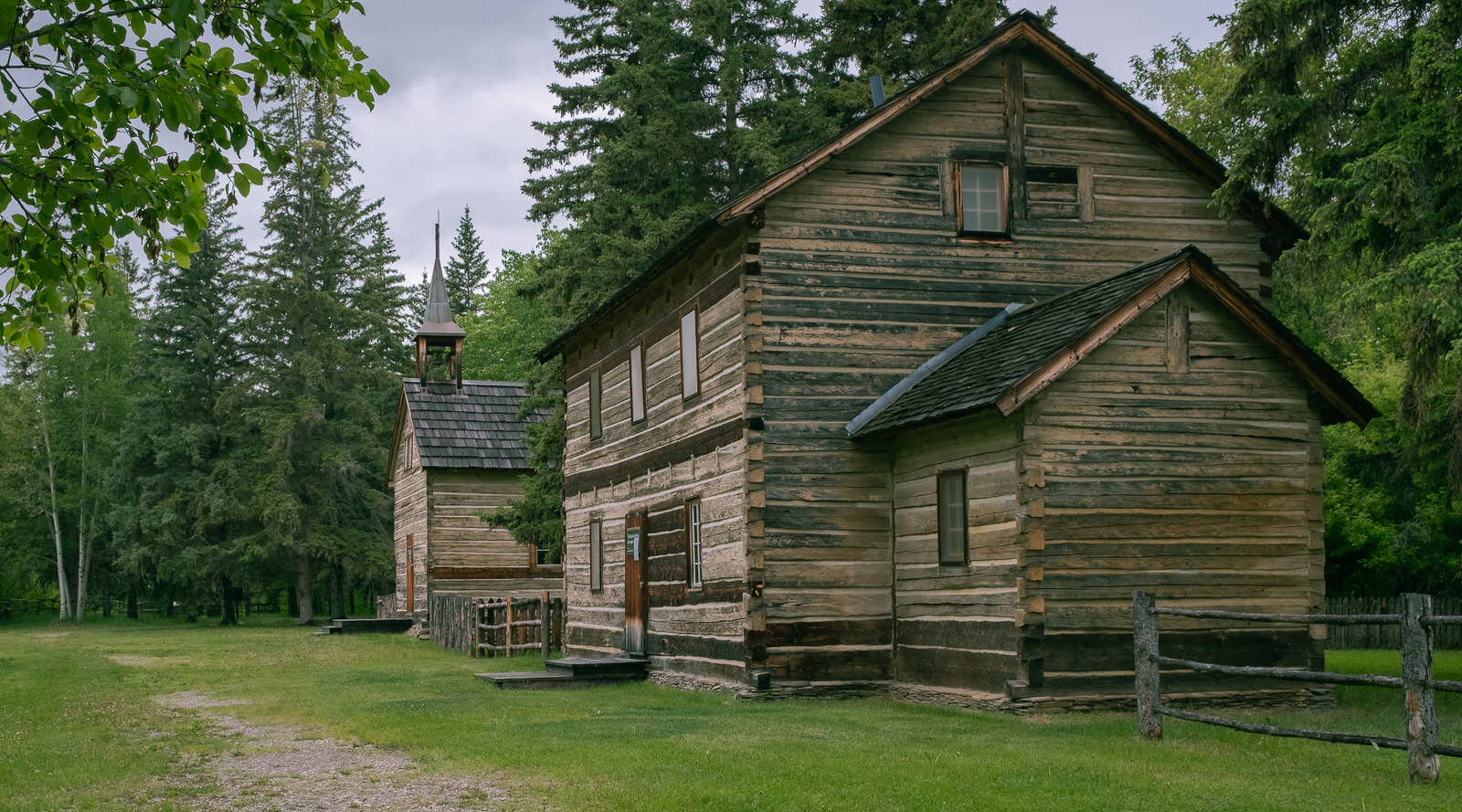
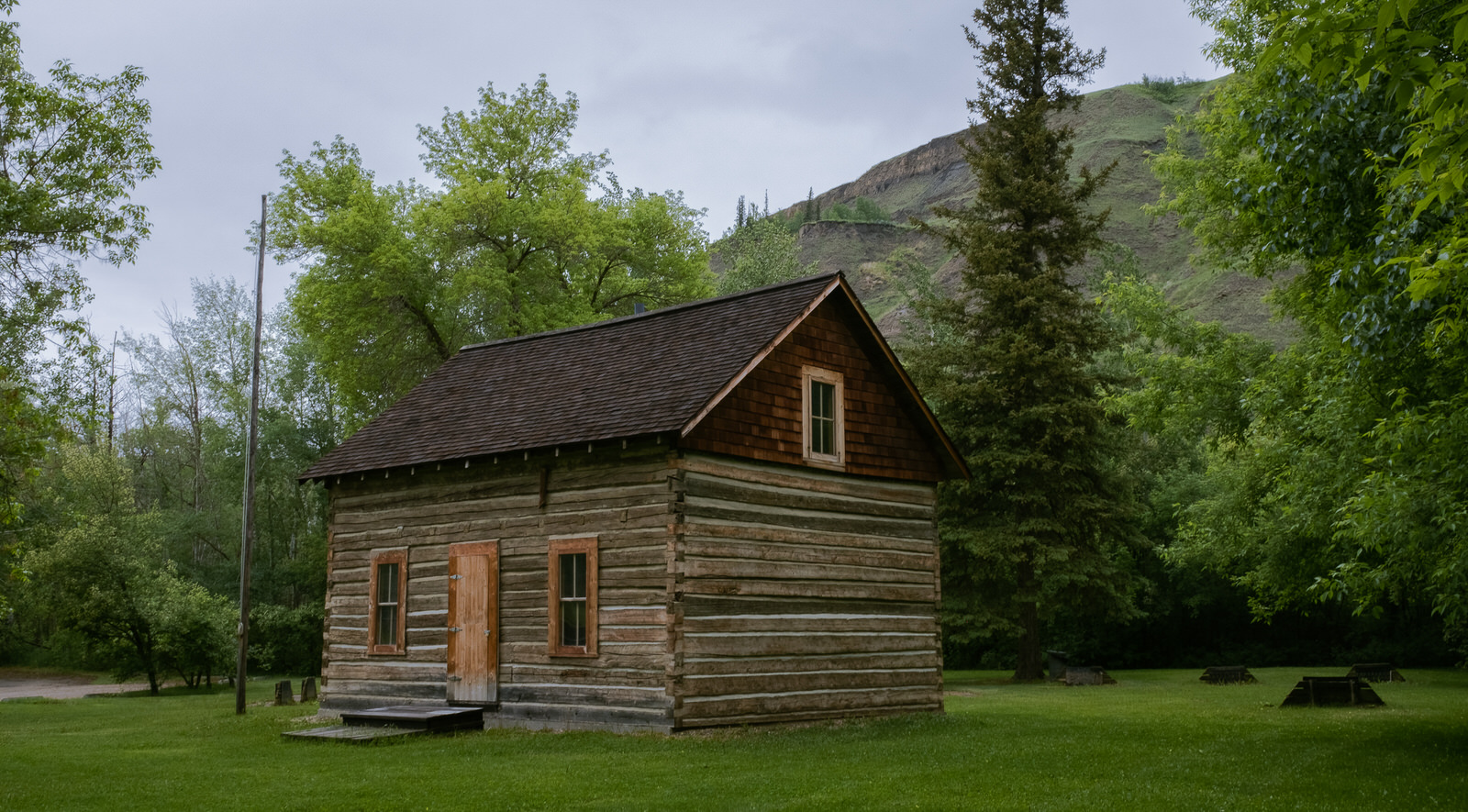
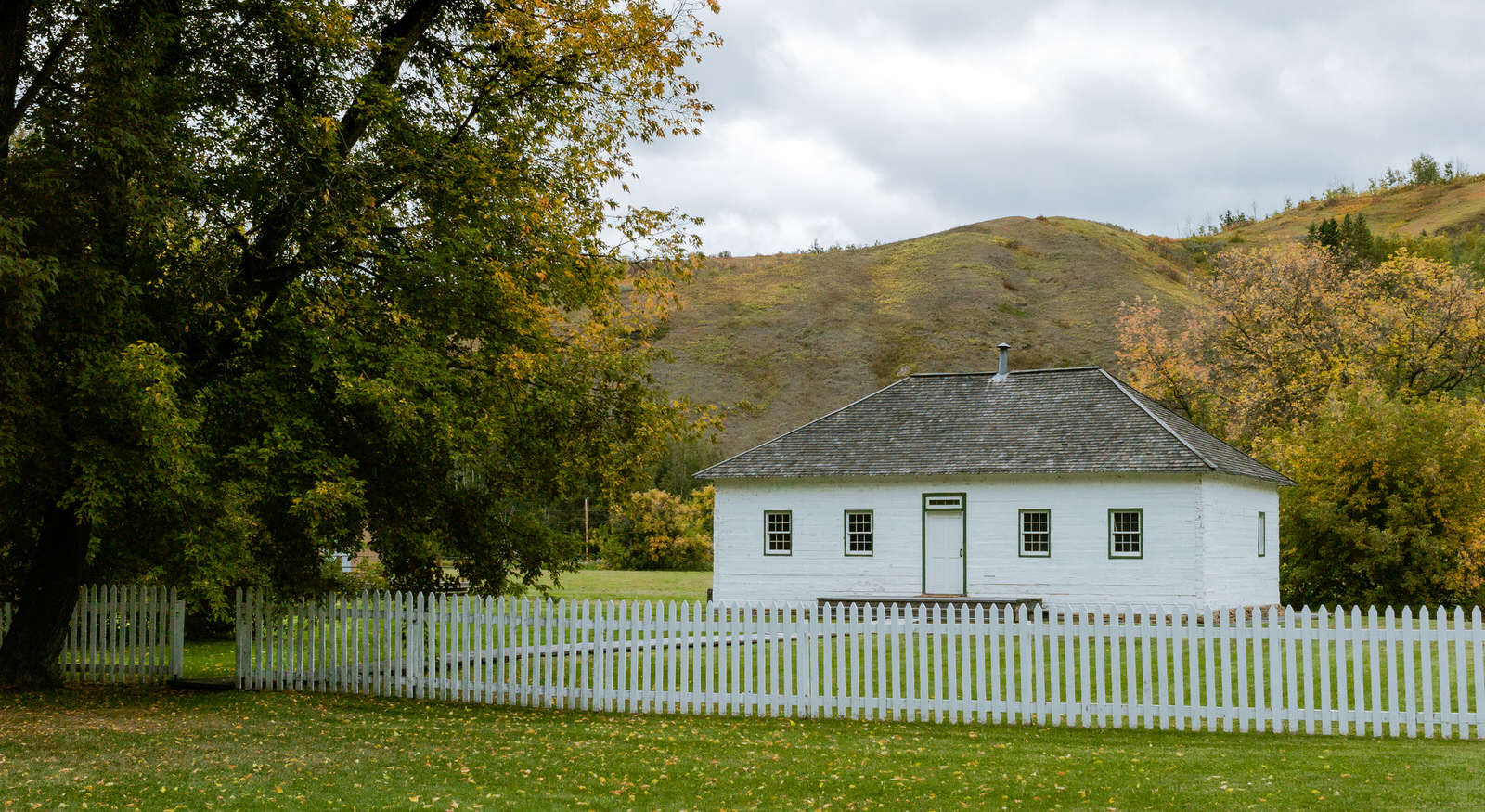
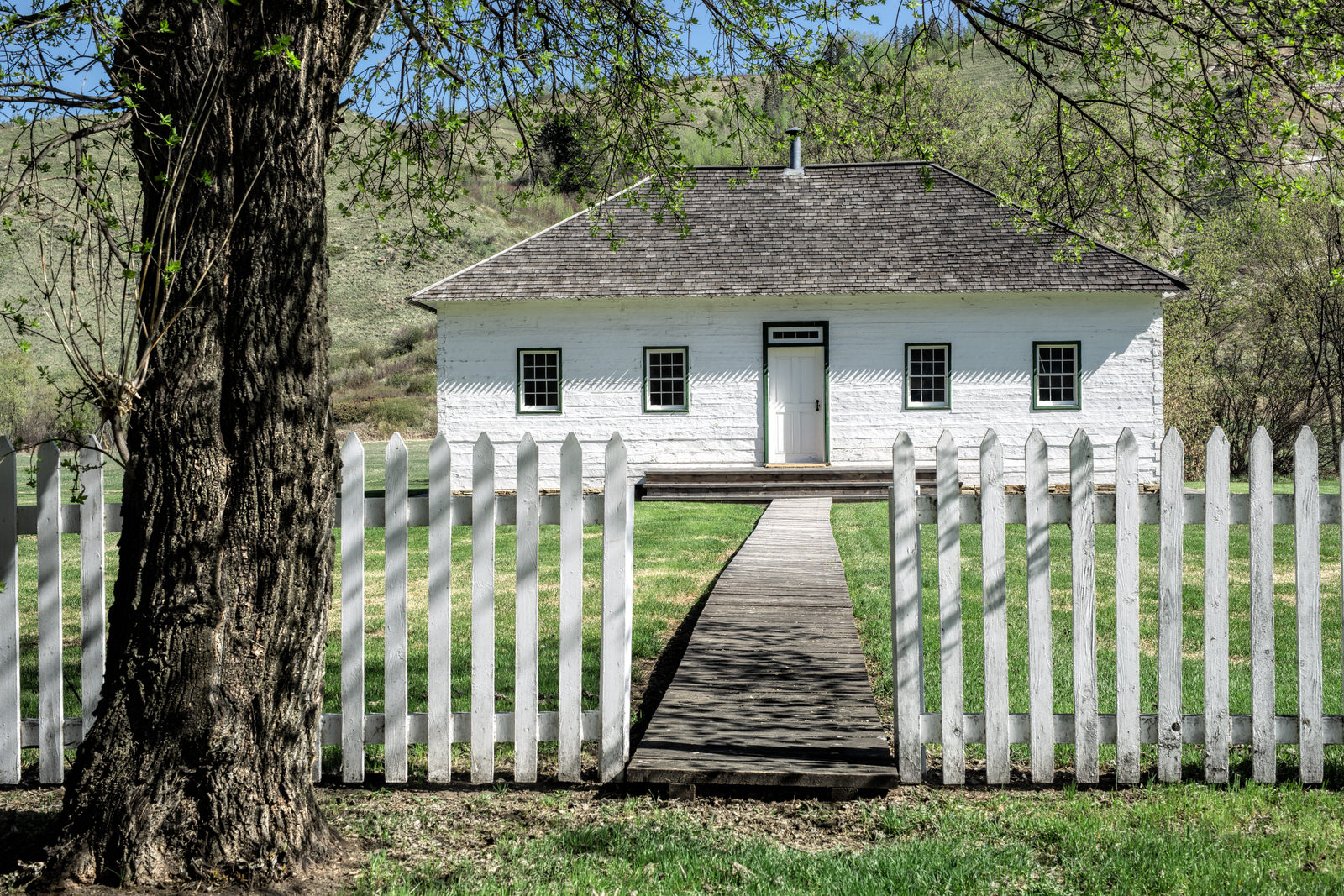
Dunvegan has been one of the prominent fur trading areas in Alberta. Fort Dunvegan was a trading post. Established by the Northwest Company, the Hudson’s Bay Company would later take over the trading post. A Factor’s house still stands. The site would evolve to hold two Churches, a Roman Catholic mission – St. Charles, and, an Anglican mission later – St. Saviour’s. Behind the Factor’s house is the plateau area upon which are four or five Tipis with poles raised waiting for hide or canvas covers. The site is older than Canadian history, the site being a meeting point or assembly area for indigenous peoples.
Quote to Consider / Inspire – “To photograph is to hold one’s breath, when all faculties converge to capture fleeting reality. It’s at that precise moment that mastering an image becomes a great physical and intellectual joy (Henri Cartier-Bresson).”
Listening to – The Candid Frame: Conversations about Photography podcast and Ibarionex Perello’s time in Japan in December, 2019; being present to situation, setting, light. Good, good.
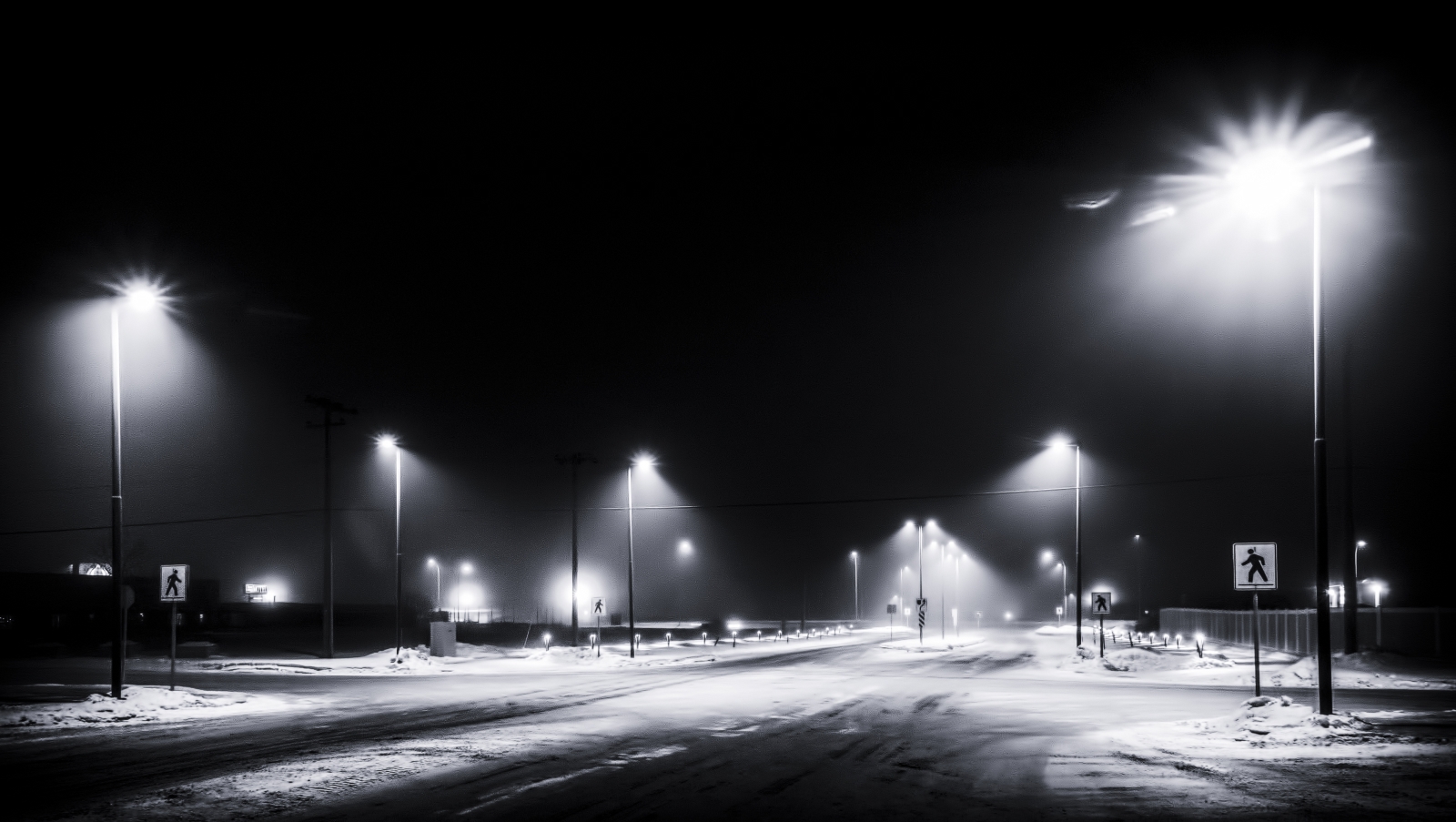
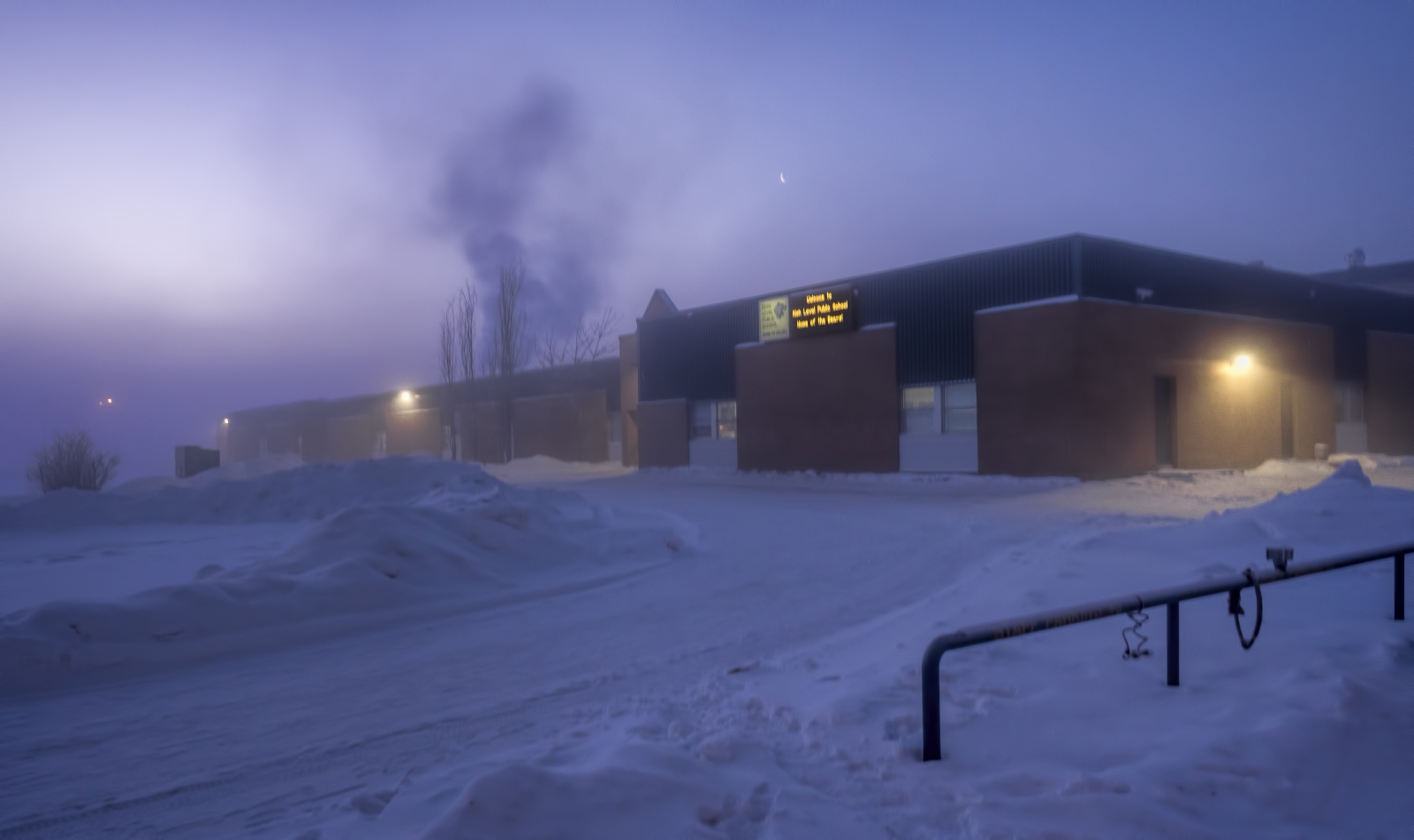
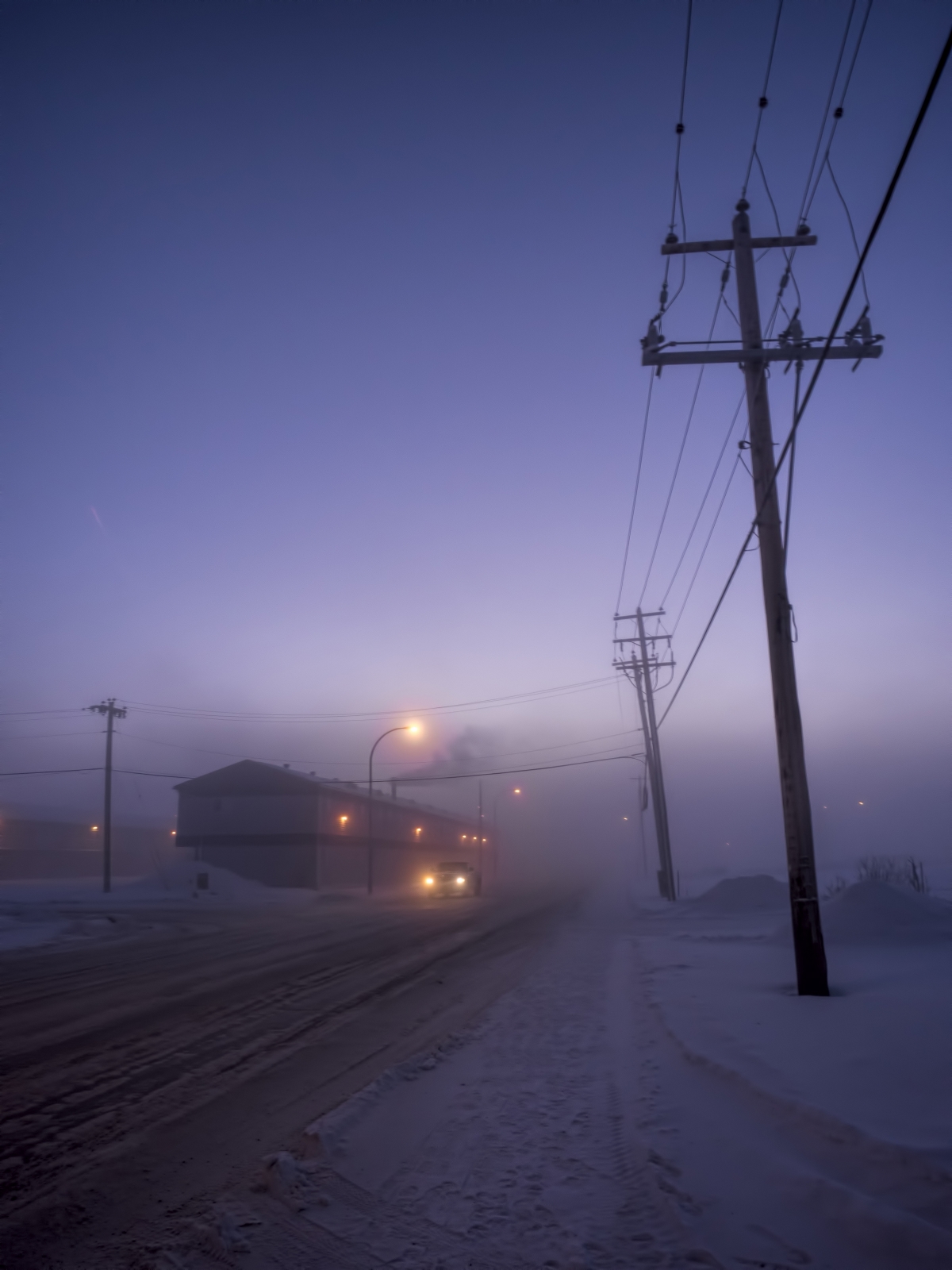
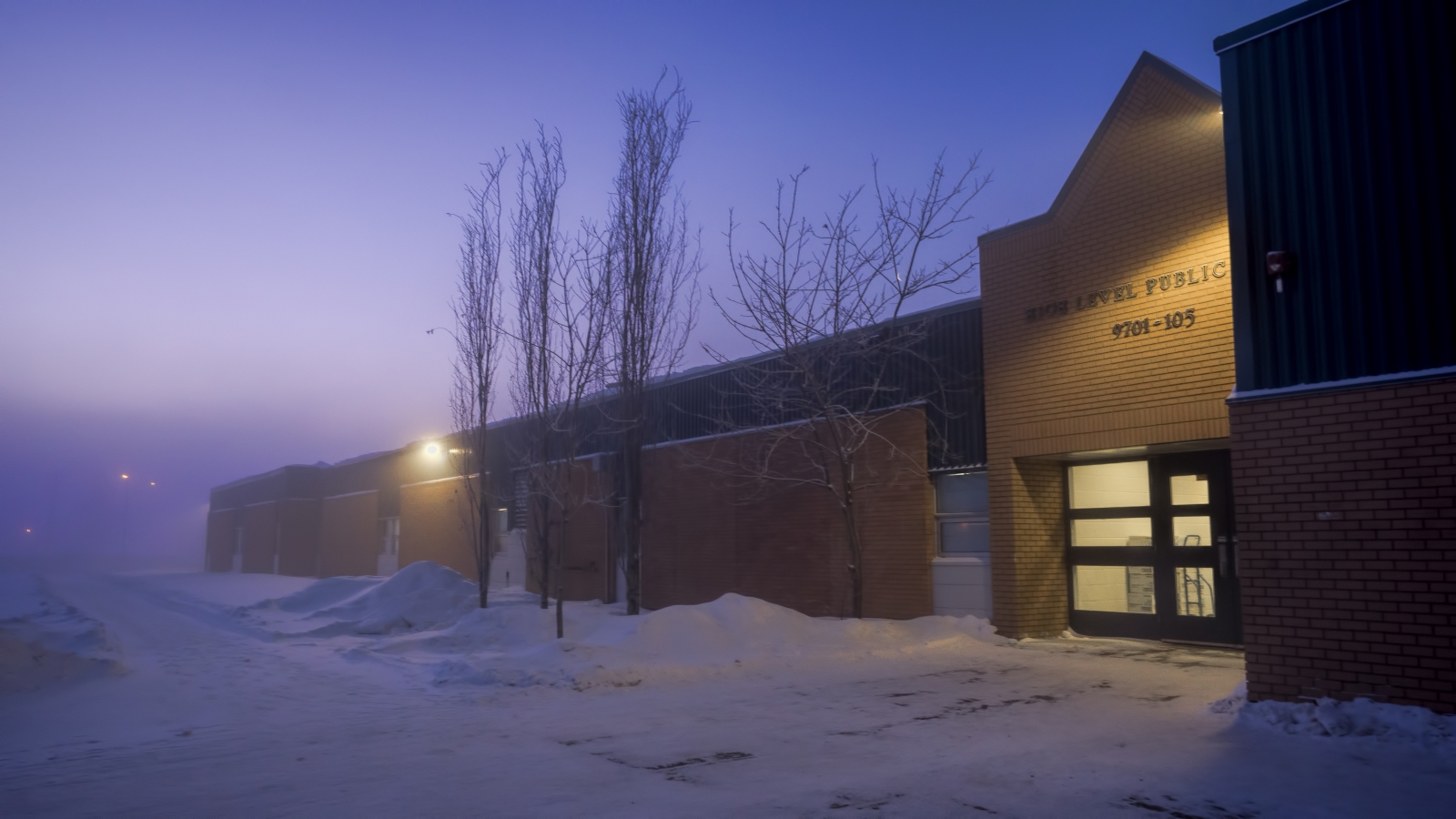
High Level, Alberta images consider the cold of January – mist reflects light from main street, street lights (-18C); dense, early morning mist surrounds the high school (-42C).
Quote to Consider / Inspire: “Photographs open doors into the past, but they also allow a look into the future (Sally Mann).”
Listening to: an audiobook of Sebastion Barry’s ‘The Secret Scripture;’ and, U2’s ‘Lights of Home.’
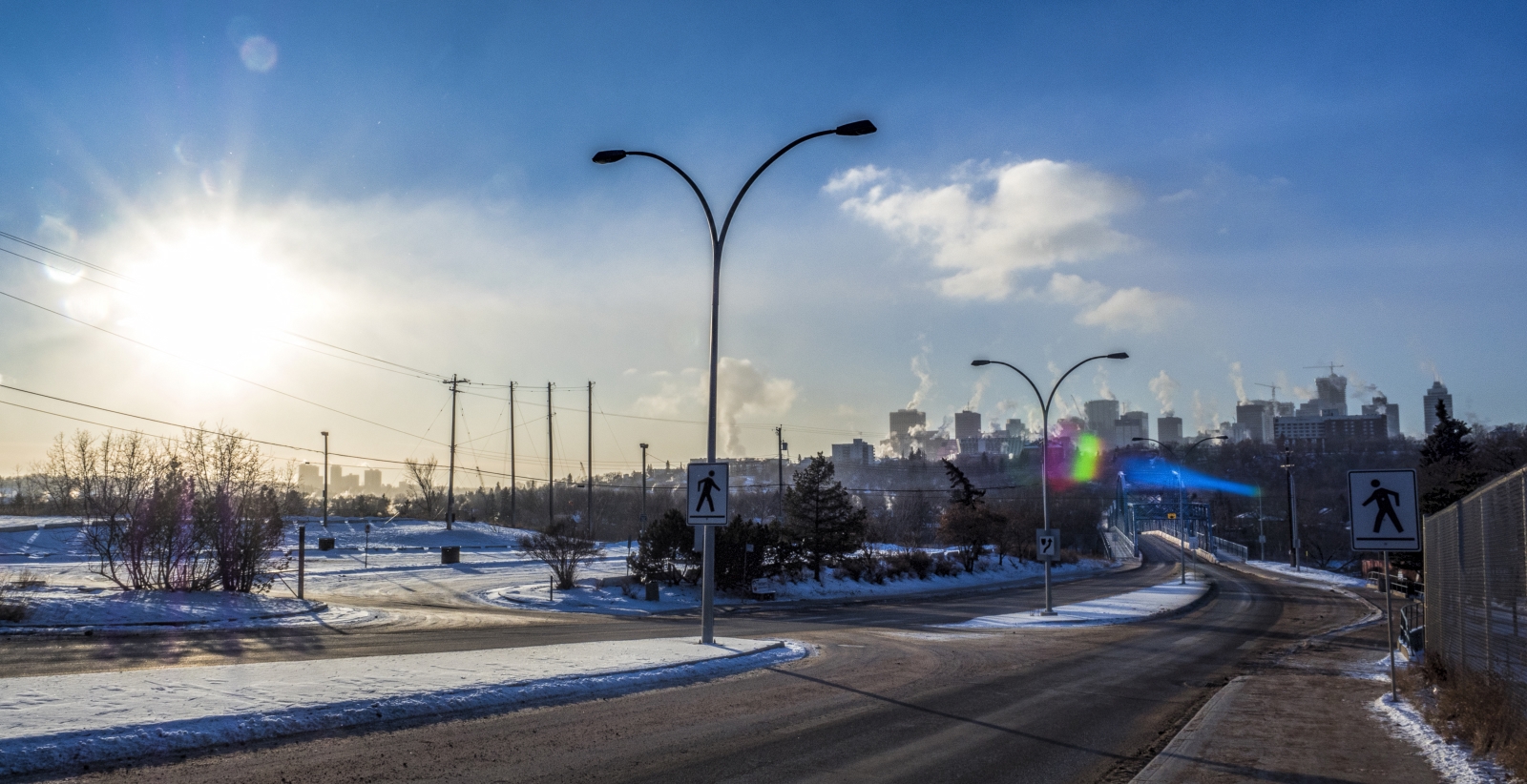
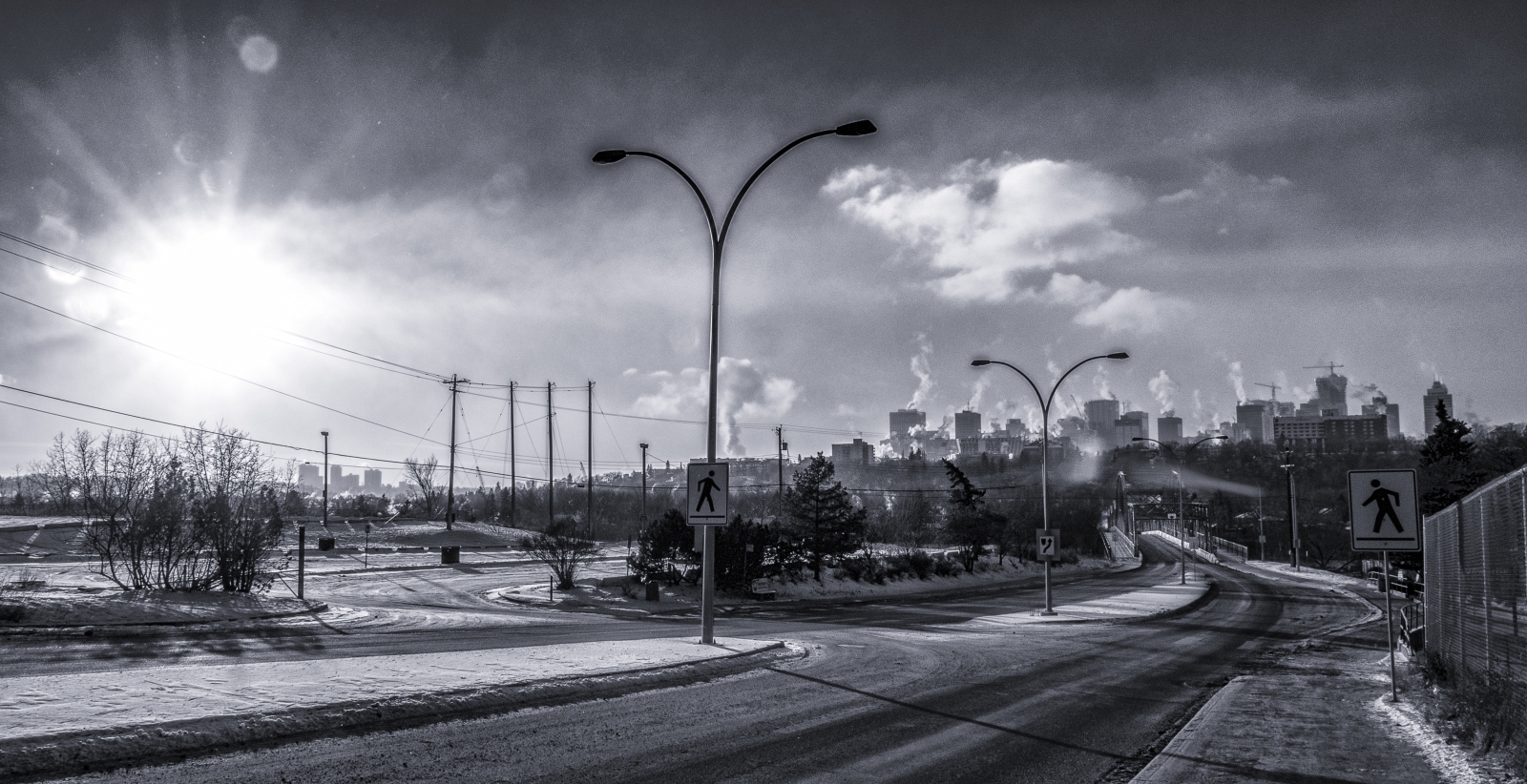
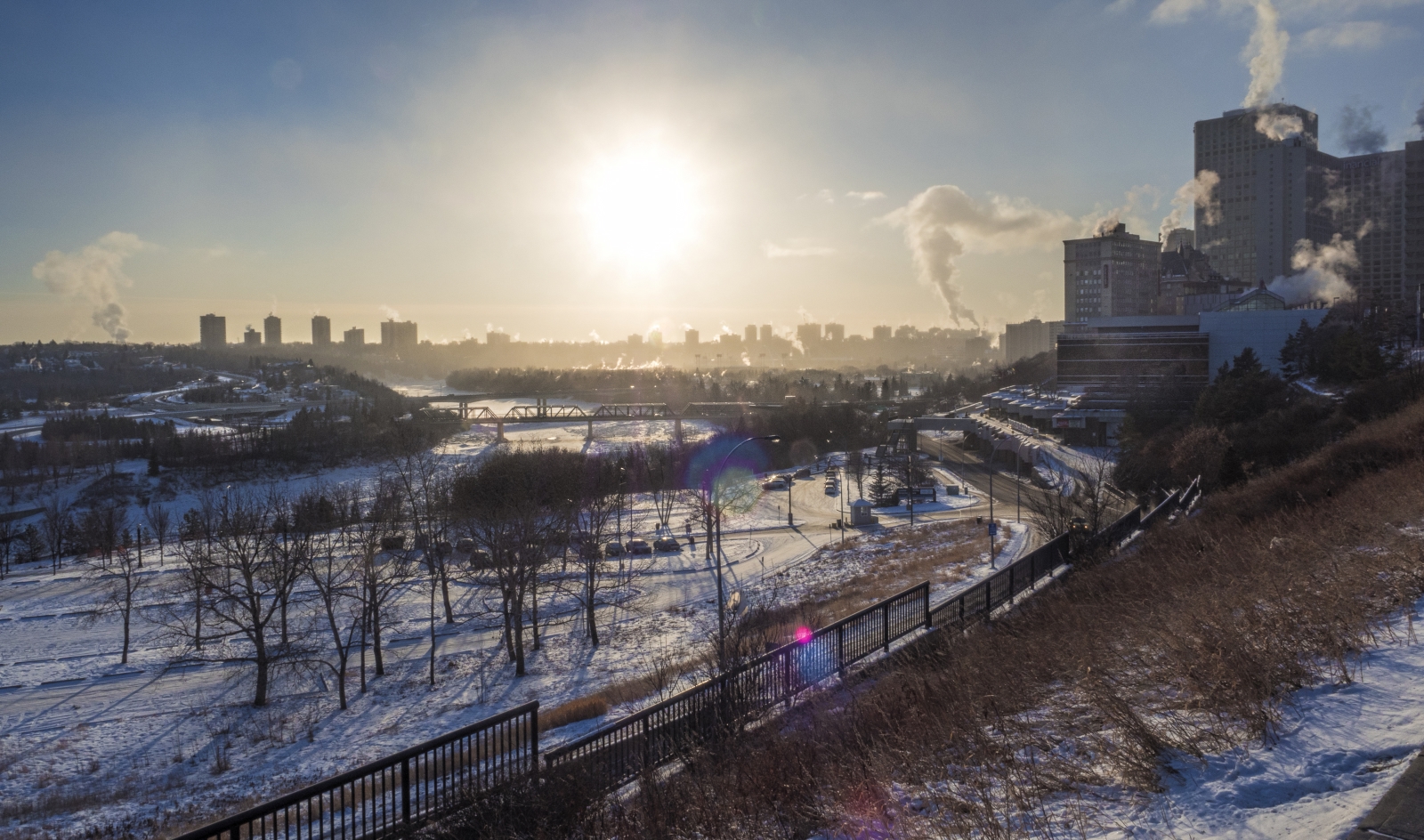
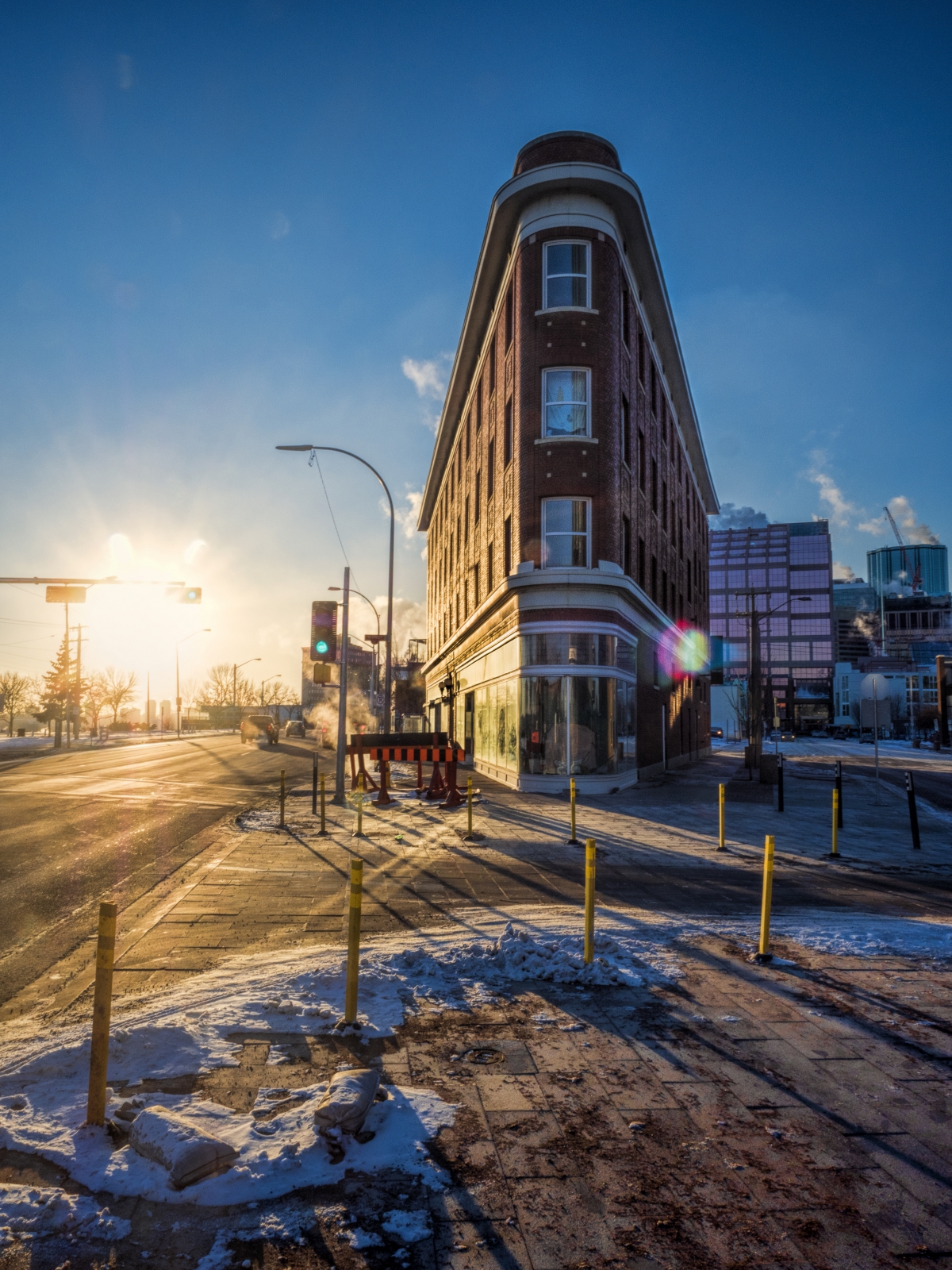
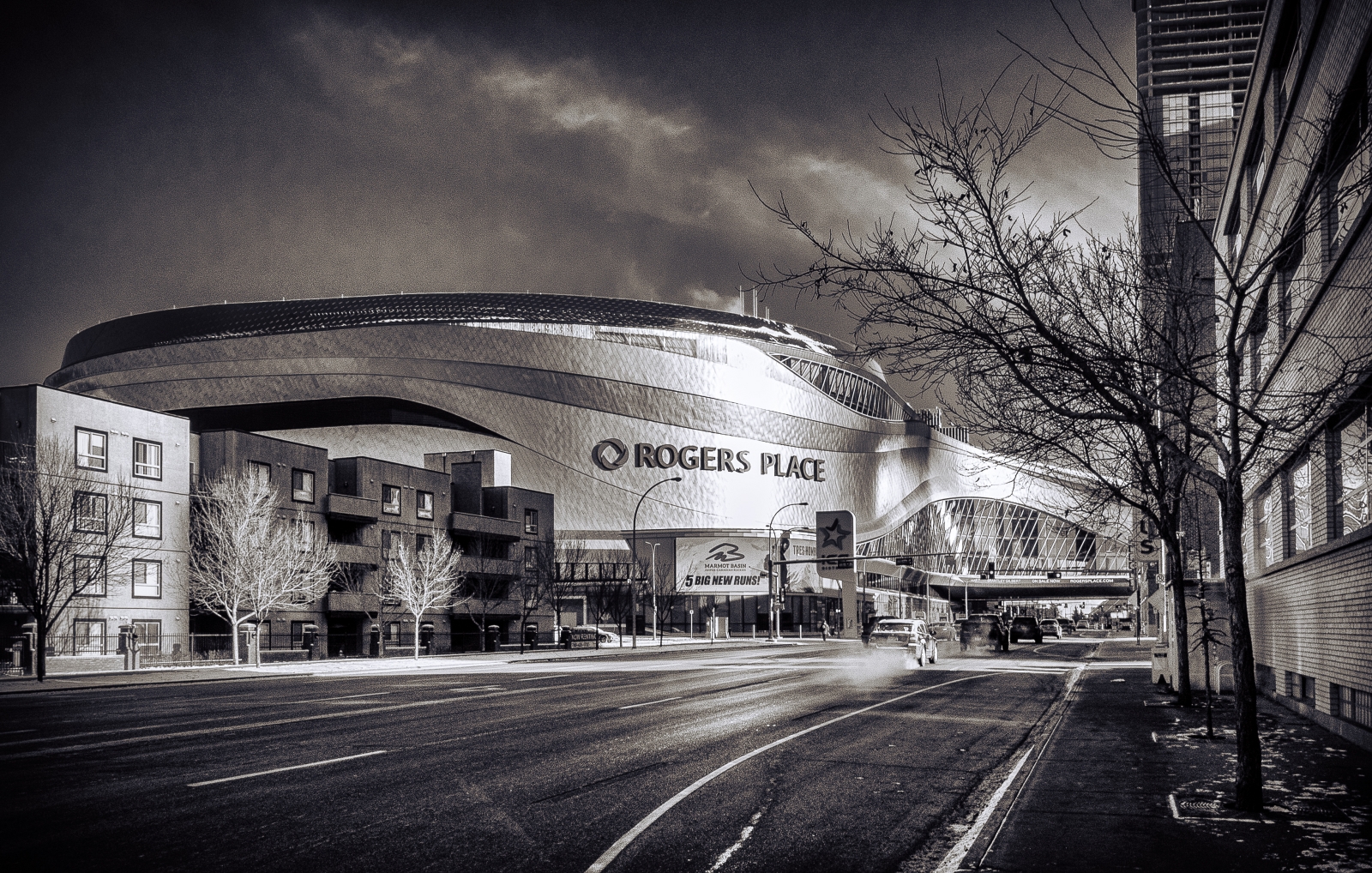
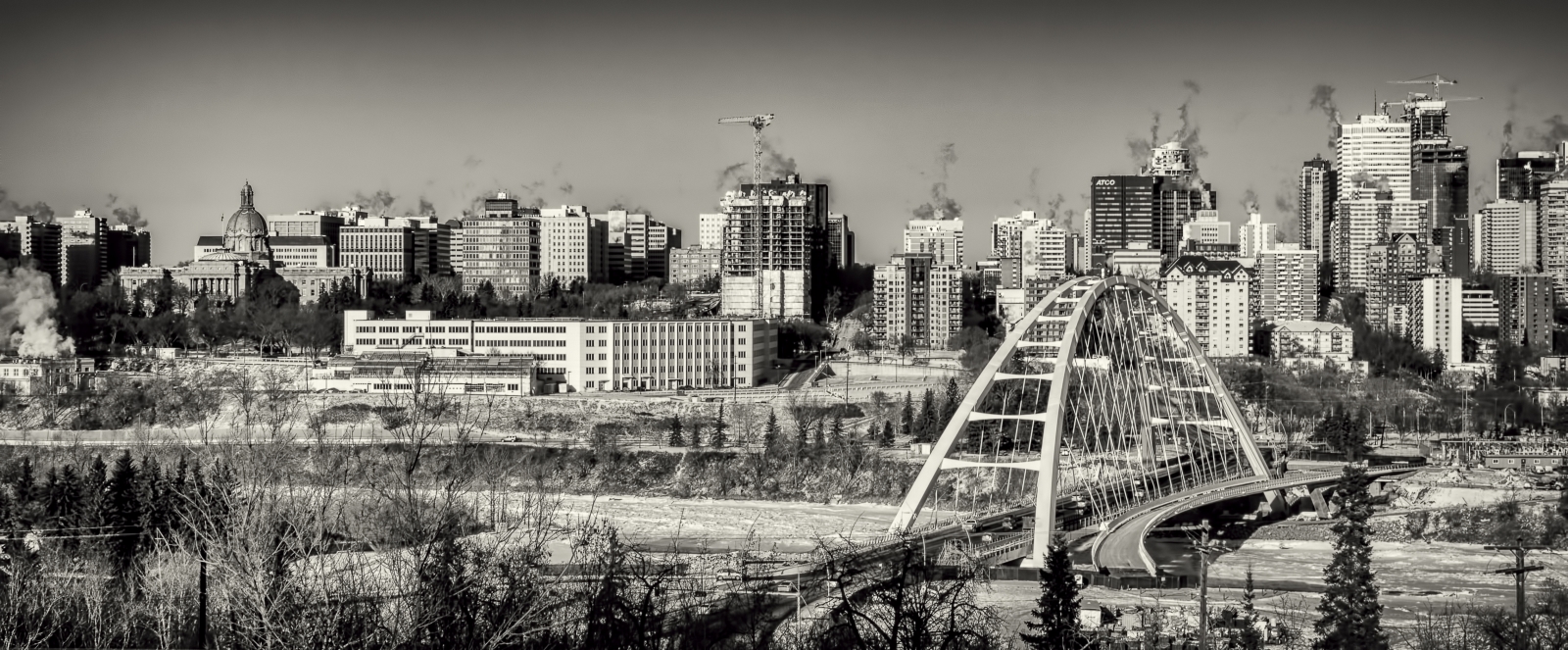
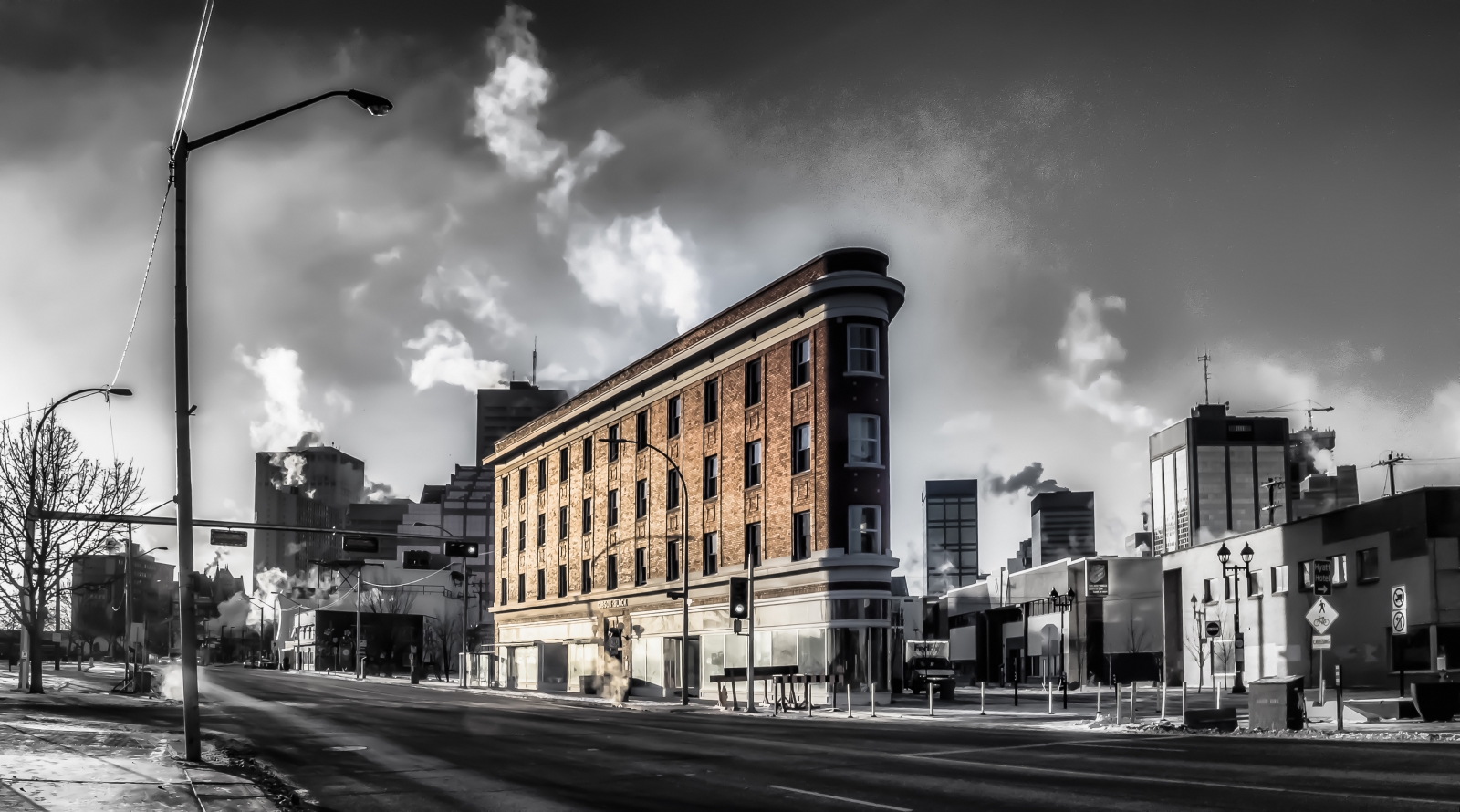
The sky is blue. Long, thin wisps of cloud move at higher altitude in the atmosphere – we could have cloud cover in a day’s time. Following winter solstice, the sun perches low over the horizon in the afternoon. At 2:00 p.m. shadows run long over unimpeded surfaces. Buildings on either side of Edmonton city streets become canyons holding solstice shadow. Without a cloud blanket, the sun’s radiant heat will continue to escape and our part of the world will grow colder in coming days. In daylight, it is -32C … it is a colder day for some photos. Steam, a by-product from buildings maintaining heat, drizzles upwards into the atmosphere. Colder images from a colder Edmonton afternoon during Christmas break.
Quote to Consider / Inspire – “The most important thing about photography is who you are, and I can go into depth about the psychology of that, but there’s no way you can take a photograph and not leave your imprint on it. Every time you hit the shutter it’s based on who you are, that’s what makes you different from everybody else. My style is that I shoot from the heart, to the heart (Joe Buissink, Light Stalking).”
Listening to: Carrie Newcomer’s ‘The Beautiful Not Yet,’ ‘Three Feet or So,’ ‘Sanctuary,’ ‘Cedar Rapids at 10 AM’ and ‘A Shovel is a Prayer.’





























 In My Back Pocket - Photography
You must be logged in to post a comment.