









Vase-lens

Best Practices - Photography, Canon 50mm, Canon 50mm Lens, Canon 60D, Canon Camera, Canon Live View, High Dynamic Range (HDR), Night, Photography & Conceptualizing Beauty, Prime Lens, Project 365 - Photo-a-day, Still Life

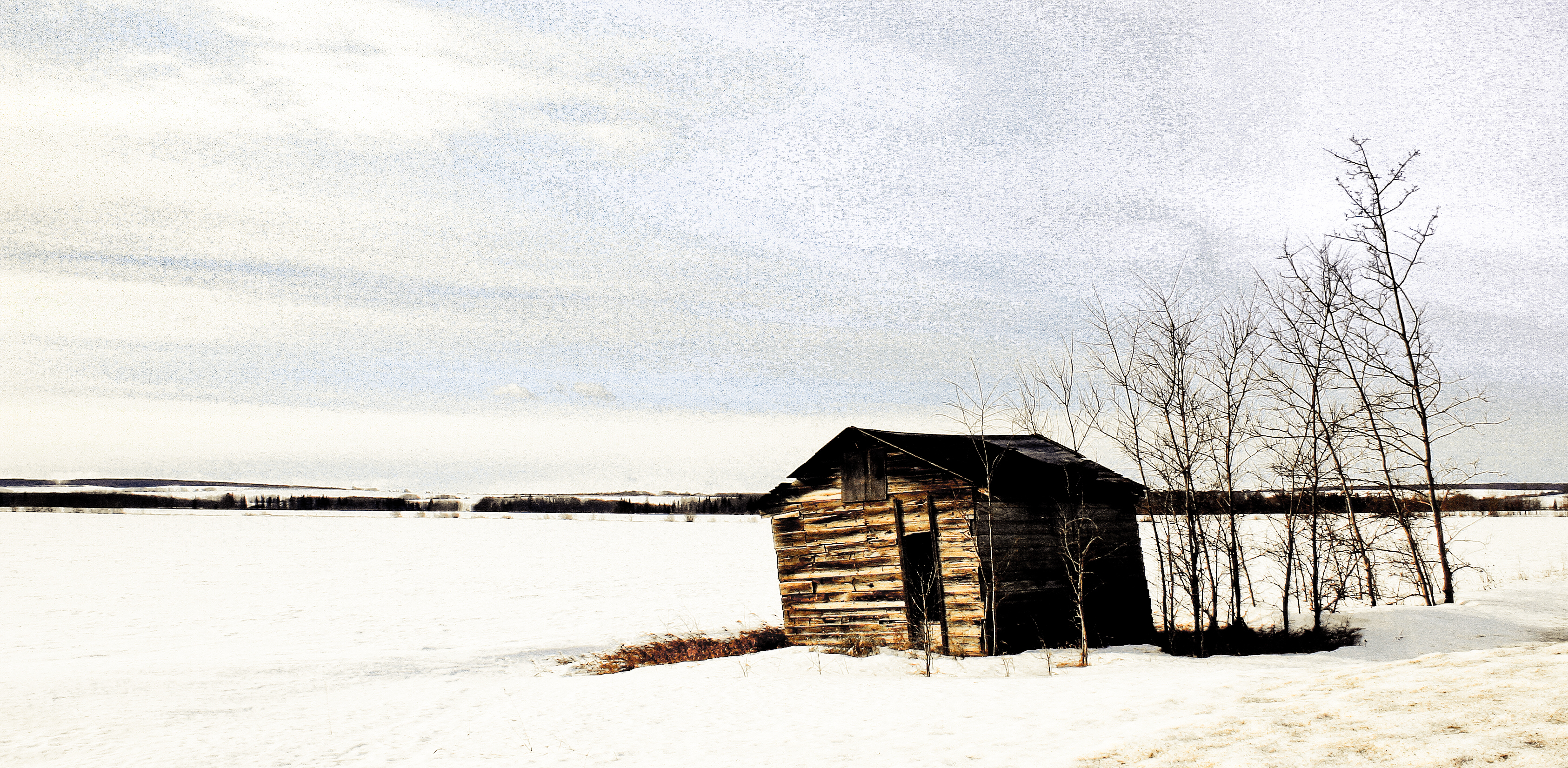
A vase and a serving dish, both glass, both transparent yet holding colour, both with shape and form and both reflecting light are subjects in the images presented here. Both glass structures are lenses, the vase, a lens revealing entire beauty of the flower held, the serving dish, a lens to the manna that soon will be eaten. The polished surface’s shape and form reflects light. So too does the interior of the glass.  There’s that place where the glass in being shaped curves or twists receiving form. From that point within there’s reflection, a glint of light from within shining back. Analogy extends forward … what structures hold us that allow us to be seen? Would this be a home?  Would this be a marriage? A vase holds the still-life flower, a living thing of beauty while beautiful. Moving past prime, dying, it is discarded. For us, we each have a rich, subtle life, one that few others really know well.  Is friendship the vase-lens structure allowing for revelation of one’s subtle life? Something in this analogy is truth my mother understood.  Her memory via her paintings prods me forward toward unraveling it.

Listening to Bruce Springsteen from the Tunnel of Love album – One Step Up; Bryan Ferry sings Just Like Tom Thumb’s Blues from Dylanesque.  Amiina from the album Kurr provides a tonal, music box sound in Rugla.  Rugla reminds of another ambient mix by Sigur Ros from the Takk album – Glosoli.  Later, I’m listening to Last Thoughts on Woody Guthrie, thoughts Bob Dylan offers – The Bootleg Series, Vols. 1-3 (Rare and Unreleased) 1961-1991.

Quote to Inspire – “Photography is only intuition, a perpetual interrogation – everything except a stage set.” – Henri Cartier-Bresson – Photography Year 1975 – Life Library of Photography, page: 216
Winter Light’s Tone & Mood

Canon 30D, Canon Camera, Christmas, Light Intensity, Lookback Photos - One Year Ago, Night, Project 365 - Photo-a-day, Season, Winter

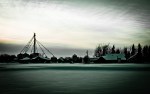
High Level Bridge - Edmonton, Alberta

On a Saturday afternoon, in late November or December, 1968, my father took me to Edmonton’s Varscona theater on the corner of 109th Street and Whyte Avenue to watch a newly created film version of a Dickens’ novel he knew well; my father took me to watch Oliver! In the film, I encountered a boy a little older than me, Oliver Twist, as he moved forward into the world without parents, moving from workhouse to funeral home and on into more (or less) corrupt hands (depending on your point of view), navigating by strength of character and goodwill through mishaps, misdeeds, abuse and neglect. Innocence and seeing the world with first eyes are key aspects in this narrative’s presentation, a child acclimating to what the world is about – good and bad.

Safety and what is right are elements of Life that Oliver perceives purely on the basis of tone. Highlighted in the novel is affectation of tone, tone used to achieve an end. Here, Oliver responds to the warmth and apparent sincerity in the charm and charisma proffered by Fagin (sly, cunning con artist) and Master Charlie Bates a.k.a. the Artful Dodger (Fagin protégé, pickpocket and derisively referred to as Master Bates). Their tone and apparent sincerity lead only so far before innocent and perhaps earnest discussion of what’s at play (picking pockets) draws both accountability and deflection of impropriety into/from the situation.

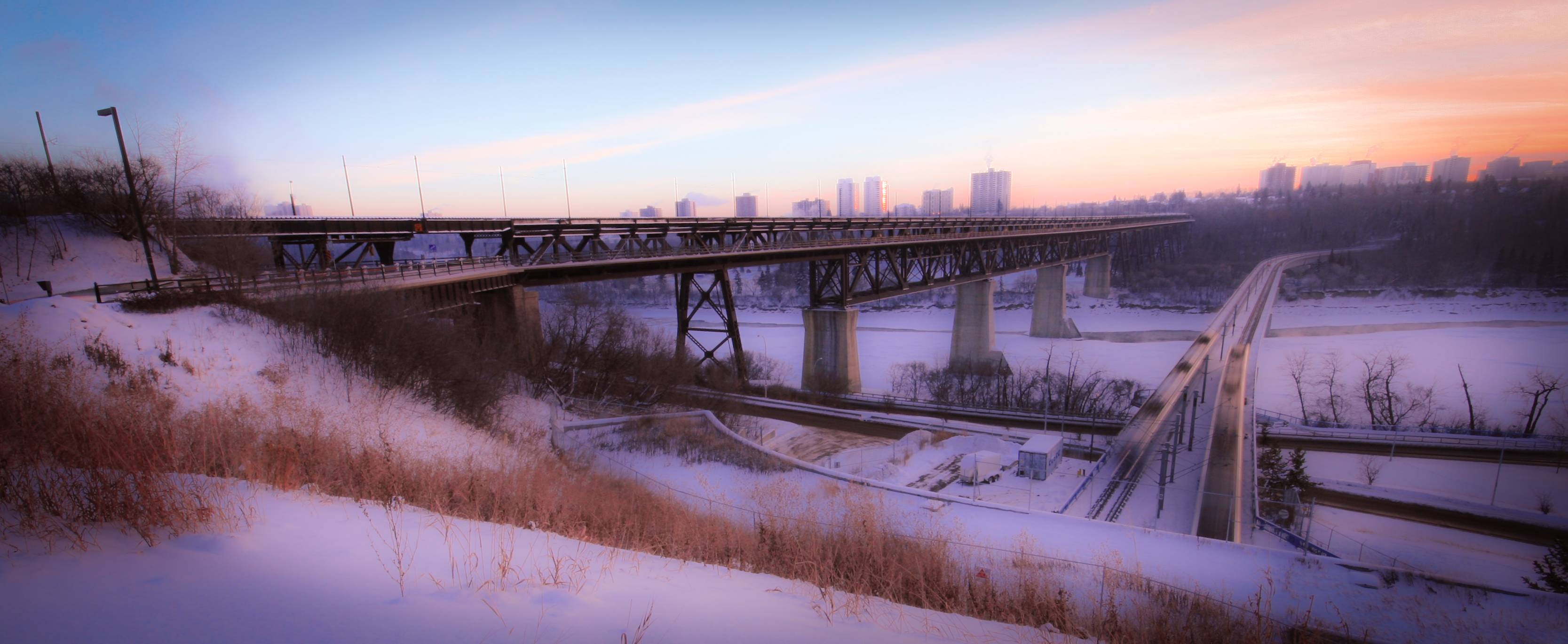
Key among things recalled from watching Oliver! at age seven is how light is used to convey tone and mood. Street scenes in the film occur when light is mistrusted as its intensity diminishes and as color and tone deepen and broaden, enhancing mood. Evening light, the cusp of sunlight declining into sunset, drawing day into night, is much of what the street scenes in Oliver are about. Perhaps director, Carol Reed, draws out broad visual metaphor, here, light’s transition into dark – wholesome Life moving to an arena of growing corruption, of that which is underhanded and unable to be truly ‘seen’. What stays with me after these forty-three odd years is the role that light’s intensity plays in establishing mood; the movie Oliver has had me attending to the tone, colour and atmosphere of winter street scenes as shadows lengthen, sunlight diminishes and we move through that range of colour taking us from day into night. Most often I’ll recognize this same tone driving west on Edmonton’s Whyte Avenue, close to Christmas as the sun draws toward the horizon … the mood is the same. The colours, light, tone and mood found in this December photograph of Edmonton’s High Level bridge are those you’ll find in Oliver!

Listening to Adele’s Set Fire to the Rain from her 21 album; other songs of the day include U2’s Bad from The Unforgettable Fire and Coldplay’s God Put a Smile Upon Your Face from their album A Rush of Blood to the Head.  In the past few days Jack White and The White Stripes have featured in my listening – 300 M.P.H Torrential Outpour Blues (Live) from Under Great White Northern Lights (Live Canadian Tour).  The Verve’s Lucky Man from the Urban Hymns album and  U2’s Love and Peace or Else from How to Dismantle an Atomic Bomb have also been there.

Quote to Inspire – “People think that all cameramen do is point the camera at things, but it’s a heck of a lot more complicated than that!” – Larry in Groundhog Day

Adizes Curve

Canon 30D, Canon Camera, Christmas, Light Intensity, Lookback Photos - One Year Ago, Project 365 - Photo-a-day, Season, Winter

Edmonton's River Valley - Looking Back to Saskatchewan Drive

If you know the Adizes curve you’ll recognize what’s referred to as a learning curve being the initial part of a bell shaped curve moving you from initiation of a new practice to a point of prime where you crest the top of the curve and master practice – new practice has been worked, handled and made best practice. Optimal use of the Adizes curve has you taking on new learning curves as you crest and master prior practice. Doing so, allows you to hang on to current good practice while embracing newer needed practice.

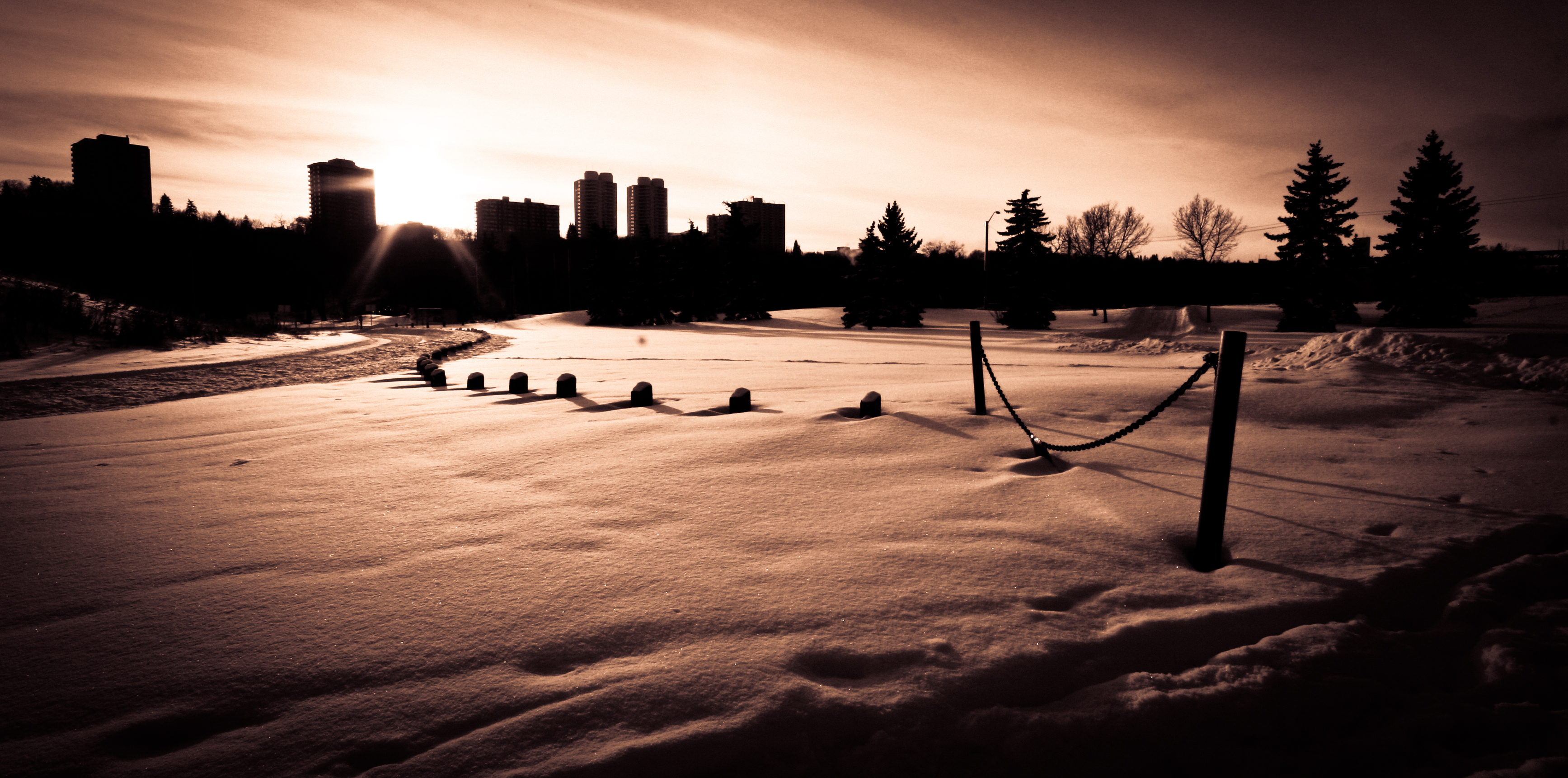
The photograph presented, here, is one taken midway through a five-hour, solo photowalk around Edmonton’s river valley. I’m dealing with new practice.  I’m moving through a metropolitan area and recreational park area and making decisions about photographs I want, committing action to each shot and moving on – it’s a pattern I’m developing. As I start I’m shooting too quickly, not letting my eye look around the frame to see if I’m gathering all that is subject and background. Some of what I’m doing is managing state – balancing my awareness of environment (the hustle and bustle of what’s going on around me as I shoot) with good awareness of what I am seeing in the lens. I settle into the rhythm of practice – walk and find subject, move to find best angle/perspective, set the exposure (f-stop against shutter speed), focus and take the shot; then, when I’ve exhausted my seeing and possibility with a subject I move on. I’m also testing out gear at -20C.  I’m keeping one battery warm, close to my chest underneath fleece and winter jacket; every twenty-minutes or so, I’m swapping out the camera battery (the cold for the warm). I’m carrying a knapsack style camera bag and a tripod bag slung over my body, over the camera bag.  Beyond this, I’m managing comfort in terms of staying warm with fleece underneath jacket and ski pants.

At the mid-point of my walk, having come down into the river valley, I encounter this shot – a silhouette, near the 5th Street Bridge looking back up toward Saskatchewan Drive, a neat leading line of posts preventing vehicles moving where they ought not to go.  I move on. As I take pictures I’m unaware of the need to clean my lens and that snow crystals will shape what I expose. It is days later when I’ve returned home and edit the images that I see them – the result isn’t anything bad, just something that needs cleaning up with software. In this photowalk I began at the High Level Diner, moved east along Saskatchewan Drive, entered the Edmonton City Park (the River Valley), crossed the 5th street bridge, walked through the Alberta Legislature grounds and returned to the University side of the North Saskatchewan River – it has been a first view of the area with my camera, something to repeat and revise. At a pub, formerly Plato’s Pizza, I treat myself to two pints of Boddington’s Pub Ale while I wait for a ride home and I review images.

Listening to … or fretting many Stan Rogers’ tunes tonight; among them have been The Wreck of the Athens Queen, Fisherman’s Wharf and Maid on the Shore; it’s been DADGAD tuning tonight and I’ve also shifted into 9/8 time, in a manner to support a fiddler’s reel or jig – a rhythm Skew Lines‘, Kerri Brown (fiddle, guitar, percussion) helped me find and play in Parksville, British Columbia.

Quote to Inspire – “I like photographs which leave something to the imagination.” – Fay Godwin

Tasking New Purpose

Canon 30D, Canon Camera, Night, Project 365 - Photo-a-day, Still Life, Summer, Vehicle, Vehicle Restoration

1953 Ford F-100 - High Level, Alberta

Someone’s project, this mauve and mint green 1953 Ford F-100 resides in the industrial area lot across from the Viterra grain elevator, a vehicle waiting for its next drive, more utility upon pavement. The mood of this photograph attracts. Its subject waits upon an earthly creator with abundant resources to transform ‘what was’ into ‘what will be,’ a creator who will set new purpose for this vehicle – breathing life into it, again. What this vehicle will become depends upon the creative imagination of those who will bring restoration.

Listening to U2 sing about INXS lead singer Michael Hutchence in Gone, from Best of 1990-2000 [B-Sides]; then it’s Gillian Welch singing Revelator from her Time – The Revelator album; finally it is Dar Williams singing Mercy of the Fallen from her album The Beauty of the Rain.

Quote to Inspire – “Photography can only represent the present.  Once photographed, the subject becomes part of the past.” – Bernice Abbott

Alberta Fissure

Canon 60D, Canon Camera, Fall, Lookback Photos - One Year Ago, Project 365 - Photo-a-day, Still Life

The Peace Valley at Dunvegan

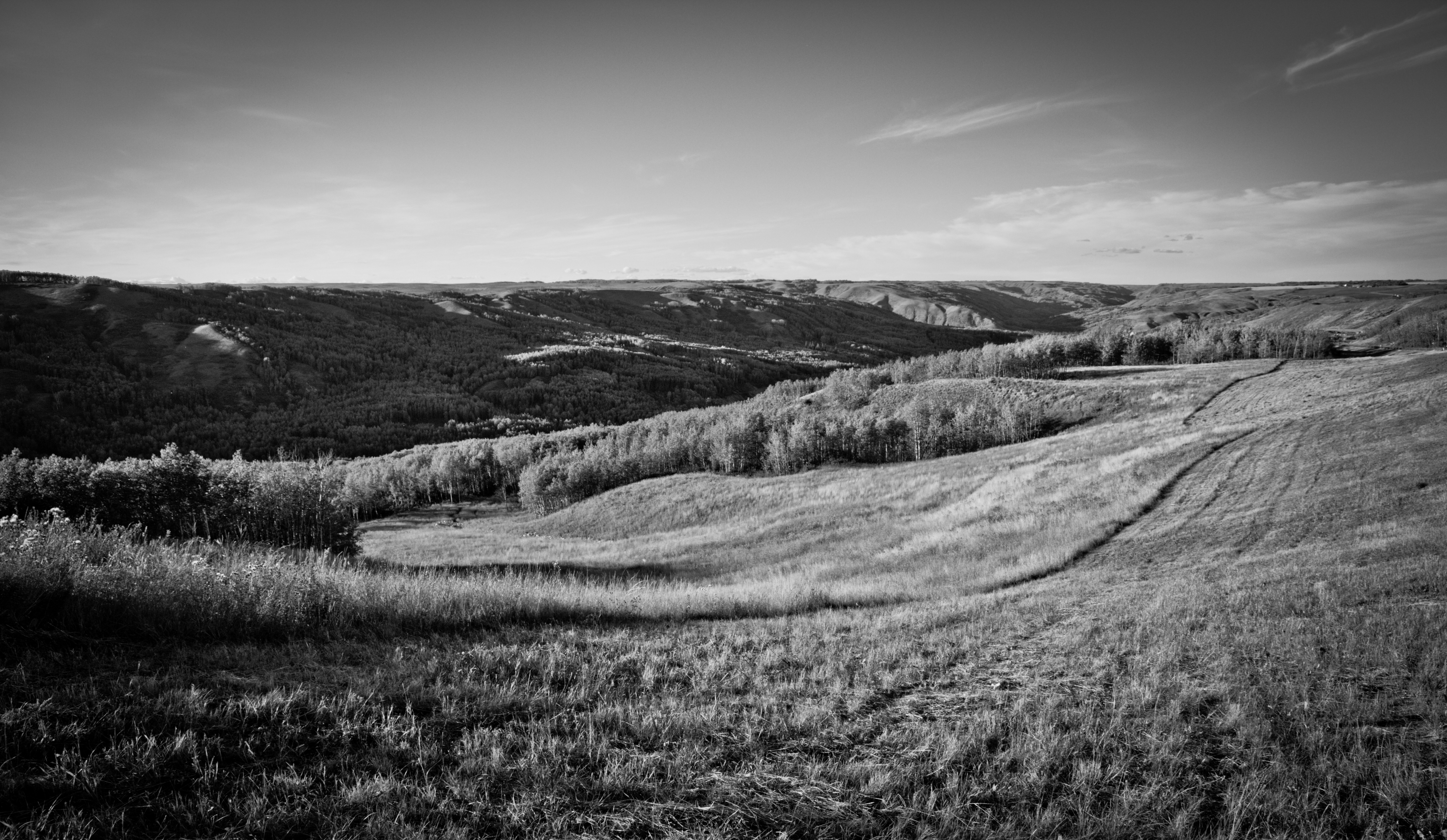
At most points in the geography of Alberta the Peace River is at least one kilometre across.  At various points it will broaden out allowing for islands and sand dunes. The first time I saw what the Peace River was about what I noticed was something this photograph conveys, the river has cut a fissure into the land through time and while the river is most times one kilometre across, the distance from level land on top of the river valley to level land on the top of the other side of the river valley is greater, spanning as much as four and five kilometres. The other thing noticed is that it takes about two kilometres of gradual descent in a vehicle to reach the river from the valley’s crest. This photograph is taken at the start of the descent toward Dunvegan and the Dunvegan suspension bridge looking north.  It’s late on a September Sunday and shadows creep from the west extending eastwards.

Listening to Bill Mallonee & the Vigilantes of Love sing Resplendent from their Audible Sigh album, a message about the nature of resilience borrowing from the narrative of the dustbowl.

Quote to Inspire – “I hate cameras.  They are so much more sure than I am about everything.” – John Steinbeck

Looking Back – Late Winter Photos

Canon 30D, Canon Camera, Farm, Light Intensity, Lookback Photos - One Year Ago, Project 365 - Photo-a-day, Weather, Winter

One year ago, late on a Sunday afternoon in February I travelled east from High Level on range roads that service farms in this region. While graders had cleared these roads snow had begun to drift into them from the north. The sun’s light was direct and bright, intense as it was reflected back from the snow. And, the wind blew. From a distance, the shapes of the snow’s drifts were a repetitive pattern blown into the roads – evidence of the wind’s work; more irregular shapes were found as result of the particular way the wind swept through an area. On my return home I photographed Gibson’s farm, 10km east of High Level – a landmark that has served to orient me to how close I was to High Level in my trips in from Garden River, Fox Lake, Fort Vermilion and beyond. After many seasons in many years, my camera allowed me finally to see more of what the Gibson’s farm was about.

Reminded of W.O. Mitchell and his novel, Who Has Seen the Wind – a novel about growing up, a story with teachers and students ….  Here’s its poem starting point.

Who Has Seen the Wind? – Christina Georgina Rosetti (1834-1894)

Who has seen the wind?

Neither I nor you.

But when the leaves hang trembling,

The wind is passing through.

Who has seen the wind?

Neither you nor I.

But when the trees bow down their heads,

The wind is passing by.

Listening to Dar Williams’ album The Beauty of the Rain, an album I was drawn to after learning the tablature for her song of the same name.  The circumstances of a friend have recalled a song from the album – Fishing in the Morning.

Quote to Inspire – “To photograph truthfully and effectively is to see beneath the surfaces and record the qualities of nature and humanity which live or are latent in all things.” – Ansel Adams.

First Light’s Drama Reflected Earthward

Canon 60D, Light Intensity, Photography & Conceptualizing Beauty, Project 365 - Photo-a-day, School, Sunrise, Vehicle, Weather, Winter

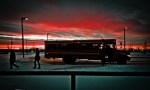
Thursday was a photographer’s morning. A warm change in weather brought colourful, early morning, sustained, sky drama of first light reflected earthward among clouds. Entering school, I set-up my camera, deposited my camera bag and moved out our east doors to click and capture the following images.

Today, being considered is a newer used vehicle. With one household vehicle being all-wheel drive, a fuel-efficient car might be smart (perhaps a VW Golf or Passat). Another consideration would involve spending a minimum of money on a vehicle that is 4×4 and wouldn’t be too much of a loss if it were to break down; here, I’ve owned three early 90s Nissan Pathfinders and they worked for me along the corduroy roads in and out of Wood Buffalo National Park through six years. And, in the back of my mind is the surety I encountered driving a Chevrolet, 2500 series, manual transmission with 4×4 in a snow storm travelling down Alberta Highway 63 from Fort McMurray to Edmonton early-on in the 90s. The overall sensible choice may be a 1999 Toyota 4 Runner with 309000 km that should run for a few more 100000km and can be purchased in a private sale in Peace River.  This vehicle should provide safe travel in and out of 4×4 throughout all seasons, no matter who was driving it.  It would hold the road well.

Listening to Canadian Melissa McClelland sing Victoria Day (April Showers and May Flowers) from her album of the same name.  Other songs standing out this morning have been Snow Patrol’s Lifeboats, Ray Lamontagne’s I Still Care for You and For the Summer.  Jack White has featured among the Raconteurs in Steady as She Goes.

Quote to Inspire – “Light glorifies everything. It transforms and ennobles the most commonplace and ordinary subjects. The object is nothing, light is everything.” — Leonard Missone

Anticipating Spring’s Arrival

Canon 60D, Canon Camera, Light Intensity, Photoblog Intention, Project 365 - Photo-a-day, Spring, Winter

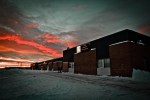
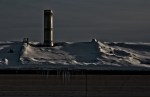
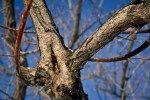
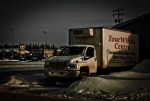
Yesterday contained opportunity for a photowalk with photographers and a chance to witness the world with growing intensity of light and warmth late on a Thursday, winter afternoon in High Level, Alberta – all were giddy with being outside and anticipating spring’s arrival … still a month away.

Listening to several songs this evening. First, my daughter asked me to find and download four Glee tunes (Animal, Dog Days are Over, Bad and Smooth Criminal). Next, we loaded Adele’s 21 album/CD (a Christmas gift) onto our iTunes account; my daughter likes Set Fire to the Rain. Twice this week, I’ve returned home at day’s end to huge decibels of Adele preceding the dinner hour. Beyond this, we’ve downloaded Schubert’s Ave Maria, the music accompaniment to her current ballet performance, music for her to practice with. Of the songs that have played through, tonight, while editing photographs the ones that stand out are those from my father’s time If I didn’t Care, by the Inkspots, I’m Looking Over a Four Leaf Clover, by Bix Beiderbecke.  I’ve been listening to the Get Low soundtrack which has eight songs involving Jerry Douglas and his dobro in a Bluegrass sound, one of the primary sound elements undergirding the music of Alison Krauss with Union Station.  And, then the iTunes music shifted to Foster the People and Pumped Up Kicks … a catchy tune that stood out for me at West Edmonton Mall’s ice rink as Edmonton youth waited to personally meet Selena Gomez back in October prior to her concert.

Quote to Inspire – Look and think before opening the shutter. The heart and mind are the true lens of the camera. — Yousuf Karsh. If you are a photographer in need of inspiration I would point you to a podcast called The Naked Photo offered by Rianne de Beer, a Canadian photographer on Canada’s west coast (between Vancouver and Salt Spring Island); in episode 5 he looks at Yousuf Karsh’s approach to creating a portrait of Winston Churchill, a photograph commissioned by the Canadian government. There is a ton of insight to be gleaned on forethought and the process to capture essence … of the subject.  http://thenakedphotopodcast.com/

Those Who Go Before Us …

Canon 30D, Canon Camera, Cemetery, Home, Lookback Photos - One Year Ago, Project 365 - Photo-a-day, Still Life, Winter

Cemeteries, for most people, are places of foreboding – we understand that we too shall end-up, here. Beyond the fact that we usually find ourselves at cemeteries on the other side of saying goodbye to loved ones and good friends, cemeteries also point us to the consideration of the life we are living. At our life’s end, we may be more in a state of regret having conformed our lives to the expectations of others, failing fully to step up and into the Life that is truly ours. On the other hand, on our death bed, it would certainly be something to smile, roguishly, and to own to others that we’d certainly taken ‘a good squeeze out of life.’ My wife’s friend from church, Herman Peters, passed away a week or two ago and his funeral and eulogy embraced his feisty, roguish approach to Life and seeing it through well. Herman’s eulogist, throughout his eulogy, would often lean over and look at Herman within his casket and ask, “Do you think it would be okay if I tell them about the time we did…?”  Wow!  What a way to go! Good schtuff, Herman – thank you to who you have been to all others and the friend and elder you’ve been to my wife. John O’Donohue and his Greenbelt lecture on the Imagination have been much on my mind as I’ve considered this photograph, tonight.

Listening to Pierce Pettis sing Love Will Always Find Its Way from his album,Everything Matters; other good, good songs include Neutral Ground and Just Like Jim Brown (She is History).

Quote to Inspire – “No place is boring, if you’ve had a good night’s sleep and have a pocket full of unexposed film.” – Robert Adams, Darkroom & Creative Camera Techniques, May 1995

Rocky Lane - Cemetery Headstones

Beaverlodge Grain Bin – Spring Light

Canon 30D, Canon Camera, Light Intensity, Lookback Photos - One Year Ago, Photography & Conceptualizing Beauty, Project 365 - Photo-a-day, Season, Spring, Still Life

Beaverlodge Grain Bin - Spring Light

Last February, my wife’s aunt was struggling with cancer at the Grande Prairie hospital. She went in during the Christmas break and remained there until May when she succumbed to the disease.  In February, when this photograph was taken I was making time to be away from the hospital to see what was happening in the world.  I got out toward Beaverlodge, Alberta. This photograph impressed me as one landmarking a period of time in which the intensity of light grows greater, day-by-day as we move forward from winter into spring – there’s something of ‘hope’ in it. Again, its subject is another grain bin; but, it sits upon a field that soon will grow black as snow melts into earth and then will grow green with as it’s planted and left to respond to the sun.

Again, listening to Liz Longley sing her song, Unraveling about her grandmother from her album Hot Loose Wire.

The chorus:

I’m the only daughter of her oldest son

I knew well before her spirit was gone

And her life is a thread woven into every part of me

She is unraveling, she is unraveling.

Quote to Inspire: “A good snapshot stops a moment from running away.” — Eudora Welty