Most of us have experienced the quiet tyranny of the ‘masterpiece’ mandate—that exhausting belief that every press of the shutter must produce a perfect hero shot. We work hard to master the first element: the technical control of our cameras, light, and exposure. Then we add the second—a genuine artistic vision, where composition, balance, and the principles of design are applied thoughtfully and deliberately. Yet, even when both are present, something can still be missing. The image might be successful or even beautiful, but it doesn’t quite draw you in. It doesn’t leave a question hanging in the air or push the viewer’s imagination towards a next thought. That elusive quality—call it story, resonance, or simply the third element—is what separates a well-made photograph from one that stays with you. And here’s what I’ve come to believe: it rarely arrives in a single frame. It exists in the series.
Curation in Long-form Visual Storytelling
When images are arranged into a series, something fundamental changes. The individual frame is no longer expected to bear all the weight on its own. In long-form visual storytelling, a modest or quietly beautiful image — one that might seem unremarkable alone — finds its place within the larger rhythm. Its goal isn’t to surprise; it’s to breathe, to pace, to link what came before with what’s to come.
Photo essays showcase this beautifully. Not every shot needs to be a ‘breathtaking’ moment. When a series of photos are carefully arranged, something emerges — a perspective, a feeling, a narrative thread that none of the individual images could create alone. The collection as a whole gains that third element quality. A few quiet moments, gathered with purpose, become something that lingers.
Curation Part I – Culling (Selecting & Excluding)
High-volume shooting is straightforward; high-quality curation is genuinely difficult. You might return from a shoot with thousands of images, narrow them down to one hundred, and still face a challenge. To a viewer, one hundred images aren’t a story — they’re overwhelming. The message gets lost in the volume.
The true craft lies in what some might call the art of the cull. It’s about discovering the unifying element in your work and — this is the challenging part — removing even strong images when they don’t support the larger story. This is the moment your photographic voice begins to emerge. Not only through the colours you select or the contrast you establish during editing, but also in the silence of the frames you omit. What you choose not to show is just as expressive as what you do.
Practical tools like cataloguing and keywording in Lightroom help manage the chaos, but they’re part of a deeper process — the intentional, almost curatorial act of shaping a shoot into a clear path that the viewer can follow and connect with.
Curation Part II – Sequencing & Image Relationships
If culling is about exclusion — determining what is essential — then sequencing concerns relationships. It is the photographer’s deliberate choice of order, and that choice alters everything. The same ten images arranged differently can tell entirely new stories, evoke different emotional journeys, or even lead viewers to different conclusions. Sequencing is where the photographer’s influence is most noticeable.
A key part of good sequencing is understanding that not every strong image advances the story — and not every weak one should be removed. This is perhaps the most counterintuitive lesson in visual storytelling: narrative tension depends on the difficult moment, the frame where things aren’t falling into place, and where the outcome remains genuinely uncertain.
Consider a series of photographs capturing a building fire. Eight striking images of firefighters bringing a blaze under control might be visually compelling — but they don’t tell a story. The photo that truly stands out, the one that makes those final frames feel like a genuine reward, is the one most photographers might overlook: exhausted firefighters, soaked and resting, with the blaze still raging behind them. That moment of apparent failure is what gives the resolution its significance. Without it, the victory lacks its depth.
This principle goes well beyond dramatic events. A wedding, a colleague’s farewell, a school year, a family reunion — any story about people and time benefits from the same honesty. An engaging visual story doesn’t just highlight successes; it also shows what was overcome to reach them. That’s what makes a viewer feel something rather than just see something. Whether the story is dramatic or everyday, the principle still applies.
What Stories to Tell – Uncharted Visual Territory vs. What You Have Around You
There is a tendency in our craft to pursue uncharted visual territory — to believe that impact exists somewhere out there, waiting to be uncovered if only we travel far enough or find the right subject. However, scope doesn’t define meaning. A small patch of ground, approached with genuine curiosity and dedication, can hold as much narrative richness as a cross-continental journey. This could be called the 360 approach — examining a subject from every possible angle, through changing light, challenging weather, and the slow passage of seasons.
Whether you’re documenting a rodeo or watching the light shift across your backyard over a year, the core feeling comes from the same place: the act of return. Again and again, with fresh eyes and an open mind. It is that commitment — not the subject itself — that gives a work its depth.
Cameras as Meaning Makers
This year, I have approached visual storytelling as a practice to genuinely explore — not just to continue. In doing so, I’ve made a quiet discovery: I already do this. I gather a series of images rather than single frames. I revisit subjects over months and seasons. I regularly create slideshows and photobooks, selecting and sequencing images into narratives I want to share with others. What I hadn’t always done was hold onto the difficult frames — the ones where things weren’t working — but I now see how those images can be exactly what a story needs to breathe.
What strikes me most, looking back, is where the meaning has truly existed. It is not found in the pursuit of the masterpiece, but in the act of returning – to the subject, to the work, to the people the story involves. While the technically perfect shot can hold narrative or meaning, it is more often found in a series of photos. Meaning is held in the collaborative experience of watching or viewing a finished narrative together and recognizing something genuine within it. That shared moment of recognition — what might be called collaborative wonderment — may be the closest thing to the third element that I can point to.
Visual storytelling has become something I enjoy, and I imagine many of you are already involved in it too, maybe without even calling it that. I’d love to hear — what visual stories are you creating with your camera, and where are you finding the meaning within them?
Quotes to Inspire/Consider
“Photography for me is not looking, it’s feeling. If you can’t feel what you’re looking at, then you’re never going to get others to feel anything when they look at your pictures (Don McCullin).”
“Photography takes an instant out of time, altering life by holding it still (Dorothea Lange).”
“Photography is a small voice, at best, but sometimes one photograph, or a group of them, can lure our sense of awareness (W. Eugene Smith).”
“If a photographer cares about the people before the lens and is compassionate, much is given. It is the photographer, not the camera, that is the instrument (Eve Arnold).”
“A great photograph is one that fully expresses what one feels, in the deepest sense, about what is being photographed (Ansel Adams).”
Listening to – Hollow Coves’ ‘Pictures,’ Roo Panes’ ‘A Message to Myself,’ Harry Chapin’s ‘W-O-L-D’,’ Van Morrison’s ‘Behind the Ritual,’ Bob Dylan’s ‘Last Thoughts on Woody Guthrie,’ and with the passing of Motorhead’s guitarist Phil Campbell, Motorhead’s version of Bowie’s ‘Heroes.’
Last year, I moved within my school jurisdiction to a role as a photographer. Previously, I had been a teacher, an educational assistant, a teacher, an administrator, a teacher again, a home education facilitator, an administrator again, a teacher again, and an inclusive education coordinator — in that order. By June, last year, I was completing my first year as a photographer, where I was responsible for taking students’ school photos using a portable studio, establishing a volume photography platform with the school authority, and teaching Communication Technology courses to senior high students. Much of the studio lighting work was unfamiliar territory for me to master.
I had developed the technical skills. I could manage lighting, composition, editing, and the logistical demands of volume photography. However, as the only staff member in the jurisdiction working with photography, I lacked a collegial base for creative or technical problem-solving. The camaraderie of fellow portrait photographers was absent, and with it, the chance to develop beyond mere technical competence.
When I signed up for a workshop with master photographers Dave Brosha and Wayne Simpson, I was seeking something specific: a path to authenticity. I aimed to learn how to create portraits that revealed the true person in front of my lens, not just a well-composed photograph. What I didn’t anticipate was that the workshop would challenge not only my technical approach but also my entire understanding of what portraiture—and creative work itself—could mean.
Writing this six months later, I see how the workshop sowed seeds that only fully blossomed through subsequent practice. At the time, I understood these concepts intellectually, but their true depth revealed itself through months of doing and learning, learning and doing. Here are the three most meaningful insights that have genuinely transformed my understanding of what it means to be a portrait photographer. I am truly grateful to the inspiring instructors, Wayne and Dave, as well as all the enthusiastic workshop participants who helped me grow.
Your Most Impactful Work Is Personal
A key discovery from the workshop was that 80% of the content on Dave and Wayne’s professional websites is personal work. This isn’t client work; it’s the work they do for themselves, driven by their curiosity and passion, without the stress of money or payment.
Why does personal work resonate so strongly? Because authenticity is unmistakable. When we create from genuine curiosity rather than client requirements, we connect to something universal through the specific. Wayne Simpson’s Miziwezi project exemplifies this principle beautifully.
Miziwezi is an Ojibwe word meaning ‘he is whole,’ a concept that became central to Wayne’s journey. The project started as a personal quest to reconnect with his family and Ojibwe culture, from which he had been separated. Through his aunt, he learnt about his mother, and through community members, including another aunt and the Chief of the Ojiinun First Nation, he began to piece together his heritage.
This journey introduced him to the stories of survivors of the ’60s Scoop, a dark chapter in Canadian history when Indigenous children were forcibly removed from their families, fostering a culture marked by brokenness. By listening to and photographing these accounts of trauma, Wayne created a body of work with a powerful, unmistakable voice—one earned through the complex yet healing process of confronting a deep cultural wound.
Art is a Wound Turned into Light
A key insight from the workshop was conveyed in a quotation by the French painter Georges Braque:
“L’art est une blessure qui devient lumière”—”Art is a wound turned into light.”
This was not presented as mere philosophy but as a practical truth: our most profound creative work often arises from confronting pain and transforming it into something illuminating and universal.
Wayne Simpson’s Miziwezi project exemplifies this, transforming the deep wound of the ’60s Scoop into a testament to resilience and wholeness. This sentiment was echoed in the workshop’s philosophy, which holds that a portrait is an artful reflection of both wounds and wonder, as well as the full spectrum of human emotion. It isn’t about concealing our struggles but about recognizing the beauty, strength, and humanity within them.
Talking to Strangers
Since childhood, we’ve been advised to be cautious around strangers. Although this advice stems from love and a desire to keep us safe, the workshop presented a compelling counterpoint for creatives: engaging with unfamiliar people, learning about them, and making connections can often lead to some of the most rewarding experiences. During the workshop, we worked with local individuals as portrait subjects and created environmental portraits of them.
I realised that developing comfort with strangers isn’t just a pleasant skill—it’s the foundation of portraiture. Each encounter with an unfamiliar subject becomes an opportunity: to move beyond discomfort, to establish genuine connection, to uncover new stories and facets of myself.
Conclusion: Which story will you share?
These lessons go beyond photography. Whether we’re behind a camera, at a keyboard, or pursuing any creative calling, meaningful work comes from the same foundation: the courage to pursue what truly moves us, the vulnerability to turn our wounds into light, and the openness to forge genuine connections—even with strangers.
The technical skills matter, yes. But they’re simply tools for telling the stories that matter. So ask yourself: What story are you avoiding because you’re fixated on the perfect shot? Which wound will you transform into light?
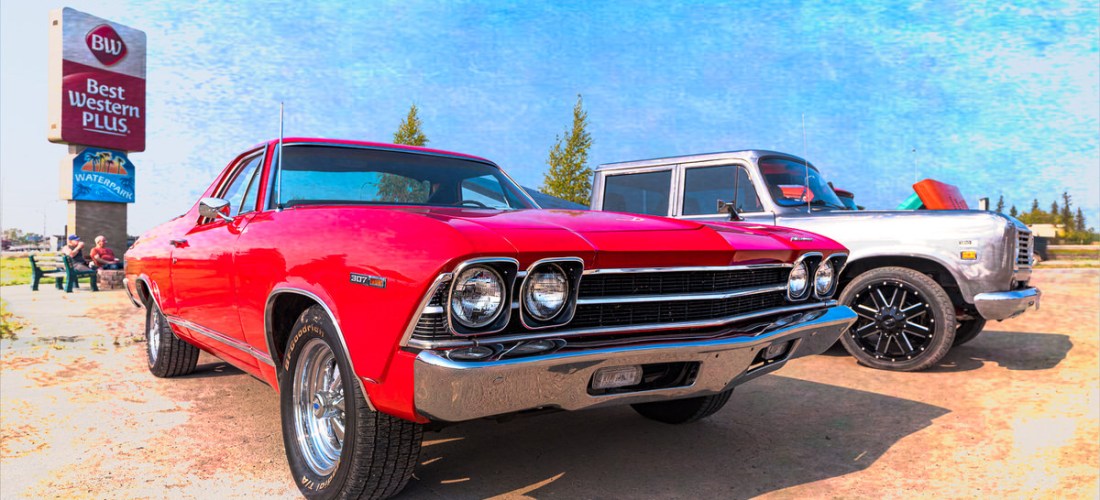
It all started with a simple question from my neighbour about an upcoming ‘Show and Shine.’ As we discussed his classic ‘Cuda and its stubborn engine, my thoughts drifted to the real challenges of photographing such stunning machines. ‘How do you capture the soul of a car and the stories it holds?’This year, with the event moved to a beautiful autumn setting, I decided to go beyond the usual snapshot. I reached out to an AI assistant with a specific prompt, blending modern technology with inspiration from masters like Tim Wallace to find a new perspective on automotive photography. Join me as I share the results of this experiment and reveal some of the tips and tricks I found for capturing the heart and soul of a car show.
A Dynamic, Live, Often Chaotic Arena
An outdoor ‘show and shine’ event represents a profound challenge to the traditional, controlled commercial photoshoot. Unlike the sterile precision of a studio, this environment is a dynamic, live, and often chaotic arena. A fundamental understanding of this chaos is not a suggestion but a necessity, as it is the first step toward transforming a series of liabilities into a wellspring of creative opportunities.
The most immediate problem is the sheer proximity of subjects and the relentless presence of crowds. Vehicles are typically parked tightly together, which leaves very little of what is called “breathing room” in the frame. The constant flow of attendees—owners, enthusiasts, and other photographers—makes capturing a clean, uncluttered shot feel like a rare commodity. This necessitates a strategic, rather than a reactive, approach to composition. The challenge of unfiltered light also defines the environment. Midday sun is a known adversary in outdoor photography, creating harsh, unflattering shadows and distracting specular highlights, or ‘hot spots,’ on a vehicle’s highly reflective surfaces. When the sun is high, a car’s body becomes a mosaic of extreme contrast, and its sculpted form is lost to the tyranny of glare. Finally, the distracting backdrop is an ever-present issue. A prepared photographer typically scouts an ideal location in advance. Still, a show floor is filled with visual clutter—other cars, people, trash, vendor signs, and overhead power lines—all of which act as a constant source of distraction, pulling the viewer’s eye away from the intended subject.
Lenswork … Amid People & Cars
Success at a ‘show and shine’ event is less about reacting to problems as they arise and more about preparing with a deliberate, intentional strategy. This is not a spontaneous endeavour but a tactical operation where every step is pre-visualised and executed with purpose. The most critical, yet deceptively simple, strategy is to arrive as early as possible and remain as late as possible. The hours before and after the main crowds and the most intense midday sun are the prime opportunities for capturing a clean frame. This window allows for shots without the typical distractions, providing a canvas closer to the desired final image.
Within the event itself, patience becomes the most valuable tool in the photographer’s kit. Rather than rushing from one vehicle to the next, the most effective approach is to find a desired angle, set the camera on the tripod, and wait for a momentary lull in the foot traffic. The shot will eventually present itself. This requires a level of perseverance and commitment that distinguishes a professional from a hobbyist. Furthermore, engaging with the exhibitors and vehicle owners with a peer-to-peer approach is not just a courtesy; it is a professional tactic. Exhibitors are deeply proud of their vehicles, having often invested significant time and money. By approaching them with respect and genuine interest, a photographer can earn the courtesy of asking them to close a door or hood for a cleaner composition, or to step away temporarily.
This strategic mindset transforms the event from a series of annoyances into a high-stakes, live-action training ground. The environment’s inherent problems—the crowds, the bad light, the clutter—serve as a strategic challenge. By consciously applying advanced techniques, a photographer can reaffirm their “unconsciously competent” status by producing spectacular results under less-than-ideal conditions. The challenge itself is the creative point. This approach also extends beyond the immediate moment. Networking at a show and shine is an intentional practice of planting seeds that may take months or years to bear fruit. A respectful conversation with an owner about their vehicle, a genuine compliment on their hard work, and a professional demeanour can lead to a future private shoot. That private shoot, conducted under complete creative control, is where a truly conceptual, high-value image can be created. Thus, the show and shine is not merely a shooting opportunity, but a vital business development asset — a deliberate part of the “farming” process of client acquisition.
Composition – Artistic & Strategic Vision
For photographers working at their highest level, recommendations must not only provide a path to success but also delineate the common missteps that separate the professional from the amateur. These are not merely technical errors; they are failures of artistic and strategic vision. The primary failure of a mundane photograph is its lack of soul. The most common errors stem from a fundamental inability to view the vehicle as a character with a personality and to compose in a way that creates an emotional connection.
A major pitfall is shooting at eye level. This is arguably the biggest blunder in automotive photography. People view cars from this perspective every day, so a shot from this angle is instantly forgettable and lacks the impact needed to convey the vehicle’s power or the artistry of its design. The car’s surface is a giant mirror, and unprepared photographers often fail to control the reflections, inadvertently capturing their own image, a distracting light post, or the reflection of a nearby vehicle. Such clutter ruins the clean lines and design, cheapening the final image. Similarly, failing to frame the car correctly—clipping a bumper, a wheel, or an antenna—is a rookie mistake. The vehicle must fit entirely within the frame with enough ‘breathing room’ to convey its full presence.
Another common issue is what can be termed ‘show and tell’ photography. While leaving doors, hoods, and trunks open might be a point of pride for an exhibitor to showcase their hard work, it fundamentally breaks the fluid lines of the car and disrupts its natural stance. A professional understands that a car is most beautiful and its sculptural form is most evident when it is ‘closed up.’ The cool stuff under the hood or inside the cab should be captured in separate, dedicated detail shots.
Thinking It Through – Light, Shadow, Glare, Reflection
Light is not simply a tool for making a subject visible; it is the primary instrument for creating emotion, contrast, and form. A failure to understand its purpose leads to bland, lifeless imagery. The intense, direct light of high noon creates a flat, harsh look with deep, unflattering shadows that eliminate the car’s sculpted form. Similarly, simply pointing a flash at a subject, particularly a reflective one, can create a flat, artificial result that lacks mood and dimension. While a fill flash can be helpful in brightening shadows, it must be used with expert care, often off-camera, to avoid a novice-level outcome. Furthermore, a reliance on HDR (High Dynamic Range) blending, while capable of recovering lost detail, can often lead to an image that appears artificial, unnatural, and soulless. A professional strives to capture the authenticity of a scene, and with a high-end camera, the need for extensive bracketing is significantly reduced.
Many of these common mistakes—shooting at midday, using on-camera flash, and over-editing—stem from a misguided goal: to achieve flat, even lighting. However, the true purpose of lighting is to control contrast and to use shadows to define form and add drama. The genuine ‘mistake’ is therefore not technical but a conceptual misunderstanding of light’s fundamental purpose. An uncluttered shot is not just aesthetically pleasing; it is a strategic move that signals professionalism and enhances the image’s marketability. An editor or client who sees a clean shot, free of bad reflections or distracting crowds, knows that the photographer understands the high standards required for publication. A good shot is not enough; the image must be a ‘safe bet’ that signals to the industry that you can be trusted to deliver.
Slowing Down – Deliberate Work with Camera & Tripod
The tools a professional chooses are not random selections; they are a deliberate extension of their creative vision. For a high-level automotive photographer, a medium-format camera and a heavy-duty tripod, while potentially seen as a burden by others, are a force multiplier for a master of the craft.
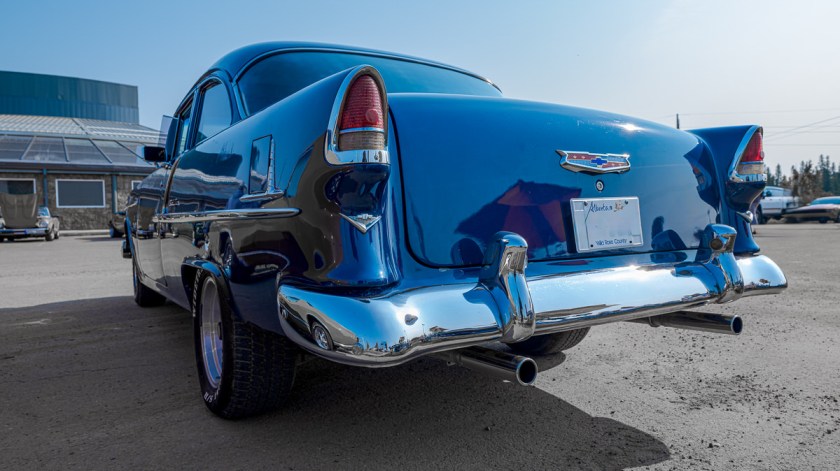
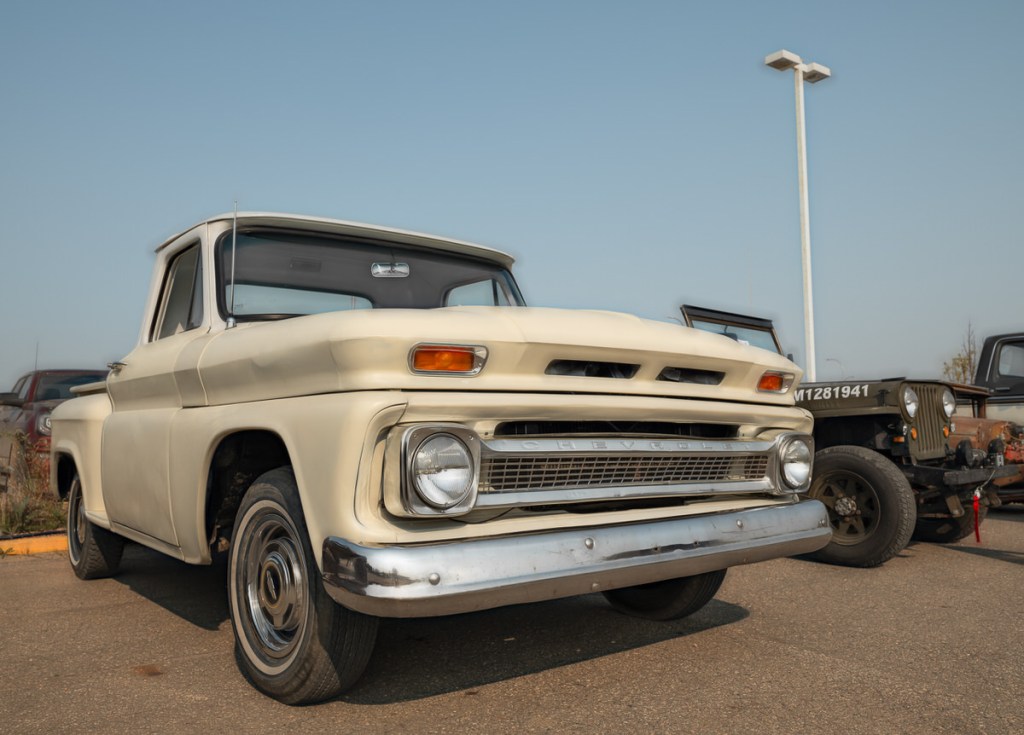
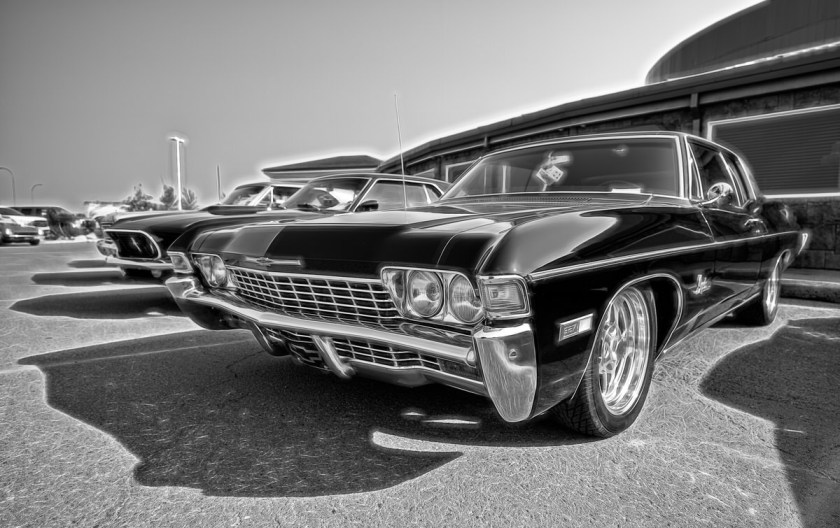
Chevrolet Impala
Medium Format – Toward Unconscious Competence
While I did shoot with two other mirrorless cameras – the 16MP Micro Four-Thirds Olympus OM-D E-M5 and the 61MP Sony A7RIV – I also photographed many of these images with a medium-format camera, the Fujifilm GFX 50R. A medium format camera is more than a tool; it is a precision instrument engineered for professional-grade results. Its capabilities directly enhance the specific creative and technical approach required for this kind of work. With a larger sensor and larger pixels, a medium format camera captures an incredible amount of detail and resolution. This capability allows for massive prints and aggressive cropping in post-production. For a photographer who views every line and curve as a critical part of a vehicle’s sculpture, this is an invaluable asset.
The most critical advantage, however, is the camera’s wide dynamic range—up to 15 stops in some cases. This capability is a direct solution to the harsh contrast of a show-and-shine environment, as it allows for the capture of subtle details in deep shadows under the car and bright highlights on a polished fender in a single exposure. This negates the need for exposure bracketing or artificial HDR blending, aligning perfectly with the philosophy of creating the finished image in-camera with minimal post-production. The sensor’s ability to produce a smoother, more ‘analogue,’ and film-like output also creates a distinctive aesthetic that resonates with the emotional, nostalgic feel of classic cars and the conceptual feel of high-end commercial work.
Tripod – Anchoring Level, Height & Intention
The tripod, often perceived as a hindrance in a crowded environment, is the very tool that unlocks advanced and creative techniques. It is a symbol of patience, not passivity. Beyond its primary function of preventing camera shake, its actual value lies in its ability to enable long-exposure photography. This is essential for creating motion blur and, more importantly, for the signature technique of light painting. After dark or during the blue hour, the tripod allows for long exposures where a simple light source can be used to ‘paint’ the car’s body, creating a custom, dramatic look that appears as if it has not been lit at all. This is the ultimate solution to the harsh daytime lighting of a show and shine. The tripod also forces a more deliberate, pre-visualized approach, where the photographer meticulously scouts the angle and waits for the perfect moment, eliminating the tendency to fire off quick, uninspired shots.
Gear, Settings, Application & Thinking
The following table provides a summary of the essential gear and settings, bridging the philosophical and technical aspects of the approach.
Gear/Setting
Rationale
Creative Application
Photographer Philosophy
Source Snippets
Medium Format Camera
High resolution for detail and large prints. Superior dynamic range negates bracketing. Distinctive colour and depth.
Capture intricate details of chrome and patina. Handle extreme contrast in a single shot. Create a film-like aesthetic.
The tool is an extension of vision, enabling the capture of the final image exactly as it was conceived in the mind.
Sturdy Tripod
Essential for long exposures and stability. Enables advanced techniques.
The embodiment of patience and commitment. The tripod requires a deliberate approach to composition.
Circular Polarizer (CPL) Filter
Reduces glare and reflections on paint and glass. Saturates colors.
Remove distracting reflections of crowds or other cars. Deepen the richness of the car’s paint.
My work is about control. The CPL is the first line of defense against an unruly environment.
Light Sources (Flashlights, LED Panel)
Used for light painting and selective lighting.
Create dramatic, custom lighting on the car’s body. Highlight specific design lines and curves at night.
Lighting is a means of controlling contrast and position, not just intensity. Subtlety is key.
Camera Settings
Aperture: f/8 or higher for full sharpness.
ISO: Lowest possible.
Shutter Speed: Varies based on time of day (e.g., 1/200s for static, slower for motion/low light).
Capture maximum detail from front to back. Minimize noise for a clean image. Freeze action or create motion blur.
The final shot is created in-camera through a precise balance of settings, with “very little post-production to do” later on.
Narratives & Personas
The goal is not to merely photograph cars but to capture their essence and personality. A show and shine’s diversity of vehicles means a one-size-fits-all approach is insufficient. Each vehicle type requires a unique visual narrative.
Custom Classics & Vintage Autos – Patina & Chrome
These vehicles serve as a testament to history. Their stories are embedded in their bodywork, and photography should capture this essence. The goal isn’t to make the car look brand new but to preserve its authenticity. This involves highlighting patina, rust spots, worn leather, and period-correct details that narrate a genuine story. The aesthetic prioritizes finding beauty in imperfection, transience, and simplicity – such flaws reflect the passage of time and add character, giving the vehicle its soul. Its natural, weathered look, with dents and scratches, demonstrates its use and is seen as a badge of honour by many enthusiasts. While chrome can create reflections that are difficult to control, it also offers a compelling tool for visual storytelling. A circular polarizer (CPL) filter helps reduce harsh reflections, while subtle lighting techniques can enhance the chrome’s sparkle and set the mood. The professional approach extends beyond full car shots to capturing intimate details that make each vehicle unique, such as original bonnet ornaments, badges, interior stitching, and its worn features (patina, rust, imperfections).
Muscle Cars – Style, Performance & Power
These vehicles are about speed and power. The photography must convey this dynamic nature even when the subject is stationary. Low angles are key to emphasizing the car’s aggressive stance and power. By getting down on one knee or even placing the camera on the ground, the vehicle can be made to look more menacing and powerful. Since the vehicles at a show are stationary, turning the front wheels toward the camera is a small but critical detail that adds a sense of motion, as if the car is “swerving to avoid you,” making the photograph feel dynamic and alive.
Utility Vehicles – Presence, Scale & the Unexpected
The most creative opportunities are often found in the most unexpected subjects. Trucks and large utility vehicles are about presence and sheer scale. Low angles can emphasize their massive size, while a wide-angle lens can give a sense of overwhelming power. Motorcycles are a different kind of machine; their complexity lies in the open view of their mechanical parts. A focus on the intricate details of the engine, the chrome wheels, and the brakes is essential. Unique vehicles, such as vintage campers, require a different approach. The goal is not just the vehicle but the story it tells. The photographer should frame the shot with a narrative in mind—a sense of adventure, nostalgia, or rustic charm.
Vehicle-Specific Shot List & Creative Prompts
The following table provides a quick-reference guide, breaking down the shot list by vehicle type and providing specific creative prompts to encourage a more intentional, high-level approach to the event.
Vehicle Type
Recommended Angles & Shots
Detail-Focused Shots
Creative Prompt / Narrative to Pursue
Source Snippets
Street Rods, Custom Classics & Vintage Automobiles
Front & rear ¾ view (all four wheels visible), full side profile, low-angle shot for stance.
“The Sculpted Machine.” How can you highlight the artistry of the open mechanics?
Unique Vehicles (Campers, Tractors, etc.)
Full profile shots to show scale, wide environmental shots to place it in context.
Interior elements, vintage logos, unique fittings, personal touches added by the owner.
“The Road Less Traveled.” How can you tell a story of adventure, nostalgia, or purpose?
Post-Production Begins At … Visualization –Reverse Engineering the Photo, Then Pressing the Shutter Button
For a professional, the final stage is about the polish. A truly successful shoot is one where the image is so meticulously crafted in-camera that extensive post-production is rendered largely unnecessary. The photograph is “reverse engineered” in the mind before the shutter is even pressed, and the subsequent editing is about refinement, not correction.
Final Polish – The Image Pops, Your Signature Look
The superior dynamic range and colour depth of a medium format camera, combined with a meticulous in-camera process, mean that extensive post-production is largely unnecessary. The heavy lifting is done on location with the careful use of light and position. The editing process is not about fixing mistakes but about subtle enhancements. This includes minor adjustments to highlights and shadows, fine-tuning contrast to make the image ‘pop,’ and cleaning up any remaining distracting reflections that could not be avoided on location. The final stage is about applying a signature look, working with contrast and texture to produce a final image that aligns with the brand’s vision. This is the final, non-contracted “extra bit of value to knock it out of the park” that turns a good photo into a great one.
The Outdoor Show & Shine, An Exercise in Creative Problem-Solving
The outdoor ‘show and shine’ is the antithesis of a controlled, commercial studio shoot, but it is precisely this unpredictability that makes it an invaluable proving ground for an photographer. The event is not a simple collection of vehicles to be documented; it is an exercise in creative problem-solving and strategic business development.
The most critical recommendations for a photographer seeking to excel in this environment are to embrace the chaos with clear, intentional strategies:
Prioritize Patience and Preparation: Arrive early and stay late to work in the prime hours free of crowds and harsh light. The most valuable tool is not the camera but the patience to wait for the perfect, clean shot.
Leverage the Toolset: The medium format camera and a tripod, while perceived as cumbersome, are the keys to unlocking high-level techniques. The camera’s superior dynamic range eliminates the need for extensive post-production, while the tripod enables long-exposure light painting, a powerful technique for creating a dramatic look in low-light conditions.
Master the Narrative: Move beyond the basic snapshot by viewing each vehicle as a distinct persona. Adapt the compositional and lighting approach for each vehicle type, from a classic car’s patina to a modern muscle car’s aggressive stance.
Think Beyond the Shot: The event is a prime opportunity for business development. A genuine, peer-to-peer approach with vehicle owners can lead to private shoots later on, where the controlled environment allows for the creation of truly valuable, high-end conceptual work.
Ultimately, the show and shine is a microcosm of the entire photography journey. The challenge lies in applying a high-end, studio-honed philosophy—the control of light, the manipulation of form, and the art of problem-solving—to an uncontrolled environment. Success is defined not by avoiding the chaos, but by mastering it.
Post Script – Mastering Best Practices
There is a learning pedagogy that often helps photographers stay confident on their journey towards mastering best practices. In the 1970s, Noel Burch introduced the Conscious Competence Learning Model, which describes four stages of acquiring any new skill, each identified by an overarching psychological state: (1) Unconscious Incompetence – ‘You don’t know what you don’t know.’ The photographer is unaware of their skill gap; (2) Conscious Incompetence – ‘You know what you don’t know.’ The photographer recognizes the gap and values learning the new skill; (3) Conscious Competence – ‘You know that you can do it (but you have to think about it);’ the photographer can perform the skill reliably, but it requires focus; and (4) Unconscious Competence (Mastery) – ‘You can do it without thinking about it;’ the skill has become second nature, performed easily and automatically.
In all this, any of us as photographers aim, through time (the 10,000 hours of guided practice and instruction), to evolve to ‘unconscious competence’ with our seeing, our imagination and our cameras.
Quotes to Consider: (1) “A camera does not create a great photograph, the photographer does, 90% of the achievement lies in your imagination of what you want to create.” (2) “In some ways, I view each car as a person that has a personality, and the starting point is to understand what the design and overall purpose is, the challenge then is to use my photography to best get this message across.” (3) “It’s easy to create an ‘acceptable’ image for a quick win, but with real passion, you can make use of the light and design to create a truly inspirational piece of work through careful thought, exposure, and lighting.”
Tim Wallace
Listening to: John Mellencamp’s ‘Grandview,’ Linda McRae’s take on Bowie’s ‘Heroes,’ The Verve’s ‘Bittersweet Symphony,’ William Prince’s ‘Great Wide Open,’ Birdy’s ‘Quietly Yours,’ and Bruce Springsteen’s ‘Used Cars‘ and ‘Open All Night.’
Thanks for reading. Hoping you get out the door with your camera once or twice this week. Take care …
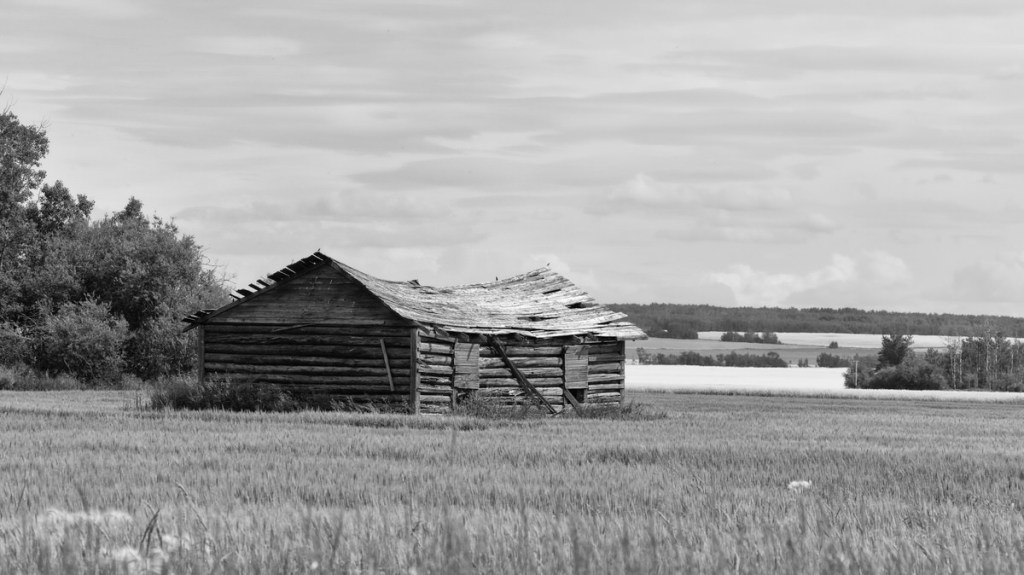
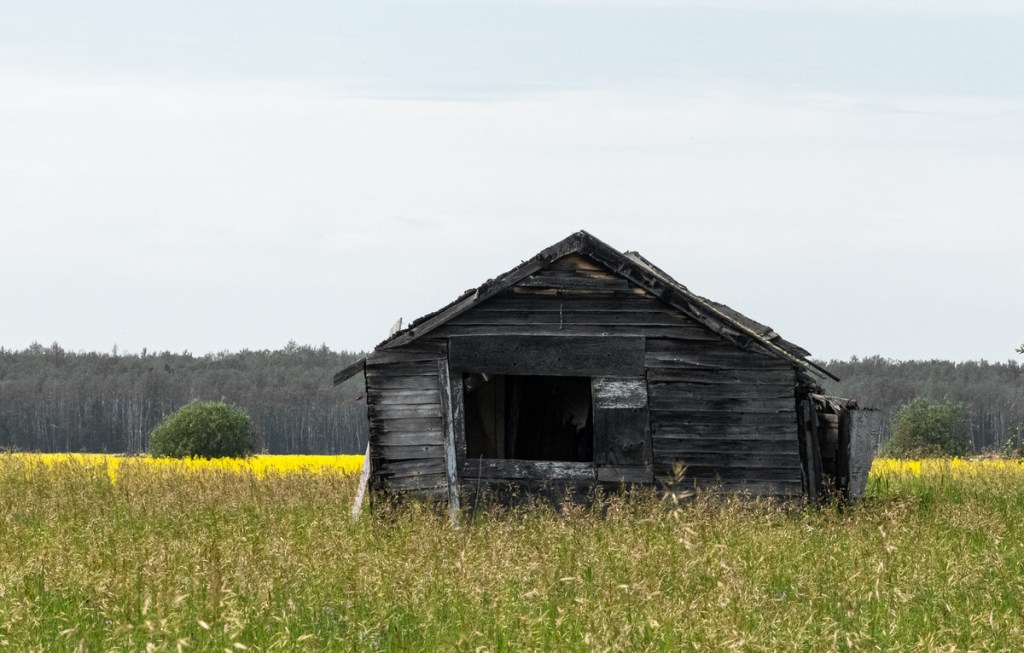
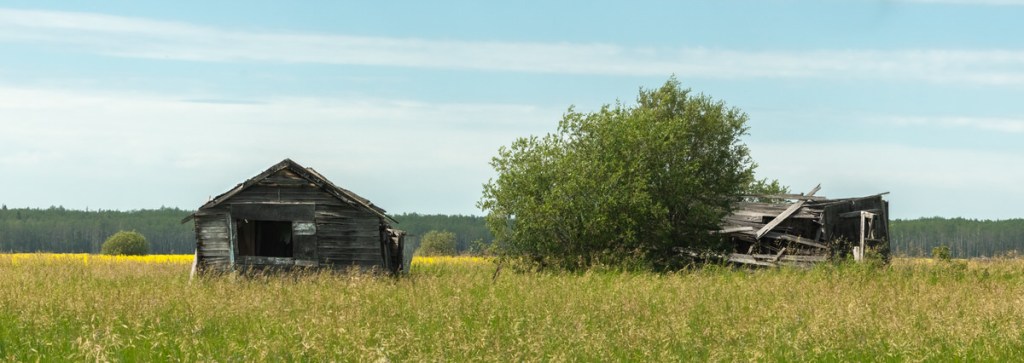
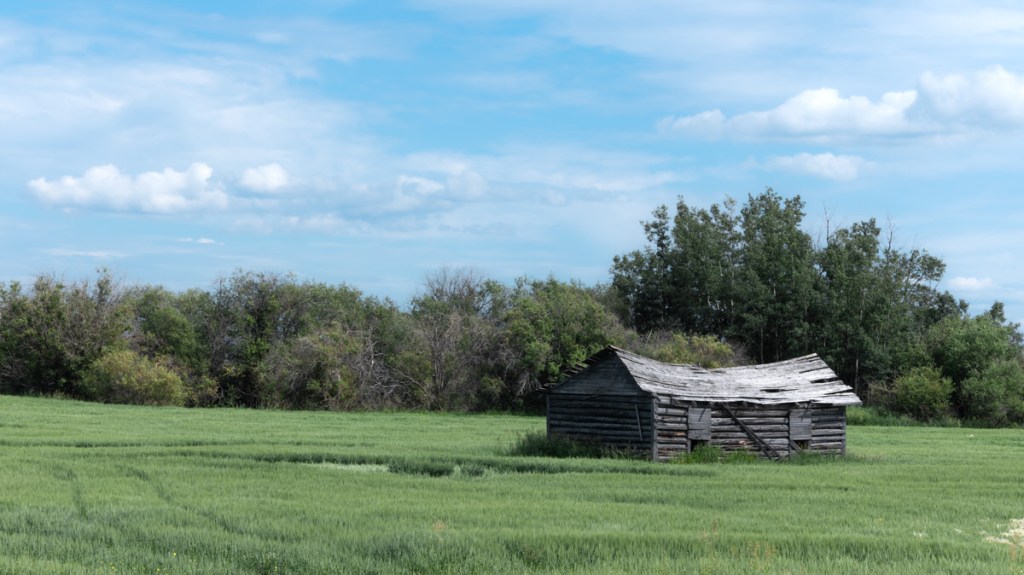
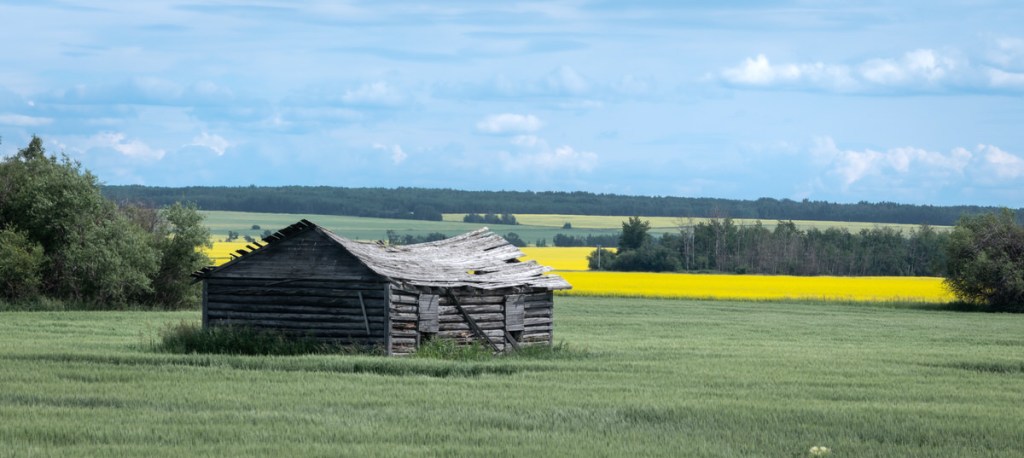
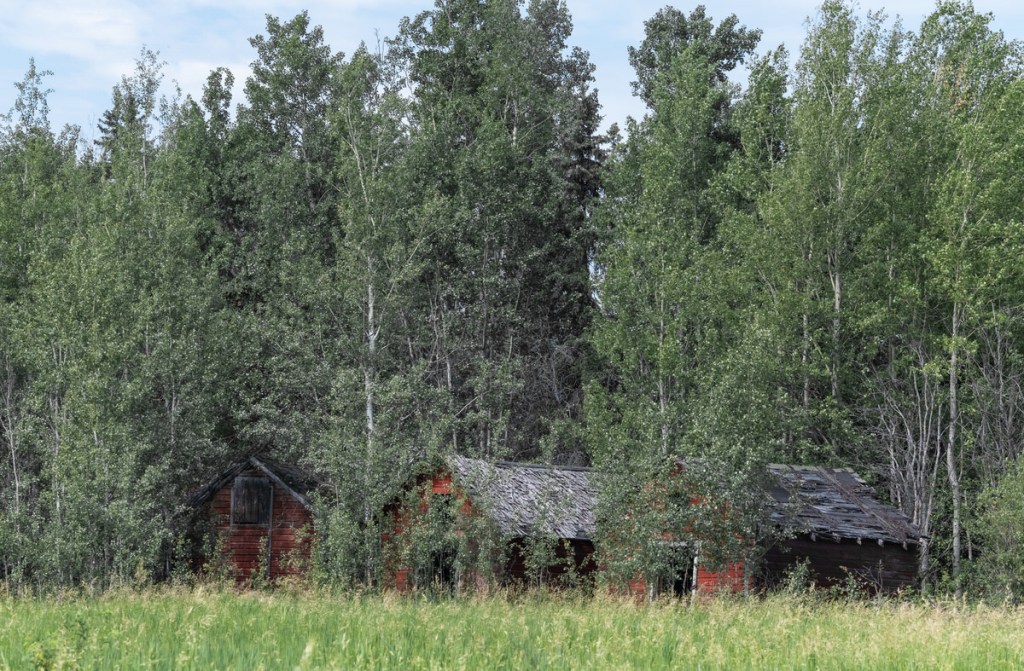
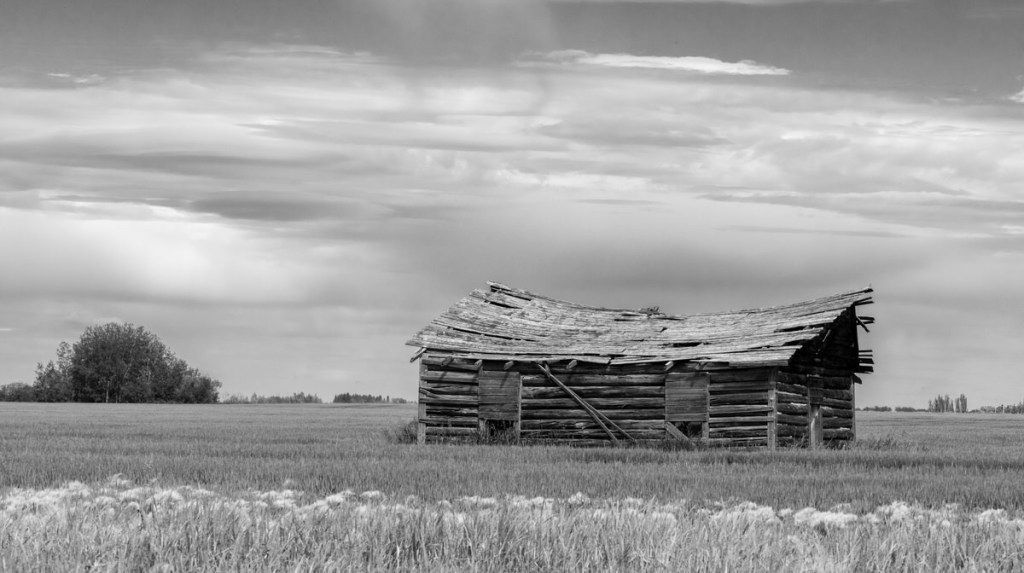
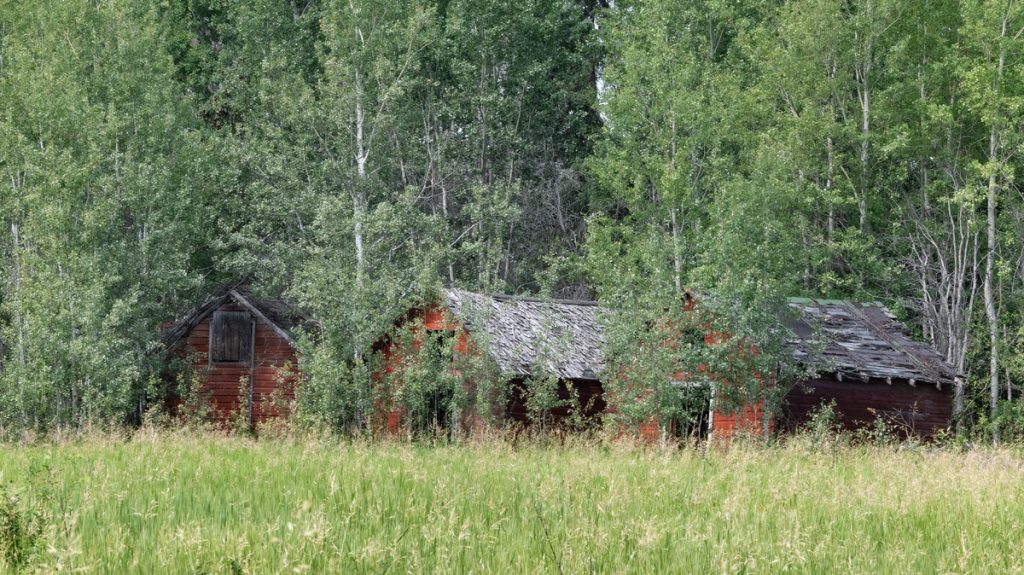
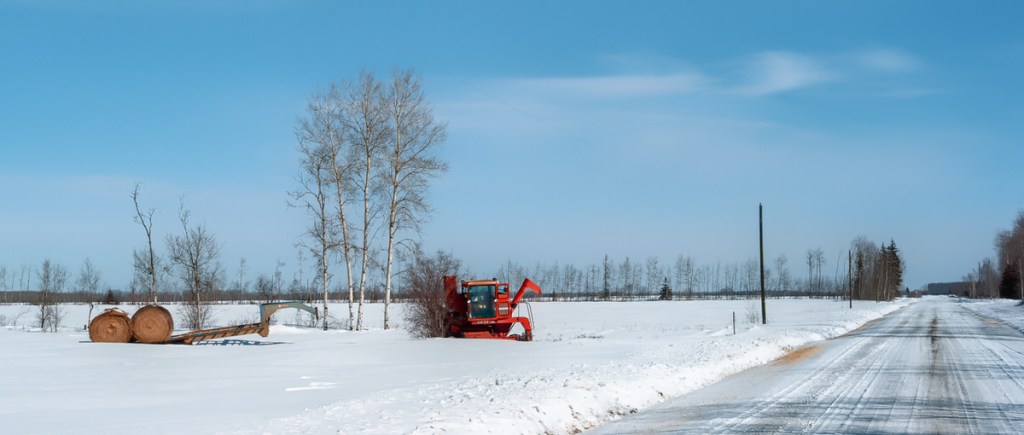
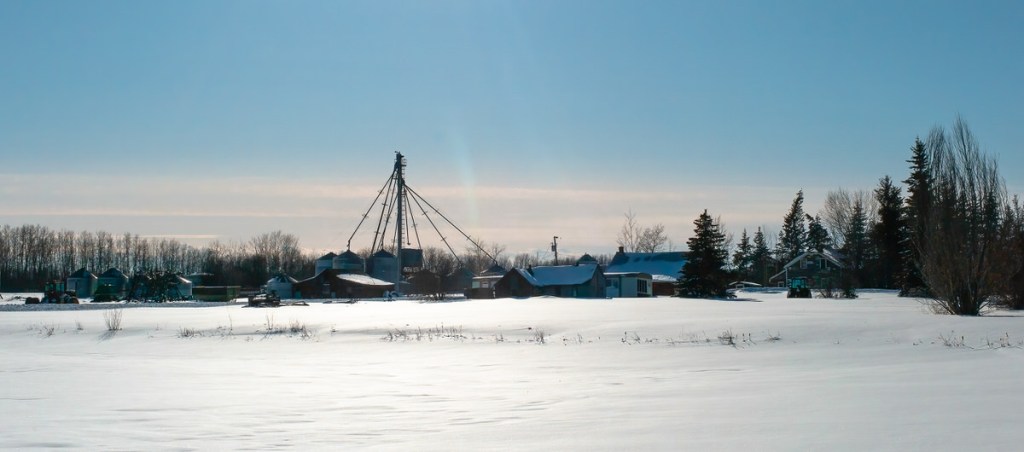
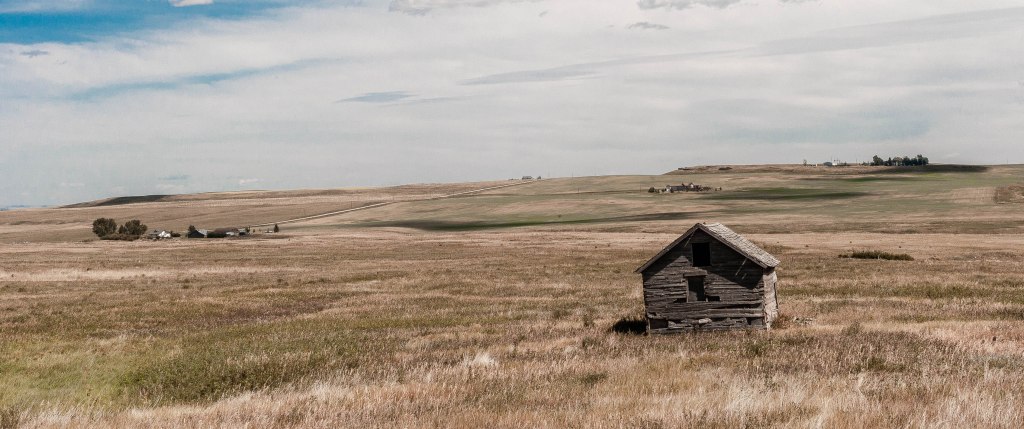
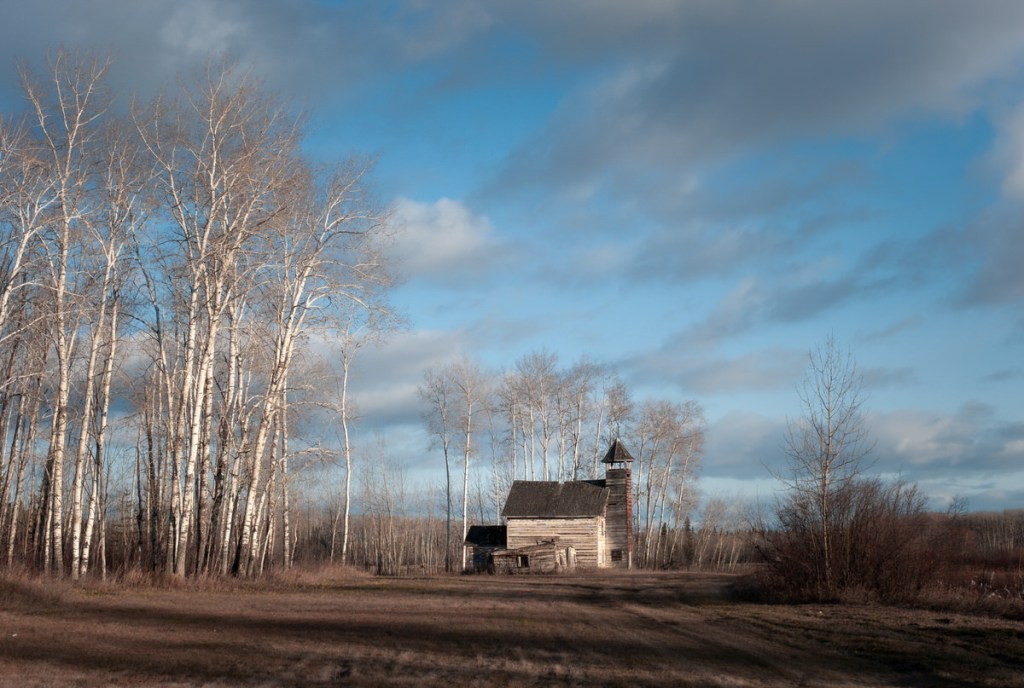
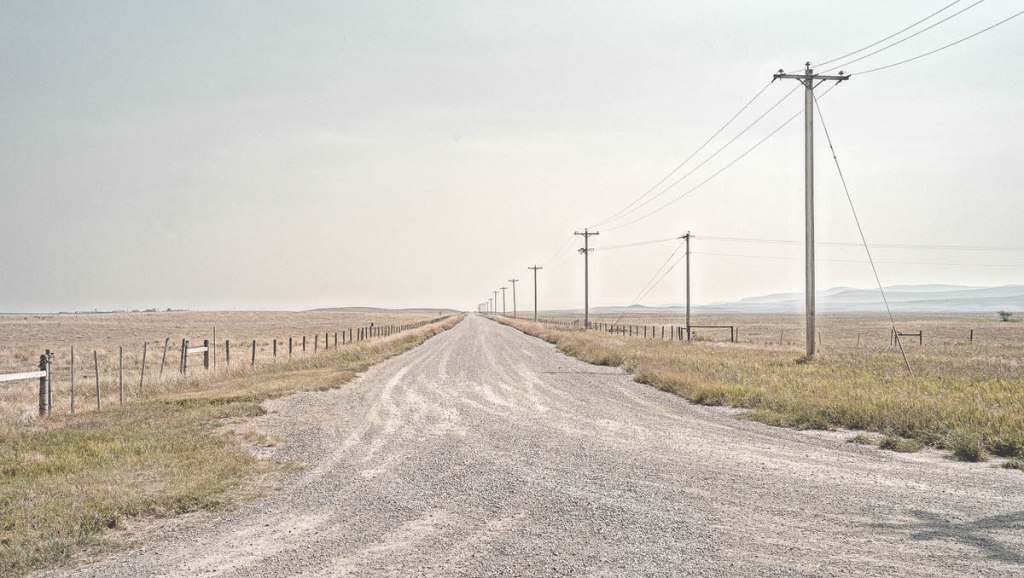
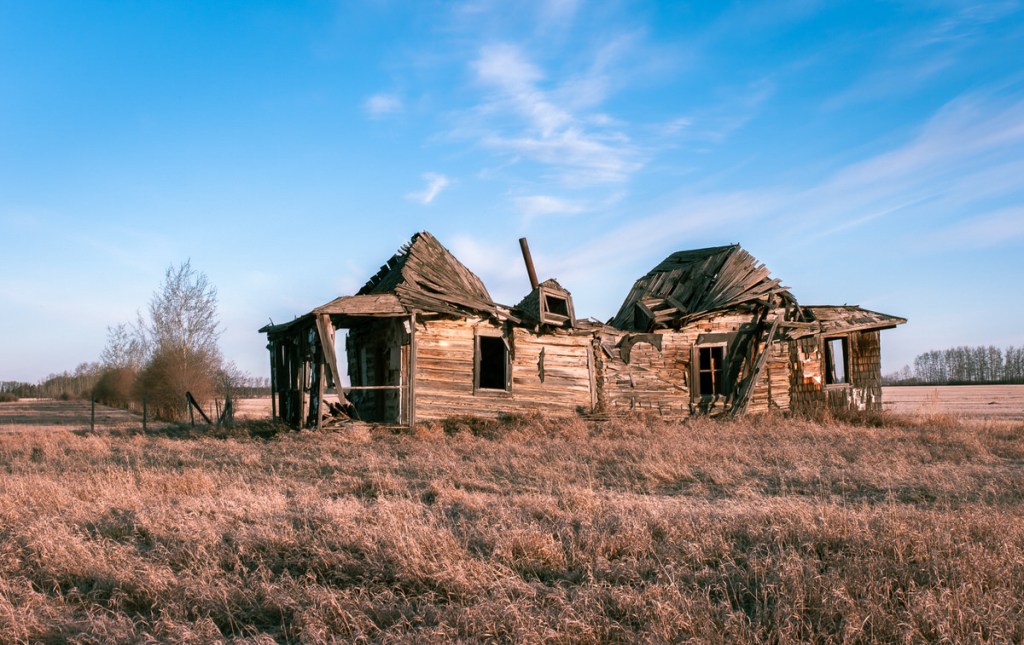
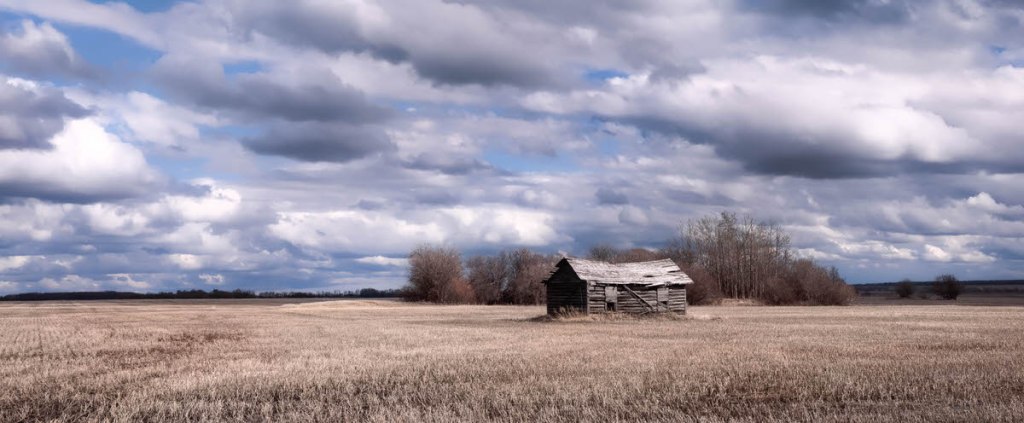
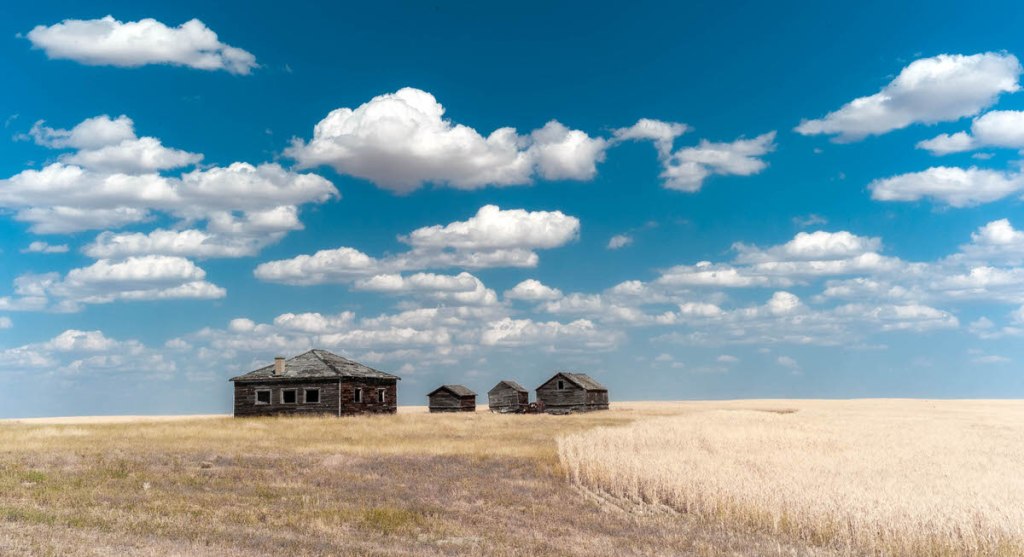
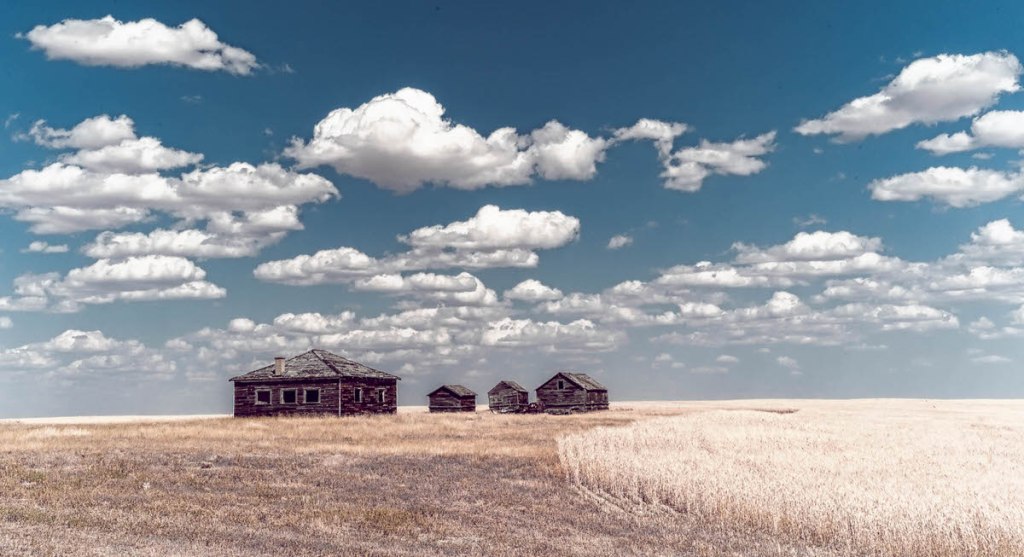
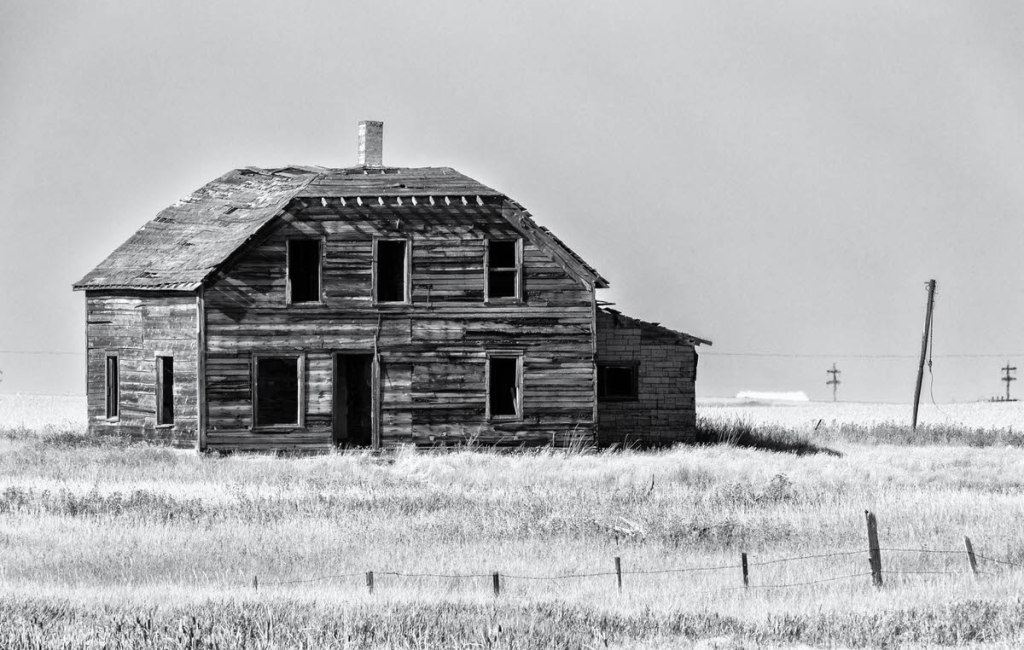
The reason for travel found, I drove southward through Boreal Forest made farmland. Allowing my eye to look and see and using my camera, these are first images of farmsteads and homesteads, now derelict, that hold memories for families whose predecessors built them. For travelers, though, along northern Alberta roads, they serve as mile markers, helping them gauge their progress toward a given destination.
There is a visual narrative to gather – those with a camera, curious with wonder, often stop and photograph. I am one of those. ‘Who lived and worked here?’ ‘How did weather shape Life through each season?’ ‘What were hard times like?’ ‘What were the good times?’ The story is there. With patient wandering, the ‘would-be’ photographer can unearth different parts of that story and make sense of them.
Listening to – #447 – Publish Your First Book, The Photowalk Podcast
Quotes to Inspire / Consider – ‘You give Life to what you give energy to.’ – Gary Williams / Neale James (via The Photowalk Podcast); ‘The energy of the mind is the essence of Life.’ – Aristotle
In the first week of summer break, school’s work has lessened—the last report, comprehensive as it was, has been written and submitted. Students’ award photos have been edited and uploaded, and the division’s long-service award images have been edited and delivered by thumb drive to the appropriate person. Next year, I will use Dropbox to move big images over the Internet. That done, I am able to launch into summer’s rest, time to myself with my thoughts, and begin letting go of the year that has been our school year and bridling down my watch for the next necessary thing needing done. It is time to release all that and take-up my own Life, once again. Movies are being watched – older ones, older favorite’s, and ones linked to novels read. An old pattern is there – movie marathon nights help dissociate me from the year that has been, one part of unlocking the door to summer.
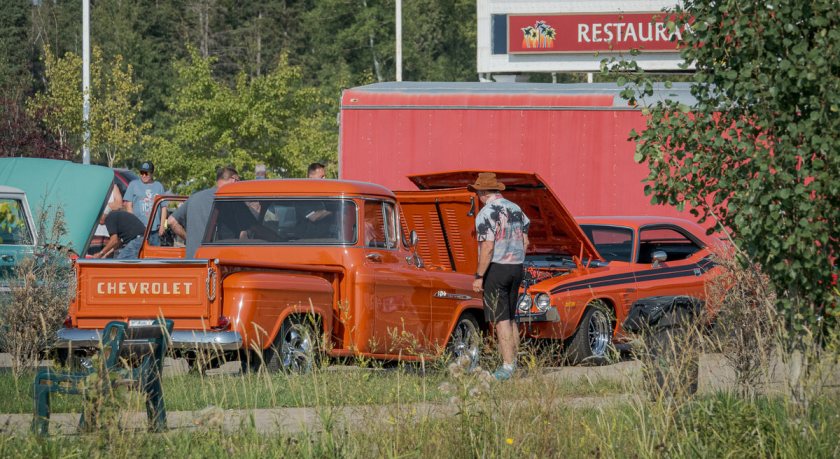
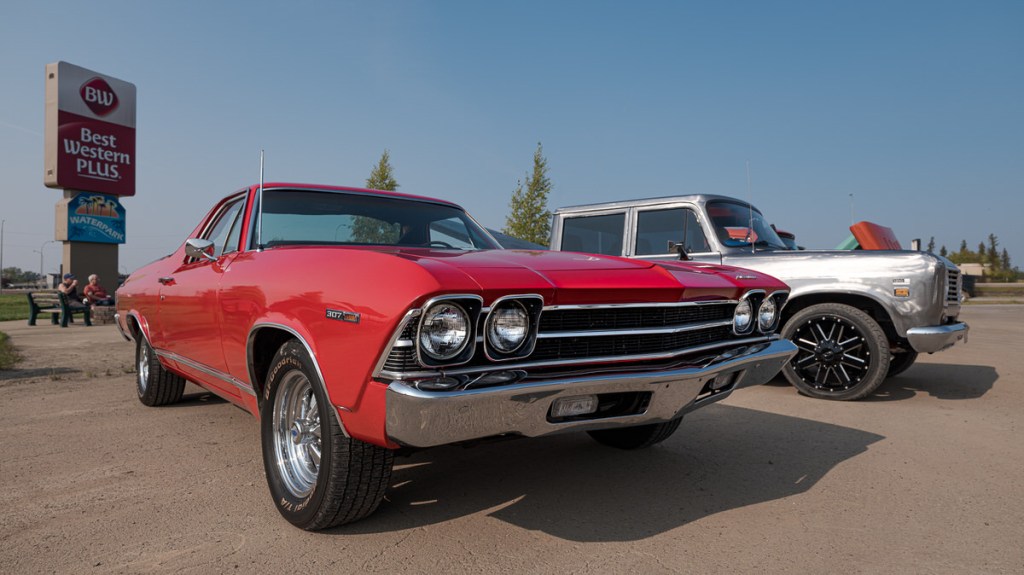
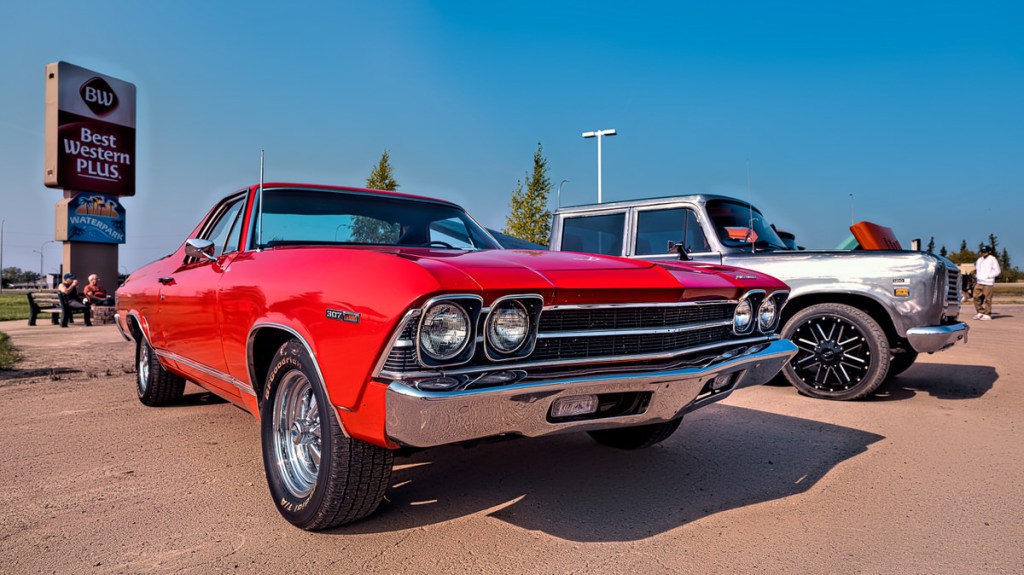
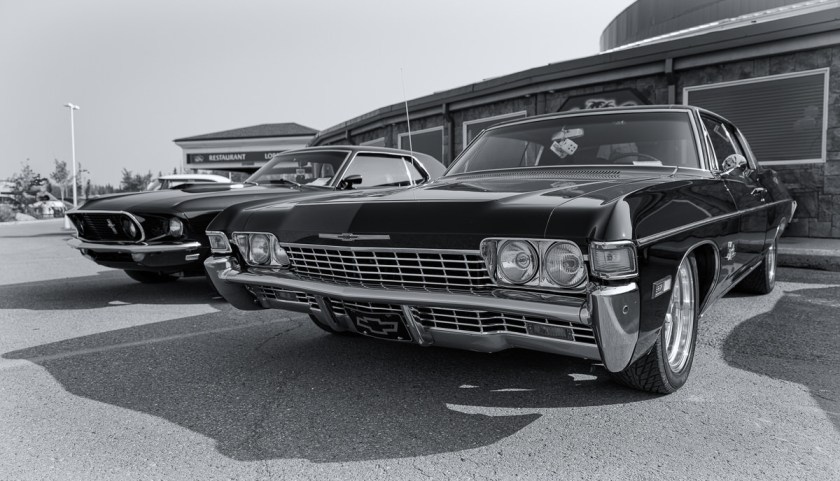
The other day, it was a good thing to wake up, gather my wife from her university work and into our truck, and get out for a drive. It set the tone for a summer’s day. That essential premise – get out the door – was lived out. I got out that door again yesterday, recalling with some strength that there should be a ‘Wheels and Deals’ event at the Mirage Hotel in High Level, Alberta, a ‘Show and Shine’ kind of gathering of favored vehicles with the added opportunity of a swap meet – ‘wouldn’t that be something for me to find a late sixties Pontiac, like the one I used to drive during high school?’ I took my Leica M8 with Zeiss ZM Biogon 28mm lens and went to have a look. I had my Fujifilm GFX 50r and Ricoh GR iii as cameras I might use as well.
I shot for the first hour with the M8, focusing with the rangefinder’s viewfinder and focus patch. I moved through the area as people set up. Cars, trucks and motorcycles arrived and were arranged in the hotel’s parking lot. I could move around, talk with vehicle owners, and photograph vehicles. I could shoot according to what I saw compositionally. I could take my time with the M8. Good.
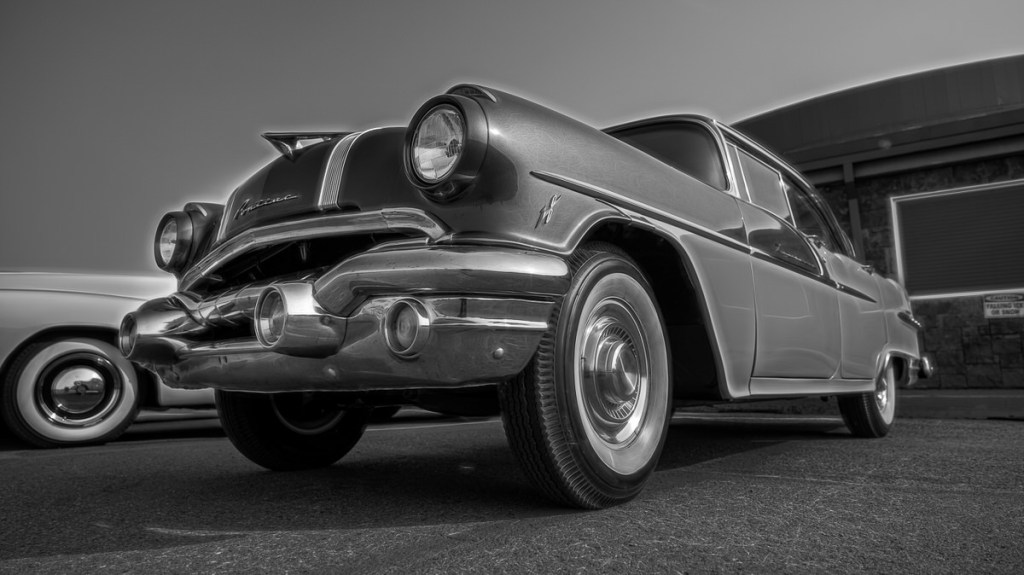
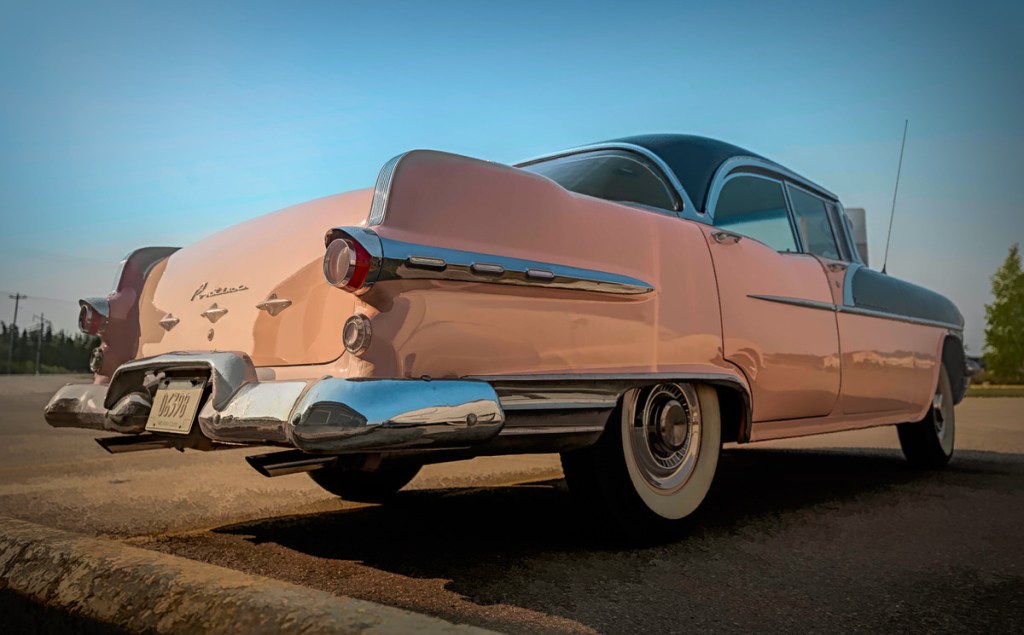
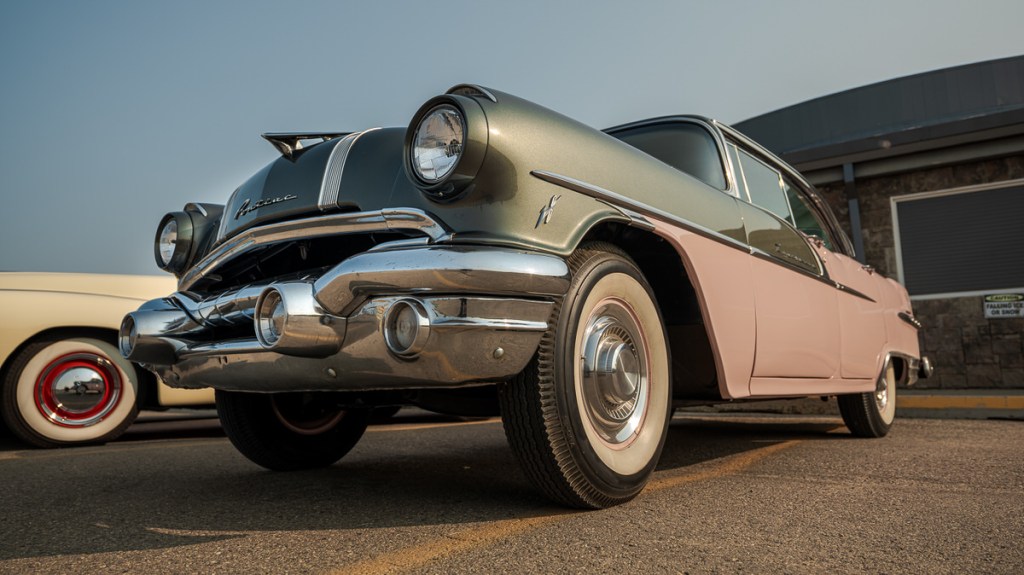
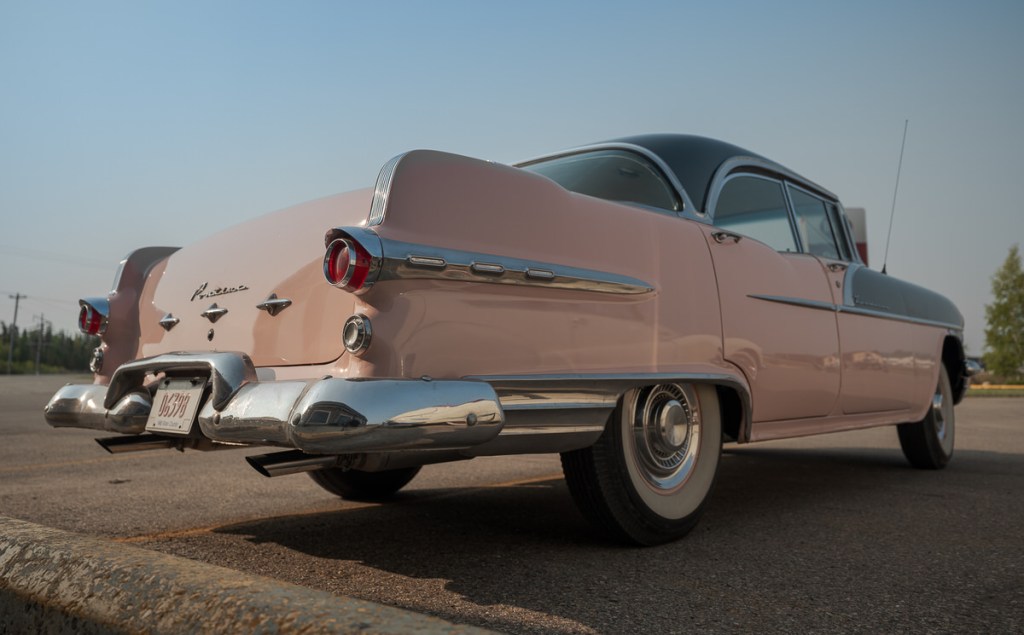
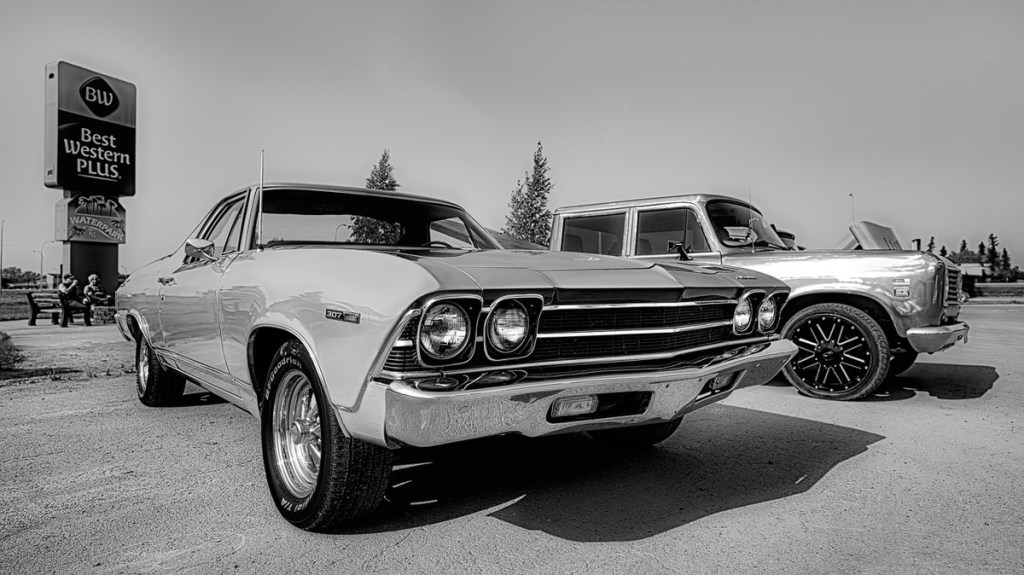
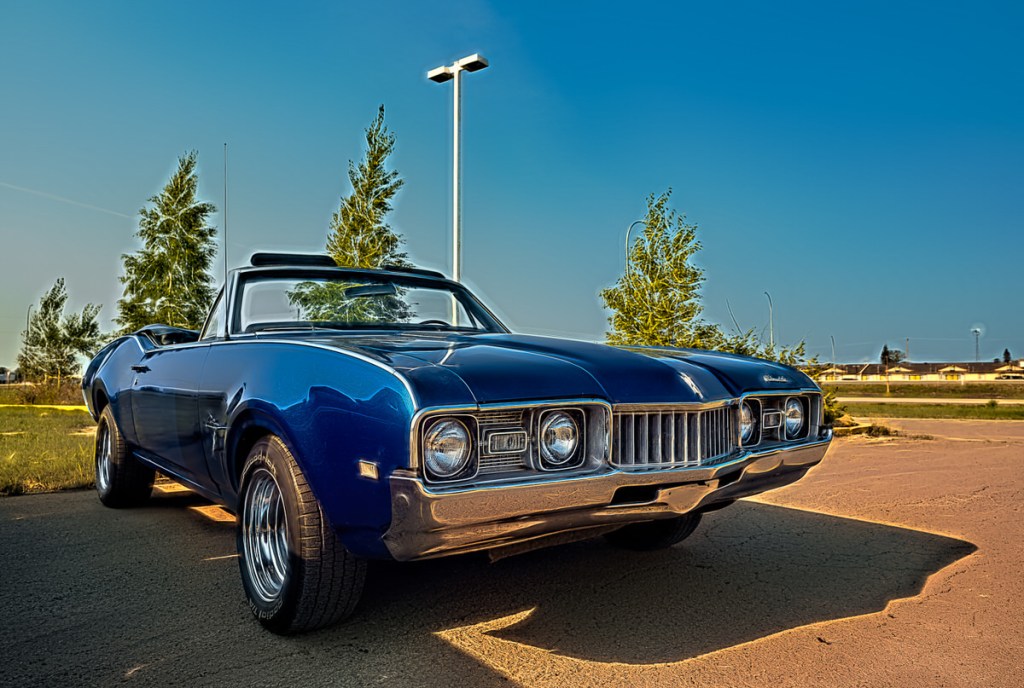
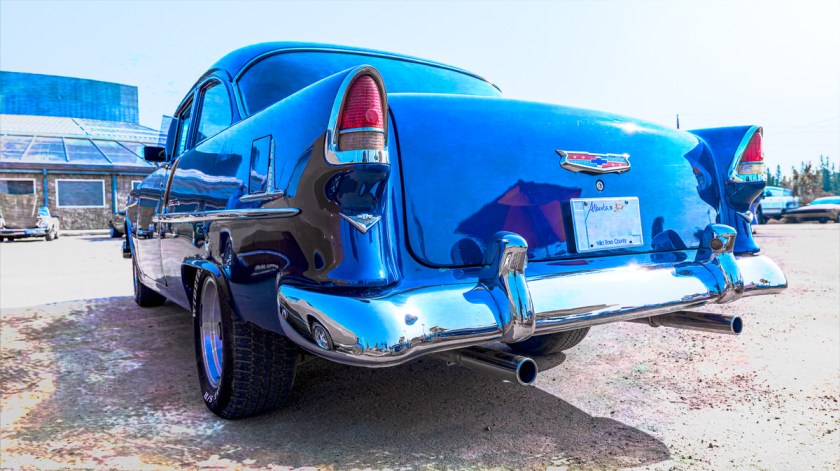
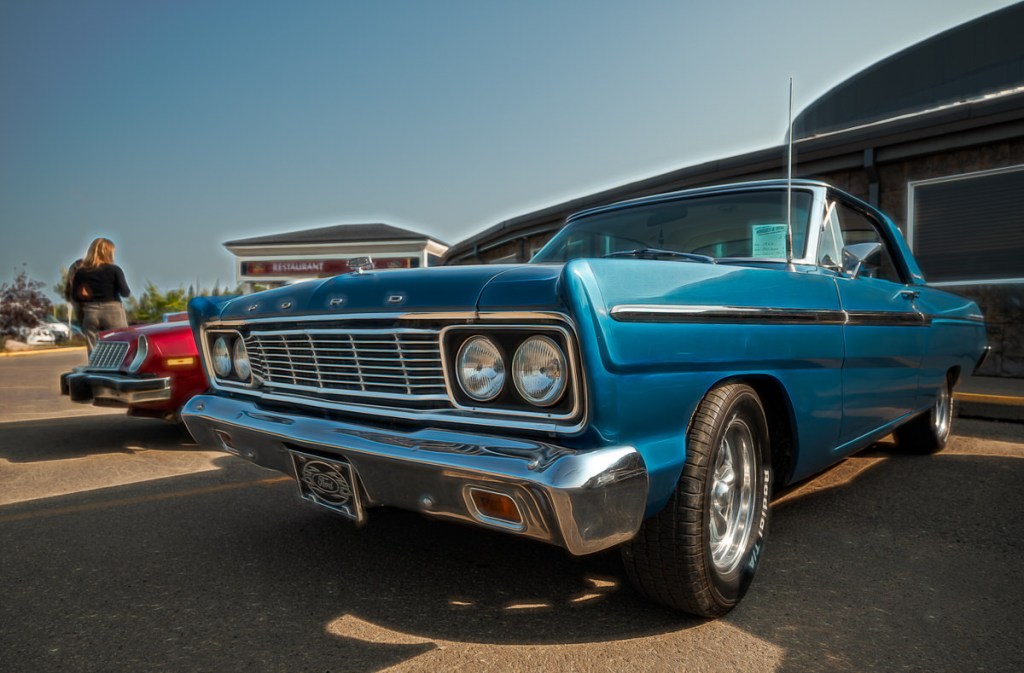
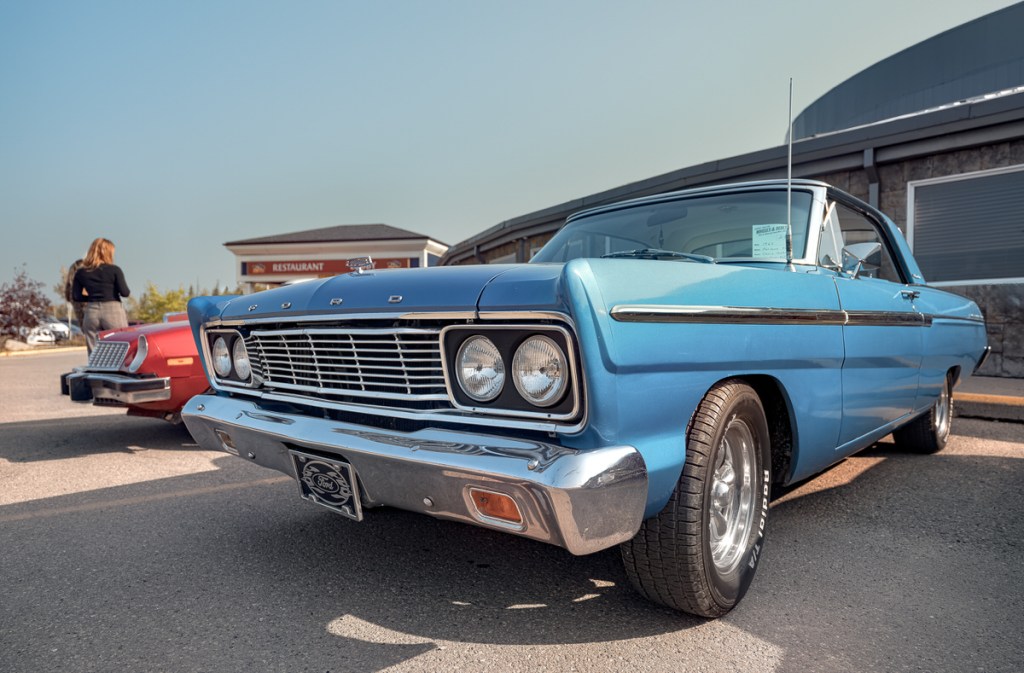
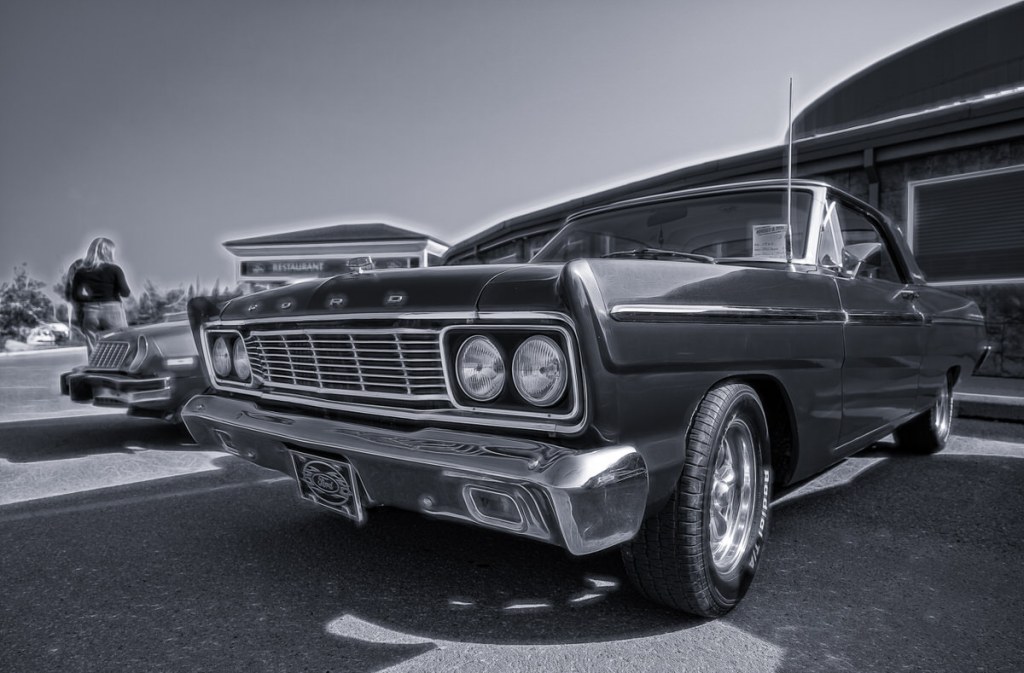
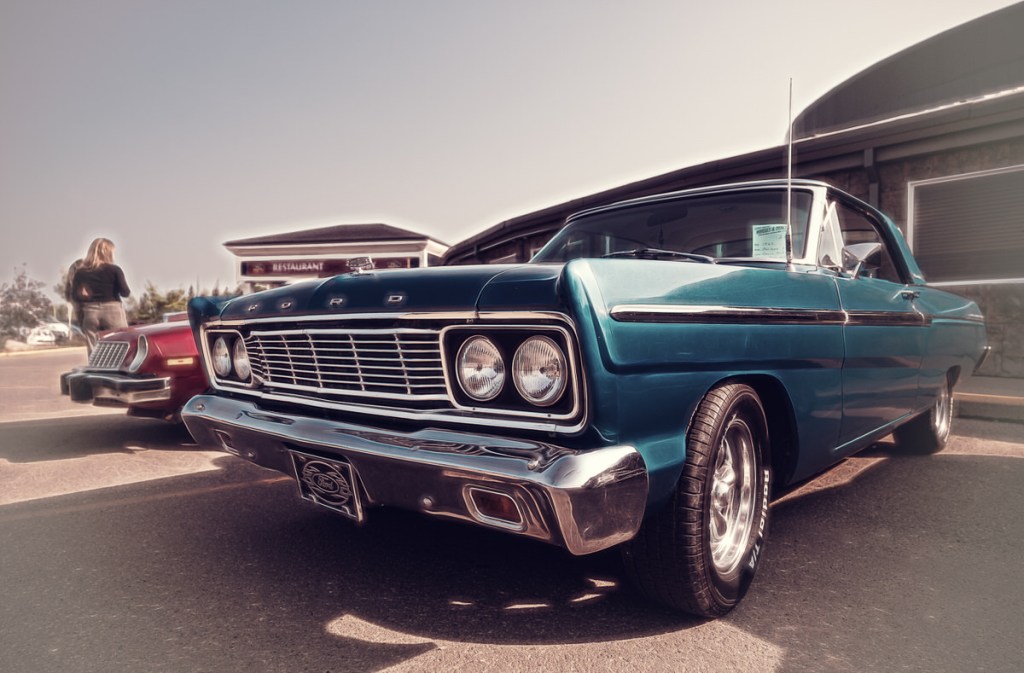
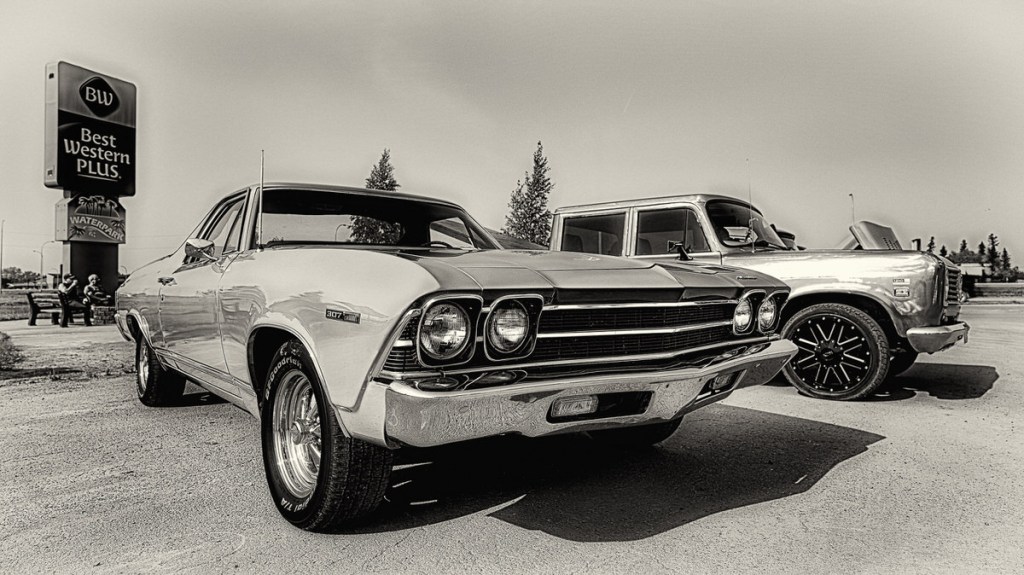
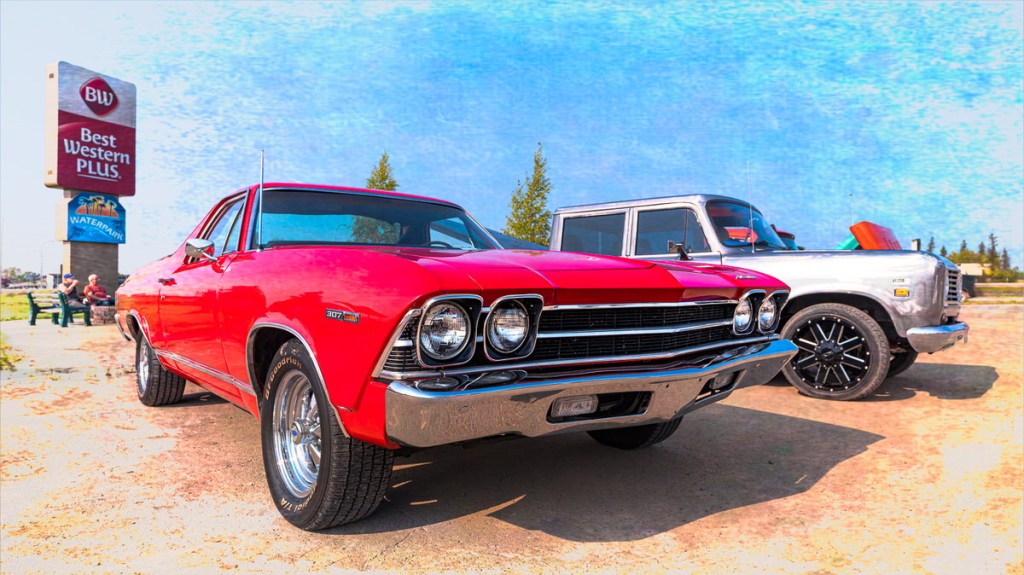
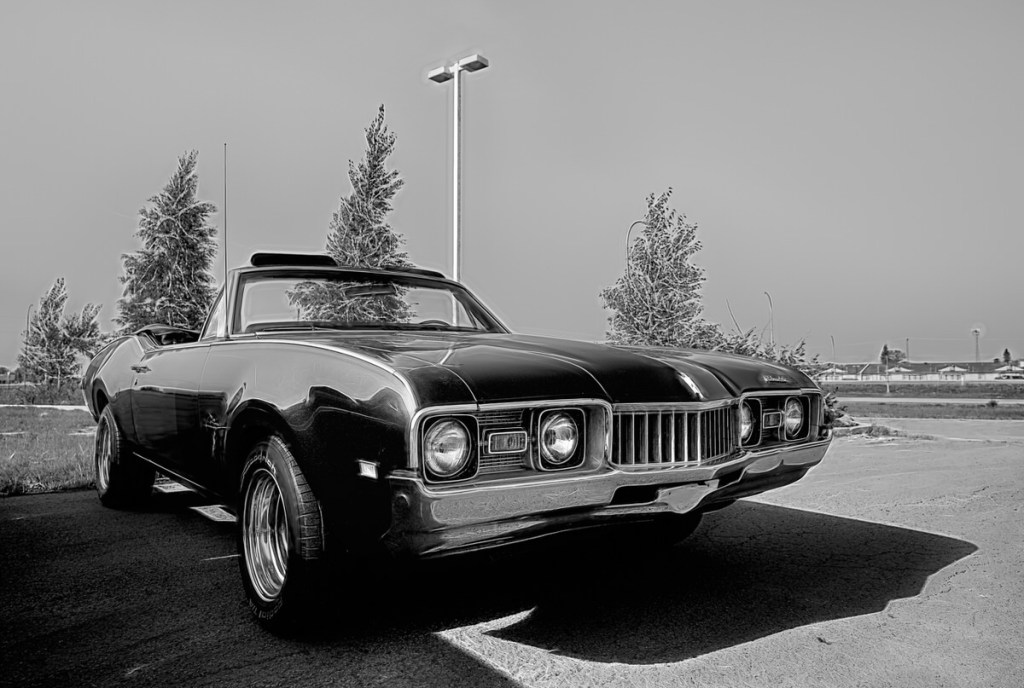
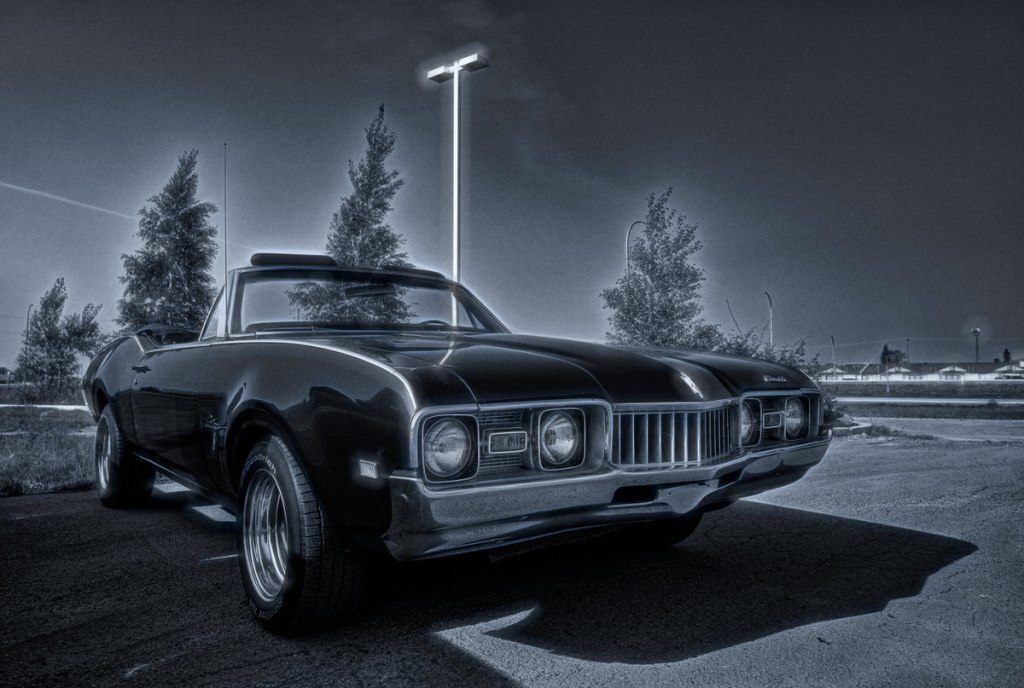
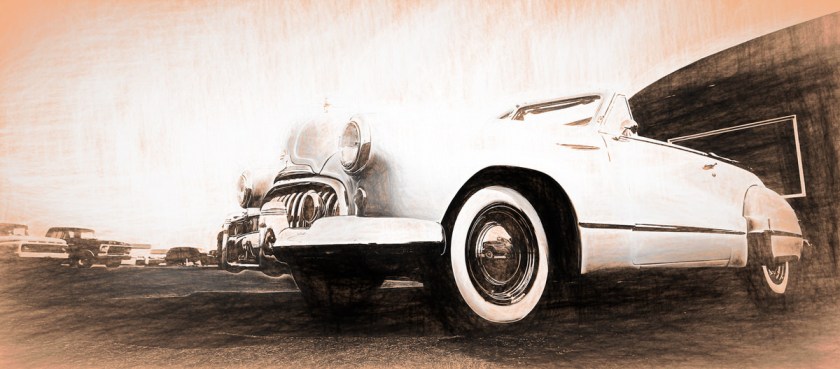
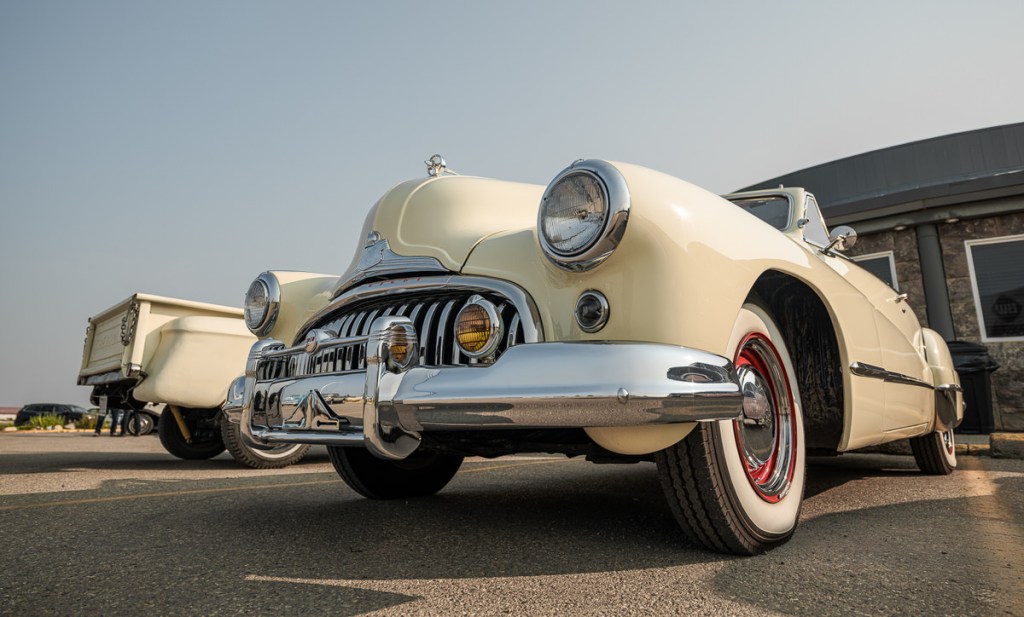
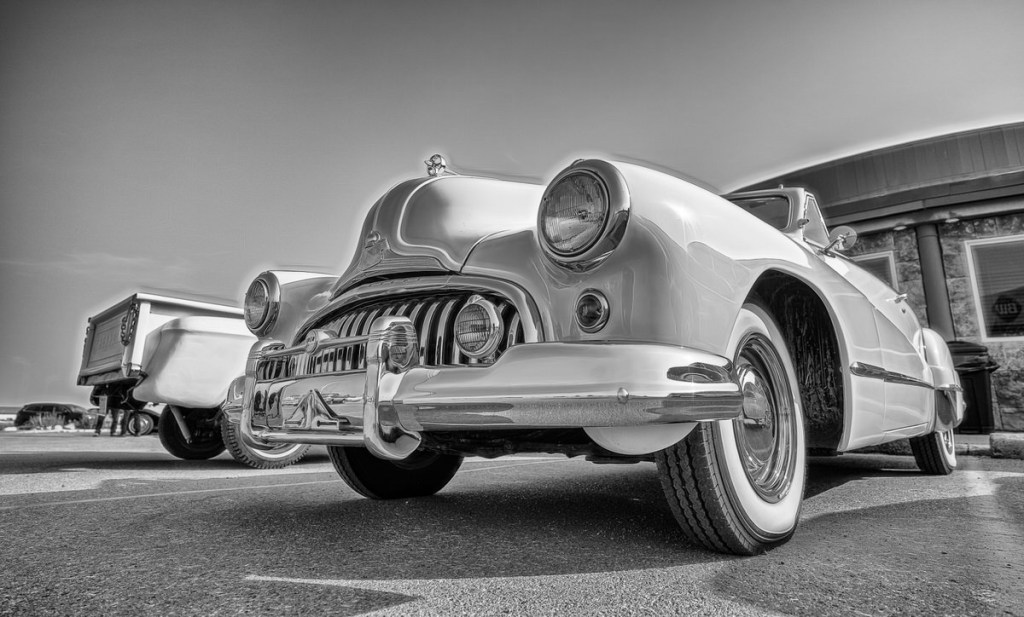
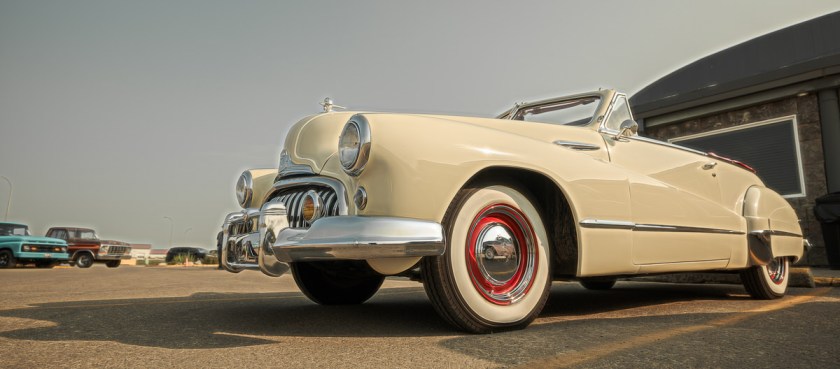
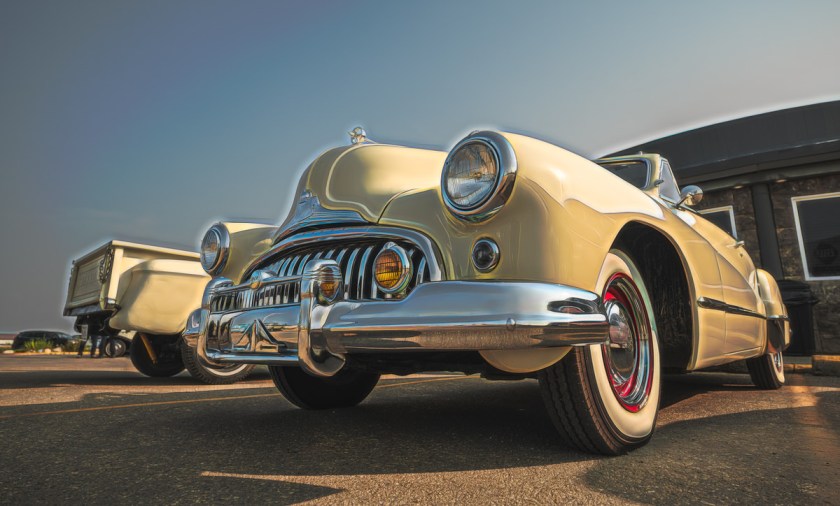
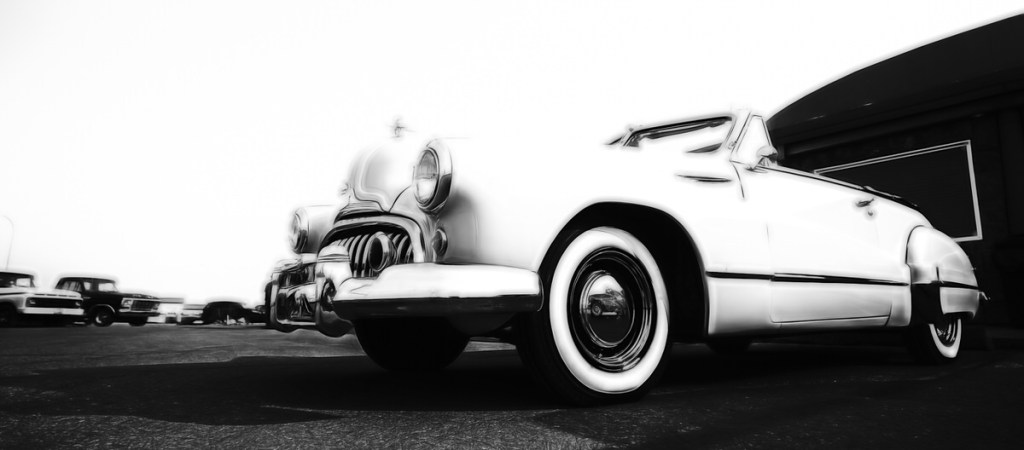
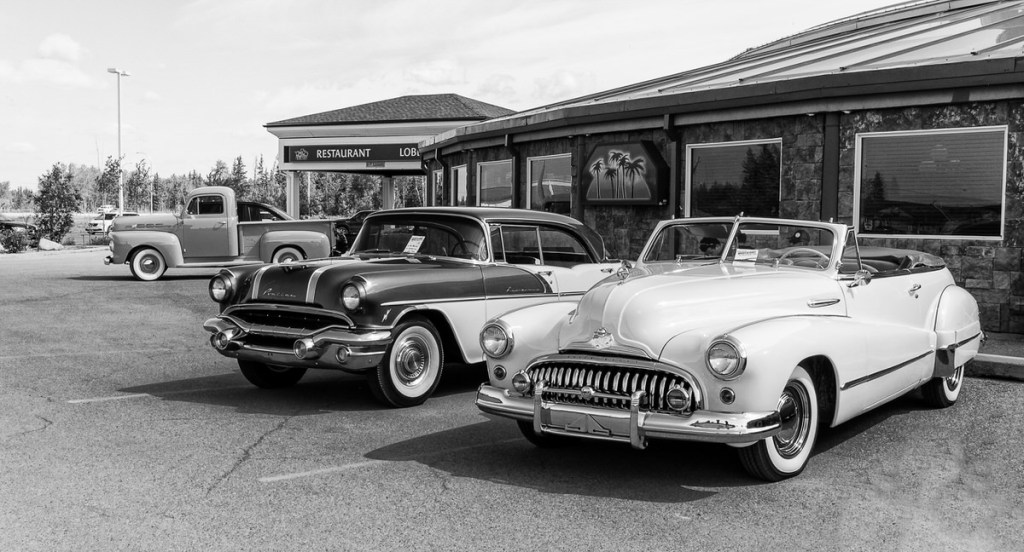
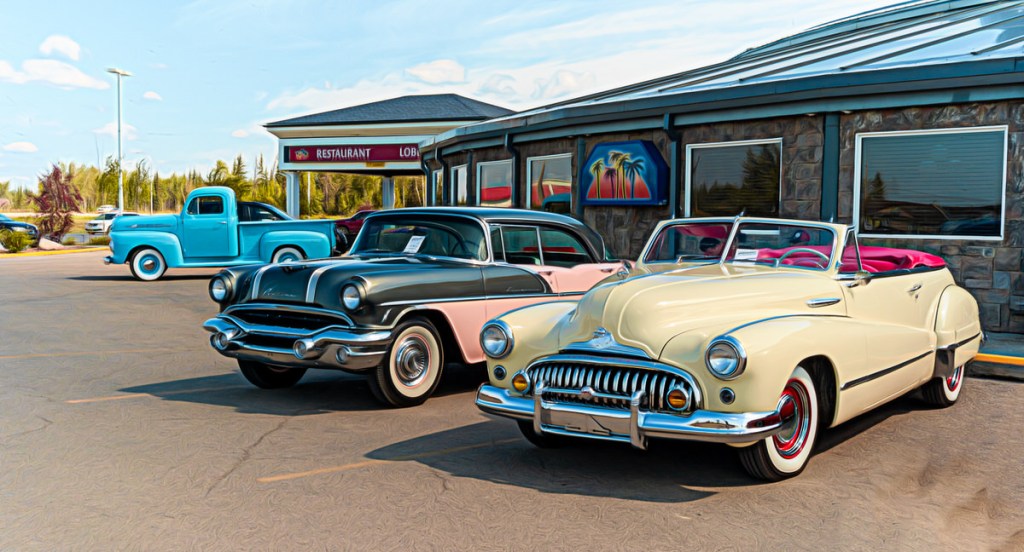
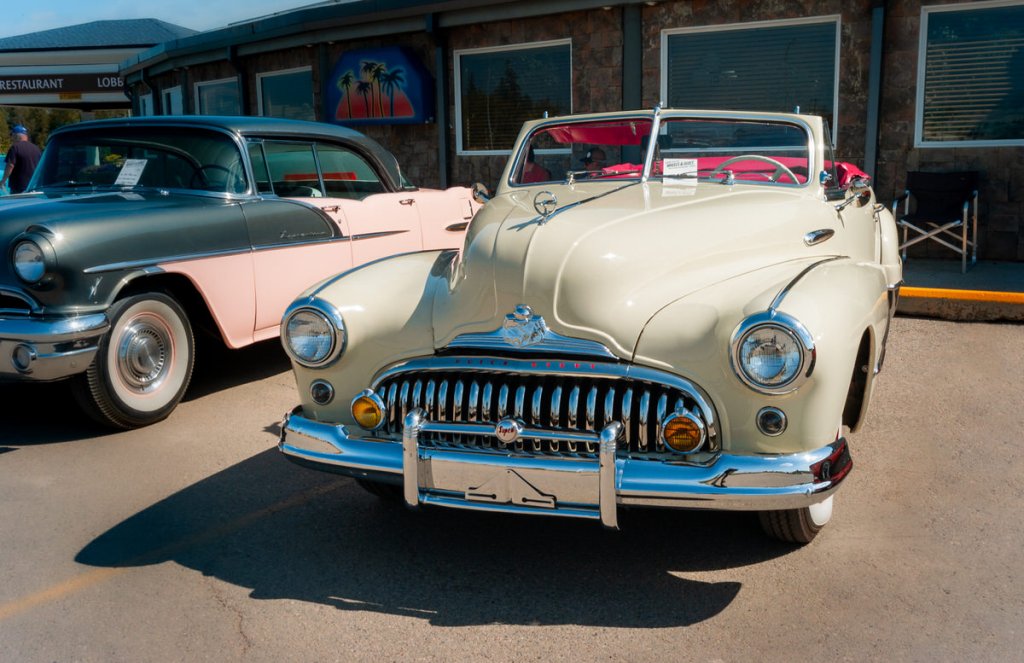
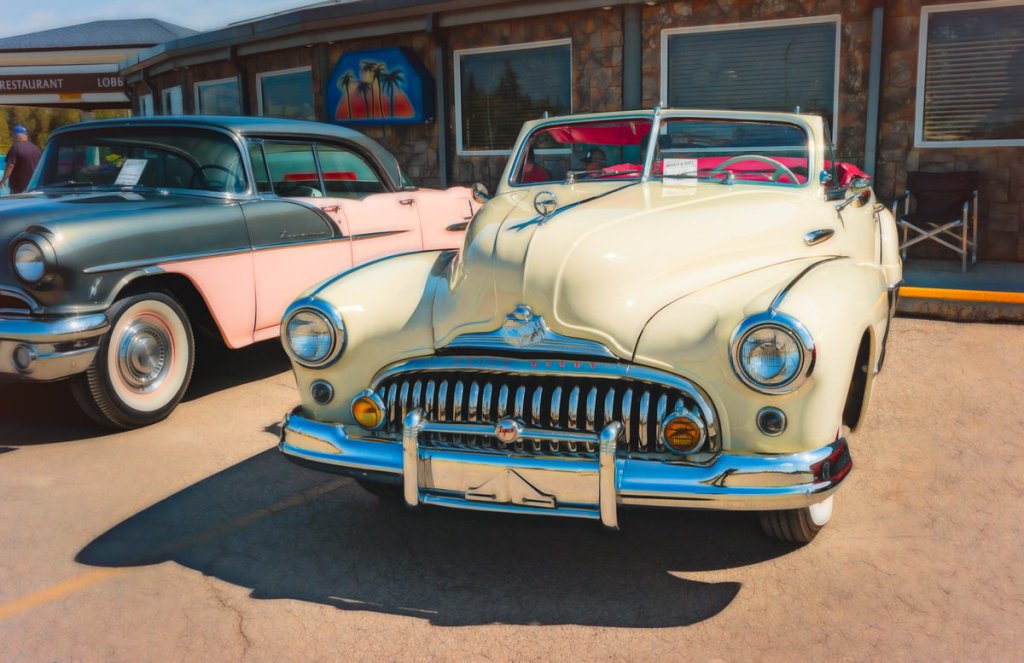
The black-and-white image presented here highlights some elements of visual composition—the Pontiac and the Buick Super Eight cluster in terms of visual weight in the image, and the black-and-white gradient of tone reveals shape, reflection, and vehicle lines (and an era of automobile design). A sense of depth is there as the eye moves from the Buick, past the Pontiac, to the Mercury truck and the hotel’s entryway. While the image was shot and edited primarily in colour, using Silver Efex from the NiK Collection provided an extraordinary, eye-captivating, black-and-white image – an image captured yesterday, in the summer of 2024, that, in terms of variety and proximity among vehicles, black-and-white toning, visual weight, and proportion, could easily have been an image captured in black-and-white during the fifties when these vehicles were first manufactured. In that sense, the image becomes nostalgic. It relates to a time preceding me … just. Other colour images are presented for reference.
Listening to: Bruce Springsteen’s ‘Open All Night,’ ‘Highway Patrolman,’ from the ‘Nebraska’ Album, JD McPherson’s ‘Let the Good Times Roll,’ and most of Bruce Springsteen’s ‘Tunnel of Love’ album, starting with ‘Walk Like a Man.’
Quotes to Consider – Re: Photography …
‘Date your cameras, marry your lenses.’ This quote is new to me, yet highlights a key idea for photographers – that investing in glass (good lenses) is essential while the cameras used over time will change.
‘Innovation comes from people who take joy in their work (W. Edwards Deming).’ The quote was offered in a YouTube video offered by ‘Three Blind Men and An Elephant’ in their video, ‘Leica D-Lux 8 Defies Expectations, Including My Own, (2 July 2024)’ to recognize that Leica, as a company already producing stellar cameras, is one whose employees enjoy innovation and improvement that can be made to their cameras and lenses. On the Adizes’ Curve, Leica has embraced a key dynamic that allows them to remain in the ‘prime’ of organizational/corporate lifecycles.
A decade ago, we brought Dad back to Edmonton, Alberta, from his retirement in Qualicum Beach, British Columbia, and found him a venue for assisted care/living close to family. Alzheimer’s Disease had its hold on him, and my brothers and I witnessed the decline of Dad’s physical and cognitive abilities through to end-of-life. Managing short-term memory day-to-day grew difficult for him. Long-term memory, though, found him a resource for family histories. Playing the piano had always been a source of joy for Dad. At the piano, in these later years, he could find his way to the music of his youth and that which he enjoyed on his 1964 Heintzman piano through our family years. In Edmonton, the expressive side of Dad’s language diminished, yet we could interact with him through the yes-and-no nods and shaking of his head to help him establish certainty in his communication. As school began in September 2016, we lost him. He’d lived eighty-three years.
We found time, my brothers and I, to disburse Mom and Dad’s belongings among the family – furniture, paintings, photos, China, and personal effects … items that, in their use, would draw out memories of Mom and Dad. One item that came to me was a 1956 Red Dial Leica If camera. While growing up at home, with all my father photographed, of his and mom’s travels abroad, of our family on vacation, of times with extended family and with his time downstairs in his darkroom, Dad had not told me about this camera and the role it played early on in his career.
As far as I knew, my father used Canon cameras, a Canon F-1 and Canon AE-1, during our school years. Before I was born, he made photographs using a Yashica Twin Lens Reflex camera, a medium format film camera, and a handheld light meter. As a research chemist, my father used the 1956 Red Dial Leica If camera to determine and maintain the quality of the product the company produced. The camera was gifted to him in retirement to remember the place and people he worked with when he transferred with his company to Toronto in the mid-eighties. One of my brothers had talked to Dad about the camera and shared the story of its use with me.
The 1956 Red Dial Leica If camera is a rangefinder, a version of the Leica IIIf series without a viewfinder or rangefinder incorporated into its body nor with the ability to work at slow speeds. It uses 35 mm film. The camera measures 5.35 inches by 1.54 inches by 2.60 inches. The body has black leatherette skin, aluminum with chrome plated brass top plate, base plate and knobs. It has two hot shoes to allow the use of an external viewfinder and rangefinder. Where the camera, as produced, was intended for use with an Elmar 50 mm f/3.5 lens, the lens on this camera is a post-war Russian Jupiter 50 mm f/2 lens (a lens not comparable with the Elmar) and not used for regular photography. The Leica If is thinner than today’s cameras. Its weight, though not weighty conveys gravitas – you have a serious piece of photographic equipment in your hands.
Microscope and Adapter – The red velvet Leica camera box contains a camera manual and a manual for an adapter, a MIKAS Micro Attachment for the Leica. With the adapter, the camera can be attached to a microscope directly. The Micro Attachment adapter attaches to the camera’s lens mount and to the microscope. It provides an eye-piece/viewfinder midway along the adapter at an angle perpendicular to the microscope’s eyepiece tube for establishing focus. Making exposures involves calculating settings, trial and error and managing the microscope’s light source. The image produced is called a ‘photomicrograph.’ Placing the camera’s production year into Dad’s career timeline, he would likely have been working in Edmonton, and documents for the camera indicate it being sold in 1957-58.
Looking back to who my father was, I can readily associate a Leica camera with him – a Canadian student from the Maritimes who, at the age of 24, had earned a Ph.D. from a London university in the United Kingdom, a pioneer in organic chemistry on the world stage. He was good at what he did. Leica was quality. So was Dad.
Leica Cameras & The Candid Frame
My first significant consideration of Leica cameras occurred listening to a 5 October 2014 podcast, ‘The Candid Frame – with Ibarionex Perello,’ in which Ralph Gibson was interviewed (The Candid Frame #252 – Ralph Gibson). Dorothea Lange and points of departure were considered. A book Gibson had worked on called ‘The Somnambulist’ was discussed. Gibson discussed a kind of visual literacy that involves not only the content of an image but the visual narrative of the image juxtaposed with other images and in terms of an image among images in sequence. In other talks, Gibson would discuss the proportion of the page in which an image rests as influencing and shaping its visual narrative. Gibson shot with Leica film cameras. In his early post-Navy years, Gibson sometimes pawned one or two of his Leicas to make ends meet. Gibson’s later presentations would consider photography an act of perception, a matter of being present in the situation and to what is photographed. In a broader sense, photography for Gibson is a mindfulness or meditative practice. The range of understanding Gibson brings to photography is extraordinary and captivates – you recognize ‘this is what photography is about.’ Gibson remains a photographer who uses Leica cameras.
“Photography is a way of shouting, of freeing oneself, not of proving or asserting one’s own originality. It’s a way of Life (Henri Cartier-Bresson).”
Gratitude – I am indebted to Ibarionex Perello and his podcast, ‘The Candid Frame,’ for the over eight hundred interviews he has conducted with photographers and their take on what photography is about. Listening to these podcasts while cycling, walking, and driving has been part of my development as a photographer.
10,000 Hours & Photography
With the extremes of cold northern Alberta winters, my exercise game plan involved getting on an inclined treadmill for an hour each morning before getting to school. I set up a basement treadmill area so that with a minimum of noise, I could gather the full-body exercise of walking on the treadmill while watching television and listening to its audio feed through earbuds or headphones. All this occurred in the wee early morning hours while the household slept.
“Dreams without movement are delusions, escapes, kid’s play. You have to put your feet into your dreams if they’re ever going to be reality. The dreamers we know and love today are the ones who worked the hardest (Paul Newman/Interview with James Grissom/1993/Photograph by CW Braun).”
Considering the ‘ten-thousand-hour’ rule suggested by Malcolm Gladwell, that ten-thousand hours of appropriately guided practice would allow the learner to achieve a level of proficiency that would rival that of a professional, I directed my treadmill television watching toward photography. I explored what YouTube offered. I found photographers who used YouTube to share the immediacy of their photography experiences and who used YouTube to generate viewer interest in the photography workshops they led. Adam Gibbs (Quiet Light Photography), Gavin Hardcastle (Fototripper), Nigel Danson, Sean Tucker, and Thomas Heaton became mentor photographers with whom I began my ten-thousand hours of guided photography practice.
“Habit and imitation – there is nothing more perennial in us than these two. They are the source of all working, and all apprenticeship, of all practice and all learning, in this world (Thomas Carlyle).”
The ‘just-like-me’ impact of these videos was surprising. Within a landscape photo shoot, the Lowepro camera bag on the ground that Thomas Heaton was opening up was one I was using. The Canon 5D Mk III camera he put on a tripod was one I used. His Canon 70-200 mm, f/2.8 lens was a lens I used. In weekly videos, Thomas talked through image-making as he made images. Watching the videos, I encountered a photographer who was personable, fallible and a photographer keenly interested in his craft and landscapes around the world. Travel, hiking, camping, exploring various landscapes, image capture, image editing and image printing were the mainstays of his videos. I began to see what was possible in landscape photography and was developing an understanding of choices that can be made when making photographs. The breadth of what photography can achieve became more doable and within reach.
“Apprenticeship is all about being tutored by those who have trod the path we desire to tread (Vincent Okay Nwachukwu).”
The images of a New Zealand photographer attracted my attention. His photography and work came across as a YouTube channel recommendation. Inspired by Thomas Heaton’s vlogging, Paul C. Smith shared videos that explored New Zealand with a camera, exposing viewers to New Zealand’s culture, people, and landscape. While photographing much of New Zealand with Olympus Digital cameras, one being an Olympus EM-D E-M5 II that I also use, Paul also photographs New Zealand with Leica cameras – an M6, M8 and M9. Much of his photography is done with the M8, and the images produced contain a quality reminiscent of Life Magazine images from the 1950s and 1960s – a quality resulting from the camera’s APS-H 10.3-megapixel Kodak CCD image sensor in combination with the colour red being diffracted differently through Leica lenses (as compared to other non-Leica lenses). An infrared UV filter can be used with Leica lenses to render a more natural colour. Paul does not always use the infrared filter, though. Paul speaks of the ‘buttery’ feel of images captured with Leica lenses. You can see this in his photography.
Here are some examples of M8 images I have made – they are from Southern Alberta, Canada.
Paul C. Smith is a self-taught photographer who has a great sense of composition, colour, and light. He believes that a photograph is the result of seeing context, proportion, balance, and placement. To enhance colour, textures, tone, and mood in his pictures, he chooses his Leica M8 camera, which gives his photos a stunning, filmic look. For black-and-white images, he uses his Leica M6 film camera as it presents tone and mood differently. While he uses his Leica M9 camera, it does not get as much use as the M8. ‘Heart’ is another essential ingredient that produces treasure in his images. When someone takes in his photos, they become privy to his response to the subject and scene, and they can consider the beauty and moment captured in his photos. For Paul, a photograph, if done well, is ‘a stolen moment.’
“A good photograph is one that communicates a fact, touches the heart and leaves the viewer a changed person for having seen it. It is, in a word, effective (Irving Penn).”
“Beauty does not indeed lie in things, but in the feeling that we give to them (Carl Jung).”
Leica M8
In the summer of 2018, I visited The Camera Store in Calgary to check out new and old cameras before returning home. While there, I noticed two used Leica M8 camera bodies on consignment. I was intrigued by the possibility of trying out the Leica M8 to see if it could help me improve my photography skills and compare my results with those of a fellow photographer who used the same camera. However, the essential question was whether I could make the Leica M8 work for me and produce the photos I wanted. I decided not to buy the camera as I was unprepared to make such a purchase and needed to rationalize such spending. It was a year later when I purchased the remaining Leica M8 with a Leica Summarit 35 mm lens. I learned to operate the camera by taking photos during the drive home. Once I got home, I ordered a battery charger from the Leica store in Miami, Florida and a few years later a new battery from B&H Photo. I also updated the firmware for the Leica M8. Later, I would add a Zeiss 28mm 2.8 ZM Biogon lens and a fifty-year-old Ernst Leitz Wetzlar Elmar 90 mm lens.
“Life shrinks or expands in proportion to one’s courage (Anais Nin).”
A season of learning began, making photos whenever possible with the M8. The camera helps slow down image-making. I work in aperture priority mode and select an f/stop based on my intention for the photo. Images are composed within the viewfinder frame lines and then the rangefinder focus patch must be aligned to the image within the viewfinder to achieve focus. Once aligned, pressing the shutter button captures the image. This process promotes consideration of composition, lighting, and positioning with respect to the subject. Each element adds to the creation of a well-thought-out image. The resulting ten-megapixel photos are extraordinary.
Operational Fix – Leica M8
While old Leica M8 batteries can be charged, weak batteries can cause operational issues and issues writing images to an SD card. I thought my Leica M8 had died two years ago – the menu would not hold settings; photos, once taken, would not write to the SD card. My research on what I encountered took months, and finally surfaced a recommendation to replace older batteries with new ones as a solution. Because I enjoyed working with this camera, I gave it a go and purchased a new Leica Rechargeable Lithium-Ion Battery (Leica 14464) from B&H Photo. The new battery restored all camera functions and full camera use.
Picture, Story, Photographer
In October 2022, Paul C. Smith produced a video entitled, ‘Cameras Are My Clickbait.’ Responding to a viewer’s question about the cameras he used, Paul spoke about his early YouTube work and having produced videos that few people viewed. He began making videos highlighting photography, the photographer and the camera used. The cameras were older, used, high-end cameras. Gear talk tended toward the trial-and-error process of mastering the camera’s use to create a photograph. Such discussion concerned what impressed him about the picture produced on the other side of picture-making with the camera. Of the cameras used – Olympus, Leica, Hasselblad and others – the Leica M8 was his first choice.
Good photographers will affirm a core truth Paul draws attention to – “Photography is about the picture, the story behind the photo and the photographer. The equipment is not that important – a camera is a camera.” A Frames Magazine podcast with photographer Walid Azami presented a few weeks after Paul’s video (November 2022) echoes the matter of equivalency of gear and takes the discussion Paul offered a step further … ‘[You] either have a Sony, a Fuji, a Canon, a Nikon, or a Hasselblad and … it comes down to a couple of other brands too. That’s it. … [We] all … have the same gear … [What] makes you … stand out is [that] you have to have opinions.’ While Walid asserts that what separates one photographer from other photographers is your opinion, he would likely agree that ‘opinion,’ as he refers to it, comes down to the photographer’s way of seeing and that one’s ‘way of seeing,’ ‘one’s opinion’ is the embodiment of ‘style.’ This part of the photographer’s photo-making adds to the image’s narrative and the photograph produced.
Along Those 10,000 Hours
Ten-thousand hours of appropriate, guided practice seems longish to me now. One hour a day for one year yields a minute step forward to the ten thousand hours Malcolm Gladwell suggests in his book, ‘Outliers.’ In terms of photography, it is not only about being mentored by a photographer. The praxis part of photography must be dialed into the equation – the time in play with the camera in hand, solving problems and making photos. It is the getting out to photograph, taking time to consider intention, making many photographs, sitting down at the computer editing and working out the presentation of photos by way of the printer, photobook or a photoblog such as this. It’s also about encountering the good, bad and unintended consequences of making and presenting photos along the way. It is about learning to see and recognize where an image lies (often right in front of you) and recognizing opportunity. Sometimes it’s the photo waiting for you as you drive by, and you need to make an active choice: stop, turn around, go back, see the scene, walk the scene, and gather not just one photograph but several. In many ways, it is about mastering yourself so that you have the discipline to go back, see all that is there and take the next step in taking the photo. A photo mentor steps in as you choose along the way – you witness the work of others, you take a workshop, you read books that develop your understanding of photography (e.g., Susan Sontag – ‘On Photography), you listen to podcasts, you find your way to talking through photographs with other photographers, friends and family, and you encounter moments that surprise you when the understanding and doing of photography coalesce in pictures you produce. Your photography becomes about the images you make, the stories behind your photographs, and you as a photographer. I am a long way into my ten-thousand hours and perhaps closing in on meeting its threshold. But there will always be something more to consider, learn, and evolve into practice. Right?
“One doesn’t stop seeing. One doesn’t stop framing. It doesn’t turn off and on. It’s on all the time. (Annie Leibovitz).”
Listening to: Hollow Coves’ ‘Pictures,’ Roo Panes’ ‘Message to Myself,’ JD McPherson’s ‘Dimes for Nickels,’ The New Customs’ ‘Chasing Light,’ Liz Longley’s ‘Unraveling,’ John McCutcheon’s take on ‘Turn, Turn, Turn,’ Dougie Maclean’s ‘The Osprey,’ and Galen Huckins Glacier Quartet’s ‘The Kennicott.’
Photography is more an active endeavour than a passive one. You take a photo by placing yourself in front of your subject – you move in small ways aligning camera and lens to subject, and at other times, you move in terms of distances travelled, large and small, to photograph your subject. The word endeavour has work at its core, perhaps even … sustained work, linked to achieving a goal.
In 2009 – 2010, I stumbled upon the photo-a-day challenge, an active pursuit in which a would-be photographer can engage in photography and evolve skills needed to take, edit, and present photos. Over time, the photos created would become stepping stones from which one could look back and consider emerging questions about photography that one was ready to have answered when they had consolidated (put together and understood) the question to be asked. Add exposure to others’ photography, and questions would then be about how photographers brought together an image and their intention to present it in the way they had. Photography in a 365-day, photo-a-day pursuit would become step-by-step, emergent learning. As a favourite ‘Motivation to Move’ podcaster, Scott Smith puts it, all you’d need to do is ‘Stand up, take a step, and repeat … until you’ve reached the goal of your dreams.’
Investigating what others had to say about photo-a-day challenges, Woody Campbell surfaced as a photographer with an interesting tack. In Woody’s ‘1 Photo Every Day’ website, you’ll find that Woody has resolved to ‘… take one photograph every day for the rest of [his] life (www.woodycampbell.com)’ and that, at the time of writing, he has done so for thirteen years. He posts his images in a format of day number since he began photographing for this project – his post for Friday, 30 June 2023, while having a small statement descriptor, also notes the post as ‘Day 5006 of photograph every day for the rest of my life;’ in each post he also presents a look-back image – an image to recall and share.
What is there, though, is Woody’s commitment to photo-a-day image-making, and for the would-be photographer, in addition to Woody’s engaging and captivating photography, an arms-length camaraderie and inspiration in like-endeavour are to be found. Because he engages in this work, you are joining him in like-endeavour.
My trek through the photo-a-day project that this WordPress blog sprang from today finds me sifting through 1100+ edited images taken since 2021 that have not been posted, images that were destined for this ‘In My Back Pocket Photography’ blog. As a teacher now in summer, I am enjoying the post-race wind-down following a ten-month marathon with students, staff, and parents, a school year saturated with people, planning, teaching, and testing. However, through the school year, while I have continued to take photos on an almost daily basis, the matter of posting photos has many steps along its way and my posting stats disappoint grievously.
In this third week of July, I am surfacing to a less other-focused Life, something Frank McCourt refers to in his biography, ‘Teacher Man,’ as all that time off, abbreviated as ‘a.t.t.o.’. All that time off allows me to consider and return to personal pursuits and one of them is posting on this blog. At present, the situation gives me the opportunity to consider and present to you ‘points of departure’ as Dorothea Lange states it (via Ralph Gibson) – the common themes or projects I tend to photograph as I review images moving forward since 2021.
Current Points of Departure (2021 to present, Summer 2023)
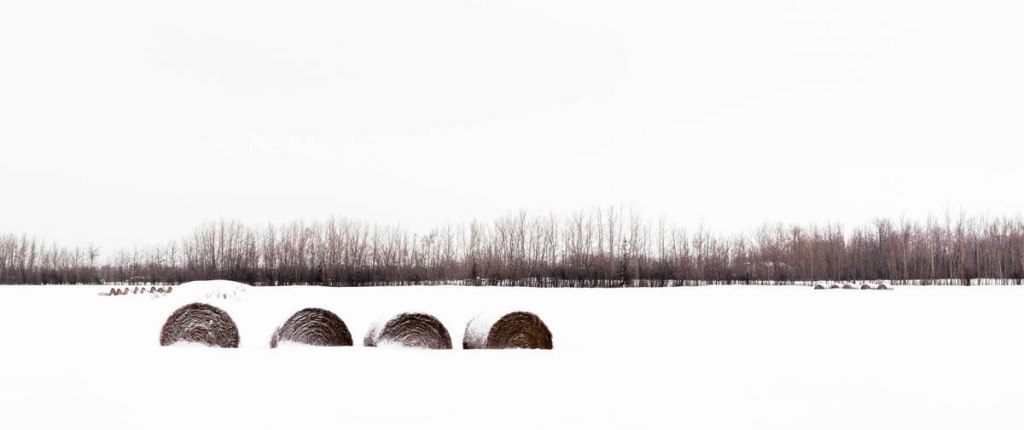
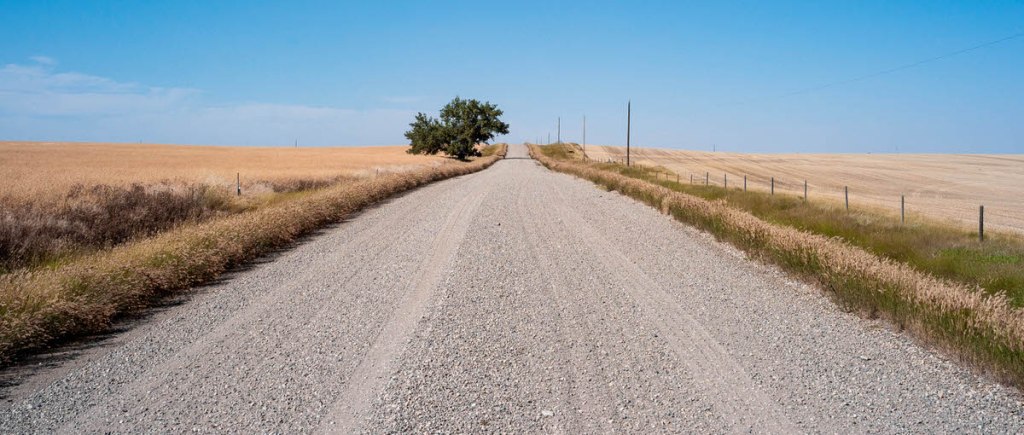
Along Northern Roads – Alberta
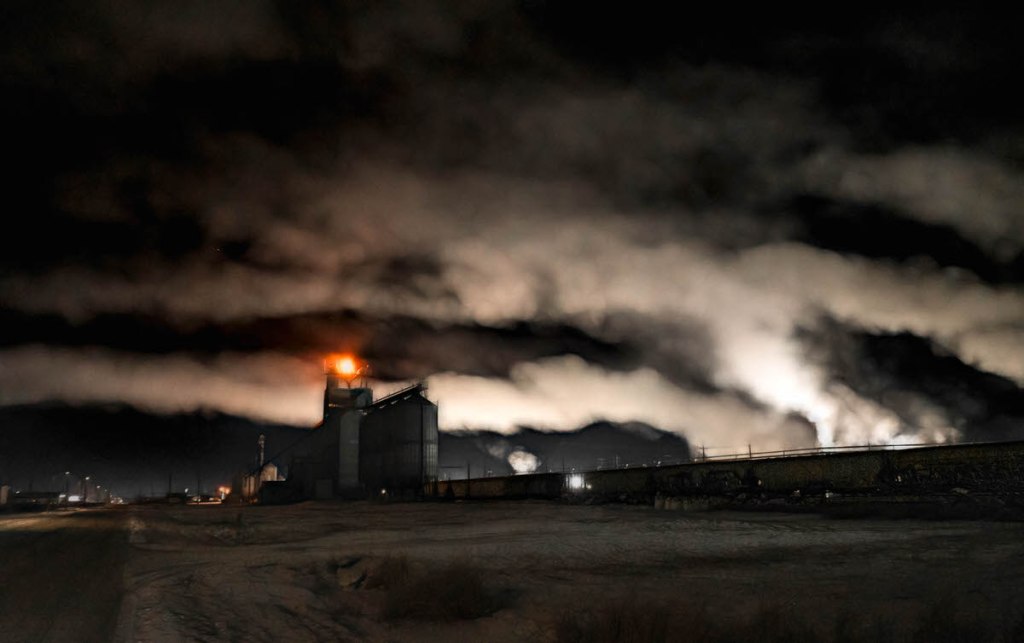
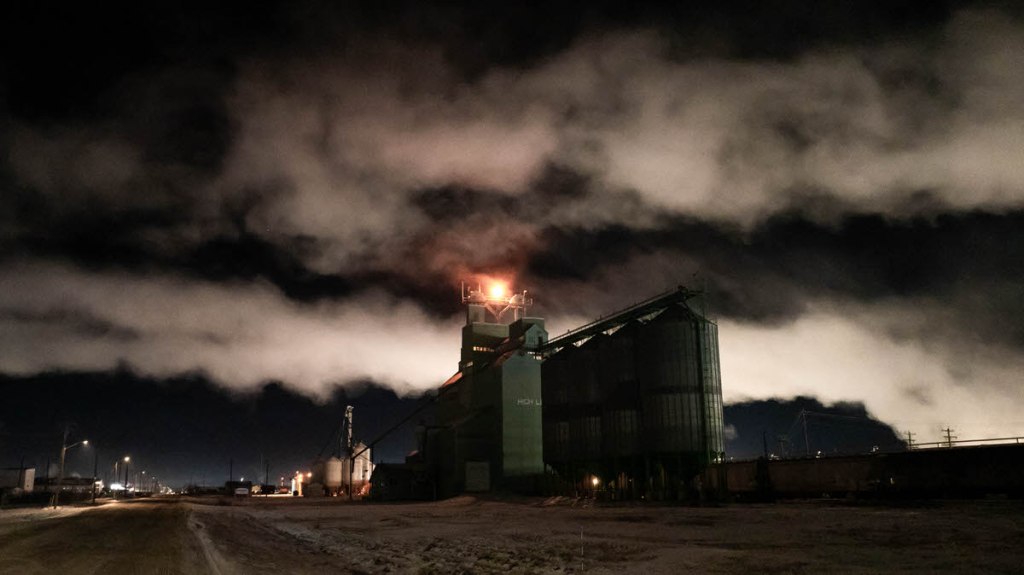
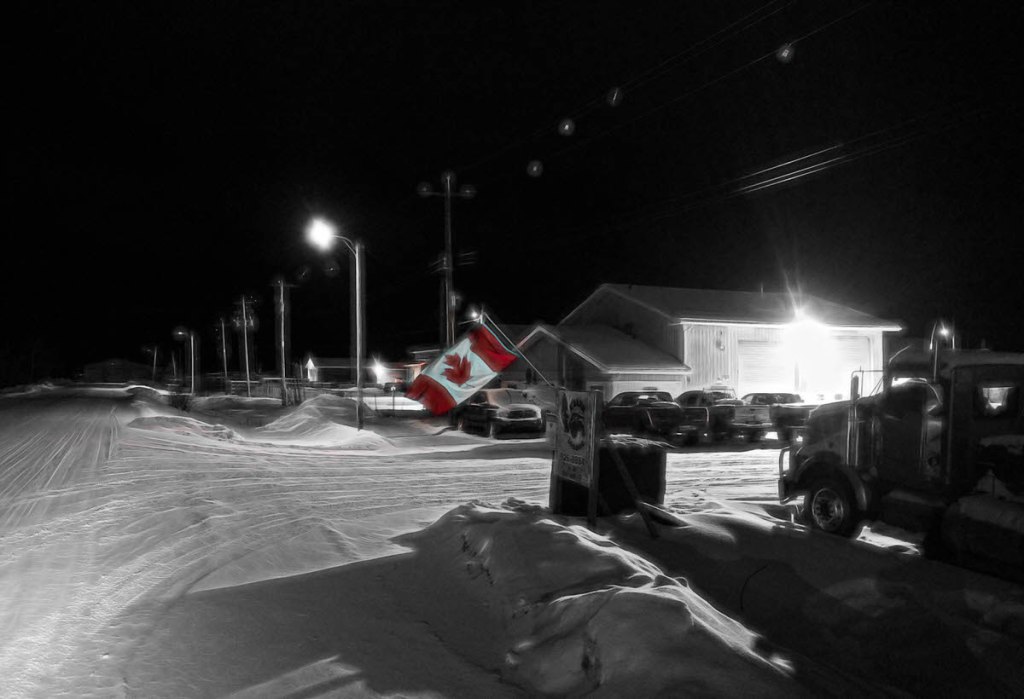
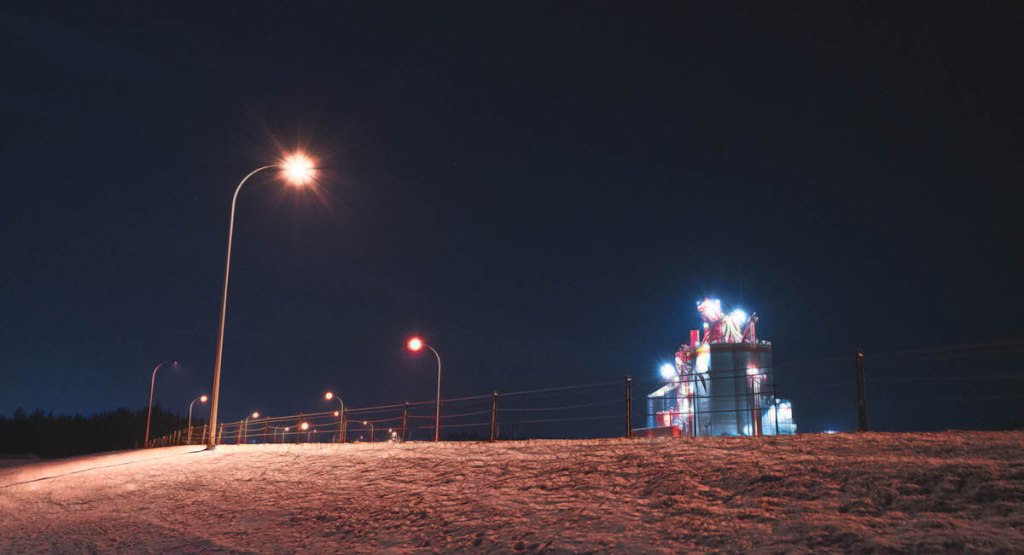
Winter Walks / Cycling in High Level, Alberta
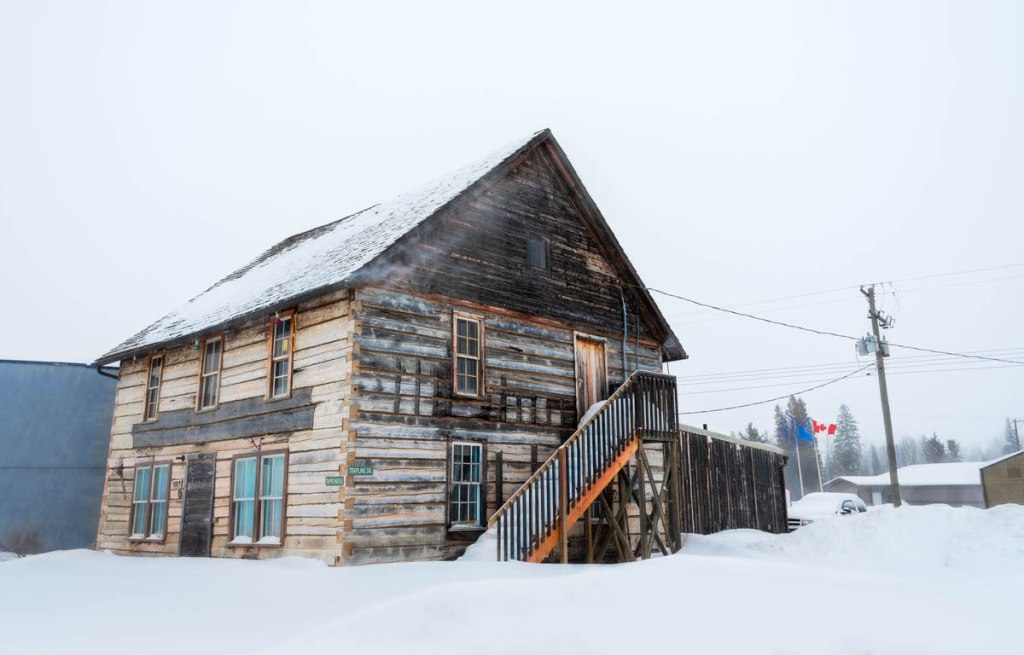
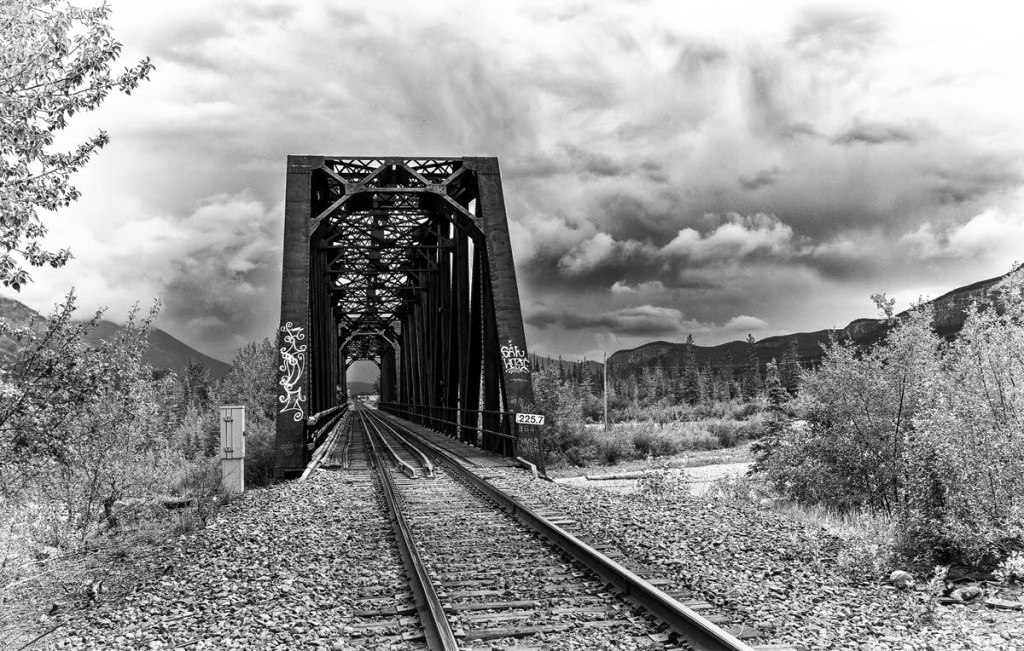
Dunvegan Historic Site and Dunvegan Bridge – Alberta
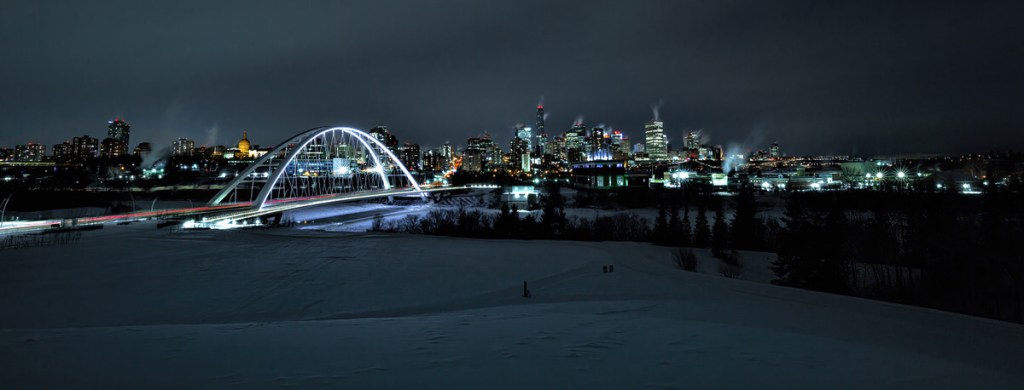
Edmonton, Alberta
Fort Vermilion, Alberta
Grain Elevators
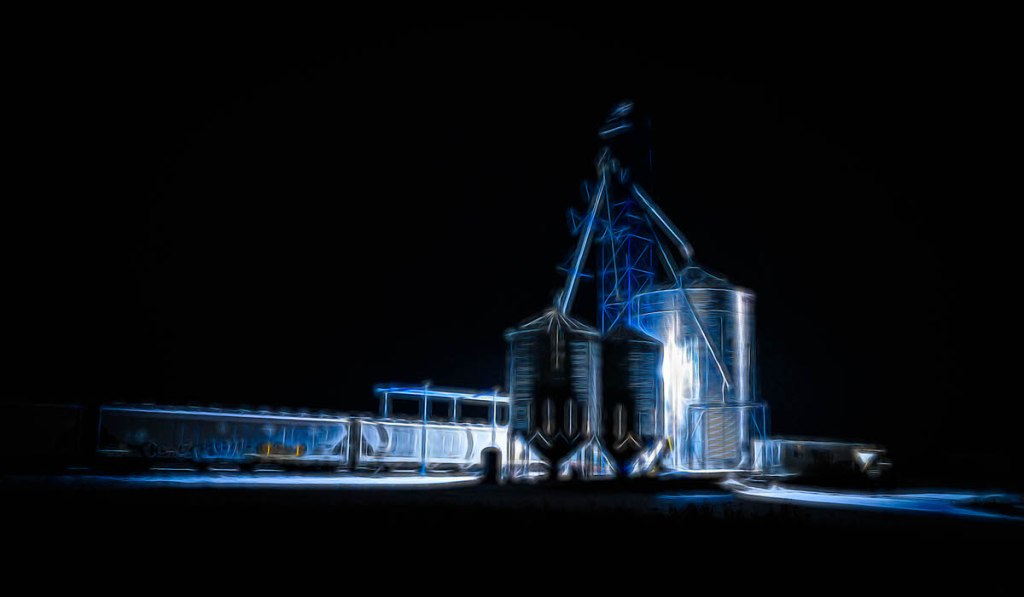
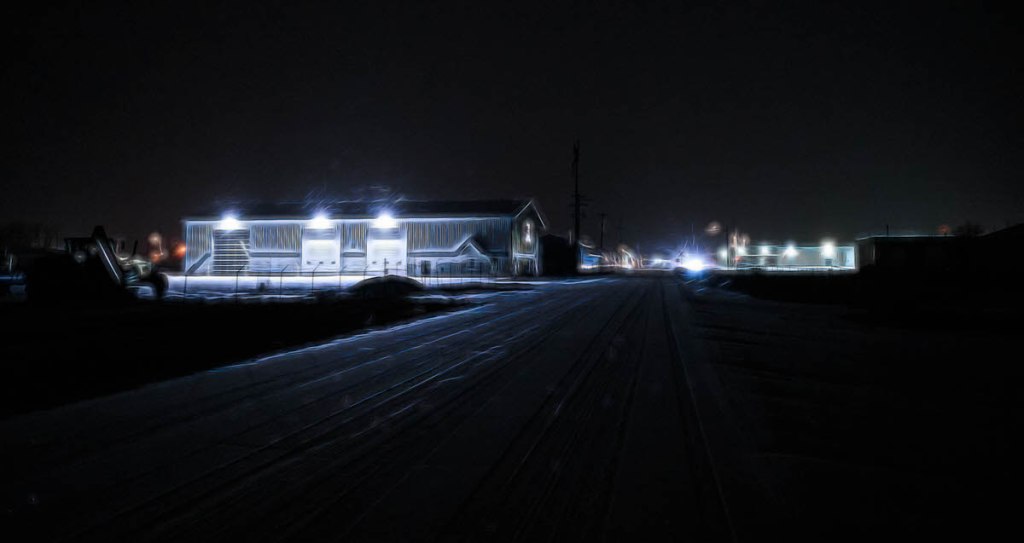
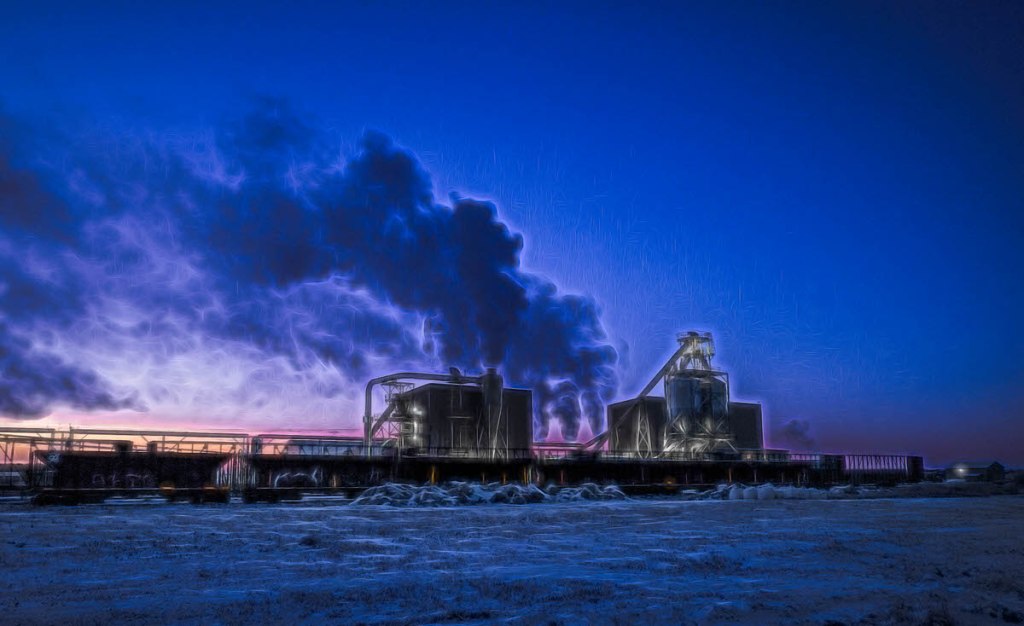
Industrial Area (Morning Rides – Winter and Summer) – High Level
Peace River Area, Alberta
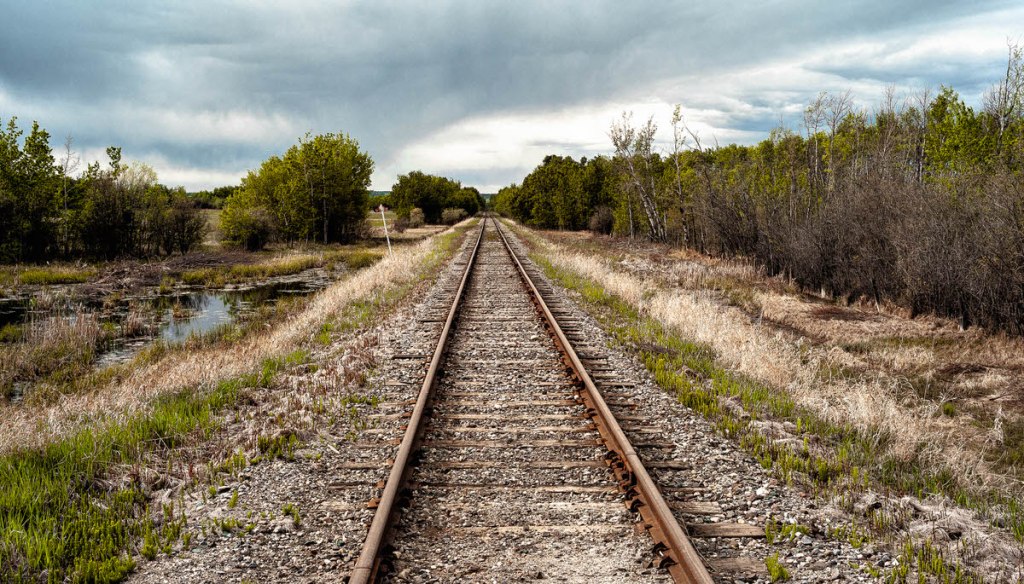
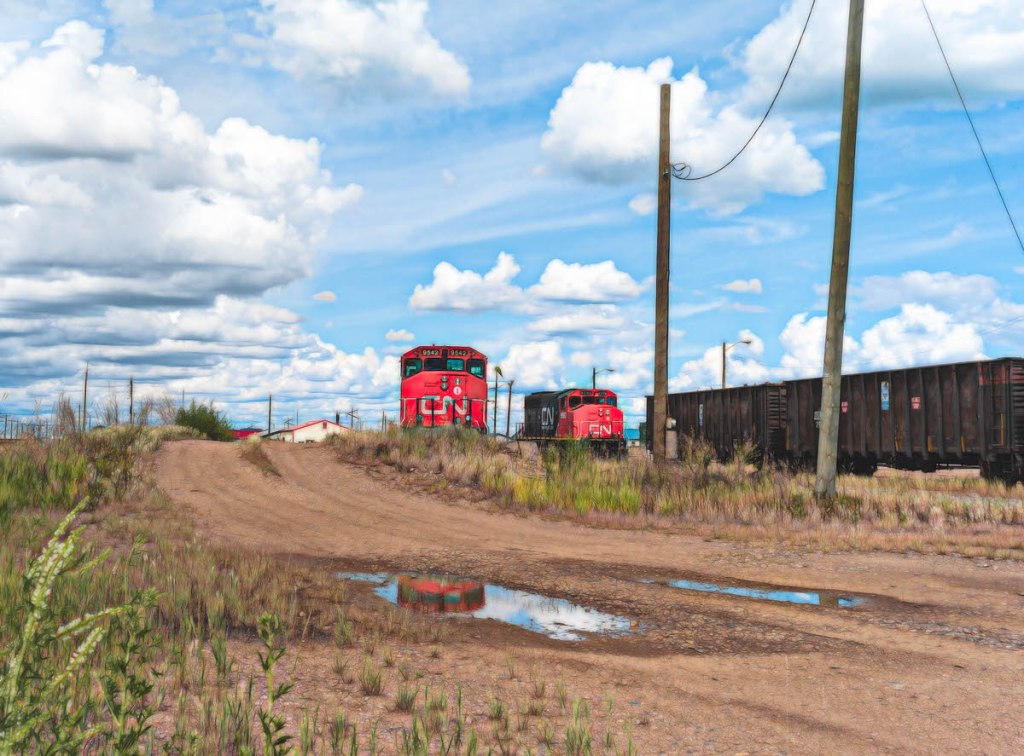
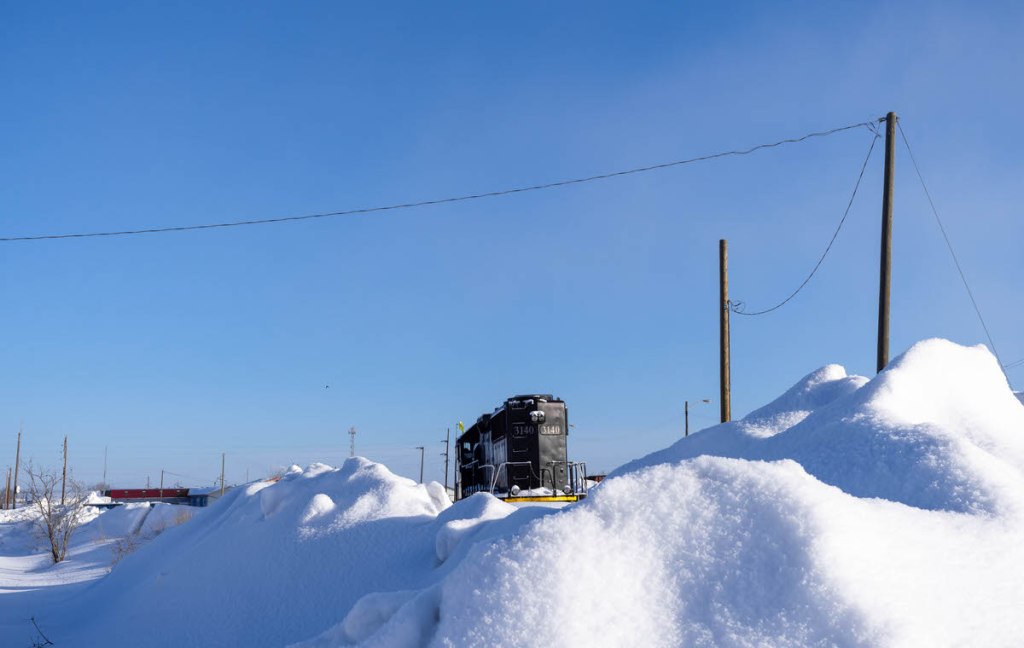
Trains
Quotes & Concepts to Consider & Inspire
Oubaitori – (1) ‘the idea that people, like flowers, bloom in their own time and in their individual ways (Victoria Ericksen);’ (2) ‘the meaning of oubaitori is that, instead of comparing ourselves to other people, we should be focusing on our own growth, and valuing what makes us special (https://vocab.chat/blog/japanese-oubaitori.html).’
“It is not the answer that enlightens, but the ‘question’ (Eugene Ionesco).”
‘Whatever you can do, or dream you can, begin it. Boldness has genius, magic and power in it (Johann Wolfgang von Goethe).’
‘You’ve got what it takes, but it will take everything you’ve got.’ – Anonymous
‘I have discovered in life that there are ways of getting almost anywhere you want to go, if you really want to go (Langston Hughes).’
Listening to: David Gray’s ‘Sail Away,’ Martyn Joseph’s ‘One Step Up,’ Over the Rhine’s ‘Who Will Guard the Door,’ Amanda Marshall’s ‘Believe in You,’ Van Morrison’s ‘Behind the Ritual,’ and Billy Joel’s ‘This is the Time.’
Rosanne Cash says about songwriting, “… Songs are there in the ether, and you just have to have your skills good enough to get them.” Like acapella singer Bobby McFerrin, Cash believes that as a songwriter, “You catch songs…. [and,] … you have to have your catcher’s mitt on…. Sometimes I’m afraid that if I don’t get it down, then somebody else will (Rosanne Cash, Time Traveler – On Being with Krista Tippett, 5 January 2012, https://onbeing.org/programs/rosanne-cash-time-traveler/ ).”
Photography is like that – about being present and ready for what you see, connecting with the moment, and ‘catching the image’ and its import as it confronts you.
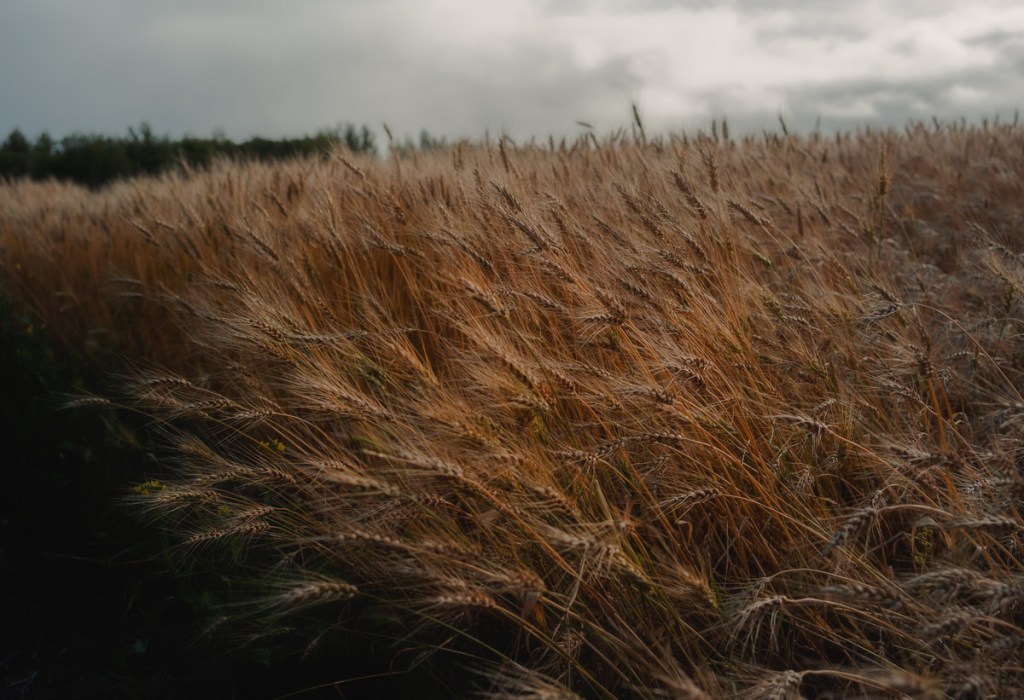
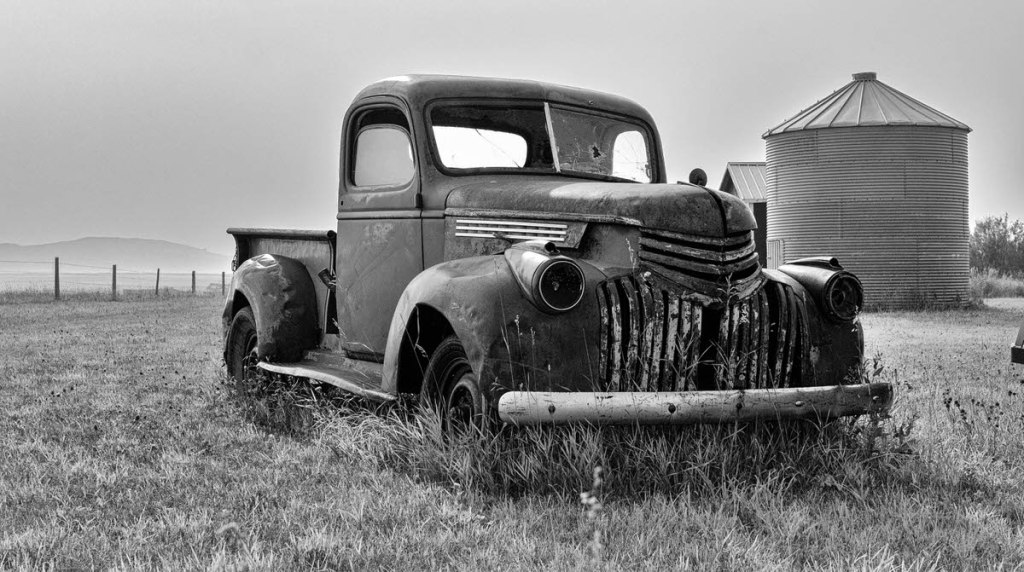
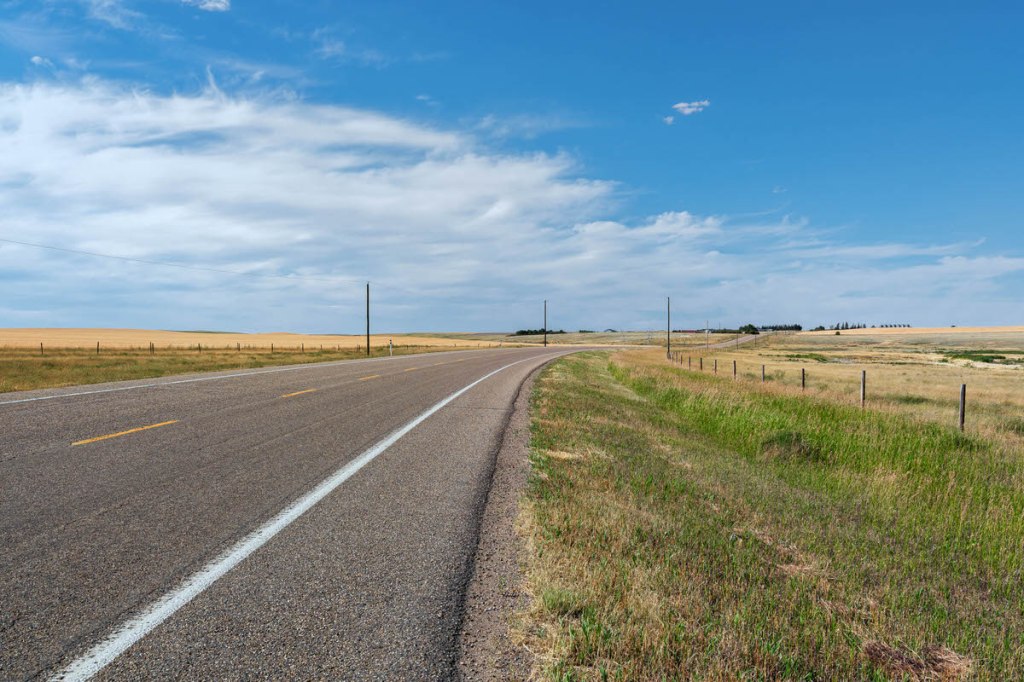
Wheat Kings and farmsteads served as points of departure. Stirling, Wrentham, Skiff, Foremost, Orion and Manyberries were place names in my travel – each had wooden grain elevators from the previous century used to stockpile grain for railway transportation. Some appeared to remain in use. Grey, weathering wood of still-standing derelict farm buildings clustered in disused prairie farmland with the rusting reds and browns of grain trucks – abandoned, yet holding memory to the past. General stores no longer in use faded in terms of colour and signage. I and my cameras went about image making.
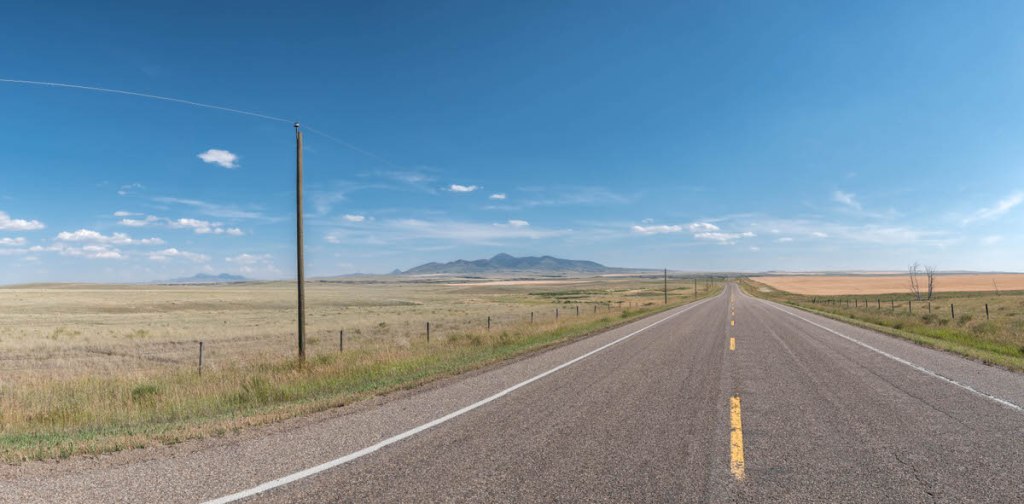
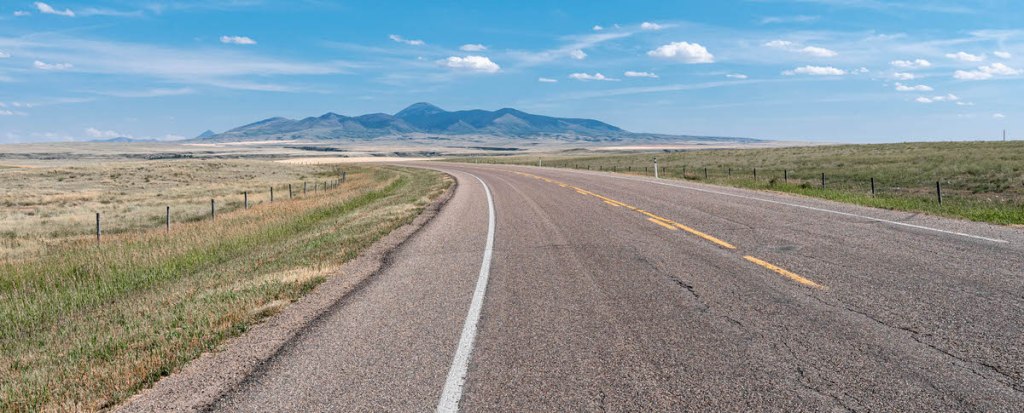
As I meandered, making exposures, travelling east and south, then west toward Milk River, two or three mountains loomed, growing more prominent in Alberta’s southernmost prairie, an unexpected juxtaposition – mountains within the prairie. I photographed them in stages as I travelled closer to them. While the mountains seemed to span the Canada – United States border, I was seeing the Sweetgrass Hills of Montana and evidence that volcanoes were a part of the prairie shared between Montana and Alberta. My mobile phone carrier began sending SMS messages advising of the need for a rate-plan change should I cross into the United States and need to use my phone. They were looking out for me. Good!
At this point in my summer, I was re-reading Thomas King’s novel, ‘Indians on Vacation,’ which has become one venue for Canadians to begin opening out Canada’s treaty history following the release of the National Truth and Reconciliation Commission report in 2015. Characters, Blackbird Mavrias (or ‘Bird’) and Mimi, are vacationing in Prague, in the Czech Republic.
In the interrogatory phrase they encounter with familiar cadence, ‘Where are you from?’ an equivalency of people among peoples, vacationers among vacationers, is drawn out. At play is Bird and Mimi’s nationality, which, while Canadian, shifts as they share it between Canadian (from Canada) and their indigenous first nation identification as Cherokee (Bird has Greek and Cherokee lineage) and Blackfoot (Mimi). ‘Where are you from?’ … is always a jumping-off point for being known and getting to know others.
Bird Mavrias is a writer and journalist looking toward retirement. For Mimi and Bird, considering Prague’s history, exploring it as a city, and its current events – all serve to jostle them, surfacing memories. Their conversations move them through their past and occasionally surface facts from the Truth and Reconciliation Commission’s final report – moments of poignancy, disappointment and numbing revulsion concerning the unimaginable. Somehow, what they remember almost becomes a Viktor Frankl choice point to move forward, to move on.
Bird recalls a story he covered regarding an encampment at ‘Writing-On-Stone’ in southern Alberta. Within the park, on the southern side of the Milk River, an indigenous woman sought to gather and practice traditional ways with those of like-mind, ways of their people(s) on their people’s land. The story recognizes a need to find and return to traditional ways. The story looks at the breaking down of the camp and moving trespassers from the site. Bird’s recollection recalls the impotence of the situation – what it did not achieve and its disappointment.
In my drive, moving south and east toward Aden from Milk River and then toward the Sweetgrass Hills of Montana, I came upon this site at ‘Writing-on-Stone Provincial Park.’ In Blackfoot, this site is referred to as Áísínaiʼpi, a word meaning ‘it is pictured’ or ‘it is written.’ The conceptualization of photography as being ‘writing with light’ and exposure of what the camera witnesses seem close to indigenous intention here, and the word Áísínaiʼpi seems as though it should be part of a photographer’s vocabulary. In both cases, the terminology refers to memory being held to be witnessed, considered and understood.
Gauging what remained of my day in terms of kilometres, gas and final meal, I began my return drive to Lethbridge and my hotel quite late. Tired at the end of my drive, I had accomplished a lot of what I intended – a day open for discovery, thought and camera work. I found Wheat Kings. I encountered the big sky of southern Alberta’s prairie landscape. I had scouted and became acquainted with an area of Alberta I was interested in and will return to.
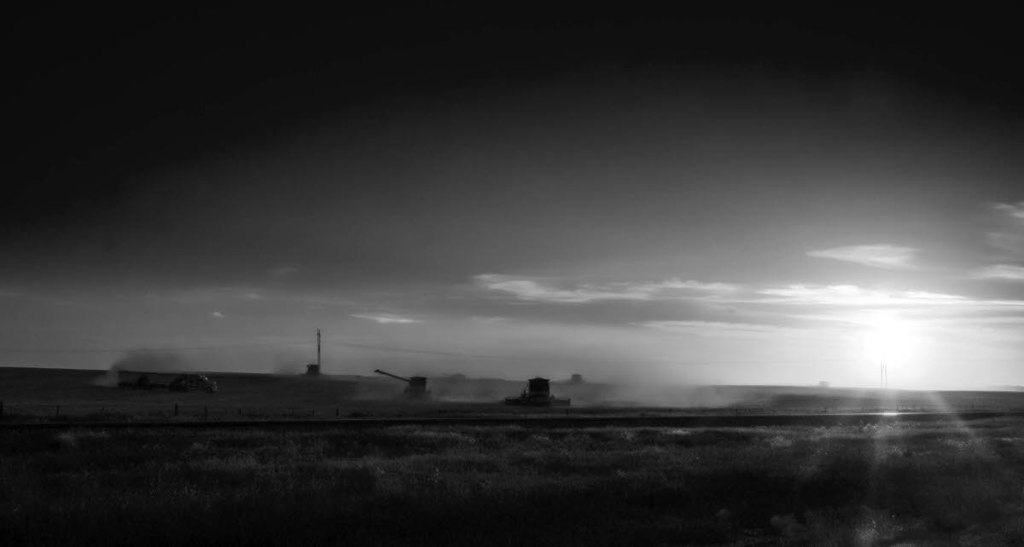
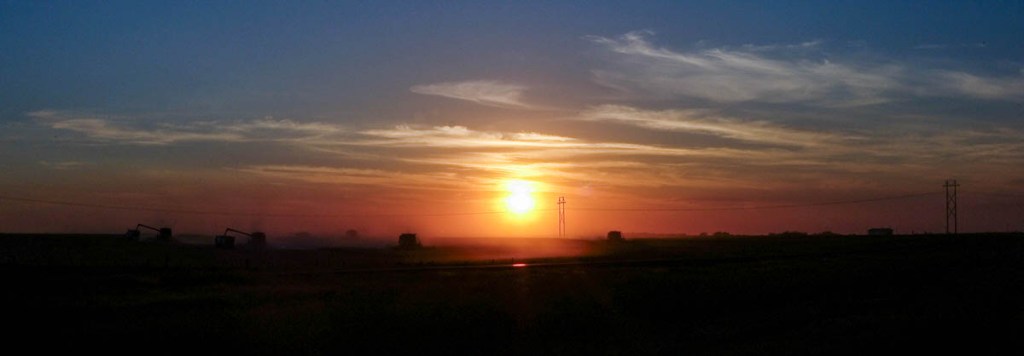
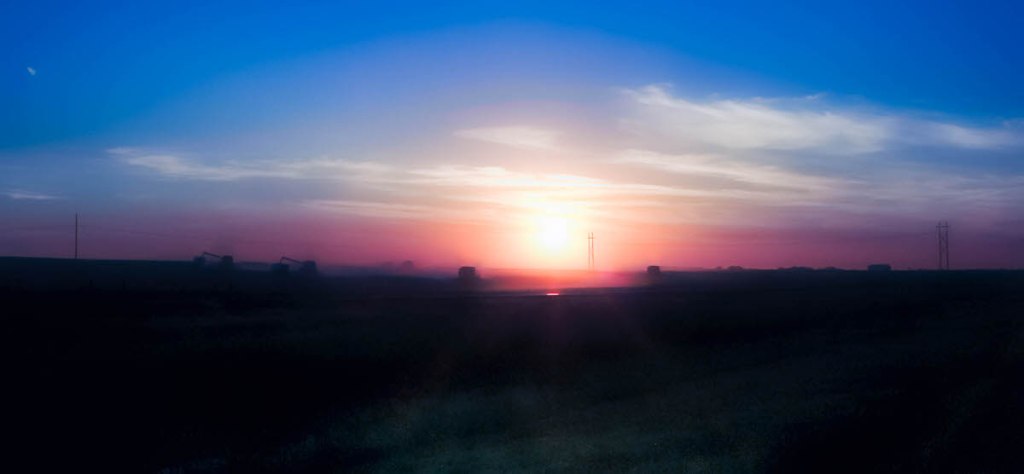
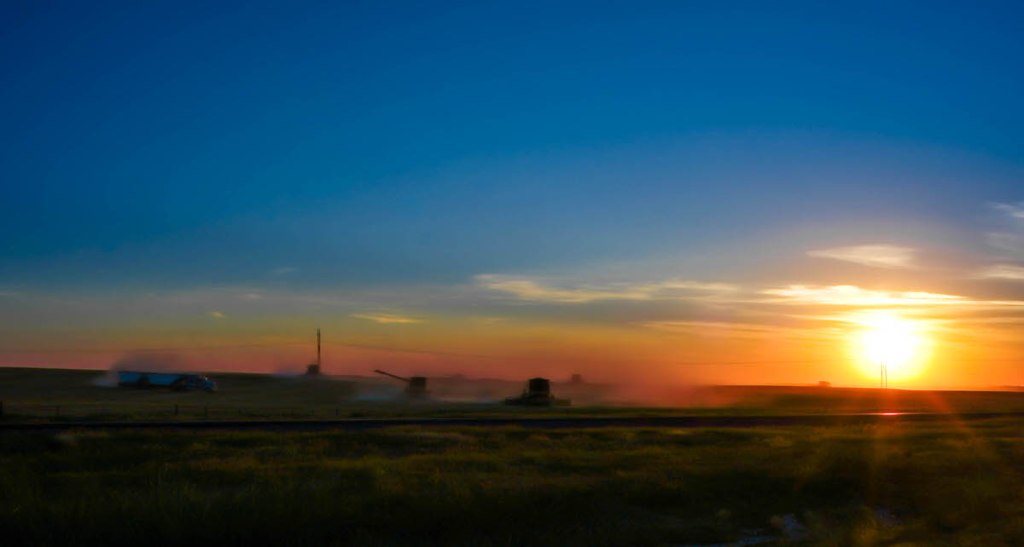
Harvest, though, caught me by surprise. Somewhere between 10:30 – 11:00 p.m. I drove past this late-night harvest scene below. The sight was extraordinary for me because the grain harvest in northern Alberta occurs from late August to mid-September. Here, it was an extraordinary sight … to see as many as five combines gathering grain from the prairie immensity. These mid-August images contain silhouettes of combines and grain haulers outlined in black against a colourful backdrop of setting sun, sky and prairie. People are at work, doing this day’s work as daylight diminishes.
Catcher’s Mitt & Day’s End
My day did not end there. Returning late to Lethbridge meant supper would be drive-through or order-in, and I hadn’t eaten for hours. Near midnight, a McDonald’s provided two quarter-pounders with cheese and a pop. A young, homeless teen hid in the shadows of the building beyond the sight of the cashier. As I moved from the drive-through, the teen presented cardboard on which was written, ‘Needing food. Can you help?’ I gave her twenty dollars, then left, returning to my hotel.
In all this, consideration of Thomas King’s novel has continued to intrigue me in its detail, humour, happenings, intention, and reference to areas of this country I know. It seems to hold the potential to prompt moving toward a good understanding of historical, colonial or treaty complexities for treaty people on both sides of each treaty. The narrative leaves off with vacationers returning from a vacation to the stability and familiarity routine offers but with questions and urgings about what’s next. Often returning from vacation, though, we are empowered (and perhaps have gained perspective enough) to consider ‘the what’ of what’s next. For Bird and Mimi, Tofino is on the table.
A year later, the photographs gathered continue to serve as a point of departure, not just in terms of images or photographic projects, but as a jumping-off point for thought and perspective gathered from such thought. A catcher’s mitt was at play within the day in song, thought and photos.
Quote to Consider / Inspire: “I like it when one is not certain about what one sees. When we do not know why the photographer has taken a picture and when we do not know why we are looking at it, all of a sudden, we discover something that we start seeing. I like this confusion.” – Saul Leiter.
Listening to: Courtney Marie Andrews’ ‘I’ll be Thinking On You,’ Ben Harper’s ‘Yard Sale,’ Terra Lighfoot’s ‘One High Note,’ GA-20’s ‘Dry Run,’ Iris Dement’s ‘The Sacred Now,’ Alberta Hunter’s ‘I’ve Got a Mind to Ramble,’ and Kue Varo’s ‘Yip Yip.’
The weather was that of early spring – a day grey and overcast, later filling with snow flurries, then shifting to bright sunlight among clouds as I drove south from Peace River, Alberta. I was taking time … to look around, to explore, to learn more about a region I drive through regularly but through decades had not yet investigated.
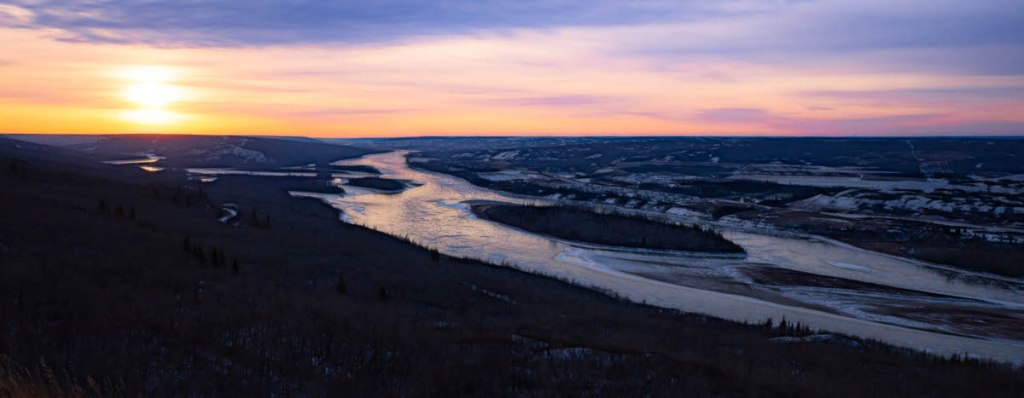
In December 2022, interested in the Peace River’s river valley’s terrain, I asked a farmer about possible vantage points for viewing the river. The river, from one kilometre to a kilometre and a half vast as it moves through an area I teach in, has intrigued me since my wife and I flew into a fly-in teaching community three decades ago. Two locations were recommended to look over the town of Peace River and along the river valley. The Twelve Foot Davis gravesite was high above the town on its east side. The second recommendation caught my attention – the Sagitowa Friendship lookout point had been described as being along the road to Judah, the hamlet of Judah, perhaps forty minutes south and west of Peace River along a route that follows the southern river bank. This lookout point allows the eye to travel west and south following the river; it allows for a look down and north to the town of Peace River’s south end, up to its north end; it permits looking across the river to the Shaftesbury Estates, the West Peace area, Saddleback Ridge and the Pines.
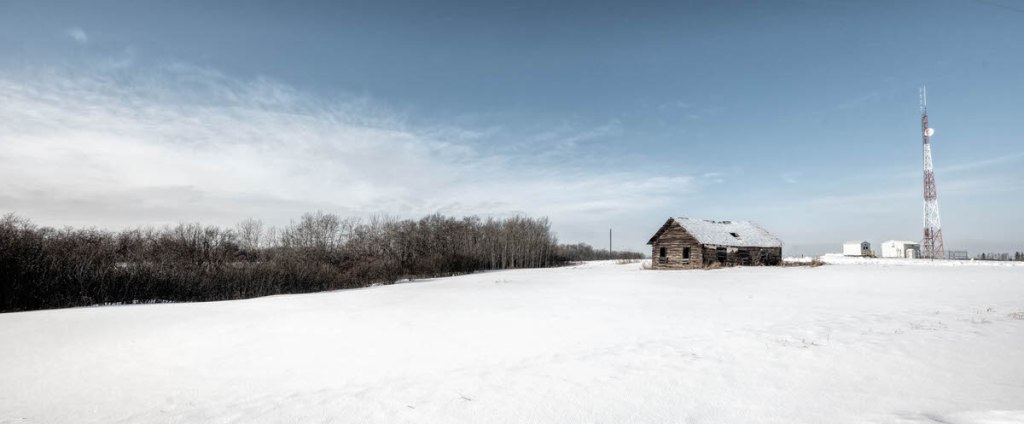
I was at the Sagitowa lookout working with my camera. After several shots, it began to snow. I packed up and began a drive toward Judah. In the early afternoon, the sun came out, somewhat harsh in terms of the contrast of light and shadows. Within the hamlet of Judah, I found treasure – this homestead.
Quotes to Inspire – two quotes have found me this week; both have value for a photographer. First, ‘We don’t see things as they are. We see them as we are (Anais Nin).’ The second is one that seems related, ‘People only see what they are prepared to see (Ralph Waldo Emerson).’ This quote highlights a photographer’s readiness to see a given subject and perhaps maturation in terms of seeing that subject. It attaches to a follow-up statement, ‘If you look for what is good and what you can be grateful for, you will find it everywhere.’ So, perhaps Emerson’s quote is a nudge out-of-context but still has import as we use it.
Listening to: Motorhead’s version of David Bowie’s ‘Heroes,’ Fred Eaglesmith’s ‘Can’t Dance,’ Pickin’ On U2 – A Bluegrass Tribute’s version of ‘One,’ and Bono’s ‘Surrender: 40 Songs, One Story’ audiobook reading.
On the final day of 2022, I drove from Lethbridge in southern Alberta to High Level in northern Alberta, a long fourteen- to fifteen-hour journey. As a return drive, I had started early, reached Edmonton just after noon, and continued northward through the day. In that time, I concluded my listening to an intriguing audiobook, ‘The Splendid and the Vile’ by Erik Larson, about Winston Churchill written recently and with access to documentation from previously unavailable sources; the book compiles memoirs and correspondences into a more intimate view of Winston’s world – Britain and its people, colleagues, family, friends, brokered loyalties, and royalty – all at a time of war, World War II.
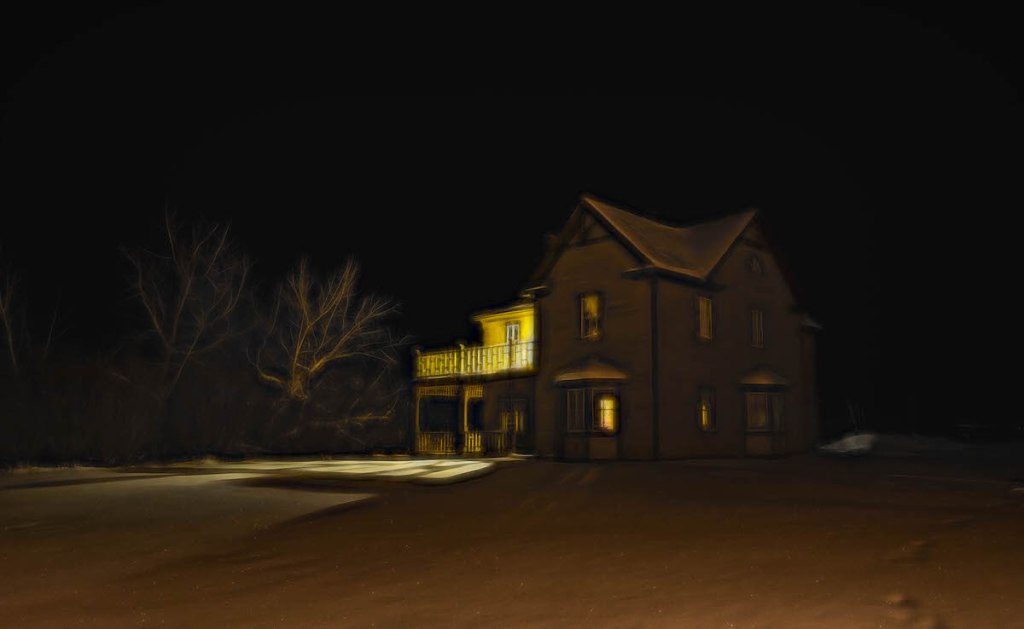
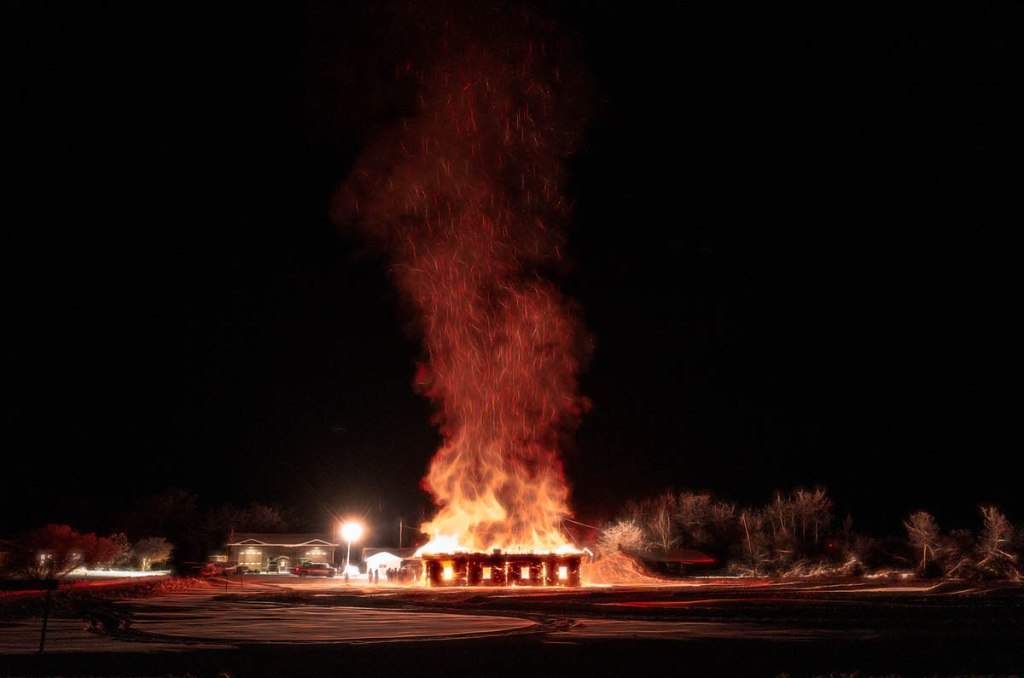
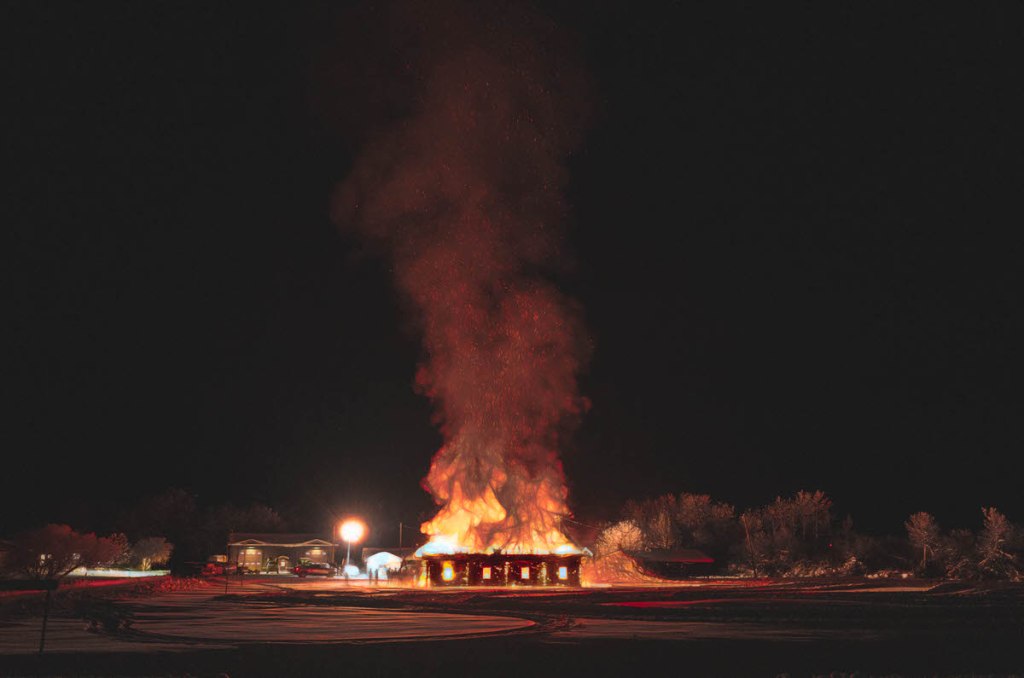
Near 9:00 p.m., my drive brought me to Manning, Alberta, where I fueled my Corolla, got snacks and began the last leg of my journey home. Northward, cresting the hill leading out of Manning, clouds in the night sky reflected bright, red-orange light. As I drove toward the Manning airport (ahead, on my left), flames reached high into the sky.
A building was burning, not at the airport, but at a farm on land immediately preceding the airport. The building was one I had considered photographing through the years. But it had been dressed down. While the overall shape and architectural style held interest, the building’s windows were boarded up, and the structure had been painted a dark chocolate brown. It was more a dark brown brick than architectural interest worthy of a photograph.
A week later, driving south, the building was absent. Nothing remained. The area, where the building had stood, was flat, cleared of debris and now offered a clear, unimpeded view from the farm home out to the service road and highway. Winter likely had been the safest time to burn this farm building, and burning the structure may have been the most efficient way to remove it.
Listened to: Erik Larson’s ‘The Splendid and the Vile: A Saga of Churchill, Family, and Defiance During the Blitz.’
Quotes to Inspire (1) ‘I walk, I look, I see, I stop, I photograph (Leon Levinstein).’ (2) ‘Photography must be integrated with the story (James Wong Howe).’





















































 In My Back Pocket - Photography
You must be logged in to post a comment.