Epiphany’s Happenstance

Canon 60D, Canon 70-200 mm 2.8 IS L Series Lens, Canon Camera, Canon Lens, Cemetery, Home, Photography & Conceptualizing Beauty, Project 365 - Photo-a-day, Spring, Still Life, Weather, Winter

Epiphany is a term used to mean a moment in time in which a veil is drawn back and you see, realize or understand something that had until that moment been hidden or concealed from one’s awareness or understanding. At Thursday noon, my wife and daughter began a drive from High Level to Edmonton, Alberta what should be a nine-hour trek at the best of times. Along their drive, with spring’s first heating of the snow-covered earth condensation blown from the snow on the earth swirled up into the atmosphere coming down a second time in a near white-out blizzard causing my wife to stop only three hours into her journey at Peace River, Alberta. In a phone call from Peace River, she asked that I fly down to Edmonton so that I would be able to drive my daughter and her back. On Friday, they made it to Edmonton and I made it to Edmonton, and, for the first time, on Saturday, two events became epiphany for me as parent to my son and my daughter.

As parent among parents, in one day I witnessed my daughter and her ballet dance troupe win gold at the ‘Standing Ovations’ dance competition at Festival Place in Sherwood Park, Alberta; in her dance I caught my daughter’s confidence, grace and beauty in movement set to time and music. Later that same day, I had the pleasure of witnessing and hearing my son’s performance as bass singer among the University of Alberta’s Mixed Chorus in its 68th Annual Spring Concert at the Francis Winspear Centre for Music in Edmonton – the music was resonant, majestic and actual, something happening before me, something surrounding me.  My son’s comment was in the order of singing with the chorus being so much better than … Church.  Indeed, he may have found more of what Church is about within the experience of participating in choral harmony. My epiphany was not so much new understanding as it was about seeing and enjoying fruits of my labours. As a teacher, most times you will at best only read about former students’ achievements. As parent, my job on this particular Saturday was not to strive for something, nor was it to push or coax my children; my job was to sit still, open-out my awareness to my children and enjoy what my daughter and my son were able to achieve in performance and result and in terms of heart-felt impact.

My wife will own that I am the parent who’s brought music into the home that our children have been brought up in; but, what’s more the truth is that I’ve really been conduit to something my parents surrounded our family with in their home as did their parents before them. My father and my mother were both accomplished pianists, both able to perform, both passing on their enjoyment of music to their three boys – my two brothers and me. We did have my father and one brother with us for both events on Saturday. Mom, who passed away in May of 2005, would have delighted in what her grandchildren achieved in relation to music, dance and performance on Saturday. The images presented in these photos are of grave-markers, headstones and crosses that recall to memory lives of those whom are held in memory, those whose lives impacted us.  My great grandmother is buried in this Edmonton cemetery.

Listening to: Neil Diamond’s Song Sung Blue, Porcupine Pie and Canta Libre from the Moods album, songs we grew up to, songs mom enjoyed.

Quote to Inspire – “All photographs are there to remind us of what we forget.  In this – as in other ways – they are the opposite of paintings.  Paintings record what the painter remembers.  Because each one of us forgets different things, a photo more than a painting may change its meaning according to who is looking at it.” – John Berger

The Soft Solder

Canon 60D, Canon 70-200 mm 2.8 IS L Series Lens, Canon Lens, Farm, High Dynamic Range (HDR), Home, Photoblog Intention, Photography & Conceptualizing Beauty, Project 365 - Photo-a-day, Still Life, Winter
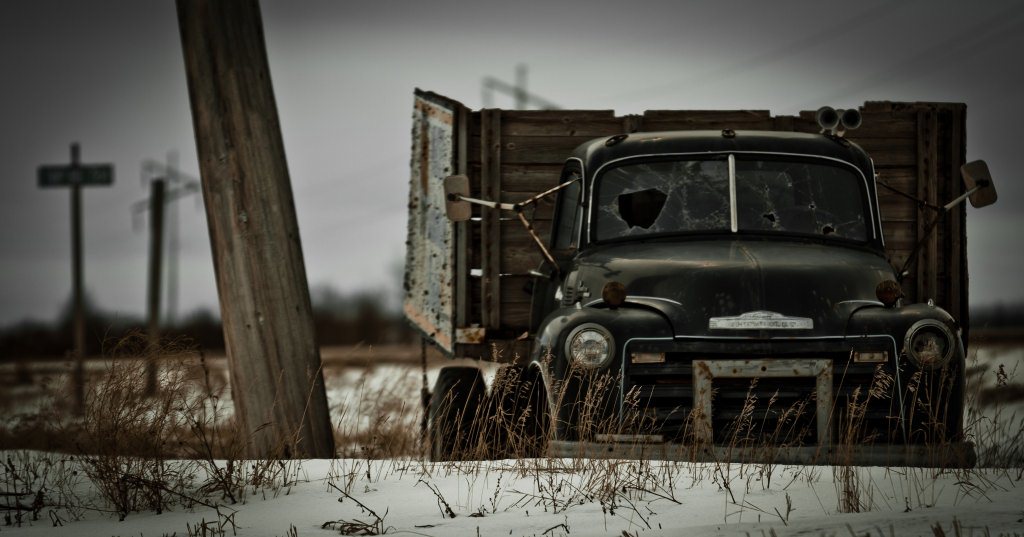
Fifties Grain Truck - South Side toward Nampa, Peace River, Alberta

Fifties Grain Truck - South Side toward Nampa, Peace River, Alberta

In a Canadian literature course at the University of Alberta in the late eighties, Professor Bruce Stovel had us reading Canadian literature – Margaret Laurence’s Stone Angel, Upton Sinclair’s As For Me and My House and Hugh MacLennon’s Two Solitudes. I was coming to Canadian literature in my last year of an Arts degree after a tour through the literatures of the world, a literature decidedly English in its understanding of the world.  We began the course with short stories about the Canadian experience of living in a young Canada. A young Canada could still be taken advantage of and Stephen Leacock wrote more than a few stories aimed at exposing a need to be more wiley and aware as a country among nations. One of the experiences written about was the matter of being sold something. Sales and selling were about creating something called the soft solder, an electrical analogy sales people understood to mean the means by which they connected the would-be, hinterland buyer to a commodity he or she didn’t really need.

The effective salesperson would work to leave the commodity, something such as a clock, in the care of the prospective Canadian buyer to let him try it out and to ascertain that the clock worked  beyond expectations. For perhaps two weeks or a month the clock would remain fixed in the prospective buyer’s home. And, after two weeks or a month, the seller would return to review the merits of the clock with the prospective buyer and to collect the commodity, a clock which had worked its way into the habits and routines of the buyer. Removing the clock was something akin to removing a tooth from one’s mouth; it had been possessed and the threat of removal brought with it the uncertainty associated with luck and promise. The unsuspecting buyer would grapple with improved luck and situation that the clock affixed in the life of the buyer would provide. The clock would be kept and terms of sale agreed to.

In and around Peace River, Alberta the means of sale are not so subtle and no longer deal with affixing service or commodity to the buyer. The connective tissue (soft solder) at present seems to be that  of using vehicles of a former era to attract retrospective view and attach it to a billboard affixed to the side of the grain box of an older grain truck. Retro grain trucks have become portable billboards regarding services found at location. On Peace River, Alberta’s west side a sixty-four (1964) GMC three-ton grain truck  connects passersby with Luxliner services transporting them to Edmonton at fair price while this Chevrolet three-ton grain truck connects passersby with sandblasting services  on Peace River’s south side.

Listening to:  Radiohead’s Go to Sleep from The Best of Radiohead, a cool tune in terms of minor key melody; then it’s Ryan Adams’ Starting to Hurt from the Demolition album.  Next is Pete Yorn’s Pass Me By from the Day I Forgot album.  Later it is 5/4 by the Gorillaz from their album of the same name.

Quote to Inspire – “You don’t make a photograph just with a camera. You bring to the act of photography all the pictures you have seen, the books you have read, the music you have heard, the people you have loved.”  ― Ansel Adams

Twin Lakes – Roadscape

Canon 60D, Canon 70-200 mm 2.8 IS L Series Lens, Canon Camera, Canon Lens, Canon Live View, High Dynamic Range (HDR), Journaling, Light Intensity, Photoblog Intention, Photography & Conceptualizing Beauty, Project 365 - Photo-a-day, Still Life, Weather, Winter
Alberta Highway 35 near Twin Lakes, Alberta

Alberta Highway 35 near Twin Lakes, Alberta

Distances travelled within Canada’s vast landscape are huge. Travel along its roadways demands commitment to best use of drive time between point of origin and destination so you get where you are going and so you enjoy where you got yourself to. Within this travel predicament kinaesthetic awareness of the road counts as much as visual presentation in terms of road familiarity. Curves, drops, bumps and inclines inform you in your travel along the road. Artists depicting the predicament of Canadian travel often poke fun at vacations enjoyed from a car’s interior as the terrain passes by as much as it is something enjoyed at the destination’s endpoint.  A better way to see more of Canada’s landscape is accomplished looking through a camera lens; doing so requires you to stop your vehicle, stow it safely along the roadside, get out of it and interact more substantially with the environment you encounter.

An iconic rendering of Canada’s roadscape is what the image presented here is about. I’ve photographed a portion of the up-and-down incline leading up to Twin Lakes along Alberta’s Highway 35, one hundred and fifty kilometres south from High Level en route toward Edmonton. In distance, the incline covers five kilometres of road surface and rises onto a land mass noted for the temperature change that occurs from bottom of the incline to its crest. In winter a double-digit temperature change can occur and is accompanied by a marked change in weather travelled through. Ascending or descending, driving this incline is a tricky endeavor in winter, something compounded by snow. While one aspect of this image favours the artist’s tongue-in-cheek take on ‘Windshield Time’, the manner in which most Canadians see their Canada rolling past them, the image also recalls lives of former students who as new (and perhaps impatient) drivers were trekking through this bit of terrain on second- or third-ever tries; one bright future ended in a vehicle roll-over. Another life was impacted by partial paralysis.  It’s this portion of road in this image that seems to surprise drivers … even experienced ones. Last November, descending the incline in snow was an activity more akin to skiing than rolling forward in a half-ton truck.

Listening to:  Gillian Welch’s I Dream a Highway from her Time – The Revelator album, Lucinda Williams’ Car Wheels on a Gravel Road from her album of the same name and High and Dry from Radiohead’s The Best of Radiohead.

Quote to Inspire: “No man has the right to dictate what other men should perceive, create or produce, but all should be encouraged to reveal themselves, their perceptions and emotions, and to build confidence in the creative spirit.” ― Ansel Adams

Where Are You Going …?

Barn, Canon 60D, Canon 70-200 mm 2.8 IS L Series Lens, Canon Camera, Canon Lens, Canon Live View, Photoblog Intention, Photography & Conceptualizing Beauty, Project 365 - Photo-a-day, Still Life, Vehicle Restoration, Winter

The images I present in this post remind of a time when as a young Dad, I read stories from the Thomas the Tank Engine series to my son and my/our doing so was an enjoyable way to close out each day. Thomas, Percy, Rusty, James et al each had an engineer, each had a conductor, all worked for Sir Topham Hat – each set about to complete a task each day. At the end of each day each engine returned to the engine shed for maintenance and rest. In Sangudo, Alberta, there’s a museum celebrating the vehicles and machinery that were used in the building of the Alaska Highway. Some are scattered within the museum’s yard and some are housed in a roofed shed without walls. The museum has closed and is no longer open to tourists. All vehicles seem to look onto the Alaska Highway they once had a hand in building. The scene is one you might find in a Thomas the Tank Engine story –  vehicles dormant and apparently waiting for a time when they can be re-tasked with new purpose and new life. Curiously, two songs I’m listening to tonight almost personify a state of mind that could lurk, here. One is Dave Matthew’s song Where Are You Going and the other is a Hank William’s song, I’m So Lonesome I Could Cry. Both songs are sung by Martyn Joseph and are found in his Passport Queue album Pq35.

Listening to: Weight of the World, Invisible Angel, Kindness and I Will Follow from Martyn Joseph’s Pq35.

Quote to Inspire: “A family’s photograph album is generally about the extended family—and, often, is all that remains of it.” – Susan Sontag (b. 1933), U.S. essayist. “In Plato’s Cave,” On Photography (1977).

B-Sides, Photographs that Linger

Barn, Best Practices - Photography, Canon 60D, Canon 70-200 mm 2.8 IS L Series Lens, Canon Camera, Canon Lens, Canon Live View, Farm, Farmhouse, High Dynamic Range (HDR), Home, Homestead, Light Intensity, Photoblog Intention, Photography & Conceptualizing Beauty, Project 365 - Photo-a-day, Spring, Still Life, Winter

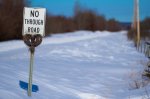
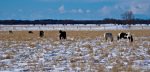
Sunday – photographs that I’d intended to post linger on my computer’s desktop in a file of edited images.  The week has been busy with obligations taking me into my nights. The first image is one of a barn located in a muskeg bog, just south of Figure Eight Lake on Alberta Highway 737; it is out of the weather and close to a water source; no house or homestead is in the immediate vicinity.  One could have burned down. Or, perhaps the barn is associated with the homestead in the second image; this homestead is treed in and built on higher ground a kilometre further south on the west side of the same highway. In another image an inuksuk has been assembled at the southwesternmost corner of someone’s farmland alongside Alberta Highway 685, stating to all comers that others have stood right there, where they now stand. Within metres of the inuksuk, a heart-shaped wreath is fastened below a ‘no through road’ sign, perhaps inviting people to come and investigate. The next photograph presents a second rendering of the Fairview horses and lamas in spring’s sunlight; there’s a glow of sunlight from the animals. Beyond this, are the other b-side renderings of the Dunvegin bridge, photographed last weekend.

Listening to Tonic’s rendition of Fleetwood Mac’s Second Hand News, then there’s Sister Hazel’s take on Gold Dust Woman and Shawn Colvin performs The Chain, all songs are part of Legacy:  A Tribute to Fleetwood Mac’s Rumours’ album.

Quote to Inspire – “I treat the photograph as a work of great complexity in which you can find drama. Add to that a careful composition of landscapes, live photography, the right music and interviews with people, and it becomes a style.” – Ken Burns

Dunvegan Photowalk, A Possibility

Best Practices - Photography, Canon 60D, Canon 70-200 mm 2.8 IS L Series Lens, Canon Camera, Canon Lens, Canon Live View, High Dynamic Range (HDR), Light Intensity, Photography & Conceptualizing Beauty, Project 365 - Photo-a-day, Still Life, Winter
The Peace River - Dunvegan Bridge and Dunvegan Gardens

The Peace River - Dunvegan Bridge and Dunvegan Gardens

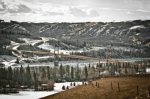
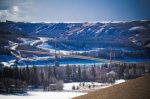
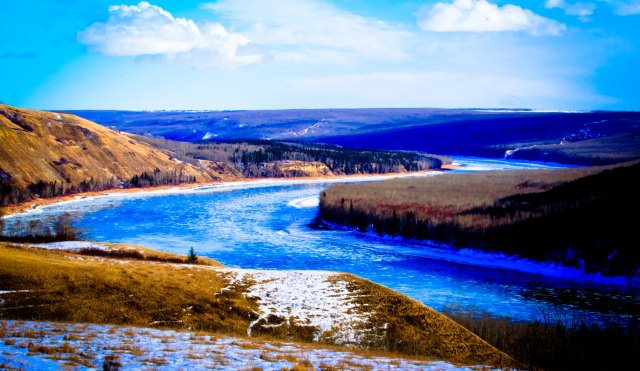
On October 1, 2011, as an educator having completed several month-long tasks associated with the September 30th student count and the paperchase associated  with ministry deadlines at 11:00 p.m., the night before, the prospect of participating in a Kelby Photowalk was there, was a never-done and was possible. As a late, ‘day-of’ registrant one photowalk I could get to from High Level, Alberta, if I started my drive early enough was the photowalk in Dawson Creek, British Columbia.  A five-hour drive would see me there with time to spare; the photowalk would start at 1:00 p.m., B.C. time. This was the photowalk I took part in. The other photowalk that was within driving distance but started much too early after my sleeping hard was Fairview-based but would take in the area in and around the Dunvegan Bridge, the Dunvegan historic site and the Dunvegan Gardens. That photowalk took place, in part, along the banks of the Peace River found in the image presented here.

In reviewing this image today, I note that several features of the river draw my attention. The river winds its way through the huge, open space of the river valley. The valley is welcome contrast to the linear, familiar landscape surrounding High Level in which you can look forward, side-to-side and behind you; but up-down depth of perspective and distance are fixed. Standing midpoint up the valley slope allows good change of perspective – opportunity to look down into the valley toward the river and the opportunity to look along the sides of the valley (almost a hallway of sorts) to appreciate its relief (the land’s wrinkles leading down to the river). This kind of perspective as I enjoyed it from a Kelowna hot tub looking down onto Lake Okanagan is one feature I will emulate if and when I ever purchase a hot tub, enjoying a hot tub’s warmth from a height while looking out upon something below.

The photograph, here, is a high dynamic range (HDR) shot in which colour, texture, relief and light are crisply enhanced, capturing attention. Beyond this, the subject of the image – the river – holds attention because there is natural flow and movement, an indicator of spring’s upcoming arrival.  The river holds broken ice and moves along the surface of the water.  And, the sky’s blue reflects in the water.  All this reminds of former life in Fox Lake, Alberta when each evening I’d trek to the Peace River, enjoy its expanse, then return home. I walked to the river through all seasons.  For me, this photograph of the Dunvegan river valley and reminiscence of the Kelby Photowalk seem to point to a richness in opportunity for photography throughout each day and through all seasons.

Listening to – Over the Rhine’s Drunkard’s Prayer album; songs standing out – Born, Who Will Guard the Door and Spark.

Quote to Inspire – “The world just does not fit conveniently into the format of a 35mm camera.” – W. Eugene Smith

After Dan Kameka, the Dunvegan Bridge

Canon 60D, Canon 70-200 mm 2.8 IS L Series Lens, Canon Camera, Canon Lens, Canon Live View, High Dynamic Range (HDR), Photoblog Intention, Photography & Conceptualizing Beauty, Project 365 - Photo-a-day, Vehicle, Winter

Dunvegan Bridge HDR 1 (Reduced Size)

Dan Kameka, an artist and photographer in Alberta’s Peace Region has spurred me forward in this never-done photograph that I captured yesterday. I first became acquainted with Dan Kameka’s photography works at Grande Prairie’s Trumpeter hotel; there, I saw two eight-foot photographs, one a retro-green grain elevator (possibly United Grain Growers) and a second image of farming machinery from former times, a beautiful cluster of a Fargo grain truck with granaries now disused in a snow-dusted, winter fallow field.

That was ten years ago. Two years ago I found smaller versions of the same images for sale at Picture Perfect Frame & Gallery in Grande Prairie. In the set of images displayed I found two or three photographs by Dan Kameka that intrigued me because I wondered how they’d been taken. Of special interest was a Dunvegan Bridge photograph which intrigued because the riddle of working out where the photograph was taken from has stayed with me through these two years. The shot I have taken is likely taken at a point close to the location Dan would have used in capturing his image of the Dunvegan Bridge. Yesterday’s never-done was about riddling this through and then daring to navigate to the site which presented its own challenges, a task taking me from my car to the site and back in ninety or so minutes; it’s only been in the last two months that I’ve known how he probably had done it.

About this photo – this photograph associates to another I’ve posted entitled Alberta Fissure.  It is the complement to this image and is taken from a point behind the far left of this image and it looks down the valley from the high left through to the expanse of the valley to the right in this image. This photograph is one of several high dynamic range (HDR) shots I’ve created with automatic exposure bracketing; but it is the first in which cloud cover accentuates significantly adding drama. In this picture I’m impressed with the zoom lens compression of distance. The bridge itself is one kilometre long reaching over the Peace River at a narrower point.  The extrapolation then is that from the point I’m standing at taking the picture to the top of the S-curve on the other side of the valley is a distance of perhaps two to two-and-a-half kilometres. It would take a car travelling at 100 km/h about one minute to travel from the top of the S-curve to the point at which I stood near the highway incline. A significant distance is captured in this photograph.

Thank you Dan for those beautiful, intriguing photographs that capture my wonder and memory; you’ve had a hand in spurring me on not only with this photograph, but with my photography.

Listening to – Sarah Masen’s The Valley, Ziggy Marley’s Love is My Religion and Willard Grant’s Evening Mass.

Quote to Inspire – “There are always two people in every picture: the photographer and the viewer.” – Ansel Adams

Depth Tradecraft

Uncategorized

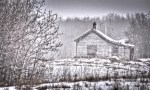
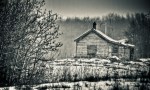
A Craft and Vision e-book entitled Creating Depth disclosed some of the subtleties of creating depth in an image. One area of tradecraft considered in creating depth was the matter of choosing perspective that allows the viewer to glean visual information in the three chunks of the photograph – the foreground, middleground (where primary subject is located) and background. I am drawn to this image because of the placement of the subject, the house, as well as the image being one that has depth in terms of foreground, middleground and background. Beyond this, the image draws me because of the subject’s shape, the texture of the house’s wood-slat exterior and framing, because it is comprised of several tones of white towards grey, because there is visual information to be had at all points of the image and finally because this house is a first endeavors building, home to a family making their way in the world. I present the image in different renderings because I find each satisfying.

Listening to Over the Rhine’s Ohio from their album of the same name.

Quote to Inspire: “Beauty can be seen in all things, seeing and composing the beauty is what separates the snapshot from the photograph.” – Matt Hardy