In the first week of summer break, school’s work has lessened—the last report, comprehensive as it was, has been written and submitted. Students’ award photos have been edited and uploaded, and the division’s long-service award images have been edited and delivered by thumb drive to the appropriate person. Next year, I will use Dropbox to move big images over the Internet. That done, I am able to launch into summer’s rest, time to myself with my thoughts, and begin letting go of the year that has been our school year and bridling down my watch for the next necessary thing needing done. It is time to release all that and take-up my own Life, once again. Movies are being watched – older ones, older favorite’s, and ones linked to novels read. An old pattern is there – movie marathon nights help dissociate me from the year that has been, one part of unlocking the door to summer.
The other day, it was a good thing to wake up, gather my wife from her university work and into our truck, and get out for a drive. It set the tone for a summer’s day. That essential premise – get out the door – was lived out. I got out that door again yesterday, recalling with some strength that there should be a ‘Wheels and Deals’ event at the Mirage Hotel in High Level, Alberta, a ‘Show and Shine’ kind of gathering of favored vehicles with the added opportunity of a swap meet – ‘wouldn’t that be something for me to find a late sixties Pontiac, like the one I used to drive during high school?’ I took my Leica M8 with Zeiss ZM Biogon 28mm lens and went to have a look. I had my Fujifilm GFX 50r and Ricoh GR iii as cameras I might use as well.
I shot for the first hour with the M8, focusing with the rangefinder’s viewfinder and focus patch. I moved through the area as people set up. Cars, trucks and motorcycles arrived and were arranged in the hotel’s parking lot. I could move around, talk with vehicle owners, and photograph vehicles. I could shoot according to what I saw compositionally. I could take my time with the M8. Good.
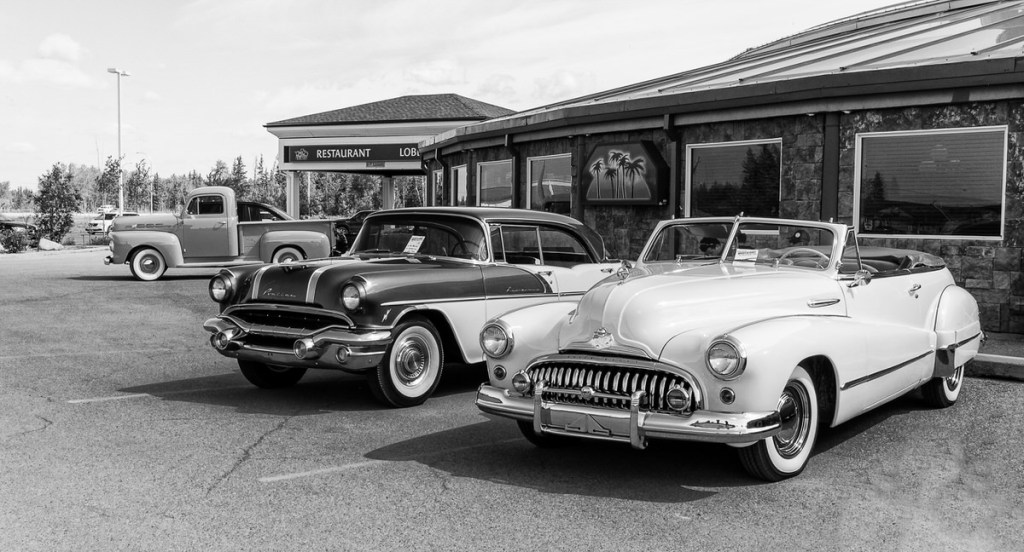
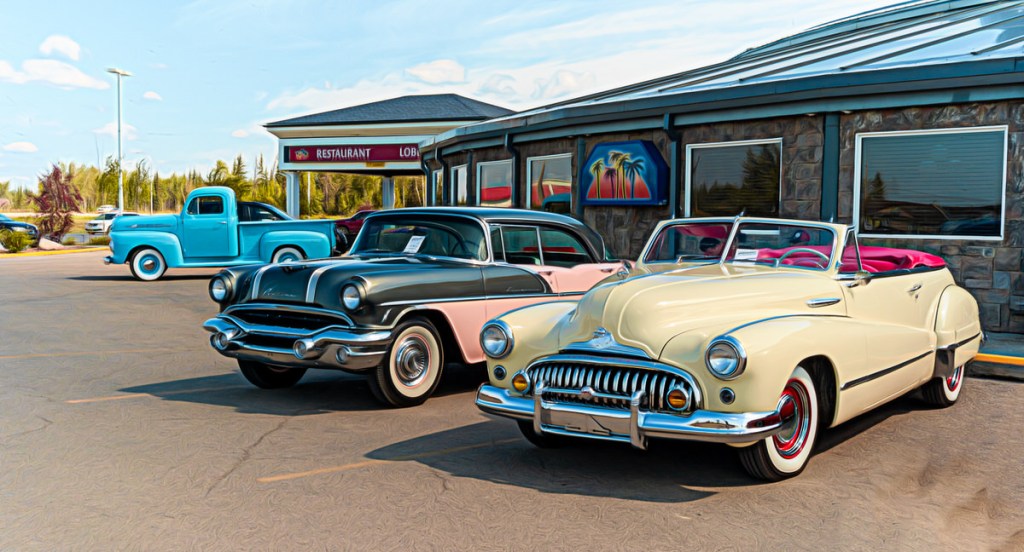
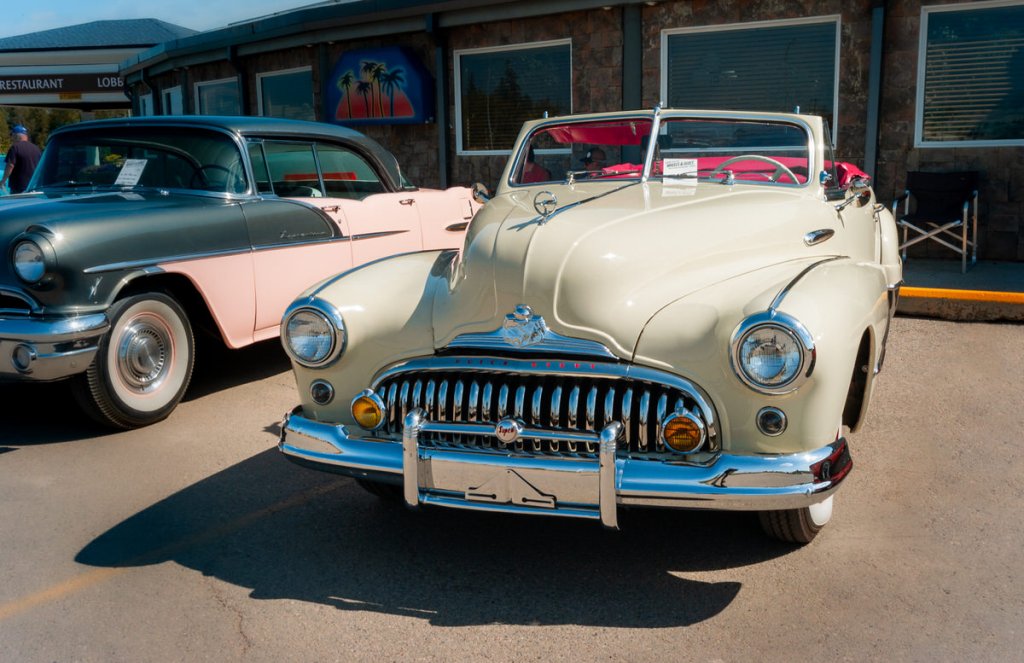
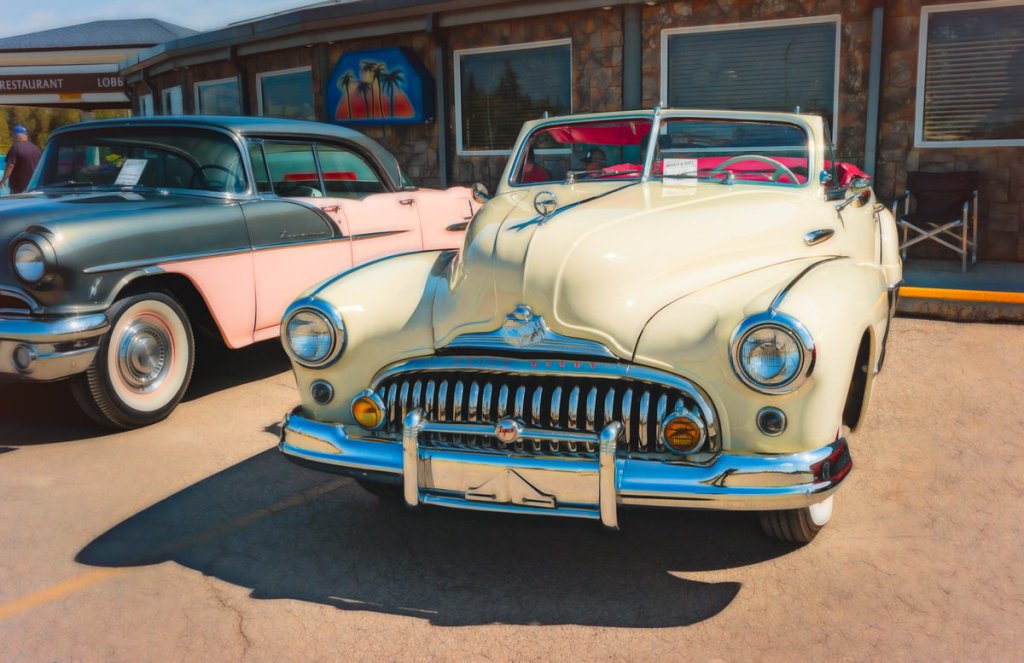
The black-and-white image presented here highlights some elements of visual composition—the Pontiac and the Buick Super Eight cluster in terms of visual weight in the image, and the black-and-white gradient of tone reveals shape, reflection, and vehicle lines (and an era of automobile design). A sense of depth is there as the eye moves from the Buick, past the Pontiac, to the Mercury truck and the hotel’s entryway. While the image was shot and edited primarily in colour, using Silver Efex from the NiK Collection provided an extraordinary, eye-captivating, black-and-white image – an image captured yesterday, in the summer of 2024, that, in terms of variety and proximity among vehicles, black-and-white toning, visual weight, and proportion, could easily have been an image captured in black-and-white during the fifties when these vehicles were first manufactured. In that sense, the image becomes nostalgic. It relates to a time preceding me … just. Other colour images are presented for reference.
Listening to: Bruce Springsteen’s ‘Open All Night,’ ‘Highway Patrolman,’ from the ‘Nebraska’ Album, JD McPherson’s ‘Let the Good Times Roll,’ and most of Bruce Springsteen’s ‘Tunnel of Love’ album, starting with ‘Walk Like a Man.’
Quotes to Consider – Re: Photography …
‘Date your cameras, marry your lenses.’ This quote is new to me, yet highlights a key idea for photographers – that investing in glass (good lenses) is essential while the cameras used over time will change.
‘Innovation comes from people who take joy in their work (W. Edwards Deming).’ The quote was offered in a YouTube video offered by ‘Three Blind Men and An Elephant’ in their video, ‘Leica D-Lux 8 Defies Expectations, Including My Own, (2 July 2024)’ to recognize that Leica, as a company already producing stellar cameras, is one whose employees enjoy innovation and improvement that can be made to their cameras and lenses. On the Adizes’ Curve, Leica has embraced a key dynamic that allows them to remain in the ‘prime’ of organizational/corporate lifecycles.
A decade ago, we brought Dad back to Edmonton, Alberta, from his retirement in Qualicum Beach, British Columbia, and found him a venue for assisted care/living close to family. Alzheimer’s Disease had its hold on him, and my brothers and I witnessed the decline of Dad’s physical and cognitive abilities through to end-of-life. Managing short-term memory day-to-day grew difficult for him. Long-term memory, though, found him a resource for family histories. Playing the piano had always been a source of joy for Dad. At the piano, in these later years, he could find his way to the music of his youth and that which he enjoyed on his 1964 Heintzman piano through our family years. In Edmonton, the expressive side of Dad’s language diminished, yet we could interact with him through the yes-and-no nods and shaking of his head to help him establish certainty in his communication. As school began in September 2016, we lost him. He’d lived eighty-three years.
We found time, my brothers and I, to disburse Mom and Dad’s belongings among the family – furniture, paintings, photos, China, and personal effects … items that, in their use, would draw out memories of Mom and Dad. One item that came to me was a 1956 Red Dial Leica If camera. While growing up at home, with all my father photographed, of his and mom’s travels abroad, of our family on vacation, of times with extended family and with his time downstairs in his darkroom, Dad had not told me about this camera and the role it played early on in his career.
As far as I knew, my father used Canon cameras, a Canon F-1 and Canon AE-1, during our school years. Before I was born, he made photographs using a Yashica Twin Lens Reflex camera, a medium format film camera, and a handheld light meter. As a research chemist, my father used the 1956 Red Dial Leica If camera to determine and maintain the quality of the product the company produced. The camera was gifted to him in retirement to remember the place and people he worked with when he transferred with his company to Toronto in the mid-eighties. One of my brothers had talked to Dad about the camera and shared the story of its use with me.
The 1956 Red Dial Leica If camera is a rangefinder, a version of the Leica IIIf series without a viewfinder or rangefinder incorporated into its body nor with the ability to work at slow speeds. It uses 35 mm film. The camera measures 5.35 inches by 1.54 inches by 2.60 inches. The body has black leatherette skin, aluminum with chrome plated brass top plate, base plate and knobs. It has two hot shoes to allow the use of an external viewfinder and rangefinder. Where the camera, as produced, was intended for use with an Elmar 50 mm f/3.5 lens, the lens on this camera is a post-war Russian Jupiter 50 mm f/2 lens (a lens not comparable with the Elmar) and not used for regular photography. The Leica If is thinner than today’s cameras. Its weight, though not weighty conveys gravitas – you have a serious piece of photographic equipment in your hands.
Microscope and Adapter – The red velvet Leica camera box contains a camera manual and a manual for an adapter, a MIKAS Micro Attachment for the Leica. With the adapter, the camera can be attached to a microscope directly. The Micro Attachment adapter attaches to the camera’s lens mount and to the microscope. It provides an eye-piece/viewfinder midway along the adapter at an angle perpendicular to the microscope’s eyepiece tube for establishing focus. Making exposures involves calculating settings, trial and error and managing the microscope’s light source. The image produced is called a ‘photomicrograph.’ Placing the camera’s production year into Dad’s career timeline, he would likely have been working in Edmonton, and documents for the camera indicate it being sold in 1957-58.
Looking back to who my father was, I can readily associate a Leica camera with him – a Canadian student from the Maritimes who, at the age of 24, had earned a Ph.D. from a London university in the United Kingdom, a pioneer in organic chemistry on the world stage. He was good at what he did. Leica was quality. So was Dad.
Leica Cameras & The Candid Frame
My first significant consideration of Leica cameras occurred listening to a 5 October 2014 podcast, ‘The Candid Frame – with Ibarionex Perello,’ in which Ralph Gibson was interviewed (The Candid Frame #252 – Ralph Gibson). Dorothea Lange and points of departure were considered. A book Gibson had worked on called ‘The Somnambulist’ was discussed. Gibson discussed a kind of visual literacy that involves not only the content of an image but the visual narrative of the image juxtaposed with other images and in terms of an image among images in sequence. In other talks, Gibson would discuss the proportion of the page in which an image rests as influencing and shaping its visual narrative. Gibson shot with Leica film cameras. In his early post-Navy years, Gibson sometimes pawned one or two of his Leicas to make ends meet. Gibson’s later presentations would consider photography an act of perception, a matter of being present in the situation and to what is photographed. In a broader sense, photography for Gibson is a mindfulness or meditative practice. The range of understanding Gibson brings to photography is extraordinary and captivates – you recognize ‘this is what photography is about.’ Gibson remains a photographer who uses Leica cameras.
“Photography is a way of shouting, of freeing oneself, not of proving or asserting one’s own originality. It’s a way of Life (Henri Cartier-Bresson).”
Gratitude – I am indebted to Ibarionex Perello and his podcast, ‘The Candid Frame,’ for the over eight hundred interviews he has conducted with photographers and their take on what photography is about. Listening to these podcasts while cycling, walking, and driving has been part of my development as a photographer.
10,000 Hours & Photography
With the extremes of cold northern Alberta winters, my exercise game plan involved getting on an inclined treadmill for an hour each morning before getting to school. I set up a basement treadmill area so that with a minimum of noise, I could gather the full-body exercise of walking on the treadmill while watching television and listening to its audio feed through earbuds or headphones. All this occurred in the wee early morning hours while the household slept.
“Dreams without movement are delusions, escapes, kid’s play. You have to put your feet into your dreams if they’re ever going to be reality. The dreamers we know and love today are the ones who worked the hardest (Paul Newman/Interview with James Grissom/1993/Photograph by CW Braun).”
Considering the ‘ten-thousand-hour’ rule suggested by Malcolm Gladwell, that ten-thousand hours of appropriately guided practice would allow the learner to achieve a level of proficiency that would rival that of a professional, I directed my treadmill television watching toward photography. I explored what YouTube offered. I found photographers who used YouTube to share the immediacy of their photography experiences and who used YouTube to generate viewer interest in the photography workshops they led. Adam Gibbs (Quiet Light Photography), Gavin Hardcastle (Fototripper), Nigel Danson, Sean Tucker, and Thomas Heaton became mentor photographers with whom I began my ten-thousand hours of guided photography practice.
“Habit and imitation – there is nothing more perennial in us than these two. They are the source of all working, and all apprenticeship, of all practice and all learning, in this world (Thomas Carlyle).”
The ‘just-like-me’ impact of these videos was surprising. Within a landscape photo shoot, the Lowepro camera bag on the ground that Thomas Heaton was opening up was one I was using. The Canon 5D Mk III camera he put on a tripod was one I used. His Canon 70-200 mm, f/2.8 lens was a lens I used. In weekly videos, Thomas talked through image-making as he made images. Watching the videos, I encountered a photographer who was personable, fallible and a photographer keenly interested in his craft and landscapes around the world. Travel, hiking, camping, exploring various landscapes, image capture, image editing and image printing were the mainstays of his videos. I began to see what was possible in landscape photography and was developing an understanding of choices that can be made when making photographs. The breadth of what photography can achieve became more doable and within reach.
“Apprenticeship is all about being tutored by those who have trod the path we desire to tread (Vincent Okay Nwachukwu).”
The images of a New Zealand photographer attracted my attention. His photography and work came across as a YouTube channel recommendation. Inspired by Thomas Heaton’s vlogging, Paul C. Smith shared videos that explored New Zealand with a camera, exposing viewers to New Zealand’s culture, people, and landscape. While photographing much of New Zealand with Olympus Digital cameras, one being an Olympus EM-D E-M5 II that I also use, Paul also photographs New Zealand with Leica cameras – an M6, M8 and M9. Much of his photography is done with the M8, and the images produced contain a quality reminiscent of Life Magazine images from the 1950s and 1960s – a quality resulting from the camera’s APS-H 10.3-megapixel Kodak CCD image sensor in combination with the colour red being diffracted differently through Leica lenses (as compared to other non-Leica lenses). An infrared UV filter can be used with Leica lenses to render a more natural colour. Paul does not always use the infrared filter, though. Paul speaks of the ‘buttery’ feel of images captured with Leica lenses. You can see this in his photography.
Here are some examples of M8 images I have made – they are from Southern Alberta, Canada.
Paul C. Smith is a self-taught photographer who has a great sense of composition, colour, and light. He believes that a photograph is the result of seeing context, proportion, balance, and placement. To enhance colour, textures, tone, and mood in his pictures, he chooses his Leica M8 camera, which gives his photos a stunning, filmic look. For black-and-white images, he uses his Leica M6 film camera as it presents tone and mood differently. While he uses his Leica M9 camera, it does not get as much use as the M8. ‘Heart’ is another essential ingredient that produces treasure in his images. When someone takes in his photos, they become privy to his response to the subject and scene, and they can consider the beauty and moment captured in his photos. For Paul, a photograph, if done well, is ‘a stolen moment.’
“A good photograph is one that communicates a fact, touches the heart and leaves the viewer a changed person for having seen it. It is, in a word, effective (Irving Penn).”
“Beauty does not indeed lie in things, but in the feeling that we give to them (Carl Jung).”
Leica M8
In the summer of 2018, I visited The Camera Store in Calgary to check out new and old cameras before returning home. While there, I noticed two used Leica M8 camera bodies on consignment. I was intrigued by the possibility of trying out the Leica M8 to see if it could help me improve my photography skills and compare my results with those of a fellow photographer who used the same camera. However, the essential question was whether I could make the Leica M8 work for me and produce the photos I wanted. I decided not to buy the camera as I was unprepared to make such a purchase and needed to rationalize such spending. It was a year later when I purchased the remaining Leica M8 with a Leica Summarit 35 mm lens. I learned to operate the camera by taking photos during the drive home. Once I got home, I ordered a battery charger from the Leica store in Miami, Florida and a few years later a new battery from B&H Photo. I also updated the firmware for the Leica M8. Later, I would add a Zeiss 28mm 2.8 ZM Biogon lens and a fifty-year-old Ernst Leitz Wetzlar Elmar 90 mm lens.
“Life shrinks or expands in proportion to one’s courage (Anais Nin).”
A season of learning began, making photos whenever possible with the M8. The camera helps slow down image-making. I work in aperture priority mode and select an f/stop based on my intention for the photo. Images are composed within the viewfinder frame lines and then the rangefinder focus patch must be aligned to the image within the viewfinder to achieve focus. Once aligned, pressing the shutter button captures the image. This process promotes consideration of composition, lighting, and positioning with respect to the subject. Each element adds to the creation of a well-thought-out image. The resulting ten-megapixel photos are extraordinary.
Operational Fix – Leica M8
While old Leica M8 batteries can be charged, weak batteries can cause operational issues and issues writing images to an SD card. I thought my Leica M8 had died two years ago – the menu would not hold settings; photos, once taken, would not write to the SD card. My research on what I encountered took months, and finally surfaced a recommendation to replace older batteries with new ones as a solution. Because I enjoyed working with this camera, I gave it a go and purchased a new Leica Rechargeable Lithium-Ion Battery (Leica 14464) from B&H Photo. The new battery restored all camera functions and full camera use.
Picture, Story, Photographer
In October 2022, Paul C. Smith produced a video entitled, ‘Cameras Are My Clickbait.’ Responding to a viewer’s question about the cameras he used, Paul spoke about his early YouTube work and having produced videos that few people viewed. He began making videos highlighting photography, the photographer and the camera used. The cameras were older, used, high-end cameras. Gear talk tended toward the trial-and-error process of mastering the camera’s use to create a photograph. Such discussion concerned what impressed him about the picture produced on the other side of picture-making with the camera. Of the cameras used – Olympus, Leica, Hasselblad and others – the Leica M8 was his first choice.
Good photographers will affirm a core truth Paul draws attention to – “Photography is about the picture, the story behind the photo and the photographer. The equipment is not that important – a camera is a camera.” A Frames Magazine podcast with photographer Walid Azami presented a few weeks after Paul’s video (November 2022) echoes the matter of equivalency of gear and takes the discussion Paul offered a step further … ‘[You] either have a Sony, a Fuji, a Canon, a Nikon, or a Hasselblad and … it comes down to a couple of other brands too. That’s it. … [We] all … have the same gear … [What] makes you … stand out is [that] you have to have opinions.’ While Walid asserts that what separates one photographer from other photographers is your opinion, he would likely agree that ‘opinion,’ as he refers to it, comes down to the photographer’s way of seeing and that one’s ‘way of seeing,’ ‘one’s opinion’ is the embodiment of ‘style.’ This part of the photographer’s photo-making adds to the image’s narrative and the photograph produced.
Along Those 10,000 Hours
Ten-thousand hours of appropriate, guided practice seems longish to me now. One hour a day for one year yields a minute step forward to the ten thousand hours Malcolm Gladwell suggests in his book, ‘Outliers.’ In terms of photography, it is not only about being mentored by a photographer. The praxis part of photography must be dialed into the equation – the time in play with the camera in hand, solving problems and making photos. It is the getting out to photograph, taking time to consider intention, making many photographs, sitting down at the computer editing and working out the presentation of photos by way of the printer, photobook or a photoblog such as this. It’s also about encountering the good, bad and unintended consequences of making and presenting photos along the way. It is about learning to see and recognize where an image lies (often right in front of you) and recognizing opportunity. Sometimes it’s the photo waiting for you as you drive by, and you need to make an active choice: stop, turn around, go back, see the scene, walk the scene, and gather not just one photograph but several. In many ways, it is about mastering yourself so that you have the discipline to go back, see all that is there and take the next step in taking the photo. A photo mentor steps in as you choose along the way – you witness the work of others, you take a workshop, you read books that develop your understanding of photography (e.g., Susan Sontag – ‘On Photography), you listen to podcasts, you find your way to talking through photographs with other photographers, friends and family, and you encounter moments that surprise you when the understanding and doing of photography coalesce in pictures you produce. Your photography becomes about the images you make, the stories behind your photographs, and you as a photographer. I am a long way into my ten-thousand hours and perhaps closing in on meeting its threshold. But there will always be something more to consider, learn, and evolve into practice. Right?
“One doesn’t stop seeing. One doesn’t stop framing. It doesn’t turn off and on. It’s on all the time. (Annie Leibovitz).”
Listening to: Hollow Coves’ ‘Pictures,’ Roo Panes’ ‘Message to Myself,’ JD McPherson’s ‘Dimes for Nickels,’ The New Customs’ ‘Chasing Light,’ Liz Longley’s ‘Unraveling,’ John McCutcheon’s take on ‘Turn, Turn, Turn,’ Dougie Maclean’s ‘The Osprey,’ and Galen Huckins Glacier Quartet’s ‘The Kennicott.’
Photography is more an active endeavour than a passive one. You take a photo by placing yourself in front of your subject – you move in small ways aligning camera and lens to subject, and at other times, you move in terms of distances travelled, large and small, to photograph your subject. The word endeavour has work at its core, perhaps even … sustained work, linked to achieving a goal.
In 2009 – 2010, I stumbled upon the photo-a-day challenge, an active pursuit in which a would-be photographer can engage in photography and evolve skills needed to take, edit, and present photos. Over time, the photos created would become stepping stones from which one could look back and consider emerging questions about photography that one was ready to have answered when they had consolidated (put together and understood) the question to be asked. Add exposure to others’ photography, and questions would then be about how photographers brought together an image and their intention to present it in the way they had. Photography in a 365-day, photo-a-day pursuit would become step-by-step, emergent learning. As a favourite ‘Motivation to Move’ podcaster, Scott Smith puts it, all you’d need to do is ‘Stand up, take a step, and repeat … until you’ve reached the goal of your dreams.’
Investigating what others had to say about photo-a-day challenges, Woody Campbell surfaced as a photographer with an interesting tack. In Woody’s ‘1 Photo Every Day’ website, you’ll find that Woody has resolved to ‘… take one photograph every day for the rest of [his] life (www.woodycampbell.com)’ and that, at the time of writing, he has done so for thirteen years. He posts his images in a format of day number since he began photographing for this project – his post for Friday, 30 June 2023, while having a small statement descriptor, also notes the post as ‘Day 5006 of photograph every day for the rest of my life;’ in each post he also presents a look-back image – an image to recall and share.
What is there, though, is Woody’s commitment to photo-a-day image-making, and for the would-be photographer, in addition to Woody’s engaging and captivating photography, an arms-length camaraderie and inspiration in like-endeavour are to be found. Because he engages in this work, you are joining him in like-endeavour.
My trek through the photo-a-day project that this WordPress blog sprang from today finds me sifting through 1100+ edited images taken since 2021 that have not been posted, images that were destined for this ‘In My Back Pocket Photography’ blog. As a teacher now in summer, I am enjoying the post-race wind-down following a ten-month marathon with students, staff, and parents, a school year saturated with people, planning, teaching, and testing. However, through the school year, while I have continued to take photos on an almost daily basis, the matter of posting photos has many steps along its way and my posting stats disappoint grievously.
In this third week of July, I am surfacing to a less other-focused Life, something Frank McCourt refers to in his biography, ‘Teacher Man,’ as all that time off, abbreviated as ‘a.t.t.o.’. All that time off allows me to consider and return to personal pursuits and one of them is posting on this blog. At present, the situation gives me the opportunity to consider and present to you ‘points of departure’ as Dorothea Lange states it (via Ralph Gibson) – the common themes or projects I tend to photograph as I review images moving forward since 2021.
Current Points of Departure (2021 to present, Summer 2023)
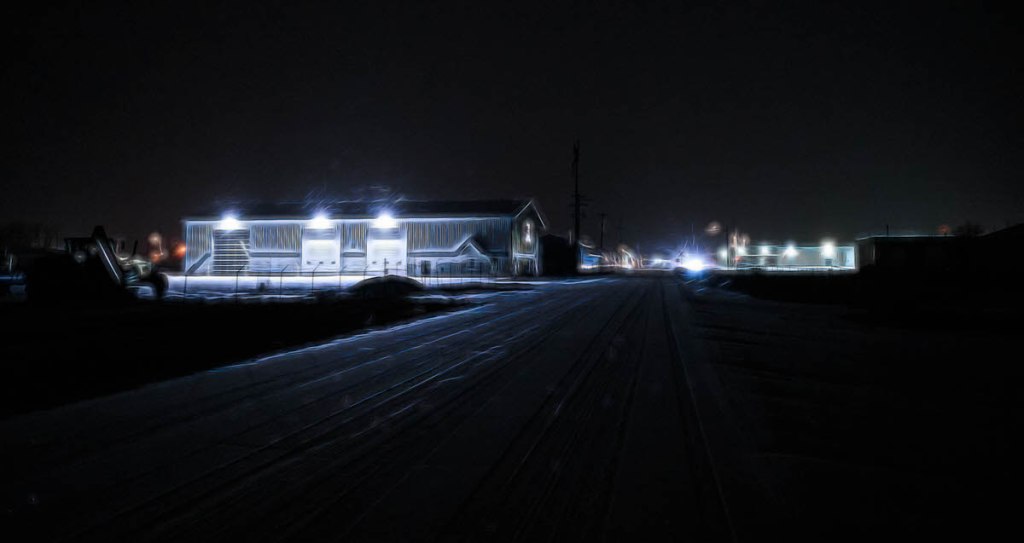
Along Northern Roads – Alberta
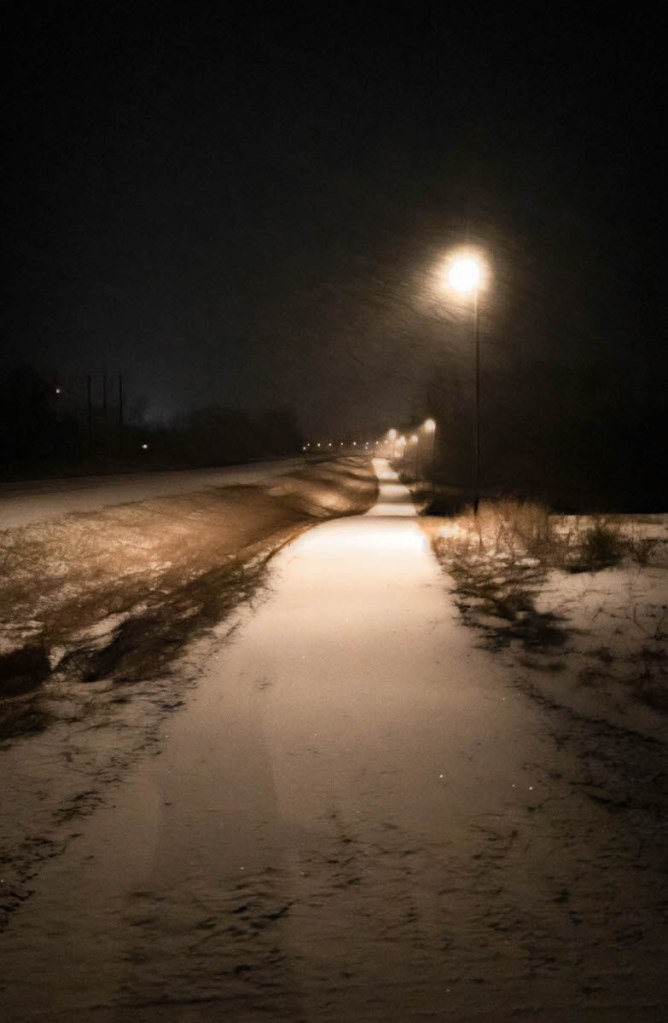
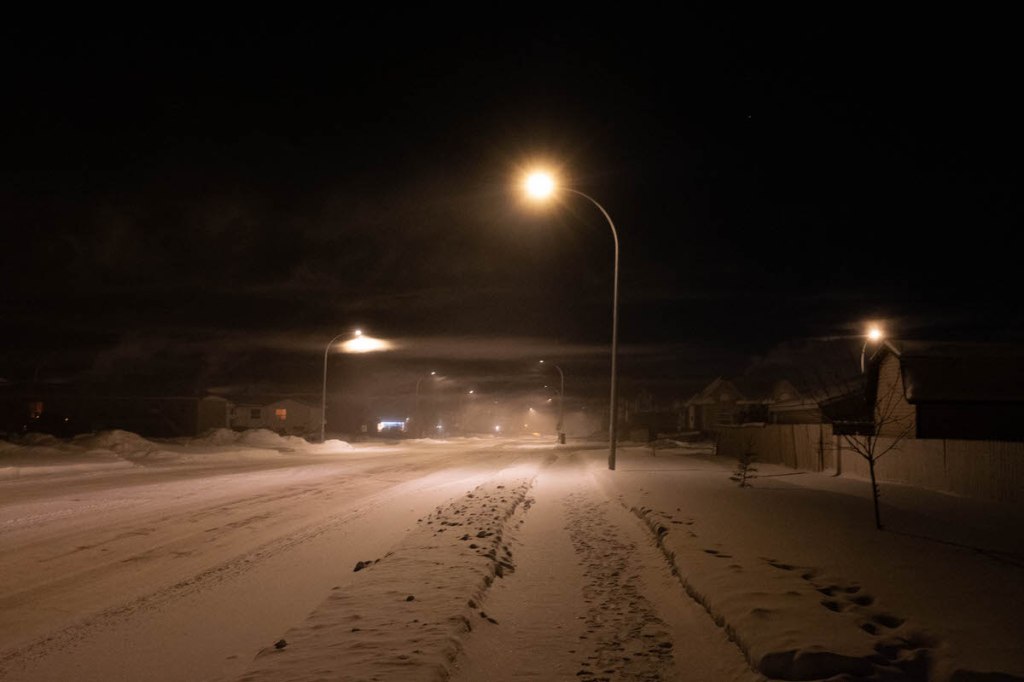
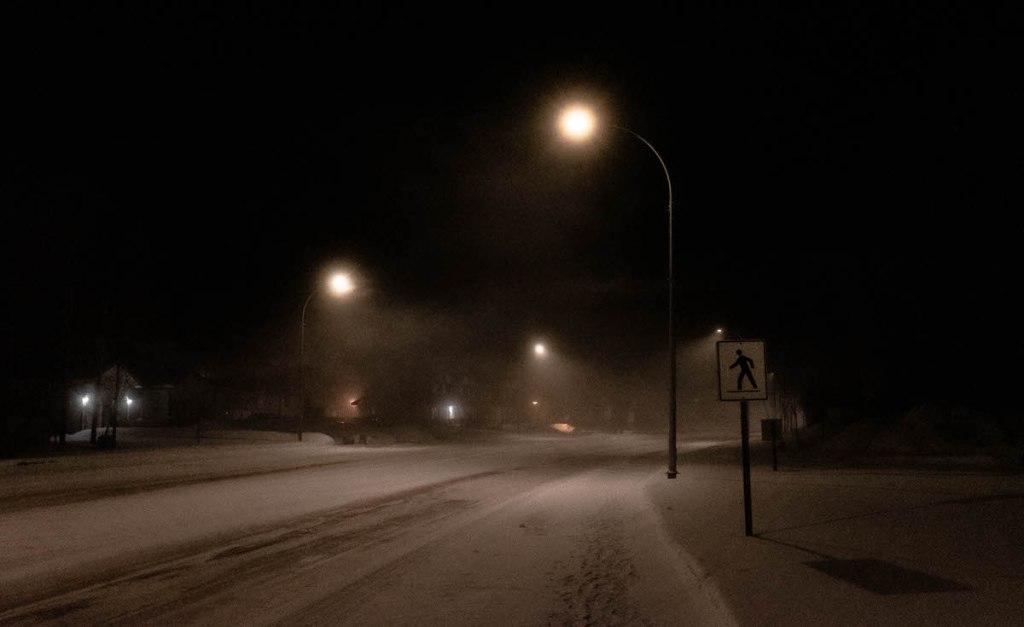
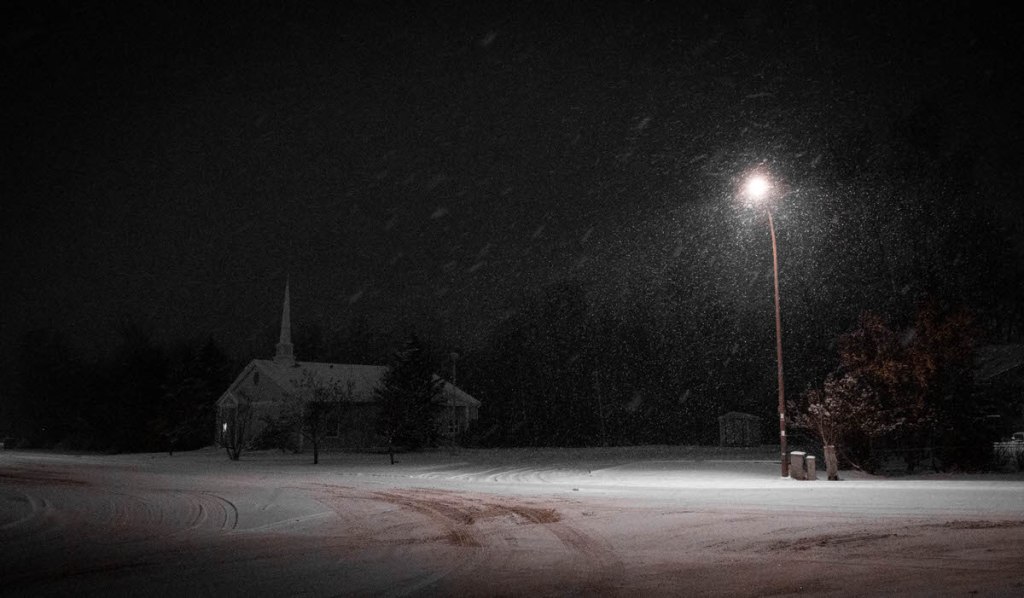
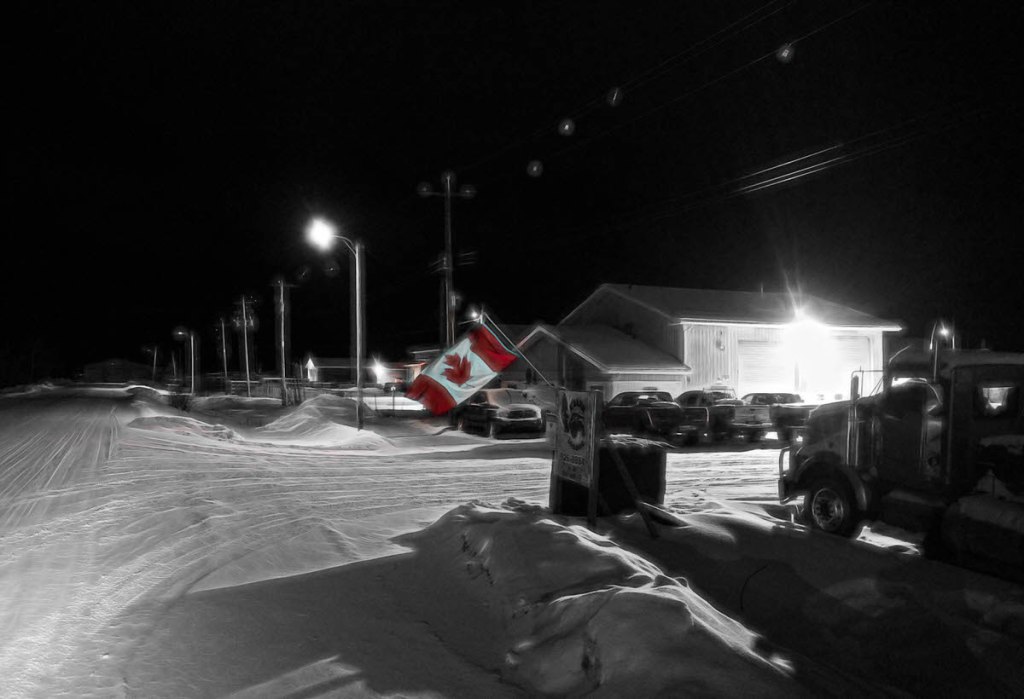
Winter Walks / Cycling in High Level, Alberta
Dunvegan Historic Site and Dunvegan Bridge – Alberta
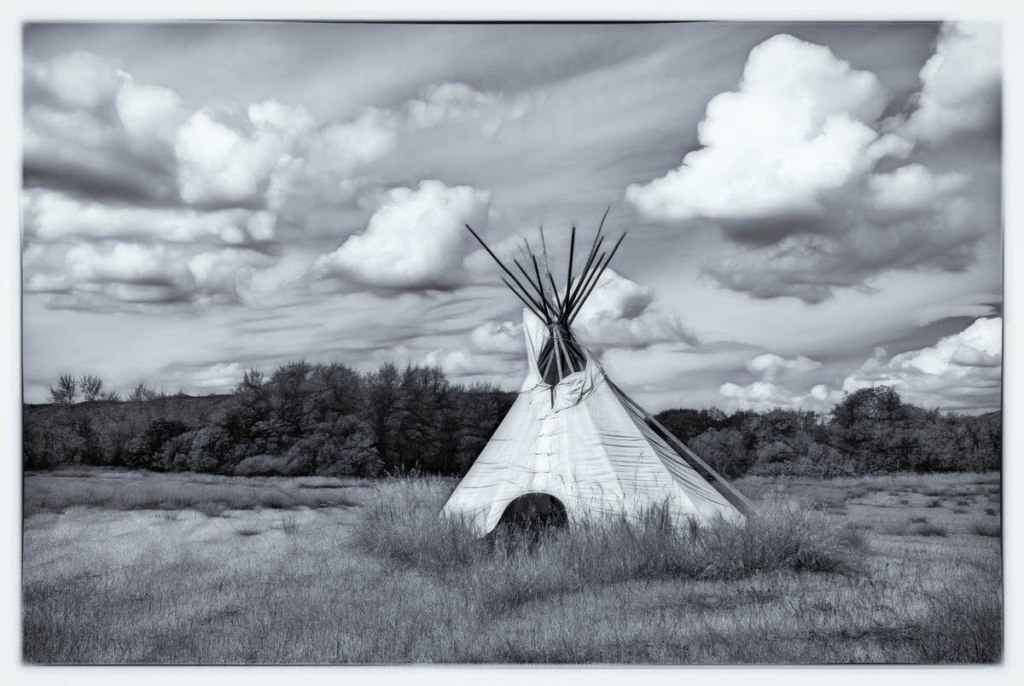
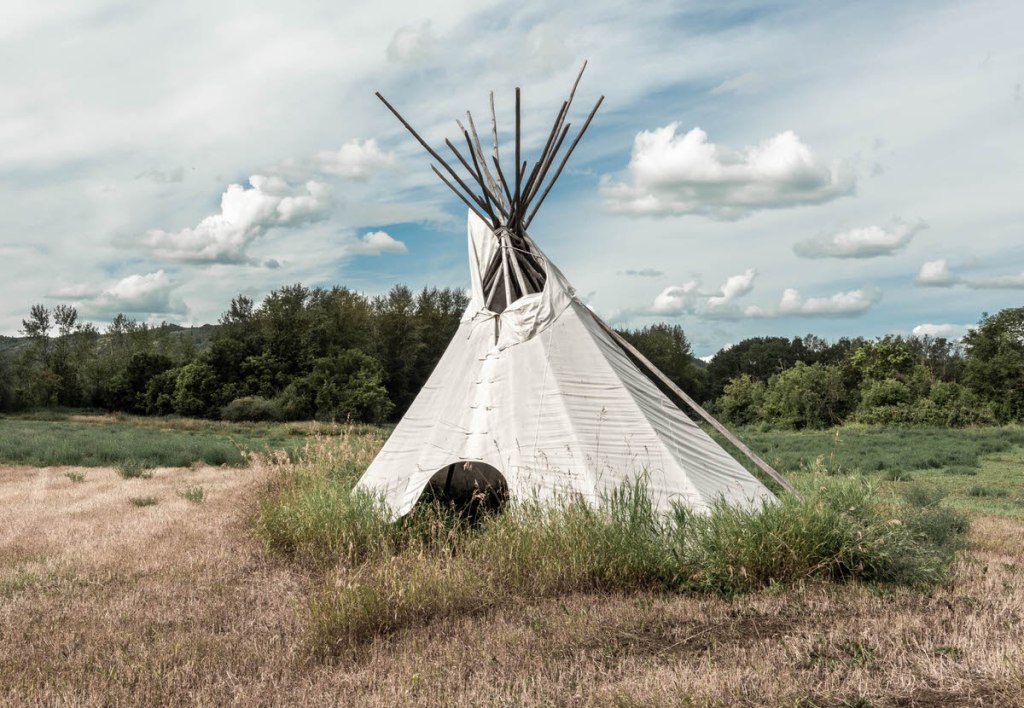
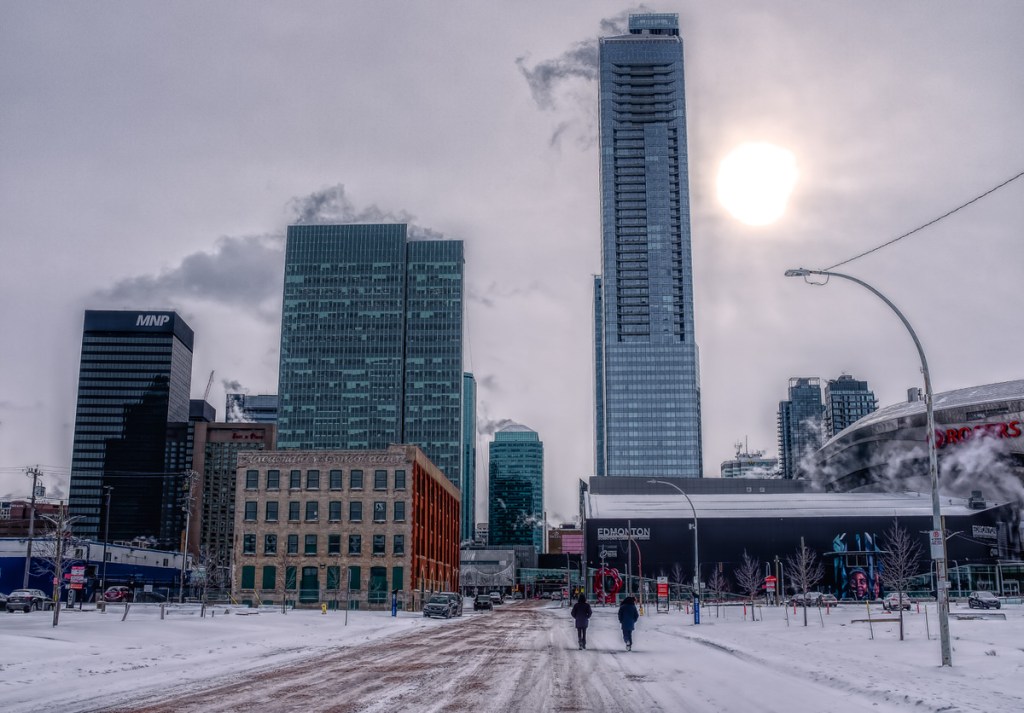
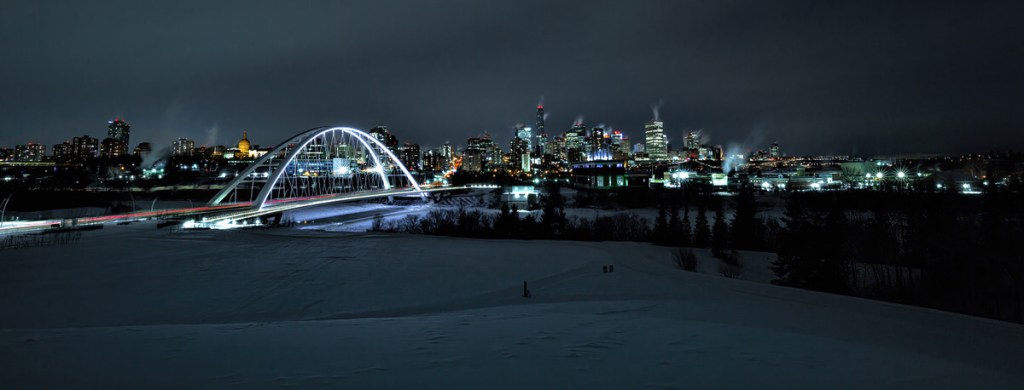
Edmonton, Alberta
Fort Vermilion, Alberta
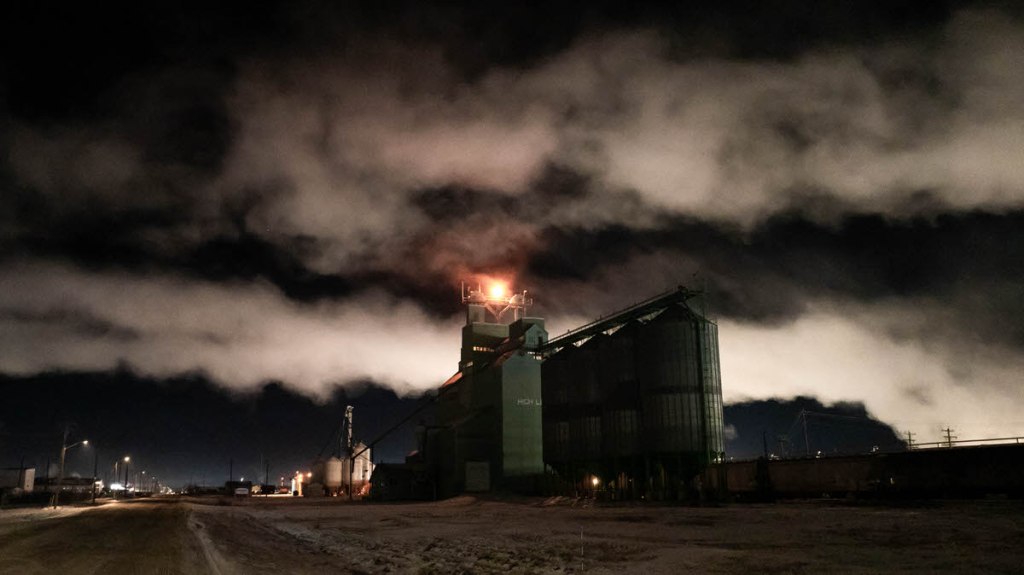
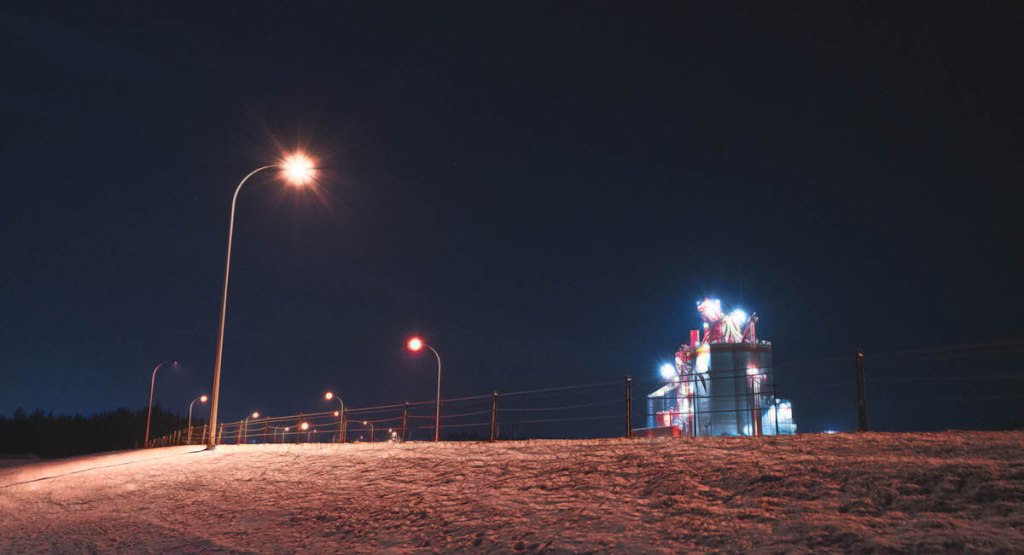
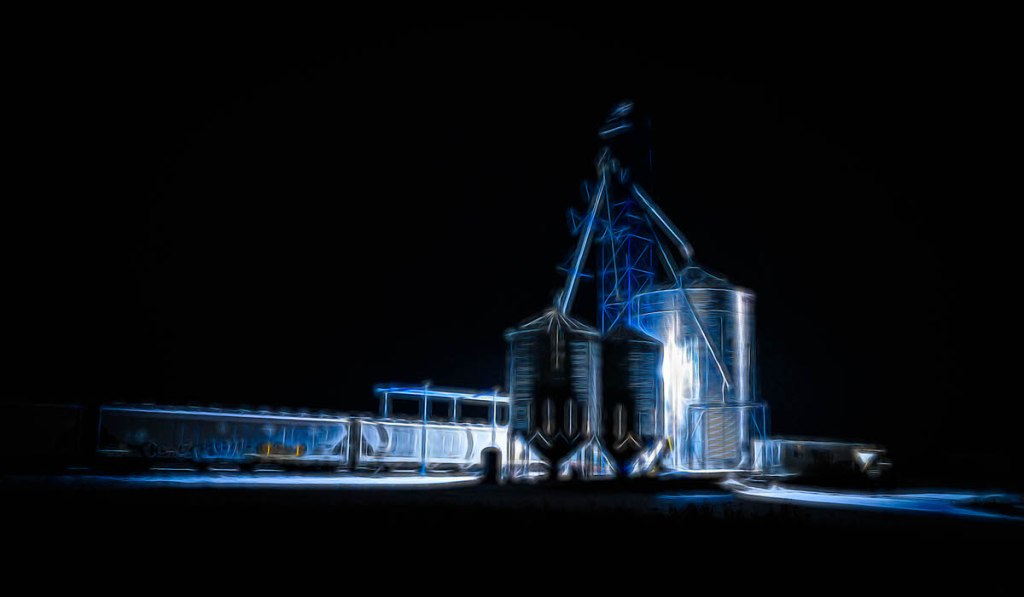
Grain Elevators
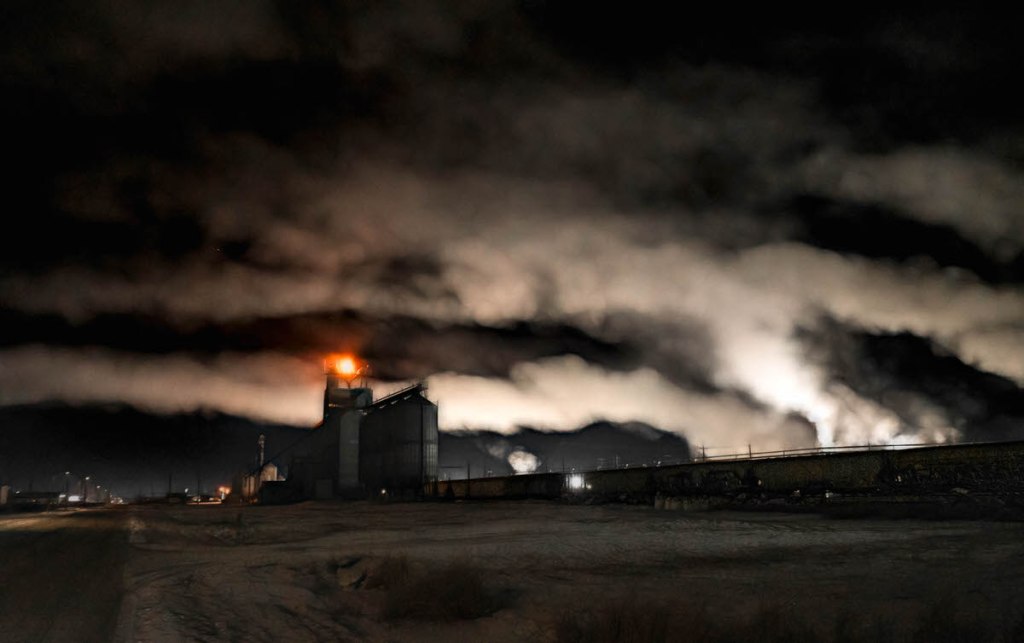
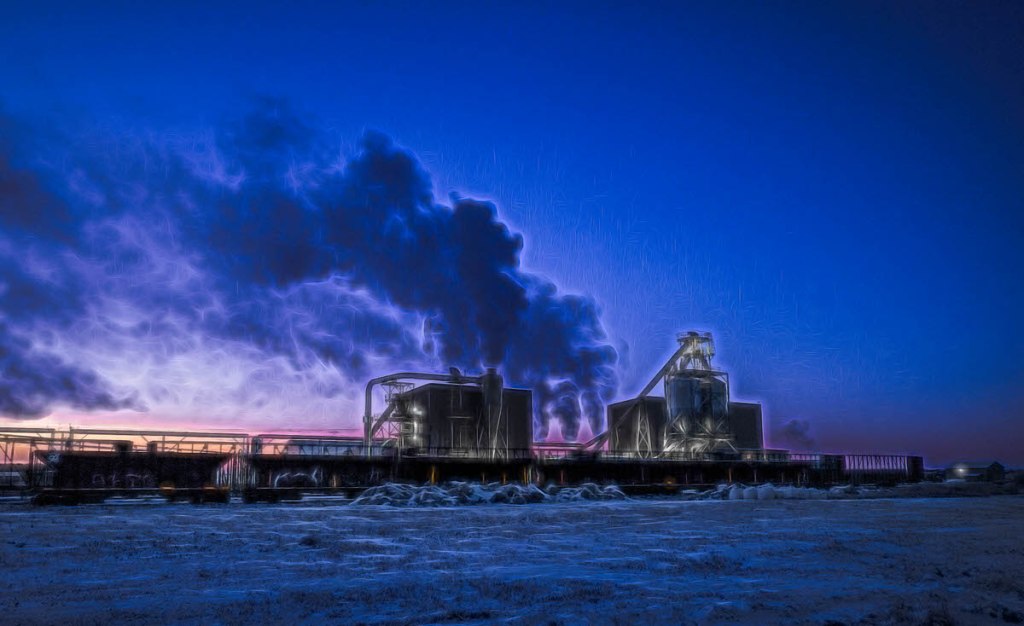
Industrial Area (Morning Rides – Winter and Summer) – High Level
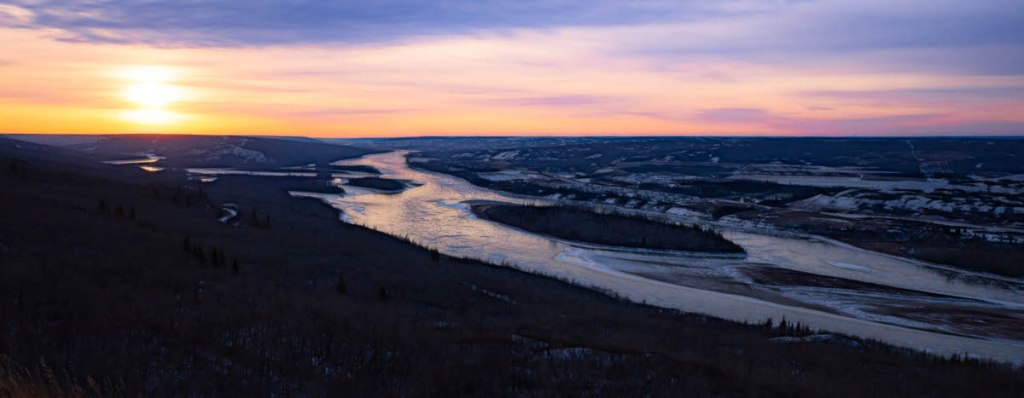
Peace River Area, Alberta
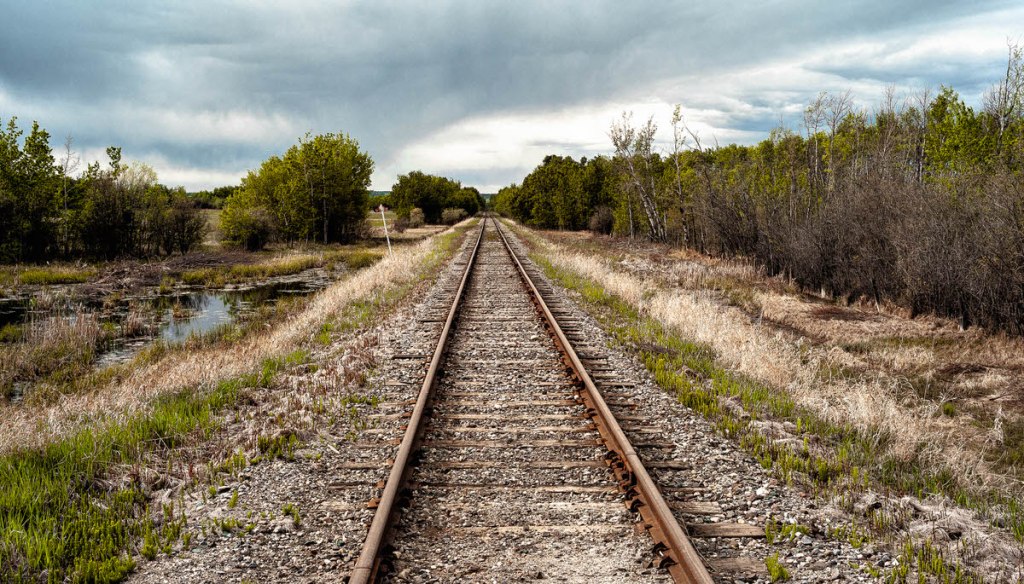
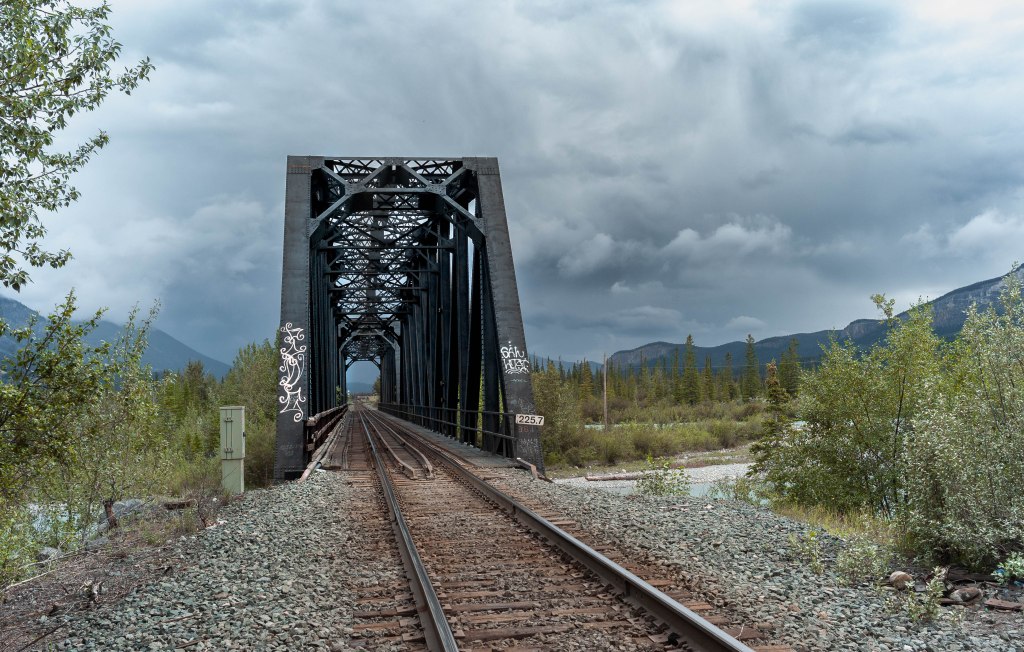
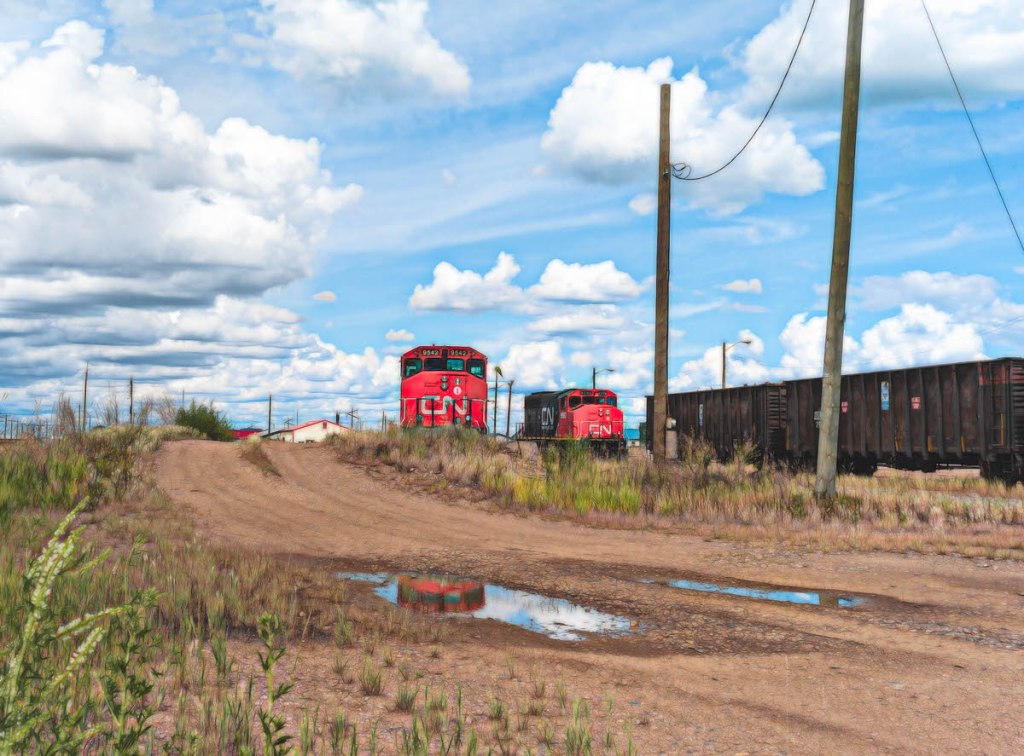
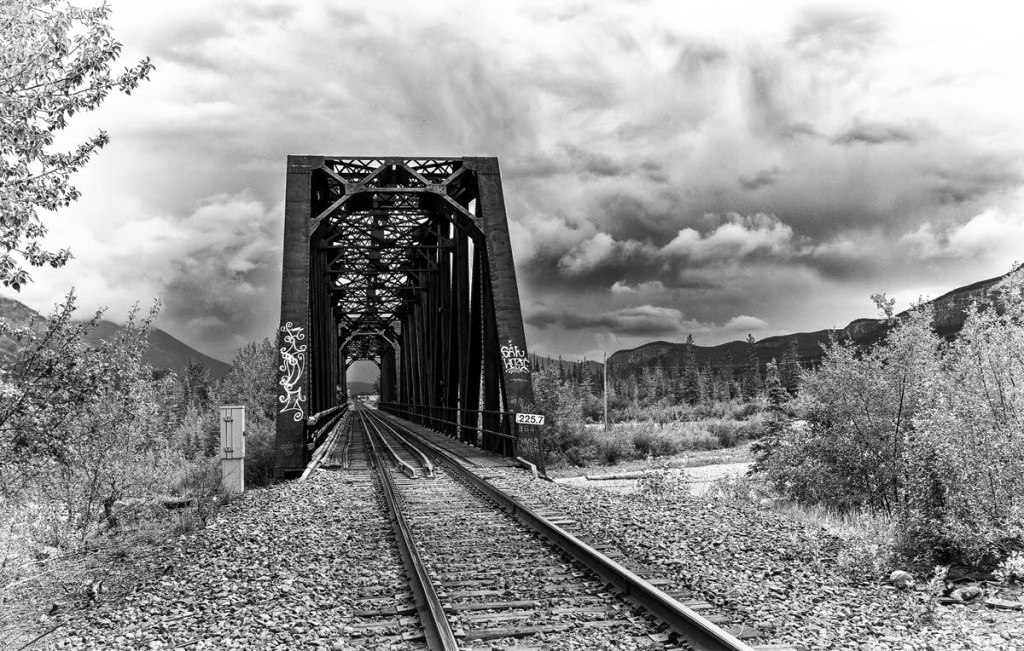
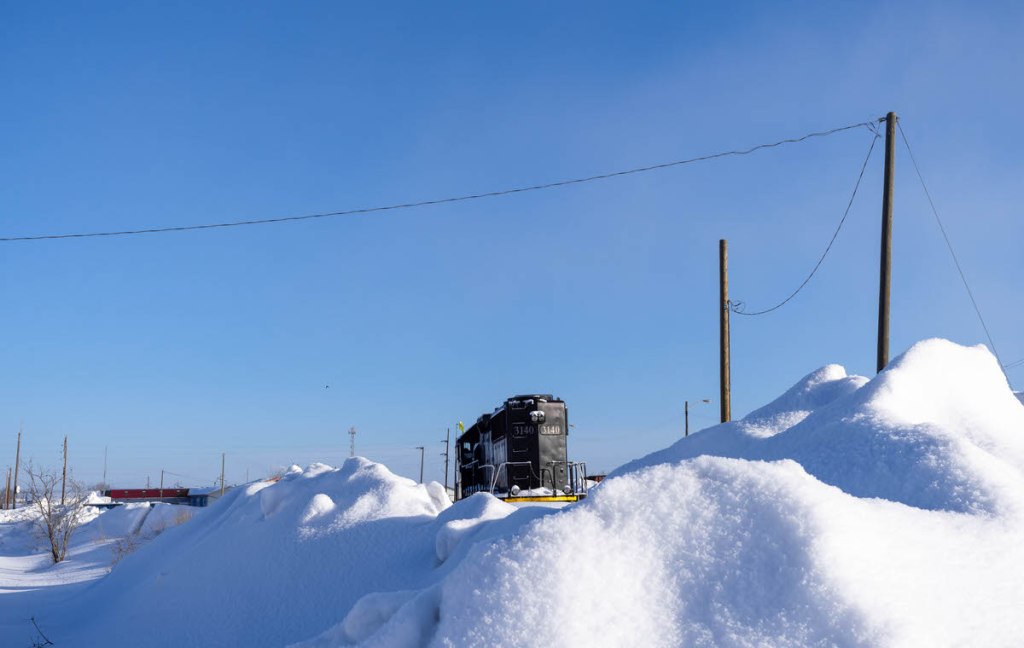
Trains
Quotes & Concepts to Consider & Inspire
Oubaitori – (1) ‘the idea that people, like flowers, bloom in their own time and in their individual ways (Victoria Ericksen);’ (2) ‘the meaning of oubaitori is that, instead of comparing ourselves to other people, we should be focusing on our own growth, and valuing what makes us special (https://vocab.chat/blog/japanese-oubaitori.html).’
“It is not the answer that enlightens, but the ‘question’ (Eugene Ionesco).”
‘Whatever you can do, or dream you can, begin it. Boldness has genius, magic and power in it (Johann Wolfgang von Goethe).’
‘You’ve got what it takes, but it will take everything you’ve got.’ – Anonymous
‘I have discovered in life that there are ways of getting almost anywhere you want to go, if you really want to go (Langston Hughes).’
Listening to: David Gray’s ‘Sail Away,’ Martyn Joseph’s ‘One Step Up,’ Over the Rhine’s ‘Who Will Guard the Door,’ Amanda Marshall’s ‘Believe in You,’ Van Morrison’s ‘Behind the Ritual,’ and Billy Joel’s ‘This is the Time.’
Rosanne Cash says about songwriting, “… Songs are there in the ether, and you just have to have your skills good enough to get them.” Like acapella singer Bobby McFerrin, Cash believes that as a songwriter, “You catch songs…. [and,] … you have to have your catcher’s mitt on…. Sometimes I’m afraid that if I don’t get it down, then somebody else will (Rosanne Cash, Time Traveler – On Being with Krista Tippett, 5 January 2012, https://onbeing.org/programs/rosanne-cash-time-traveler/ ).”
Photography is like that – about being present and ready for what you see, connecting with the moment, and ‘catching the image’ and its import as it confronts you.
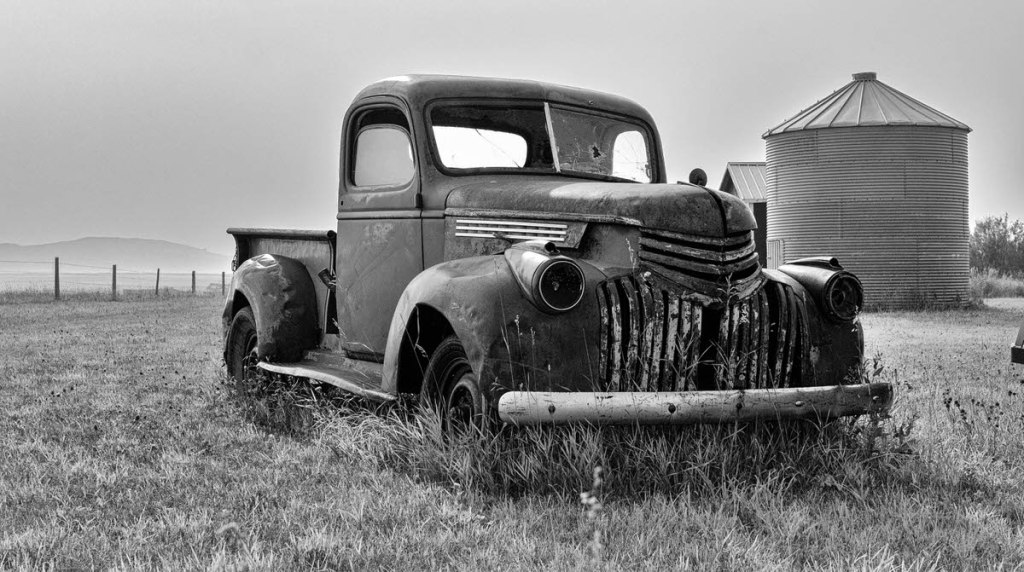
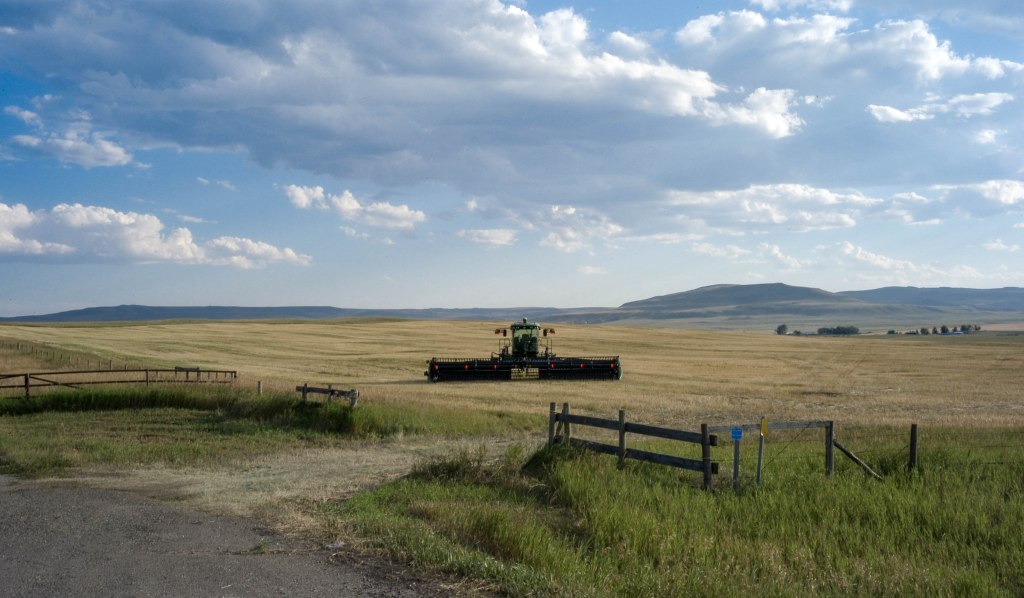
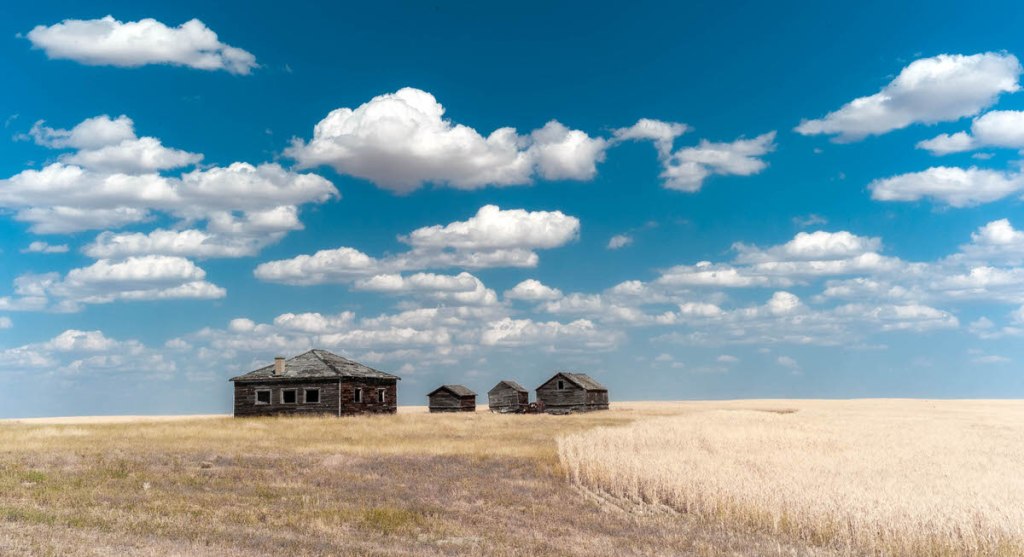
Wheat Kings and farmsteads served as points of departure. Stirling, Wrentham, Skiff, Foremost, Orion and Manyberries were place names in my travel – each had wooden grain elevators from the previous century used to stockpile grain for railway transportation. Some appeared to remain in use. Grey, weathering wood of still-standing derelict farm buildings clustered in disused prairie farmland with the rusting reds and browns of grain trucks – abandoned, yet holding memory to the past. General stores no longer in use faded in terms of colour and signage. I and my cameras went about image making.
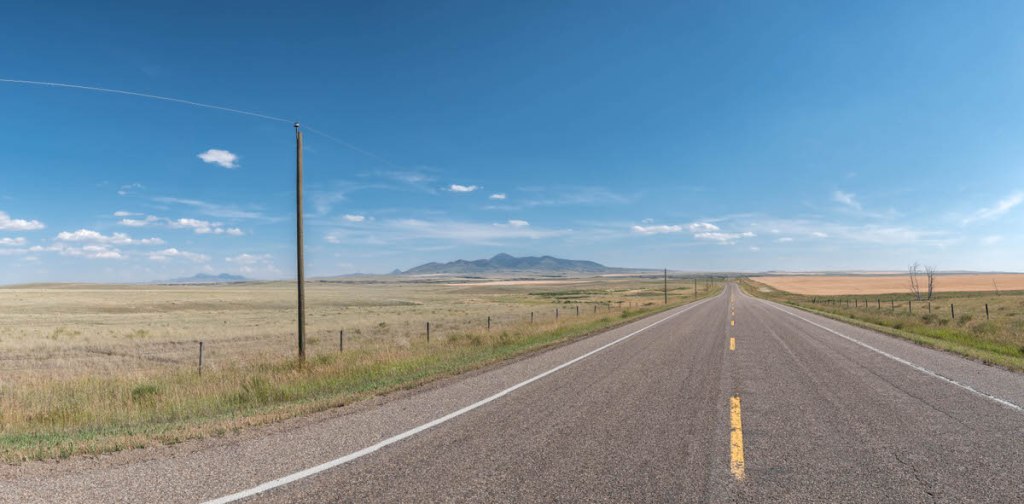
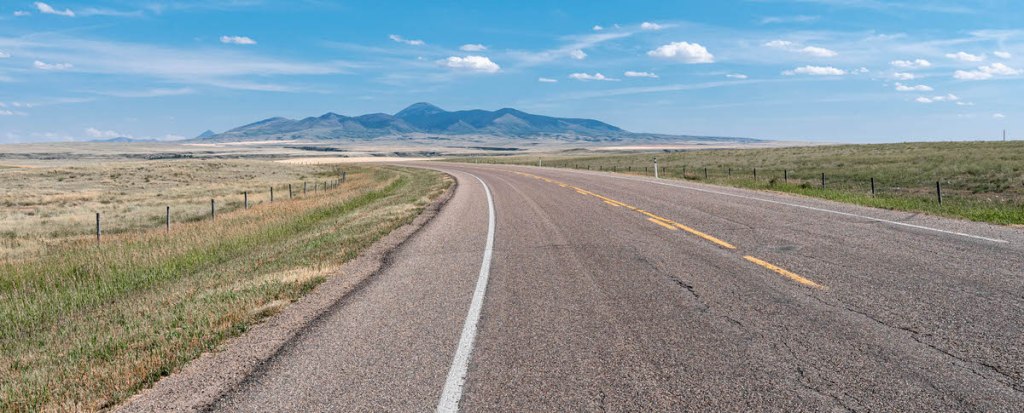
As I meandered, making exposures, travelling east and south, then west toward Milk River, two or three mountains loomed, growing more prominent in Alberta’s southernmost prairie, an unexpected juxtaposition – mountains within the prairie. I photographed them in stages as I travelled closer to them. While the mountains seemed to span the Canada – United States border, I was seeing the Sweetgrass Hills of Montana and evidence that volcanoes were a part of the prairie shared between Montana and Alberta. My mobile phone carrier began sending SMS messages advising of the need for a rate-plan change should I cross into the United States and need to use my phone. They were looking out for me. Good!
At this point in my summer, I was re-reading Thomas King’s novel, ‘Indians on Vacation,’ which has become one venue for Canadians to begin opening out Canada’s treaty history following the release of the National Truth and Reconciliation Commission report in 2015. Characters, Blackbird Mavrias (or ‘Bird’) and Mimi, are vacationing in Prague, in the Czech Republic.
In the interrogatory phrase they encounter with familiar cadence, ‘Where are you from?’ an equivalency of people among peoples, vacationers among vacationers, is drawn out. At play is Bird and Mimi’s nationality, which, while Canadian, shifts as they share it between Canadian (from Canada) and their indigenous first nation identification as Cherokee (Bird has Greek and Cherokee lineage) and Blackfoot (Mimi). ‘Where are you from?’ … is always a jumping-off point for being known and getting to know others.
Bird Mavrias is a writer and journalist looking toward retirement. For Mimi and Bird, considering Prague’s history, exploring it as a city, and its current events – all serve to jostle them, surfacing memories. Their conversations move them through their past and occasionally surface facts from the Truth and Reconciliation Commission’s final report – moments of poignancy, disappointment and numbing revulsion concerning the unimaginable. Somehow, what they remember almost becomes a Viktor Frankl choice point to move forward, to move on.
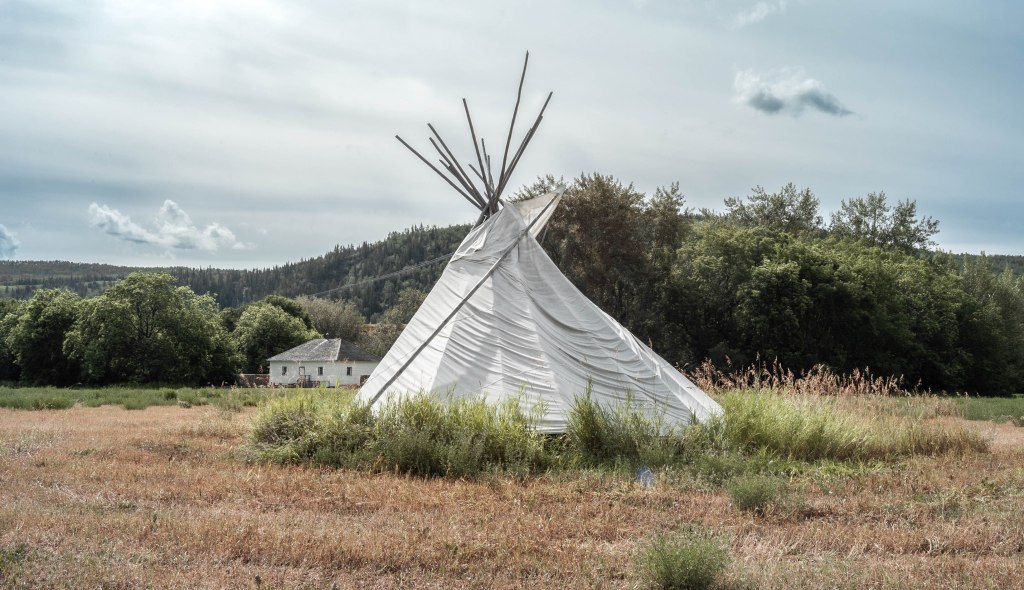
Bird recalls a story he covered regarding an encampment at ‘Writing-On-Stone’ in southern Alberta. Within the park, on the southern side of the Milk River, an indigenous woman sought to gather and practice traditional ways with those of like-mind, ways of their people(s) on their people’s land. The story recognizes a need to find and return to traditional ways. The story looks at the breaking down of the camp and moving trespassers from the site. Bird’s recollection recalls the impotence of the situation – what it did not achieve and its disappointment.
In my drive, moving south and east toward Aden from Milk River and then toward the Sweetgrass Hills of Montana, I came upon this site at ‘Writing-on-Stone Provincial Park.’ In Blackfoot, this site is referred to as Áísínaiʼpi, a word meaning ‘it is pictured’ or ‘it is written.’ The conceptualization of photography as being ‘writing with light’ and exposure of what the camera witnesses seem close to indigenous intention here, and the word Áísínaiʼpi seems as though it should be part of a photographer’s vocabulary. In both cases, the terminology refers to memory being held to be witnessed, considered and understood.
Gauging what remained of my day in terms of kilometres, gas and final meal, I began my return drive to Lethbridge and my hotel quite late. Tired at the end of my drive, I had accomplished a lot of what I intended – a day open for discovery, thought and camera work. I found Wheat Kings. I encountered the big sky of southern Alberta’s prairie landscape. I had scouted and became acquainted with an area of Alberta I was interested in and will return to.
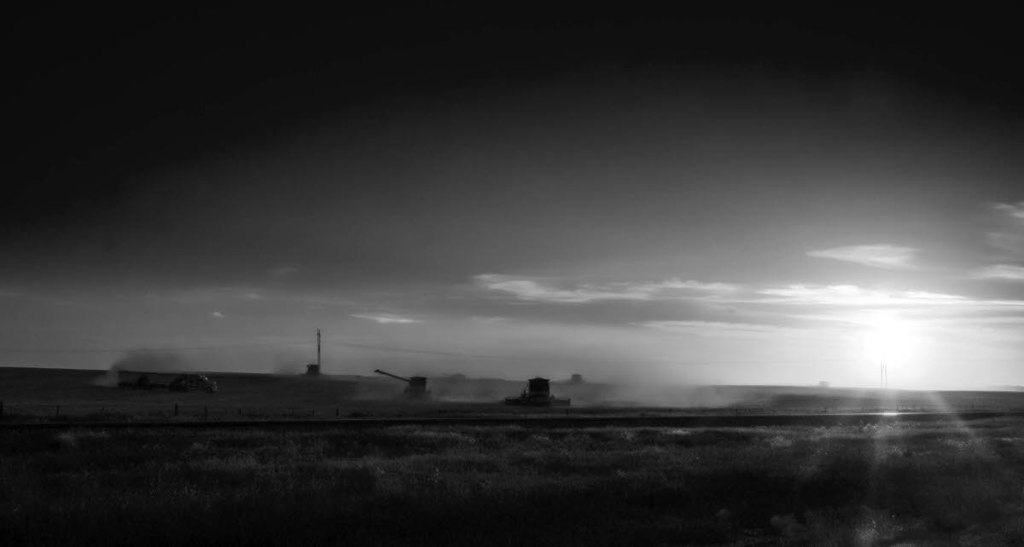
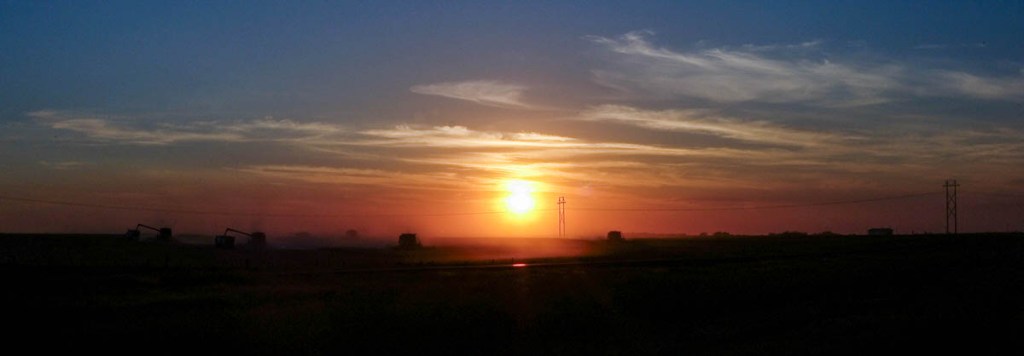
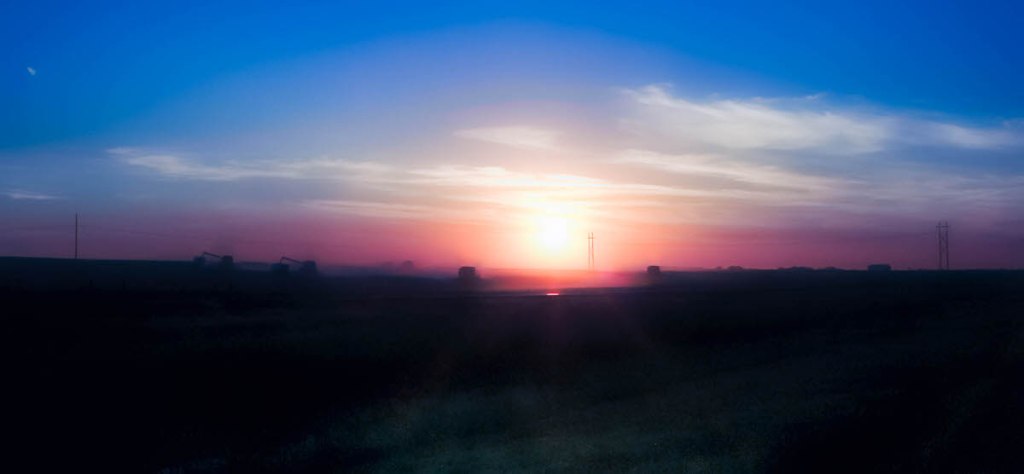
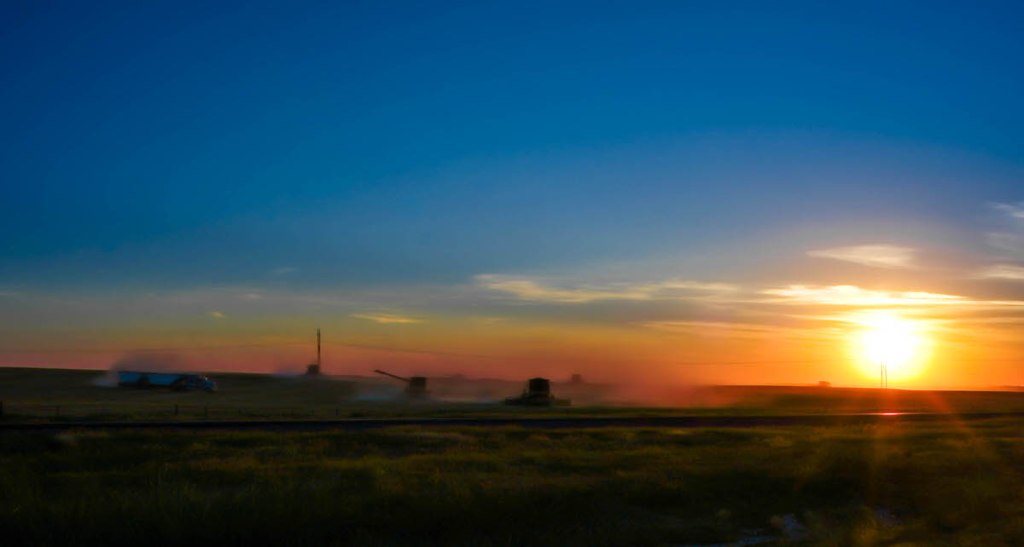
Harvest, though, caught me by surprise. Somewhere between 10:30 – 11:00 p.m. I drove past this late-night harvest scene below. The sight was extraordinary for me because the grain harvest in northern Alberta occurs from late August to mid-September. Here, it was an extraordinary sight … to see as many as five combines gathering grain from the prairie immensity. These mid-August images contain silhouettes of combines and grain haulers outlined in black against a colourful backdrop of setting sun, sky and prairie. People are at work, doing this day’s work as daylight diminishes.
Catcher’s Mitt & Day’s End
My day did not end there. Returning late to Lethbridge meant supper would be drive-through or order-in, and I hadn’t eaten for hours. Near midnight, a McDonald’s provided two quarter-pounders with cheese and a pop. A young, homeless teen hid in the shadows of the building beyond the sight of the cashier. As I moved from the drive-through, the teen presented cardboard on which was written, ‘Needing food. Can you help?’ I gave her twenty dollars, then left, returning to my hotel.
In all this, consideration of Thomas King’s novel has continued to intrigue me in its detail, humour, happenings, intention, and reference to areas of this country I know. It seems to hold the potential to prompt moving toward a good understanding of historical, colonial or treaty complexities for treaty people on both sides of each treaty. The narrative leaves off with vacationers returning from a vacation to the stability and familiarity routine offers but with questions and urgings about what’s next. Often returning from vacation, though, we are empowered (and perhaps have gained perspective enough) to consider ‘the what’ of what’s next. For Bird and Mimi, Tofino is on the table.
A year later, the photographs gathered continue to serve as a point of departure, not just in terms of images or photographic projects, but as a jumping-off point for thought and perspective gathered from such thought. A catcher’s mitt was at play within the day in song, thought and photos.
Quote to Consider / Inspire: “I like it when one is not certain about what one sees. When we do not know why the photographer has taken a picture and when we do not know why we are looking at it, all of a sudden, we discover something that we start seeing. I like this confusion.” – Saul Leiter.
Listening to: Courtney Marie Andrews’ ‘I’ll be Thinking On You,’ Ben Harper’s ‘Yard Sale,’ Terra Lighfoot’s ‘One High Note,’ GA-20’s ‘Dry Run,’ Iris Dement’s ‘The Sacred Now,’ Alberta Hunter’s ‘I’ve Got a Mind to Ramble,’ and Kue Varo’s ‘Yip Yip.’
The weather was that of early spring – a day grey and overcast, later filling with snow flurries, then shifting to bright sunlight among clouds as I drove south from Peace River, Alberta. I was taking time … to look around, to explore, to learn more about a region I drive through regularly but through decades had not yet investigated.
In December 2022, interested in the Peace River’s river valley’s terrain, I asked a farmer about possible vantage points for viewing the river. The river, from one kilometre to a kilometre and a half vast as it moves through an area I teach in, has intrigued me since my wife and I flew into a fly-in teaching community three decades ago. Two locations were recommended to look over the town of Peace River and along the river valley. The Twelve Foot Davis gravesite was high above the town on its east side. The second recommendation caught my attention – the Sagitowa Friendship lookout point had been described as being along the road to Judah, the hamlet of Judah, perhaps forty minutes south and west of Peace River along a route that follows the southern river bank. This lookout point allows the eye to travel west and south following the river; it allows for a look down and north to the town of Peace River’s south end, up to its north end; it permits looking across the river to the Shaftesbury Estates, the West Peace area, Saddleback Ridge and the Pines.
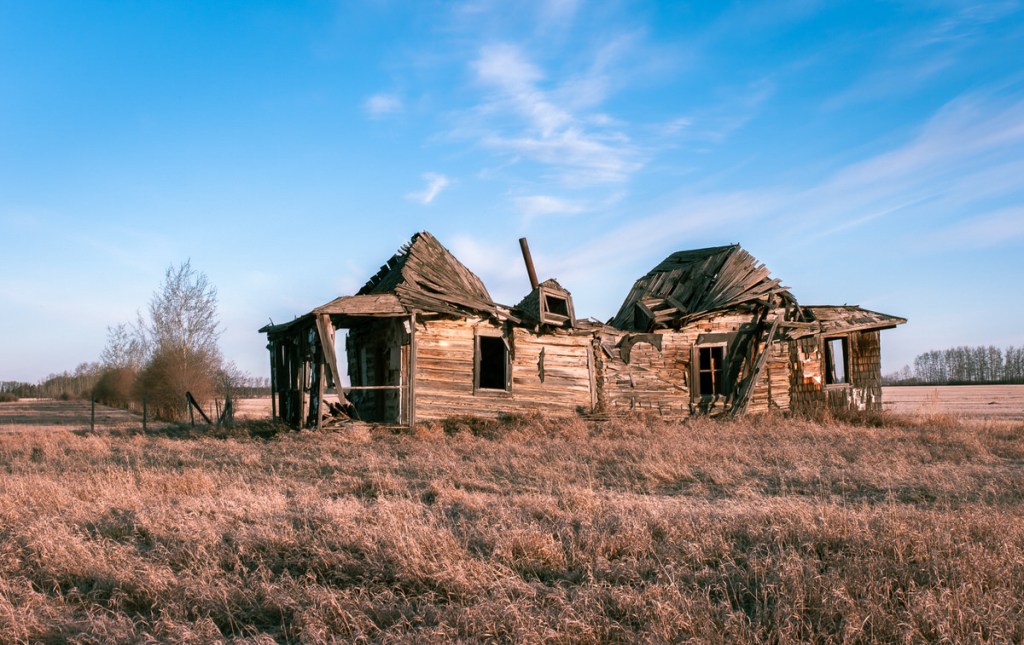
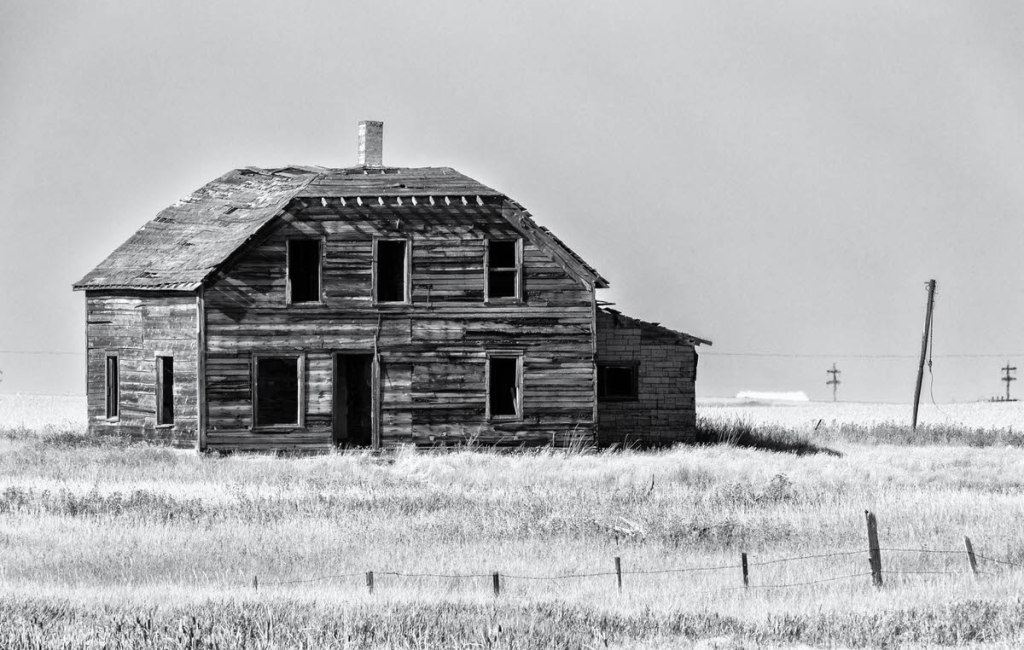
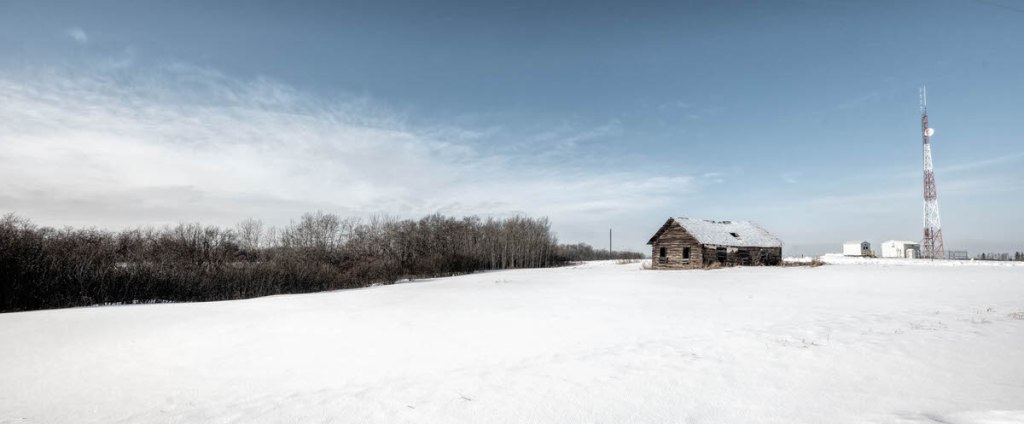
I was at the Sagitowa lookout working with my camera. After several shots, it began to snow. I packed up and began a drive toward Judah. In the early afternoon, the sun came out, somewhat harsh in terms of the contrast of light and shadows. Within the hamlet of Judah, I found treasure – this homestead.
Quotes to Inspire – two quotes have found me this week; both have value for a photographer. First, ‘We don’t see things as they are. We see them as we are (Anais Nin).’ The second is one that seems related, ‘People only see what they are prepared to see (Ralph Waldo Emerson).’ This quote highlights a photographer’s readiness to see a given subject and perhaps maturation in terms of seeing that subject. It attaches to a follow-up statement, ‘If you look for what is good and what you can be grateful for, you will find it everywhere.’ So, perhaps Emerson’s quote is a nudge out-of-context but still has import as we use it.
Listening to: Motorhead’s version of David Bowie’s ‘Heroes,’ Fred Eaglesmith’s ‘Can’t Dance,’ Pickin’ On U2 – A Bluegrass Tribute’s version of ‘One,’ and Bono’s ‘Surrender: 40 Songs, One Story’ audiobook reading.
On the final day of 2022, I drove from Lethbridge in southern Alberta to High Level in northern Alberta, a long fourteen- to fifteen-hour journey. As a return drive, I had started early, reached Edmonton just after noon, and continued northward through the day. In that time, I concluded my listening to an intriguing audiobook, ‘The Splendid and the Vile’ by Erik Larson, about Winston Churchill written recently and with access to documentation from previously unavailable sources; the book compiles memoirs and correspondences into a more intimate view of Winston’s world – Britain and its people, colleagues, family, friends, brokered loyalties, and royalty – all at a time of war, World War II.
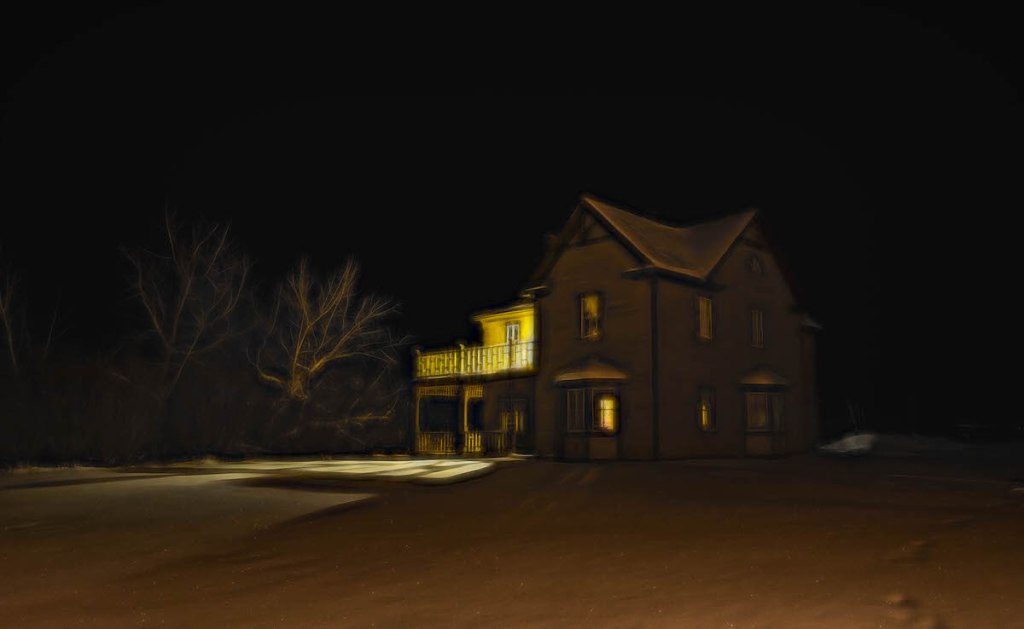
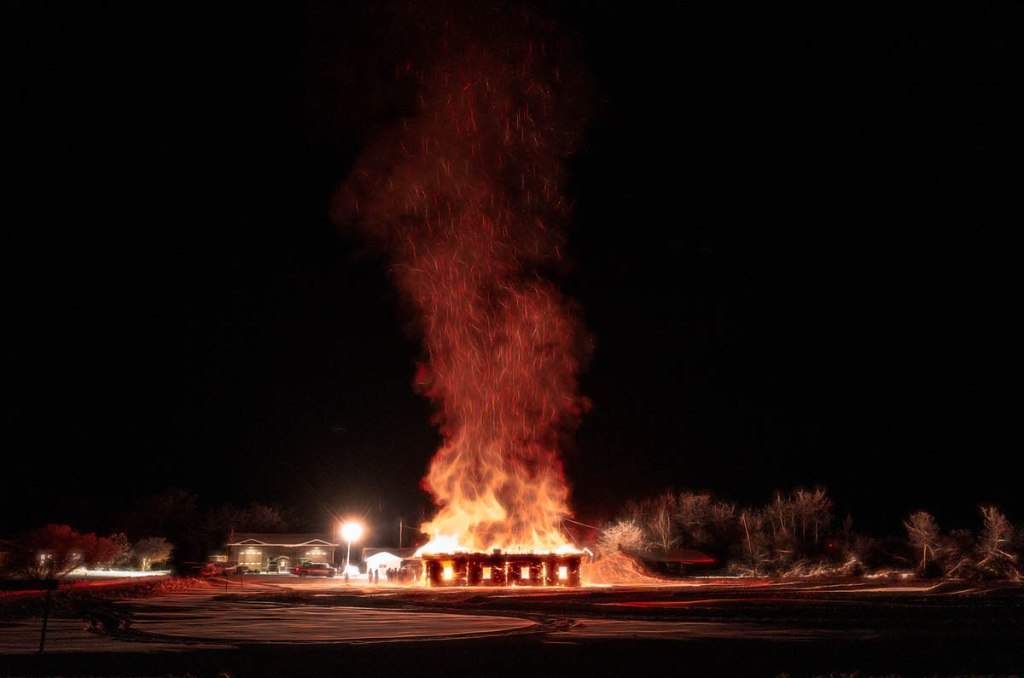
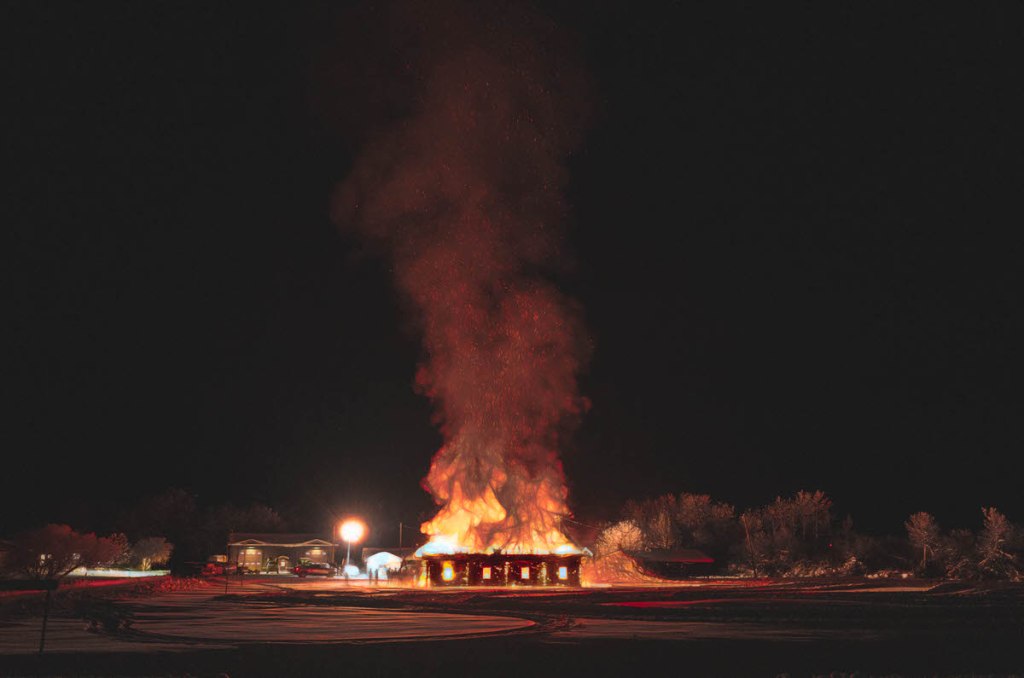
Near 9:00 p.m., my drive brought me to Manning, Alberta, where I fueled my Corolla, got snacks and began the last leg of my journey home. Northward, cresting the hill leading out of Manning, clouds in the night sky reflected bright, red-orange light. As I drove toward the Manning airport (ahead, on my left), flames reached high into the sky.
A building was burning, not at the airport, but at a farm on land immediately preceding the airport. The building was one I had considered photographing through the years. But it had been dressed down. While the overall shape and architectural style held interest, the building’s windows were boarded up, and the structure had been painted a dark chocolate brown. It was more a dark brown brick than architectural interest worthy of a photograph.
A week later, driving south, the building was absent. Nothing remained. The area, where the building had stood, was flat, cleared of debris and now offered a clear, unimpeded view from the farm home out to the service road and highway. Winter likely had been the safest time to burn this farm building, and burning the structure may have been the most efficient way to remove it.
Listened to: Erik Larson’s ‘The Splendid and the Vile: A Saga of Churchill, Family, and Defiance During the Blitz.’
Quotes to Inspire (1) ‘I walk, I look, I see, I stop, I photograph (Leon Levinstein).’ (2) ‘Photography must be integrated with the story (James Wong Howe).’
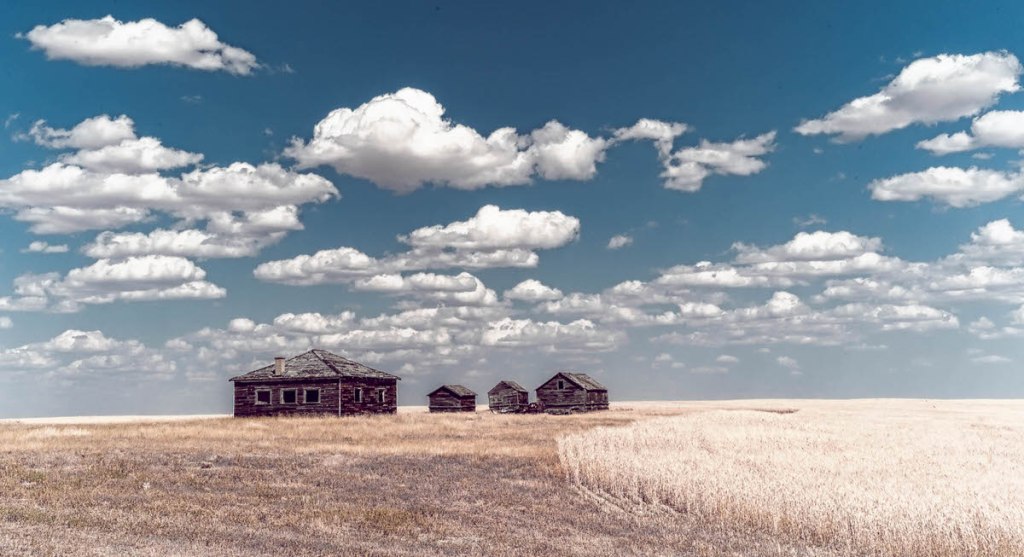
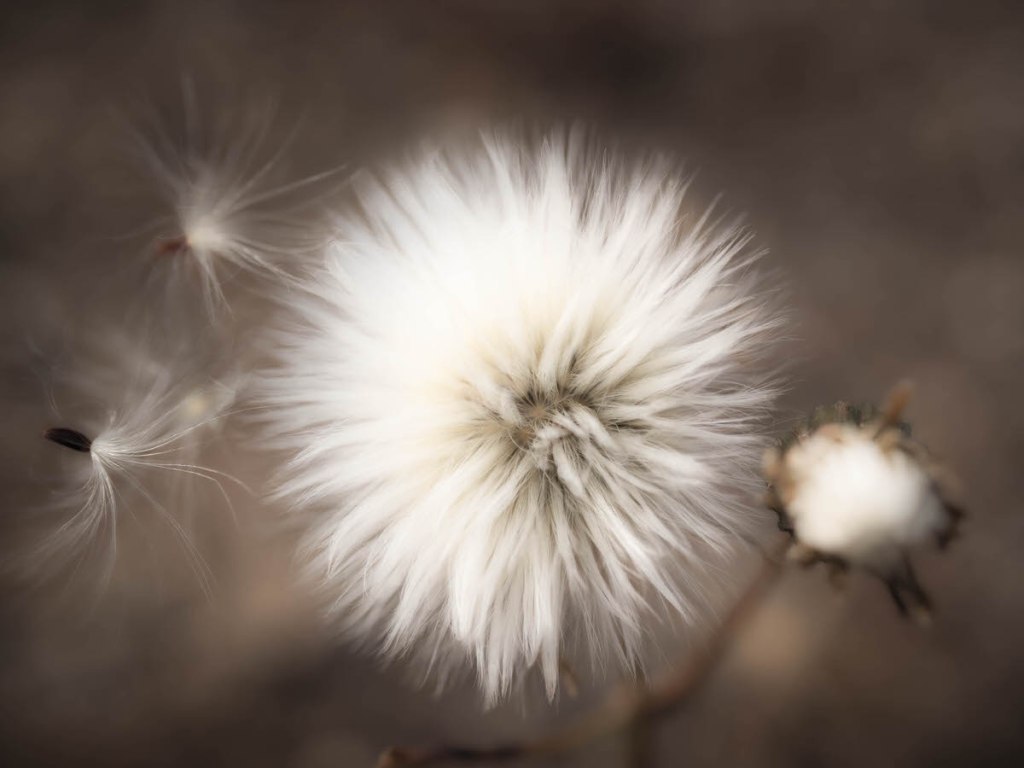
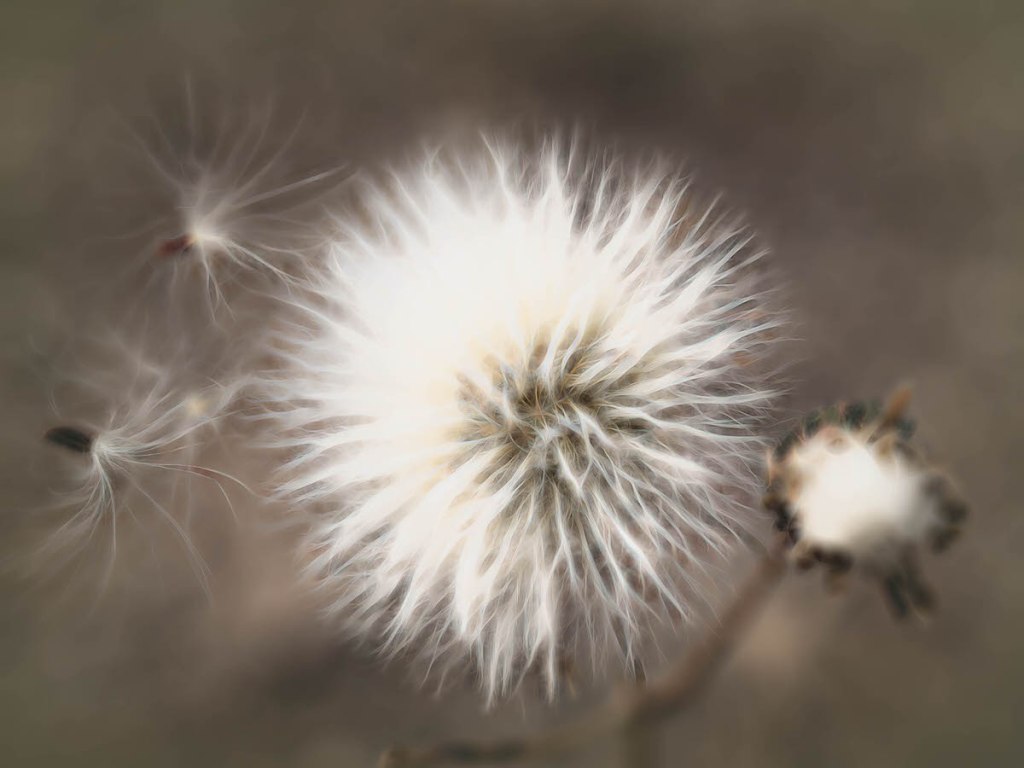
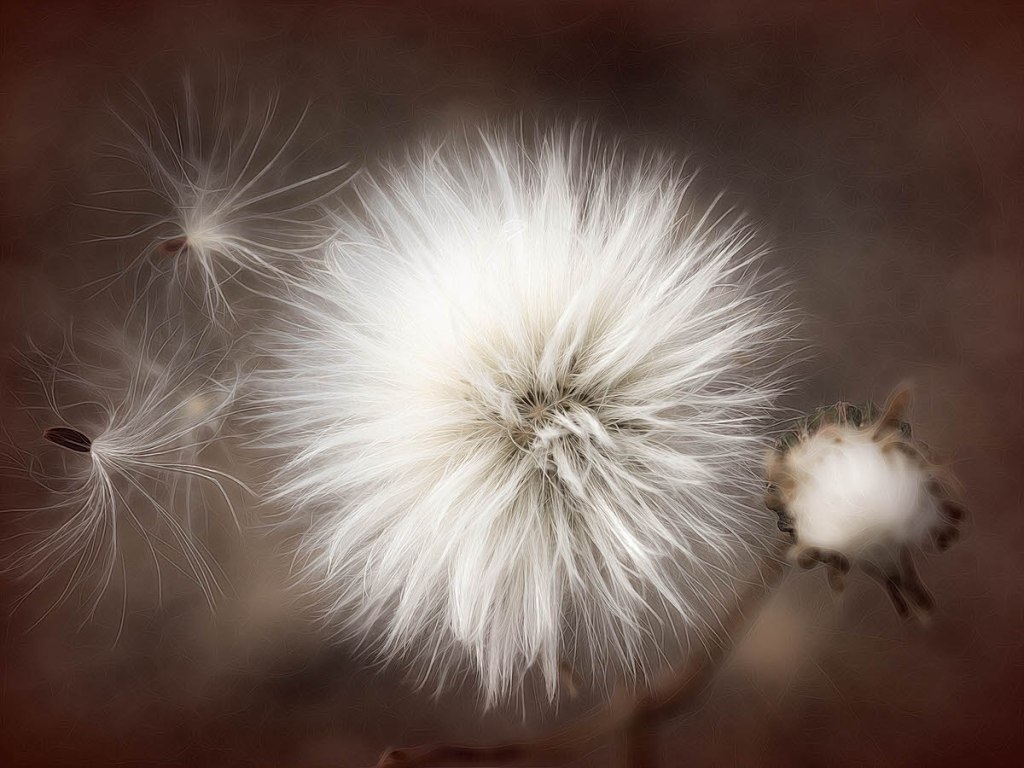
In my free time, I looked back through my Lightroom catalogue this past summer. I took the opportunity to view images I had taken a while ago. The intent was, in some ways, a historical look back. In another way, it became an opportunity to edit images I like using my present workflow. This dandelion image became a series of different edits – these edits. Looking back, I was surprised that this is a photo from October 2016 and that I had taken the image with my Olympus E-M5 Mark II. Pocketable and light, this camera was easy to use, rendered good images and was a camera I enjoyed using.
Quote to Inspire – “If you argue for your limitations, you get to keep them. But if you argue for your possibilities, you get to create them!” ― Kelly Lee Phipps.
Listening to: Spencer Elliott’s ‘Torque,’ Charl du Plessis’ ‘Ode to Peace,’ Pat Green’s take on U2’s ‘Trip Through Your Wires,’ Birdy’s ‘Quietly Yours’ from the ‘Persuasion’ soundtrack, and 100 Mile House and ‘1952 Vincent Black Lightning.’
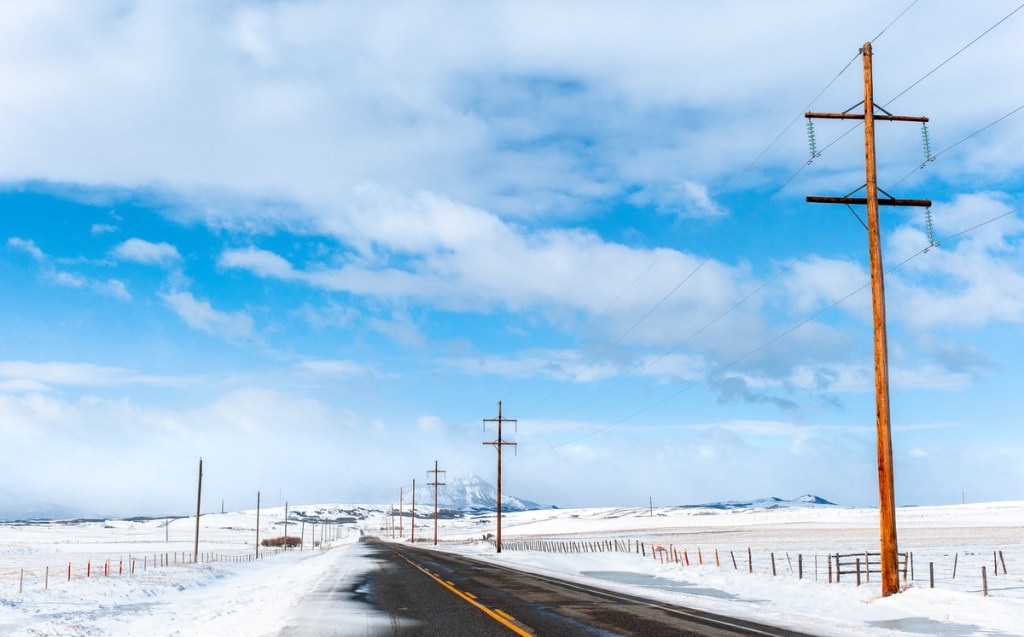
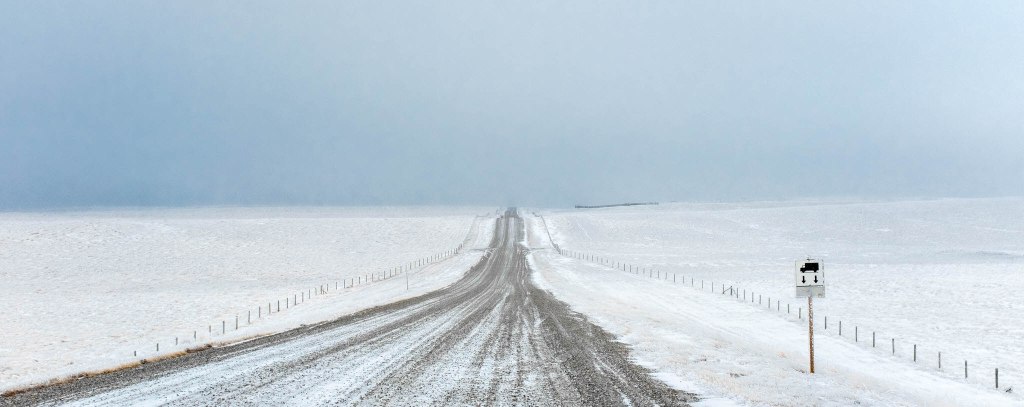
Three weeks back, amid mileage and a COVID pivot, on a road west in Southern Alberta, I was able to stop, get out of my truck, frame this image and two others, and return to my truck and motor on. Many elements make this image come together, not the least of which is the encounter of colour within a monochromatic image. Liking it.
Quote to Consider / Inspire – “One should not only photograph things for what they are, but for what else they are.” – Minor White, Frames Magazine, February 2021.
Listening to – Kathleen Edwards’ ‘Take It With You When You Go’ and Appalachian Road Show’s ‘Don’t Want to Die in the Storm.’
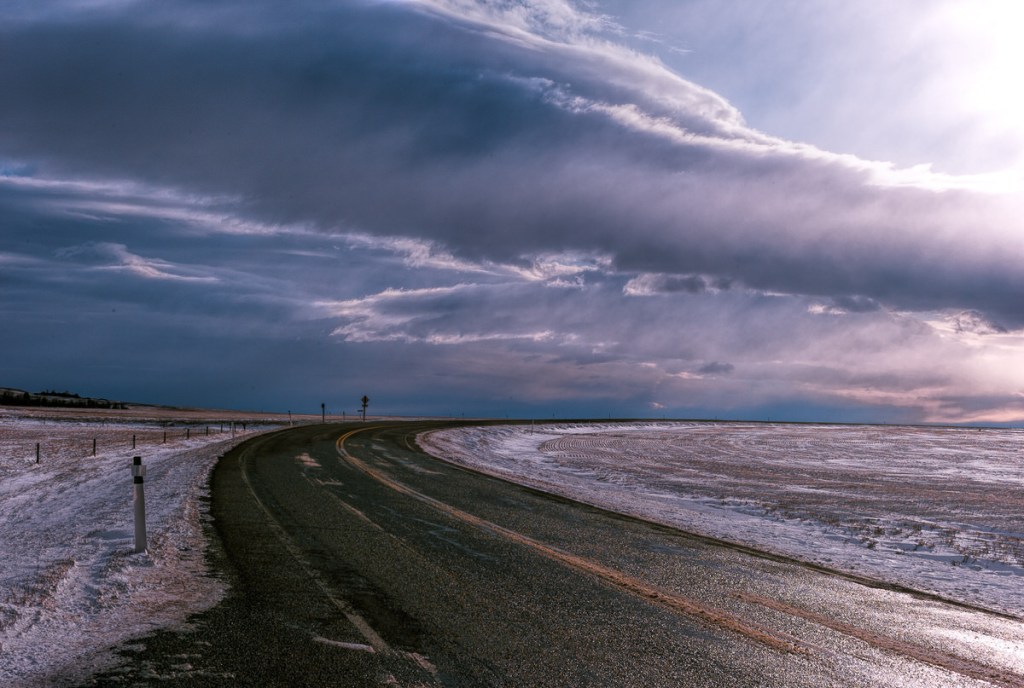
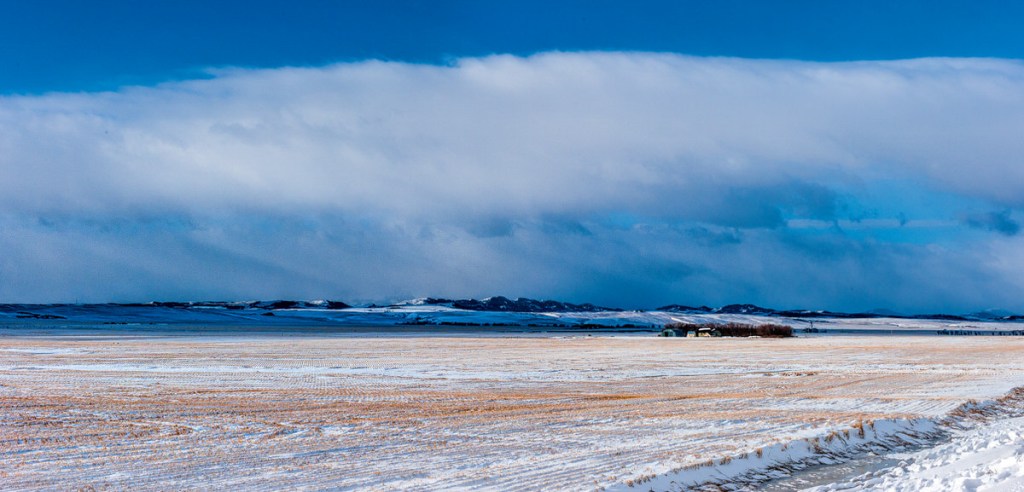
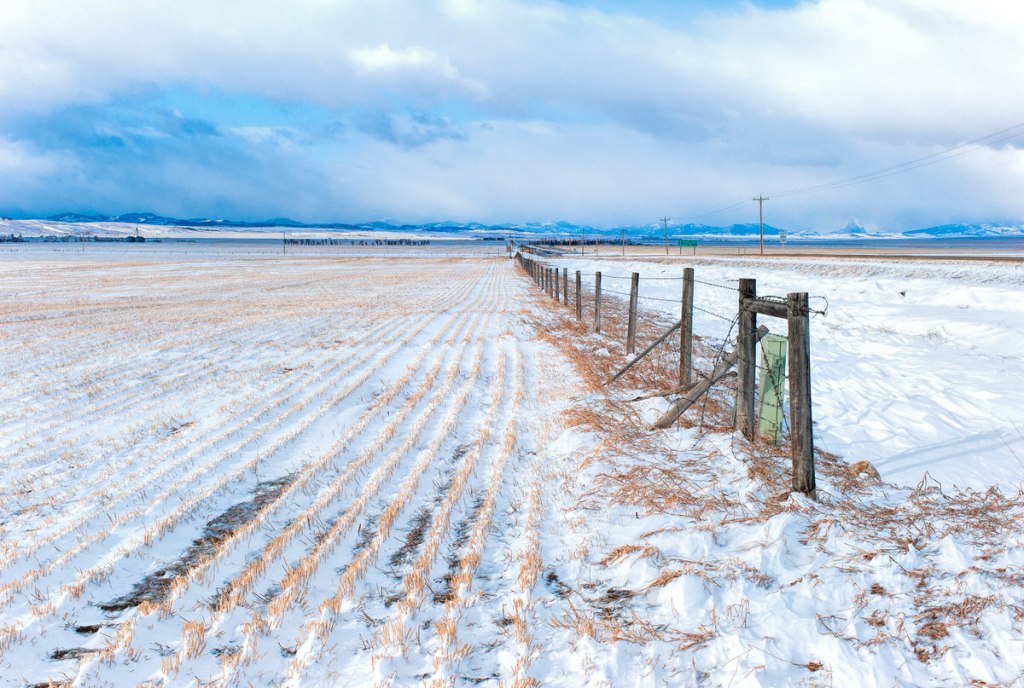
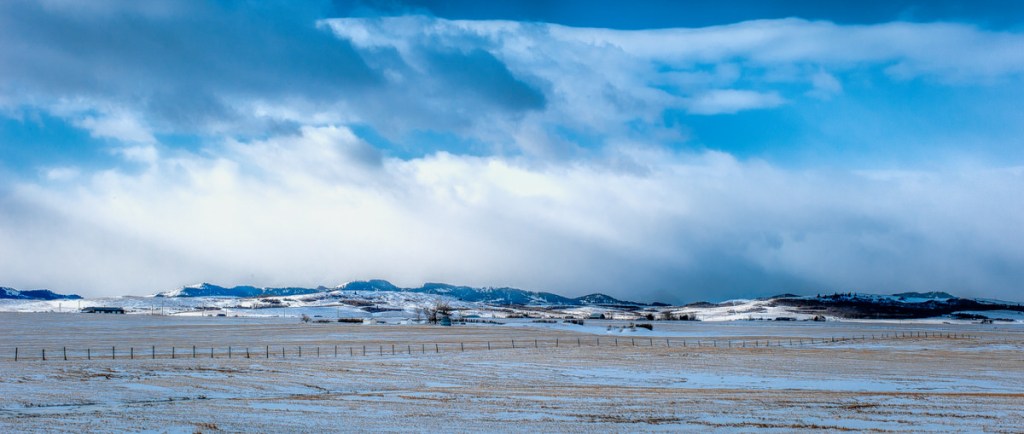
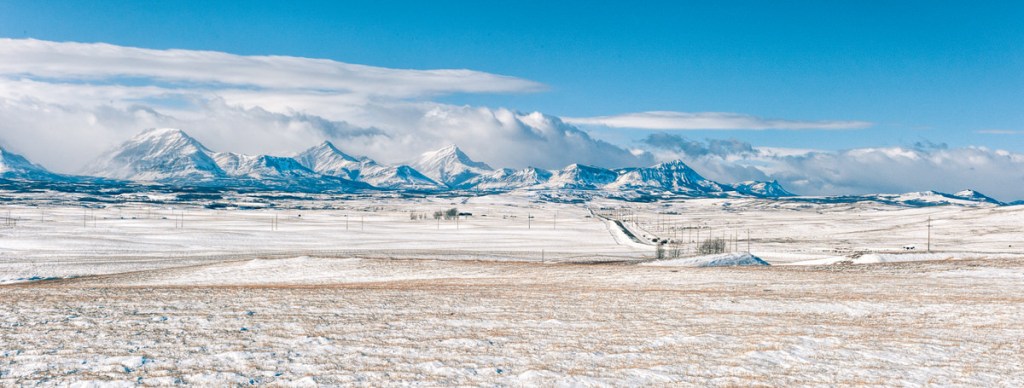
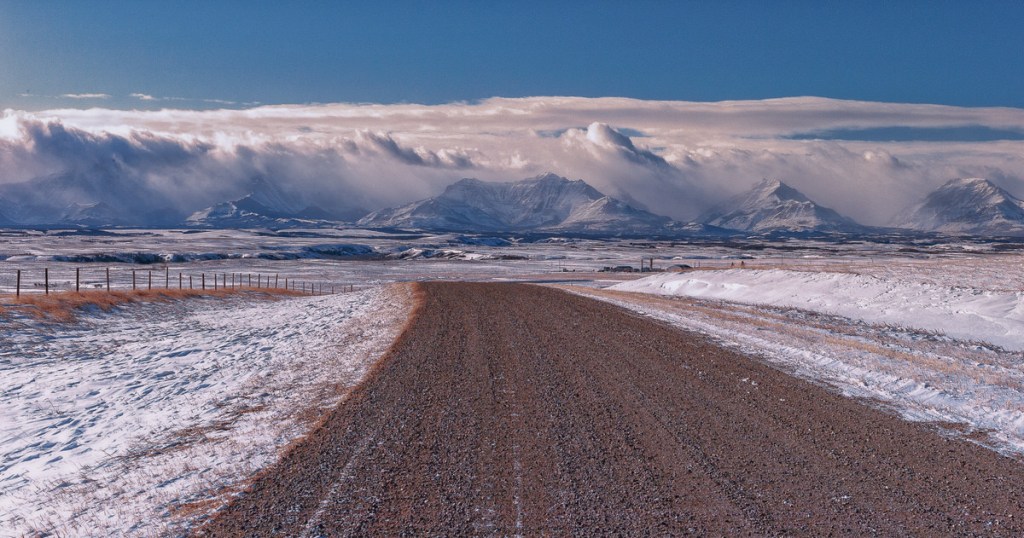
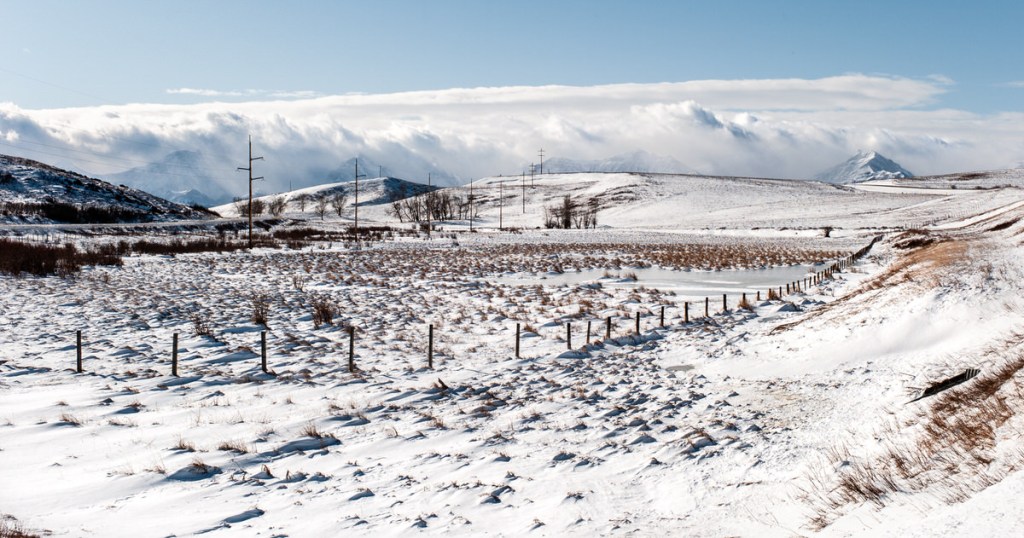
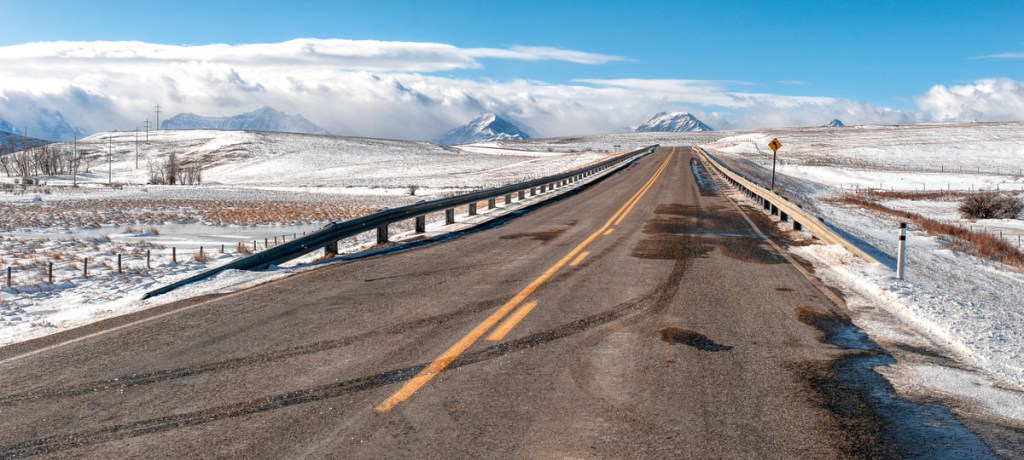
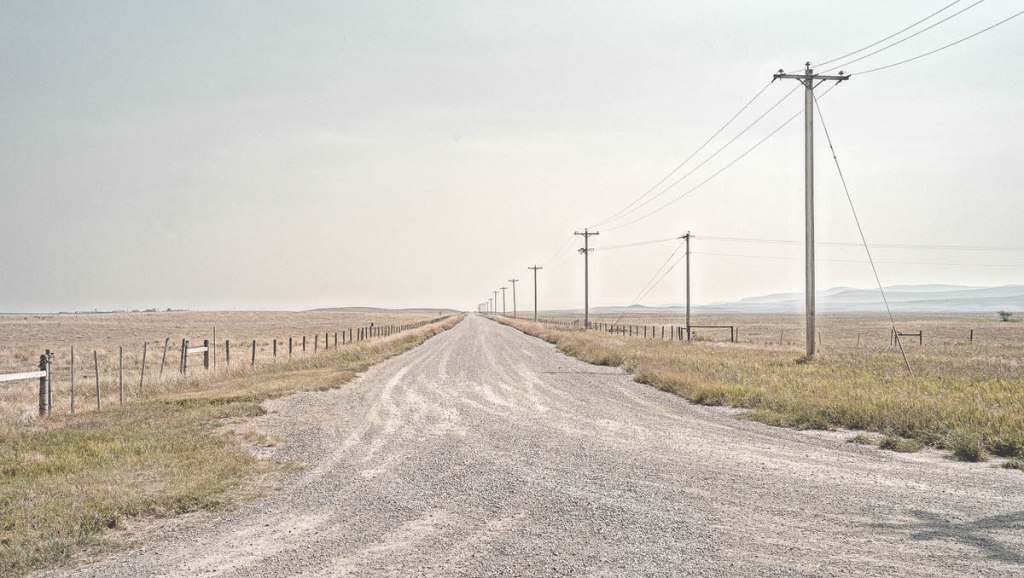
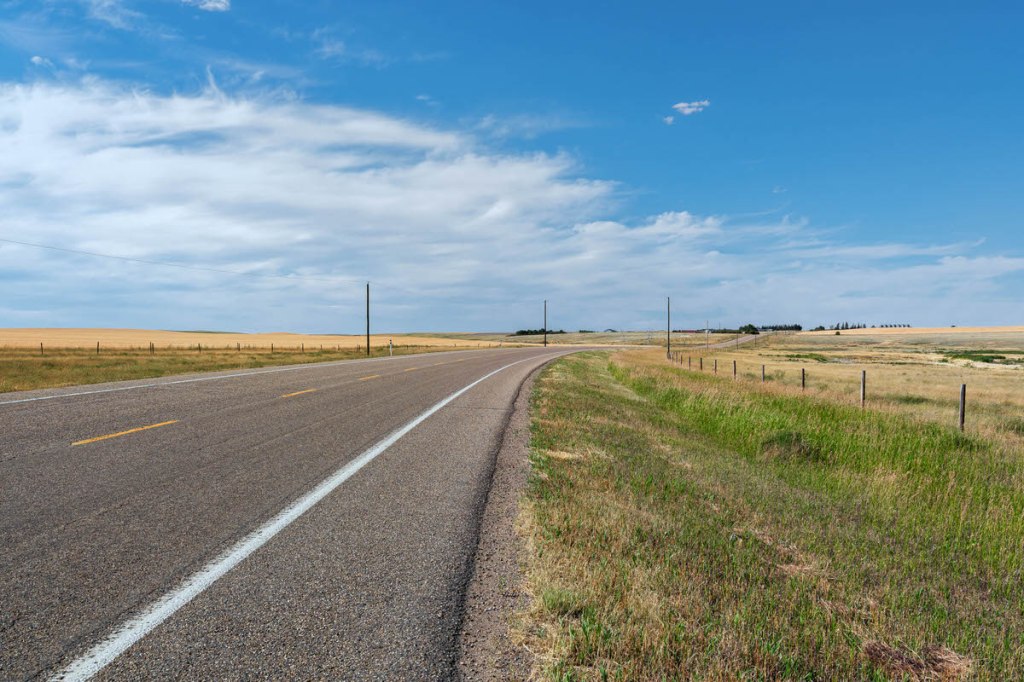
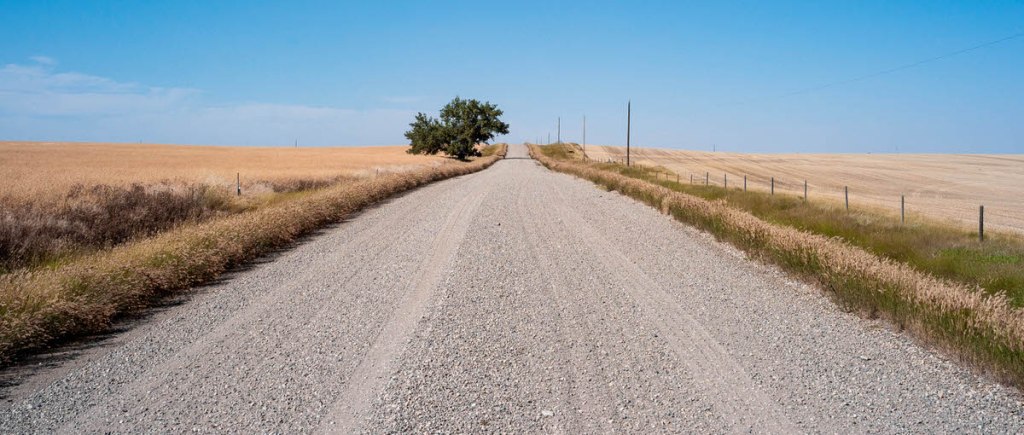
A COVID pivot provides minimalist moments among the modulation and ramble of foothills roads in southernmost Alberta.
Quote to Consider / Inspire – “Photography, as we all know, is not real at all. It is an illusion of reality with which we create our own private world.” – Arnold Newman, Frames Magazine, January 2021
Listening to – Jools Holland & Kylie Minogue’s take on the Clash’s ‘Should I Stay or Should I Go.’
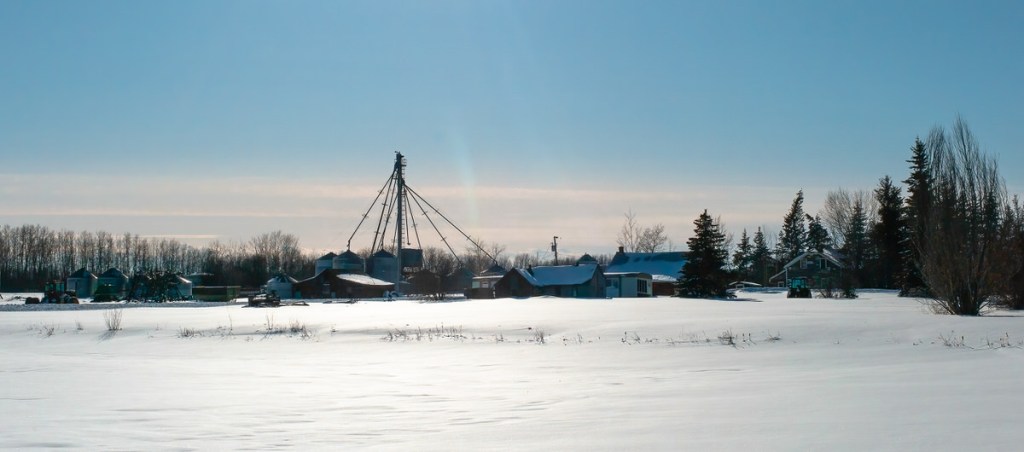
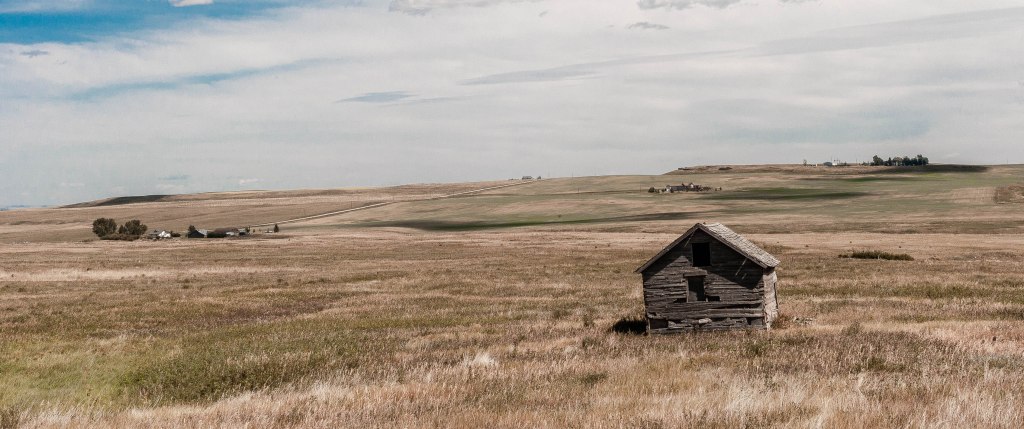
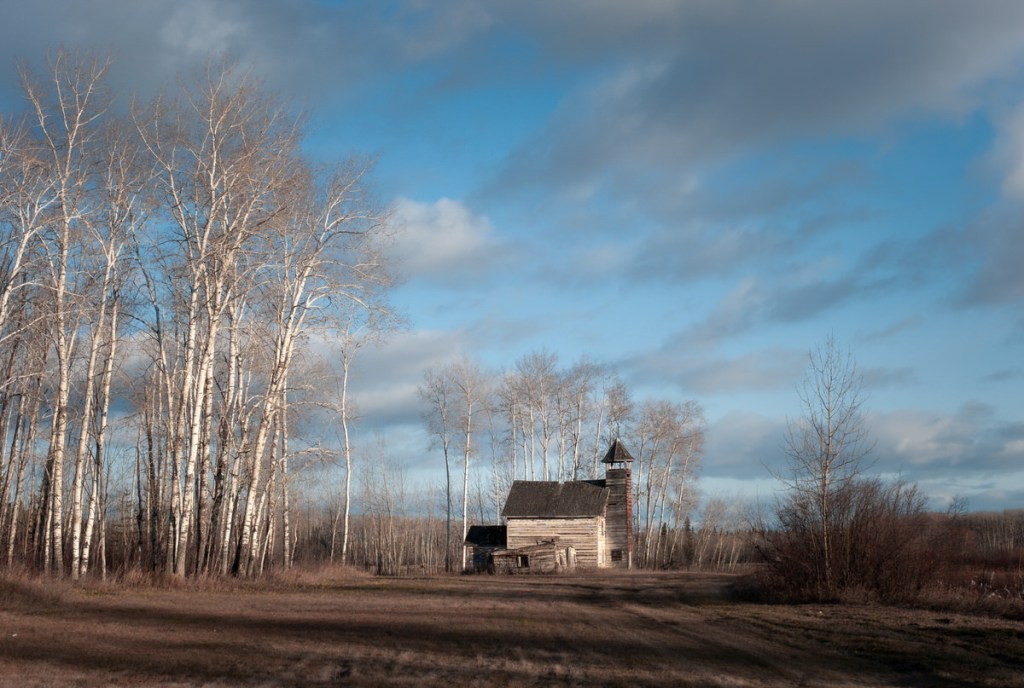
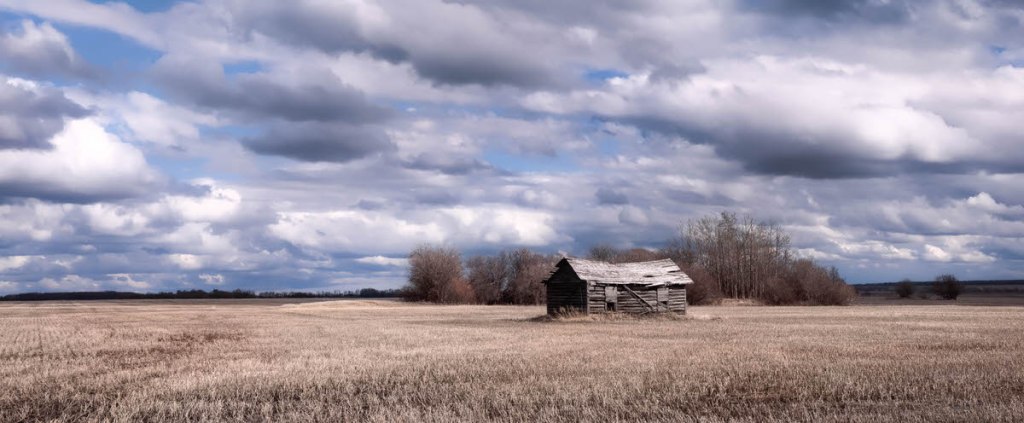
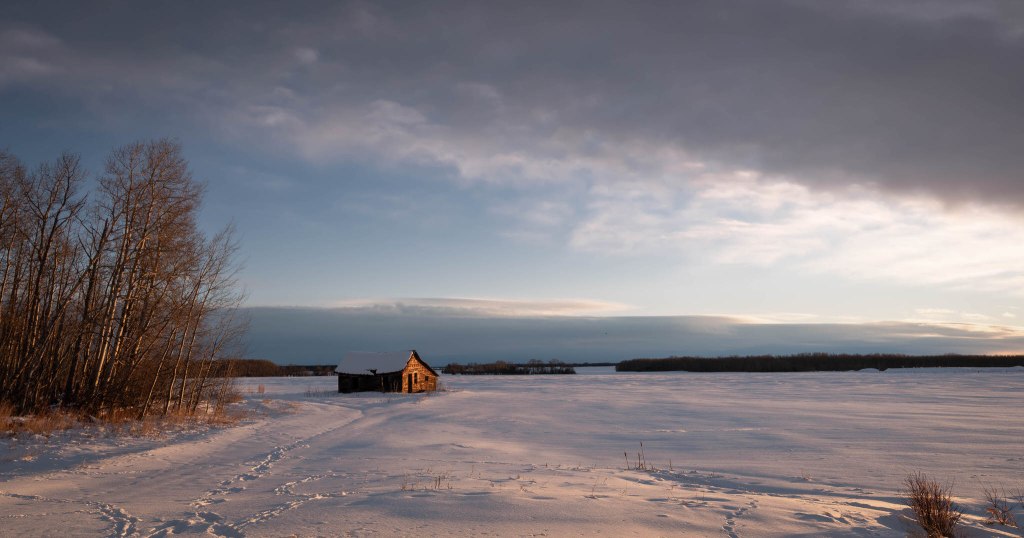
Liking this bit of winter morning light, directional light, side-light – intensity and shadows – falling on snow and an Alberta homestead, the first image in a long while.
Quote to Consider / Inspire – “… I believe that the real challenge of photography lies not in finding something or someplace exotic and beautiful to photograph, but in revealing the hidden beauty in what most people would consider mundane.” – Howard Grill, The Challenge of Photography, Frames Magazine, February 2021.
Listening to – Ian Tyson’s ‘Yellowhead to Yellowstone,’ Galen Huckins’ ‘The Kennicott,’ Roo Panes’ ‘A Message to Myself,’ and Hollow Coves’ ‘Adrift.’
Winter’s morning light and a homestead near Fairview, Alberta














































 In My Back Pocket - Photography
You must be logged in to post a comment.