Dunvegan Photowalk, A Possibility

Best Practices - Photography, Canon 60D, Canon 70-200 mm 2.8 IS L Series Lens, Canon Camera, Canon Lens, Canon Live View, High Dynamic Range (HDR), Light Intensity, Photography & Conceptualizing Beauty, Project 365 - Photo-a-day, Still Life, Winter
The Peace River - Dunvegan Bridge and Dunvegan Gardens

The Peace River - Dunvegan Bridge and Dunvegan Gardens

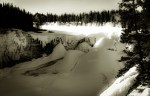
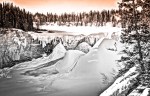
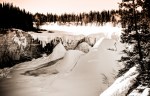
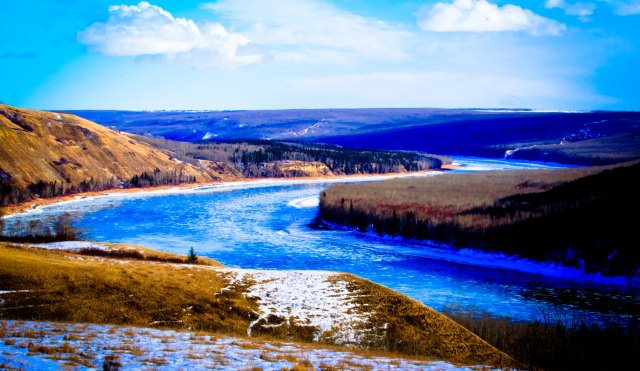
On October 1, 2011, as an educator having completed several month-long tasks associated with the September 30th student count and the paperchase associated  with ministry deadlines at 11:00 p.m., the night before, the prospect of participating in a Kelby Photowalk was there, was a never-done and was possible. As a late, ‘day-of’ registrant one photowalk I could get to from High Level, Alberta, if I started my drive early enough was the photowalk in Dawson Creek, British Columbia.  A five-hour drive would see me there with time to spare; the photowalk would start at 1:00 p.m., B.C. time. This was the photowalk I took part in. The other photowalk that was within driving distance but started much too early after my sleeping hard was Fairview-based but would take in the area in and around the Dunvegan Bridge, the Dunvegan historic site and the Dunvegan Gardens. That photowalk took place, in part, along the banks of the Peace River found in the image presented here.

In reviewing this image today, I note that several features of the river draw my attention. The river winds its way through the huge, open space of the river valley. The valley is welcome contrast to the linear, familiar landscape surrounding High Level in which you can look forward, side-to-side and behind you; but up-down depth of perspective and distance are fixed. Standing midpoint up the valley slope allows good change of perspective – opportunity to look down into the valley toward the river and the opportunity to look along the sides of the valley (almost a hallway of sorts) to appreciate its relief (the land’s wrinkles leading down to the river). This kind of perspective as I enjoyed it from a Kelowna hot tub looking down onto Lake Okanagan is one feature I will emulate if and when I ever purchase a hot tub, enjoying a hot tub’s warmth from a height while looking out upon something below.

The photograph, here, is a high dynamic range (HDR) shot in which colour, texture, relief and light are crisply enhanced, capturing attention. Beyond this, the subject of the image – the river – holds attention because there is natural flow and movement, an indicator of spring’s upcoming arrival.  The river holds broken ice and moves along the surface of the water.  And, the sky’s blue reflects in the water.  All this reminds of former life in Fox Lake, Alberta when each evening I’d trek to the Peace River, enjoy its expanse, then return home. I walked to the river through all seasons.  For me, this photograph of the Dunvegan river valley and reminiscence of the Kelby Photowalk seem to point to a richness in opportunity for photography throughout each day and through all seasons.

Listening to – Over the Rhine’s Drunkard’s Prayer album; songs standing out – Born, Who Will Guard the Door and Spark.

Quote to Inspire – “The world just does not fit conveniently into the format of a 35mm camera.” – W. Eugene Smith

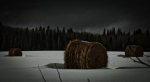
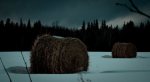
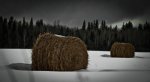
The Repeat of Round Bales Set On Land Regularly

Best Practices - Photography, Canon 60D, Canon 70-200 mm 2.8 IS L Series Lens, Canon Camera, Canon Live View, Farm, High Dynamic Range (HDR), Light Intensity, Photography & Conceptualizing Beauty, Project 365 - Photo-a-day, Winter

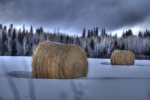
Round bales of hay populate the landscape in the triangle of area between Grimshaw, Dixonville and Bluesky, Alberta. As I saw them, the bales will, at times, be neatly stacked by a farmer in preparation for winter use.  Some stacks will indicate surplus and that hay is for sale.  In other instances, round bales are more of a challenge – the bales have ripped and given way, the stacks falling over, the hay’s colour indicating decay … hay that’s sat around for too long, presenting the problem of what it can be used for. Square bales of hay are what I’m used to in feeding cows on my cousin’s farm.  The two lines of twine holding the bale together had a trick to opening and releasing the hay which did not involve cutting the twine; one of the lines was weaker; if you pulled on it first it would release the rest of the bale to the ground. And, then, square bales of Timothy hay are used innovatively as the insulating factor in hay bale houses both in warm and cold climates with an R value of 70; it can keep things cool in desert hay bale homes and keep things warm in arctic endeavors. Here, in these photographs the unified shape of the bales repeating, set on land regularly, drifted in and around by snow captures my attention. And, there’s variation in how spring light works as the afternoon draws toward dusk.
I am indebted to Russell Ray of Russell Ray Photos for suggesting the use of AVS Image Converter; not only has the software saved time in the resize conversion, it has also reduced upload times into wordpress immensely. Thank you … Russell.

Listening to Snow Patrol and Lifeboats from their A Hundred Million Suns album.

Quote to Inspire: “I photograph continuously, often without a good idea or strong feelings. During this time the photos are nearly all poor, but I believe they develop my seeing and help later on in other photos. I do believe strongly in photography and hope by following it intuitively that when the photographs are looked at they will touch the spirit in people.” – Harry Callahan

After Dan Kameka, the Dunvegan Bridge

Canon 60D, Canon 70-200 mm 2.8 IS L Series Lens, Canon Camera, Canon Lens, Canon Live View, High Dynamic Range (HDR), Photoblog Intention, Photography & Conceptualizing Beauty, Project 365 - Photo-a-day, Vehicle, Winter

Dunvegan Bridge HDR 1 (Reduced Size)

Dan Kameka, an artist and photographer in Alberta’s Peace Region has spurred me forward in this never-done photograph that I captured yesterday. I first became acquainted with Dan Kameka’s photography works at Grande Prairie’s Trumpeter hotel; there, I saw two eight-foot photographs, one a retro-green grain elevator (possibly United Grain Growers) and a second image of farming machinery from former times, a beautiful cluster of a Fargo grain truck with granaries now disused in a snow-dusted, winter fallow field.
That was ten years ago. Two years ago I found smaller versions of the same images for sale at Picture Perfect Frame & Gallery in Grande Prairie. In the set of images displayed I found two or three photographs by Dan Kameka that intrigued me because I wondered how they’d been taken. Of special interest was a Dunvegan Bridge photograph which intrigued because the riddle of working out where the photograph was taken from has stayed with me through these two years. The shot I have taken is likely taken at a point close to the location Dan would have used in capturing his image of the Dunvegan Bridge. Yesterday’s never-done was about riddling this through and then daring to navigate to the site which presented its own challenges, a task taking me from my car to the site and back in ninety or so minutes; it’s only been in the last two months that I’ve known how he probably had done it.

About this photo – this photograph associates to another I’ve posted entitled Alberta Fissure.  It is the complement to this image and is taken from a point behind the far left of this image and it looks down the valley from the high left through to the expanse of the valley to the right in this image. This photograph is one of several high dynamic range (HDR) shots I’ve created with automatic exposure bracketing; but it is the first in which cloud cover accentuates significantly adding drama. In this picture I’m impressed with the zoom lens compression of distance. The bridge itself is one kilometre long reaching over the Peace River at a narrower point.  The extrapolation then is that from the point I’m standing at taking the picture to the top of the S-curve on the other side of the valley is a distance of perhaps two to two-and-a-half kilometres. It would take a car travelling at 100 km/h about one minute to travel from the top of the S-curve to the point at which I stood near the highway incline. A significant distance is captured in this photograph.

Thank you Dan for those beautiful, intriguing photographs that capture my wonder and memory; you’ve had a hand in spurring me on not only with this photograph, but with my photography.

Listening to – Sarah Masen’s The Valley, Ziggy Marley’s Love is My Religion and Willard Grant’s Evening Mass.

Quote to Inspire – “There are always two people in every picture: the photographer and the viewer.” – Ansel Adams

Douglas DC-3s – Green or Orange on White

Best Practices - Photography, Canon 60D, Canon 70-200 mm 2.8 IS L Series Lens, Canon Camera, Canon Lens, Canon Live View, Light Intensity, Project 365 - Photo-a-day, Still Life, Vehicle, Winter

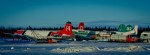
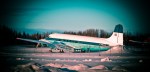
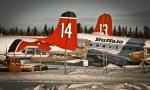
As you drive past Hay River’s Airport and look both to the run way and to aircraft parking/storage areas, it can seem that you have returned to a former time.  Buffalo Airways has several Douglas DC-3s lining the airfield awaiting use in transport in and around the Northwest Territories. They are colourful workhorse aircraft – usually bright green on white or orange on white, easy to see and easy to be seen in. The reminiscence of former times is there for me with these aircraft. As research chemist, my father did a lot of flying between Canada and Europe with the parent and subsidiary plastics companies – Britain, Montreal, Toronto and Edmonton. On one of his early business trips in the sixties one of the gifts he brought back for me was that of a blue and white dye-cast model of a Douglas DC-3 advertising BOAC Airways, a plane model I would play with in my childhood and something kept still as remembrance of my early years.

Listening to Over the Rhine from the Ohio Disc 2; songs standing out are Long Lost Brother, She and Nobody Number One.

Quote to Inspire – “When I first became interested in photography, I thought it was the whole cheese. My idea was to have it recognized as one of the fine arts.  Today I don’t give a hoot in hell about that.  The mission of photography is to explain man to man and each man to himself.” – Edward Steichen, quoted in Penelope Niven’s ‘Steichen: A Biography’.

Apart at Seams

Best Practices - Photography, Canon 60D, Canon 70-200 mm 2.8 IS L Series Lens, Canon Camera, Canon Lens, Canon Live View, Cemetery, Light Intensity, Night, Photography & Conceptualizing Beauty, Project 365 - Photo-a-day, Still Life, Weather, Winter

Boat at Rest - Vale Island, Hay River, NWT

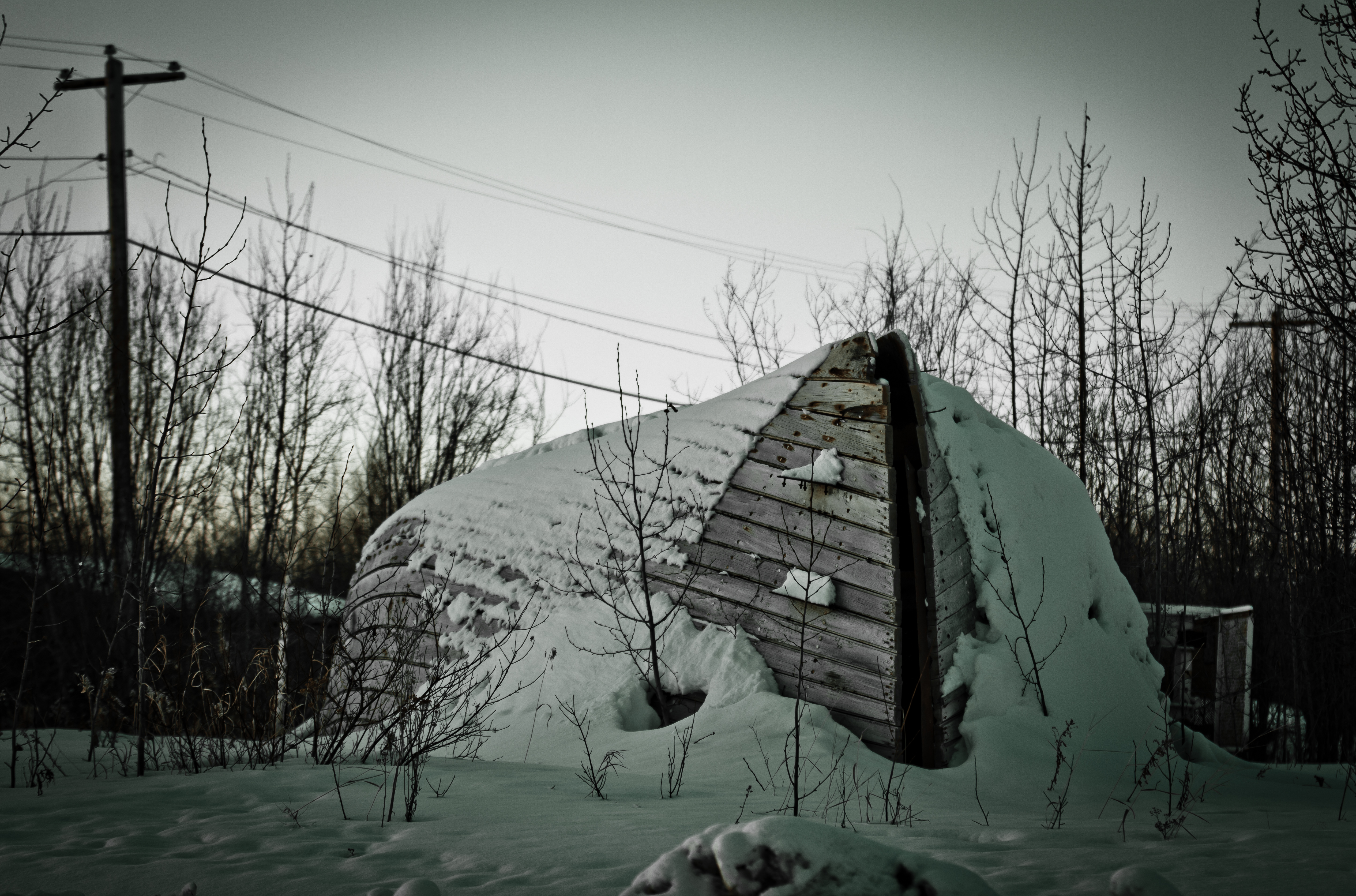
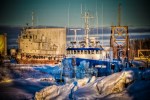
At sundown I found this boat, dragged to its rest among the trees; it lies on Vale Island in the industrial section of Hay River’s west channel that now caters to barges on the Great Slave Lake. The photograph may make the boat look smaller than it really is.  From ground up to the boat’s keel is eight to ten feet and its length is about sixty feet. What has it been used to accomplish? Many things draw me to this photo – the juxtaposition of boat and plants, the juxtaposition of boat and telephone poles, a boat covered in snow, the colour, form and texture of the wood. The image draws highlight to the phrase, ‘coming apart at the seams.’ Possibly this phrase refers to the final demise of derelict boats and ships. As I look to the image, the final photograph I’ll consider today, it seems as though the boat sleeps under a blanket of snow.

Thank you to all bloggers who navigate regularly to ‘In My Back Pocket – Photography;’ thank you for the ‘likes’ and the ‘comments’.  Good schtuff!!

Listening to a playlist while I walk tonight – U2’s Magnificent, Coldplay’s Yes, Radiohead’s All I Need, The Police’s Walking on the Moon, Kings of Leon’s Crawl, U2’s Moment of Surrender, David Bowie’s China Girl and U2’s Miracle Drug.

Quote to Inspire – “A lot of people think that when you have grand scenery, such as you have in Yosemite, that photography must be easy.” – Galen Rowell

-23C, Leaning North

Best Practices - Photography, Canon 60D, Canon 70-200 mm 2.8 IS L Series Lens, Canon Camera, Canon Lens, Canon Live View, High Dynamic Range (HDR), Light Intensity, Photoblog Intention, Project 365 - Photo-a-day, Season, Still Life, Winter

Saturday – a new treasure of a car, a 2006 Nissan Altima with 35000 km, a vehicle barely finished being broken in, a definite upgrade from my 2000 GMC half-ton, a vehicle that is clean, well maintained and somewhat regal. The opportunity was there to test out the vehicle and to use the day to travel and to look around at the world through my camera lens. The choice leaned heavily toward going south to the Dunvegan Bridge and Grande Prairie; undiscovered landscapes in and around Peace River were to be considered. The choice could also lean into an eastward drive to Fort Vermilion and La Crete; but, I had been in La Crete twice in the previous month.  The choice could also bend westward to Rainbow Lake and Chateh; but, doing so would really require truck or skidoo. Early in the morning, as I steered the Altima toward the highway … the choice became … north.

From High Level, Alberta to Enterprise and then Hay River in the Northwest Territories has you using one highway, highway 35 in Alberta which becomes highway 1 in the Northwest Territories, their route south to Edmonton. On Saturday, I made the -23C drive from High Level to Hay River and back stopping wherever my camera lens found interesting opportunities for image capture. On the Alberta side of the drive, a train trestle on the highway’s west side was the first image. A quarter of an hour later, I arrived at Steen River where a cabin along ancestral land of a Dene Tha’ trap line was the next image. Another hour passed, looking right, left, forward and back into the landscape along the road; often I turned the car around to revisit an area and to find photographs. I got to Alexandra Falls and clouds broke to reveal sun shining into trees, onto the highway and onto the Alexandra Falls. Midday’s light was bright and harsh, but for photographs along my ninety minute walk along a snow trampled path in forest atop the west side of the Hay River gorge below the falls; the walk to me from the first falls lookout to the second and third lookouts. Early afternoon found me in Hay River scouting out potential shots for later. After a bite to eat, in late afternoon the sun worked its way into sunset;  several colourful photographs became possible – Buffalo Air’s DC-3s at the Hay River Airport, ships frozen in ice in the west channel below the Great Slave Lake and then photos at the Northern Transportation Company Limited (NTCL) shipyard. The day was colourful and cold, but a good opportunity to see winter’s north by day – one of my never dones.

Listening to – what’s been interesting in the past few days is to listen to CDs; where my 2000 GMC half-ton had a cassette deck and am/fm stereo, the Altima has a CD player.  And, instead of listening to satellite radio which would require some hooking up, I’ve opted to listen to full albums on CD, a significant change from iPod playlists and satellite radio.  Literally, there have been CDs I haven’t referred back to in more than a decade.  Today’s listening has been to a Brian Houston album Mea Culpa and the songs standing out are Hard Man, Dancing with You and Standing Here.  I’ve thought of these songs while thinking of another Brian Houston song – We Don’t Need Religion … a good enlightening tune.

Quotes to Inspire – (1)“There are no rules for good photographs, there are only good photographs.” – Ansel Adams; (2) “I take photographs with love, so I try to make them art objects. But I make them for myself first and foremost – that is important.” – Jacque-Henri Lartique

Past Old to Abundant New

Canon 60D, Canon 70-200 mm 2.8 IS L Series Lens, Canon Camera, Canon Live View, Farm, Farmhouse, High Dynamic Range (HDR), Home, Homestead, Photography & Conceptualizing Beauty, Project 365 - Photo-a-day, Still Life, Winter

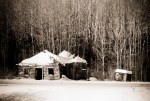
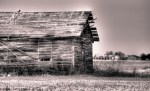
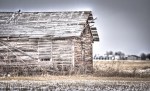
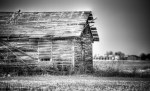
A homestead, a memory anchor, reminds of former times; its past informs our present.  Any of us can look at what is, what we now have and what we now do from the perspective of what was, what we haven’t had and what used to be done.  With realization, shift and tweak the historical becomes present. One attribute associated with progress is that current effort expended in the practice of living is reduced from former effort yielding smaller result. Transition to better practice comes through good understanding of the past. Such learning is usually associated with overcoming mistakes as well as obstacles. John O’Donohue, a former priest, talks of this process in conversion. For him, one’s walk is only possible by being faithful to one’s mistakes, those points of learning that forward you in your walk.

Similar practice is found in jazz as musicians work to add variation to melody and theme. They hear what works. They hear what does not work. While what does not work, the dissonant note or chord, points to what does work, often jazz players incorporate dissonance into music’s landscape; dissonance is heard and grappled with, creating yearning toward primary melody. The variation becomes one among many that takes the listener’s ear through landscape of the piece returning to primary melody alone.  Jacque Loussier works skillfully with Satie’s Gymnopedies Gnossiennes in creating such variations. Dave Brubeck does the same in all of his work; reminiscence here is drawn to those Saturday nights with my father working through Brubeck on his Heintzman grand piano in vertical form.  Songs included Blue Rondo a la Turk, Bru’s Boogie Woogie and Take Five, all the masterful, ingenious work of Dave Brubeck.

What was and what is, what works and what hasn’t are outcomes found in a Life richly lived.  Mistakes are a part of life; the poignant thing, here, is to let mistakes remain at play within us and to let them inform next action.  Here, in today’s photograph, a third rendering of the Donnelly homestead juxtaposes old homestead against abundant farm operation. I hadn’t thought of it until today, that in the visual memorial that this homestead is, it is in itself a wisdom text, something with story that informs us presently and it does so in the same way a photograph’s narrative will (if we let it).

Listening to – From Don Henley’s Inside Job songs standing out are Annabel, Inside Job, Goodbye to a River (in which he seems to forecast the recession) and For My Wedding; Jesse Cook has been at play with Vertigo, Red and Byzantium Underground from his album Vertigo; as well, Martyn Joseph’s live album, Don’t Talk about Love, has been on my mind with songs like Liberal Backslider, The Good in Me is Dead and Have an Angel Walk with Her.

Quote to Inspire – “For me the printing process is part of the magic of photography. It’s that magic that can be exciting, disappointing, rewarding and frustrating all in the same few moments in the darkroom.” – John Sexton

Collected, Not Yet Discarded – Other Photographs from the Week

Best Practices - Photography, Canon 60D, Canon 70-200 mm 2.8 IS L Series Lens, Canon Camera, Canon Lens, Canon Live View, Combine (Farming), Farm, Farmhouse, Home, Homestead, Light Intensity, Photoblog Intention, Photography & Conceptualizing Beauty, Project 365 - Photo-a-day, Season, Still Life, Vehicle, Vehicle Restoration, Winter

Farms, farm buildings, farm equipment and the occasional treasure of a rusting relic have surfaced within this week’s compiling of photographs.  Rather than let them fall into the discard pile it may be good to give them their due, cluster them into photo gallery format and allow you a look at second, third and even seventh choices.  Below, because this week’s photographs have dealt with farming images, I’m posting the lyrics to Murray MacLauchlan’s Farmer’s Song, a treat to sing and a song that you can find yourself singing with others also around a campfire. Lyrics as found on Lets Sing It http://artists.letssingit.com/murray-mclauchlin-lyrics-farmers-song-2s98rgh#ixzz1nMbsXNcE

Farmer’s Song – Murray McLauchlan

Re-released 9 October 2007 in Songs from the Street: The Best of Murray McLauchlan

Dusty old farmer out working your fields

Hanging down over your tractor wheels

The sun beatin’ down turns the red paint to orange

And rusty old patches of steel

There’s no farmer songs on that car radio

Just cowboys, truck drivers and pain

Well this is my way to say thanks for the meal

And I hope there’s no shortage of rain


Straw hats and old dirty hankies

 Moppin’ a face like a shoe

Thanks for the meal here’s a song that is real

 From a kid from the city to you


The combines gang up, take most of the bread

Things just ain’t like they used to be

Though your kids are out after the American dream

And they’re workin in big factories

Now If I come on by, when you’re out in the sun

Can I wave at you just like a friend

 These days when everyone’s taking so much

There’s somebody giving back in


Straw hats and old dirty hankies

Moppin’ a face like a shoe

Thanks for the meal here’s a song that is real

From a kid from the city to you

Quote to Inspire – “Light glorifies everything. It transforms and ennobles the most commonplace and ordinary subjects. The object is nothing, light is everything.” – Leonard Misone

Listening to – She Walks on Roses by Bill Mallonee & Vigilantes of Love from Audible Sigh, then Mercy of the Fallen by Dar Williams from Beauty of the Rain and then finally Red Clay Halo by Gillian Welch from Time the Revelator.

That Old A&W Shirt and A World Fed

Best Practices - Photography, Canon 60D, Canon 70-200 mm 2.8 IS L Series Lens, Canon Camera, Canon Lens, Canon Live View, Combine (Farming), Farm, Farmhouse, High Dynamic Range (HDR), Home, Light Intensity, Photoblog Intention, Project 365 - Photo-a-day, Winter

Farmhouse, Grain Bins & Combines

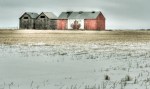
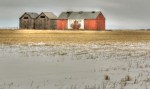
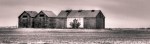
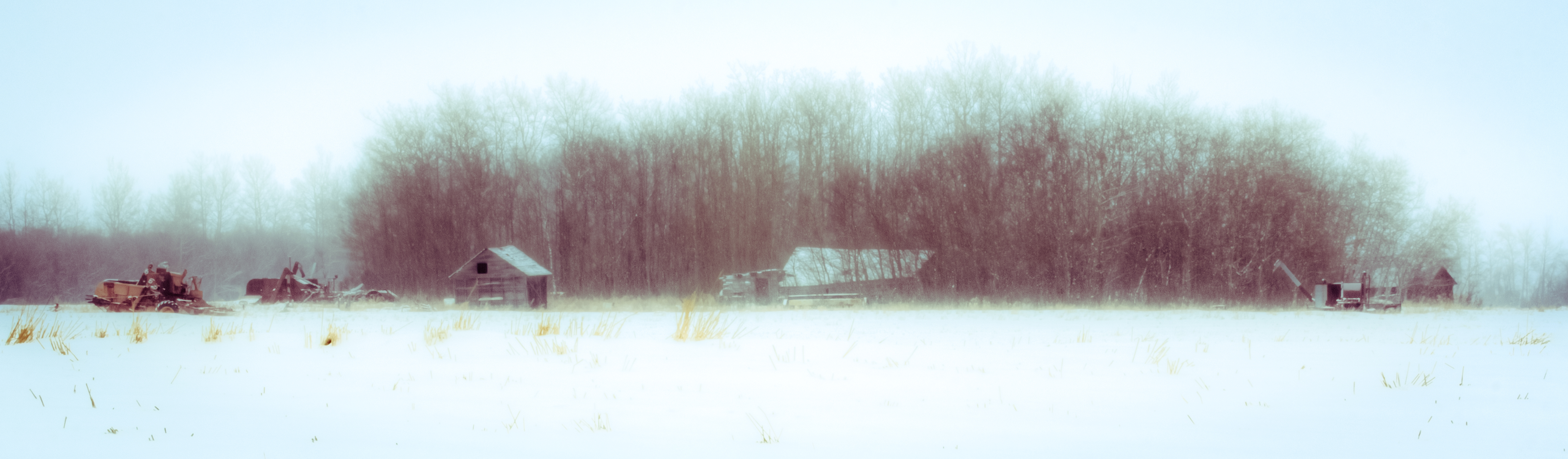
Curiosity surrounds this image.  A derelict farmhouse is at geometric center point for farm buildings and as many as four combines from the fifties and sixties – three on the left (one is hidden behind the darker one) and one on the right, in front of the grain bin.  The buildings have not been burnt off the land and the combines no longer work; again, there’s an air of abandonment as well as reverence for what was a family’s starting point.

My cousin, a farmer, in his first decade of marriage would occasionally wear an A&W shirt from its nation-wide hamburger restaurant chain, something likely found and bought from a Goodwill or Value Village or Thrift Store back in the eighties. I’m not sure if his wearing of this shirt was youthful cynicism or if he was making light of the fact that as a farmer he fed the world – all farmers do this … but role/position in what one does for work as farmer sometimes blurs/shifts to the background what farmers accomplish on a global scale. I don’t know if I’ve ever thought about how many people all his grain and all his cattle could keep alive in one year; I wonder if he has?

My cousin and his wife ran a mixed farming operation in partnership with his father and his mother in Rimbey, Alberta, an area of Alberta situated in a golden triangle blessed with the right combination of rain, sun and cloud for their grain crops, an area of the world that supported a sizeable Hereford cattle operation, as well. The Blindman River runs through their property and while summer was an extremely busy season, my cousin likely looked forward to days when friends and relations would visit, allowing him to break away from heavy or mundane routines. On our visits, we’d go back into the wooded ravine and talk. There’d be good-hearted, entertaining, teasing back and forth as we investigated the currency of each other’s lives in playful interrogation.  A good amount of bull-s**t would extend exaggeration into all that our stories could become. On my cousin’s farm, I watched him grow from a boy building model cars, to a youth with a grain elevator job who was dating (… and owning a black, two-door, 1966 Chevelle), to a young spouse, into a farming partner, to a father, and then two decades later into an innovative entrepreneur with patents for frost-free nose pumps.

In recent years I’ve been struck by how close to the land they may actually have been living and how much their success or failure as farmers depended on their ability to rely upon and support their neighbors; help offered and help received is/was really an investment in community and in each other. I am impressed by the humility they exercised in allowing themselves the help offered by neighbors who took care of them and saw them more as family than neighbors. Likewise I am impressed by the care they showed not only to our family, but towards others by putting something positive in their lives when they needed it … even if this was only done by way of good-hearted humour and teasing during an evening board game.

Stories take me back to this era of time when farms such as this one captured in this image were starting points for Canadian families.  One set of Canadian stories about farm-life were W.O. Mitchell’s Jake and the Kid Stories.  The other story that opened out the time toward moving into the fifties was John Grisham’s A Painted House. The farm I know best, though, is that farm my cousin grew up on; and, then I come back to this image and the questions I have about leaving it in this state – it must be memorial, something that draws memory back to what was and who they were that made things happen, feeding the world.

As I’ve searched through my music for songs associated with Canada and with farms I’ve run into Murray McLauchlan, a singer and songwriter whose album I purchased would have been one of the first three albums I ever purchased.  The one that would have pulled my ear to the radio would have been Hard Rock Town, a song I tried to understand in terms of narrative in grade 8, 9 or 10; the other would have been Farmer’s Song, a song that could be sung around a campfire in unison, a song that could be sung in a prairie tavern when everyone’s collected on a Friday or Saturday night.

Listening to – Murray McLauchlan’s Hard Rock Town from his Songs from the Street album and Farmer’s Song, done I think with Murray McLauchlan et al in Lunch at Allen’s Catch the Moon album. Finally, tonight I purchased Ryan Adam’s Chains of Love from his Ashes & Fire album.

Quotes to Inspire – (1) “A photographer without a magazine behind him is like a farmer without fields.” – Norman Parkinson; (2) “Beauty can be seen in all things, seeing and composing the beauty is what separates the snapshot from the photograph.” – Matt Hardy

Parked – Not On the Road

Best Practices - Photography, Canon 60D, Canon Camera, Canon Lens, Canon Live View, Farm, High Dynamic Range (HDR), Photoblog Intention, Photography & Conceptualizing Beauty, Project 365 - Photo-a-day, Vehicle, Vehicle Restoration, Winter

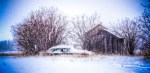
Chevrolet - Parked, Not on the Road

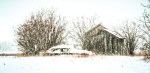
A parked mid-fifties, Chevrolet four door sedan from 1955 or 1956, a Chevrolet that would have been ‘on the road’ in an era Jack Kerouac writes about in his novel with the same title – On the Road.

In the novel, a young World War II veteran, Sal Paradise, newly based in New York embarks on a career as writer, a writer in search of experience just at a time when America wrestles with new identity as world power and war victor. In one sense the book documents the restless, youthful spirit of a nation discovering identity as it moves into an era of prime economic stability.

Key among the era’s cultural entities is the independence of movement brought about by owning and driving a car. A car allows you to see the world.  And, there’s always a car going by; so, if you’ve had a mishap with yours you can thumb a ride from someone else.  Or, you can take a bus.  Again, there’s the idea of a vehicle being something where all riding within it, all have their eyes fixed on the road ahead.  Perhaps that’s part of what Kerouac aims at with message in all the travel – he might be pointing to the road ahead for the nation.  Perhaps the car and occupants image is also about riding along with shared ideologies and intentions … but this is extrapolation.

Needless to say, a variety of vehicles – cars and trucks – move Sal Paradise and his cohorts across the nation from New York to San Francisco and back again … two or three times. A friend with a car is the force initiating Sal into a road trip.  There’s the within vehicle narrative – what’s going on – and there is the travelogue narrative of Sal making sense of the America he finds along the way.  By the end of the book Sal has ridden in and driven many vehicles … he’s been more a passenger than driver, though – one able to observe the goings on rather than being the driver compelled to get where he’s going.  Perhaps there’s something there about stances that can be taken in living life.

Jon Foreman of Switchfoot got me to read Kerouac’s On the Road because of a section of stream of consciousness writing embedded into the novel’s narrative – the ramble and rant of thought-life shared, somewhat soliloquy, somewhat monologue, expression utilizing meter and curious placement of rhyme usually halting abruptly with quirky insight into the issue at-hand – Life and living. Here’s the quote Jon excerpted and placed within a Switchfoot concert that led me to consider a serious read of On the Road: “… the only people for me are the mad ones, the ones who are mad to live, mad to talk, mad to be saved, desirous of everything at the same time, the ones who never yawn or say a commonplace thing, but burn, burn, burn like fabulous yellow roman candles exploding like spiders across the stars and in the middle you see the blue centerlight pop and everybody goes ‘Awww!’” ― Jack Kerouac, On the Road

Listening to – Lucinda William’s Can’t Let Go from Car Wheels on a Gravel Road, The White Stripes’ 300 M.P.H. Torrential Outpour Blues (Live) from Under Great White Northern Lights (Live); it’s also been Last Thoughts on Woody Guthrie (Live) offered by Bob Dylan from The Bootleg Series Vols. 1-3 (Rare and Unreleased) 1961-1991.

Quotes to Inspire – (1) “Anything more than 500 yards from the car just isn’t photogenic.” – Edward Weston; (2) “You don’t take a photograph. You ask, quietly, to borrow it.” – Pentax Advertisement.