
325 – 152nd Street East, Tacoma, Washington

Best Practices - Photography, Canon 60D, Canon 70-200 mm 2.8 IS L Series Lens, Canon Camera, Canon Lens, Journaling, Light Intensity, Photoblog Intention, Photography & Conceptualizing Beauty, Project 365 - Photo-a-day, Season, Spring, Still Life, Vehicle, Vehicle Restoration

One of the bigger treats for me in visiting Seattle, Washington this Easter was something my wife and daughter allowed me to do on the Thursday before we returned to Canada, something that they joined me in. That Thursday morning, we drove from Seattle an hour south to Tacoma and using our TomTom GPS were able to navigate to 325 – 152nd Street East to arrive at the LeMay Car Collection/Museum at Marymount.

Imagine a former convent/school resurrected to become storage and showing site for the LeMay collection of cars and trucks, vehicles of the last one hundred years. At the museum, a docent will lead you through each collecting point on the Marymount property. Not only do rusting relics inhabit these spaces, but you also find that the majority of vehicles within these confines will have received restoration or would have been kept in their original pristine condition throughout their years. Beyond this, imagine that your docent has heart and understands well your connection to cars and knows each car’s history intimately. He’s able to tell you all that you didn’t know about each car. Our docent, Mr. Pierce, led us, this way and that, through the maze of cars parked end to end in each of three buildings, a means to house them all. He was introducing each car to us – what the car was about practically, what had been each automaker’s intentions for the vehicle conceptually and how the car came to reside within the LeMay collection.

And, Mr. Pierce allowed me a kind of grace that only a fellow gear-head would ever let you have … he allowed time to photograph the vehicles and for that I will be forever grateful. At two hours in to my tour my wife went to be with my daughter out in our rental car while I rounded off the tour with Mr. Pierce looking up close at some of the first-ever self-propelled vehicles to transport people around the Americas. In terms of next steps, I’m considering becoming a member at the LeMay museum – they may be able to make use of this old-time car jockey who used to dust and polish cars at Edmonton’s Waterloo Mercury.

Listening to – U2’s Magnificent, Coldplay’s Yes and Radiohead’s All I Need.  In terms of audiobooks, the last two morning walks have been a listen through D.H. Lawrence’s Lady Chatterley’s Lover; it’s been more than a couple of year’s since I’ve been through the book and this audio-recording has a good reader –  Maxine Peake.

Quote to Inspire – “Photography does not create eternity, as art does; it embalms time, rescuing it simply from its proper corruption.” – Andre Bazin (1918-1958), French film critic.

Twin Lakes – Roadscape

Canon 60D, Canon 70-200 mm 2.8 IS L Series Lens, Canon Camera, Canon Lens, Canon Live View, High Dynamic Range (HDR), Journaling, Light Intensity, Photoblog Intention, Photography & Conceptualizing Beauty, Project 365 - Photo-a-day, Still Life, Weather, Winter
Alberta Highway 35 near Twin Lakes, Alberta

Alberta Highway 35 near Twin Lakes, Alberta

Distances travelled within Canada’s vast landscape are huge. Travel along its roadways demands commitment to best use of drive time between point of origin and destination so you get where you are going and so you enjoy where you got yourself to. Within this travel predicament kinaesthetic awareness of the road counts as much as visual presentation in terms of road familiarity. Curves, drops, bumps and inclines inform you in your travel along the road. Artists depicting the predicament of Canadian travel often poke fun at vacations enjoyed from a car’s interior as the terrain passes by as much as it is something enjoyed at the destination’s endpoint.  A better way to see more of Canada’s landscape is accomplished looking through a camera lens; doing so requires you to stop your vehicle, stow it safely along the roadside, get out of it and interact more substantially with the environment you encounter.

An iconic rendering of Canada’s roadscape is what the image presented here is about. I’ve photographed a portion of the up-and-down incline leading up to Twin Lakes along Alberta’s Highway 35, one hundred and fifty kilometres south from High Level en route toward Edmonton. In distance, the incline covers five kilometres of road surface and rises onto a land mass noted for the temperature change that occurs from bottom of the incline to its crest. In winter a double-digit temperature change can occur and is accompanied by a marked change in weather travelled through. Ascending or descending, driving this incline is a tricky endeavor in winter, something compounded by snow. While one aspect of this image favours the artist’s tongue-in-cheek take on ‘Windshield Time’, the manner in which most Canadians see their Canada rolling past them, the image also recalls lives of former students who as new (and perhaps impatient) drivers were trekking through this bit of terrain on second- or third-ever tries; one bright future ended in a vehicle roll-over. Another life was impacted by partial paralysis.  It’s this portion of road in this image that seems to surprise drivers … even experienced ones. Last November, descending the incline in snow was an activity more akin to skiing than rolling forward in a half-ton truck.

Listening to:  Gillian Welch’s I Dream a Highway from her Time – The Revelator album, Lucinda Williams’ Car Wheels on a Gravel Road from her album of the same name and High and Dry from Radiohead’s The Best of Radiohead.

Quote to Inspire: “No man has the right to dictate what other men should perceive, create or produce, but all should be encouraged to reveal themselves, their perceptions and emotions, and to build confidence in the creative spirit.” ― Ansel Adams

Capturing Experience As Fact

Canon 30D, Canon Camera, Journaling, Lookback Photos - One Year Ago, Project 365 - Photo-a-day, Still Life, Vehicle, Winter

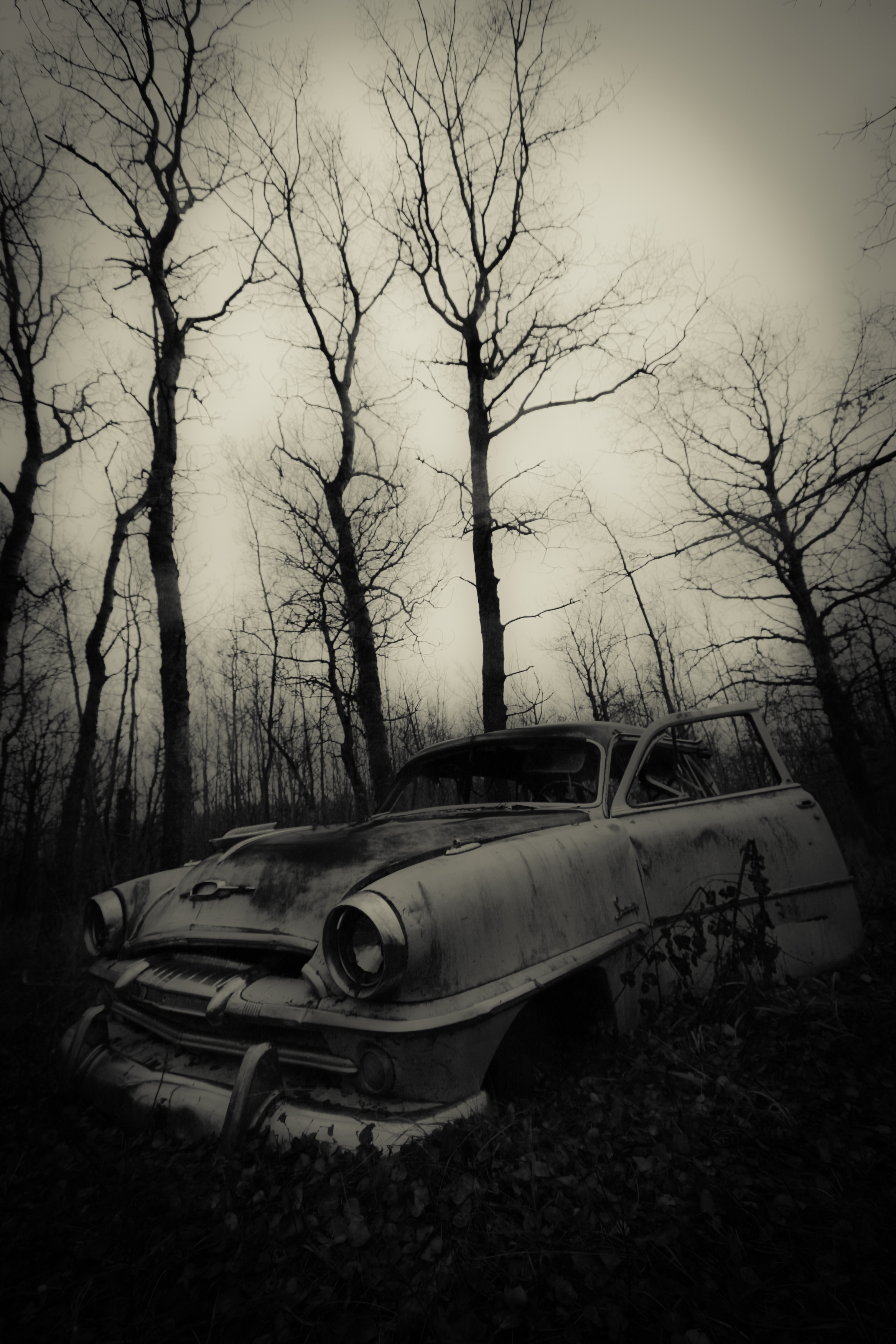
Moody - Plymouth Savoy 2

At an age when wearing glasses assists me in my day, my experience of working with a camera through to editing an image often is about revisiting subject and context to see what else is there; it is actual re-view (review). The process is similar to gleaning feedback in using a personal journal. And, in journaling, one point of revelation has been sorting through the conception that memory, perception, thought and even feeling are only what they were on the day that they occurred. In that portion of experience in which they occurred they were what truth was – they became the facts in response to Life’s events for that duration of time. Without a record, the memory that is carried forward can shift, adjust and change over time … with new thoughts, feelings, perceptions and influences – memory is or becomes malleable. Just like a journaling process, creating a photograph isolates the truth of ‘what was’ for the duration of time in which it occurs. What is also valuable about a journal and photographs produced by the photographer and camera is that you can revisit subject and context to see and appreciate more of what else was there. The journal and photograph inform you and other readers/viewers about the personal narrative of the writer/photographer. The feedback of what else was there, that you now see, informs future action.

Listening to Neil Young’s Old Man and reminded that Lizz Wright also sings this song; there’s not so much experientially that separates us, the older and younger; it does seem to be a father-son song and the son’s revelation of greater similarity than difference.

Quote to Inspire – “Photography, as a powerful medium of expression and communications, offers an infinite variety of perception, interpretation and execution.” — Ansel Adams

Vale Island – At the Corner of 100th St. and 102nd Ave. NW

Canon 50mm, Canon 50mm Lens, Canon 60D, Canon Camera, Canon Live View, High Dynamic Range (HDR), Journaling, Night, Prime Lens, Project 365 - Photo-a-day, Still Life, Weather, Winter

Vale Island Boats - Hay River, NWT

On Vale Island, part of the old Hay River town site, at the wooded corner of 100th Street and 102nd Avenue, if you look into the trees of the northwest corner the sight you’ll see is that of four or five derelict wooden boats of various sizes, some small enough to have navigated the east channel alone, others with size enough to have been considered, in their day, seaworthy on the Great Slave Lake. Three of these boats are the subject of my second high dynamic range (HDR) photograph, boats well-past their prime, dragged to higher ground to rot away among the aspen willows. They will no longer be a nuisance there and they’ll need little upkeep.  In actual fact, what I’ve come across is the cemetery plot for these old boats.  While life has gone out from them, these vessels, without doubt, saw service in my life time; but, would they have been built in my life time?

The picture and this present consideration of boat-life reminds of a reader colleague and friend who pointed me toward Alice Munroe’s 2001 novel about the different ‘ships’ we sail within throughout our lives; it’s entitled Hateship, Friendship, Courtship, Loveship, Marriage, and has now been republished with the title ‘Away From Her.’ Within each state we act and move with different intents and purposes.  But, a ship graveyard such as this found on Vale Island reminds that our journey within these collective or collected states has beginning, duration and an end, as well.  The book was a tough go reading-wise, more something exposing malaise and truth than … hope?

The boats of Vale Island while having had lives that preceded this photograph, have certainly ferried human lives living within the various ‘ships’ that Alice Munroe has proposed in and around Hay River, NWT. These boats still hold their line and shape.  Now, beyond their service, they are in demise.  And, the winds blow from the Great Slave Lake through Vale Island, among these boats and into Hay River.

Listening to Ride Forever, sung by Paul Gross as part of the Due South soundtrack, a single song referencing the Great Slave Lake, living in Alberta … and matters of growing old.

Quote to Inspire – “Where I come from the challenges are quite different.  There are no drug dealers or pimps, few thieves to bother with.  There was only the environment and surviving in the face of it is the challenge of the Inuit. A mother gives birth somewhere out on a glacier field, hundreds of miles from the nearest outpost and she knows that the odds are stacked against her son even living to see the spring with disease, lack of food or the elements.  And, even if they should survive and if he should grow to be a boy, she knows very well that all he has to do is lose his footing on the smooth surface of a glacier and that’ll be that.  In other words, she should know that if her son cannot live … why should she try?  Well I know this woman. I helped deliver her son. She was weak and undernourished. The next morning she stood up and she picked her child up into her arms and she set out again into the blinding snow.  And, I think that was one of the most courageous acts that I’ve ever seen.” ~ Paul Gross, Fraser/Inuit Soliloquy – Due South

Thank you, kindly.

Dormant – More than a Winter Season

Bicycle, Canon 50mm, Canon 50mm Lens, Canon 60D, Canon Camera, Canon Live View, Journaling, Night, Prime Lens, Project 365 - Photo-a-day, Still Life, Uncategorized, Winter

As a journaling exercise I might look to today’s events or surroundings to see what, if any, forgotten life themes are lurking deep within. I’d open my attention to that thing in my day that draws attention and focus, and, I’d work backward through steppingstones to those places and times in which this thing has been a part of me. I’d work to open-out its meaning for me then and now. Life’s bad and good needs its work as part of one’s psychological hygiene – decluttering what no longer works and what no longer has meaning and working to open-out perception, thinking and those possibilities which surround me. There’s work there.  And, there’s possibility to surface, investigate and realize.

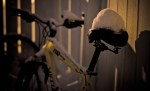
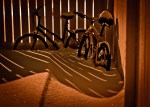
My bike.

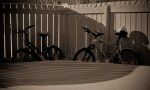
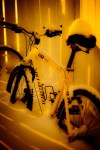
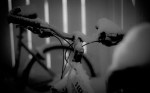
My bike has been dormant for more than this winter. Working to capacity (and then some), a busy year has seen me reach my fiftieth year milestone.  The life tasks now seem to be about serving others and limiting the possibility of mistakes; perhaps knowing how to limit mistakes and seeing this as a goal is one attribute of being in my prime. But, still Life doesn’t seem entirely configured to suit or fit all that I’d like each of my days to contain. I’m attending to an aging parent with mid-stage Alzheimer’s Disease at the same time that my wife and I are aiming to establish my son in his year one of university. And, then, I’ve chosen to investigate and develop my photographic competencies – these practices hold their share of sitting and time.

My bike tonight has been the subject of a photograph, a work of art in still-life, a much different perspective than that of an active cyclist who is inseparable from that bike upon which he investigates the world. My bike and my desire to ride are dormant tonight.

Listening to Stolen Car by Patty Griffin from 1000 Kisses; Long Ride Home, from the Elizabethtown soundtrack is where Patty Griffin caught my ear. Later, Acoustic Guitar magazine featured an interview and tabs to one of her songs – good schtuff!

Quote to Inspire – “… to stop rushing around, to sit quietly on the grass, to switch off the world and come back to Earth, to allow the eye to see a willow, a bush, a cloud, a leaf, is an ‘unforgettable experience.’” ~ Frederick Franck, The Zen of Seeing  (p.s. – the battle of any photographer is to discard Life’s presses and to calm one’s spirit enough to be able to see that which is in front of us; right? I’m there, too)

Thank you all for stopping by, the likes and comments.

Take good care of your good selves!