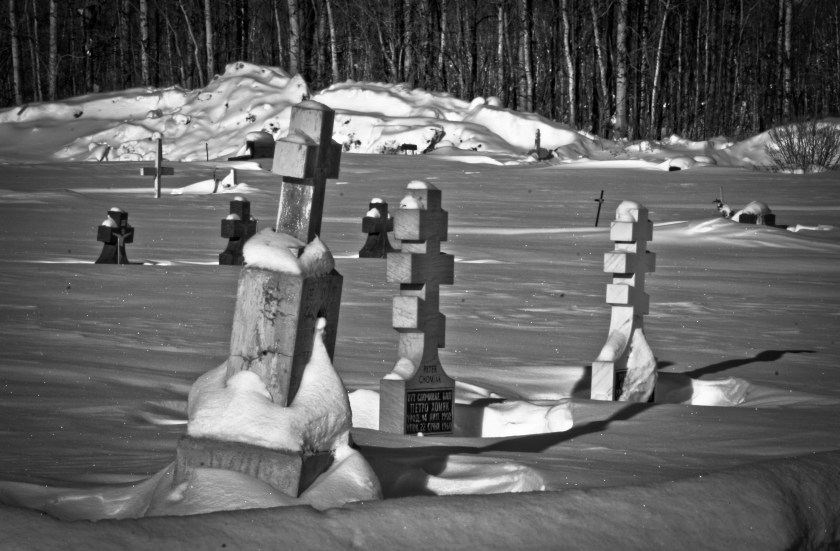
Cemeteries, for most people, are places of foreboding – we understand that we too shall end-up, here. Beyond the fact that we usually find ourselves at cemeteries on the other side of saying goodbye to loved ones and good friends, cemeteries also point us to the consideration of the life we are living. At our life’s end, we may be more in a state of regret having conformed our lives to the expectations of others, failing fully to step up and into the Life that is truly ours. On the other hand, on our death bed, it would certainly be something to smile, roguishly, and to own to others that we’d certainly taken ‘a good squeeze out of life.’ My wife’s friend from church, Herman Peters, passed away a week or two ago and his funeral and eulogy embraced his feisty, roguish approach to Life and seeing it through well. Herman’s eulogist, throughout his eulogy, would often lean over and look at Herman within his casket and ask, “Do you think it would be okay if I tell them about the time we did…?” Wow! What a way to go! Good schtuff, Herman – thank you to who you have been to all others and the friend and elder you’ve been to my wife. John O’Donohue and his Greenbelt lecture on the Imagination have been much on my mind as I’ve considered this photograph, tonight.
Listening to Pierce Pettis sing Love Will Always Find Its Way from his album,Everything Matters; other good, good songs include Neutral Ground and Just Like Jim Brown (She is History).
Quote to Inspire – “No place is boring, if you’ve had a good night’s sleep and have a pocket full of unexposed film.” – Robert Adams, Darkroom & Creative Camera Techniques, May 1995
Home and homesteads are the subject of this evening’s perusal through photographs. In the U2 canon, Paul Hewson (Bono), the younger of two siblings asserts lyrically that ‘a house does not make a home,’ something he’s needed his father (Bob Hewson – Catholic) to understand about their shared life, a life without a mother who’s passed on (when Bono was 16 years of age). His lyrics point to the heart of home life – the void Bono’s encountered and what should be there. Another song from the U2 canon references yearning for his mother (Iris Elizabeth Hewson – Protestant) and her example – there’s vertiable duality in his ‘I will follow‘ lyrics – Bono surfaces his mother, here, as well as redemption through saviour and salvation. The essence that’s there, throughout these songs, is that much of what home is about revolves around the care and direction we receive from that parent who is our mother. Here, in tonight’s photographs, more than you’d expect, home is the key anchoring ingredient to Life on our frontier (yours too).
Listening to much of U2’s All That You Can’t Leave Behind album – New York (a secondary home-base for U2 and anchor), Grace (that awkward yet overcoming force/intention) and Kite (that song made gospel in Joey Ramone’s deathbed hearing).
Quote to Inspire (and to chuckle at) – “I shutter to think how many people are underexposed and lacking depth in this field.”
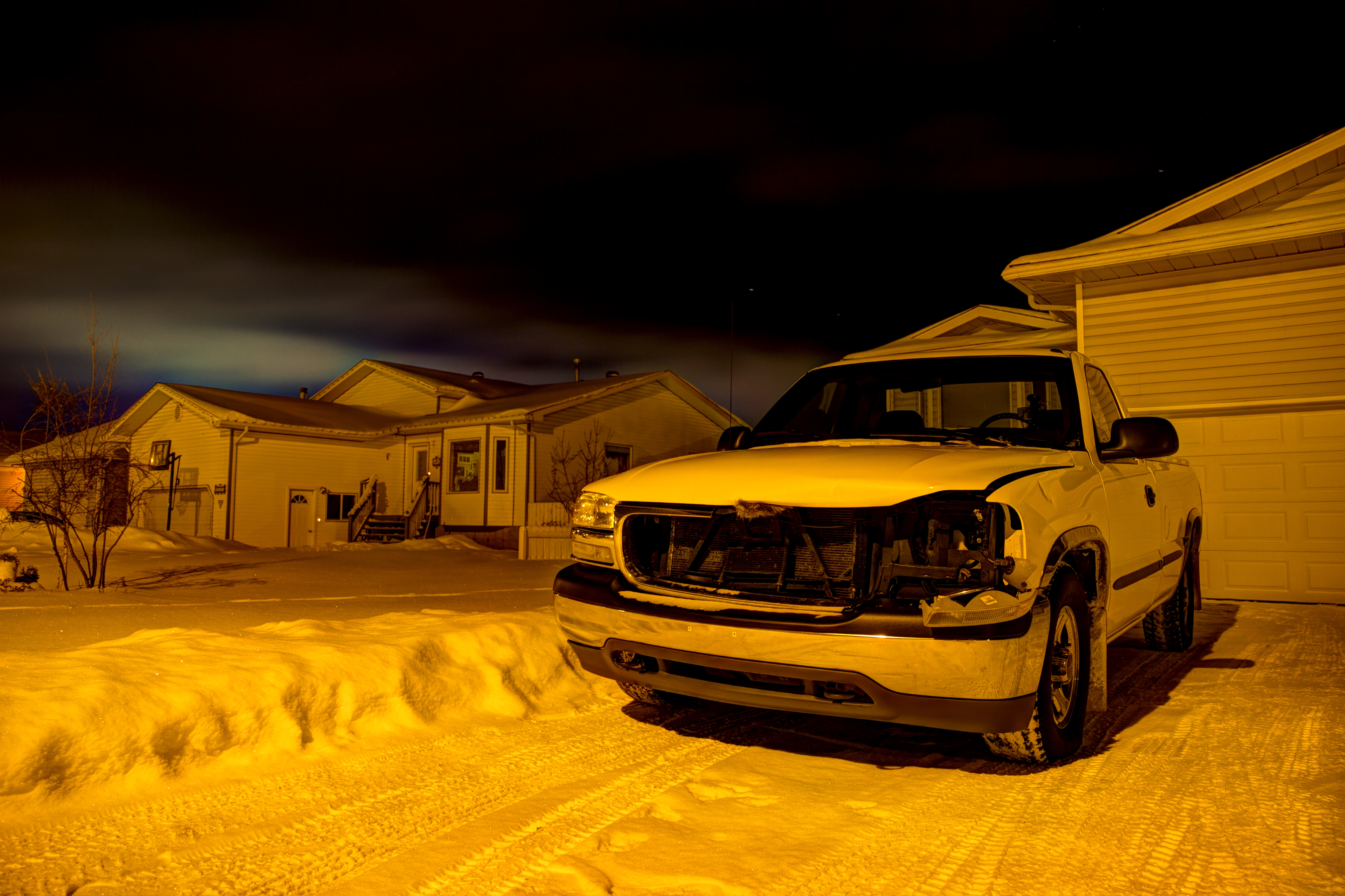
Tomorrow, after a day of school between 4:00-5:00 p.m., a salvage company will come to my house and tow away my 2000 GMC Sierra half-ton pick-up truck. Today, I checked with my wife and she agreed to my signing off the vehicle to my insurance company – the truck has been written off. The truck, a former Cargill elevator truck, has an ever-running small Vortec V8 engine and has had nothing but synthetic oil and regular maintenance through its 286,000 km history. The transmission has been upgraded to allow for the hauling of a motor boat during summers by its previous owner. While not a top of the line truck, it has been a presentable vehicle in terms of shape, chrome and gleam – at twelve years of age there is little rust.
I liked that.
The truck has required some mastery to drive. A two-wheel rear drive unit, without a load in the box, the light back end on icy winter roads takes a while to get to cruising speed. All season passenger tires on the front have made the steering a bit sloppy, as well. Coming down the three kilometre hill from Twin Lakes, Alberta toward High Level in heavy snowfall has been more of a skiing event than rolling forward with steering, brakes and engine. I’ve mastered much of that; but, obviously not enough to avoid last week’s buck.
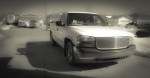
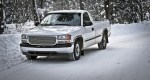
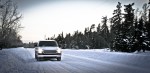
With photography, I’ve appreciated having windows on all sides of me in the cab and the immediacy of light which well allowed me to sense direction, colour and intensity in considering possible photographs. Tonight, I have looked back through the past two years for photos of my 2000 GMC Sierra and found these four.
Quote to Inspire – “When I think of why I make pictures, the [only] reason that I can come up with just seems that I’ve been making my way here. It seems right now that all I’ve ever done in my life is making my way here to you.” – so says Robert Kincaid, in the movie and novel, The Bridges of Madison County by Robert James Waller; notable to me, not as romantic, but as photographer and GMC truck owner is that Robert Kincaid, a National Geographic photographer enters and leaves Madison County in a forest green 65 GMC pickup. Good schtuff!
Listening to Lucinda Williams from her album World Without Tears – Righteously, Ventura and Bleeding Fingers; reminded that Sarah McLachlan adores Lucinda William’s album, Car Wheels on a Gravel Road.
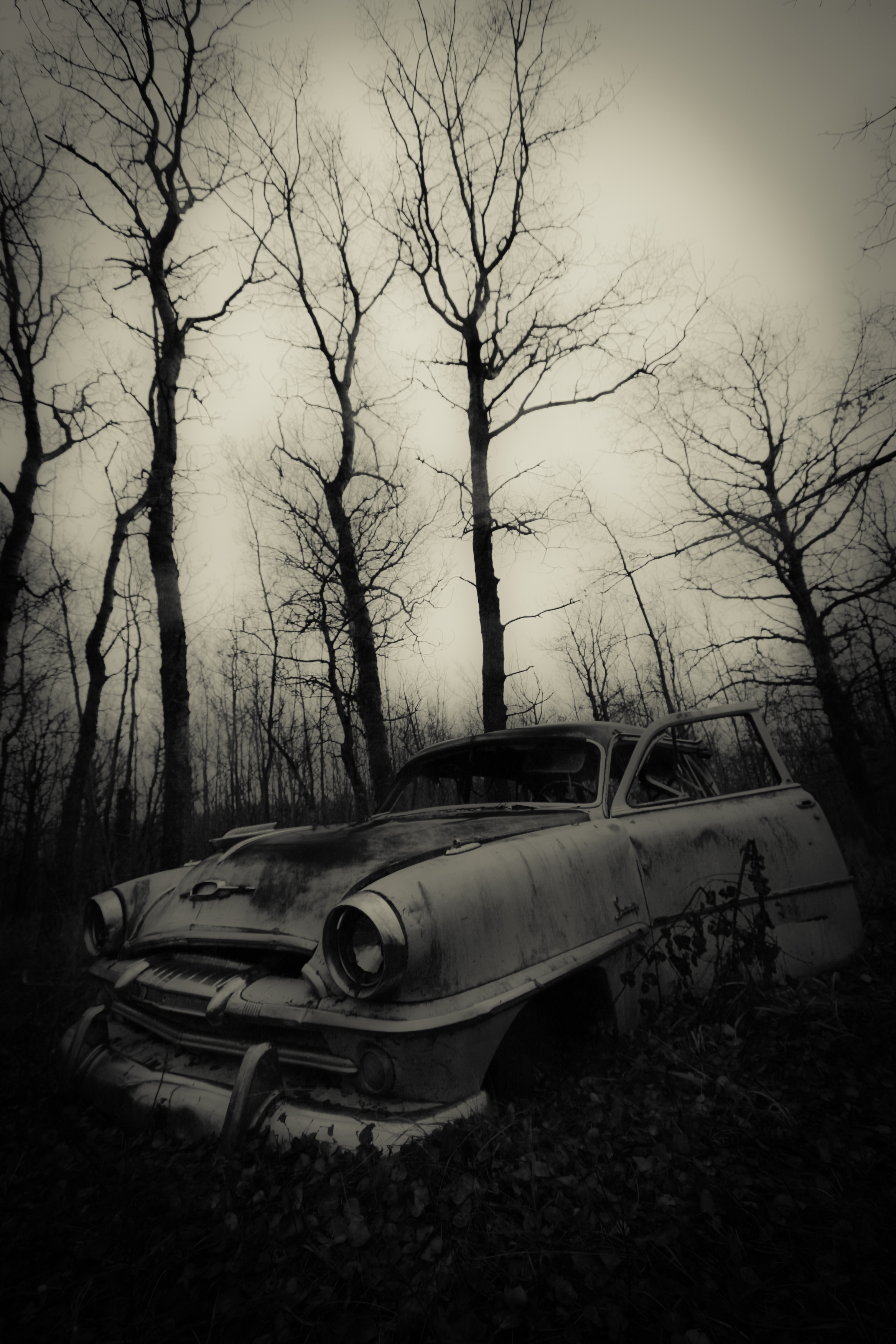
Car photography especially of early fifties vehicles, for me, derives from my learning to steer a car and then to drive one sitting next to a favourite, older cousin in his copper brown and white 1951 Mercury four-door. Strong-arm steering meant that effort was needed to guide the Mercury down dusty gravel roads. These drives usually followed Sunday get-togethers of my family from Edmonton with his in Rimbey, Alberta. The event, recalled to memory is that of a late spring or early summer drive, following an evening meal and Walt Disney. I might have been nine or ten years old when I first took the wheel for some good, adventure-filled times before saying our goodbyes, parting company and returning home in an hour-long drive to Edmonton. Always, my aunt, uncle and three cousins would wave to us from their porch as we left. Our families might see each other again in a month or two. Those were good times.
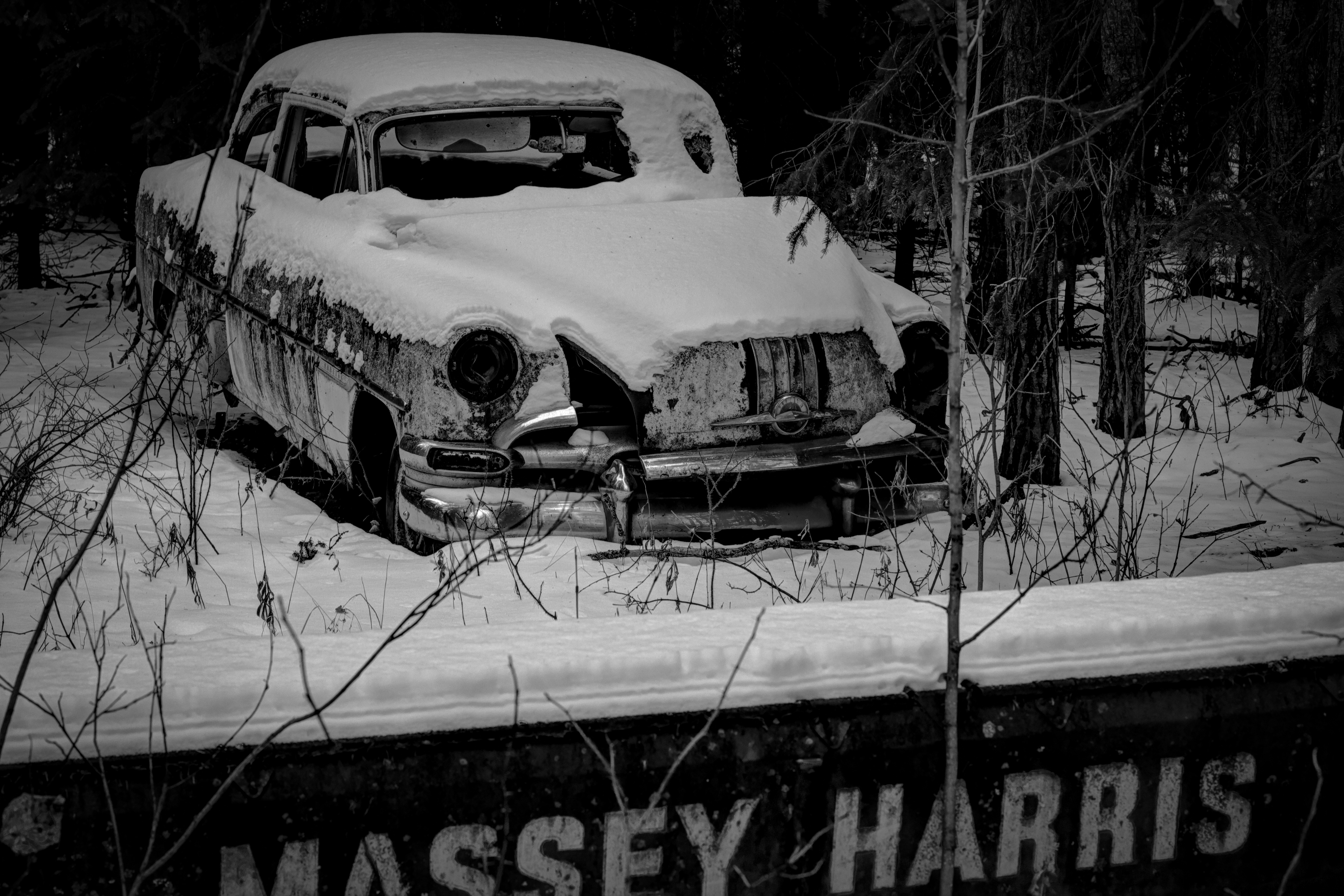
My starting point for this photograph is curious. I am unable to determine the make of this early fifties two-door sedan. Given that this Blue Hills’ farm and its woods have seemingly been left as if in the middle of things, its abandonment indicates something unfinished in not just one life but in the lives of a few. Here, what is sacred is often about the conception of ‘what-has-happened-here.’ It associates to memory that will not fade and cannot be left. With this image, just as in no-trace camping the art is to pass through an area without disturbing it, this photograph presents the necessity of capturing something seemingly sacred without disturbance – reverence and respect are needed.
Listening to the Dave Matthews Band from the album Stand Up and the childhood/teen reminiscences of Old Dirt Hill, a song that recalls my go-cart, our garage and back alley … and friends at Easter break in Edmonton in grade 5 – 1972 … what a week (and to be grounded part-way through).
Quote to Inspire – “A photograph is a secret about a secret. The more it tells you the less you know.” —Diane Arbus
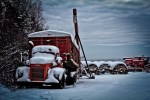
Mid-sixties Ford 3-Tonne Grain Truck – Fort Vermilion, Alberta
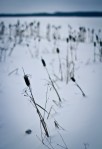
Cattails 1
Cattails 2
Cattails 3
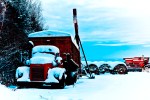
Older White Grain Truck – La Crete, Alberta 1
Older White Grain Truck – La Crete, Alberta 2
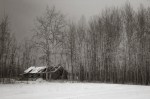
Derelict House / Farm – Blue Hills, Alberta
Mid to Late 50s Sedan – Blue Hills, Alberta
Wife at school, prepping; daughter at dance, dancing – this Saturday seems to be mine, a day before me to use at my discretion, and, certainly not a day to pass in front of a computer screen. A breakfast out takes me to the Flamingo Restaurant where my Photo Plus magazine becomes object of discussion between fellow Canon photographer (my cashier) and me; I point him to the Zinio iPad app as the best means to download the Photo Plus, easily, here in High Level.
Onward – my outerwear consists of several items purchased over the years from Mountain Equipment Co-op – ski pants (10 years old), Salomon winter trainers (new, this year) and a down-filled jacket with hood. Set for warmth at -22C, today, I point my GMC Sierra (without grill or driver’s side headlamp) toward Fort Vermilion and La Crete. Music is part of what this Saturday afternoon is about – Sirius Satellite Radio allows for tuning into folk music on Coffee House, news at the top of the hour from CBC and BBC, jazz music and an interview with the bass player working with Miles Davis. Comedy does not attract my attention, today. I had had thoughts of listening to Sid and Mac’s Shuttertime Podcast; but, their podcast is good to digest while out on a walk around High Level … I let the podcast wait.
In Fort Vermilion, Shirley’s Snack Shack allows for purchase of coffee and something unseen before, a Reese’s Peanut Butter chocolate bar. The truck rolls south on the Red Earth road. The first photographs are of a red, mid-sixties, FORD, three-tonne grain truck; the vehicle remains active – it has current plates and tires are full. The next photographs are of cattails, at the northeast corner of a massive field – land, newly broken and newly farmed; the wind stirs the cattails enough that Automatic Exposure Bracketing, while tried, will not allow for HDR results.
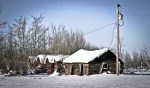
La Crete has Quality Motors to check out, a used car lot and a new Subway restaurant. Moving southward from La Crete, Buffalo Head Prairie is next. A chain of hills loom in the distance, a blue backdrop to this settlement and extends to another thirty kilometres away called Blue Hills. Along the way, different untried back roads are taken and they return to the Blue Hills highway. A derelict farm house is discovered. Doubling back, a place to park the truck off the highway is found; there, two relics from the fifties are found among old disused farming machinery (Massey Harris is the emblem on a seed drill, not Massey Ferguson). With so much left scattered around, the farm seems to be left medias res (in the middle of things); has there been a family death? There’s a story of a car that drove onto the Tompkin’s Landing ferry many years ago; its brakes failed and one or all occupants of the car drowned.
The final part of the journey involves crossing the Peace River over an ice bridge at Tompkin’s landing; signs are there to direct vehicles and to advise of a maximum speed of 10 km/h for crossing the kilometre-wide river. Another forty minutes in night’s darkness with only a passenger headlight to alert oncoming highway traffic of my presence sees me home before 7:00 p.m.. Supper is grilled cheese sandwiches.
Listening to Miles Davis from his Kind of Blue album and So What; reminds that I first seriously listened to Miles Davis within the Finding Forrester soundtrack … Bill Frisell is also there with Over the Rainbow and Under a Golden Sky.
Quote to Inspire – “While there is perhaps a province in which the photograph can tell us nothing more than what we see with our own eyes, there is another in which it proves to us how little our eyes permit us to see.” — Dorothea Lange
At an age when wearing glasses assists me in my day, my experience of working with a camera through to editing an image often is about revisiting subject and context to see what else is there; it is actual re-view (review). The process is similar to gleaning feedback in using a personal journal. And, in journaling, one point of revelation has been sorting through the conception that memory, perception, thought and even feeling are only what they were on the day that they occurred. In that portion of experience in which they occurred they were what truth was – they became the facts in response to Life’s events for that duration of time. Without a record, the memory that is carried forward can shift, adjust and change over time … with new thoughts, feelings, perceptions and influences – memory is or becomes malleable. Just like a journaling process, creating a photograph isolates the truth of ‘what was’ for the duration of time in which it occurs. What is also valuable about a journal and photographs produced by the photographer and camera is that you can revisit subject and context to see and appreciate more of what else was there. The journal and photograph inform you and other readers/viewers about the personal narrative of the writer/photographer. The feedback of what else was there, that you now see, informs future action.
Listening to Neil Young’s Old Man and reminded that Lizz Wright also sings this song; there’s not so much experientially that separates us, the older and younger; it does seem to be a father-son song and the son’s revelation of greater similarity than difference.
Quote to Inspire – “Photography, as a powerful medium of expression and communications, offers an infinite variety of perception, interpretation and execution.” — Ansel Adams
Again, today – out and about on a photowalk … others’ fresh perspective has me looking up and looking at things. Green needles of a conifer remind and point towards spring … loving the colour and background, here.
Listening to U2’s Mysterious Ways … the subject and content of the lyrics are something good to unravel, in their unraveling. Coldplay’s In My Place, is up next, reminding of U2, Paul McCartney, Coldplay and the Verve’s Richard Ashcroft (Bittersweet Symphony) and the world-wide Live 8 concert and the Gleneagles decisions made by G8 leaders … some good, that day! Brian Adams kicked things off in Toronto followed in the day by The Tragically Hip and Great Big Sea.
Curious Quote to Inspire – “In photography there is a reality so subtle that it becomes more real than reality.” – Alfred Stieglitz
Today – out with fellow photographers, a first cluster together. Some creatives among the group, ones willing to experiment with perspective and their subject. Totally cool to be a part of things today and to capture this photographer’s photo in the making. Good schtuff!
Listening to How Soon Is Now by the Smiths, as found on The Wedding Singer Soundtrack.
Quote to Inspire – “Which of my photographs is my favorite? The one I’m going to take tomorrow.” – Imogen Cunningham
Deer – three does chased by a stag crossed Alberta highway 88 as I traveled eastward from High Level to Fort Vermilion at 8:00 a.m. on January 23, 2012; the three does made it across safely between myself and oncoming vehicles. I slowed my truck down on the icy road but not enough to miss hitting the stag. I stopped further ahead and turned around to see about animal remains that might need to be hauled from the road. Nothing was found. There was a swale in the snow where the deer had drifted into the ditch on the north side of the highway. But, the stag and does had taken off. My truck, on the other hand, received damage – the grill and light housing mainly and the radiator and transmission cooler were pushed back toward the engine. I checked it out and watched the gauges – it held together for another 160 km and still is driveable today. Despite being in immaculate shape, at 286 000 km, this 2000 GMC Sierra is considered a write-off as the cost to repair the truck exceeds the value of the truck.
The antlered stag, imagistically recalls U2’s Electrical Storm video, its being written about Ireland’s Easter Day Accord, and the ghosted image of the stag in the Electrical Storm video – a subject I’ve commented on on the old U2 Zoo Station (Zooropa) website.
Listening to – Impermanent Things by Peter Himmelman from his Stage Diving album.
Quote to Inspire – “There are always two people in every picture: the photographer and the viewer.” -Ansel Adams
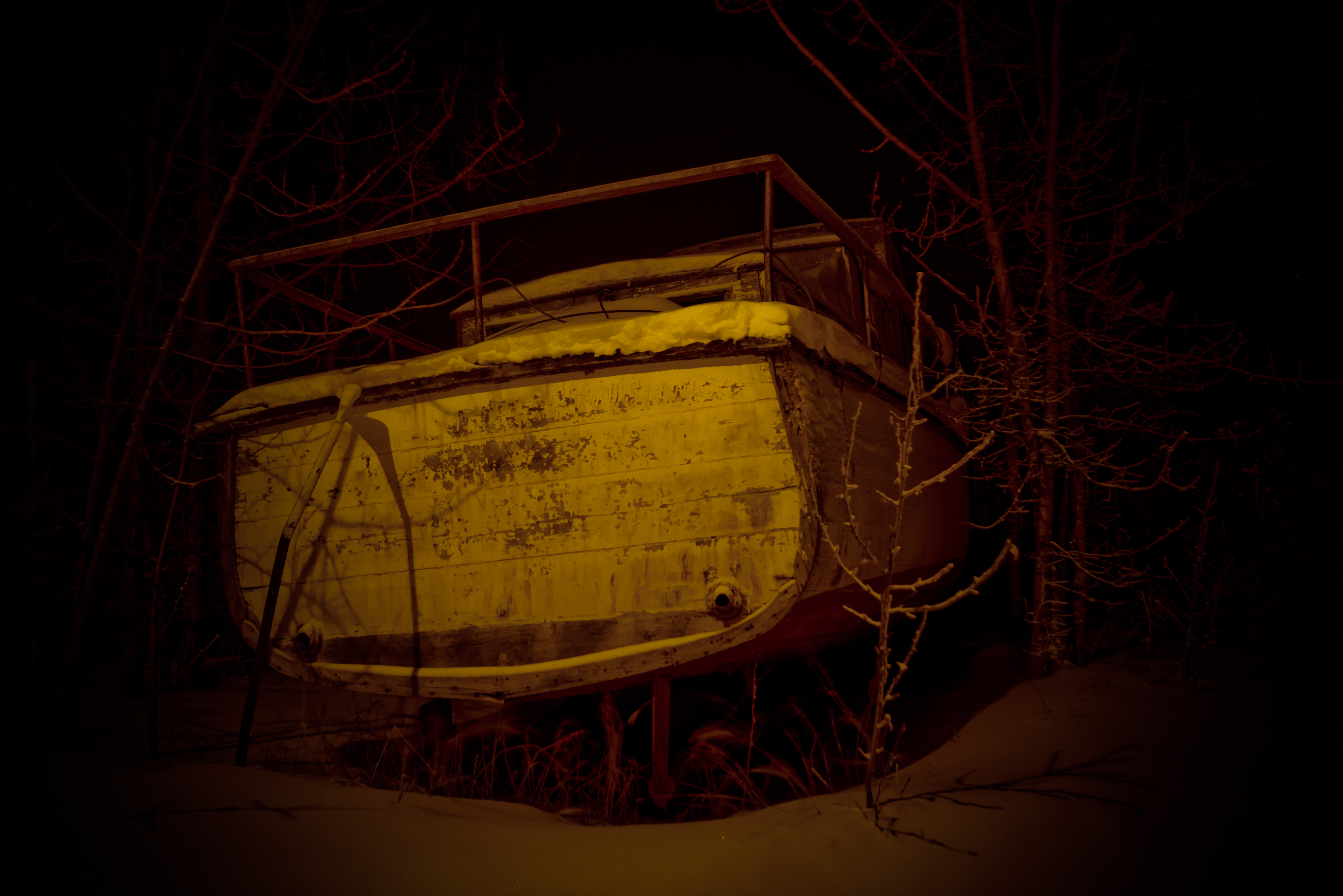
The photograph presented, here, is one of the five boats on Vale Island at Hay River, NWT. While several wordpress blogger photographs this week explore the theme of ‘simple’ in a weekly photo challenge, this photograph more accurately conveys the sentiment of ‘being at rest or at peace.’ This photograph is quirky, though, a boat dragged among the trees, a boat left to rot away … and still the lighting, the subject and boat’s shape suggest simplicity, perhaps a simplicity in resignation. As a concept, simple can be construed to mean the basics involved in the minimum equation for living; it can refer to what one finds easy to do and tangentially it can refer to limited cognitive capacity, perhaps a capacity less than what is required in order to live. Again, the photograph really presents the simplicity of resignation – a life resigned, something complete, something simple.
Listening to The Good in Me is Dead sung by Martyn Joseph in his album Don’t Talk About Love, Volume 1
Quote to Inspire – “There is no such thing as ‘correct’ composition, just bad composition, good composition and inspired composition.” ~ Andrew S. Gibson, Beyond Thirds – A Photographer’s Introduction to Creative Composition







 In My Back Pocket - Photography
You must be logged in to post a comment.