Wisconsin Locomotive - High Level's Canadian National Railyards
High Level’s industrial area intrigues. Within the two kilometres that comprise its service road are perhaps fifty businesses, ones that mediate between our hinterland frontier and the world at large. The location is active. Rarely on this section of road would ten minutes go by without some activity, a vehicle driving by, logging trucks being unloaded, rail cars being loaded, grain trucks pulling in to the Viterra elevator or larger transport trucks pulling in to Neufeld Petroleum (Petro Canada) for fuel. The area contains the Emergency Medical Services, an auto-body collision repair shop, loading bays of a trucking company and much more. And, then, something novel occurs. A Wisconsin locomotive with Wisconsin map painted on its side arrives and idles overnight in High Level’s Canadian National (C.N.) rail yard. The engine is regal with its cab being painted maroon and yellow and sporting a Wisconsin Rail badge on either side of its cab. Later, I learn that C.N. bought out and operates Wisconsin Rail in the United States.
Listening to Run on for a Long Time by The Five Blind Boys of Alabama (Spirit of the Century) and Wisdom by David Gray (E.P.’s 92-94).
Quote to Inspire – “If your pictures aren’t good enough, you’re not close enough.” – Robert Capa
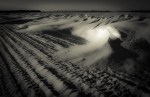
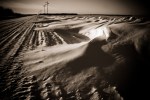
One year ago, late on a Sunday afternoon in February I travelled east from High Level on range roads that service farms in this region. While graders had cleared these roads snow had begun to drift into them from the north. The sun’s light was direct and bright, intense as it was reflected back from the snow. And, the wind blew. From a distance, the shapes of the snow’s drifts were a repetitive pattern blown into the roads – evidence of the wind’s work; more irregular shapes were found as result of the particular way the wind swept through an area. On my return home I photographed Gibson’s farm, 10km east of High Level – a landmark that has served to orient me to how close I was to High Level in my trips in from Garden River, Fox Lake, Fort Vermilion and beyond. After many seasons in many years, my camera allowed me finally to see more of what the Gibson’s farm was about.
Reminded of W.O. Mitchell and his novel, Who Has Seen the Wind – a novel about growing up, a story with teachers and students …. Here’s its poem starting point.
Who Has Seen the Wind? – Christina Georgina Rosetti (1834-1894)
Who has seen the wind?
Neither I nor you.
But when the leaves hang trembling,
The wind is passing through.
Who has seen the wind?
Neither you nor I.
But when the trees bow down their heads,
The wind is passing by.
Listening to Dar Williams’ album The Beauty of the Rain, an album I was drawn to after learning the tablature for her song of the same name. The circumstances of a friend have recalled a song from the album – Fishing in the Morning.
Quote to Inspire – “To photograph truthfully and effectively is to see beneath the surfaces and record the qualities of nature and humanity which live or are latent in all things.” – Ansel Adams.
During evening meals as I and my brothers grew up my father would look back to his boyhood days and share stories and facts about the world surrounding him. Talk would often revolve about different outings and that his mum, my grandmother loved a Sunday drive in the landscape surrounding Moncton, New Brunswick where he grew up. It did her good to be with her family and to see the world beyond her home. A blue 1938 Pontiac transported them – a few years ago my aunt showed me a picture of the car with my Dad and his younger brother eating picnic sandwiches sitting in shade on the car’s running boards. Cars do double as portable homes or perhaps rooms and during transport they group a family together. Everyone has common vision, all staring down the road with the driver. Cars become a place to catch-up on things, a place to talk things through, places to share news – in transport, you’d not be the same person getting out of the car as you were getting in to it.
While cars did seem to be a family thing, a fact that I continue to be amazed at is that my father only learned to drive after completing his Ph.D. at the age of twenty-five or twenty-six; perhaps he anticipated family as his next step. And, maybe there’s some truth in that because during his university years at Mount Allison (Sackville, Nova Scotia) and at St. Mary’s College (London, U.K.), he hadn’t needed a car but had been able to make his way around Europe on train, by bus, on bicycle or hiking. And, it seemed that such travel was much more of a social thing with much more grace being there as fellow-travellers or friends in the act of travel. Perhaps there was that common purpose of travel in that former time – to ‘see’ the world (which also meant to experience it).
Dad had ideas about cars, about how long they should be driven before a new one should be bought. He had ideas and biases about good and better cars. He enjoyed a car that had what he would term ‘pep.’ It’s tempting to look at the cars Dad has owned and driven as associating to different points of development among our family – a 57 Ford Consul (marriage), a 64 Pontiac Beaumont (the family populates), a 69 Pontiac Parisienne (the family’s middle years), a 76 Chevrolet Caprice Classic with 74 Ford Gran Torino (the family’s later middle years), an 81 Oldsmobile Cutlass Supreme (kids almost ready to move out), an Oldsmobile Delta 88 with Dodge Aries K Car (first years of empty-nest), two Nissan Maximas (later empty nest and retirement) and a Nissan Altima (later years of retirement). You could almost use the technology available at each stage to chronicle the evolution of cultural norms within society … possible Masters thesis for someone.
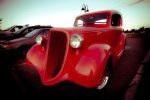
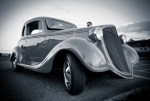
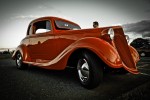
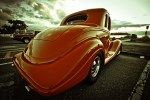
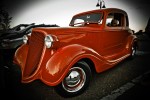
On occasion, cars – what they were about, their history and their potential for each aspiring driver in our family – would be the center of discussion at evening meals. One vehicle Dad commented on with regard to its history was a car alluded in terms of character name in the Disney/Pixar movie, Cars. Paul Newman provided voice-over for that car, now animated, Doc Hudson. Last summer I got to see a Hudson Terraplane, not one from the fifties or forties, but a Hudson Terraplane from the thirties, a pet project for an autobody repairman and tow-truck driver from Nanaimo. These photographs are taken at the end of July, 2011.
Quote to Inspire – “The question is not what you look at but what you see!” – Henry David Thoreau
Listening to John Mayer sing Route 66 from the Cars Soundtrack; the same soundtrack has Rascal Flatts singing Life is a Highway. After that it has been listening to Tom Cochrane and Red Rider in the Edmonton Symphony Sessions recorded at Edmonton’s Jubilee Auditorium – Avenue A, Bird on a Wire, Big League and Boy Inside the Man … all, good, good tunes.
Cemeteries, for most people, are places of foreboding – we understand that we too shall end-up, here. Beyond the fact that we usually find ourselves at cemeteries on the other side of saying goodbye to loved ones and good friends, cemeteries also point us to the consideration of the life we are living. At our life’s end, we may be more in a state of regret having conformed our lives to the expectations of others, failing fully to step up and into the Life that is truly ours. On the other hand, on our death bed, it would certainly be something to smile, roguishly, and to own to others that we’d certainly taken ‘a good squeeze out of life.’ My wife’s friend from church, Herman Peters, passed away a week or two ago and his funeral and eulogy embraced his feisty, roguish approach to Life and seeing it through well. Herman’s eulogist, throughout his eulogy, would often lean over and look at Herman within his casket and ask, “Do you think it would be okay if I tell them about the time we did…?” Wow! What a way to go! Good schtuff, Herman – thank you to who you have been to all others and the friend and elder you’ve been to my wife. John O’Donohue and his Greenbelt lecture on the Imagination have been much on my mind as I’ve considered this photograph, tonight.
Listening to Pierce Pettis sing Love Will Always Find Its Way from his album,Everything Matters; other good, good songs include Neutral Ground and Just Like Jim Brown (She is History).
Quote to Inspire – “No place is boring, if you’ve had a good night’s sleep and have a pocket full of unexposed film.” – Robert Adams, Darkroom & Creative Camera Techniques, May 1995
Home and homesteads are the subject of this evening’s perusal through photographs. In the U2 canon, Paul Hewson (Bono), the younger of two siblings asserts lyrically that ‘a house does not make a home,’ something he’s needed his father (Bob Hewson – Catholic) to understand about their shared life, a life without a mother who’s passed on (when Bono was 16 years of age). His lyrics point to the heart of home life – the void Bono’s encountered and what should be there. Another song from the U2 canon references yearning for his mother (Iris Elizabeth Hewson – Protestant) and her example – there’s vertiable duality in his ‘I will follow‘ lyrics – Bono surfaces his mother, here, as well as redemption through saviour and salvation. The essence that’s there, throughout these songs, is that much of what home is about revolves around the care and direction we receive from that parent who is our mother. Here, in tonight’s photographs, more than you’d expect, home is the key anchoring ingredient to Life on our frontier (yours too).
Listening to much of U2’s All That You Can’t Leave Behind album – New York (a secondary home-base for U2 and anchor), Grace (that awkward yet overcoming force/intention) and Kite (that song made gospel in Joey Ramone’s deathbed hearing).
Quote to Inspire (and to chuckle at) – “I shutter to think how many people are underexposed and lacking depth in this field.”
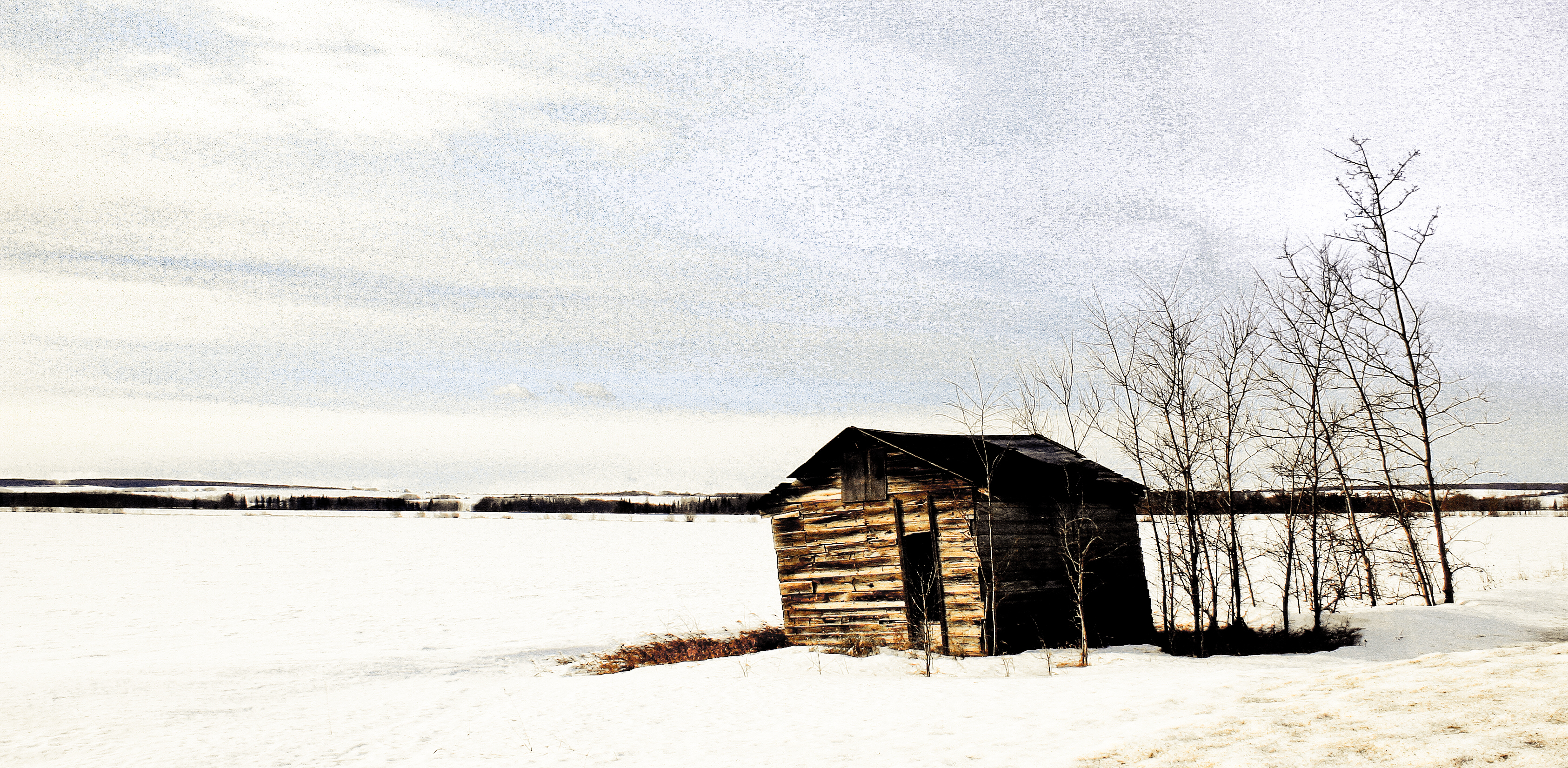
Last February, my wife’s aunt was struggling with cancer at the Grande Prairie hospital. She went in during the Christmas break and remained there until May when she succumbed to the disease. In February, when this photograph was taken I was making time to be away from the hospital to see what was happening in the world. I got out toward Beaverlodge, Alberta. This photograph impressed me as one landmarking a period of time in which the intensity of light grows greater, day-by-day as we move forward from winter into spring – there’s something of ‘hope’ in it. Again, its subject is another grain bin; but, it sits upon a field that soon will grow black as snow melts into earth and then will grow green with as it’s planted and left to respond to the sun.
Again, listening to Liz Longley sing her song, Unraveling about her grandmother from her album Hot Loose Wire.
The chorus:
I’m the only daughter of her oldest son
I knew well before her spirit was gone
And her life is a thread woven into every part of me
She is unraveling, she is unraveling.
Quote to Inspire: “A good snapshot stops a moment from running away.” — Eudora Welty
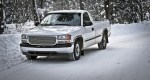
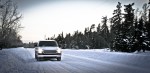
Tomorrow, after a day of school between 4:00-5:00 p.m., a salvage company will come to my house and tow away my 2000 GMC Sierra half-ton pick-up truck. Today, I checked with my wife and she agreed to my signing off the vehicle to my insurance company – the truck has been written off. The truck, a former Cargill elevator truck, has an ever-running small Vortec V8 engine and has had nothing but synthetic oil and regular maintenance through its 286,000 km history. The transmission has been upgraded to allow for the hauling of a motor boat during summers by its previous owner. While not a top of the line truck, it has been a presentable vehicle in terms of shape, chrome and gleam – at twelve years of age there is little rust.
I liked that.
The truck has required some mastery to drive. A two-wheel rear drive unit, without a load in the box, the light back end on icy winter roads takes a while to get to cruising speed. All season passenger tires on the front have made the steering a bit sloppy, as well. Coming down the three kilometre hill from Twin Lakes, Alberta toward High Level in heavy snowfall has been more of a skiing event than rolling forward with steering, brakes and engine. I’ve mastered much of that; but, obviously not enough to avoid last week’s buck.
With photography, I’ve appreciated having windows on all sides of me in the cab and the immediacy of light which well allowed me to sense direction, colour and intensity in considering possible photographs. Tonight, I have looked back through the past two years for photos of my 2000 GMC Sierra and found these four.
Quote to Inspire – “When I think of why I make pictures, the [only] reason that I can come up with just seems that I’ve been making my way here. It seems right now that all I’ve ever done in my life is making my way here to you.” – so says Robert Kincaid, in the movie and novel, The Bridges of Madison County by Robert James Waller; notable to me, not as romantic, but as photographer and GMC truck owner is that Robert Kincaid, a National Geographic photographer enters and leaves Madison County in a forest green 65 GMC pickup. Good schtuff!
Listening to Lucinda Williams from her album World Without Tears – Righteously, Ventura and Bleeding Fingers; reminded that Sarah McLachlan adores Lucinda William’s album, Car Wheels on a Gravel Road.
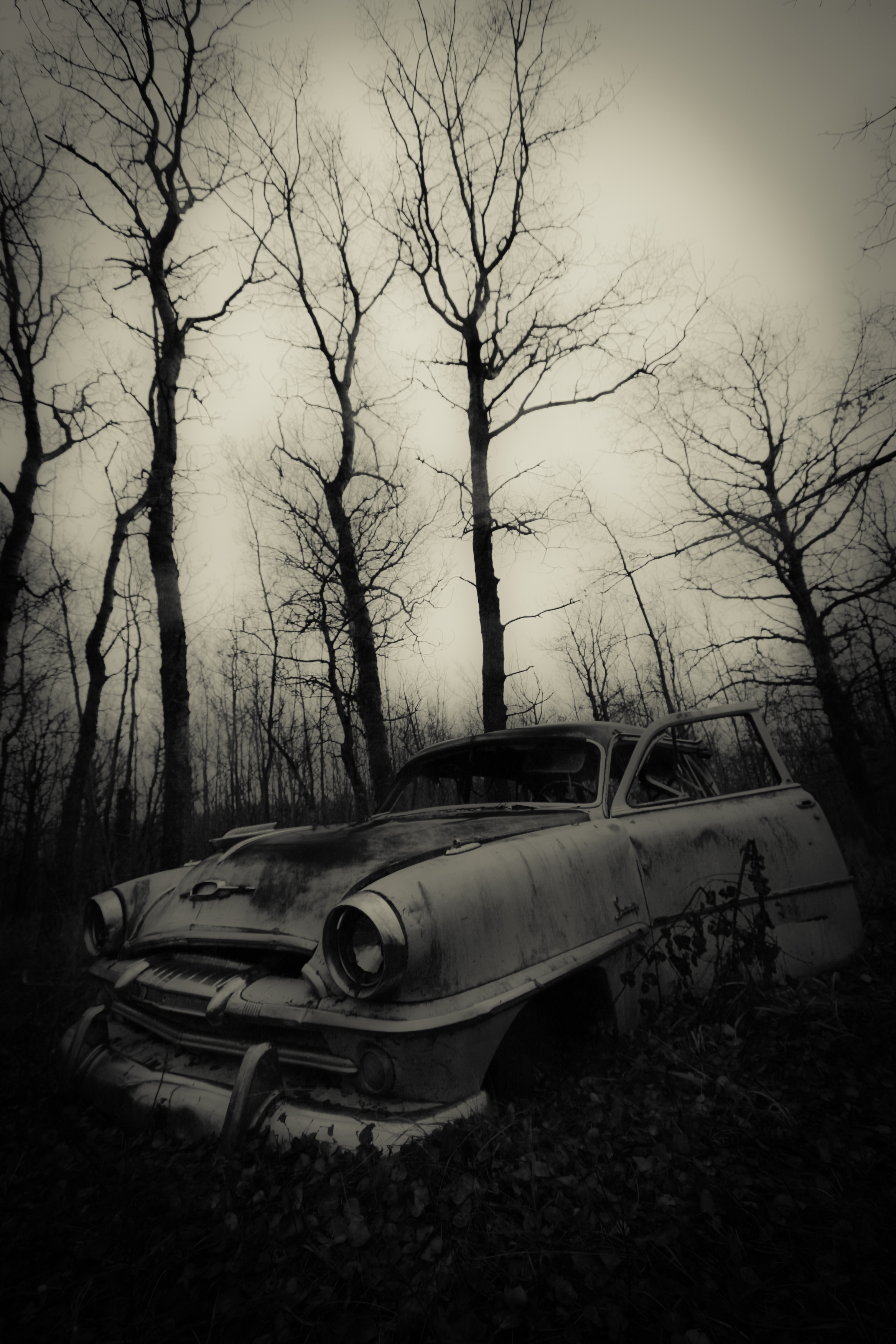
With this image, I’m beyond camera in post-processing toward this colorful result. The Plymouth Savoy plays its own part in longer term decay among this still life. I like it.
Listening still to www.ckua.org and Hole in the Wall by the Bobby Blue Band from their album Year of Tears.
Quote to Inspire – “Light glorifies everything. It transforms and ennobles the most commonplace and ordinary subjects. The object is nothing, light is everything.” — Leonard Missone
With photography, there’s a subtle contemplative side which must be settled into and found; then, ‘click’ you’re in … amid revelations of colour, texture and visual treasure, all sitting there, before you. Right?
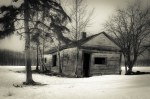
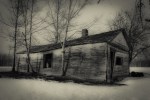
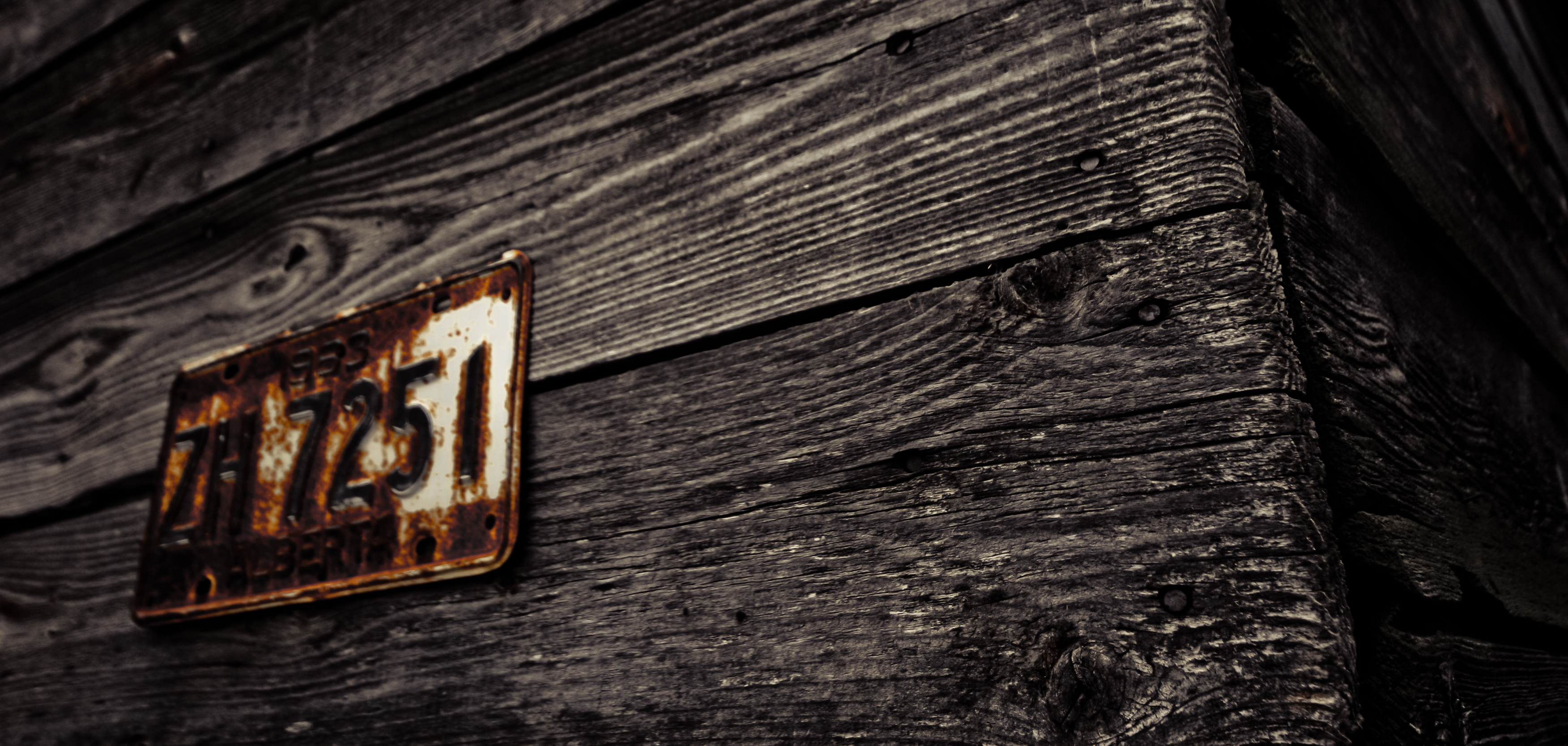
I’m looking back through my McNaught Homestead photos again this evening – this image surfaced in terms of colour, form and texture … and thoughts about what I’d do with it, anew.
Quote to Inspire – “I see something special and show it to the camera. The moment is held until someone sees it. Then it is theirs.” — Sam Abell
Listening to www.ckua.org ; it’s Friday night and Liz Mandeville belts out Corner Bar Blues from her Red Top album.
At an age when wearing glasses assists me in my day, my experience of working with a camera through to editing an image often is about revisiting subject and context to see what else is there; it is actual re-view (review). The process is similar to gleaning feedback in using a personal journal. And, in journaling, one point of revelation has been sorting through the conception that memory, perception, thought and even feeling are only what they were on the day that they occurred. In that portion of experience in which they occurred they were what truth was – they became the facts in response to Life’s events for that duration of time. Without a record, the memory that is carried forward can shift, adjust and change over time … with new thoughts, feelings, perceptions and influences – memory is or becomes malleable. Just like a journaling process, creating a photograph isolates the truth of ‘what was’ for the duration of time in which it occurs. What is also valuable about a journal and photographs produced by the photographer and camera is that you can revisit subject and context to see and appreciate more of what else was there. The journal and photograph inform you and other readers/viewers about the personal narrative of the writer/photographer. The feedback of what else was there, that you now see, informs future action.
Listening to Neil Young’s Old Man and reminded that Lizz Wright also sings this song; there’s not so much experientially that separates us, the older and younger; it does seem to be a father-son song and the son’s revelation of greater similarity than difference.
Quote to Inspire – “Photography, as a powerful medium of expression and communications, offers an infinite variety of perception, interpretation and execution.” — Ansel Adams









 In My Back Pocket - Photography
You must be logged in to post a comment.