
Winter Picnic Table – High Level, Ab – Canada
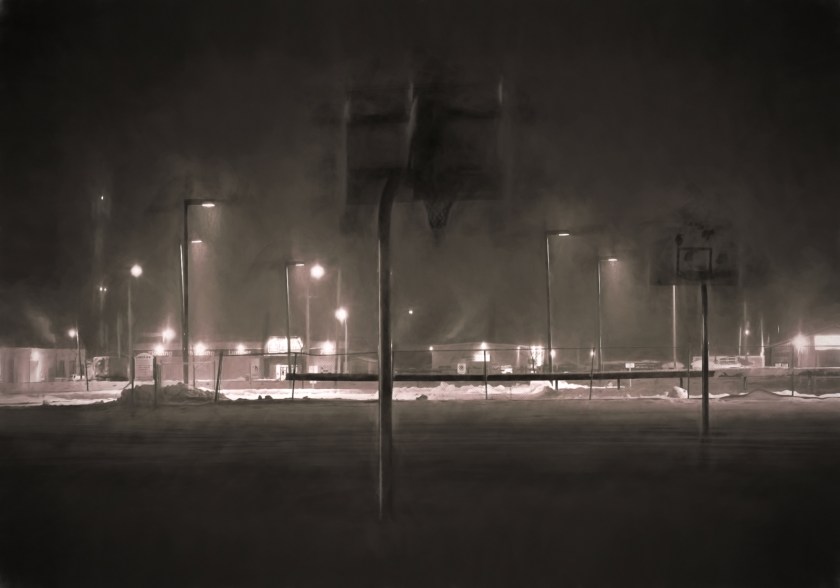
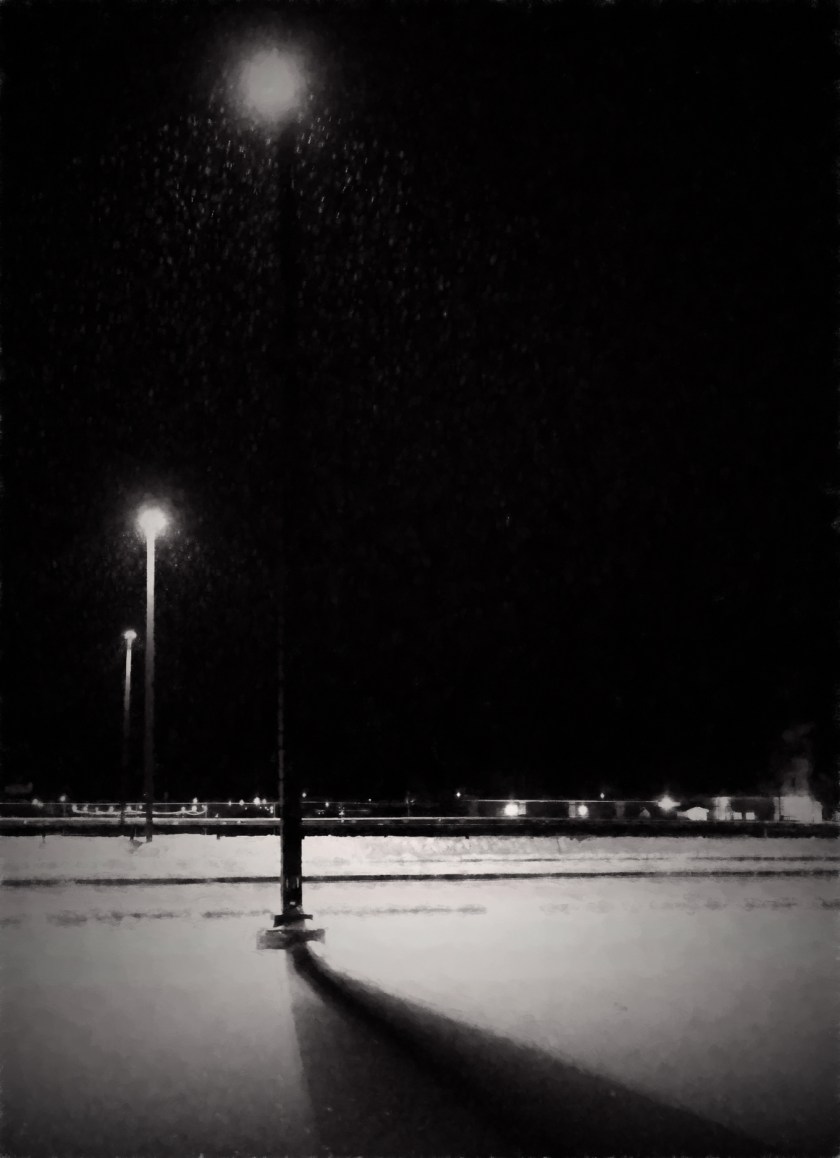
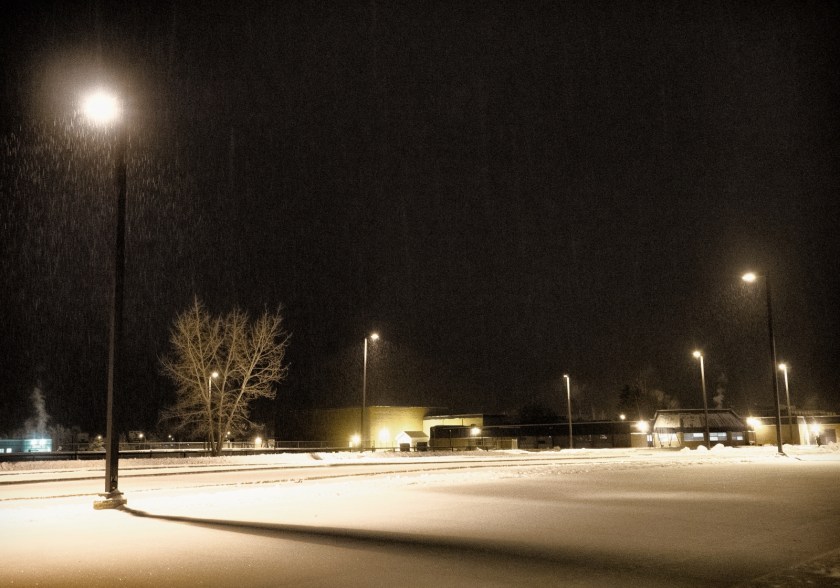
Image – A picnic table lies dormant under a blanket of snow waiting its next use.
The song is ‘Wish You Were Here’ by Pink Floyd. I am helping a student gather its fretting. I work with a Seagull mini jumbo, the student with a Yamaha dreadnought. The student is learning his part for a school band. Music is part of his motivation for coming to school. We enjoy our practice times and the rabbit trails toward the investigation of other songs.
This morning, violinist, Stephane Grappelli, holds my attention. This classical violinist, whom my father admires, features in a recording of ‘Wish You Were Here’ found on iTunes. He and his violin add to the soulful drifting upon waves feel. Musical literacy would connect lyrics with soundscape. Imagery, imagination, memory would merge into experience for the listener. Drifting upon waves is there. Chords and strumming pattern echo a sense of being upon waves. Forward, a wave moves with momentum. It diminishes, receding to trough and moves forward again. The momentum only carries forward into future, yet there’s cadence in this movement, you expect it.
“Wish You Were Here” by Pink Floyd
So, so you think you can tell Heaven from Hell, blue skies from pain.
Can you tell a green field from a cold steel rail?
A smile from a veil?
Do you think you can tell?
Did they get you to trade your heroes for ghosts?
Hot ashes for trees?
Hot air for a cool breeze?
Cold comfort for change?
Did you exchange a walk on part in the war for a lead role in a cage?
How I wish, how I wish you were here.
We’re just two lost souls swimming in a fish bowl, year after year,
Running over the same old ground.
What have we found?
The same old fears.
Wish you were here.
The lyrics – as an English teacher, I aim to expose nuance in the word read and the word spoken, in prose and poetry. Trying out words in roles other than those intended often exposes nuance well. The words between Romeo and Juliet become words between a priest and penitent. They become words between Apollo astronaut and ground control. The mismatch of speaker(s) to words spoken confronts students with their intent. What the words are and are not about become clearer. In ‘Wish You Were Here,’ the lyrics intrigue in terms of who can own them.
Who speaks these words and who receives such words? Are these words found strictly among Pink Floyd bandmates? The language at play is almost jibe or dig or taunt, yet they are intimate. They are the words of long-standing relationship. In their speaking, they hold concern and interest for the other. Contrast is there. That world that was once understood, known and mastered is no longer one’s playground. No longer is the world of youth’s heyday accessible. Sluffed-off, that former time is no more. A different, colder, more bland and more stark reality confronts the speaker. The lyrics seek commiseration – to confirm that one’s disbelief and disillusionment are valid. “Did this happen to you, too?” The lyrics do own a seasoned perspective on loss.
Longed-for is the good understanding of shared values and principles. Longed-for is reconnection to that other who knows you. That other re-orients you to who you know yourself to be. That other recalls you to Life. On the other hand, though, it is possible that that other from one’s heyday has moved on in his or her Life; perhaps that other no longer sees, recognizes or understands you. Perhaps that other has adapted through change(s). Perhaps that other is in a quite different state – stronger, weaker, hardened, older, frail. This relationship has encountered interruption and a shared Life trajectory is no longer possible. Life in the interim is at play.
Would this be one’s mind scrabbling back to a poignant, long-ago idea? Would that activity recall to Life the idea and the friend who breathed Life into it? The absence of friend is poignant in ‘Wish You Were Here.’ The possibility of reconnecting with that friend is absent. Alone, there is drifting, listing between what was and what is pending. There had been an approach to Life and its difficult next steps. Some of one’s confidence had been founded in the assurance of handling such next steps together. Now, one gauges Life’s next steps alone. It has become impossible to reconnect with the other. The song’s rhythm, melody and lyrics convey such listing emotion. The looking back to look forward is there when a pending, next, unfamiliar step must be taken.
The breadth of who can own these words grows. While the intimate questioning in the absence of the other has its origin in song among bandmates, they become those questions one would hope to ask of absent friend or soulmate. They are likely questions the band would love to wrestle with and consider with its audience. Yet the structure of concert, performance, band and listener makes such poignant sharing beyond performance untenable.
Who next can own these words? Is this the wrestling between conscience and ego? In the first person, these intimate questions express warning. They are the prickling words of conscience. They surface one’s selling-out of values, moral grasp and integrity. The intimate questioning is that from conscience to ego. Conscience asks, ‘Where are you in all this that’s going on?’ Conscience seeks to awaken courage, asking ego to man-up, not sell out and act with integrity.
In metallurgy, a crucible is a container used to heat metal to a molten state. The container allows skimming of impurities (the slag) from the molten surface. The metal’s quality improves with the removal of the slag. As well, a crucible refers to the ordeal one encounters that yields strength to the person and the group by having gone through it. A crucible is a means to apply heat to metal and refine it. A crucible is also a group process that exerts influence upon a person. Parents send students to school. Parents send children for music lessons. Learning and practice with skills build skills needed by the developing adult. A crucible can force compliance in disciplinary situations for children and adults. Adults can limit a child’s access to privileges in response to inappropriate behaviour. In party politics, censure ensures party compliance in voting. On the world stage, sanctions against a country seek compliance from that country. That compliance may be about social issues or what happens in war.
In ‘Wish You Were Here’ the speaker and the other endured a crucible experience. They may have created it. Its boundaries may only include the two of them. They may not have been able to see where it would lead. They may have differed on what was best for them. Both may have sought the other’s compliance. Both may have applied censure. The mess of moving through that crucible experience halted relationship with the other. Time has passed. There’s that intimate knowing of the other. There’s that interest and concern for how the other dealt with it. That’s the arena of the song’s narrative.
Now, turning to the perspective of crucible, who might own these lyrics? Thomas Beckett comes to mind. Richard Burton played this English, medieval figure in the 1964 film, ‘Beckett.’ Well-educated, Beckett was a close friend of Henry II. Beckett served as chancellor to Henry. Later, by Henry’s appointment, Beckett served as the Archbishop of Canterbury. As Beckett grew into that role and understanding of that position Beckett stood-up for the Church. Doing so, placed him at odds with Henry. This issue was more than mere ‘truth to power.’ Beckett was opposing his King’s authority over the Church. T.S. Eliot wrote about this crucible experience Beckett faced in a verse drama, ‘Murder in the Cathedral.’ The play considers Beckett’s reasoning for not complying with King Henry II. Henry gives Beckett an ultimatum and timeline for compliance. Beckett understands that non-compliance not only undermines the King, but doing so becomes an act of treason. Through one long night, Beckett works within a crucible of seeking to resolve how he can comply with the king and still speak and stand for the issues of the Church. Beckett considers each possible action he might take. Each consideration is framed as temptation. And, the first three temptations are modeled after the temptations Christ encounters. There is a fourth and final temptation. Beckett masters temptation, the time of temptation through to not acting upon the temptation. Still, Beckett does not yield. Here, in relation to King Henry II, Thomas Beckett and Eliot’s ‘Murder in the Cathedral,’ one encounters political context and leadership within aphorism, ‘The strong rule by force, the weak by caprice.’ Ambition, politics and Christendom caress and collide throughout this play. They become the crucible Beckett works through. Beckett cannot comply with King Henry. In 1170 A.D., four knights find their way to Beckett into Canterbury Cathedral and assassinate him. Not only are the lyrics within ‘Wish You Were Here,’ those of any of us that might wish to investigate the integrity of Thomas Beckett within his crucible, they may also be those of his friend, King Henry II. The lyrics of ‘Wish You Were Here’ are words found on the other side of crucible. Where those lyrics might express our wish to know more about what was at play, they are the words encountered on the other side of conflict in which no resolution was possible.
A fellow blogger, Rajiv, has comments that follow. I would urge you to look at his blog, especially with an eye for the ‘down-and-out’ for whom Life itself is crucible. Lyrics in ‘Wish You Were Here,’ take on another perhaps more poignant shade of meaning, perhaps with the question of our role within their plight. Thank you, Rajiv.
Listening to – Pink Floyd’s ‘Wish You Were Here’ featuring Stephane Grappelli (and I’m curious about his involvement in the concert and how he comes to the song).
Quote to Consider – “There is one thing the photograph must contain, the humanity of the moment.”











 In My Back Pocket - Photography
You must be logged in to post a comment.