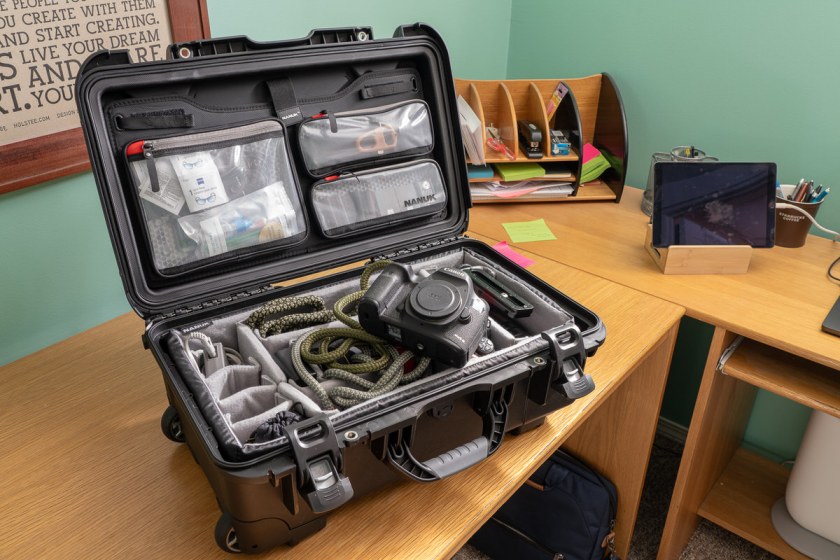
The camera bag sits in the corner, its leather cool to the touch. Weeks have passed — maybe months, maybe years — since you last heard the shutter click. The battery is dead. The SD card is a graveyard of half-finished ideas. Meanwhile, the smartphone in your pocket vibrates incessantly, a black mirror that demands your attention every waking moment.
Ruth Guest has seen this pattern countless times. A photographer with an MSc in Cyberpsychology, she has spent her career studying how technology shapes our behaviour, identity, and sense of self — and has lived it. “I spent years shooting high-end fashion and portraits across Europe, feeling absolutely nothing,” she says. After a failed tech startup and a bruising corporate job, her DSLR gathered dust for four years.
“Your camera isn’t broken,” she says. “Your relationship with it is. To come back, we have to stop looking at the glass and start looking at the soul.”
1 – The Problem Isn’t Your Eye — It’s Your ‘Why’
When creative momentum stalls, the instinct is to look outward. We ask how to improve, buy a sharper lens, or chase new post-processing techniques. But ‘how’ is a technical question that masks a deeper void. The only question that matters is: “Why did you stop?”
Photography often loses its appeal when it shifts from a practice of love to a performance for validation — shooting for likes or to meet a client’s expectations. When external rewards dry up, the internal engine stalls. The longer the camera sits in the drawer, the harder it becomes to close that gap.
No amount of new gear will fix this. Until you name the real blockers — fear, resentment, exhaustion — you won’t want to shoot again. The problem was never your technique or your eye. You simply lost sight of why you picked up the camera in the first place.
2 – You Are Caught in the ‘Mass Drift.’
Every time you unlock your phone, you are flooded with other people’s visions, aesthetics, and curated lives. In cyberpsychology, this relentless ‘identity performance’ is well documented — and it quietly erodes your sense of self.
Guest calls this the Mass Drift. When your eye is saturated with a billion other images, your unique way of seeing begins to fade. “The algorithm has become your creative director,” she says, “… even though you never hired it.” “It is not neutral — it is,” as she puts it, “… a parasitic creative director reshaping what you think your work and your life should look like.”
The drift isn’t just about taking uninspired photos. It is a drift from yourself. Your visual voice hasn’t vanished; it is buried. The first step toward recovery is a deliberate Media Fast — closing the black mirror long enough to let your own visual hunger return.
3 – Your Camera is a Mirror, Not a Window
We tend to think of photography as looking outward at the world. In reality, the camera points back at us. The subjects you choose, the light you seek, and the themes you return to — all of it reflects your internal landscape: your desires, fears, and values.
Guest discovered this through what she calls an Archive Audit, a process of reviewing her own body of work. She noticed she had been obsessively photographing couples during a painful breakup, then shifted to themes of friendship and coming-of-age when her brother emigrated. She hadn’t consciously chosen these subjects — her subconscious was using the camera to process her life.
She also identifies a related pattern: using the Camera as Armour, placing the lens between yourself and a world that feels too overwhelming to face directly. An honest Emotion Audit — asking what you were feeling when you took your best shots — can transform photography from a passive hobby into a vital, truthful practice.
4 – The ‘Contained Practice:’ Addition by Subtraction
When we feel creatively stagnant, the reflex is to add: a new location, a faster sensor, or a different genre. Guest argues the opposite. The secret to restoring the eye is constraint.
She calls it the Contained Practice, governed by the 1-1-1 Rule: one camera, one lens, one film stock. Strip away the burden of choice, and you eliminate gear fixation, freeing the brain to engage with the world in front of it.
For Guest, this meant selling all her digital equipment and buying a secondhand 1983 Leica without a light meter or backup. “It wasn’t the smart choice,” she admits, “but it was necessary.” That limitation forced her into what she describes as the Three Stages of Seeing — a discipline of noticing the world before even raising the camera.
For those feeling overwhelmed, she offers the 3-30 Rule as a starting point: give yourself three minutes to find a shot within a 30-foot radius, or limit yourself to three frames in 30 minutes. Less equipment, less time, fewer frames — and, paradoxically, more of yourself in every one.
5 – Shooting to ‘Escape Death:’ Finding Your True Philosophy
The deepest reason we take photographs is rarely spoken aloud. We are, Guest argues, trying to escape death — leaving proof that we were here, that we saw things, and that our particular way of seeing was ours and no one else’s.
This is the photography philosophy that outlasts every trend. When you begin to see your body of work as a legacy — a testament to your existence — the pressure to perform for an audience quietly dissolves. The practice ceases to be something you do and becomes an honest extension of how you live.
The Camera Has Waited Long Enough
Returning to photography is not about mastering technical settings. It is about stepping out of the Mass Drift and back into an honest, personal practice — finally deciding that you are done waiting to live the life you truly want.
Your love for the craft is still there, tucked away in that bag with the dead battery and the dusty lens. Before you pick it up again, Guest leaves you with one last, uncomfortable question.
What does your current body of work — or its absence — reveal about who you are right now?
The camera has waited long enough. It is time to see again.
Sources / Further Reading This article was inspired by Neale James’s interview with Ruth Guest on the Photowalk podcast. The frameworks and concepts discussed here are drawn from her work; her returning-to-photography workbook is available at ruthguest.com/returning-to-photography-workbook.
Quote to Inspire / Consider: borrowed from the Photowalk because it is relevant within the podcast, to the work of Ruth Guest and for what our photography is about. “What you have caught on film is captured forever. It remembers little things long after you’ve forgotten everything – Aaron Siskind.”
Listening to: Hollow Coves’ ‘Pictures,’ and Roo Panes’ ‘Message to Myself.’
 In My Back Pocket - Photography
2 responses to “5 Truths Reconnecting You to Photography (and Your Camera)”
I very much enjoyed this article, and completely resonated with much of it (using the camera as armour!).
What I did this past year, was take a beginners photography class. Almost everyone in the room has a brand new camera and had not done much, if any shooting. My friends wondered why I was taking a beginners class, but as you suggested, it had been too long since I had been able to shoot (family health challenges), and I needed to go back to the beginning. It was a tremendous help!
Hi Laurie,
It has been a while since we last connected through blog posts and comments. I remember a comment from you about one of my images — a 5 km road descent into a wooded valley, beginning near Twin Lakes, Alberta. It was taken just after a bit of rainfall, with the sun breaking through the clouds about an hour before sunset. Your comment encouraged the idea of riding your Harley into Canada’s north, and it stayed with me.
I’m sorry to read about your family’s health challenges. I imagine navigating them has required your full attention, and I hope things are easing for you.
I love the idea of returning to your camera through a beginner’s photography class. Honestly, it would likely do me some good, too. There is value in the camaraderie of shared inquiry — the dynamic of hope that comes with exploring creativity, engaging the imagination, owning your output, and finding the authentic in what you produce. It’s about building a path of creative photographic exploration and returning to it again and again, strengthening it, and finding your way.
Can you imagine that after a 35+ year teaching career, I now teach photography?
I do appreciate the energy of a group in the photowalk sense. As a group grows, it can become something more — a collective for developing skills, receiving feedback, and embracing both individual and shared outcomes. Perhaps this is what you and I have been blogging toward all along: being part of a community of photographers who chat, encourage, and truly see.
It’s good to connect again. Thank you for your comment. I’m glad the blog post resonated with you.
Take good care of yourself.
Ross