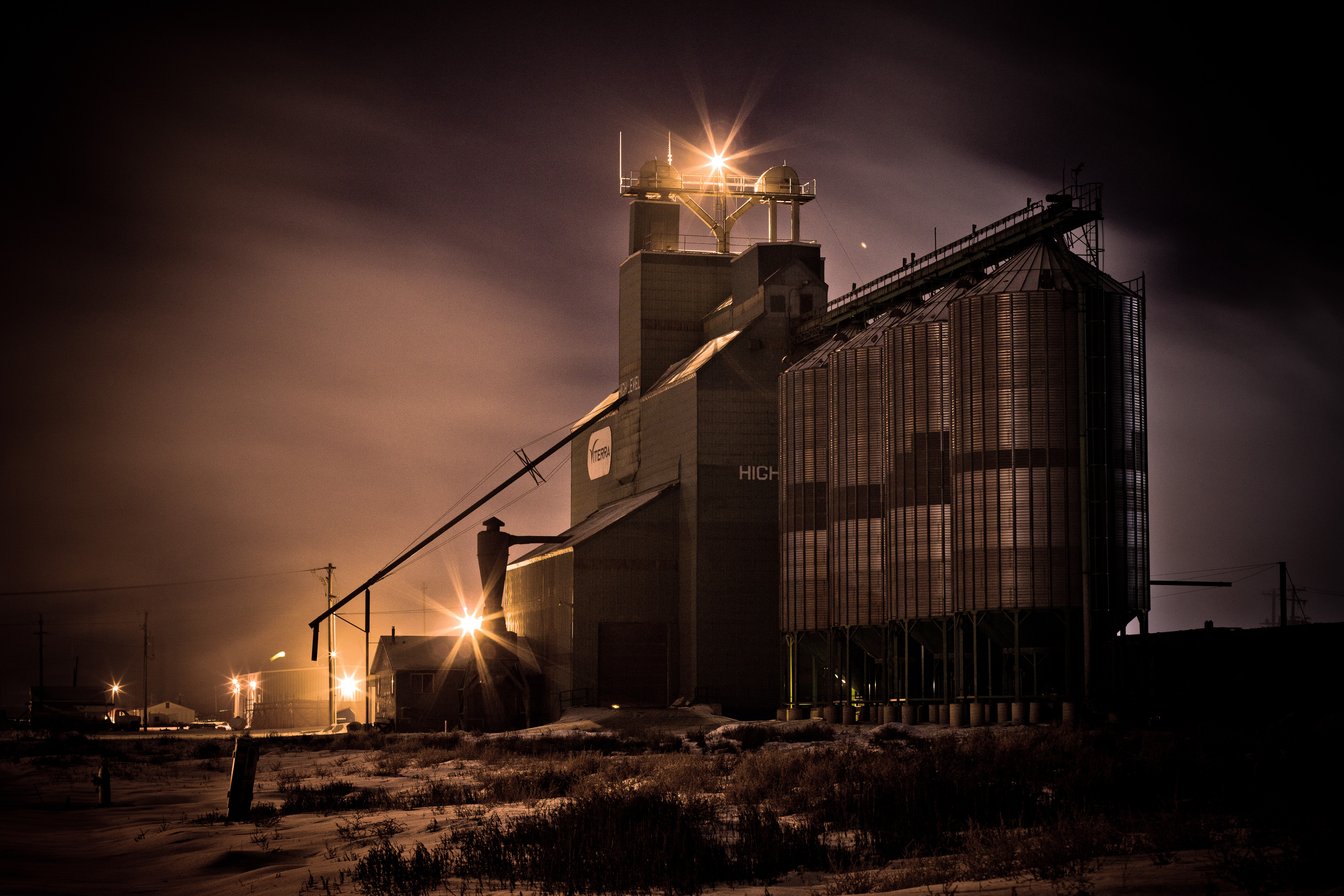
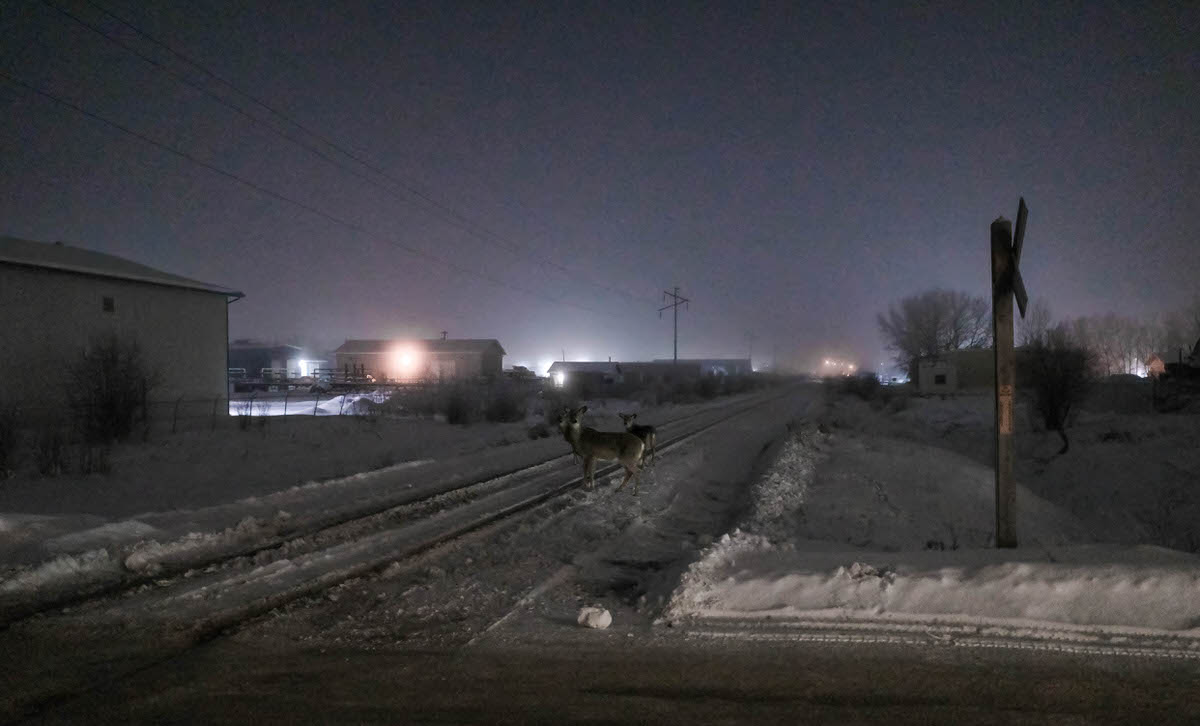
The Viterra grain elevator in High Level, Alberta is the subject of this shot. Weather attracted me to this shot. The day has been cold starting at -31C and warming to -17C this evening when this photograph was taken. The grain elevator shares railroad tracks with the local lumber mills and a sulphur car loading station. Steam blows from the mill from right to left (east to west) surrounding the grain elevator, blurring. In this shot I’ve used shallow depth of field (f-5.6) with an exposure of five seconds . The point of focus is the structure holding the light on top of the elevator; it is the clearest area of the photograph. Also, I’ve been using ‘live view’ on the Canon 60D as a means to find better, more crisp manual focus with regard to the subject. As I left the site, two deer crossed in front of me … perhaps having accessed grain spillage.
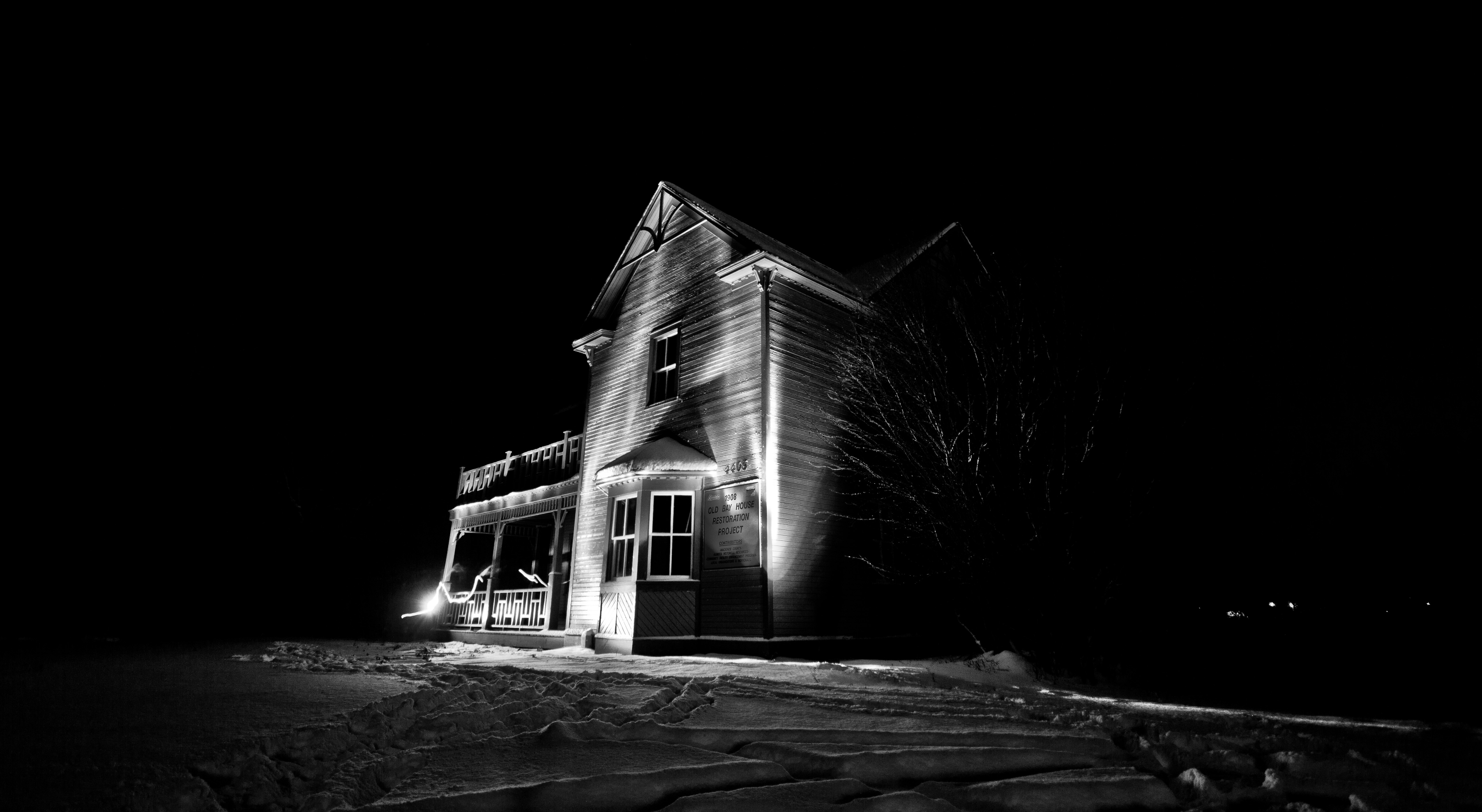
One of five shots, painting with light out in Fort Vermilion, Alberta. Note that by the front deck/porch the maglite has been turned back toward the camera and captures a streak of light. Also, note the ghosting image of the person at the bottom right corner – that’s me, I’d been there long enough for the exposure to pick me up.
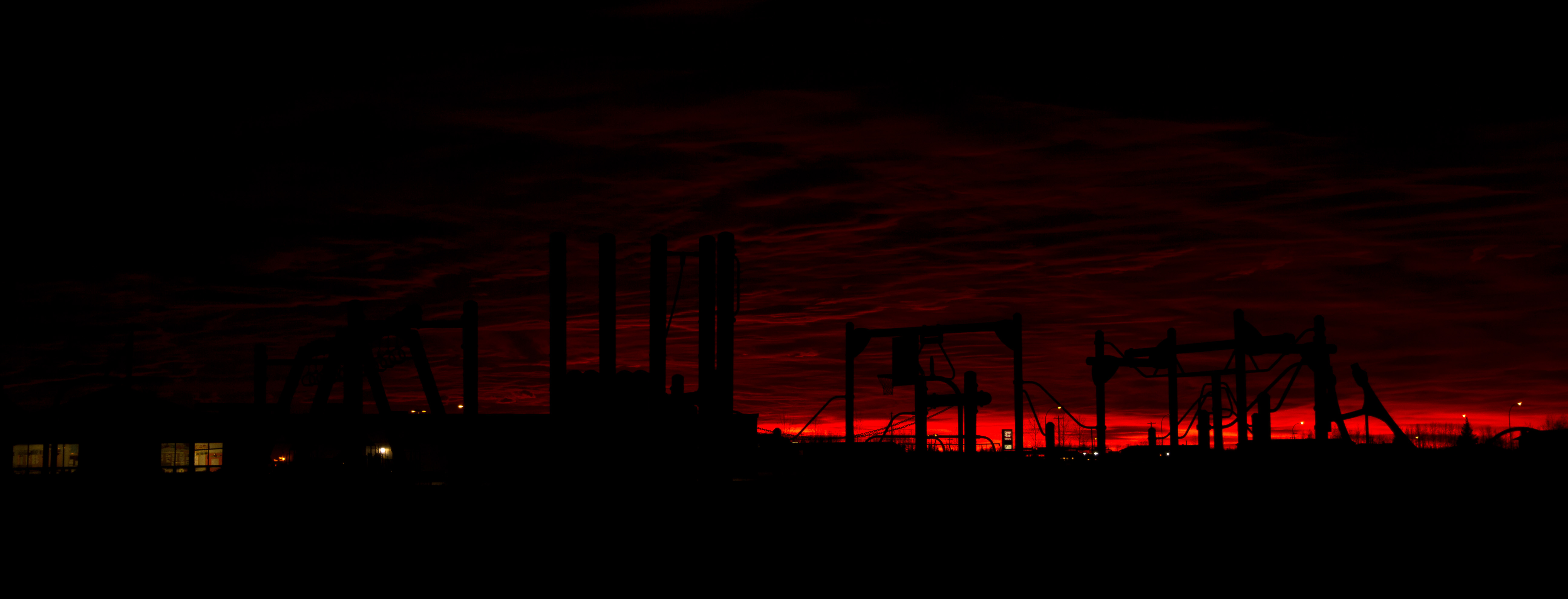
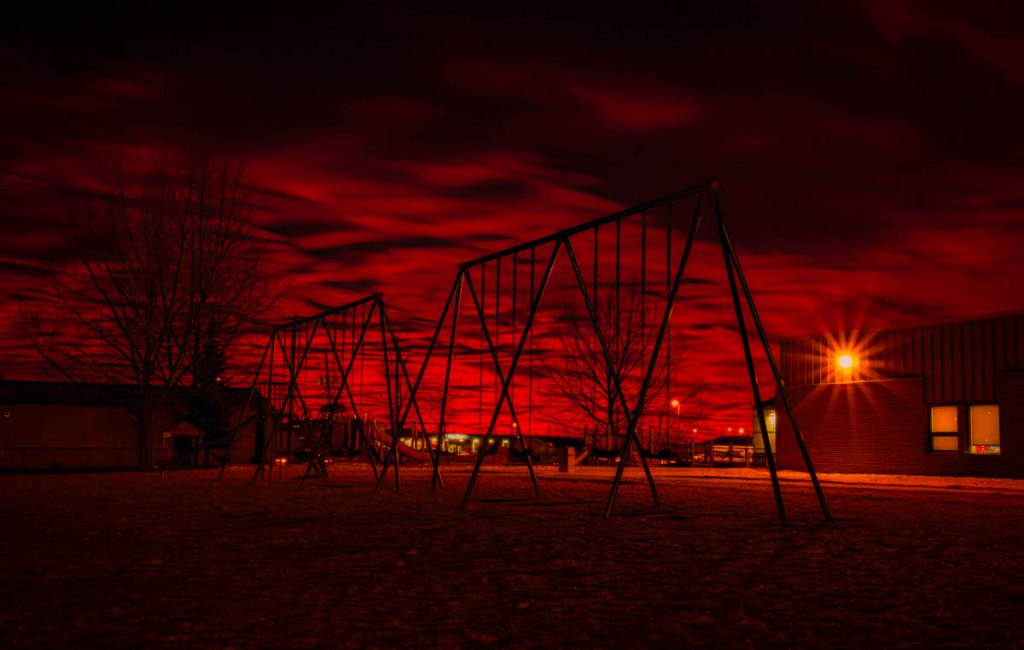
At day’s end, this fiery sky confronted me. I gathered my tripod and camera. Making an image would be about camera placement and framing an appropriate foreground, then working out which aperture settings best served the image. I tried several shots with varying apertures, exposure times and lens lengths. Wide open, the lens limited cloud movement and the sharpness around lights within the scene. At f/22, a sharper image was possible, but lights on the school building blew out at the center and a star effect was produced via the lens shutter leaves.
The scene – a tall tree and playground swings in front of an elementary school. A warmer start to winter has yielded little snow on the ground and a cloud-filled day. The camera faces southwest, and at 3:45 p.m., the sun has fallen beneath the horizon yet is reflected briefly along an interesting billow of clouds producing a fiery red outcome above. High Level is at 58 degrees north. In December, we are familiar with diminishing sunlight. At the winter solstice, we may have the sun for less than five hours in our day. This sight is quirky and unusual at the start of the year’s twelfth month.
Later that night, I would photograph firefighters at a nearby lake – their training for ice rescues would see them plunging into the icy, frigid water and pulling each other out from the ice for their practice.
Quote to Inspire – “To be surprised, to wonder, is to begin to understand (José Ortega y Gasset).”
Listening to – David Gray’s ‘Shine,’ ‘Flame Turns Blue,’ ‘A Clean Pair of Eyes,’ ‘The Other Side,’ ‘My Oh My,’ ‘Babylon,’ and ‘Sail Away.’
In his Greenbelt lecture — Divine Beauty: The Invisible Embrace — John O’Donohue spoke to the fragmentation that marks so much of modern life, and to the work required to gather that fragmentation into meaning. He suggested, too, that there is a particular and remarkable beauty to be found in those who undertake that work — people who engage honestly with their own lives, striving to understand and hold together the threads of experience, memory, and becoming that shape who they are.
Thought Work
The mind is an old crow
Who knows only to gather dead twigs,
Then take them back to the vacancy
Between the branches of the parent tree
And entwine them around the emptiness
With silence and unfailing patience
Until what was fallen, withered and lost
Is now set to fill with dreams a nest.
Retrieve & Reweave
“This is the art of bringing your mind home, that if your mind [were] able to retrieve and re-weave all that is withered and forlorn and lost in your life, then the integrity of your memory and identity of your life would be incredible [if not beautiful] (Divine Beauty – The Invisible Embrace, John O’Donohue, Greenbelt).
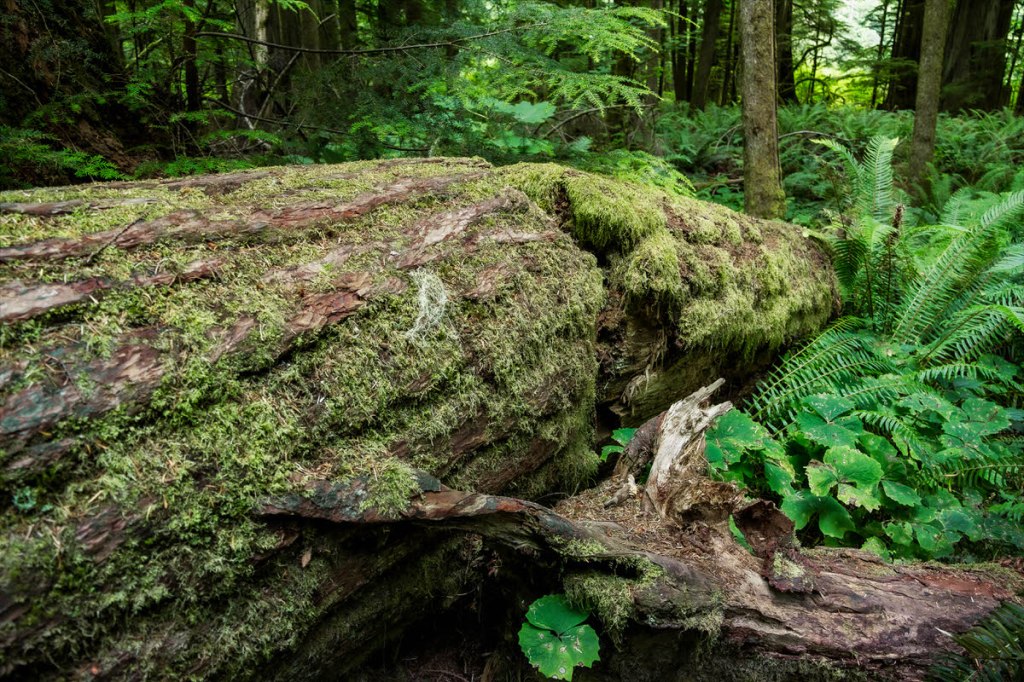
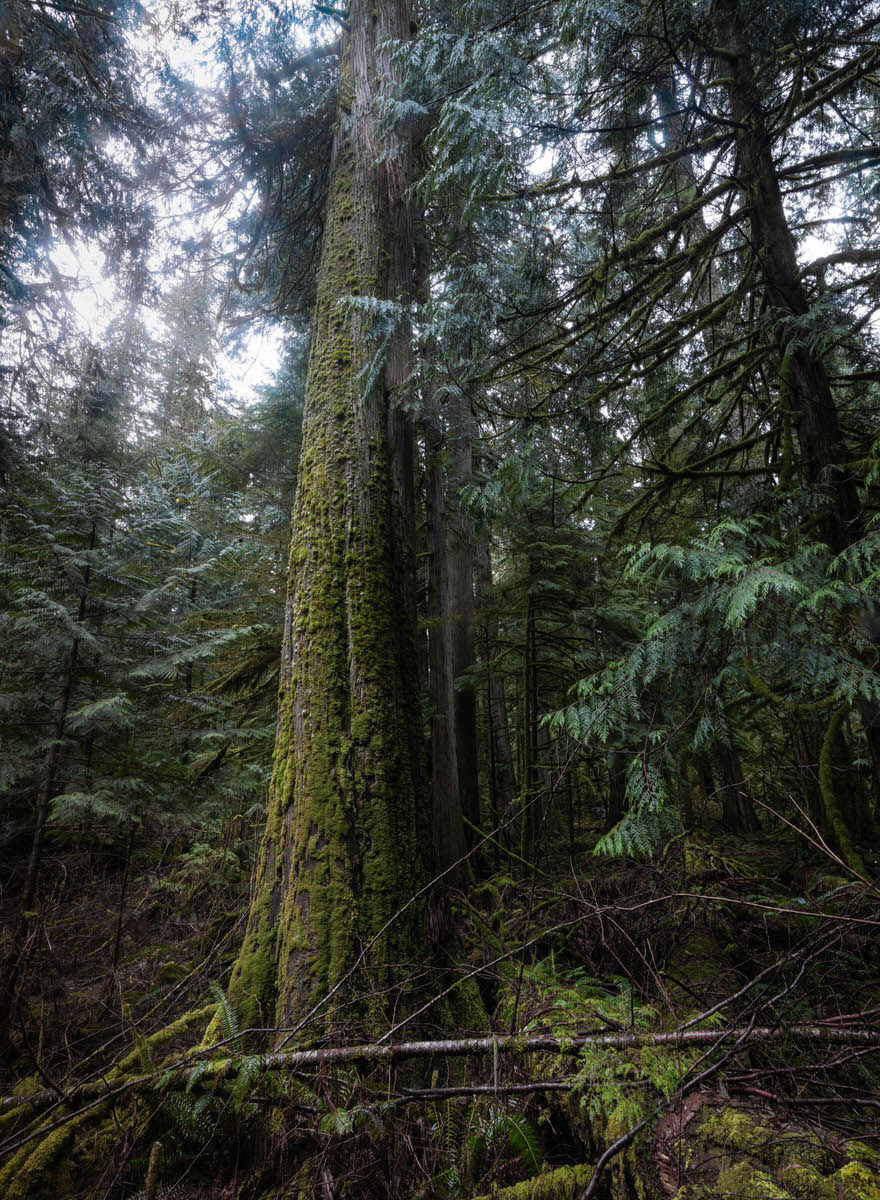
Cathedral Grove, Vancouver Island, British Columbia, Canada
“The presence of beauty is one of the most neglected presences in our contemporary world. Beauty was the word without which the ancient world refused to know itself; beauty was at the heart of everything they considered. In our times, beauty is reduced to glamour. It caters to the surface and the external image. Once you’ve got the up-front hit from it, there’s nothing behind it. Whereas beauty is a far more sophisticated, subtle and really substantial kind of presence (Divine Beauty: The Invisible Embrace, John O’Donohue, Greenbelt).”
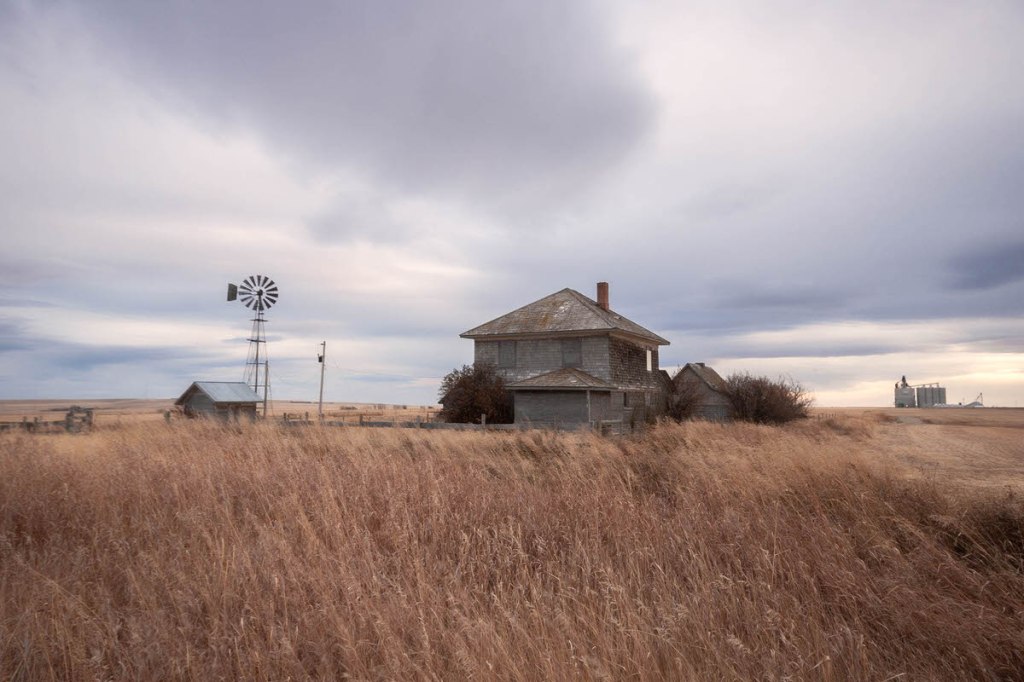
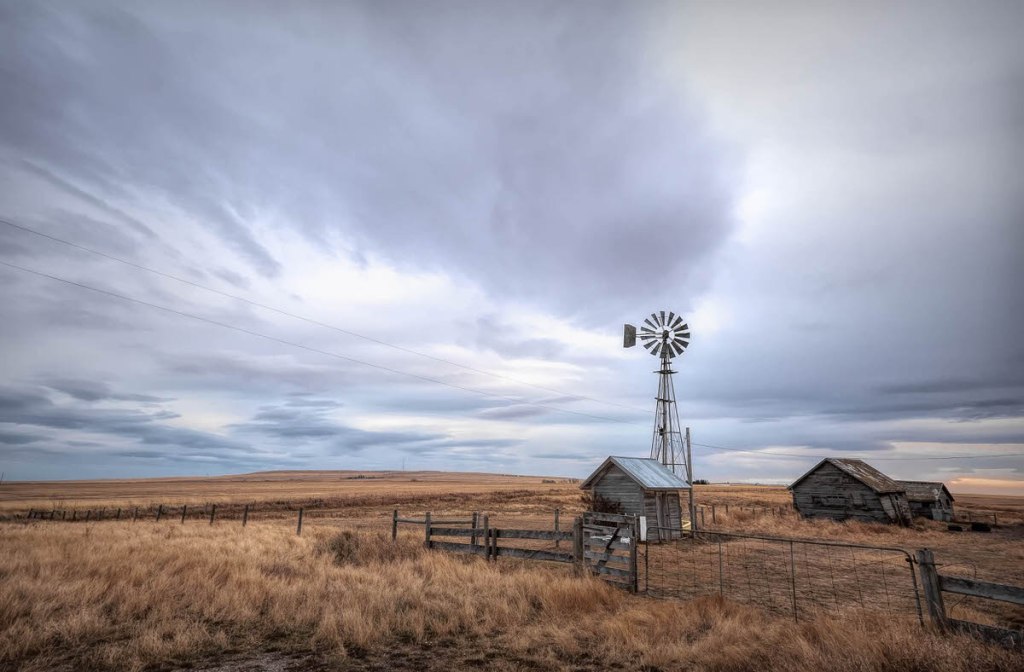
CPR Demonstration Farm – Vulcan, Alberta
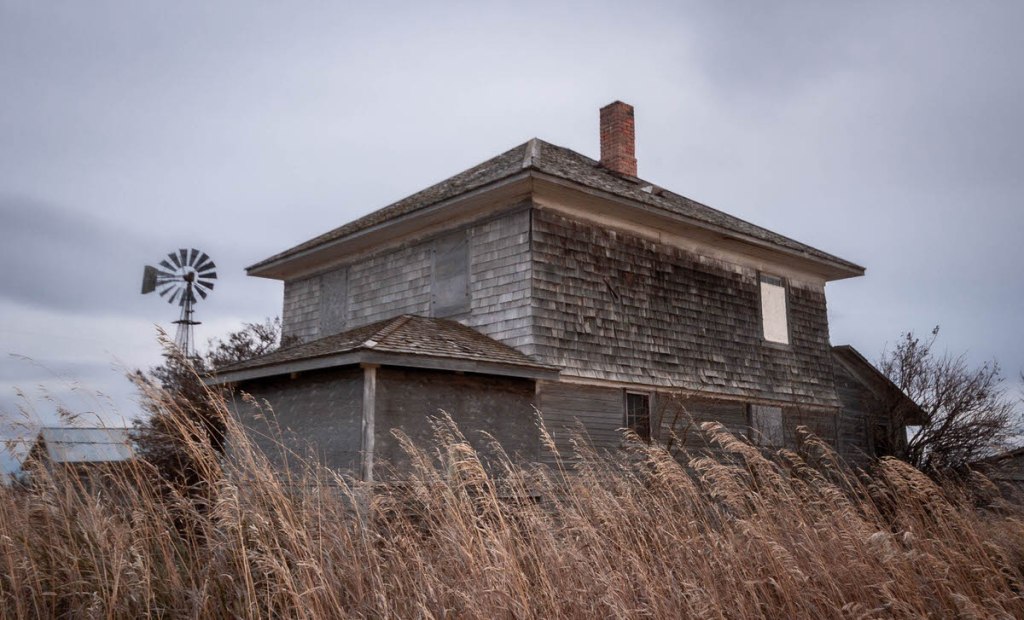
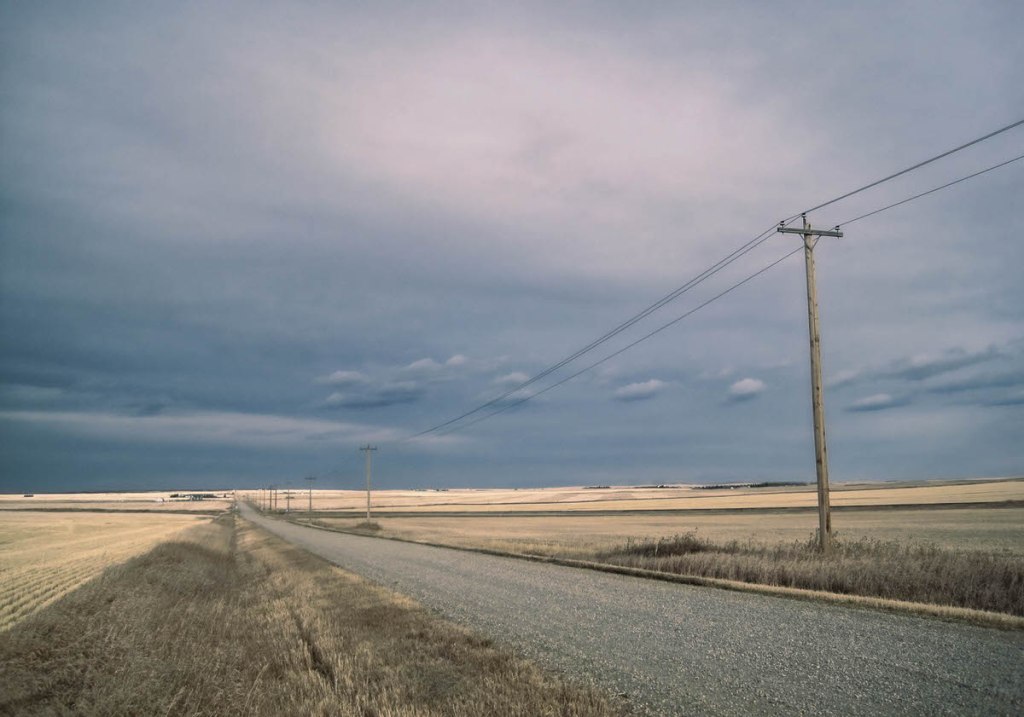
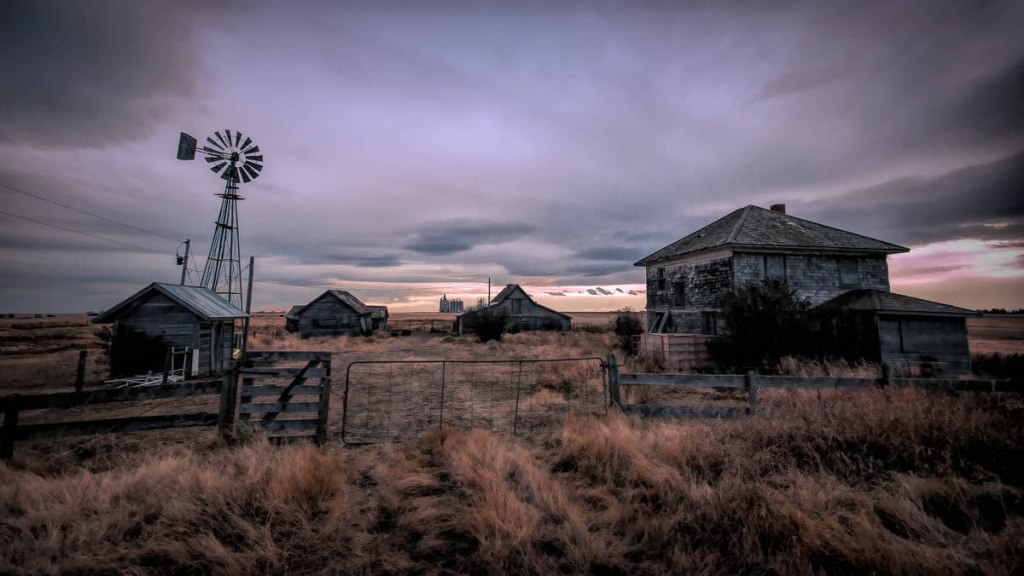
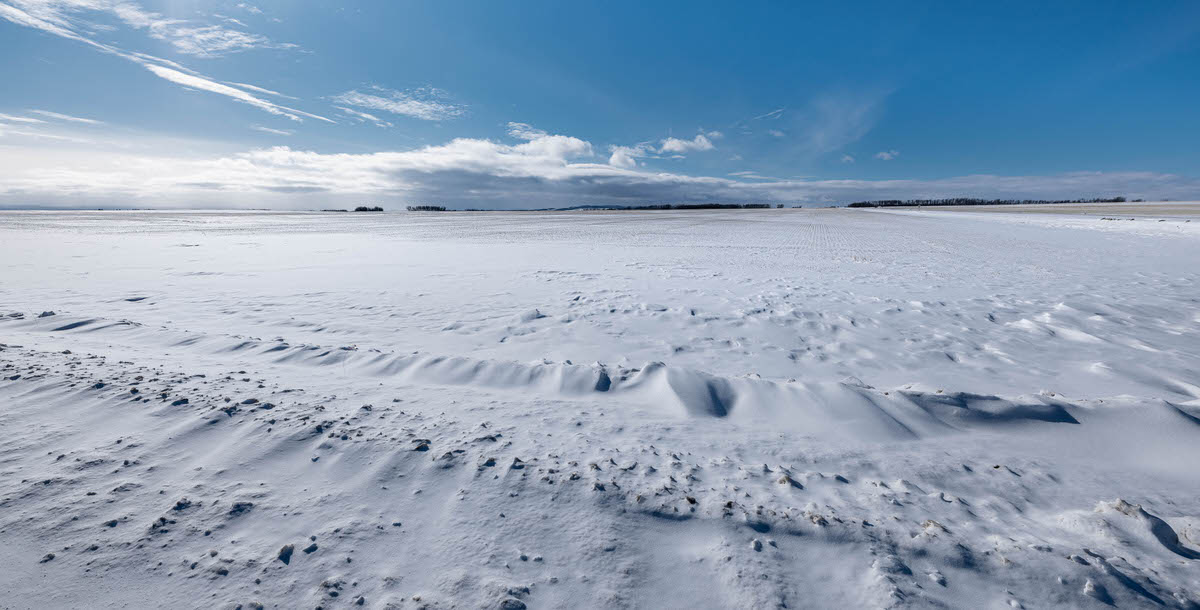
It was early November 2011 — the evening after a day of photography training in Vulcan, Alberta. On my own, with camera in hand, I found this farm and spent an hour or so photographing it in the fading light. What drew me in was the visual conversation between the prairie farm and the winter clouds building overhead.
Many years later, I would discover what I had been photographing. This was a CPR demonstration farm, built in 1912 and used by Canadian Pacific Railway to showcase the agricultural potential of southern Alberta to prospective settlers. The CPR sold these fully equipped kit farms to aspiring farmers, and considerable thought had gone into how they were laid out — the placement of the homestead and outbuildings designed to appeal to farmers, whether they encountered the farm in a photograph or stood before it in person. It was, in its own way, a study in the persuasive power of visual presentation.
The farm still stands. I passed it again on 13 August 2023, on a drive from Lethbridge to Edmonton, and it looked much as it had that November evening more than a decade before.
(Source: Chris Doering, “CPR Demonstration Farm,” Off the Beaten Path with Chris & Connie, 9 July 2020)
“Beauty is in the eye of the beholder has another meaning. If the beholding eye is gracious and has beautified itself, then it will pick up the beautiful. When we can’t notice the beauty, it is not that it is absent. It is just that our vision and gaze has become coarsened (Divine Beauty: The Invisible Embrace, John O’Donohue, Greenbelt).”
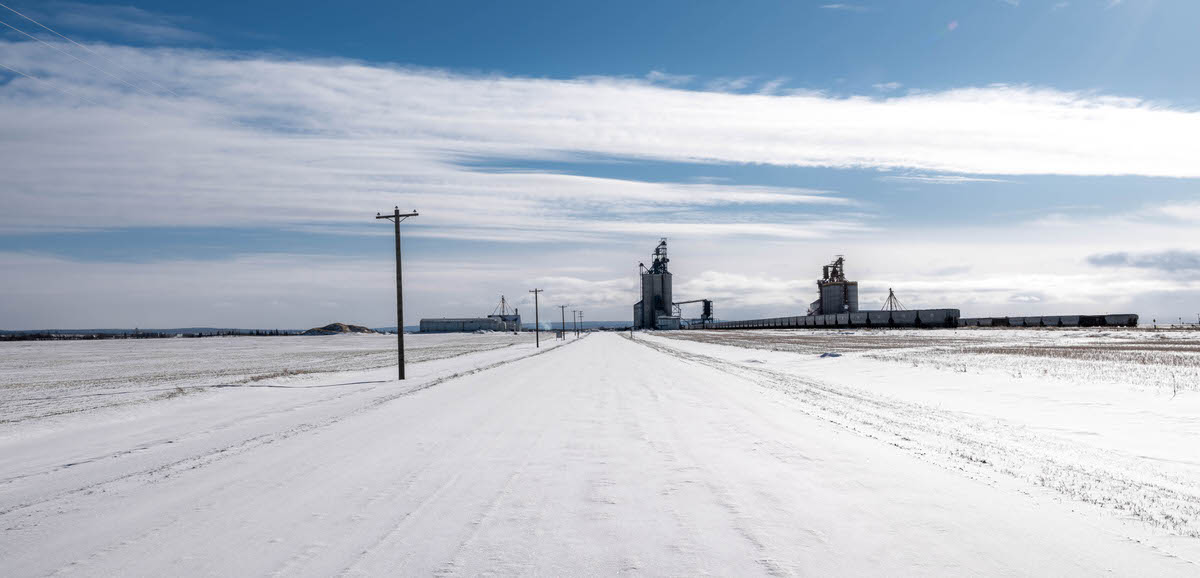
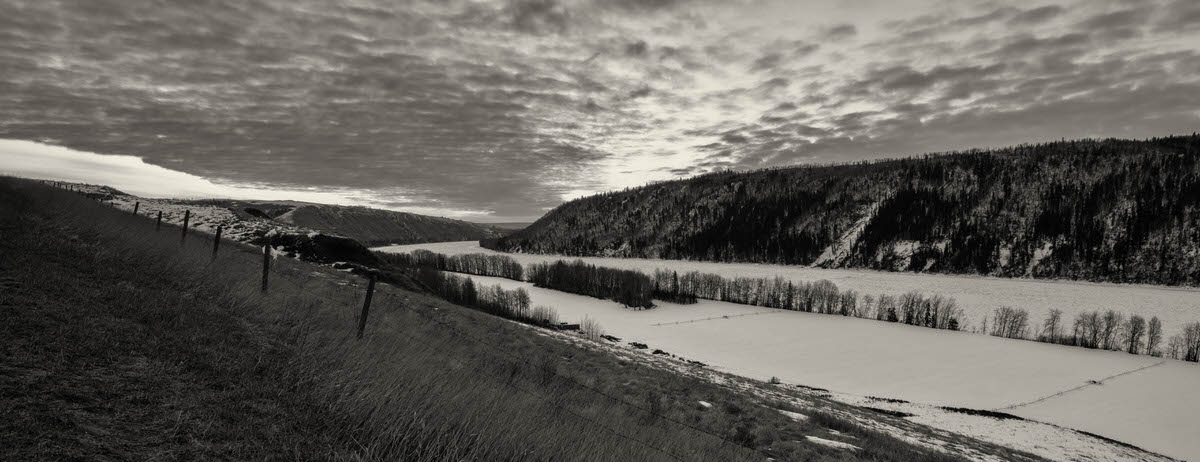
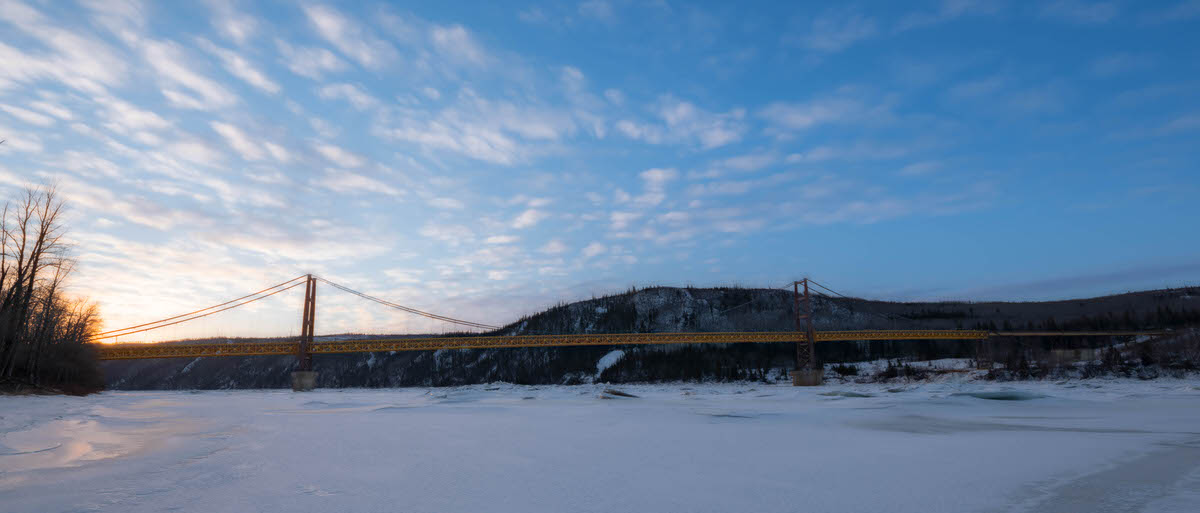
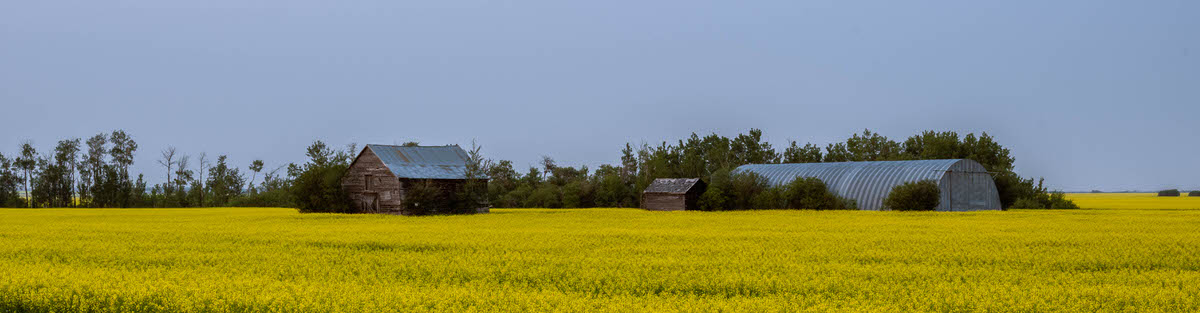
Note – The collage presented here has replaced the single image of a white, late-sixties Ford half-ton in Vavenby, British Columbia.
“Rodin did not concern himself with the beautiful. His art was meticulous, careful and slow. The beautiful comes only in its own terms. ‘Like in the forest when the forest is free of strangers in the evening, the shy animals turn up at the river to drink.’ And, that’s the way the beautiful actually comes (Divine Beauty: The Invisible Embrace, John O’Donohue, Greenbelt).”













You must be logged in to post a comment.