In my photography I am back to basics. I am working the fundamentals of post-processing in Adobe Lightroom 5. Haste in producing a photograph is taking back seat to broader consideration of what can happen with each image. Post-processing holds choices that I would also make using the Nik Collection. The resulting photograph, though, does not degrade with each edit.
B-side images contain surprises – they often hold gold. Post-processing becomes a means of mining for that gold. It becomes a means of re-discovering what you saw and now see. It is practice. It is also a kind of meditation, a practice of seeing more. I am tied in with Mitchell Kanashkevich for post-processing instruction with Adobe Lightroom 5. There is more to understand / discover – yet, I am getting somewhere.
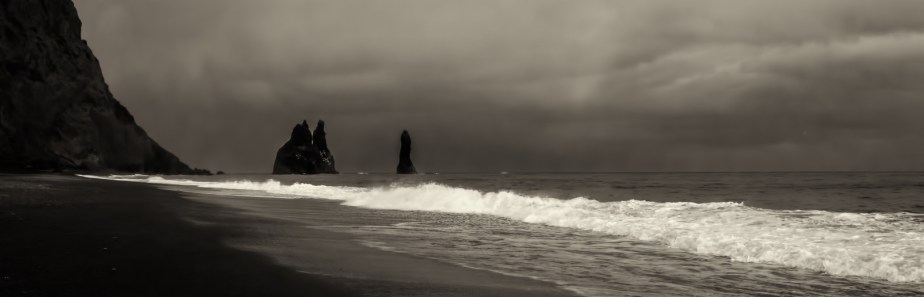
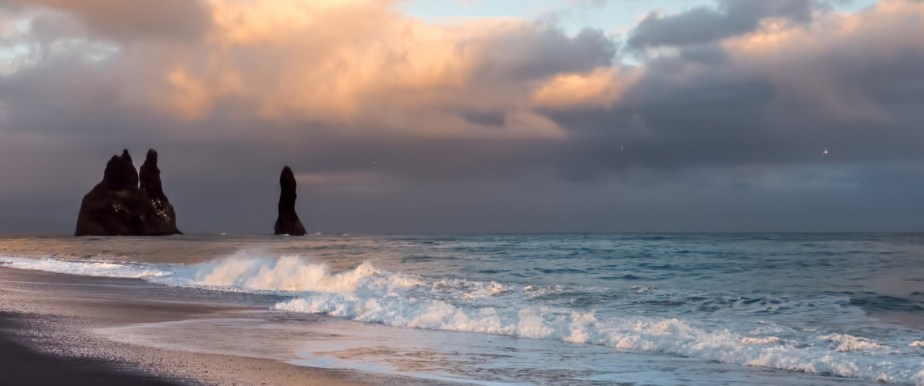
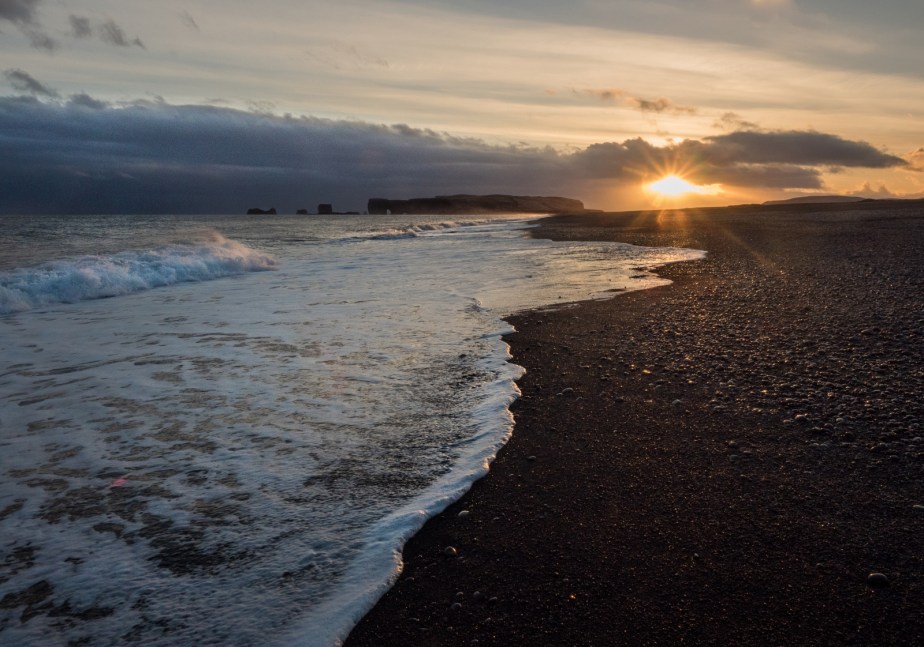
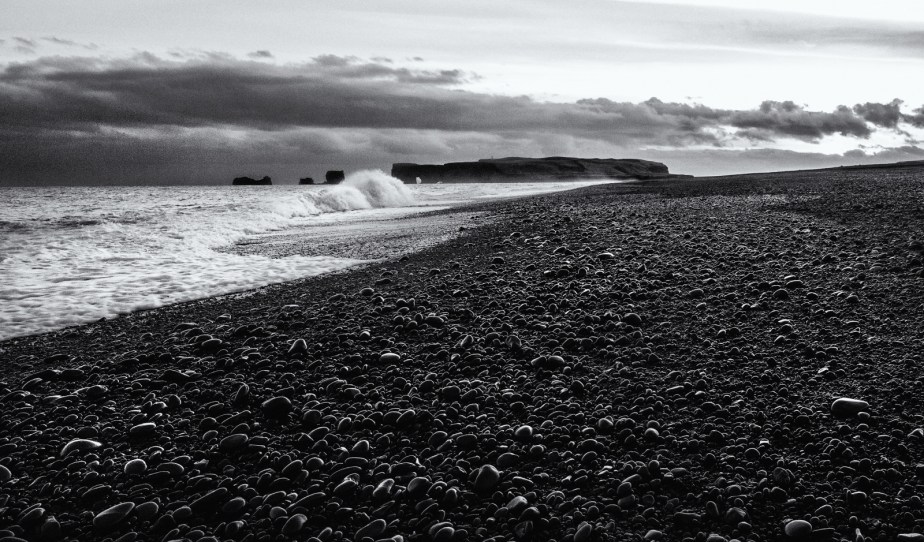
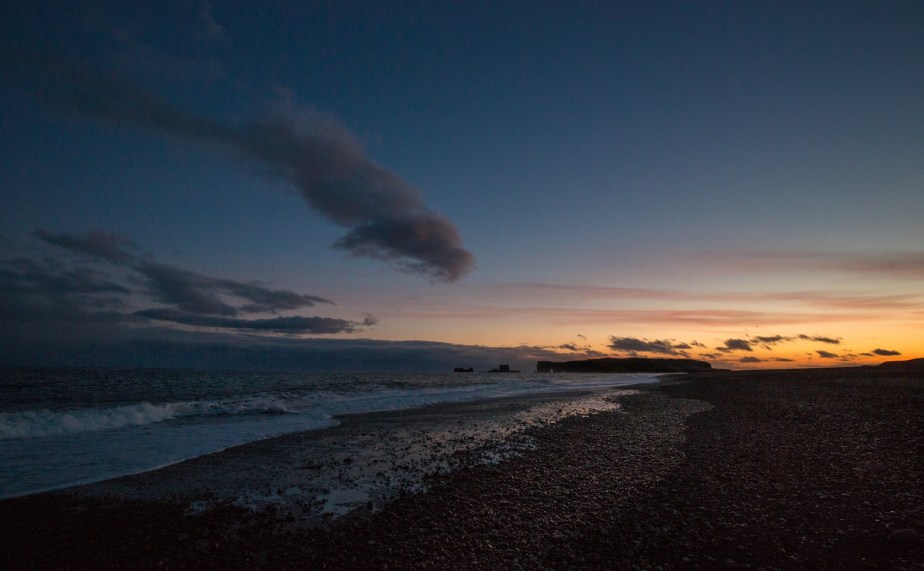
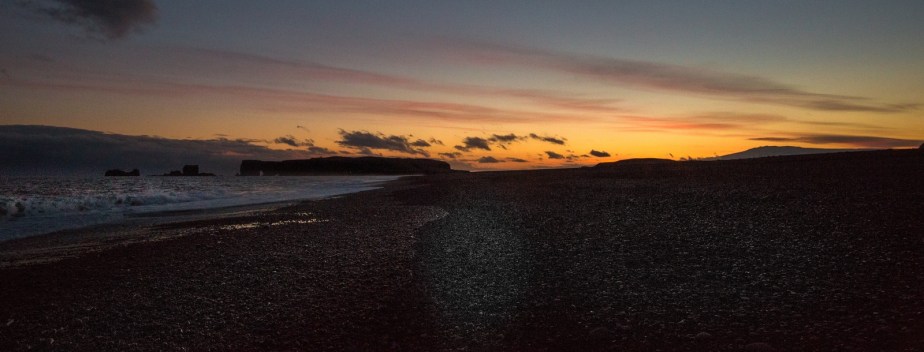
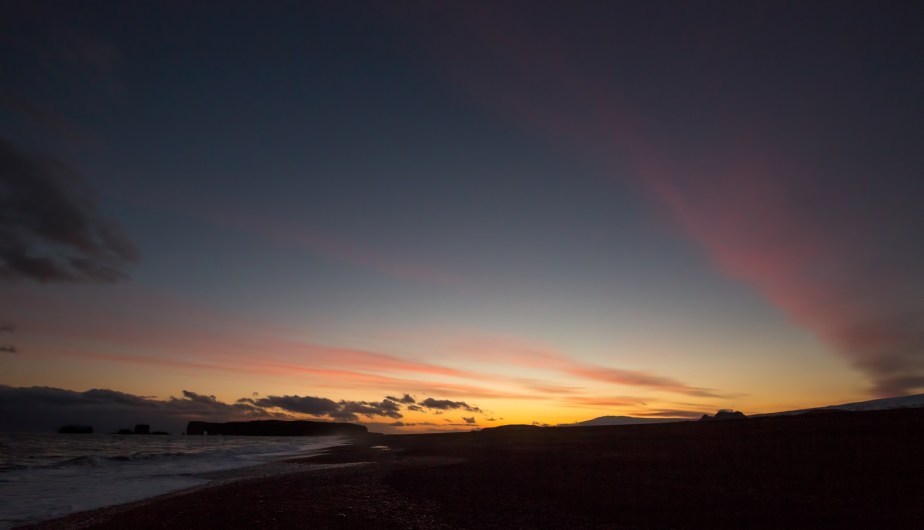
Images – Reynisfjara Black Sand Beach, Halsanefshellir Cave and Dyrolaey Arch – South Coast, Iceland.
Quote to Consider – ‘Personally, I am always ready to learn, although I do not always like being taught.’ – Winston Churchill
Listening to – ‘Truth, Beauty, Banjo,’ an ‘On Being with Krista Tippett’ interview with Bela Fleck and Abigail Washburn, presented as podcast.
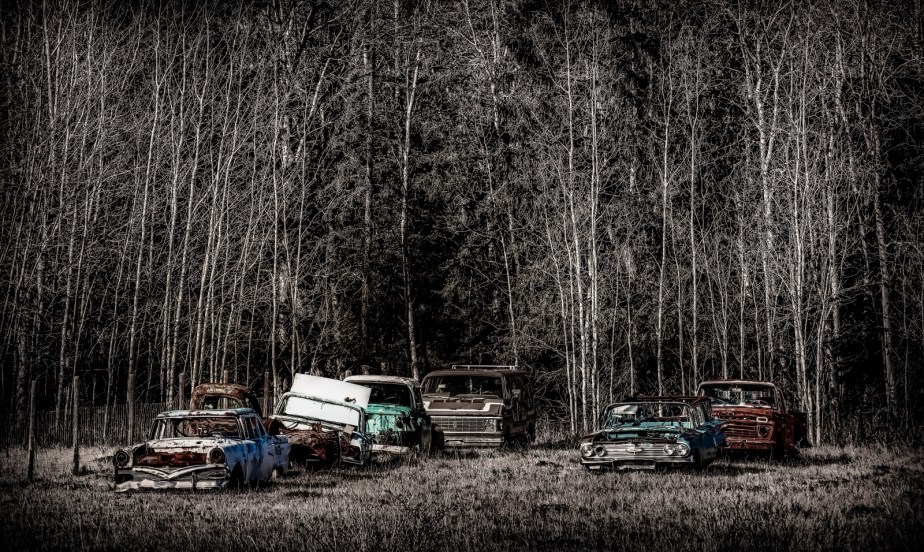
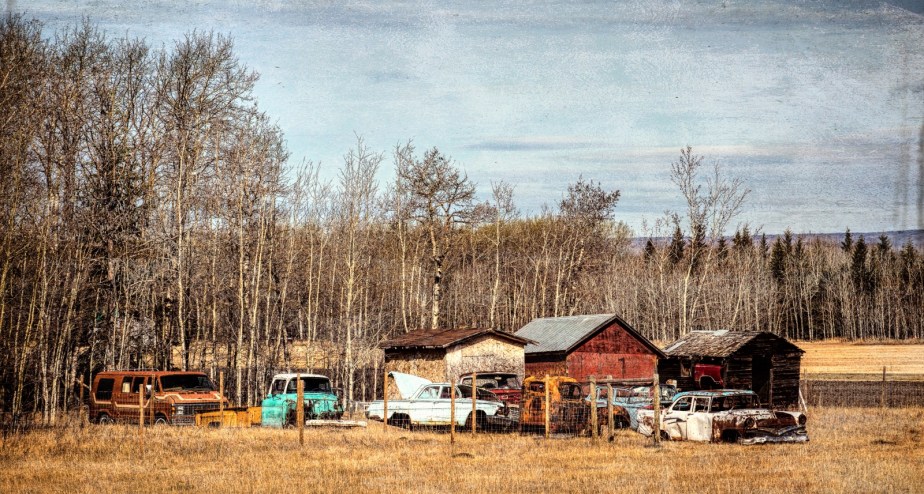
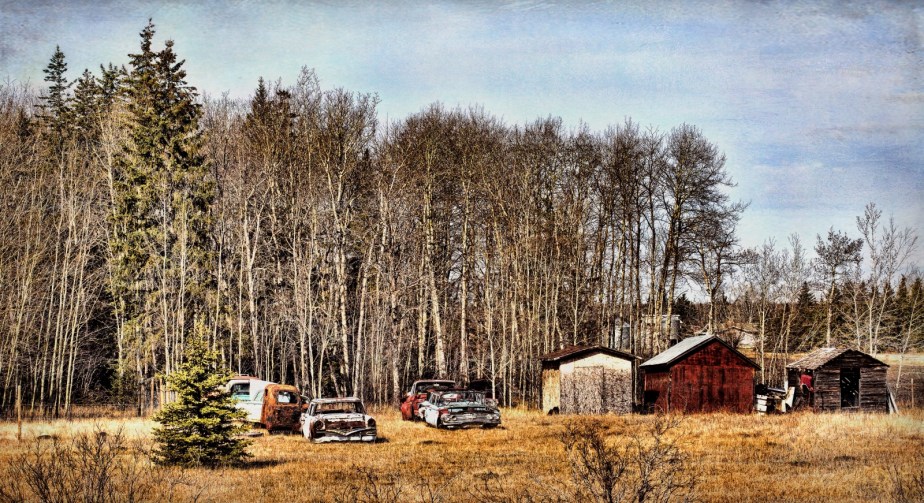
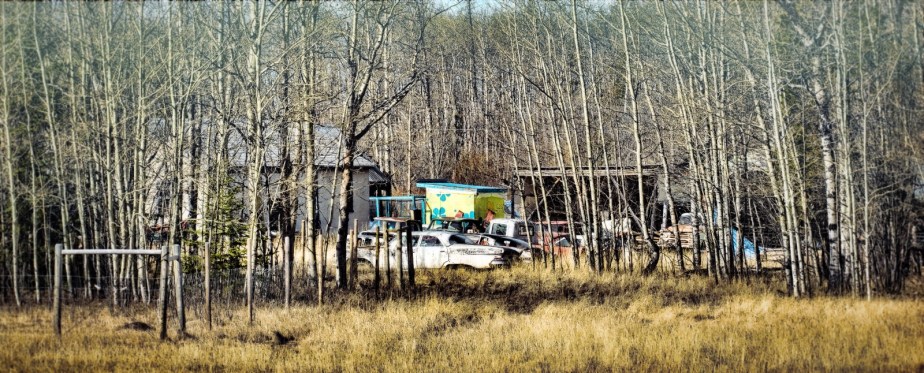
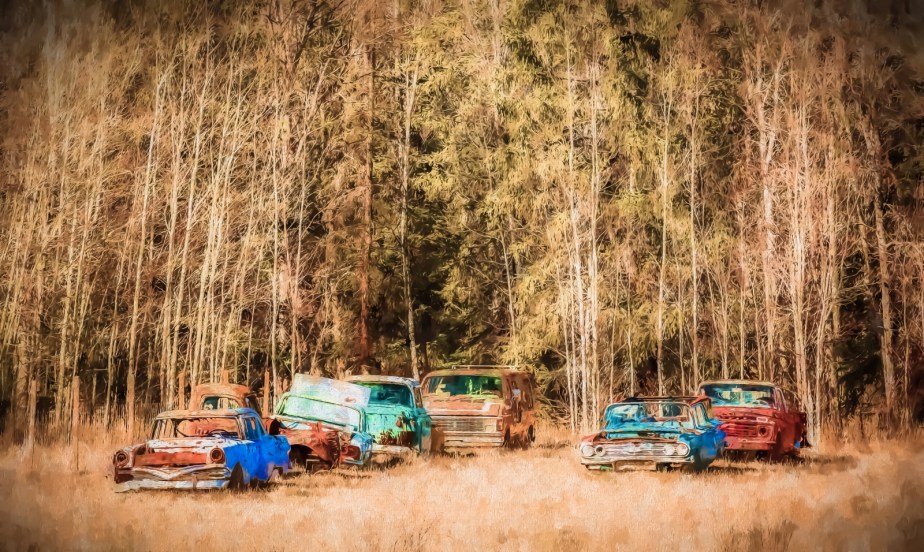
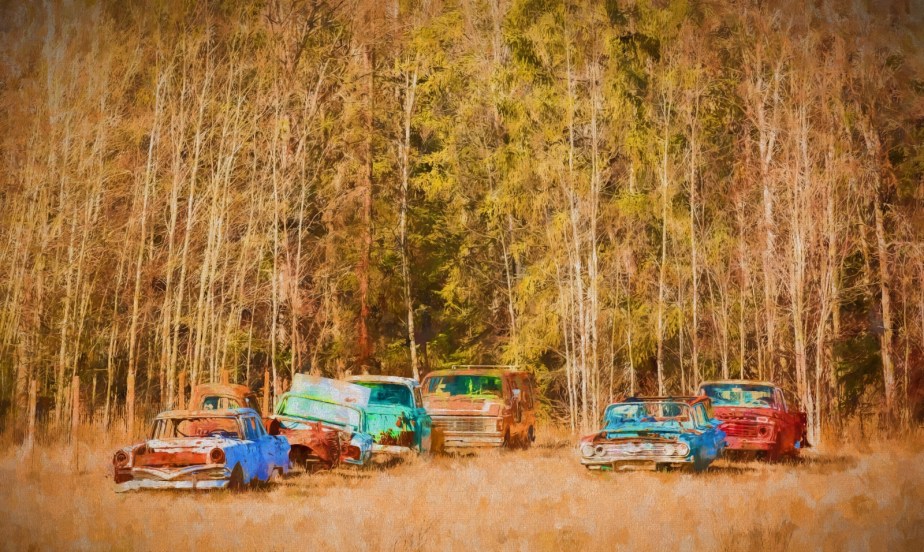
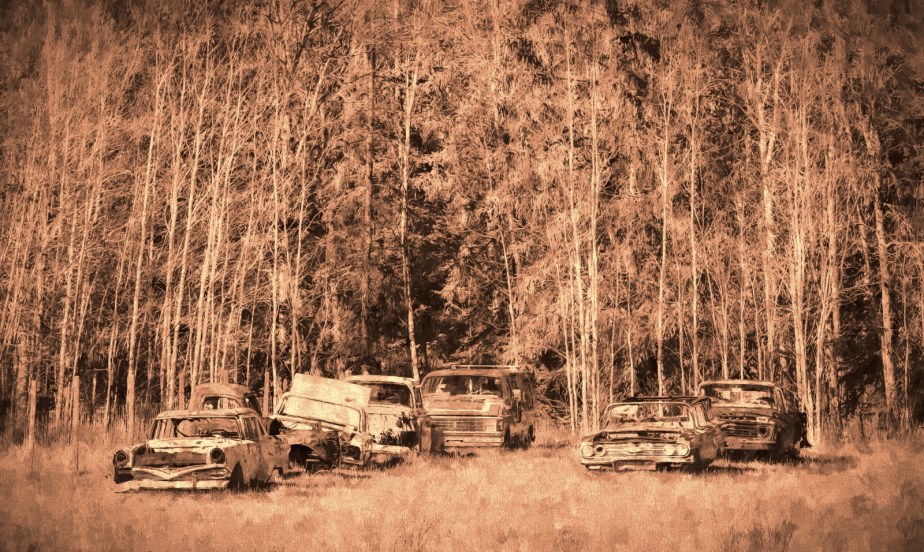
Today, my daughter dances refining skills at a dance workshop. My wife has my truck and gathers bottles in a Church-youth bottle-drive. Our week’s sermon explored the intricacy and direct assertion of faith being tied to works – within my week there has been my action and my shortfall. Much of Northern Alberta burns, consumed in wildfire; we’ve donated money to the Red Cross and gently-used clothing to the 80,000 Fort McMurray evacuees. Today, I am chauffeur, more behind the scenes and needed, as needed. Time in-waiting provides opportunity to edit images and is welcome respite … the activity fits the day. Images – a farmer’s field alongside a highway north from Valleyview serves as resting site for older vehicles, those from a few generations ago … used parts, ready for use – for structure or as donor car. For me, each vehicle associates to former lives in memory. What memories stir and surface for you?
Listening to – Dream Academy’s ‘The Love Parade,’ The Beatles’ ‘Twist and Shout,’ Brian Houston’s ‘Next to Me,’ Nilsson’s ‘Jump into the Fire,’ Bruce Springsteen’s ‘Radio Nowhere,’ Link Wray and the Wraymen’s ‘Rumble’ and Tim Armstrong’s ‘Into Action.’
Quote to Consider/Inspire – “I wish more people felt that photography was an adventure the same as Life itself and felt that their individual feelings were worth expressing. To me, that makes photography more exciting.” – Harry Callahan
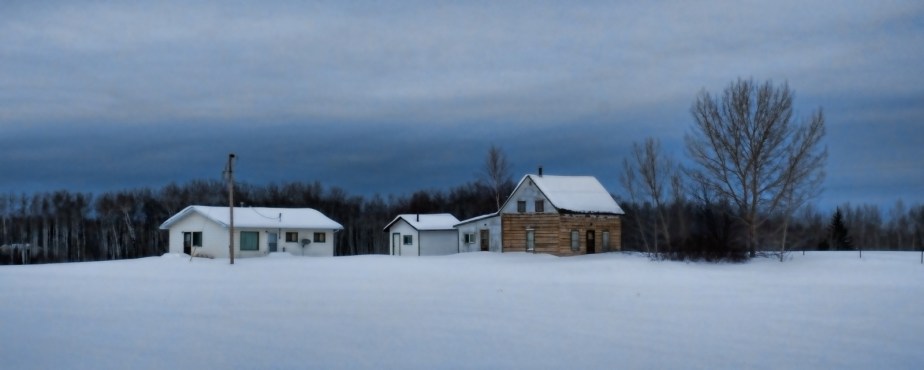
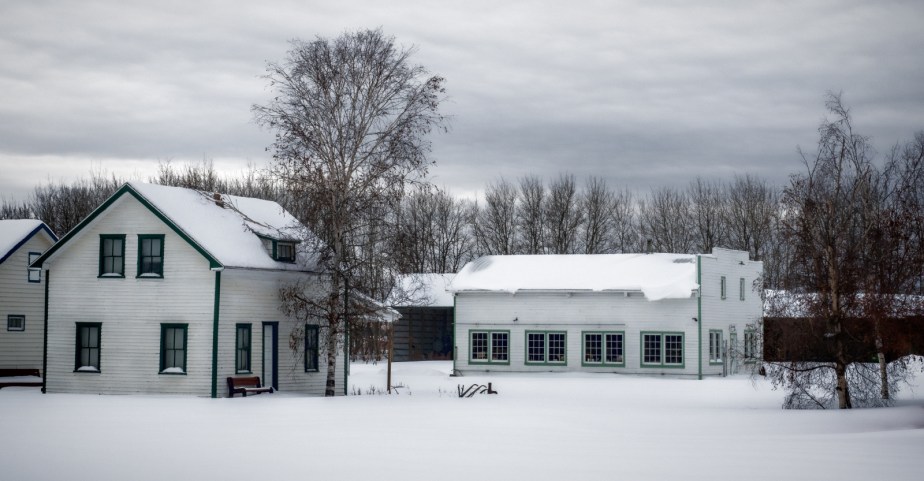
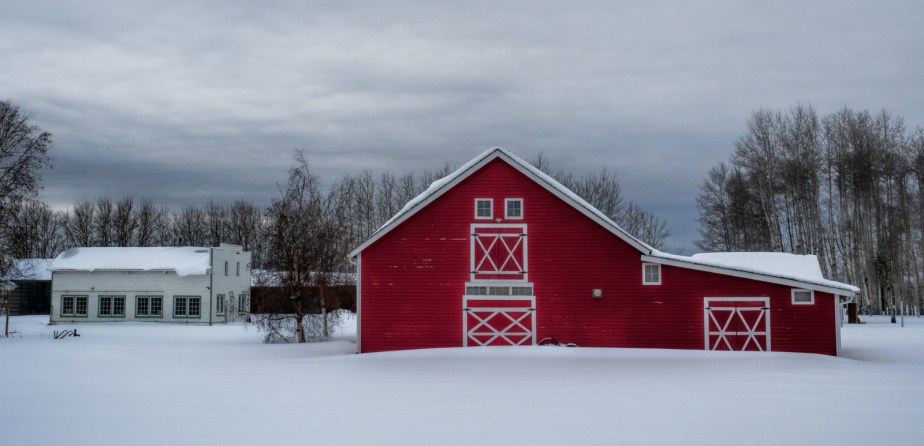
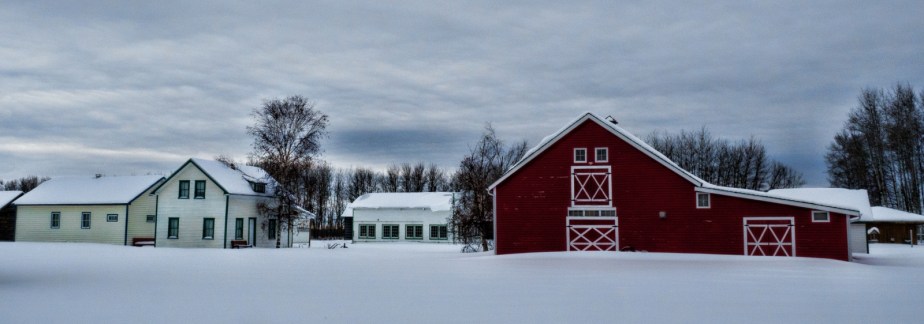
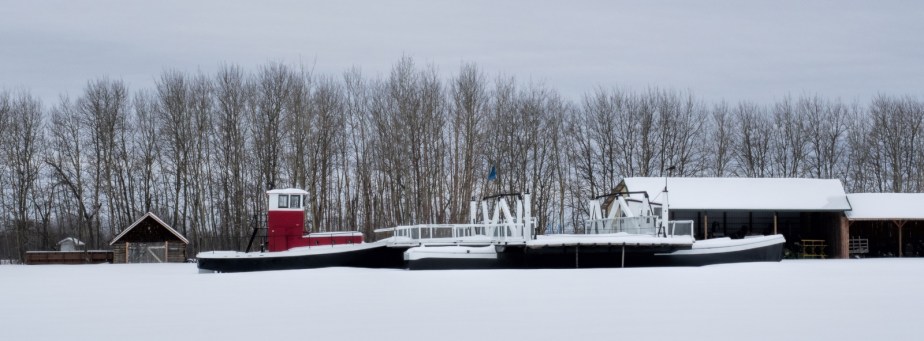
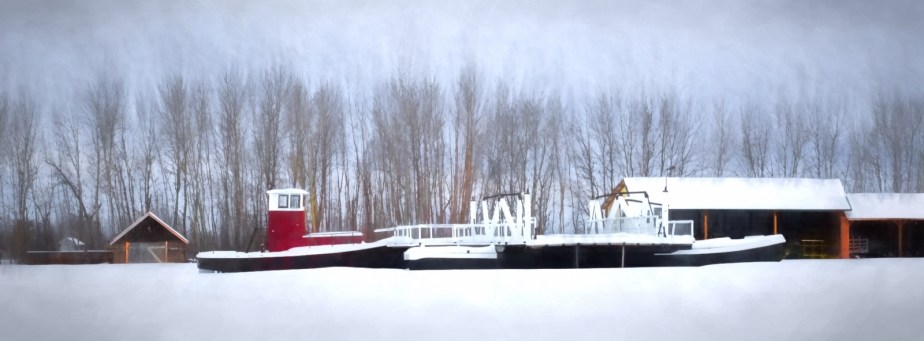
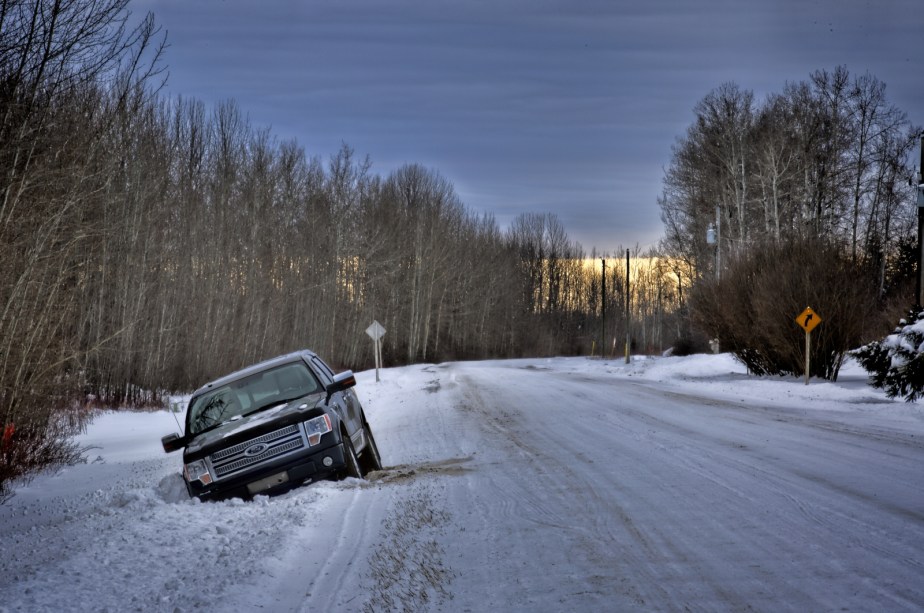
Aquamarine Ford F-150 – Tompkin’s Landing, Ab Canada 1Aquamarine Ford F-150 – Tompkin’s Landing, Ab Canada 2Buttertown Buildings – Fort Vermilion, Ab CanadaLa Crete Heritage Museum Buildings 1La Crete Heritage Museum Buildings 2La Crete Heritage Museum Buildings 3La Crete Heritage Museum Buildings 4Old Tompkin’s Landing Ferry 1Old Tompkin’s Landing Ferry 2Stuck in Snow – Buttertown, Fort Vermilion, AB Canada
I got out for an afternoon drive on a Saturday late in February. I gathered my cameras and set off for a look around within Alberta’s MacKenzie Municipal District.
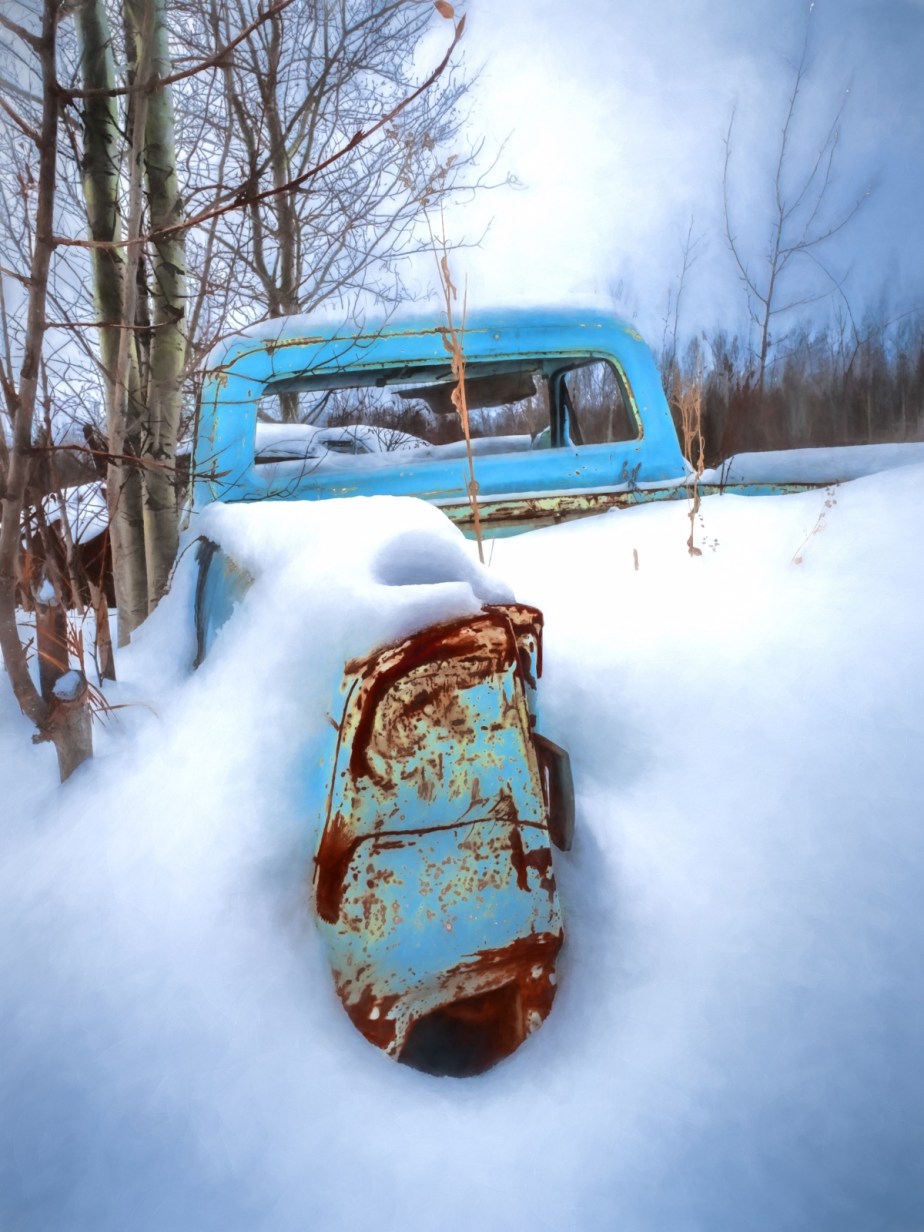
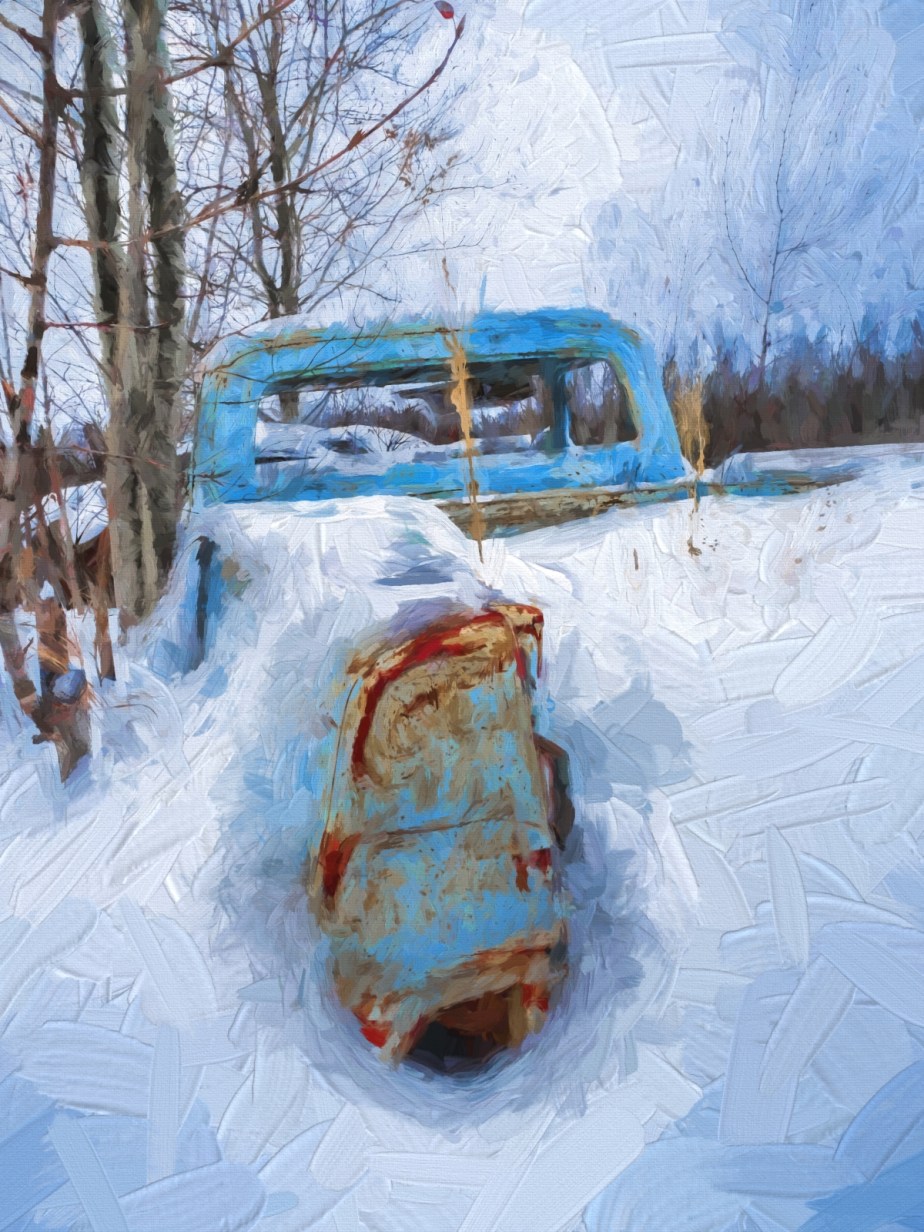
From High Level I traveled south. I would cross the Peace River ice bridge through slushy water at Tompkin’s Landing, traveling no more than 10km/h. Before I got there, on the hill descending toward the ice bridge a blue, aquamarine colour caught my eye. The colour belonged to a seventies Ford F-150. Someone had dragged it a ways into the trees. It, like the 1970 Buick GS next to it, had served a purpose and was left there – a rusting relic. Tromping into knee deep snow I gathered photos.
Driving past Blue Hills, farms held livestock, the occasional horse and derelict farming implements. I detoured along back roads behind Buffalo Head Prairie. There, second and third generation families are operating farms that have grown in size through the years. Many families are moving from original homestead homes built in the forties into new homes. The older homesteads stand holding memory’s residue. Next, I drove behind La Crete to the Heritage museum. The museum site holds old buildings from the La Crete area, old farming implements and machinery. The old Tompkin’s Landing ferry that transferred people and vehicles across the Peace River is there. The museum is one I want to return to for photos. And, people are invited to arrange a tour of the site. It might be something to see in early June.
Later, in moving past Fort Vermilion and into Buttertown, I managed to get my truck stuck in snow. I had seen some Buttertown buildings built with Swedish log cut corners. They were likely more than a hundred years old and I had been meaning to photograph them for a while. In parking my truck on a snowy road shoulder, I got too close to the shoulder’s edge and my truck and I slid sideways into the ditch. I did not have to wait too long for help though. A young Mennonite farmer out for a drive with his date stopped. He took some time (an hour or so) and was able to pull my truck back onto the road. And, he didn’t want anything for his trouble. He was just being neighborly. Good on him!
I stayed in Buttertown for another hour or so before sundown and my return home with pictures, better for being out of the house, better for being away from town, grateful for all that my afternoon had held.
Quote to Consider – “Sometimes I do get to places just when God’s ready to have somebody click the shutter.” – Ansel Adams
Listening to – Martyn Joseph’s ‘Strange Way,’ Bruce Cockburn’s ‘Wondering Where the Lions Are,’ David Gray’s ‘My Oh My’ and James Taylor’s ‘Country Road.’
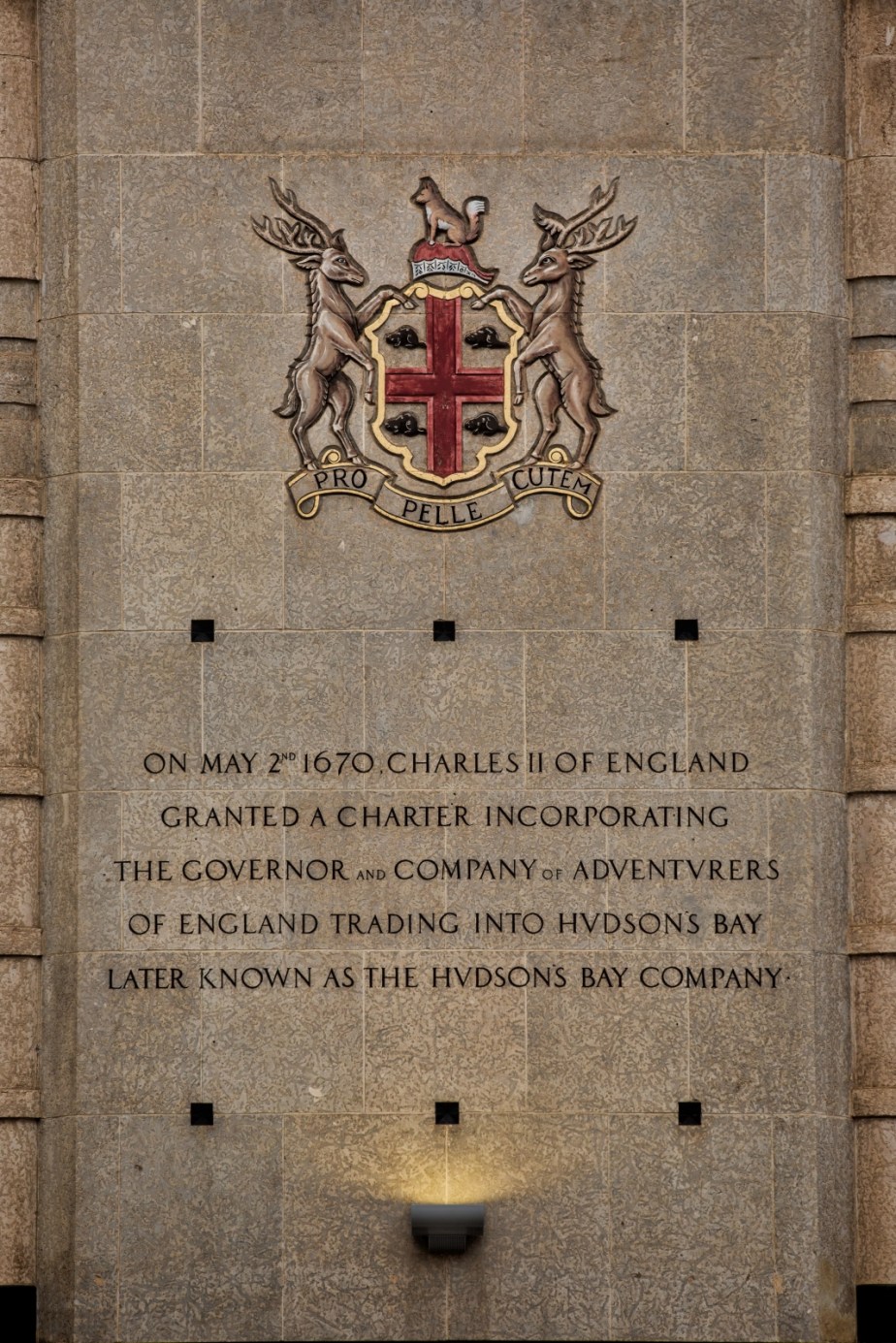
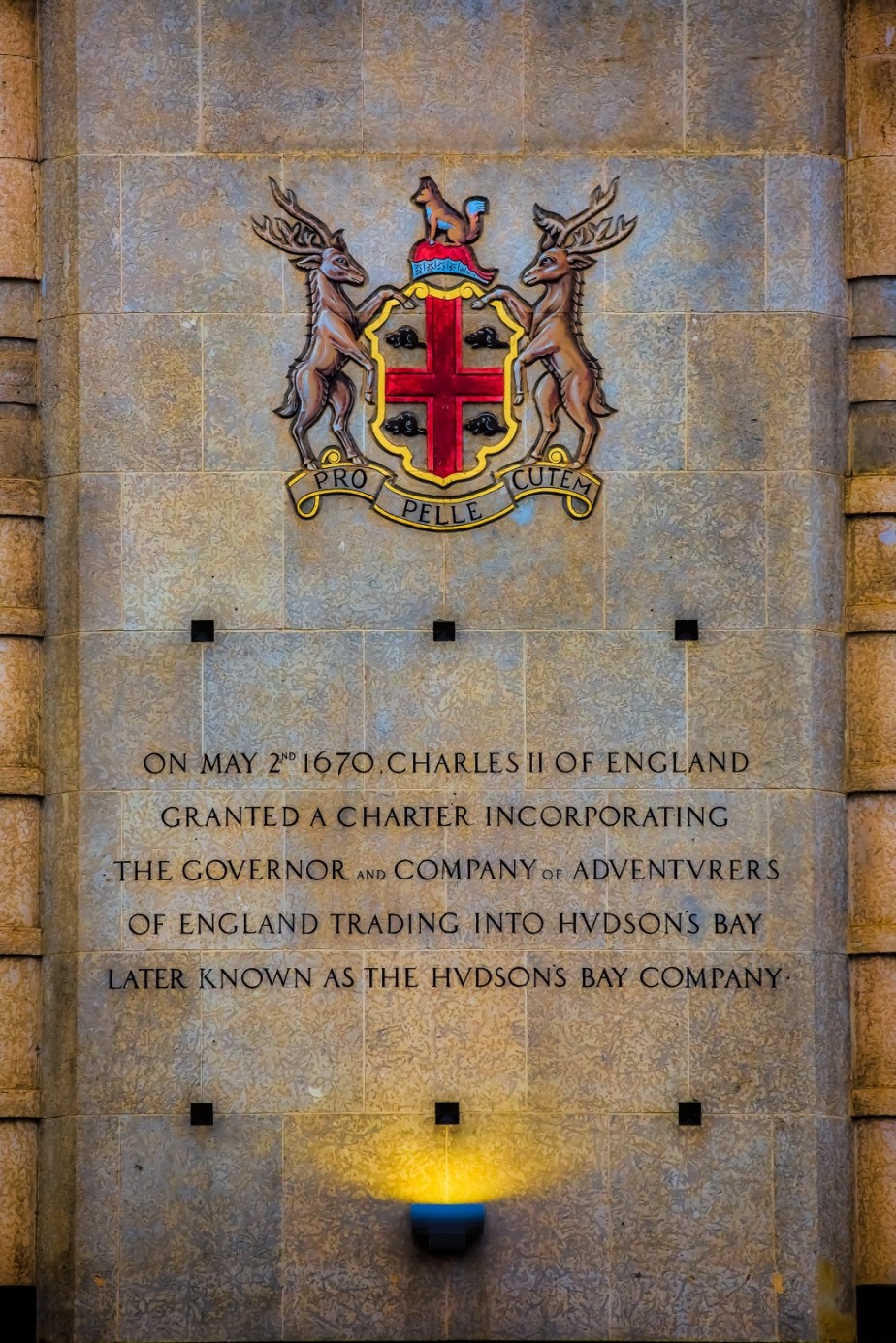
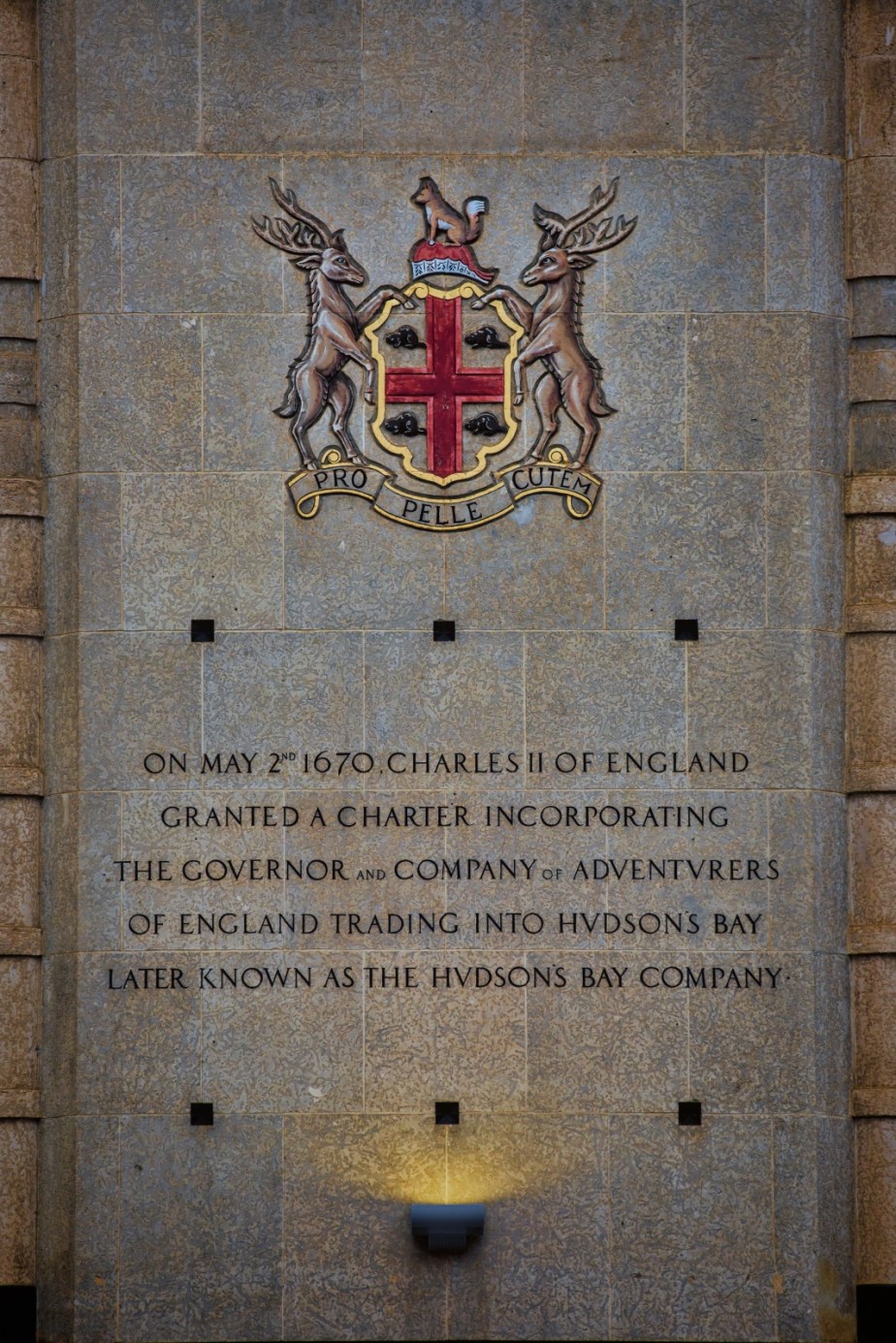
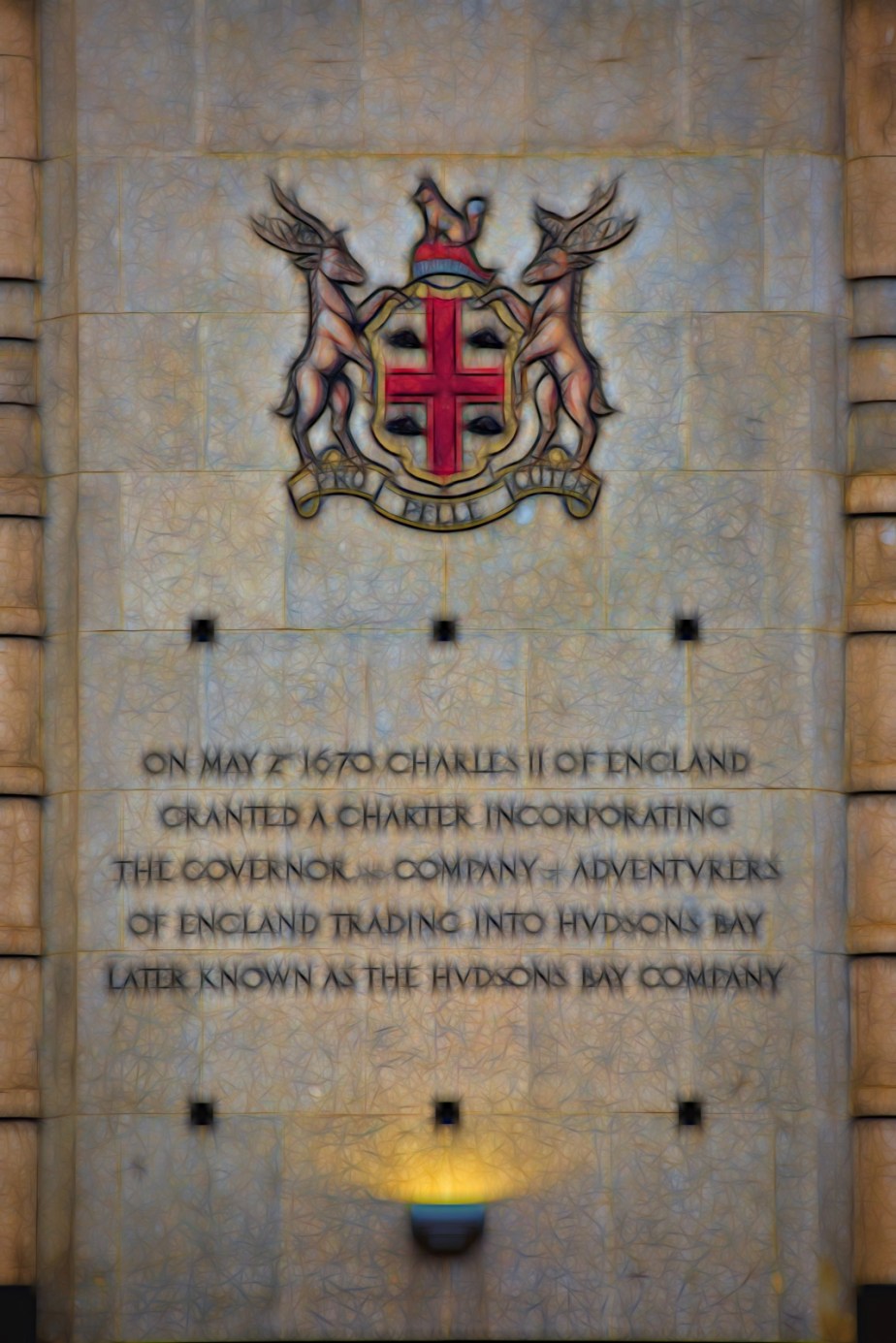
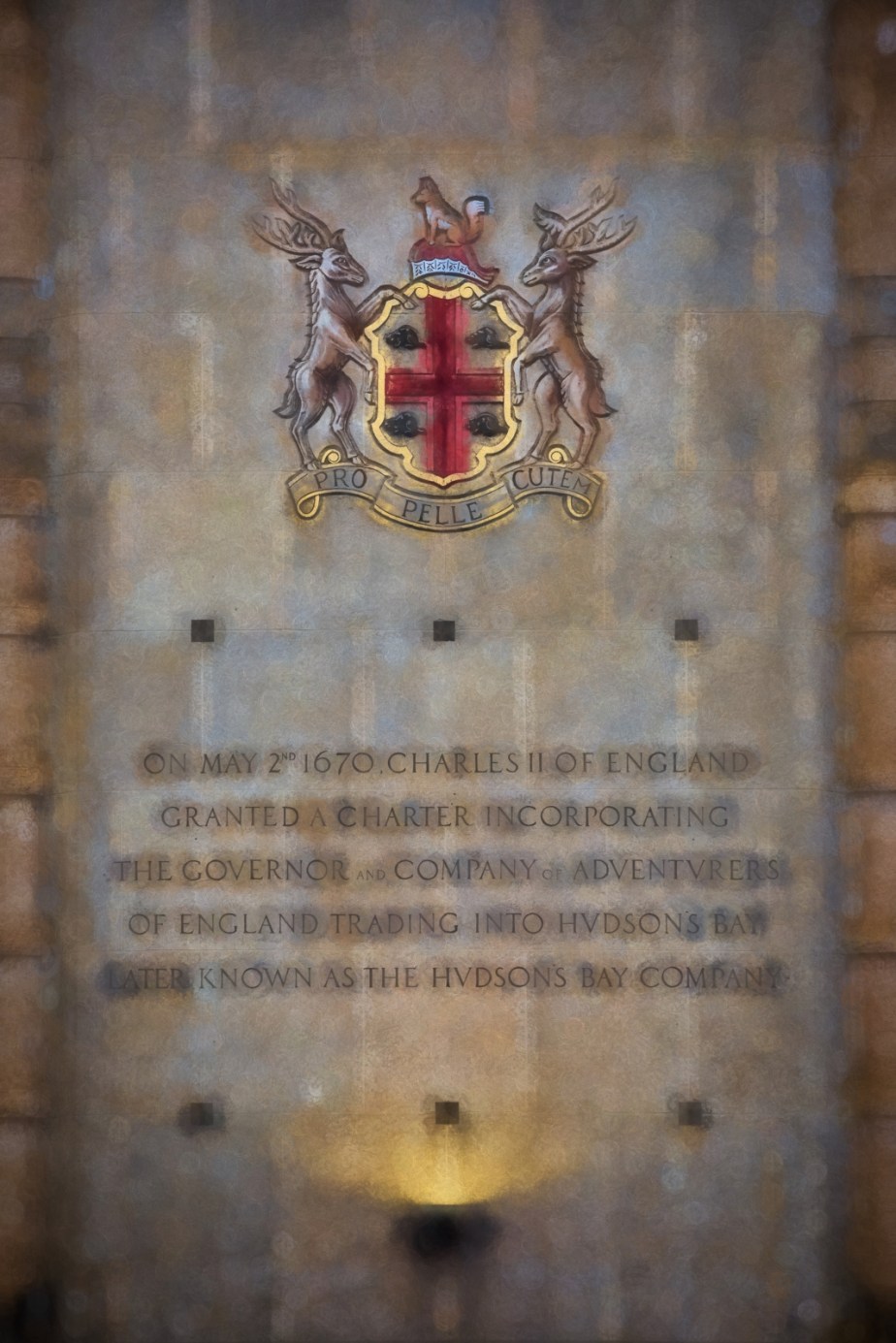
Hudson’s Bay Company Crest – Edmonton, Ab Canada 1Hudson’s Bay Company Crest – Edmonton, Ab Canada 2Hudson’s Bay Company Crest – Edmonton, Ab Canada 3Hudson’s Bay Company Crest – Edmonton, Ab Canada 4Hudson’s Bay Company Crest – Edmonton, Ab Canada 5
The crest of the Hudson’s Bay Company is affixed to the southeast corner of the Bay store on Edmonton’s Jasper Avenue. The crest recalls Peter C. Newman’s book, ‘Company of Adventurers,’ a history of the Hudson’s Bay Company in North America.
A decade ago, as a home education coordinator, I travelled within our school division boundaries helping parents provide their children with an education within their homes. The area of our school division encompasses an area equivalent to that of three small European countries. In one day, I might work with four to eight students and have driven as much as four to six-hundred kilometres. Windshield time was a part of the job. In one month, during my travels, I worked my way through an unabridged audiobook of ‘Company of Adventurers’. What was extraordinary was the fact that some of our northwestern Alberta territory featured within the book. What also was intriguing was that many of the stories about Life working for the Hudson’s Bay Company remained true.
In Meander River, for instance, an old Hudson’s Bay trading post was still in use. It had had its title transferred to a Church and a thrift store serving the Dene Tha’ people was being operated within the building. Part of Newman’s book highlighted the fact that the temperature in a Hudson’s Bay post was often kept close to zero as a means to encourage departure of customers after they’d made their purchases. This was the case in this building; heated by a wood stove the family tended to congregate close to the fire through the winter and were always dressed in layers of clothing. The family operating the thrift store chose home education as the means to educate their child.
Quote to Consider – “Unless you photograph what you love, you are not going to make good art.” – Sally Mann
Listening to – The Primitives’ ‘Crash,’ Bruce Springsteen’s ‘Radio Nowhere,’ The Who’s ‘I Can See for Miles,’ Link Wray and the Wraymen’s ‘Rumble’ and Green Day’s ‘East Jesus Nowhere.’
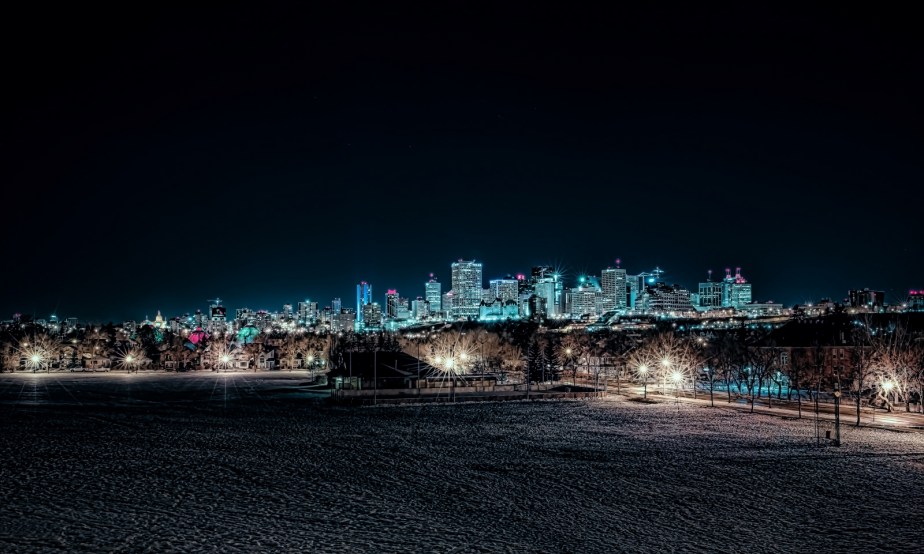
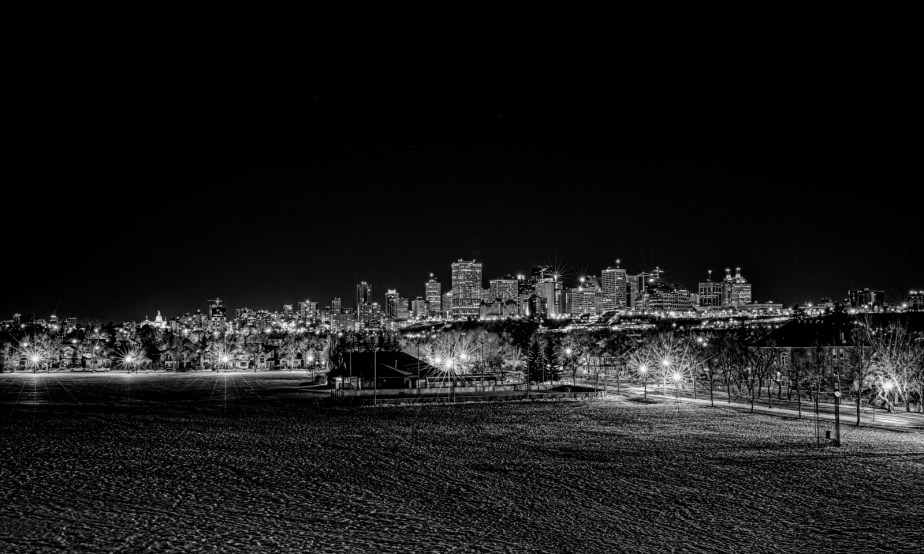
Edmonton Skyline from Connor’s Hill – Edmonton, Ab Canada 2Edmonton Skyline from Connor’s Hill – Edmonton, Ab Canada 1
My first look with my camera is technical – ‘Will this vantage point work to create an image?’ I try it out. I gather an Edmonton image, one of several in climbing Connor’s hill. The hour is late on a Monday evening in February. Editing provides second look at the image, back home days later. There, I work through High Dynamic Range (HDR) image creation. Rendering holds choices – sharpening, colour, black and white, cropping. I try them out. Almost a month later, my look at this image is more settled and recalls memory – events and people through time. A fight and a chase occurred in this landscape. Among friends, before I was a teen an altercation occurred. We had ridden bikes perhaps five miles further than we should have, without parents knowing. We stumbled onto turf, that of someone older than us. We came out okay. But, that was way back in time. Connor’s hill, the part seen here is just below Edmonton’s Strathearn Drive. It is close to my grandparent’s home. My grandfather, my brothers and I hiked trails in the treed ravine in front of this part of Connor’s hill. Through the sixties, seventies and eighties Connor’s hill was Edmonton’s ski hill. The Edmonton Folk Festival occurs on this site, now. I have seen and listened to Fred Eaglesmith, the Blind Boys of Alabama, Martyn Joseph and Great Big Sea play on this hill. Five or six musical offerings are easily undertaken all at any one time. For me, the festival has been a place to reconnect with friends, a place to enjoy a glass of wine or beer through a warm August weekend. The festival has become a place to catch-up, settle-in and enjoy.
Listening to – Fred Eaglesmith’s ‘Wilder than Her,’ the Blind Boys of Alabama’s ‘Way Down the Hole,’ Martyn Joseph’s version of Springsteen’s ‘The River’ and Great Big Sea’s ‘General Taylor.’ Then, it’s Cat Stevens’ ‘Pop Star,’ Peter Gabriel’s ‘The Family and Fishing Net,’ then Joan Baez & Dirk Powell’s take on ‘House of the Rising Sun’and finally Billy Bragg with Wilco’s ‘Hot Rod Hotel.’ David Gray’s ‘First Chance’ is up, then it’s Cat Steven’s ‘Bitterblue,’ Gillian Welch with ‘Revelator’ and ‘The Way It Goes’ from Gillian Welch and Dave Rawlings Machine.
Quote to Consider – “You don’t take a photograph. You ask quietly to borrow it.” – Unknown
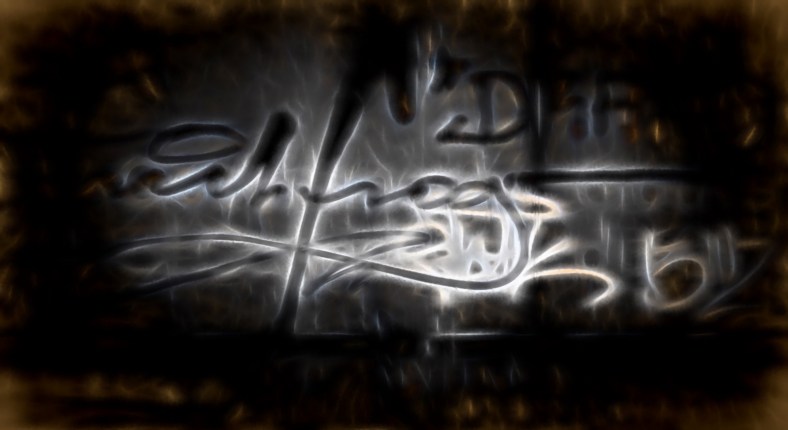
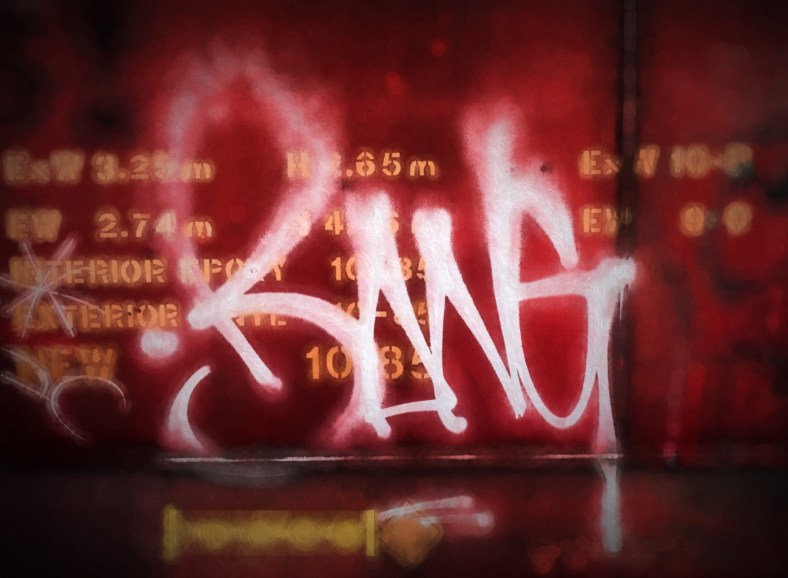
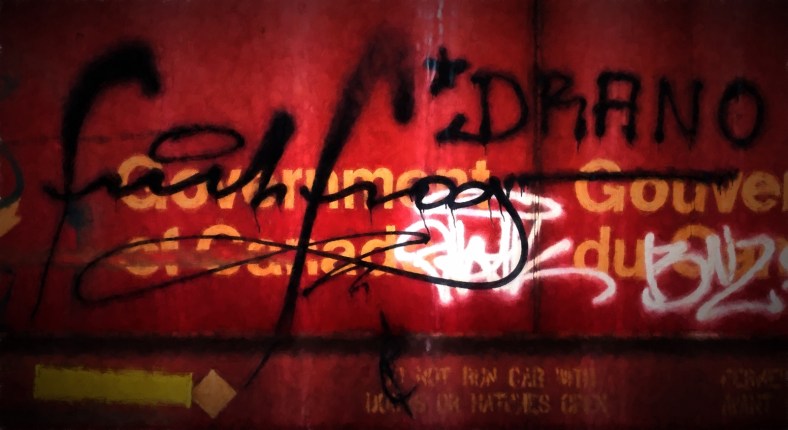
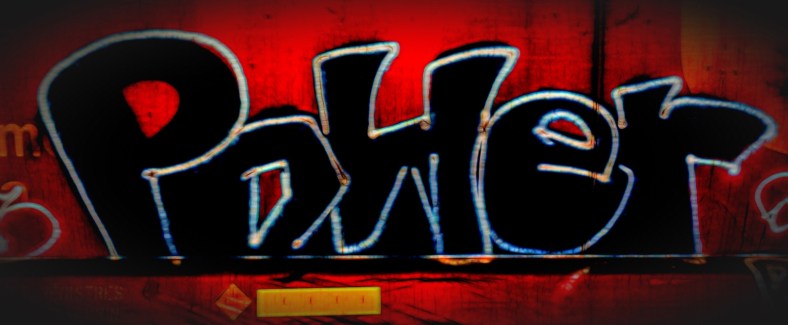
Grain Car Tattoo – High Level, Ab – Canada 1Grain Car Tattoo – High Level, Ab – Canada 2Grain Car Tattoo – High Level, Ab – Canada 3Grain Car Tattoo – High Level, Ab – Canada 4Grain Car Tattoo – High Level, Ab – Canada 5Grain Car Tattoo – High Level, Ab – Canada 6Grain Car Tattoo – High Level, Ab – Canada 7Grain Car Tattoo – High Level, Ab – Canada 7aGrain Car Tattoo – High Level, Ab – Canada 8
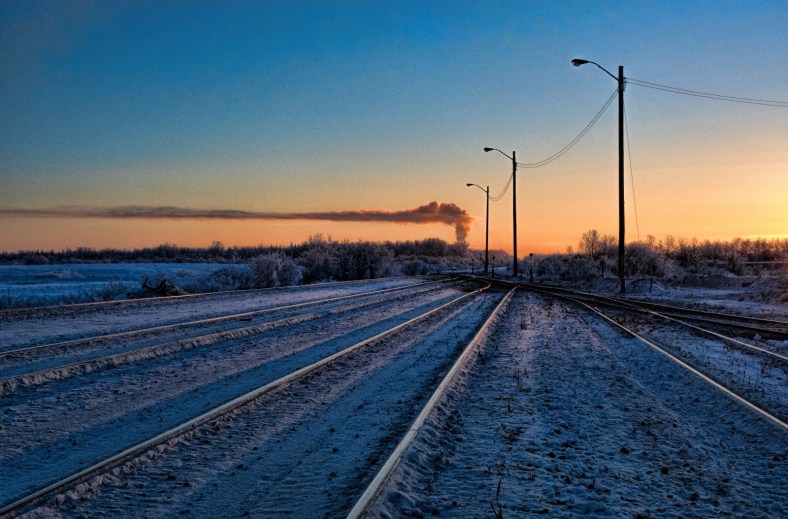
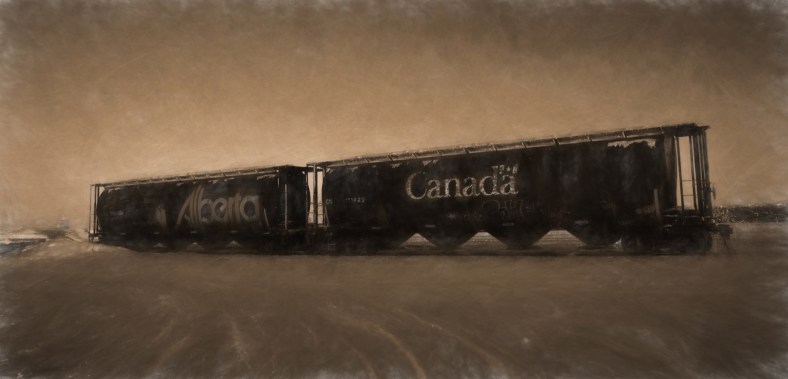
Tattooed with graffiti, two hopper cars await loading and transport at High Level’s grain terminal, late on a Sunday afternoon, as the sun sets.
Listening to – Neil Young’s ‘The Needle and the Damage Done,’ Steve Miller’s ‘Take the Money and Run,’ Aerosmith’s ‘Living on the Edge,’ The Who’s ‘Magic Bus,’ The Beatles’ ‘Across the Universe,’ Bruce Springsteen’s ‘Brilliant Disguise,’ Alice in Chains’ ‘Heaven Beside You’ and The Black Crowes’ ‘Twice as Hard.’
Quotes to Consider – (1) “When I photograph someone, what it really means is that I’d like to know them. Anyone I know I photograph.” – Annie Liebovitz; (2) “Let death be what takes us, not lack of imagination.” – Dr. B. J. Miller (palliative care physician); (3) “You can look at a picture for a week and never think of it again. You can also look at a picture for a second and think of it all your life.” – Joan Miro
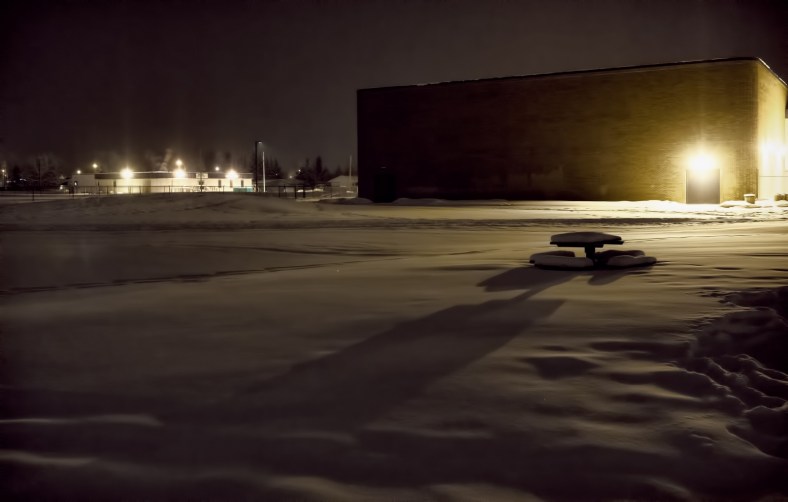
Image – A picnic table lies dormant under a blanket of snow waiting its next use.
The song is ‘Wish You Were Here’ by Pink Floyd. I am helping a student gather its fretting. I work with a Seagull mini jumbo, the student with a Yamaha dreadnought. The student is learning his part for a school band. Music is part of his motivation for coming to school. We enjoy our practice times and the rabbit trails toward the investigation of other songs.
This morning, violinist, Stephane Grappelli, holds my attention. This classical violinist, whom my father admires, features in a recording of ‘Wish You Were Here’ found on iTunes. He and his violin add to the soulful drifting upon waves feel. Musical literacy would connect lyrics with soundscape. Imagery, imagination, memory would merge into experience for the listener. Drifting upon waves is there. Chords and strumming pattern echo a sense of being upon waves. Forward, a wave moves with momentum. It diminishes, receding to trough and moves forward again. The momentum only carries forward into future, yet there’s cadence in this movement, you expect it.
“Wish You Were Here” by Pink Floyd
So, so you think you can tell Heaven from Hell, blue skies from pain.
Can you tell a green field from a cold steel rail?
A smile from a veil?
Do you think you can tell?
Did they get you to trade your heroes for ghosts?
Hot ashes for trees?
Hot air for a cool breeze?
Cold comfort for change?
Did you exchange a walk on part in the war for a lead role in a cage?
How I wish, how I wish you were here.
We’re just two lost souls swimming in a fish bowl, year after year,
Running over the same old ground.
What have we found?
The same old fears.
Wish you were here.
The lyrics – as an English teacher, I aim to expose nuance in the word read and the word spoken, in prose and poetry. Trying out words in roles other than those intended often exposes nuance well. The words between Romeo and Juliet become words between a priest and penitent. They become words between Apollo astronaut and ground control. The mismatch of speaker(s) to words spoken confronts students with their intent. What the words are and are not about become clearer. In ‘Wish You Were Here,’ the lyrics intrigue in terms of who can own them.
Who speaks these words and who receives such words? Are these words found strictly among Pink Floyd bandmates? The language at play is almost jibe or dig or taunt, yet they are intimate. They are the words of long-standing relationship. In their speaking, they hold concern and interest for the other. Contrast is there. That world that was once understood, known and mastered is no longer one’s playground. No longer is the world of youth’s heyday accessible. Sluffed-off, that former time is no more. A different, colder, more bland and more stark reality confronts the speaker. The lyrics seek commiseration – to confirm that one’s disbelief and disillusionment are valid. “Did this happen to you, too?” The lyrics do own a seasoned perspective on loss.
Longed-for is the good understanding of shared values and principles. Longed-for is reconnection to that other who knows you. That other re-orients you to who you know yourself to be. That other recalls you to Life. On the other hand, though, it is possible that that other from one’s heyday has moved on in his or her Life; perhaps that other no longer sees, recognizes or understands you. Perhaps that other has adapted through change(s). Perhaps that other is in a quite different state – stronger, weaker, hardened, older, frail. This relationship has encountered interruption and a shared Life trajectory is no longer possible. Life in the interim is at play.
Would this be one’s mind scrabbling back to a poignant, long-ago idea? Would that activity recall to Life the idea and the friend who breathed Life into it? The absence of friend is poignant in ‘Wish You Were Here.’ The possibility of reconnecting with that friend is absent. Alone, there is drifting, listing between what was and what is pending. There had been an approach to Life and its difficult next steps. Some of one’s confidence had been founded in the assurance of handling such next steps together. Now, one gauges Life’s next steps alone. It has become impossible to reconnect with the other. The song’s rhythm, melody and lyrics convey such listing emotion. The looking back to look forward is there when a pending, next, unfamiliar step must be taken.
The breadth of who can own these words grows. While the intimate questioning in the absence of the other has its origin in song among bandmates, they become those questions one would hope to ask of absent friend or soulmate. They are likely questions the band would love to wrestle with and consider with its audience. Yet the structure of concert, performance, band and listener makes such poignant sharing beyond performance untenable.
Who next can own these words? Is this the wrestling between conscience and ego? In the first person, these intimate questions express warning. They are the prickling words of conscience. They surface one’s selling-out of values, moral grasp and integrity. The intimate questioning is that from conscience to ego. Conscience asks, ‘Where are you in all this that’s going on?’ Conscience seeks to awaken courage, asking ego to man-up, not sell out and act with integrity.
In metallurgy, a crucible is a container used to heat metal to a molten state. The container allows skimming of impurities (the slag) from the molten surface. The metal’s quality improves with the removal of the slag. As well, a crucible refers to the ordeal one encounters that yields strength to the person and the group by having gone through it. A crucible is a means to apply heat to metal and refine it. A crucible is also a group process that exerts influence upon a person. Parents send students to school. Parents send children for music lessons. Learning and practice with skills build skills needed by the developing adult. A crucible can force compliance in disciplinary situations for children and adults. Adults can limit a child’s access to privileges in response to inappropriate behaviour. In party politics, censure ensures party compliance in voting. On the world stage, sanctions against a country seek compliance from that country. That compliance may be about social issues or what happens in war.
In ‘Wish You Were Here’ the speaker and the other endured a crucible experience. They may have created it. Its boundaries may only include the two of them. They may not have been able to see where it would lead. They may have differed on what was best for them. Both may have sought the other’s compliance. Both may have applied censure. The mess of moving through that crucible experience halted relationship with the other. Time has passed. There’s that intimate knowing of the other. There’s that interest and concern for how the other dealt with it. That’s the arena of the song’s narrative.
Now, turning to the perspective of crucible, who might own these lyrics? Thomas Beckett comes to mind. Richard Burton played this English, medieval figure in the 1964 film, ‘Beckett.’ Well-educated, Beckett was a close friend of Henry II. Beckett served as chancellor to Henry. Later, by Henry’s appointment, Beckett served as the Archbishop of Canterbury. As Beckett grew into that role and understanding of that position Beckett stood-up for the Church. Doing so, placed him at odds with Henry. This issue was more than mere ‘truth to power.’ Beckett was opposing his King’s authority over the Church. T.S. Eliot wrote about this crucible experience Beckett faced in a verse drama, ‘Murder in the Cathedral.’ The play considers Beckett’s reasoning for not complying with King Henry II. Henry gives Beckett an ultimatum and timeline for compliance. Beckett understands that non-compliance not only undermines the King, but doing so becomes an act of treason. Through one long night, Beckett works within a crucible of seeking to resolve how he can comply with the king and still speak and stand for the issues of the Church. Beckett considers each possible action he might take. Each consideration is framed as temptation. And, the first three temptations are modeled after the temptations Christ encounters. There is a fourth and final temptation. Beckett masters temptation, the time of temptation through to not acting upon the temptation. Still, Beckett does not yield. Here, in relation to King Henry II, Thomas Beckett and Eliot’s ‘Murder in the Cathedral,’ one encounters political context and leadership within aphorism, ‘The strong rule by force, the weak by caprice.’ Ambition, politics and Christendom caress and collide throughout this play. They become the crucible Beckett works through. Beckett cannot comply with King Henry. In 1170 A.D., four knights find their way to Beckett into Canterbury Cathedral and assassinate him. Not only are the lyrics within ‘Wish You Were Here,’ those of any of us that might wish to investigate the integrity of Thomas Beckett within his crucible, they may also be those of his friend, King Henry II. The lyrics of ‘Wish You Were Here’ are words found on the other side of crucible. Where those lyrics might express our wish to know more about what was at play, they are the words encountered on the other side of conflict in which no resolution was possible.
A fellow blogger, Rajiv, has comments that follow. I would urge you to look at his blog, especially with an eye for the ‘down-and-out’ for whom Life itself is crucible. Lyrics in ‘Wish You Were Here,’ take on another perhaps more poignant shade of meaning, perhaps with the question of our role within their plight. Thank you, Rajiv.
Listening to – Pink Floyd’s ‘Wish You Were Here’ featuring Stephane Grappelli (and I’m curious about his involvement in the concert and how he comes to the song).
Quote to Consider – “There is one thing the photograph must contain, the humanity of the moment.”
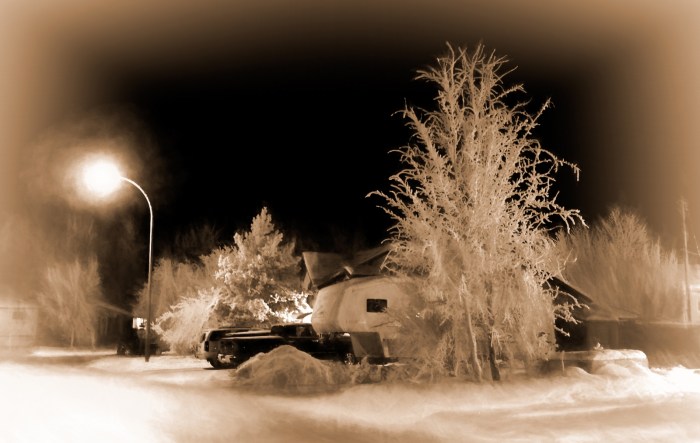
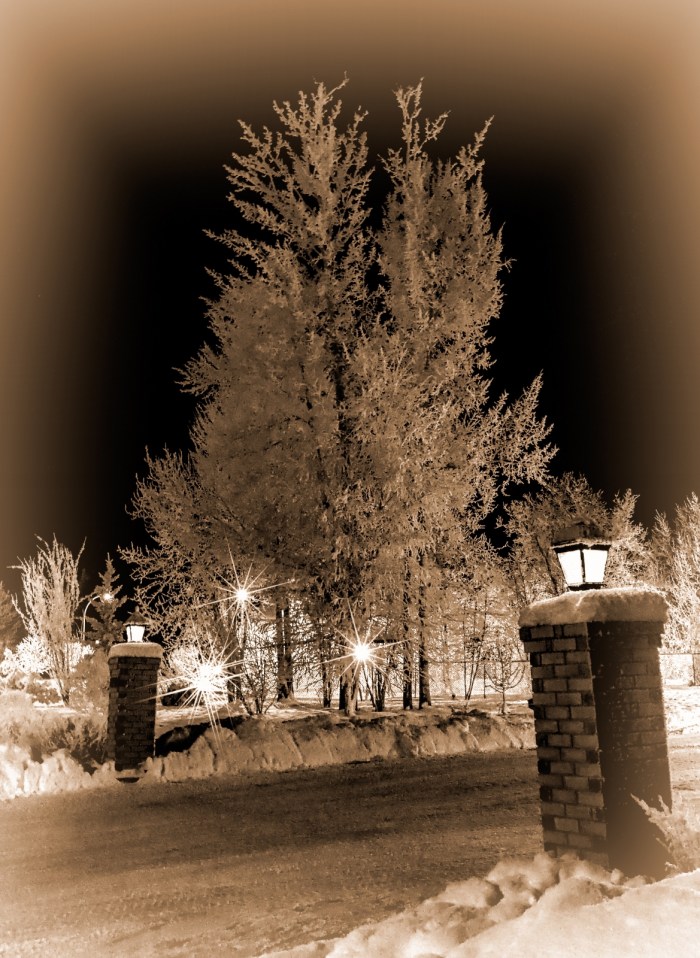
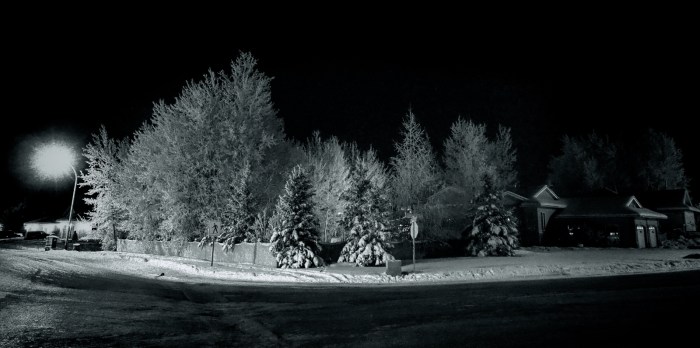
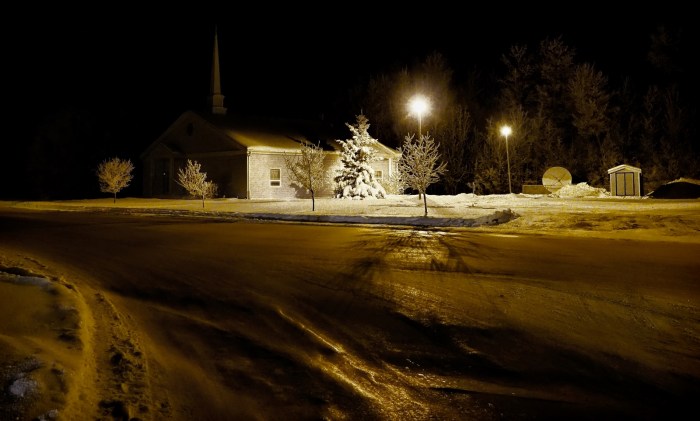
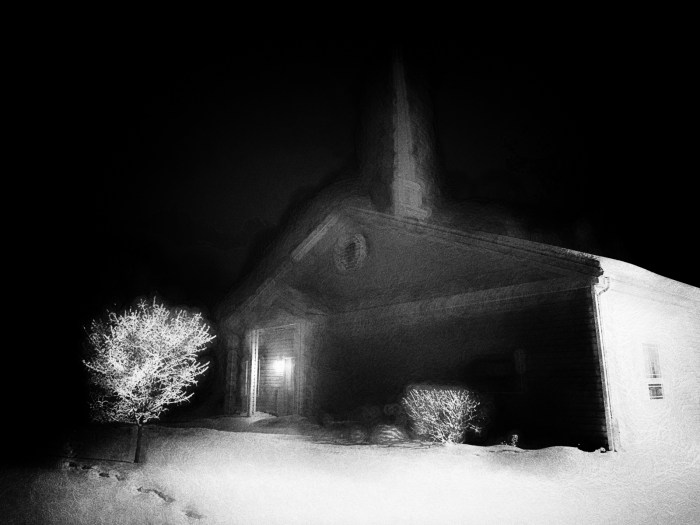
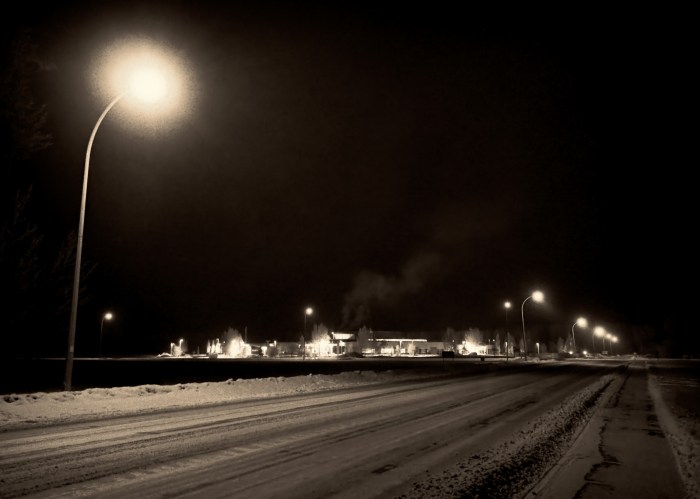
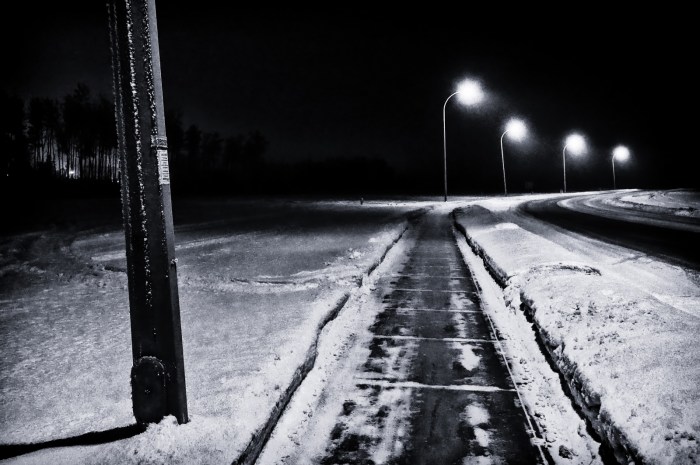
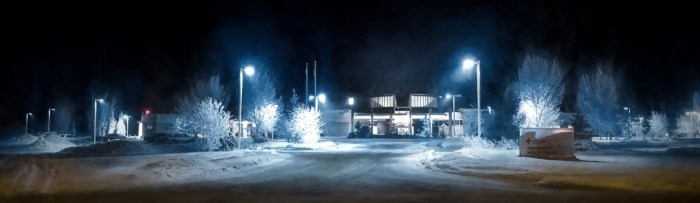
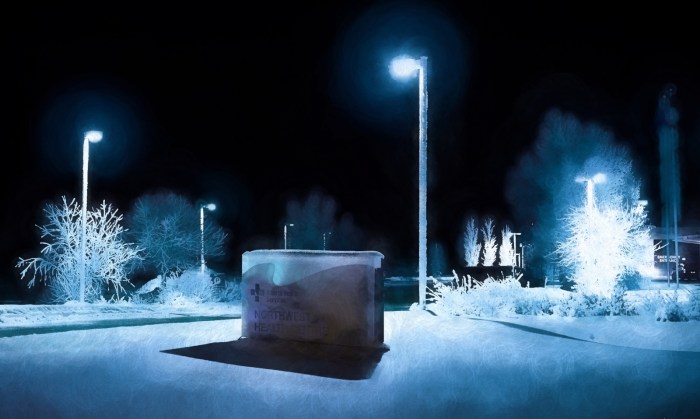
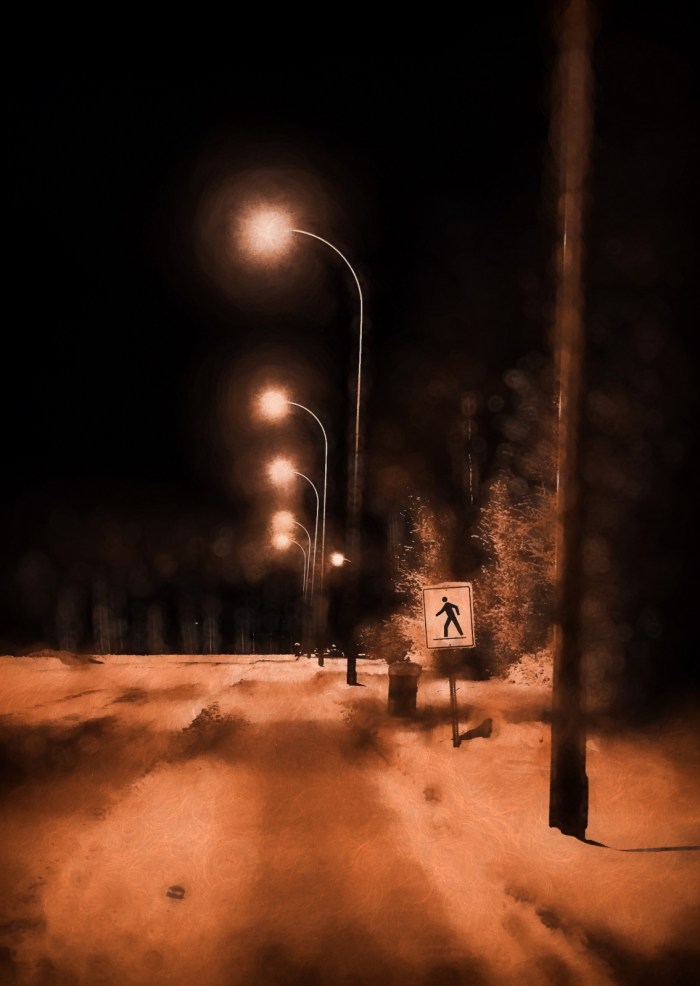
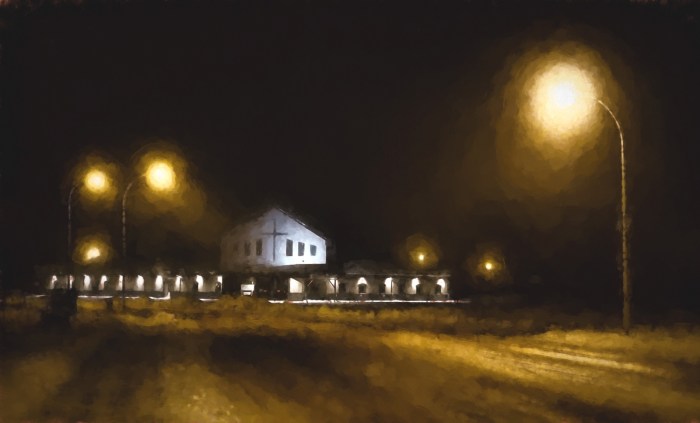
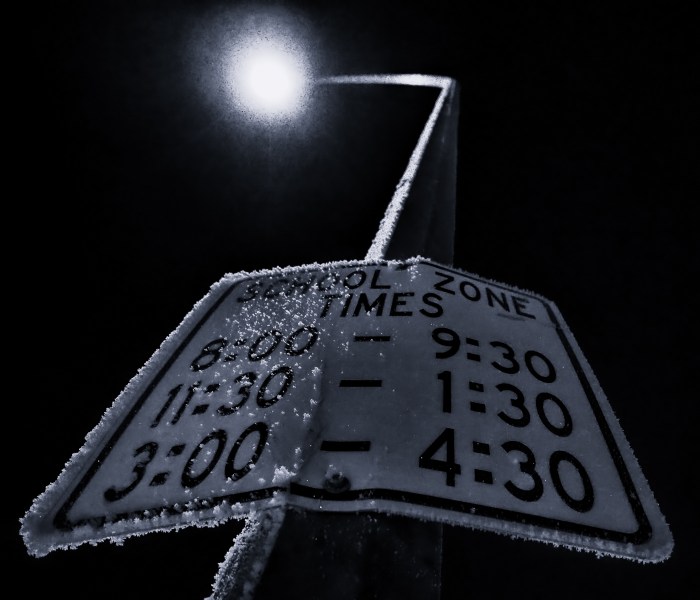
Hoar Frost Morning – High Level, Ab – Canada 1Hoar Frost Morning – High Level, Ab – Canada 2Hoar Frost Morning – High Level, Ab – Canada 2aHoar Frost Morning – High Level, Ab – Canada 3aHoar Frost Morning – High Level, Ab – Canada 4High Level Hospital – High Level, Ab – CanadaHoar Frost Morning – High Level, Ab – Canada 6Hoar Frost Morning – High Level, Ab – Canada 6aHoar Frost Morning – High Level, Ab – Canada 6bHoar Frost Morning – High Level, Ab – Canada 7Hoar Frost Morning – High Level, Ab – Canada 7aHoar Frost Morning – High Level, Ab – Canada 8Hoar Frost Morning – High Level, Ab – Canada 9Hoar Frost Morning – High Level, Ab – Canada 10Hoar Frost Morning – High Level, Ab – Canada 10aHoar Frost Morning – High Level, Ab – Canada 10bHoar Frost Morning – High Level, Ab – Canada 10cHoar Frost Morning – High Level, Ab – Canada 11aHoar Frost Morning – High Level, Ab – Canada 11bHoar Frost Morning – High Level, Ab – Canada 11cHoar Frost Morning – High Level, Ab – Canada 11dHoar Frost Morning – High Level, Ab – Canada 11dHoar Frost Morning – High Level, Ab – Canada 11fHoar Frost Morning – High Level, Ab – Canada 13Hoar Frost Morning – High Level, Ab – Canada 13aHoar Frost Morning – High Level, Ab – Canada 13bHoar Frost Morning – High Level, Ab – Canada 13cHoar Frost Morning – High Level, Ab – Canada 13dHoar Frost Morning – High Level, Ab – Canada 14Hoar Frost Morning – High Level, Ab – Canada 15
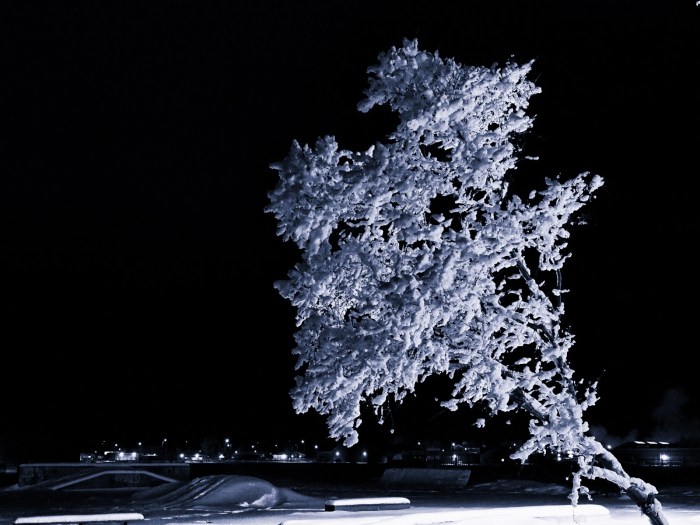
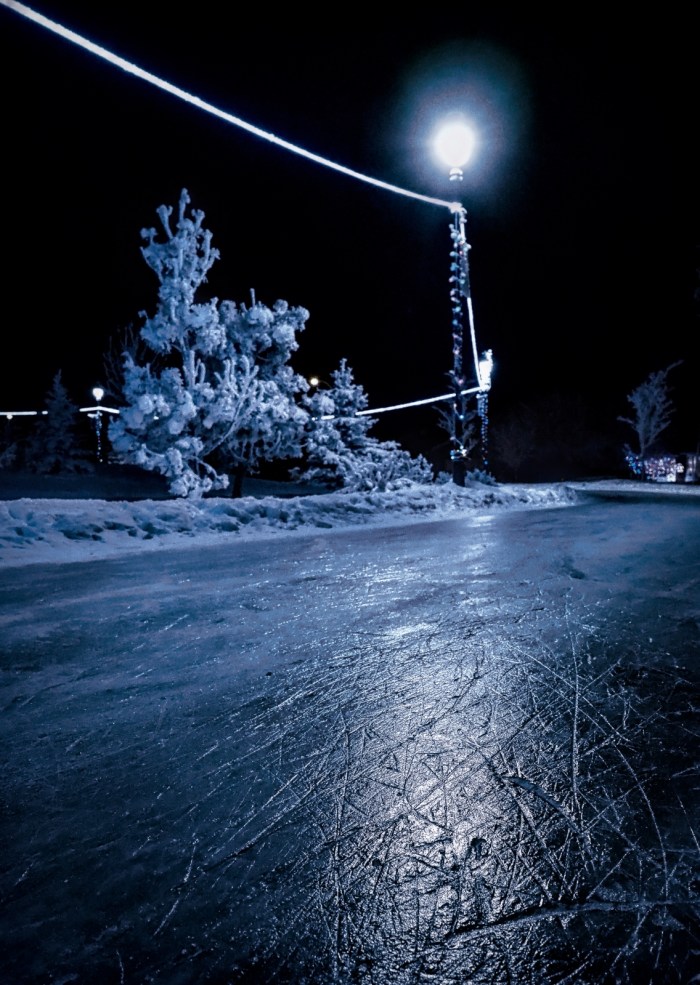
Our weather has been warm for January. In a portion of the year when we are accustomed to -40C and colder, last night rain fell upon our world. A thick slippery mat of ice coated all – vehicles moved with success while our biped selves slipped, slid, stumbled and tumbled. This set of images holds more meandering with a camera. Walking before school, white hoar frost dazzles. We may not see this weather outcome again this winter.
Listening to – Ray LaMontagne and the Pariah Dogs’ ‘Beg, Steal or Borrow,’ David Gray’s ‘Fugitive’ and ‘Kathleen,’ John Mayer’s ‘Queen of California’ and the Avett Brothers’ ‘Head Full of Doubt/Road Full of Promise.’
Quote to Consider – “Photography is a way of feeling, of touching, of loving. What you have caught on film is captured forever … It remembers little things, long after you have forgotten everything.” – Aaron Siskind
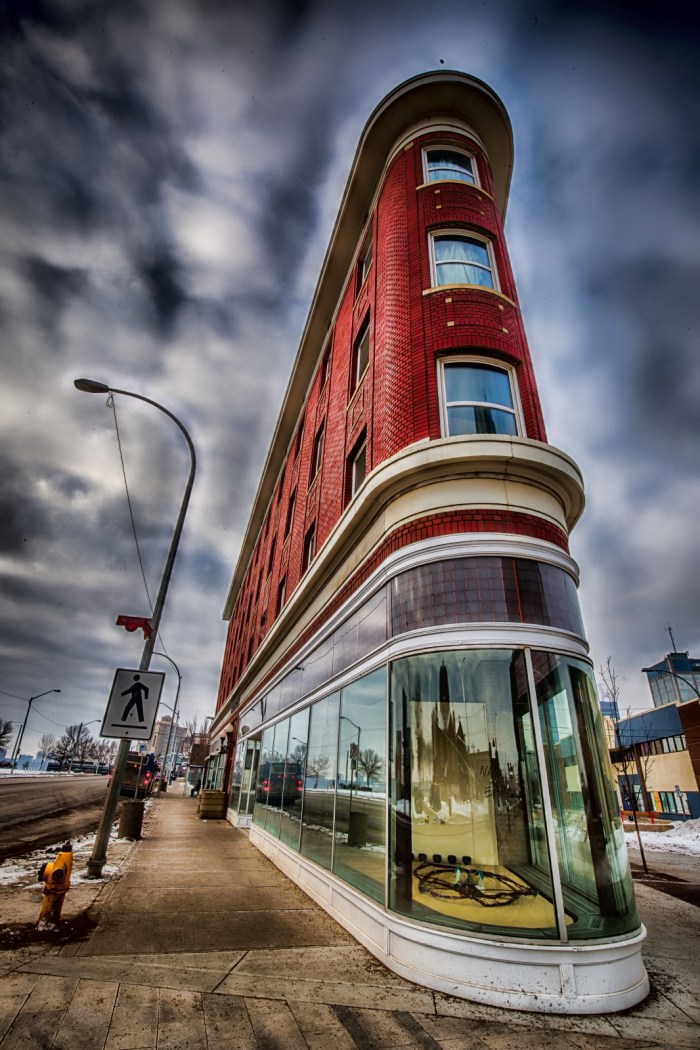
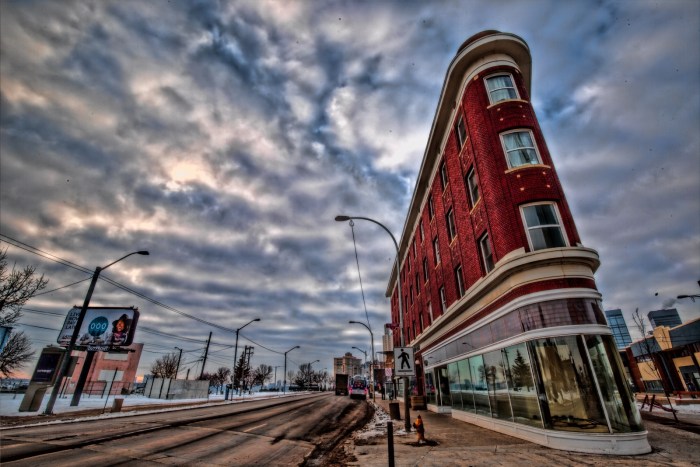
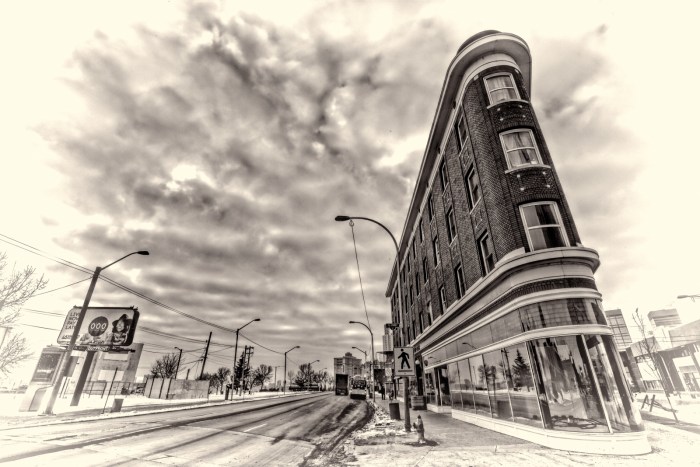
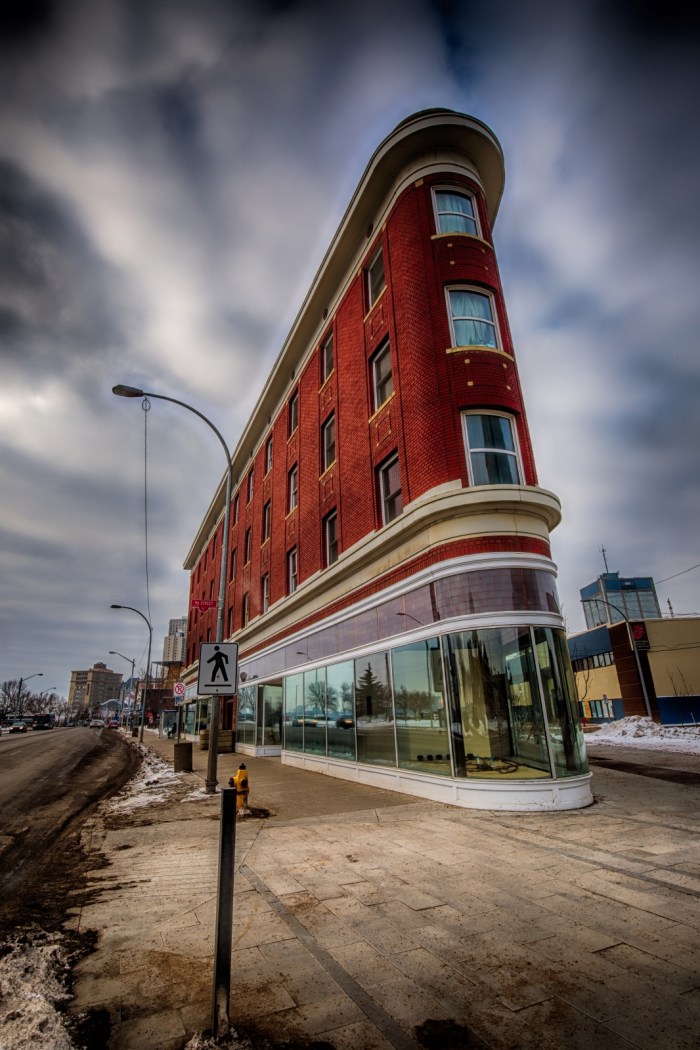
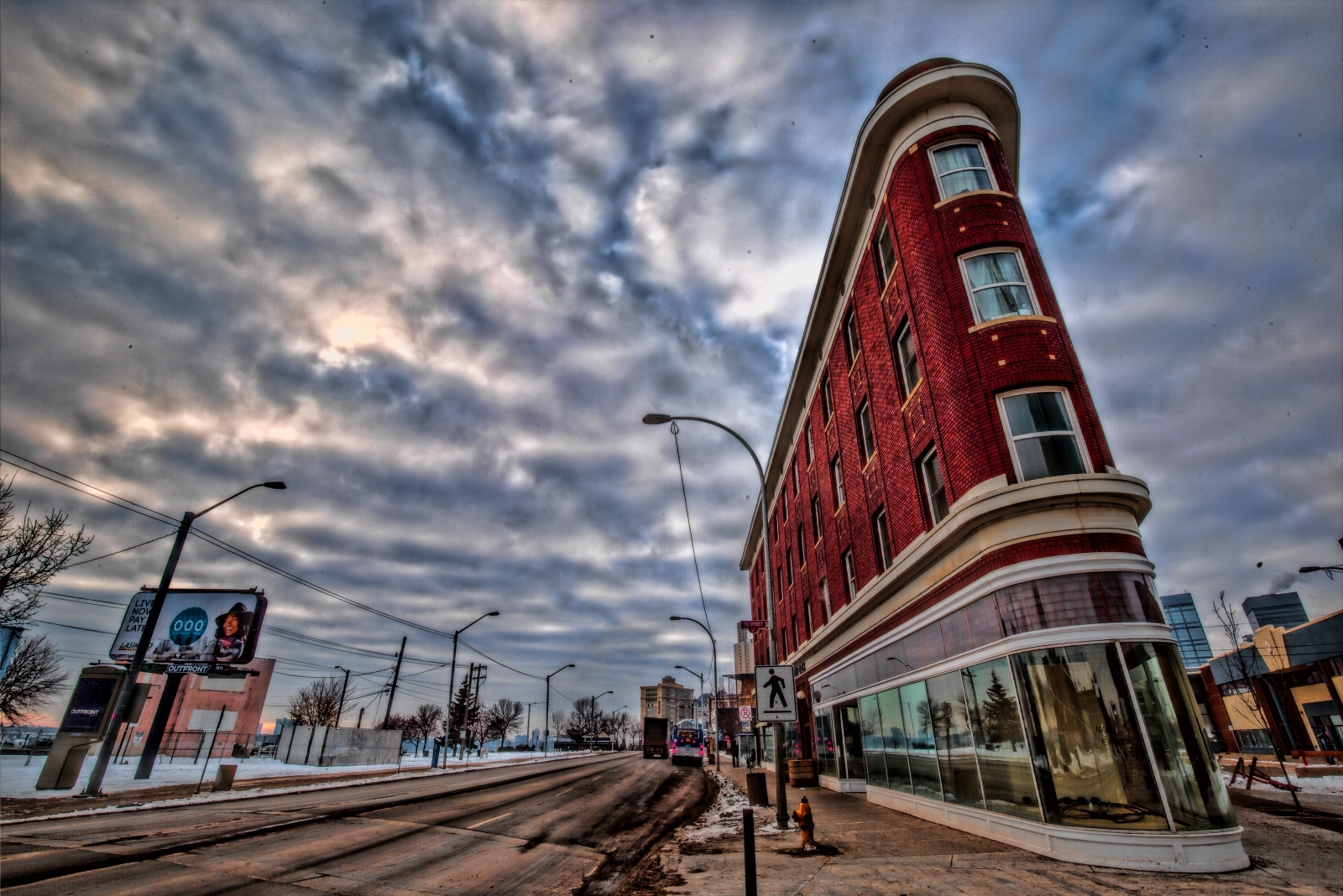
This building is likely the only building in Edmonton in the Flatiron architectural style – triangular in shape with curved windows at its toe. One would find this building in the twentieth century and it would reflect Edmonton opulence. The Gibson Block building, built in 1913, precedes many things. It precedes Canada’s involvement in World War I. It precedes the roaring twenties. It precedes the era of Al Capone, the American prohibition and a Canadian connection. It precedes the Great Depression. The Gibson Block building associates Edmonton to being Metropolitan. One would find a similar building in Montreal, Toronto or Vancouver. Its Canadian, older metropolitan style works well as possible landscape to Morley Callaghan’s novel ‘Such is My Beloved.’ One can imagine the Great Depression and the lives of Father Dowling, Ronnie and Midge intersecting in such a building, a building with ground level retail space, apartments upstairs and Turkish baths below. Neglected, the Gibson Block building faced possible destruction in the 1990’s. The Edmonton City Centre Church Corporation recognized possibility and repurposed the building. The Gibson Block building is now home to the Women’s Emergency Accommodation Centre and provides refuge to those in need – homeless and transient women. At Christmas, the building’s curved glass toe held a huge dreamcatcher, one, in size, able to encompass a person.
Listening to – Bruce Springsteen’s ‘One Step Up’ and ‘If I Should Fall Behind,’ The Black Crowes’ ‘Twice as Hard,’ Neil Young’s ‘The Needle and the Damage Done,’ Alison Krauss’ ‘Lay My Burden Down,’ Hank Williams’ ‘My Heart Would Know,’ Willie Nelson’s version of Coldplay’s ‘Scientist,’ Lucinda Williams’ ‘East Side of Town,’ Shawn Colvin’s ‘All Fall Down,’ Peter Himmelman’s ‘Impermanent Things’ and Ryan Adams’ ‘Chains of Love.’
Quote to Consider – “To me, photography is an art of observation. It’s about finding something interesting in an ordinary place … I’ve found it has little to do with the things you see and everything to do with the way you see them.” – Elliott Erwitt
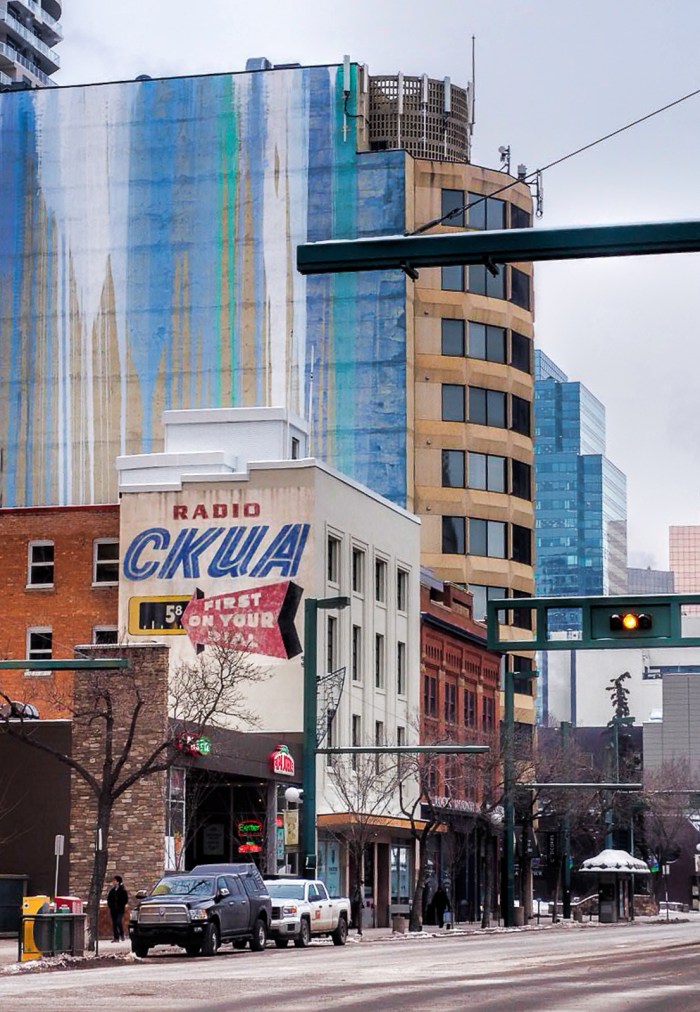
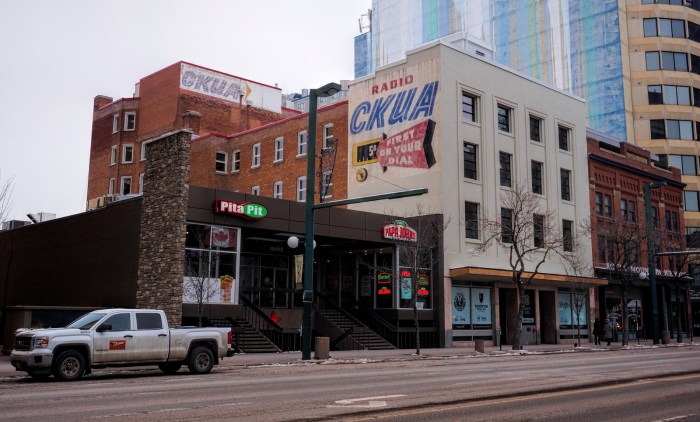
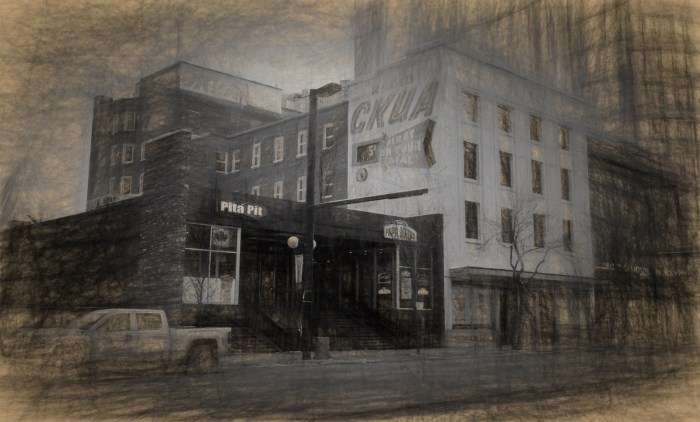
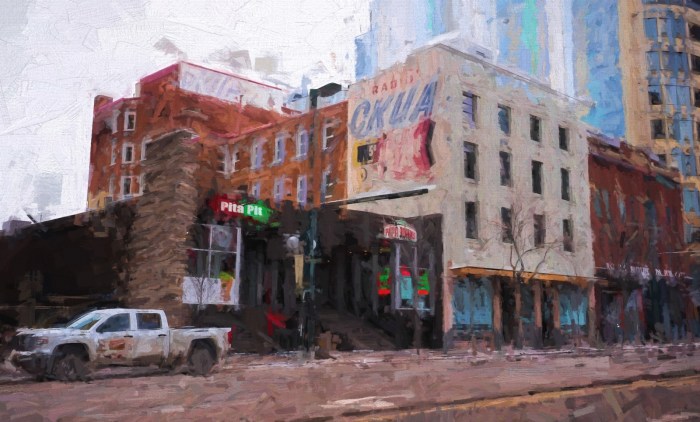
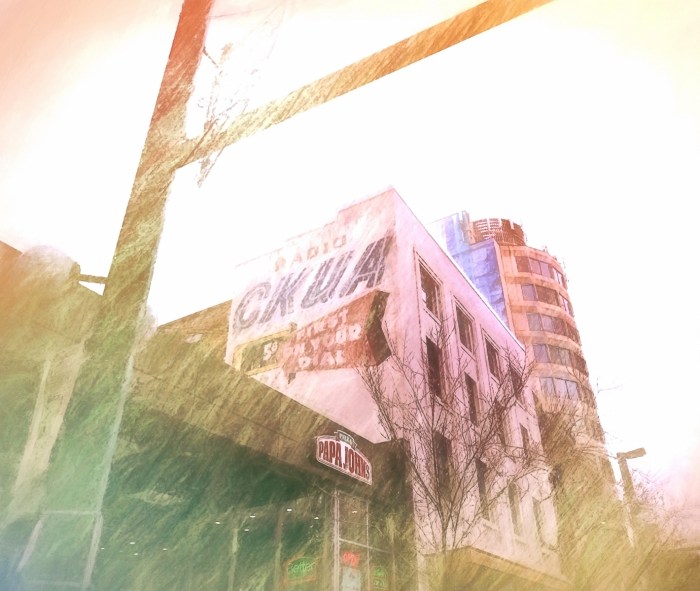
CKUA Signage – Jasper Avenue, Edmonton, Ab – Canada 1CKUA Signage – Jasper Avenue, Edmonton, Ab – Canada 2CKUA Signage – Jasper Avenue, Edmonton, Ab – Canada 3CKUA Signage – Jasper Avenue, Edmonton, Ab – Canada 4CKUA Signage – Jasper Avenue, Edmonton, Ab – Canada 5
In the era preceding satellite radio, for us in Northwestern Alberta, CKUA was a radio station that could be caught and tuned-in to driving south, somewhere around Rycroft, Alberta, three hours into a Friday evening’s drive toward Grande Prairie, right about the time Andy Donnelly would bring to Life, ‘The Celtic Show.’ We would listen – current and traditional gaelic music, interviews among voices often sharing common brogue, sometimes sharing a spot of tea on either side of a phone line; listening brought a sense of connection to the world, to Edmonton, to Andy Donnelly and different artists. In a former Life, CKUA had been my father’s radio station, the station he’d listen to on a Saturday afternoon, in his darkroom downstairs, developing film and exposing images on photographic paper. Jazz and Swing music were his afternoon fodder. Now, CKUA is online and I listen via my computer, often while I’m editing and considering where to take an image. Along with my photographs, Saturday mornings move me through different CKUA programs – ‘Dead Ends & Detours,’ ‘Wide Cut Country’ and ‘A Time for Jazz.’ Downstairs in our home, one of Dad’s Edmonton autumn images hangs framed – it looks up from under the 105th Street Bridge, framing through brush one of the white houses of the John Walter Museum; I’ve photographed these same buildings, returning to thoughts of Dad, considering how he saw them.
In Edmonton at Christmas I happened upon Jasper Avenue, CKUA signage painted colorfully on a building side; the building may hold one of CKUA’s studios. This morning, reading through CKUA’s history has been interesting. I am grateful to be able to access ckua.com .
Listening to – Paul Pena’s ‘Jet Airliner,’ Elmore James’ ‘The Sky is Crying,’ Walter Trout’s ‘The Sky is Falling,’ the North Mississippi Allstars’ ‘Mean Ol’ Wind Died Down’ and Shawn Colvin’s ‘All Fall Down.’
Quote to Consider – “When words become unclear, I shall focus with photographs. When images become inadequate I shall be content with silence.” – Ansel Adams



You must be logged in to post a comment.